Introduction to General, Organic & Biological Chemistry, 12e (Timberlake)
Chapter 10 Acids and Bases and Equilibrium
10.1 Multiple-Choice Questions
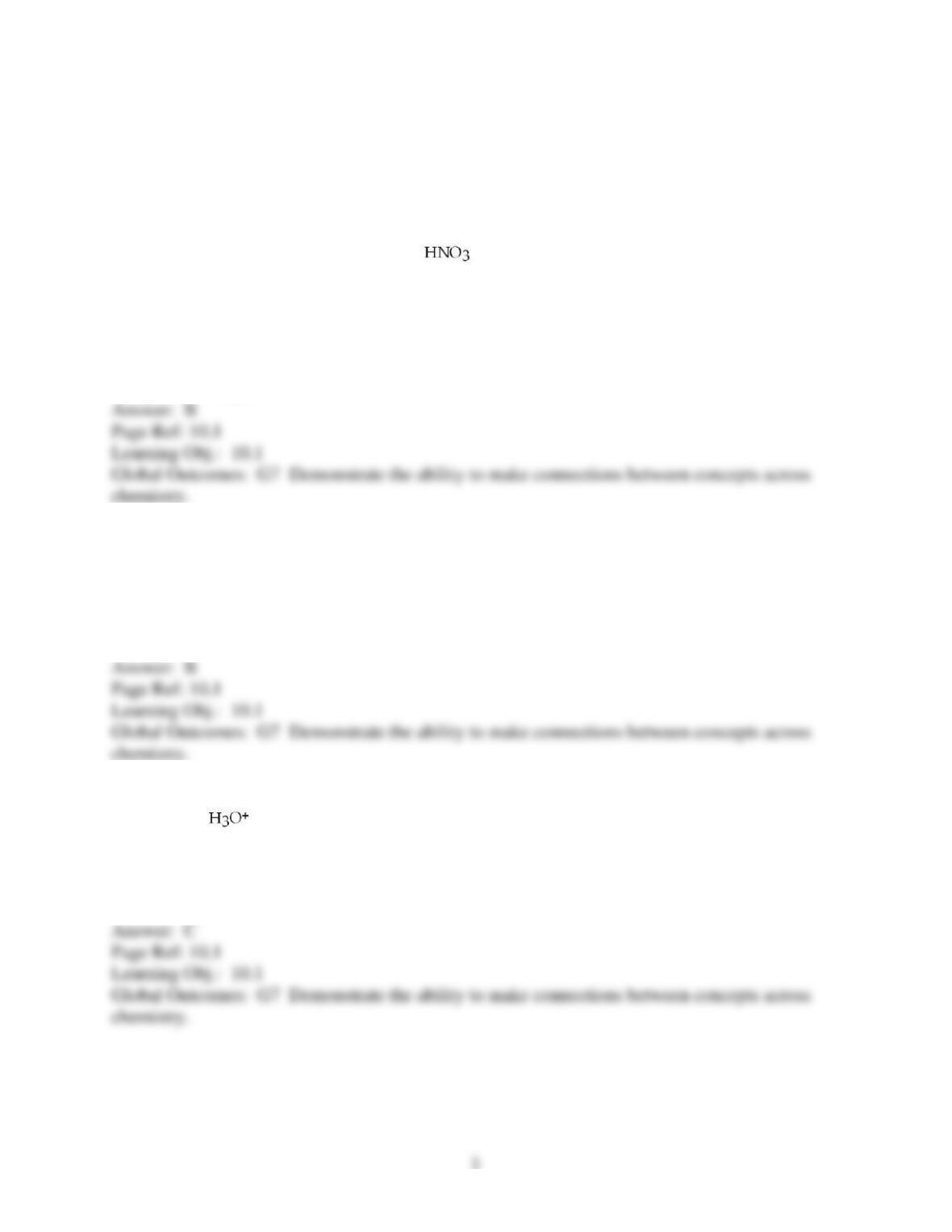
1) According to the Arrhenius concept, if were dissolved in water, it would act as
________.
A) a base
B) an acid
C) a source of hydroxide ions
D) a source of H– ions
E) a proton acceptor
2) The name given to an aqueous solution of HBr is ________.
A) hydrogen bromide
B) hydrobromic acid
C) bromic acid
D) bromous acid
E) hypobromous acid
3) Which one of the following is characteristic of a base?
A) produces in water
B) has a sour taste
C) has a slippery, soapy feel
D) turns blue litmus red
E) is insoluble in water

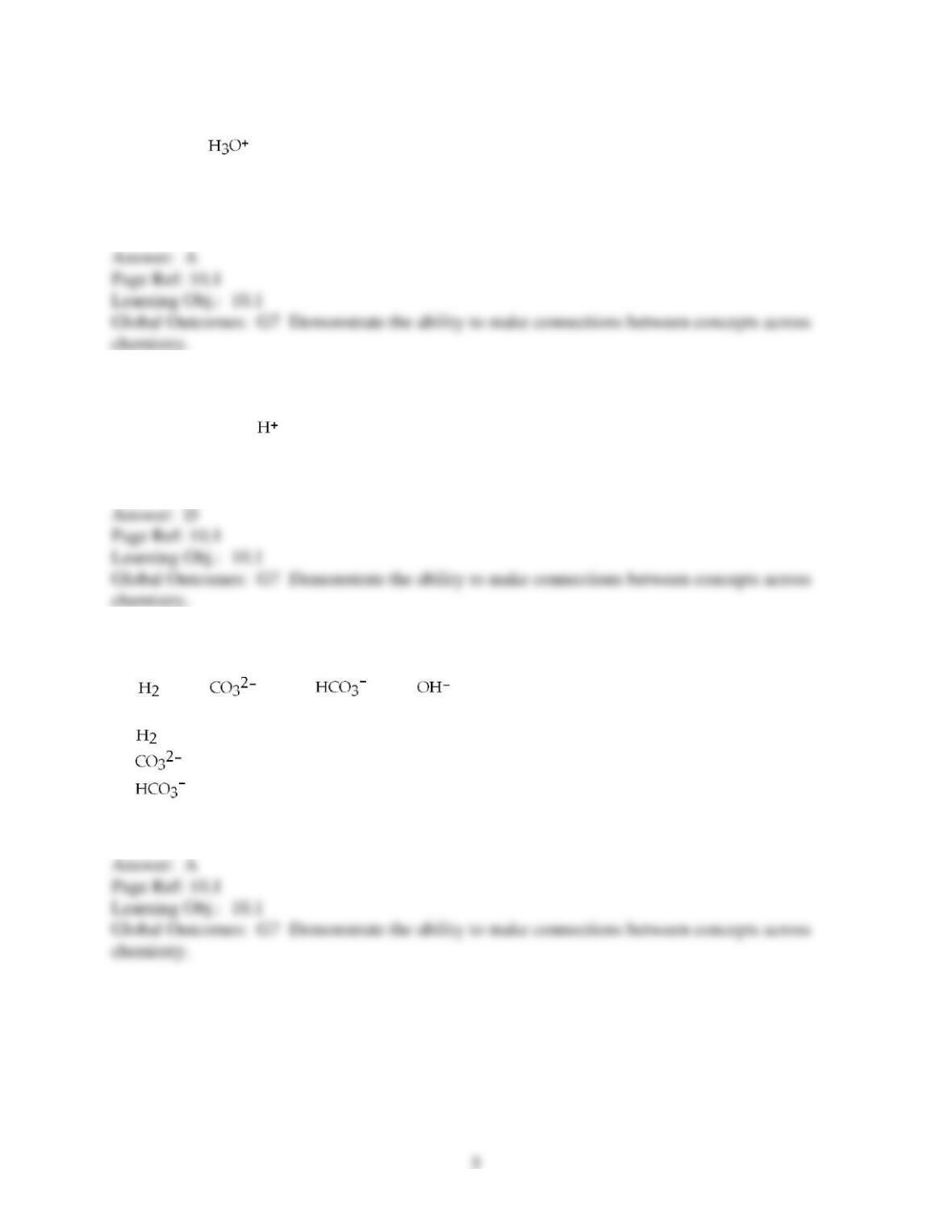
4) Which one of the following is characteristic of an acid?
A) produces in water
B) has a bitter taste
C) has a slippery, soapy feel
D) turns litmus blue
E) is insoluble in water
5) According to the Brønsted-Lowry definition, ________.
A) an acid is a proton acceptor
B) a base produces ions in aqueous solutions
C) a base is a proton donor
D) a base is a proton acceptor
E) an acid acts as the solvent
6) Identify the Brønsted-Lowry acid in the following reaction.
O(l) + (aq) → (aq) + (aq)
A) O
B)
C)
D) OH–
E) H2CO3
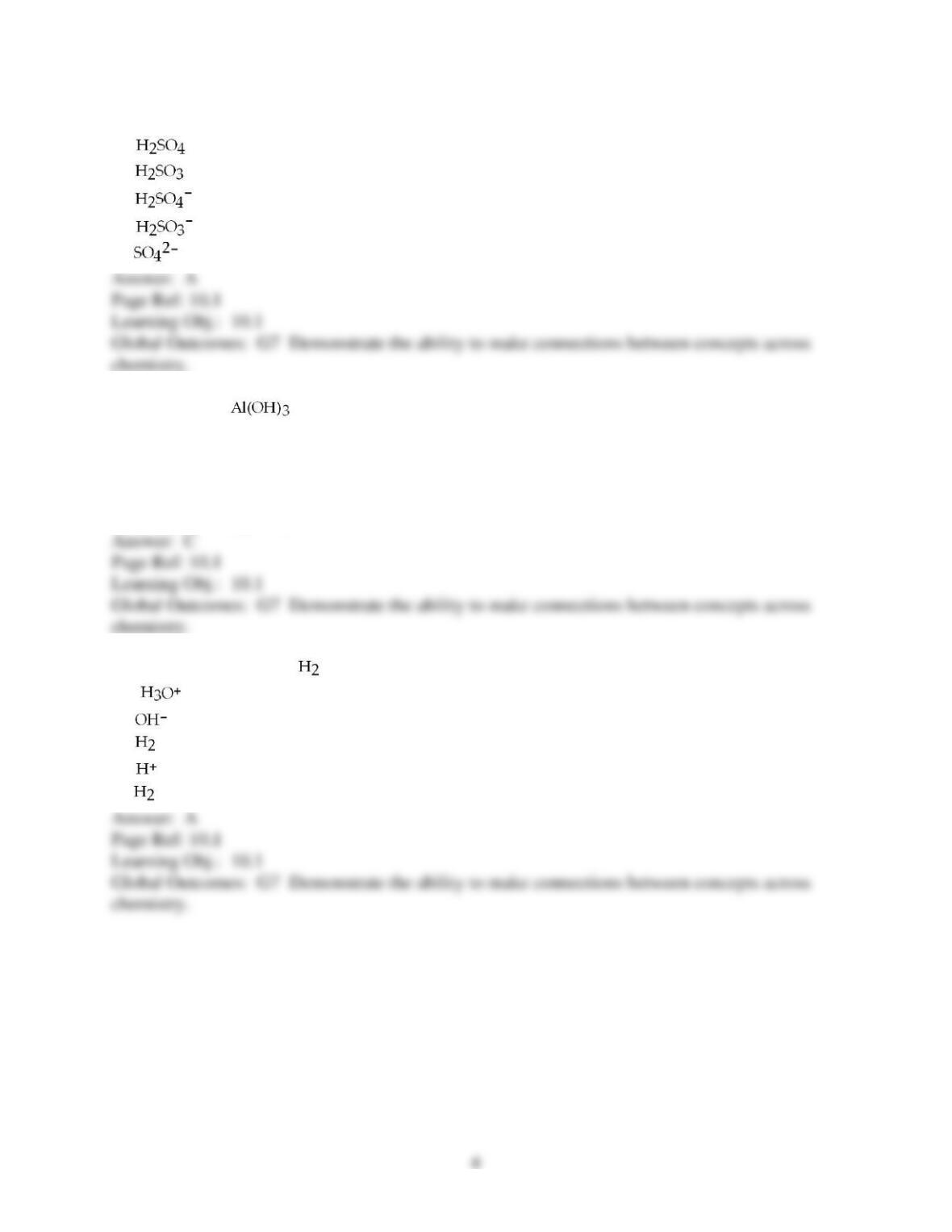
7) The correct formula for sulfuric acid is ________.
A)
B)
C)
D)
E)
8) The name of is ________.
A) aluminum trihydroxide
B) monoaluminum trihydroxide
C) aluminum hydroxide
D) aluminum(III) hydroxide
E) aluminum oxygen hydride
9) The conjugate acid of O is ________.
A)
B)
C) O
D)
E) O has no conjugate acid.
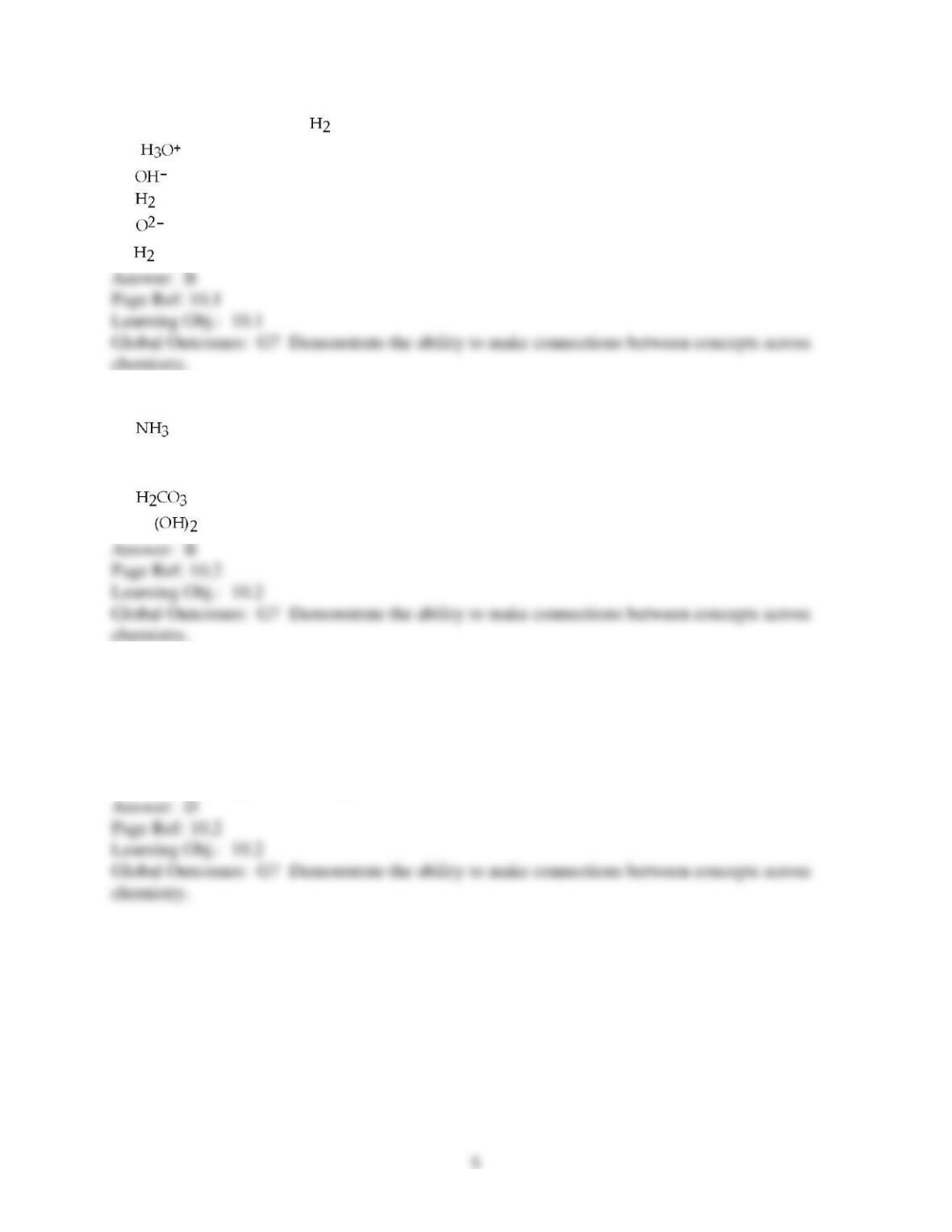
10) The conjugate base of O is ________.
A)
B)
C) O
D)
E) O has no conjugate base.
11) Which of the following is correctly identified?
A) , strong acid
B) NaOH, strong base
C) HCl, weak acid
D) , strong acid
E) Ca , weak base
12) Ammonium hydroxide is a weak base because ________.
A) it forms a dilute solution
B) it is only slightly soluble in water
C) is a poor acceptor of protons
D) it dissociates only slightly in water
E) it is completely ionized in aqueous solution
13) Which of the following is the strongest acid?
A)
B)
C) NaOH
D)
E) HCl
14) According to LeChâtelier’s principle, predict whether adding causes the system to shift
in the direction of reactants, products, or no change.
N (aq) + O(l) ⇌ N (aq) + (aq)
A) reactants
B) products
C) no change
15) According to LeChâtelier’s principle, predict whether adding H2O causes the system to shift
in the direction of reactants, products, or no change.
N (aq) + O(l) ⇌ N (aq) + (aq)
A) reactants
B) products
C) no change
16) A chemical reaction has reached equilibrium when ________.
A) the concentrations of reactants and products are equal
B) all reactants have been converted to products
C) all products have been removed from the reaction mixture
D) the catalyst has been used up
E) the rate of the forward reaction equals the rate of the reverse reaction
17) When a reaction is at equilibrium, ________.
A) all reaction stops
B) no more reactants are converted to products
C) the reaction is no longer reversible
D) the forward and reverse reactions occur at the same rate
E) the products and reactants have the same energy content
18) Which of the following statements correctly describes the hydronium-hydroxide balance in
the given solution?
A) In acids, [ ] is greater than [ ].
B) In bases, [ ] = [ ].
C) In neutral solutions, [ ] = [ O].
D) In bases, [ ] is greater than [ ].
E) In bases, [ ] is less than [ ].
8
19) For , the product of [ ] and [ ] is ________.
A) 1.0 ×
B) 1.0 ×
C) 1.0 ×
D) 1.0
E) 1.0 ×
20) What is the [ ] in a solution with [ ] = 1 × M?
A) 1 × M
B) 1 × M
C) 1 × M
D) 1 × M
E) 1 × M
21) What is the [ ] in a solution that has a [ ] = 1 × M?
A) 1 × M
B) 1 × M
C) 1 × M
D) 1 × M
E) 1 × M
22) What is the pH of a solution with [ ] = 1 × M?
A) 1.0 ×
B) -9.0
C) 5.0
D) -5.0
E) 9.0
23) What is the pH of a solution with [ ] = 1 × M?
A) 10.0
B) -10.0
C) 4.0
D) -4.0
E) 1.0 ×
24) The [ ] of a solution with pH = 2.0 is ________.
A) 10 M
B) -10 M
C) 1 × M
D) 1 × M
E) 1 × M
25) The [ ] of a solution with pH = 8.7 is ________.
A) 8.7 M
B) 5.3 M
C) 2 × M
D) 8.7 × M
E) 5 × M
26) A solution with [ ] of 5 × has a pH of ________.
A) 2.3
B) -2.3
C) 11.7
D) 7.0
E) 5.0
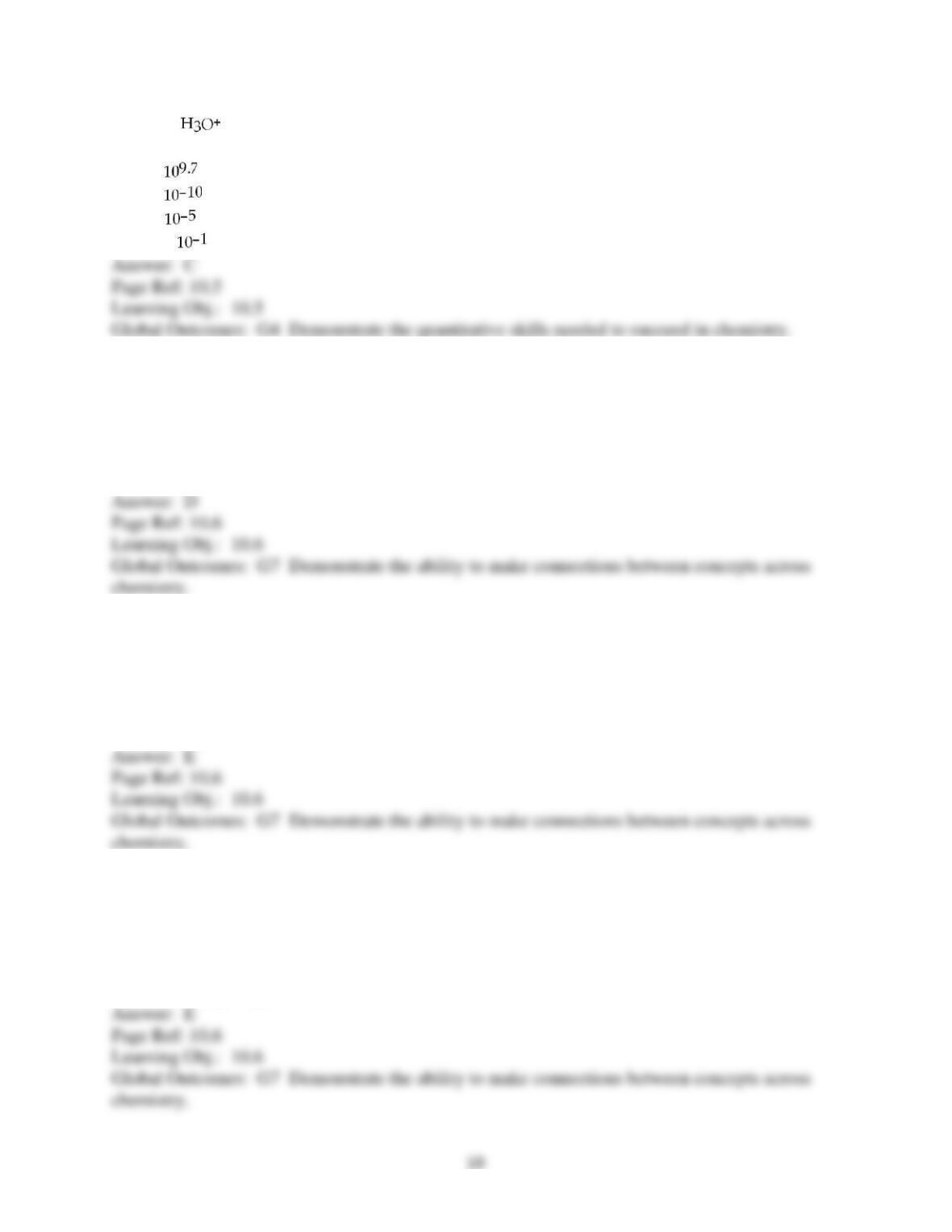
27) The [ ] of a solution with pH = 9.7 is ________.
A) 9.7 M
B) 1 × M
C) 2 × M
D) 5 × M
E) 9.7 × M
28) An acid and base react to form a salt and water in a(n) ________ reaction.
A) ionization
B) dissociation
C) oxidation
D) neutralization
E) reduction
29) In a neutralization reaction ________.
A) two acids react to form water
B) water and a salt react to form an acid and a base
C) an acid and a salt react to form water and a base
D) a base and a salt react to form water and an acid
E) an acid and a base react to form a salt and water
30) When an acid reacts with a metal like Al, the products are ________.
A) water and a base
B) water and a salt
C) water and carbon dioxide
D) a salt and carbon dioxide
E) a salt and hydrogen
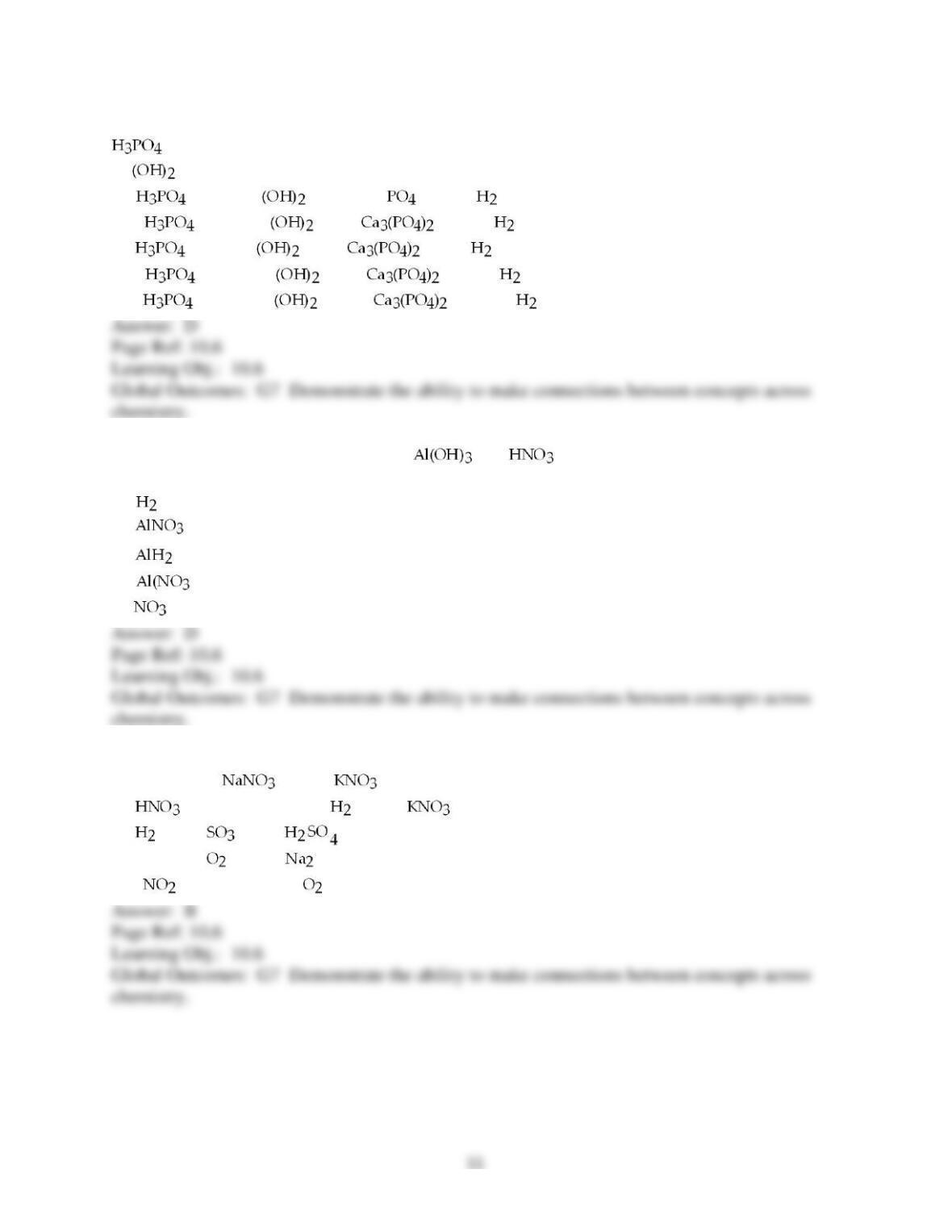
31) Which of the following is the correctly balanced equation for the complete neutralization of
by
Ca ?
A) (aq) + Ca (s) → CaH (aq) + 2 O(l)
B) 3 (aq) + Ca (s) → (aq) + 5 O(l)
C) (aq) + Ca (s) → (aq) + O(l)
D) 2 (aq) + 3Ca (s) → (aq) + 6 O(l)
E) 4 (aq) + 6Ca (s) → 2 (aq) + 12 O(l)
32) The neutralization reaction between and produces the salt with the formula
________.
A) O
B)
C)
D) )3
E) OH
33) Which of the following is a neutralization reaction?
A) KCl (aq) + (aq) → (aq) + NaCl(aq)
B) (aq) + KOH(aq) → O (l) + (aq)
C) O(l) + (g) → (aq)
D) 4Na(s) + (g) → 2 O(s)
E) 2 (g) → 2NO(g) + (g)
34) 25.0 mL of 0.212 M NaOH is neutralized by 13.6 mL of an HCl solution. The molarity of the
HCl solution is ________.
A) 0.212 M
B) 0.115 M
C) 0.500 M
D) 0.390 M
E) 0.137 M
35) A 10.0 mL of 0.121 M H2SO4 is neutralized by 17.1 mL of KOH solution. The molarity of
the KOH solution is ________.
A) 0.207 M
B) 0.414 M
C) 0.0708 M
D) 0.428 M
E) 0.142 M
36) The function of a buffer is to ________.
A) change color at the end point of a titration
B) maintain the pH of a solution
C) be a strong base
D) maintain a neutral pH
E) act as a strong acid
37) Normal blood pH is about ________.
A) 6.8
B) 7.0
C) 7.2
D) 7.4
E) 7.6
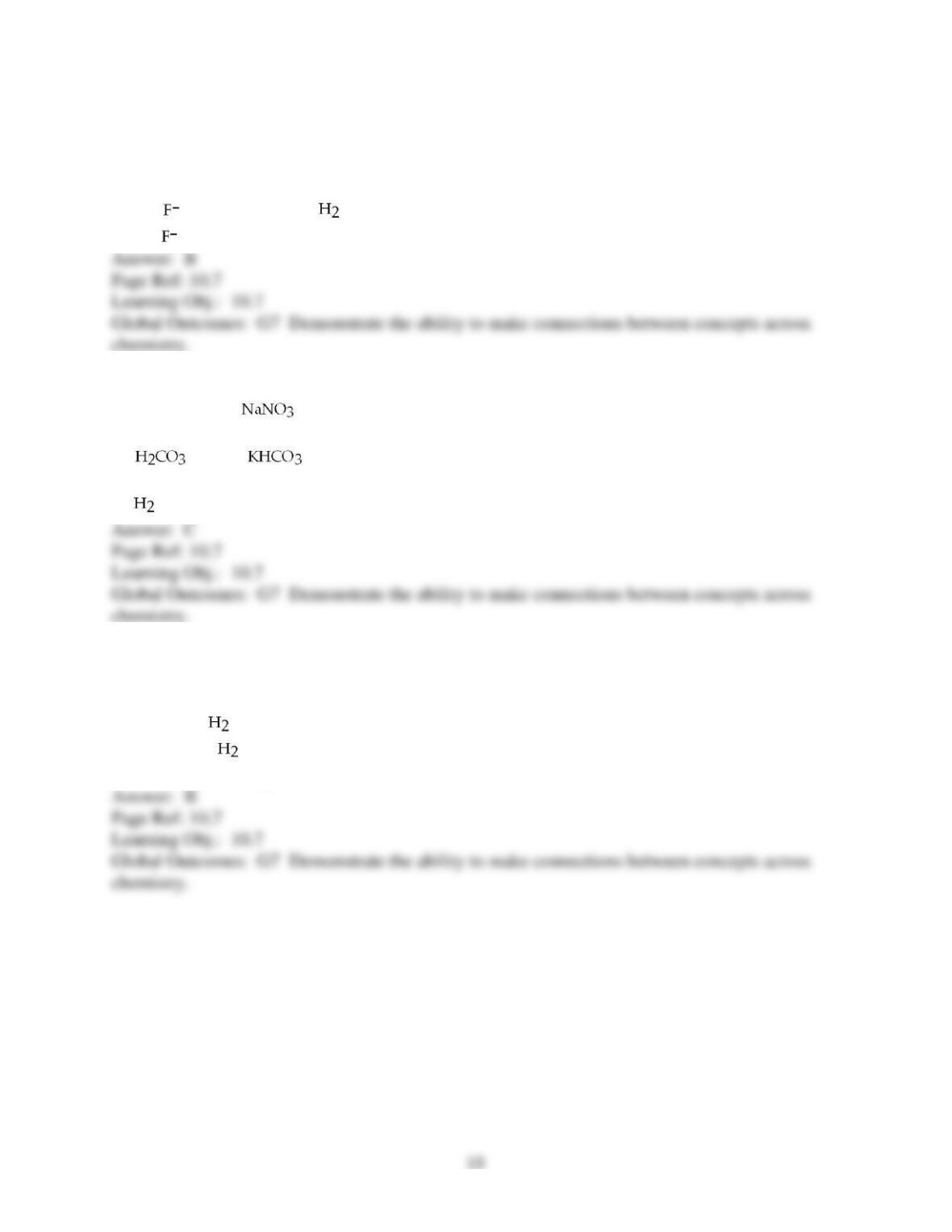
38) In a buffer system of HF and its salt, NaF, ________.
A) the HF neutralizes added acid
B) the HF neutralizes added base
C) the HF is not necessary
D) the neutralizes added O
E) the neutralizes added base
39) Which of the following is a buffer system?
A) NaCl(aq) and (aq)
B) HCl(aq) and NaOH(aq)
C) (aq)and (aq)
D) NaCl(aq) and NaOH(aq)
E) O(l) and HCl(aq)
40) Which of the following could be a buffer?
A) NaF(aq)
B) HF(aq) + NaF(aq)
C) HF(aq) + O(l)
D) NaF(aq) + O(l)
E) NaCl(aq) + HF(aq)
41) What is the name of the medical condition of an asthmatic patient with a blood pH of 7.30?
A) respiratory acidosis
B) respiratory alkalosis
C) metabolic acidosis
D) metabolic alkalosis
E) diabetes mellitus
42) If lung problems like emphysema occur, the blood pH of the patient is expected to ________.
A) saturate
B) increase
C) decrease
D) stay the same
E) concentrate
43) When hyperventilation (rapid breathing) causes a patient to exhale large amounts of , the
blood pH rises in a condition called ________.
A) metabolic acidosis
B) metabolic alkalosis
C) respiratory acidosis
D) respiratory alkalosis
E) pulmonary distress
10.2 True/False Questions
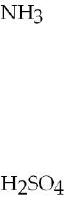
1) The name of S is hydrosulfuric acid.
2) The conjugate base of O is .
3) The conjugate base of HF is F–.
4) HF is a strong acid.
5) HBr is a strong acid.
6) KOH is a strong base.
7) When a system is at equilibrium, all the concentrations are 1 M.
8) A system is at equilibrium when the rate of the forward and reverse reactions are equal.
9) When more reactant is added to a system iat equilibrium, the reverse reaction is favored.
10) In any aqueous solution, = 1.0 × .
11) In any aqueous solution, = .
12) An aqueous solution with = 1.0 × has a pH of 12.0.
13) An acidic solution has a pH less than 7.0.
14) A solution with a pH greater than 7 is basic.
15) For many reactions of acids with bases, the resulting products are a salt and water.
16) Strong acids react with Zn metal to produce H2 gas.
17) If the carbon dioxide level in the blood is too high, more carbonic acid is produced, and this
results in the condition termed acidosis.
18) Alkalosis is the blood condition in which the blood pH is higher than normal.
19) A buffer is a solution that tends to maintain a neutral pH.
18
10.3 Matching Questions
Identify each of the following compounds as an acid, a base, or neither.
A) base
B) neither
C) acid
1) HCl
Page Ref: 10.1
Learning Obj.: 10.1
Global Outcomes: G7 Demonstrate the ability to make connections between concepts across
chemistry.
2) NaOH
Page Ref: 10.1
Learning Obj.: 10.1
Global Outcomes: G7 Demonstrate the ability to make connections between concepts across
chemistry.
3)
Page Ref: 10.1
Learning Obj.: 10.1
Global Outcomes: G7 Demonstrate the ability to make connections between concepts across
chemistry.
4)
Page Ref: 10.1
Learning Obj.: 10.1
Global Outcomes: G7 Demonstrate the ability to make connections between concepts across
chemistry.
5) KOH
Page Ref: 10.1
Learning Obj.: 10.1
Global Outcomes: G7 Demonstrate the ability to make connections between concepts across
chemistry.
6) NaCl
Page Ref: 10.1
Learning Obj.: 10.1
Global Outcomes: G7 Demonstrate the ability to make connections between concepts across
chemistry.

19
7) NaN
Page Ref: 10.1
Learning Obj.: 10.1
Global Outcomes: G7 Demonstrate the ability to make connections between concepts across
chemistry.
8)
Page Ref: 10.1
Learning Obj.: 10.1
Global Outcomes: G7 Demonstrate the ability to make connections between concepts across
chemistry.
Identify the following as acids, bases, or neutral solutions.
A) base
B) acid
C) neutral
9) has a sour taste
Page Ref: 10.1
Learning Obj.: 10.1
Global Outcomes: G7 Demonstrate the ability to make connections between concepts across
chemistry.
10) turns blue litmus paper red
Page Ref: 10.1
Learning Obj.: 10.1
Global Outcomes: G7 Demonstrate the ability to make connections between concepts across
chemistry.
11) O
Page Ref: 10.1
Learning Obj.: 10.1
Global Outcomes: G7 Demonstrate the ability to make connections between concepts across
chemistry.
12)
Page Ref: 10.1
Learning Obj.: 10.1
Global Outcomes: G7 Demonstrate the ability to make connections between concepts across
chemistry.

13) contains more hydronium ions than hydroxide ions
Page Ref: 10.4
Learning Obj.: 10.4
Global Outcomes: G7 Demonstrate the ability to make connections between concepts across
chemistry.
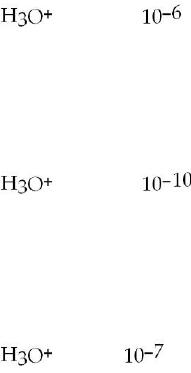
14) [ ] = 3.4 × M
Page Ref: 10.4
Learning Obj.: 10.4
Global Outcomes: G7 Demonstrate the ability to make connections between concepts across
chemistry.
15) [ ]= 2.8 × M
Page Ref: 10.4
Learning Obj.: 10.4
Global Outcomes: G7 Demonstrate the ability to make connections between concepts across
chemistry.
16) [ ] = 1.0 × M
Page Ref: 10.4
Learning Obj.: 10.4
Global Outcomes: G7 Demonstrate the ability to make connections between concepts across
chemistry.
17) has a pH = 4.5
Page Ref: 10.5
Learning Obj.: 10.5
Global Outcomes: G7 Demonstrate the ability to make connections between concepts across
chemistry.
18) pH =9.0
Page Ref: 10.5
Learning Obj.: 10.5
Global Outcomes: G7 Demonstrate the ability to make connections between concepts across
chemistry.
21
In the following solutions, is the [OH-] greater than, less than, or equal to the [H3O+]?
A) greater than
B) less than
C) equal to
19) acid
Page Ref: 10.3
Learning Obj.: 10.3
Global Outcomes: G7 Demonstrate the ability to make connections between concepts across
chemistry.
20) base
Page Ref: 10.3
Learning Obj.: 10.3
Global Outcomes: G7 Demonstrate the ability to make connections between concepts across
chemistry.
21) [ ] = 1.0 × M
Page Ref: 10.3
Learning Obj.: 10.3
Global Outcomes: G7 Demonstrate the ability to make connections between concepts across
chemistry.
22) [ ] = 1.0 × M
Page Ref: 10.3
Learning Obj.: 10.3
Global Outcomes: G7 Demonstrate the ability to make connections between concepts across
chemistry.
23) [ ] = 1 × M
Page Ref: 10.3
Learning Obj.: 10.3
Global Outcomes: G7 Demonstrate the ability to make connections between concepts across
chemistry.
24) pH = 2
Page Ref: 10.3
Learning Obj.: 10.3
Global Outcomes: G7 Demonstrate the ability to make connections between concepts across
chemistry.

22
25) pH = 9
Page Ref: 10.3
Learning Obj.: 10.3
Global Outcomes: G7 Demonstrate the ability to make connections between concepts across
chemistry.