
110.
On October 1, 2015, Jack Company issued a $5,000, 6%, bond payable. The interest is payable
annually each September 30 and the bond matures in five years. The annual accounting
period for the company ends December 31.
Required:
Complete the following entries at the date specified under three different assumptions as to
the issue price. Use straight-line amortization. Assume no adjusting entries have been made
during the year.
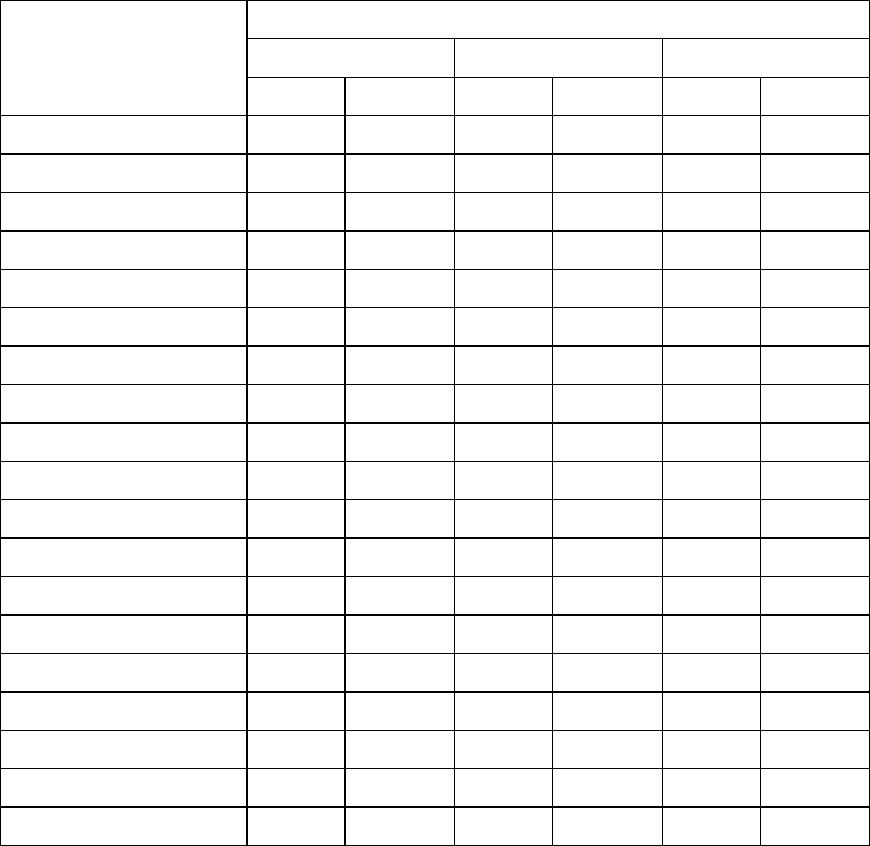
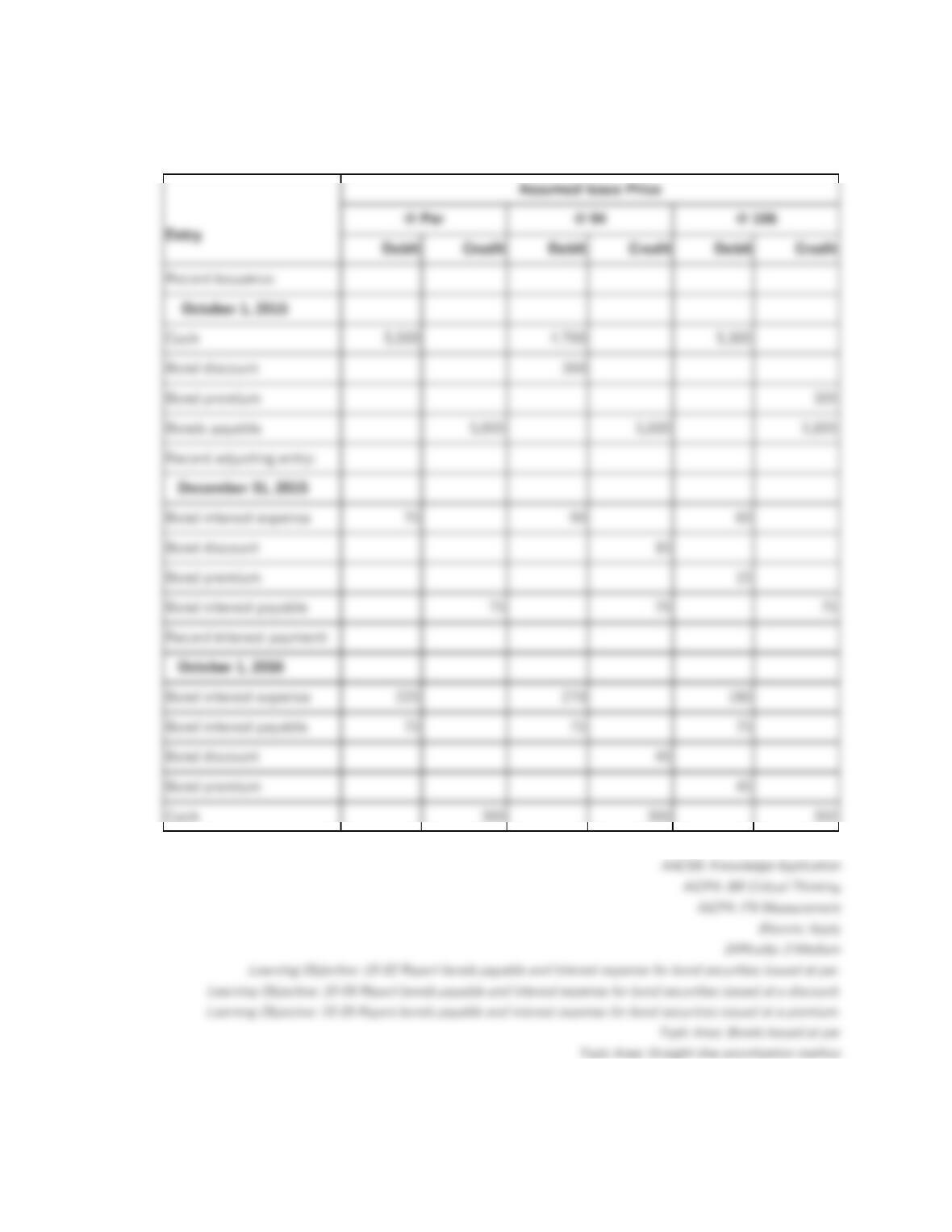
Entry
Assumed Issue Price
@ Par
@ 94
@ 106
Debit
Credit
Debit
Credit
Debit
Credit
Record issuance:
October 1, 2015
Cash
Bond discount
Bond premium
Bonds payable
Record adjusting entry:
December 31, 2015
Bond interest expense
Bond discount
Bond premium
Bond interest payable
Record interest payment:
October 1, 2016
Bond interest expense
Bond interest payable
Bond discount
Bond premium
Cash
111.
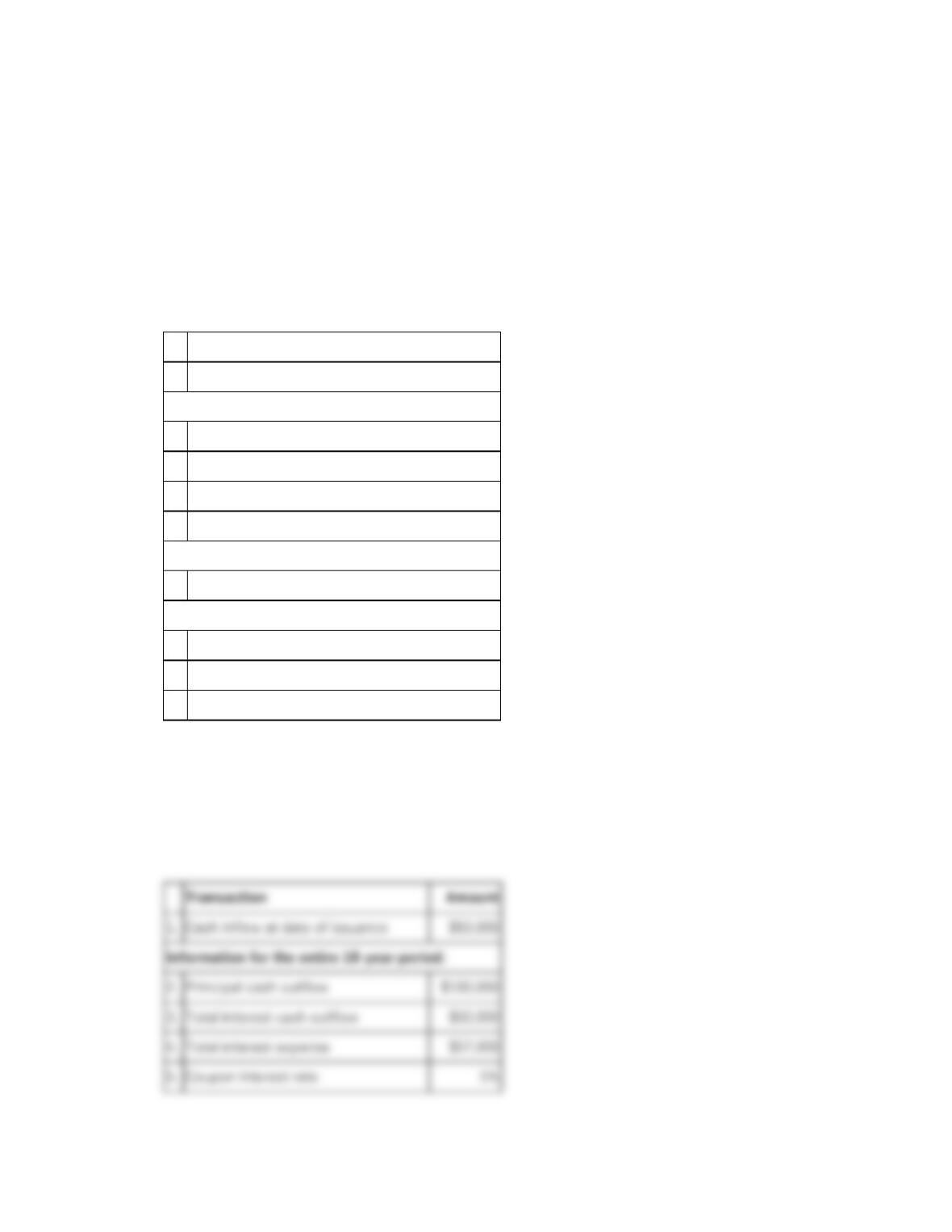
Ridgetop Company issued the following ten-year bonds on January 1, 2016: $100,000 maturity
value, 5% interest payable annually on each December 31. The bonds were dated January 1,
2016 and the accounting period ends December 31. The bonds were issued for $93,000.
Ridgetop uses the effective-interest method for amortization. The amortization for 2016 was
$580.
Required:
A.
Determine the following:
1.
Cash inflow at date of issuance
Information for the entire 10-year period:
2.
Principal cash outflow
3.
Total interest cash outflow
4.
Total interest expense
5.
Coupon interest rate
Income statement for the year 2016:
6.
Interest expense for 2016
Balance Sheet at December 31, 2016:
7.
Bonds payable
8.
Unamortized amount of discount
9.
Net book value of bonds
A.
1.
Cash inflow at date of issuance
2.
Principal cash outflow
3.
Total interest cash outflow
4.
Total interest expense
112.
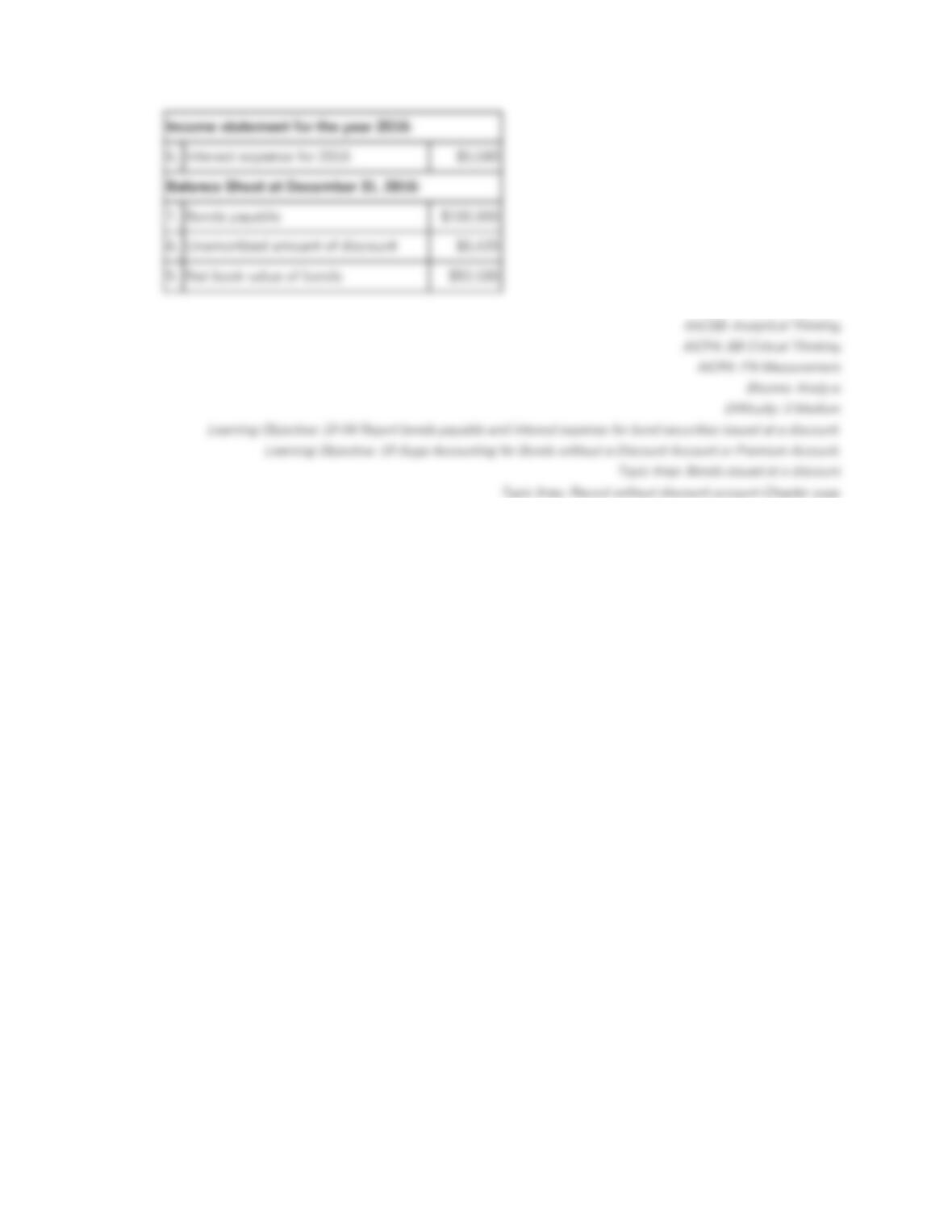
Steamboat Company issued the following ten-year bonds on January 1, 2016: $100,000
maturity value, 6% interest payable annually on each December 31. The bonds were dated
January 1, 2016 and the accounting period ends December 31. The bonds were issued for
$93,000. Steamboat uses the effective-interest method for amortization. The amortization for
2016 was $510.
Required:
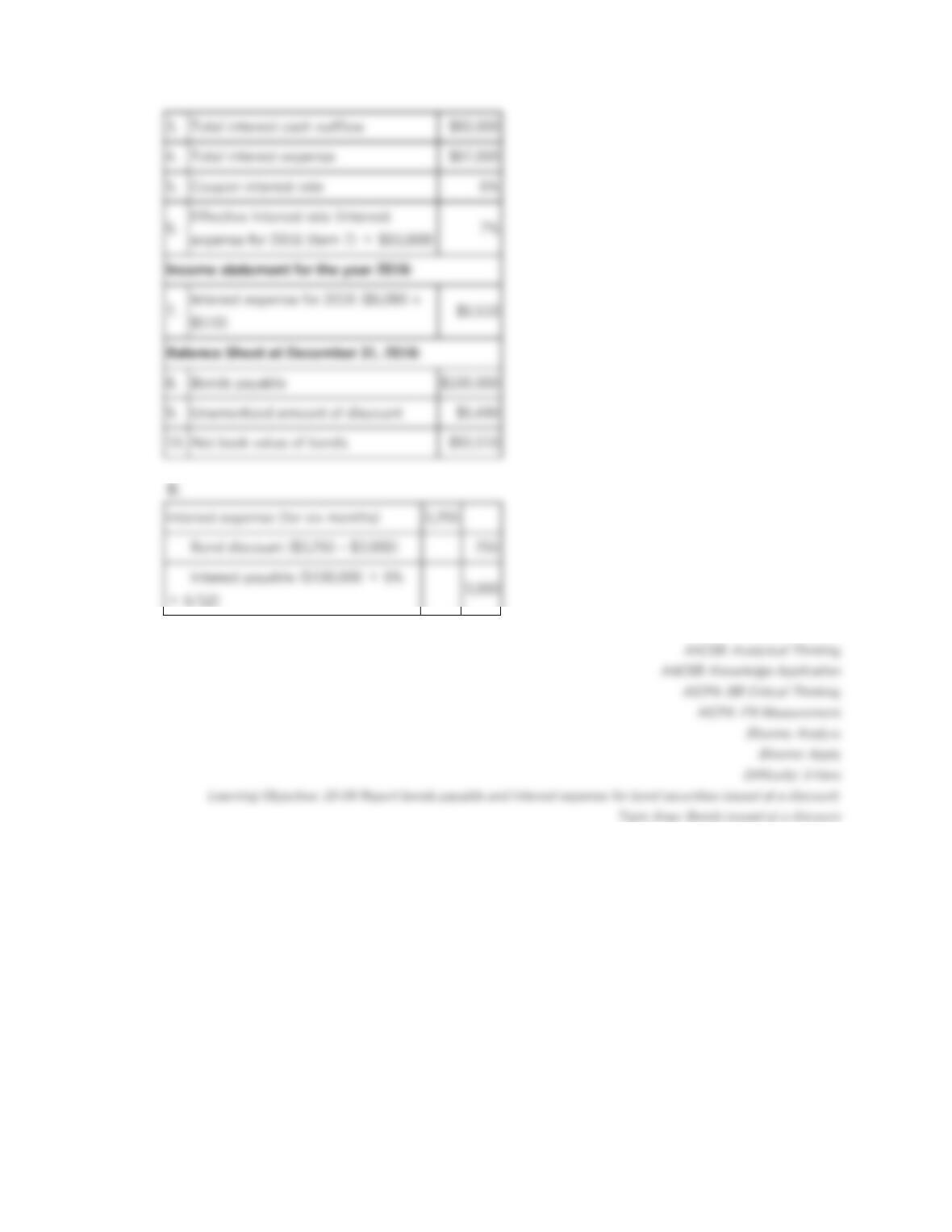
A.
Determine the following:
1.
Cash inflow at date of issuance
Information for the entire 10-year period:
2.
Principal cash outflow
3.
Total interest cash outflow
4.
Total interest expense
5.
Coupon interest rate
6.
Effective interest rate
Income statement for the year 2016:
7.
Interest expense for 2016
Balance Sheet at December 31, 2016:
8.
Bonds payable
9.
Unamortized amount of discount
10.
Net book value of bonds
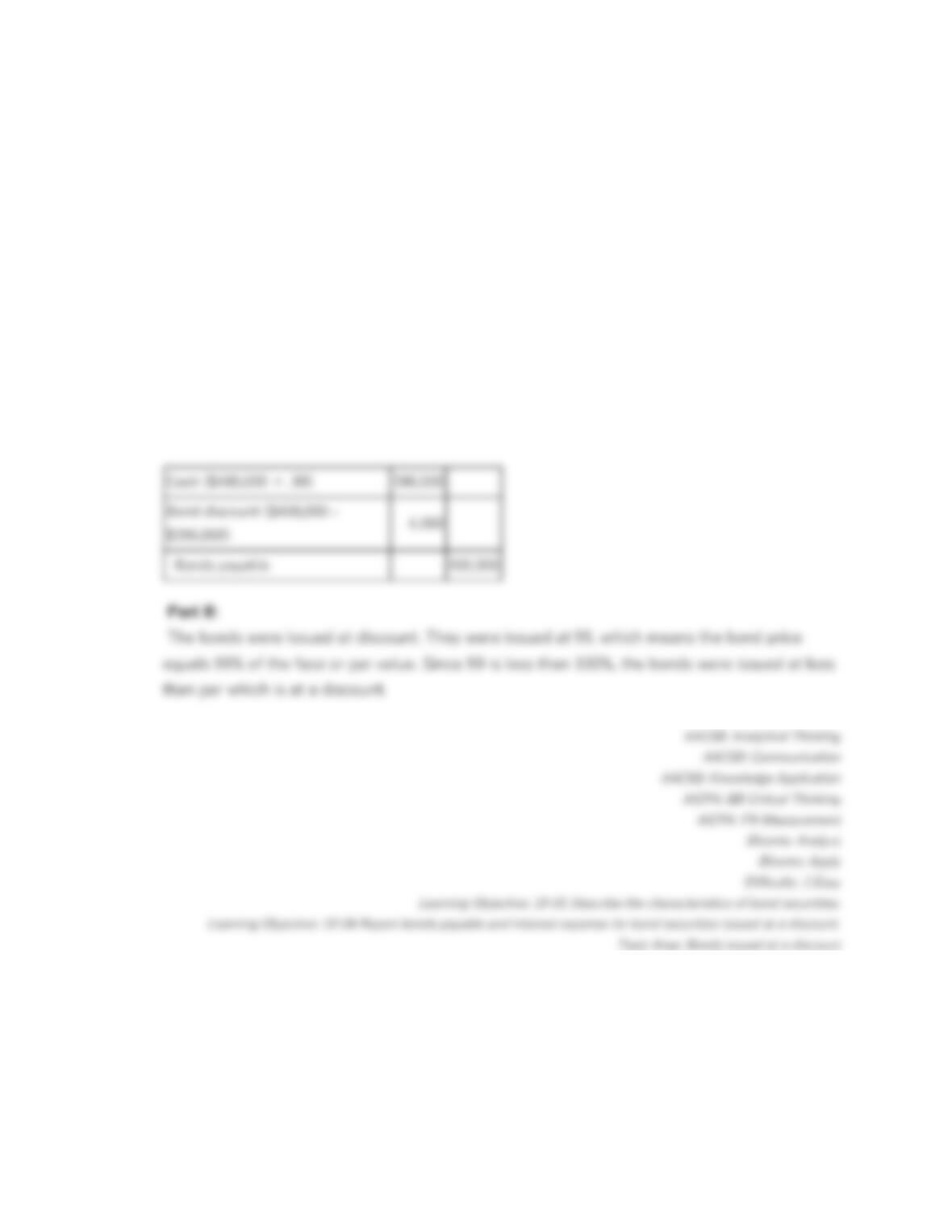
B. Assuming instead that the accounting period ends on June 30, prepare the adjusting entry
related to interest expense and the interest accrual at June 30. No adjusting entries have
been made during the year.
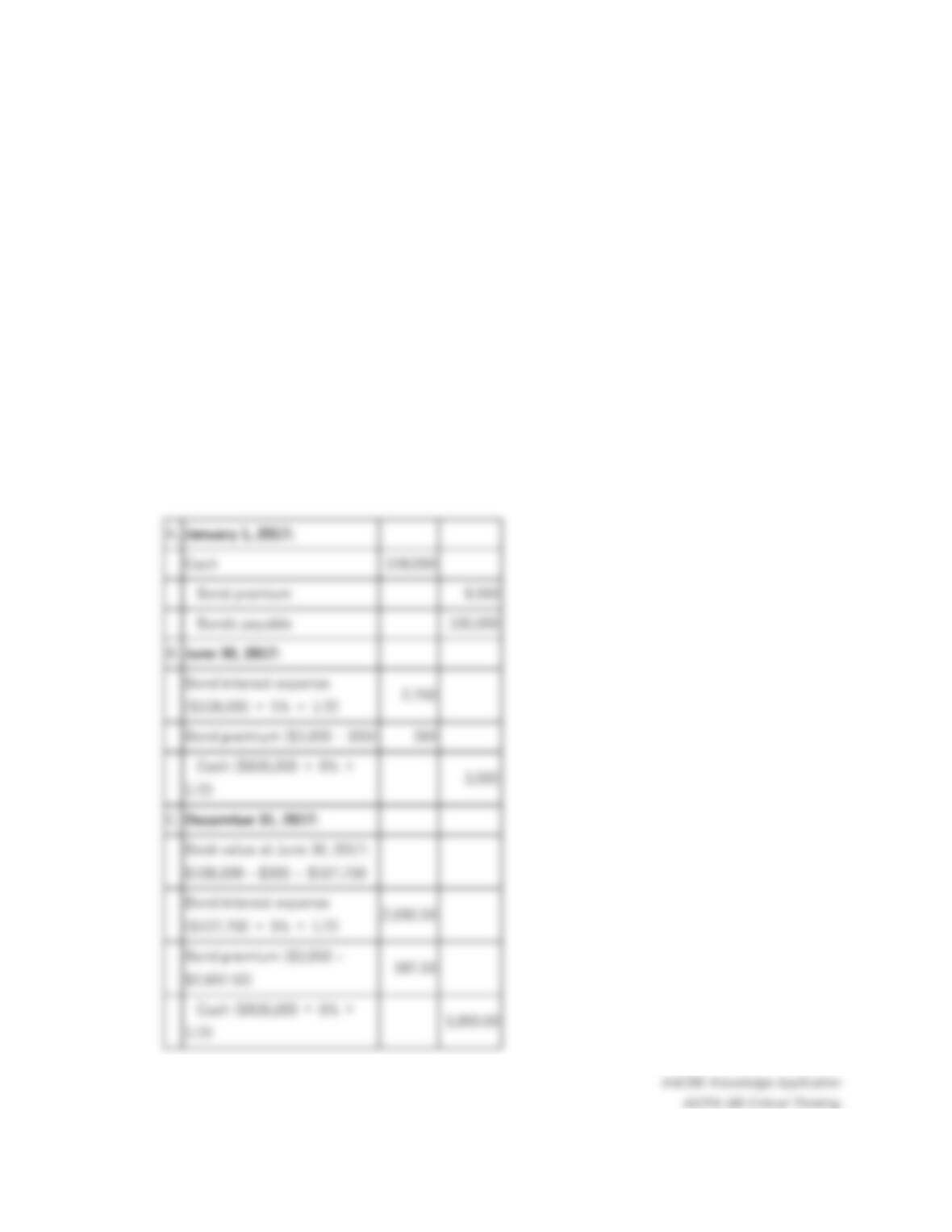
A.
1.
Cash inflow at date of issuance
113.
On January 1, 2016, Mendez Company issued 400 of its $1,000, ten-year, 9% bonds. The
bonds were dated January 1, 2016, and interest is paid annually each December 31. The
bonds were issued at 99.
Required:
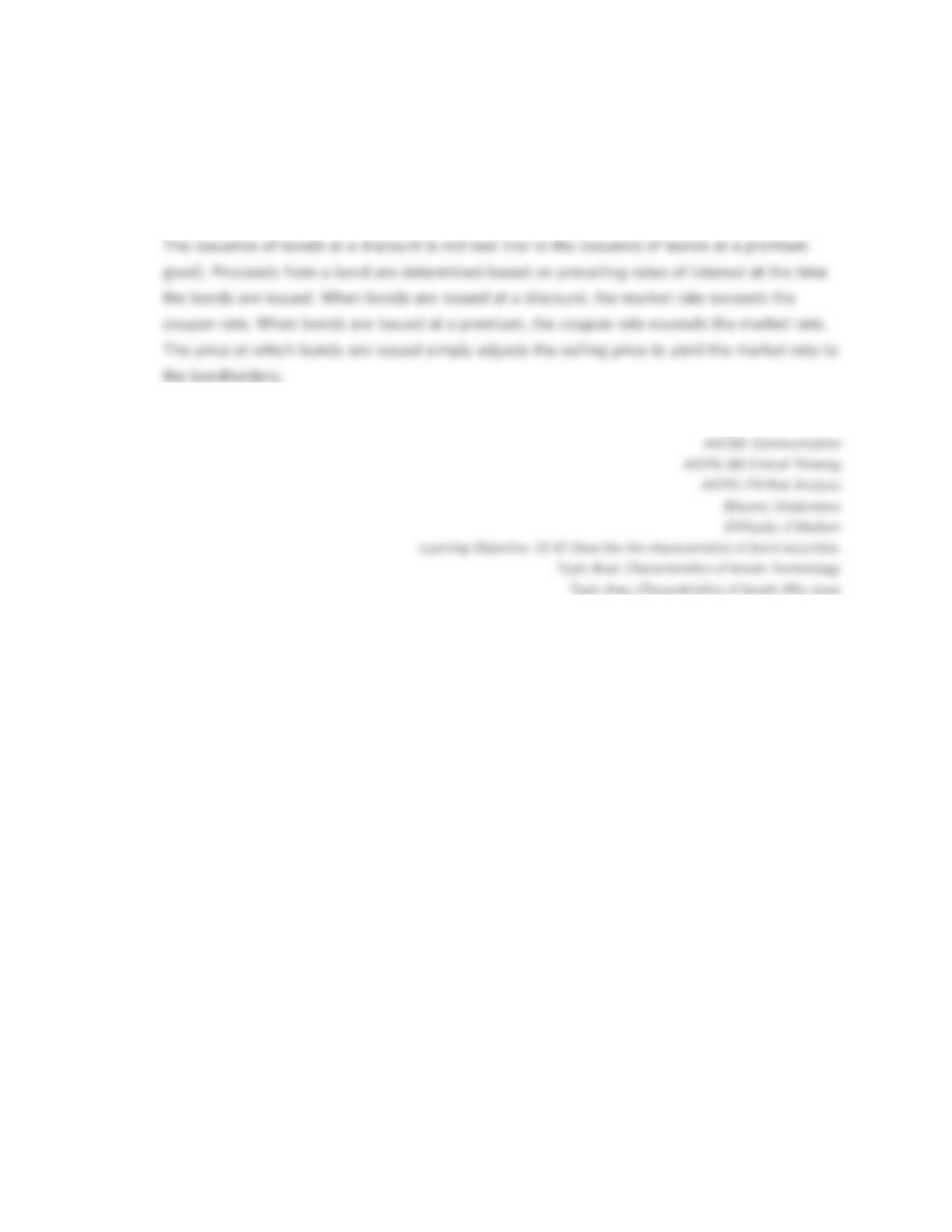
Part A: Prepare the entry to record the issuance of the bonds on January 1, 2016:
Part B: Were the bonds issued at par, at a premium, or at a discount? How did you arrive at
your answer?
Part A:
114.
Consider the following statement: “Issuing bonds at a discount is bad for the issuing
company.” Discuss the statement and comment on its validity.
115.
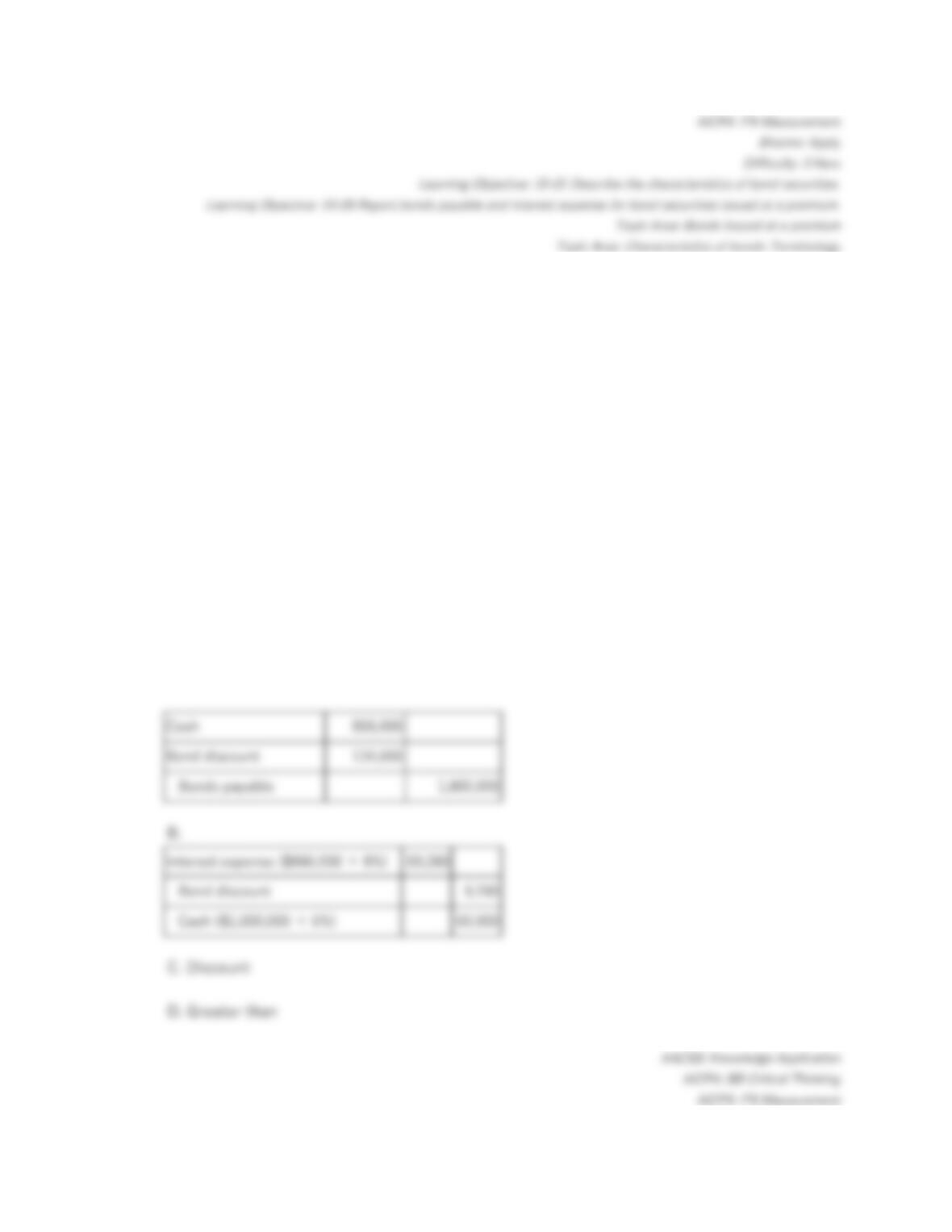
On January 1, 2017, Simmons Company issued $100,000 of its ten-year, 6% bonds payable at
$108,000 to yield a market rate of 5%. The bonds were dated January 1, 2017, and interest is
paid semi-annually on each June 30 and each December 31. The effective interest method is
used for amortization and no adjusting journal entries were made during the year.
Required:
A. Prepare the journal entry for the sale of the bonds.
B. Prepare the journal entry to record the first interest payment and include the appropriate
date before the entry.
C. Prepare the journal entry to record the second interest payment and include the
appropriate date before the entry.
116.
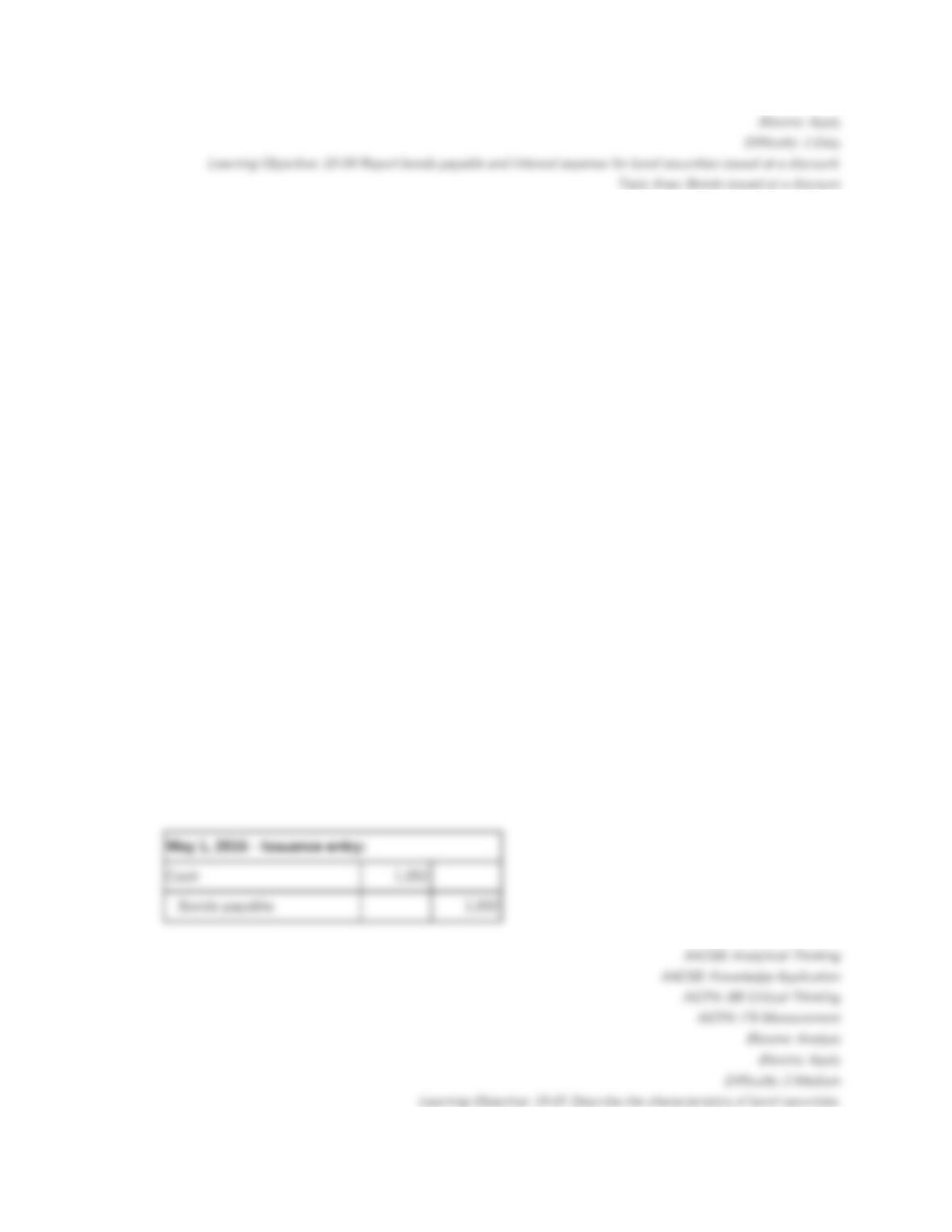
Harriman Company authorized a $1,000,000, 10-year, 6% bond issue dated January 1, 2016,
when the market rate was 8%. Annual interest will be paid each December 31. On January 1,
2016, the bonds were issued for $866,000. Harriman Company has a December 31 year-end.
Required:
A. Prepare the journal entry to record the sale of the bonds.
B. Prepare the required journal entry on December 31, 2016 to record amortization using the
effective interest method. No adjusting journal entries were made during the year.
C. Was the bond issued at par, at a discount, or at a premium?
D. Will interest expense over the life of the bond be greater than, or less than, the total cash
payment for interest over the life of the bond?
A.
117.
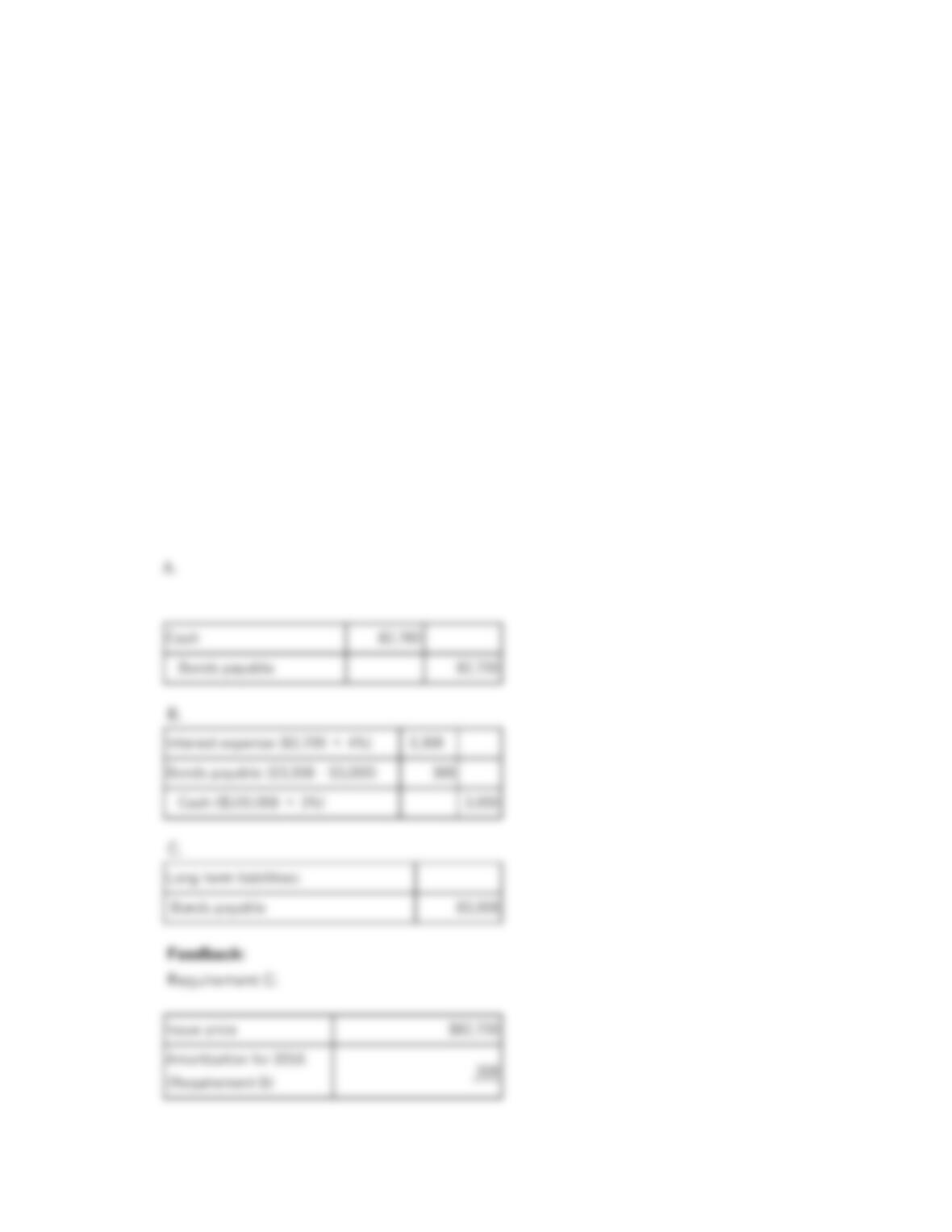
On May 1, 2016, Jaspo, Inc. issued a $1,000, 5%, five–year bond for $1,092 when the market
rate was 3%. The bond was dated on May 1, 2016, and interest is payable each April 30.
Jaspo, Inc. has a December 31 year-end and uses the effective interest method of
amortization. Jaspro does not use a discount or a premium account for bonds in its accounting
records.
Required:
A. Prepare the journal entry required on May 1, 2016.
B. Prepare the journal entry required on December 31, 2016. No adjusting journal entries
were made during the year. Round the entry items to whole dollar amounts.
C. Prepare the entry required on April 30, 2017. Round the entry items to whole dollar
amounts.
D. Was the bond issued at par, at a premium, or at a discount?
E. What is the carrying value (book value) of the bond at December 31, 2016? Round your
answer to a whole dollar amount.
F. Where in the financial statements does the carrying value of the bond appear? (Be
specific).
G. On what date does the bond issue mature?
A.

118.
Southridge Company prepared a bond issue dated January 1, 2016. On January 1, 2016, the
company issued $100,000 of its par value bonds for $82,700. The bonds mature in thirty years
and have a coupon rate of interest of 3% per year and the market rate at the date of issue is
4%. Interest is payable annually on December 31 which is also the year-end date for
Southridge. Southridge does not use a discount or a premium account in its records. The
effective interest method of amortization is used. Round the entry items to the nearest whole
dollar amounts.
Required:
A. Prepare the journal entry to record the sale of bonds on January 1, 2016.
B. Prepare the journal entry to record interest expense at December 31, 2016. No adjusting
journal entries have been made during the year.
C. Show how the bonds would be reported on the balance sheet of Southridge Company at
December 31, 2016.