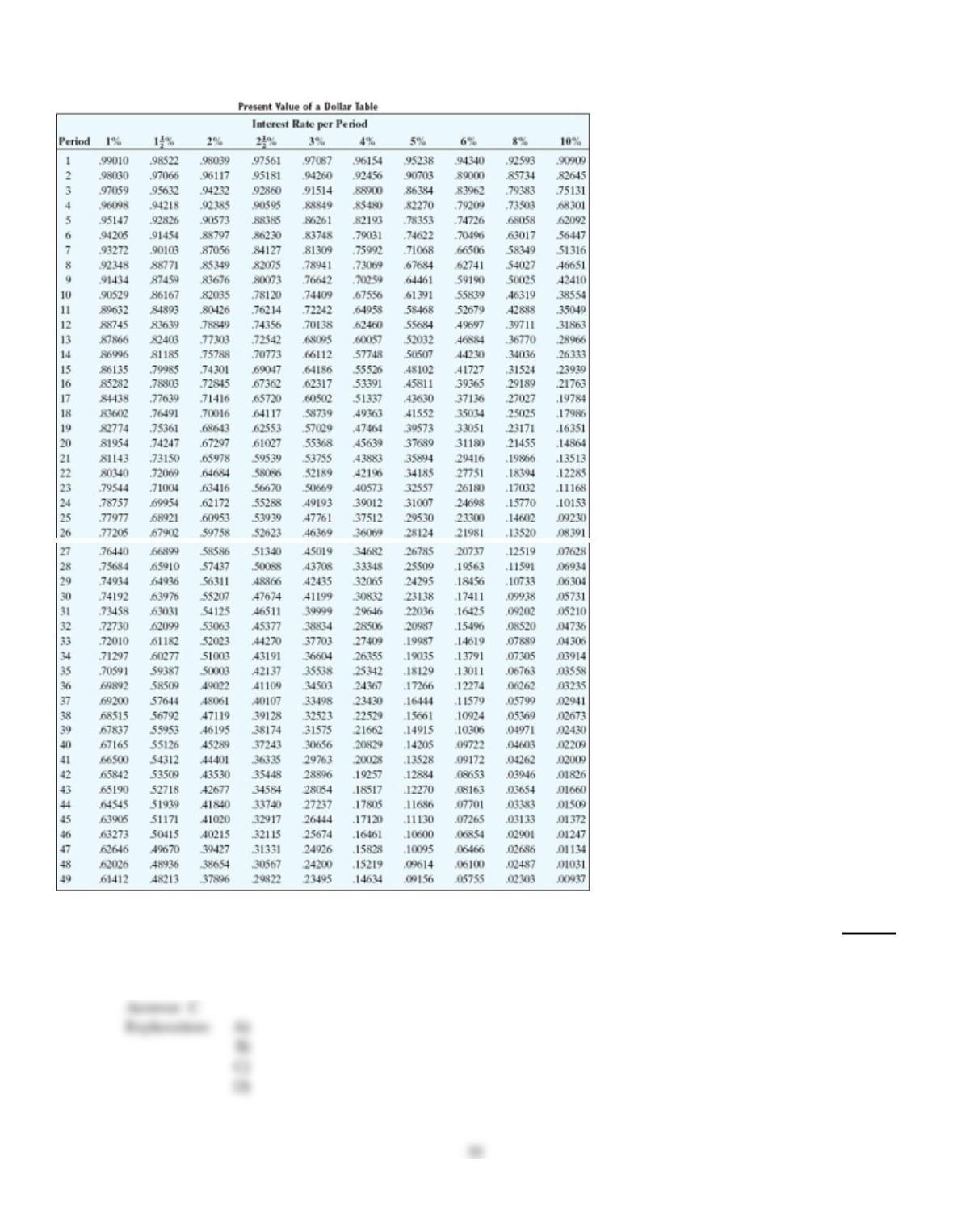
Find the present value. Round to the nearest cent.
42)
Amount Needed Time (Years) Interest Compounded
$18,000 10 10% semiannually
42)
A)
$11,215.98
B)
$6939.78
C)
$6784.02
D)
$47,759.36
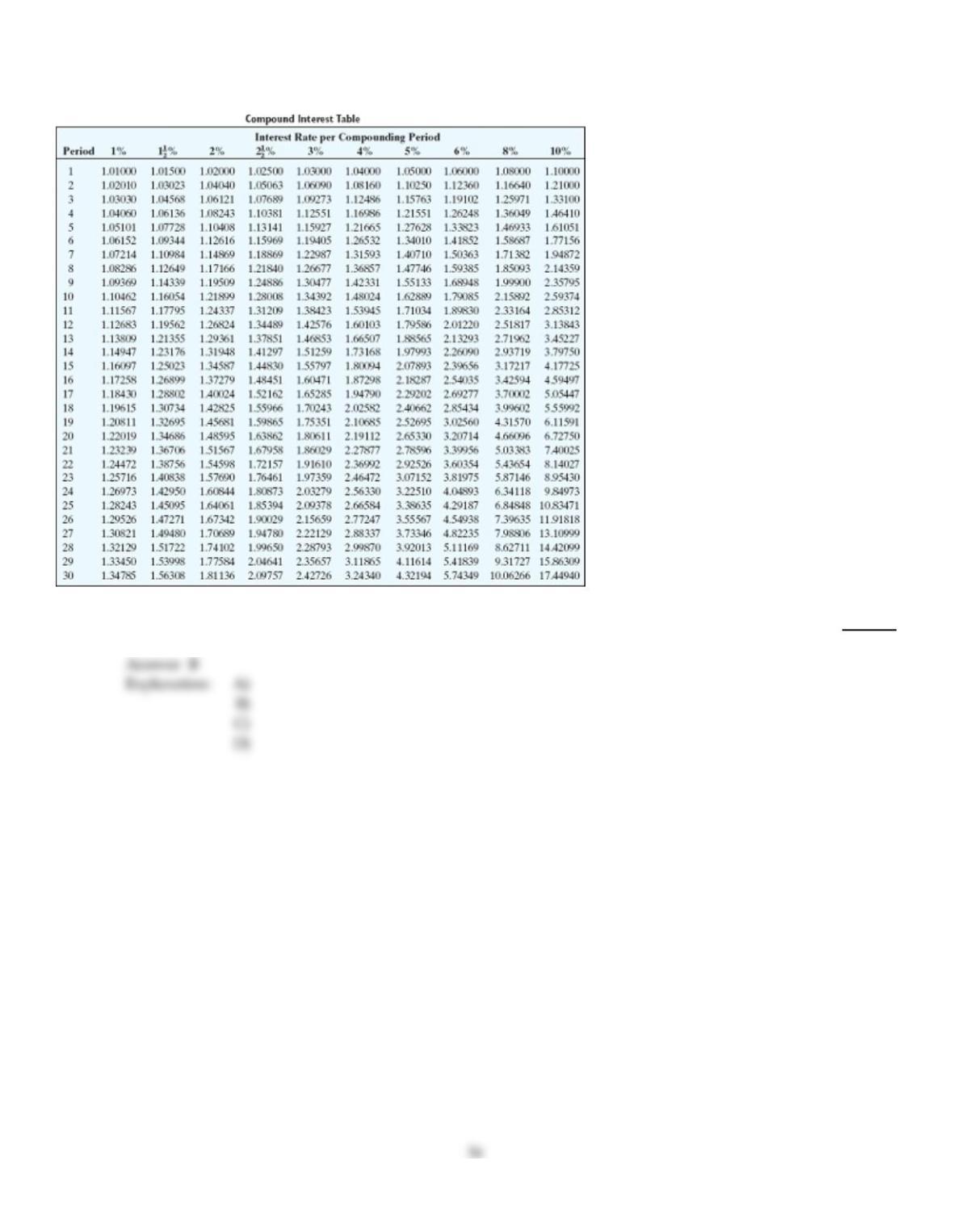
Use values from the compound interest table to find the compound interest. Round to the nearest cent.
43)
$1220 at 6% compounded semiannually for 5 years
43)
A)
$412.64
B)
$419.58
C)
$366.00
D)
$194.31
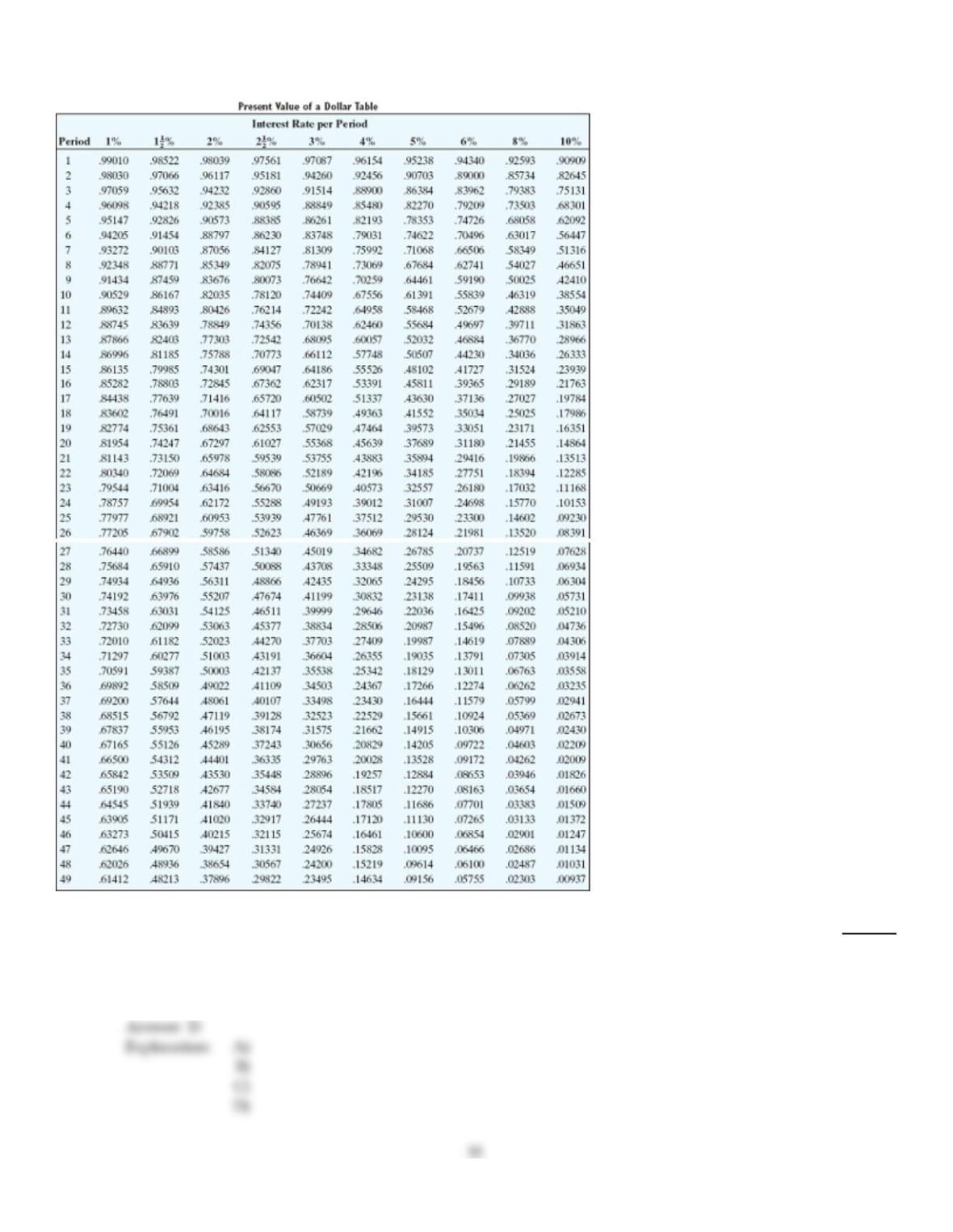
Solve the problem.
44)
A note is due in 4 years, with interest of 6% compounded semiannually. The face value of the note
is $26,000. Find the maturity value of the note and find the minimum sale price of the note if money
can be deposited at 4% compounded quarterly. Use the compound interest table.
44)
A)
$41,440.05, $28,088.54
B)
$32,936.02, $23,992.11
C)
$29,288.81, $24,978.12
D)
$32,936.02, $28,088.50
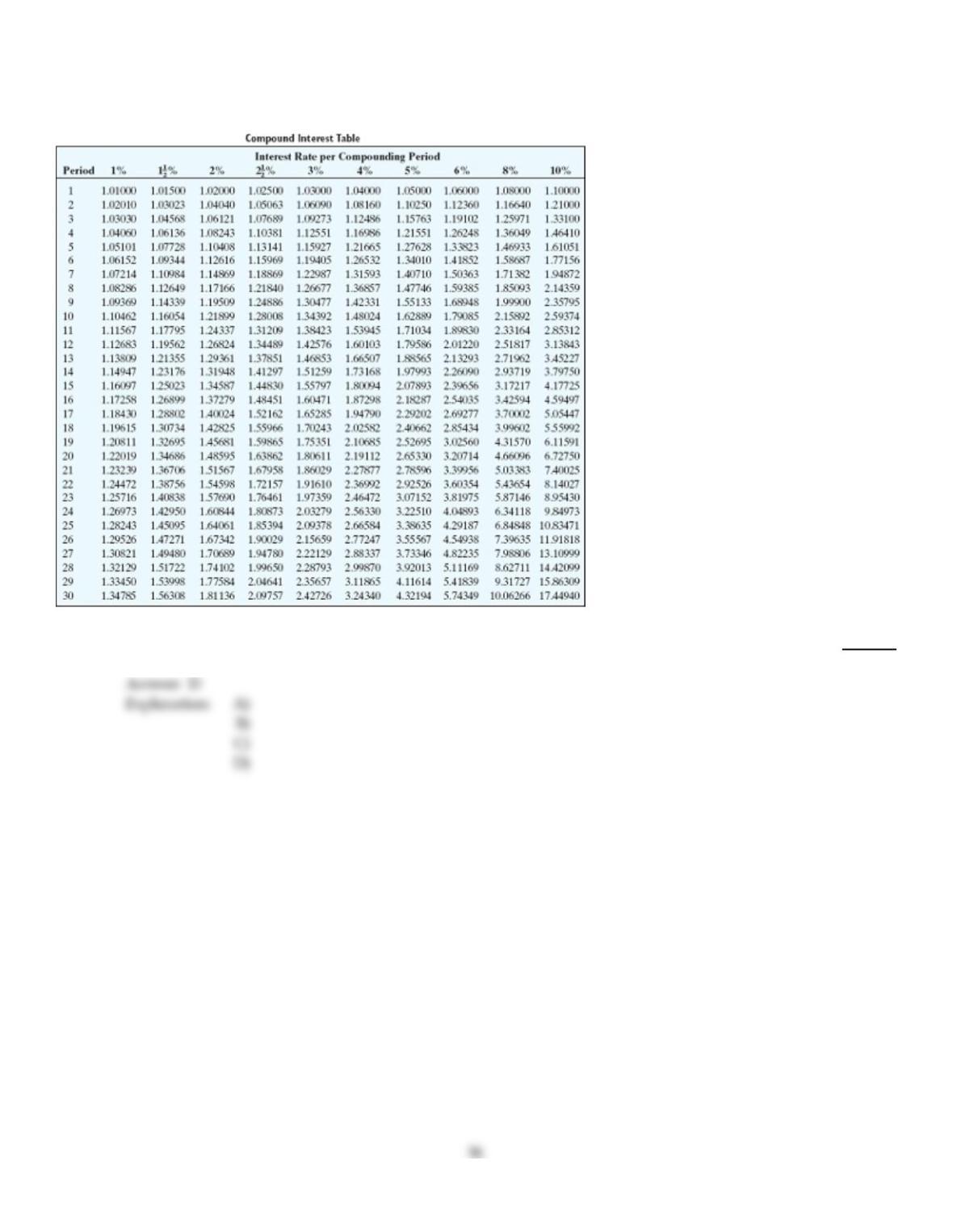
Find the simple interest for the period indicated. Then use table values to find the compound interest. Finally, find the
difference between compound interest and simple interest. Round to the nearest cent. (Interest is compounded
annually.)
45)
Principal: $6761 Rate: 6% Years: 20
45)
A)
$5987.54
B)
$13,570.24
C)
$5457.04
D)
$6809.27
D
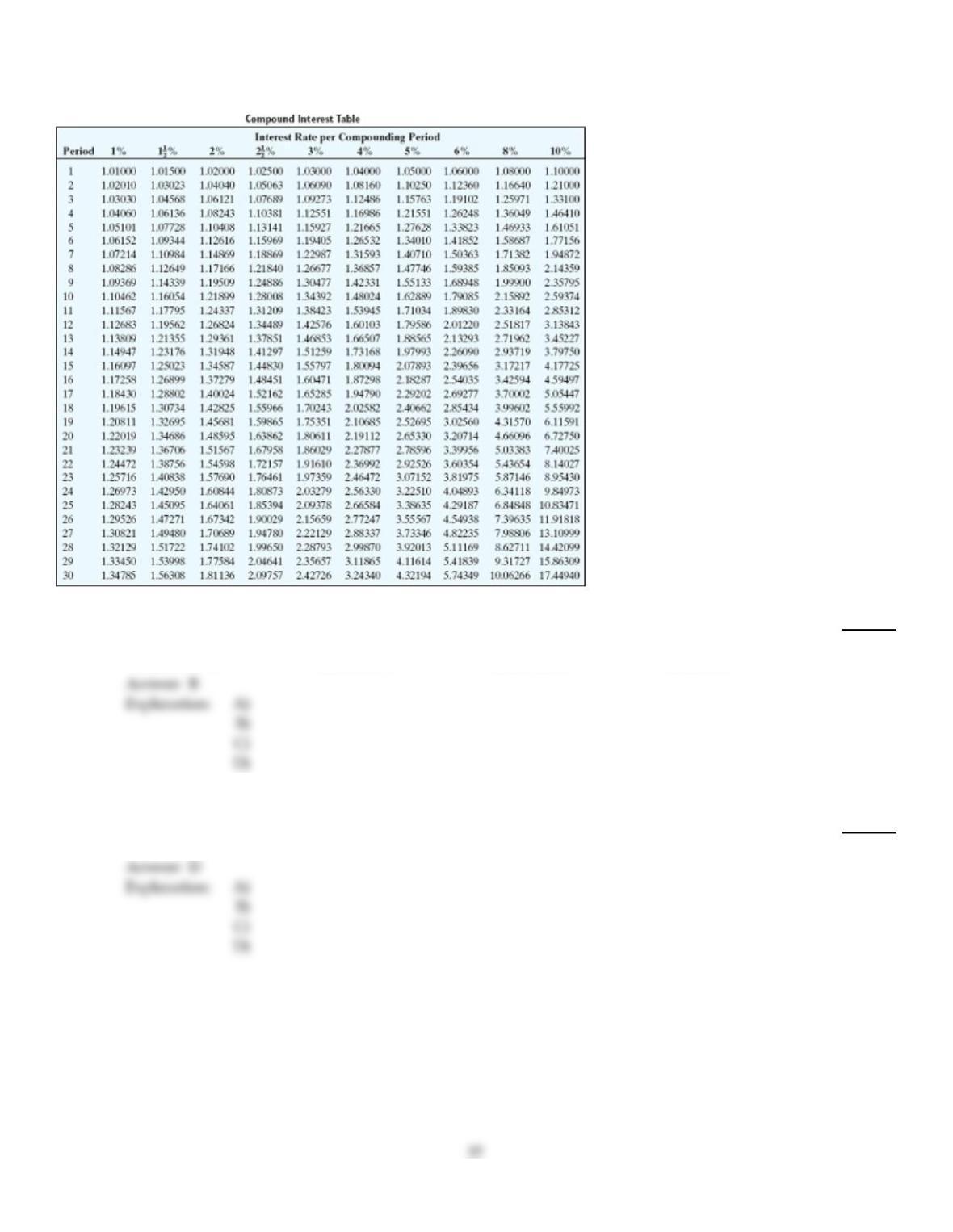
Use the table to solve the problem. Round to the nearest cent.
46)
John Lee’s savings account has a balance of $4723. After 10 years, what will the amount of interest
be at 5% compounded semiannually?
46)
A)
$2970.27
B)
$3016.20
C)
$1322.84
D)
$2361.50
Find the compound interest earned. Round to the nearest cent. Do not use an interest table.
47)
$19,000 at 6% compounded annually for 3 years
47)
A)
$2348.40
B)
$3420.00
C)
$1141.50
D)
$3629.30
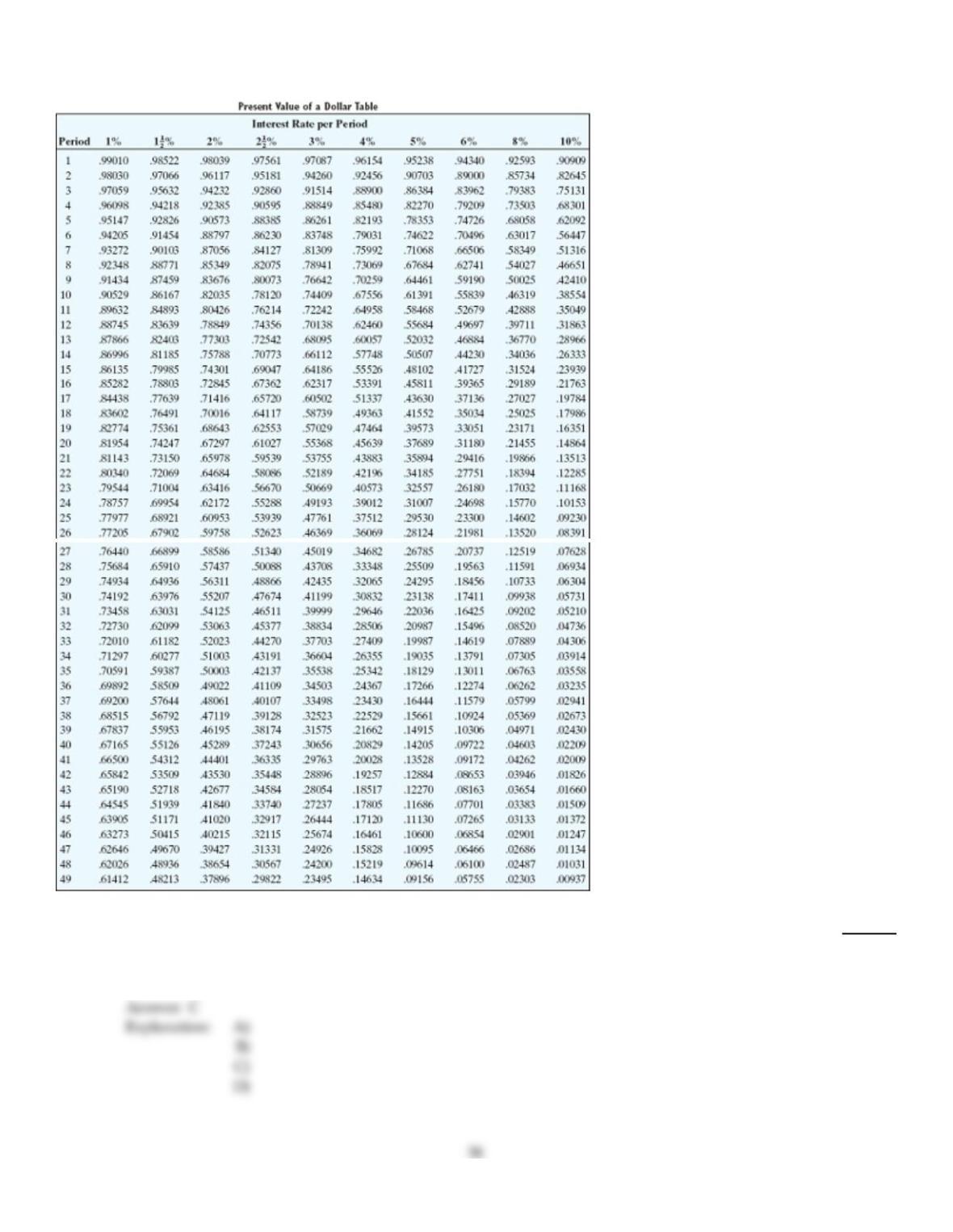
Find the present value. Round to the nearest cent.
48)
Amount Needed Time (Years) Interest Compounded
$3000 910% semiannually
48)
A)
$1753.44
B)
$7219.86
C)
$1246.56
D)
$1272.29
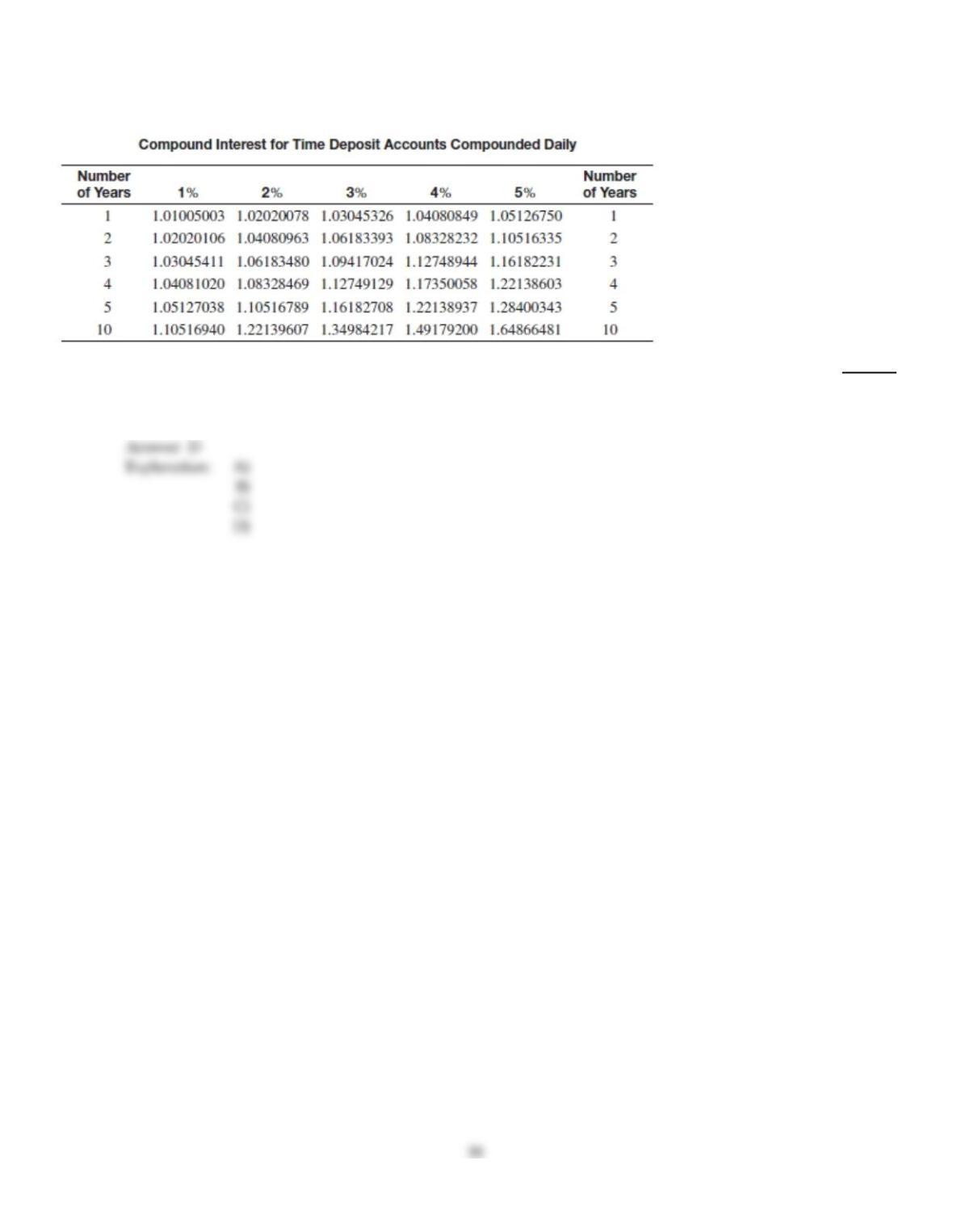
Find the compound amount for the certificate of deposit. Assume daily compounding using the following table. Round
to the nearest cent.
49)
Amount: $9800
Rate: 2%
Years: 4
49)
A)
$13,228.45
B)
$11,969.68
C)
$10,405.98
D)
$10,616.19
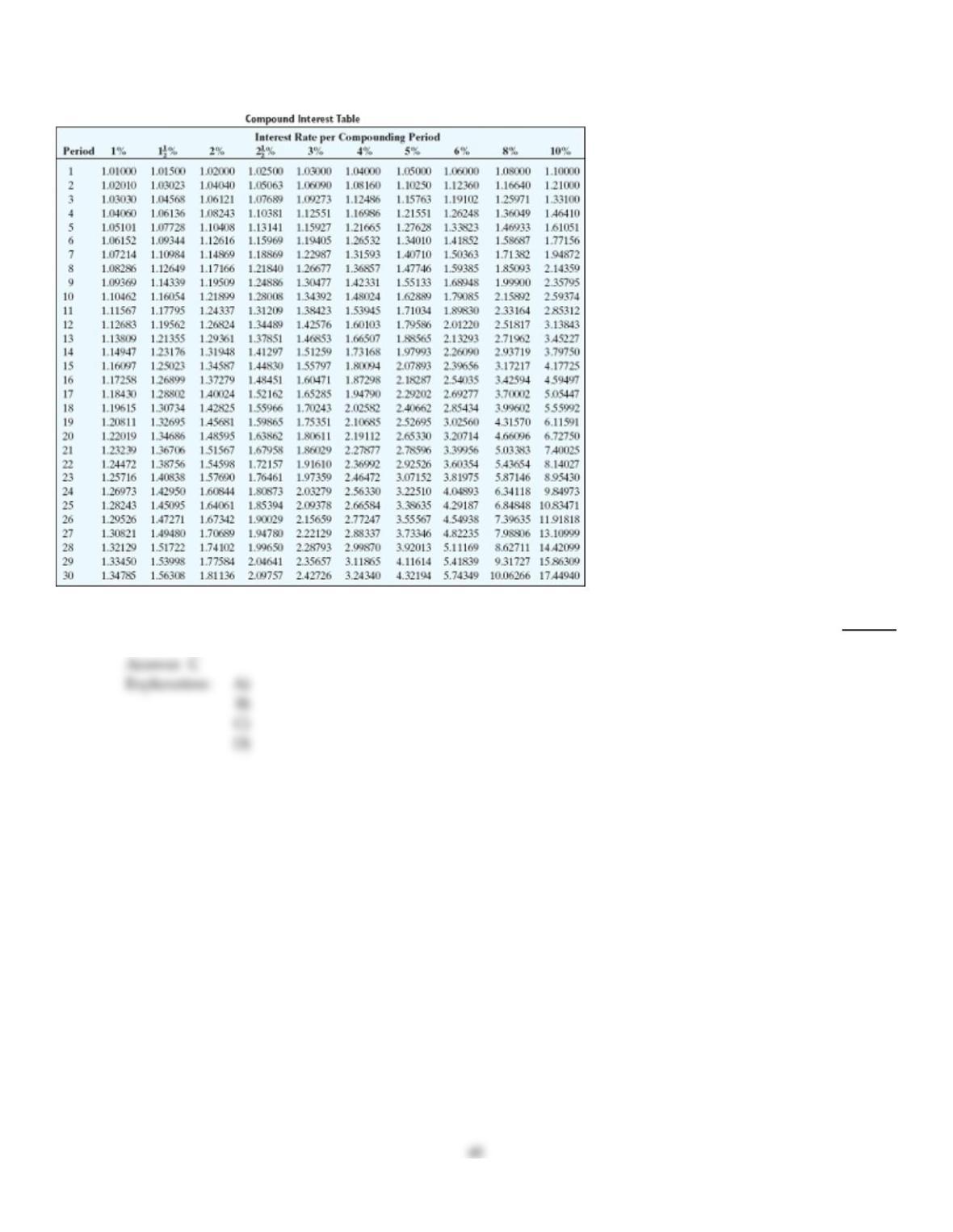
Use values from the compound interest table to find the compound amount. Round to the nearest cent.
50)
$1380 at 5% compounded annually for 19 years
50)
A)
$2691.00
B)
$3321.13
C)
$3487.19
D)
$2622.00
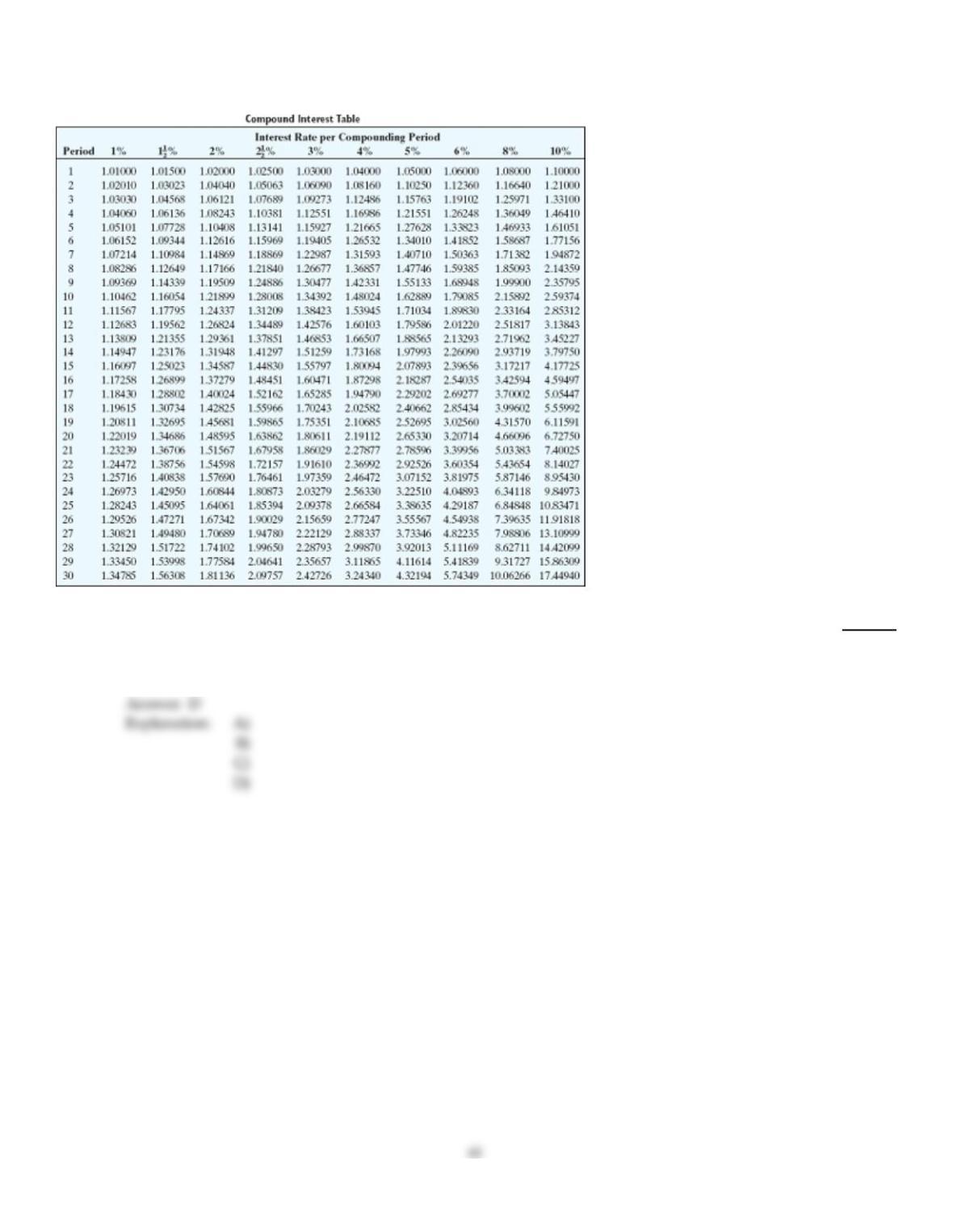
Use the table to solve the problem. Round to the nearest cent.
51)
Jenny Sherrer has $15,000 to invest and believes that she will earn 8% compounded semiannually.
Find the compound amounts if she invests for 2 years and for 9 years. Then find the additional
amount earned due to the longer period.
51)
A)
$14,163.30
B)
$5125.65
C)
$39,532.95
D)
$12,839.40
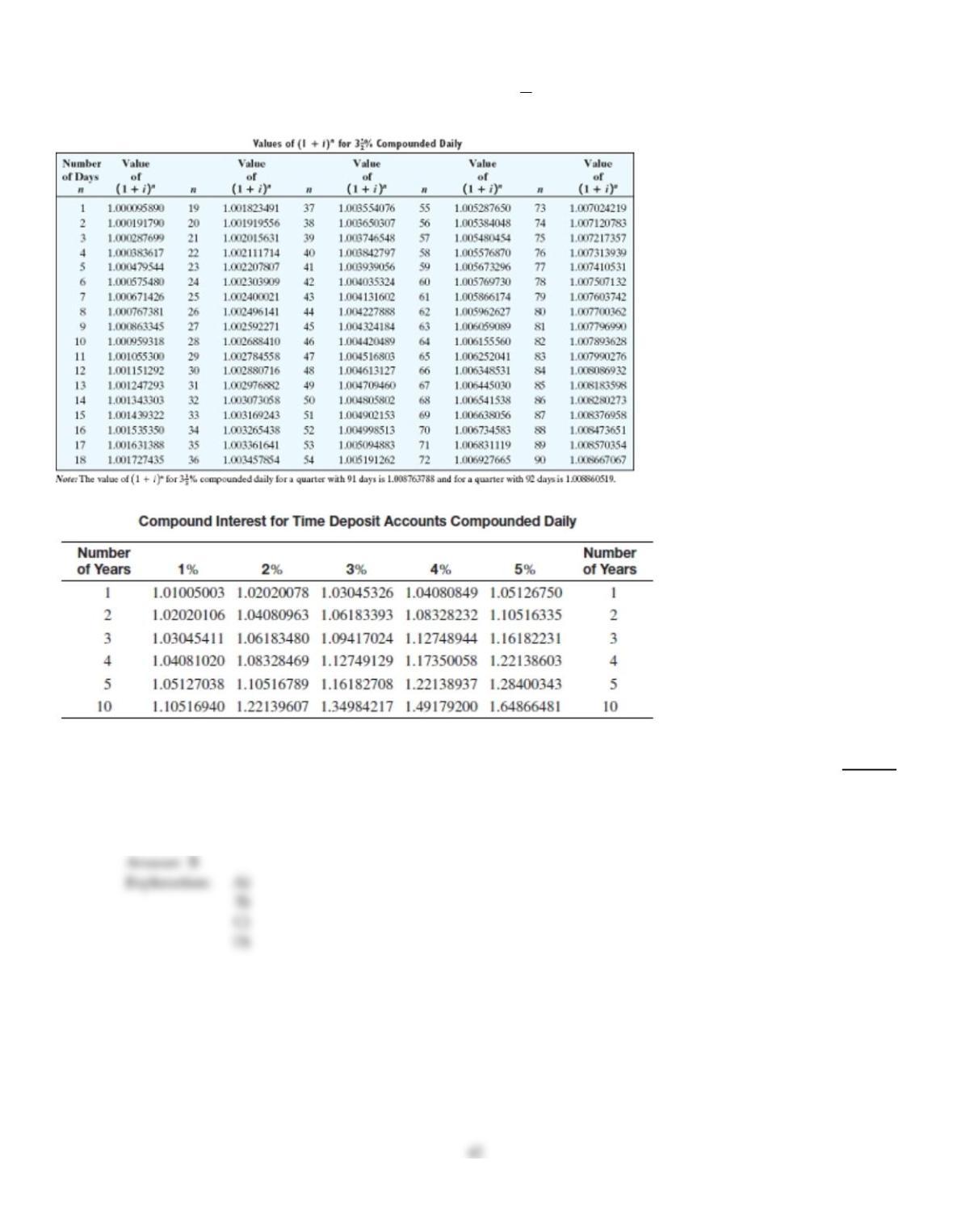
Solve the application problem. If no interest rate is given, assume 31
2% interest compounded daily. Round to the nearest
cent.
52)
Paul Pierce has $6000 to deposit in a certificate of deposit but is debating whether to leave it there
for 2 years or for 3 years. Assume 50% compounded daily in both situations, and find the
compound amount in each case.
52)
A)
$6630.98; $13,941.87
B)
$6630.98; $6970.93
C)
$6640.98; $6970.93
D)
$6630.98; $6975.93
Answer Key
Testname: C10
Answer Key
Testname: C10