85) Which transition could occur if a solid is heated at a pressure below the triple point pressure?
A) condensation
B) deposition
C) melting
D) sublimation
86) Which transition could occur if a solid is heated at a pressure above the triple point pressure?
A) condensation
B) deposition
C) melting
D) sublimation
87) A supercritical fluid refers to a substance
A) above both its critical temperature and its critical pressure.
B) at its triple point.
C) that is in the liquid crystal state.
D) with a viscosity of zero.
88) The liquid crystal state
A) is a liquid in which the molecules tend to assume an overall orientation with respect to each
other.
B) occurs when a supercritical fluid is rapidly cooled below the critical point.
C) occurs when an amorphous solid first begins to melt.
D) occurs when the first crystals form in the liquid during freezing.
22
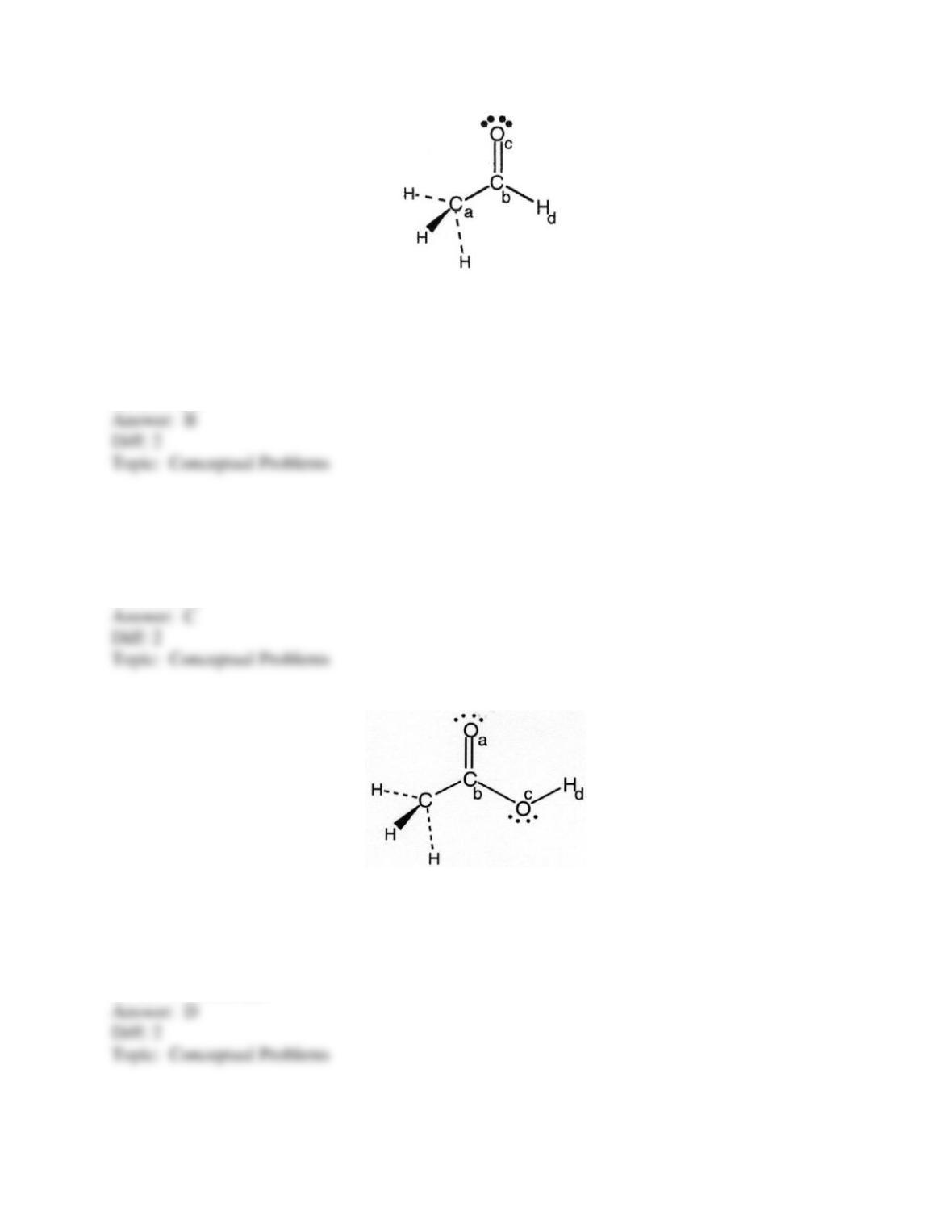
89) In the drawing of acetaldehyde, CH3CHO, the largest partial positive charge (δ+) occurs on
A) atom (a).
B) atom (b).
C) atom (c).
D) atom (d).
90) In the drawing of acetaldehyde, CH3CHO, the largest partial negative charge (δ -) occurs on
A) atom (a).
B) atom (b).
C) atom (c).
D) atom (d).
91) In the drawing of acetic acid, CH3CO2H, a partial positive charge (δ+) occurs on
A) only atom (a).
B) only atom (b).
C) atoms (a) and (c).
D) atoms (b) and (d).
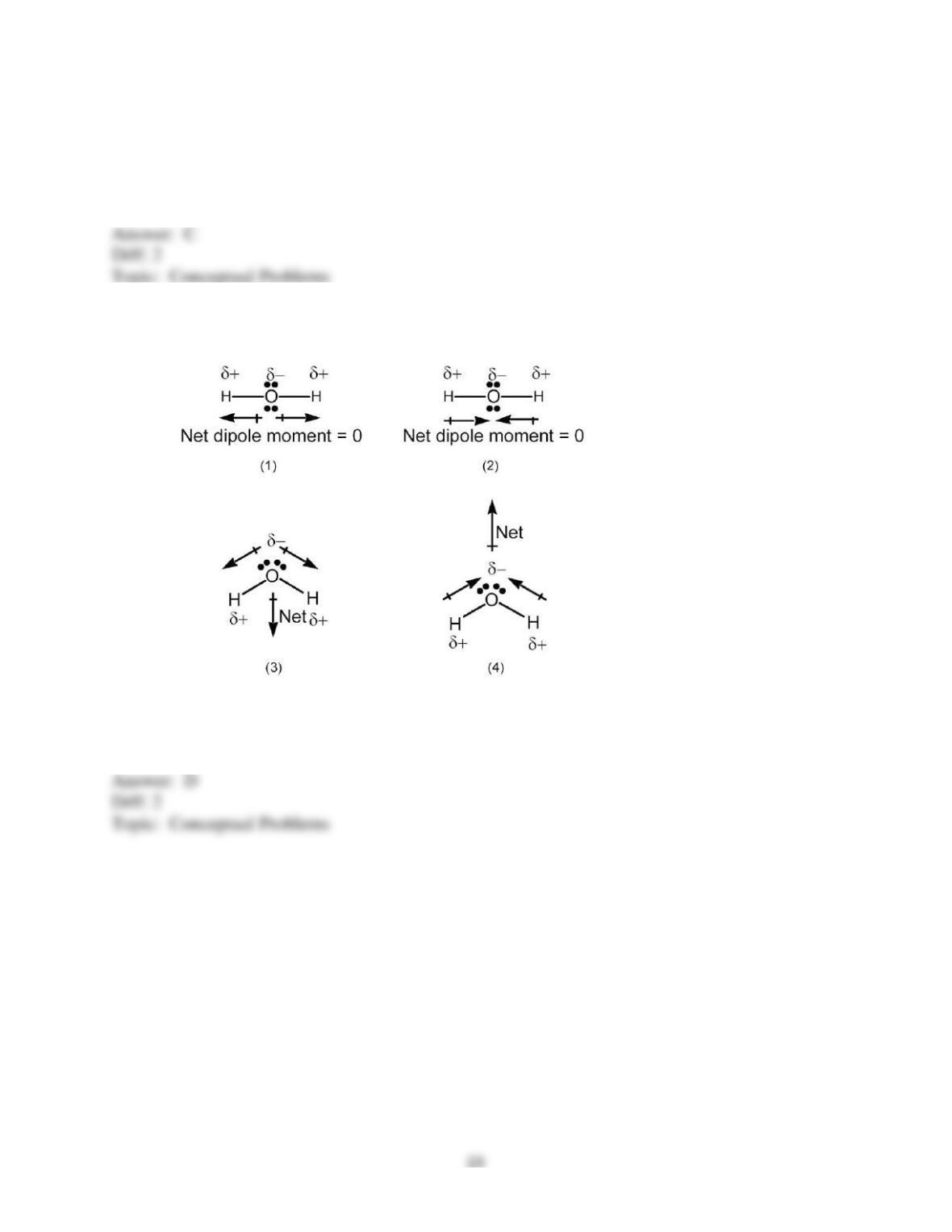
92) In the drawing of acetic acid, CH3CO2H, a partial negative charge (δ-) occurs on
A) only atom (a).
B) only atom (b).
C) atoms (a) and (c).
D) atoms (b) and (d).
93) Which drawing best accounts for the polarity of water, H2O, and the bond polarities that
make a major contribution to the overall molecular polarity?
A) drawing (1)
B) drawing (2)
C) drawing (3)
D) drawing (4)
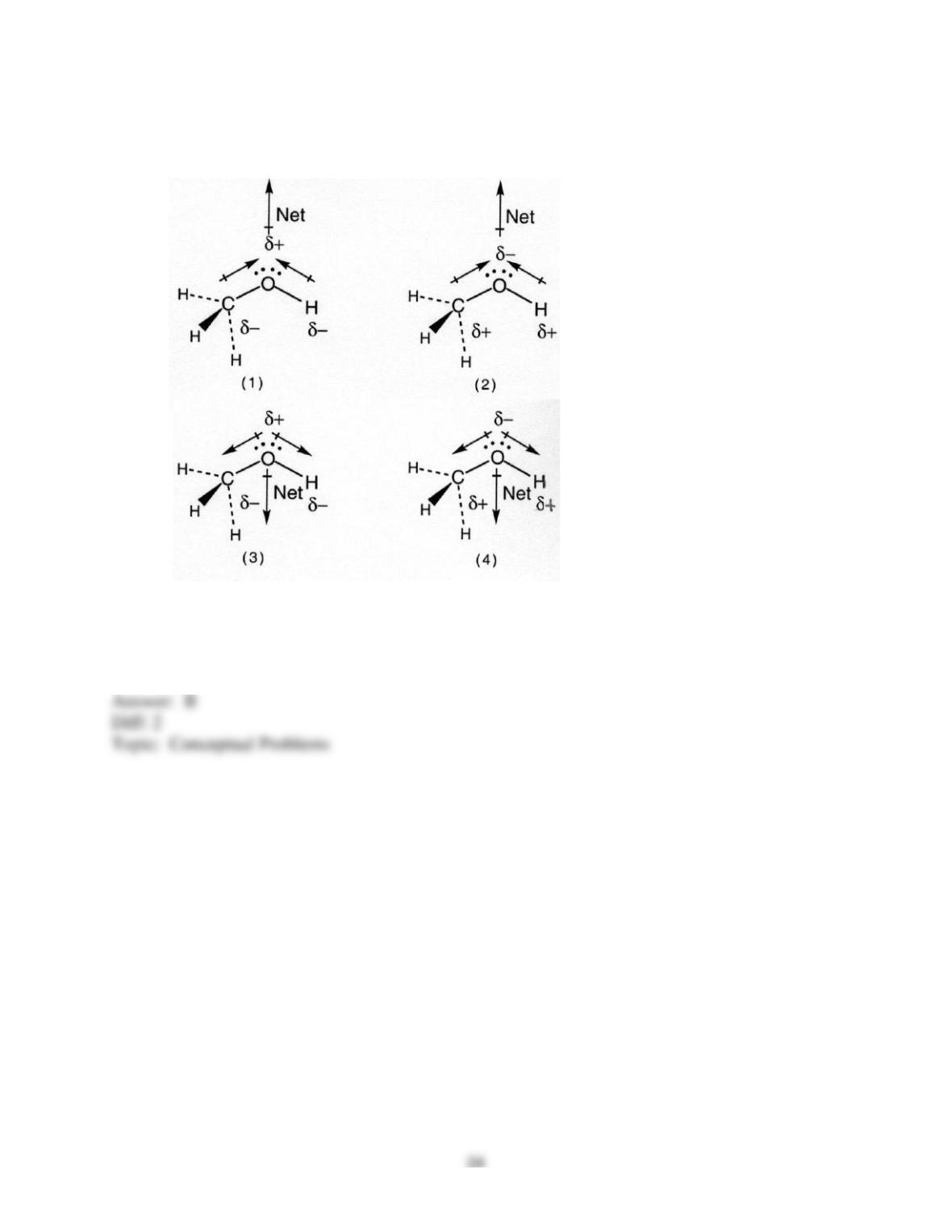
94) Which drawing best accounts for the polarity of methanol, CH3OH, and the bond polarities
that make a major contribution to the overall molecular polarity?
A) drawing (1)
B) drawing (2)
C) drawing (3)
D) drawing (4)
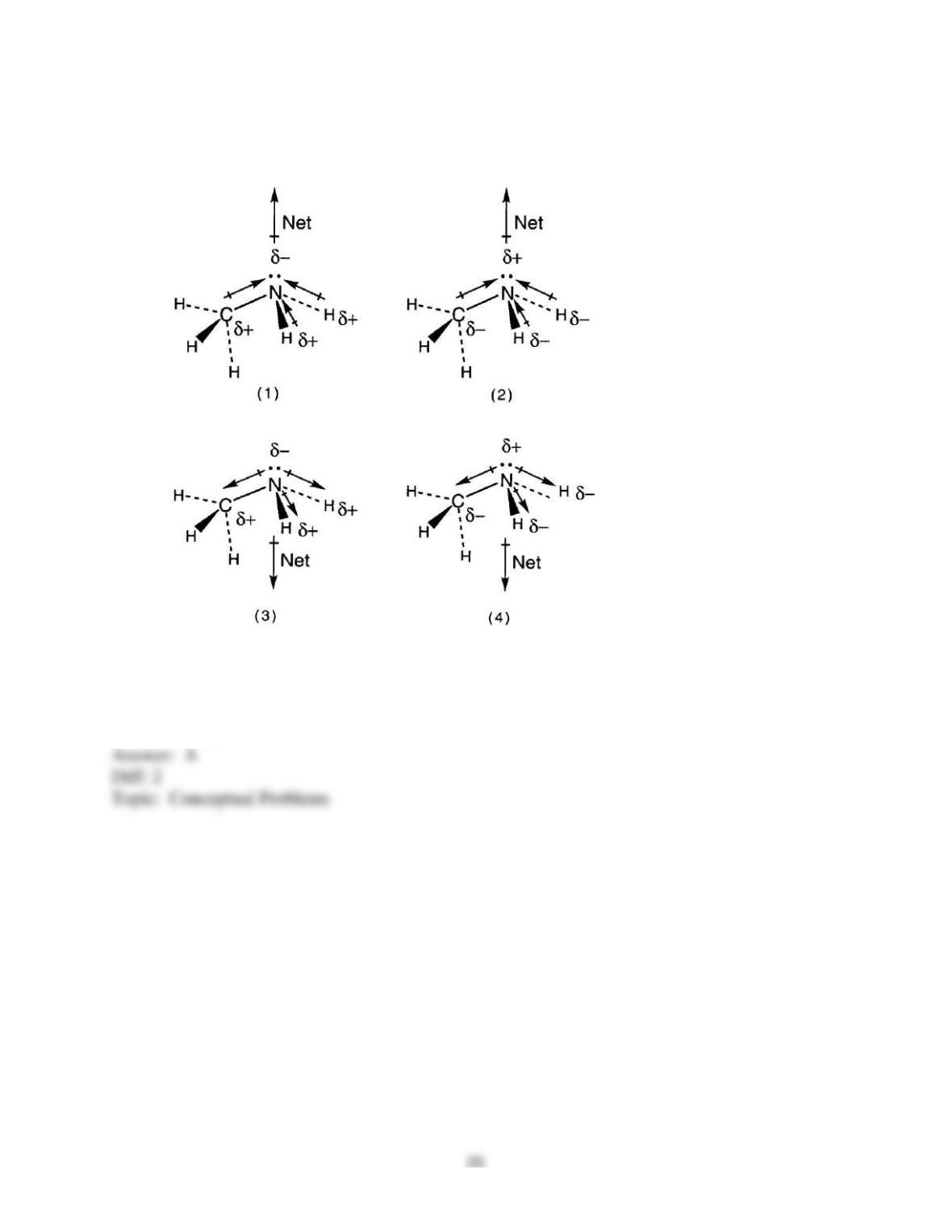
95) Which drawing best shows the molecular polarity of methylamine, CH3NH2, and the bond
polarities that make a major contribution to the overall molecular polarity?
A) drawing (1)
B) drawing (2)
C) drawing (3)
D) drawing (4)
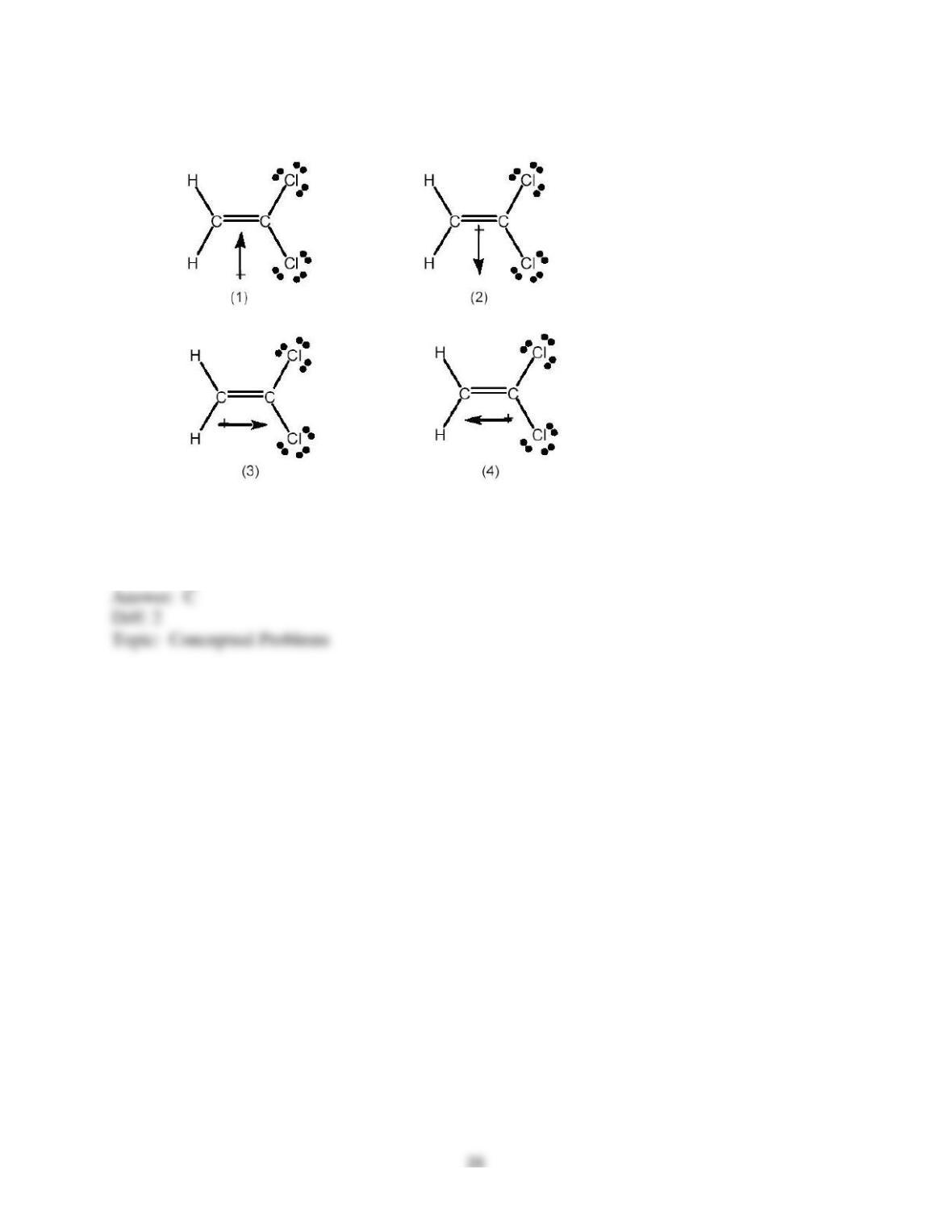
96) Which drawing best shows the direction of the dipole moment in H2C=CCl2?
A) drawing (1)
B) drawing (2)
C) drawing (3)
D) drawing (4)
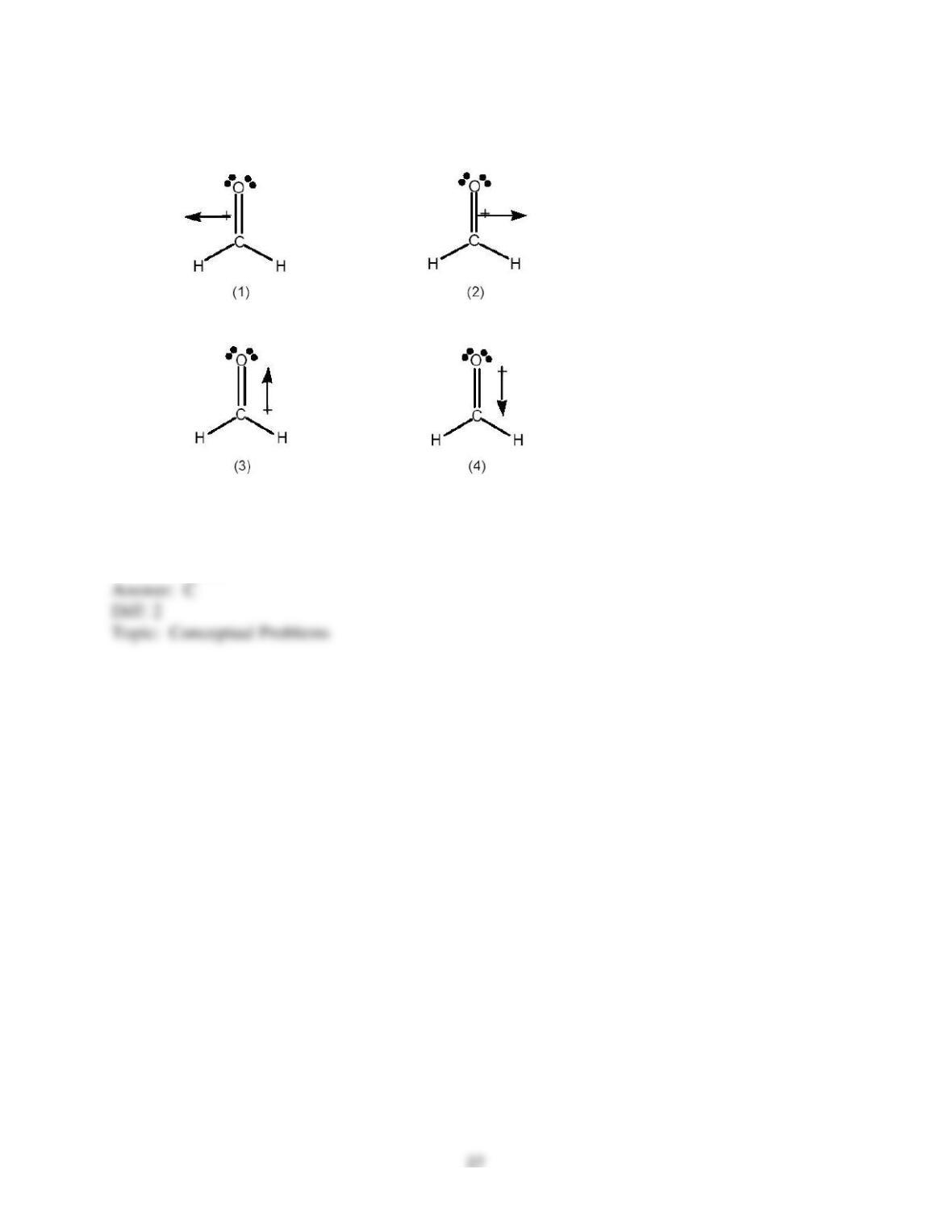
97) Which best indicates the direction of the dipole moment in formaldehyde, H2C=O?
A) drawing (1)
B) drawing (2)
C) drawing (3)
D) drawing (4)
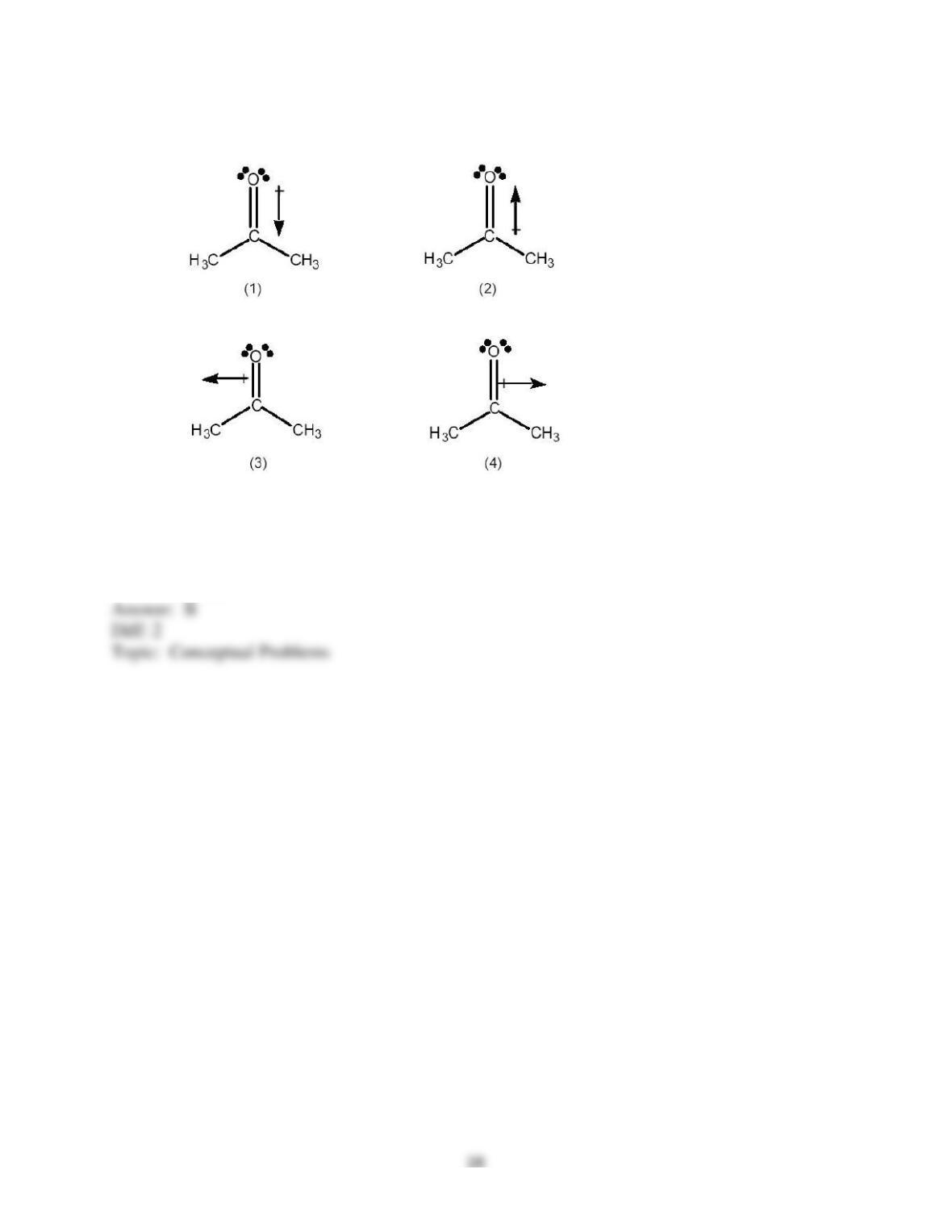
98) Which best indicates the direction of the dipole moment in acetone, (CH3)2C=O?
A) drawing (1)
B) drawing (2)
C) drawing (3)
D) drawing (4)
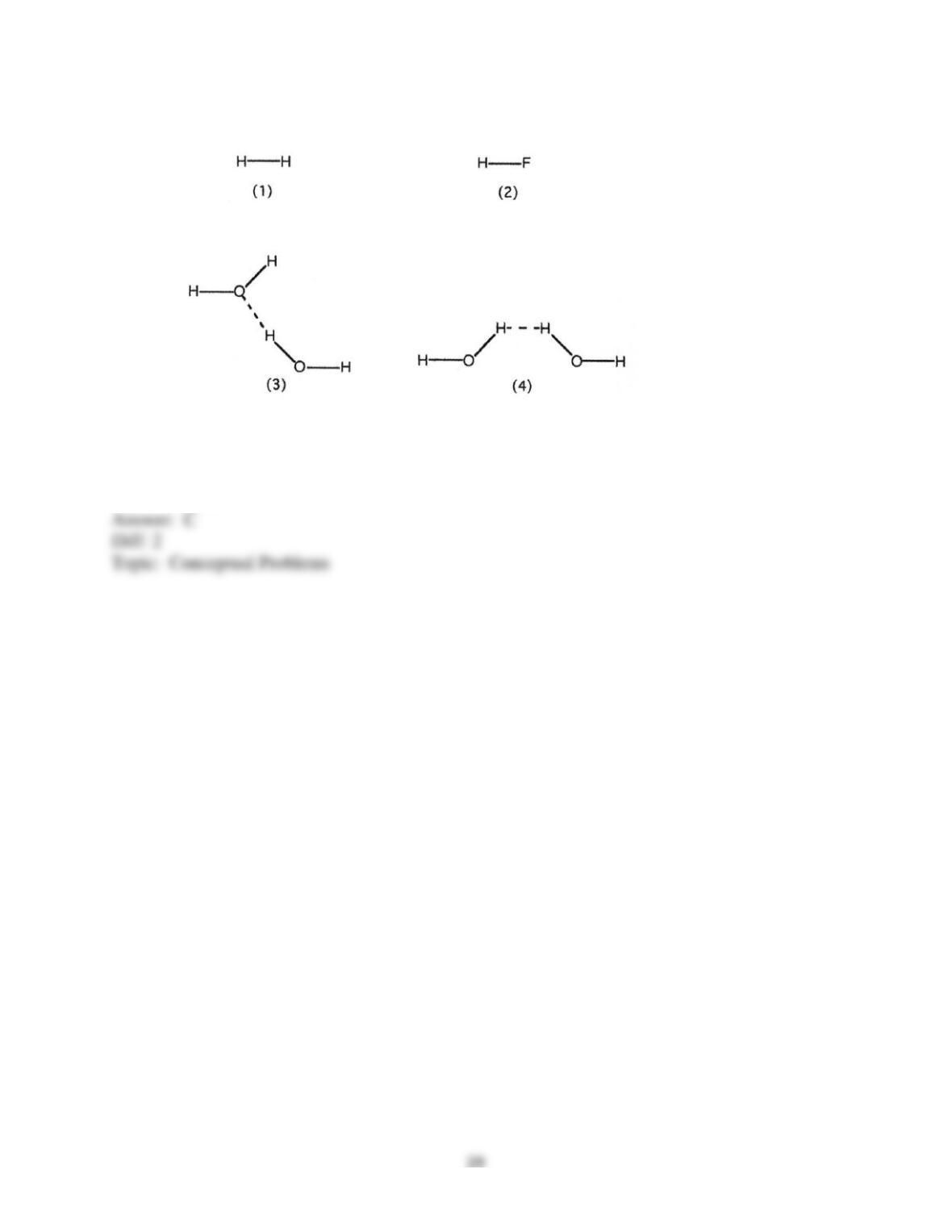
99) Which drawing best represents hydrogen bonding?
A) drawing (1)
B) drawing (2)
C) drawing (3)
D) drawing (4)
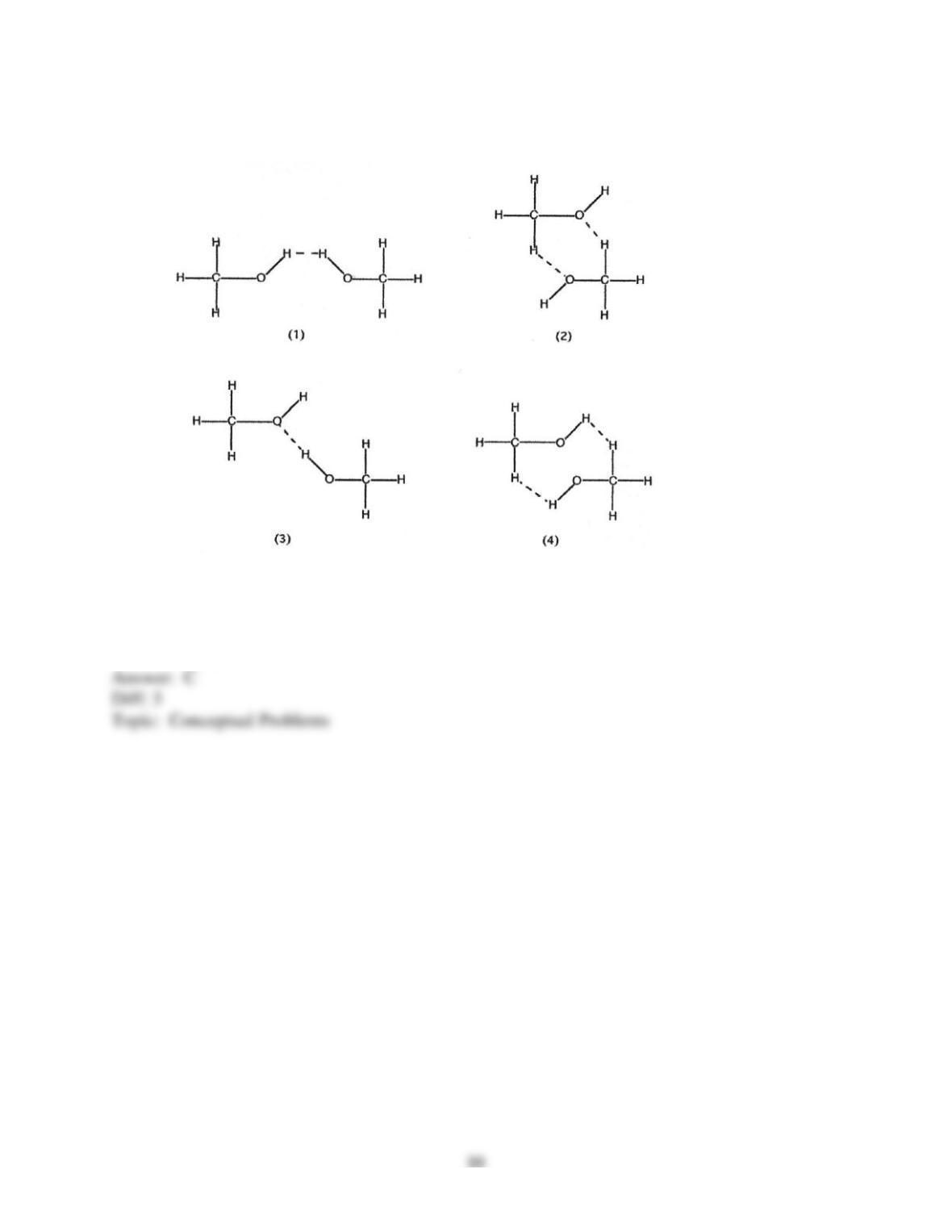
100) Which drawing below best represents hydrogen bonding methanol, CH3OH?
A) drawing (1)
B) drawing (2)
C) drawing (3)
D) drawing (4)
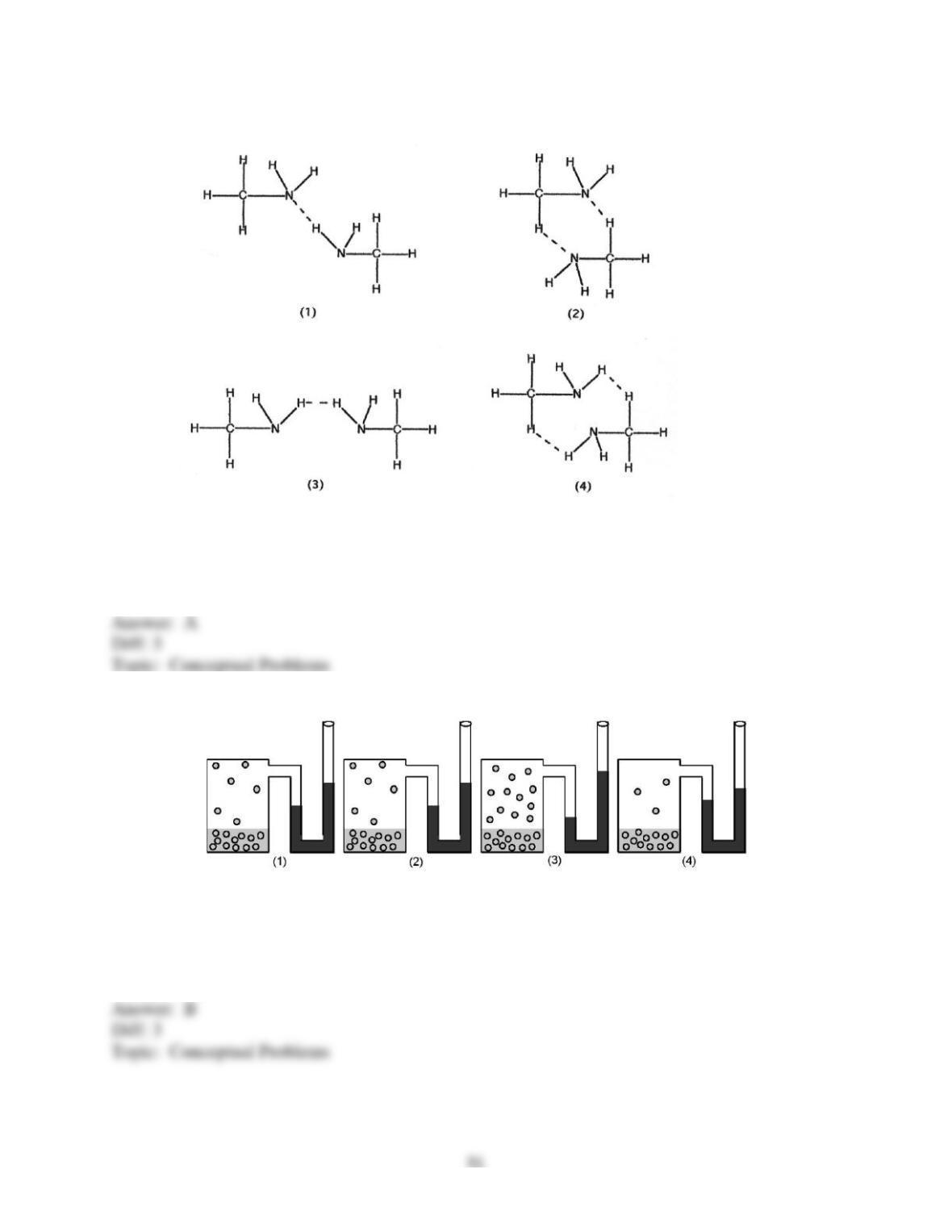
101) Which drawing best represents hydrogen bonding in methylamine, CH3NH2?
A) drawing (1)
B) drawing (2)
C) drawing (3)
D) drawing (4)
102) If figure (1) represents the vapor pressure of water at 25°C, which figure represents the
vapor pressure of water at 45°C?
A) figure (2)
B) figure (3)
C) figure (4)
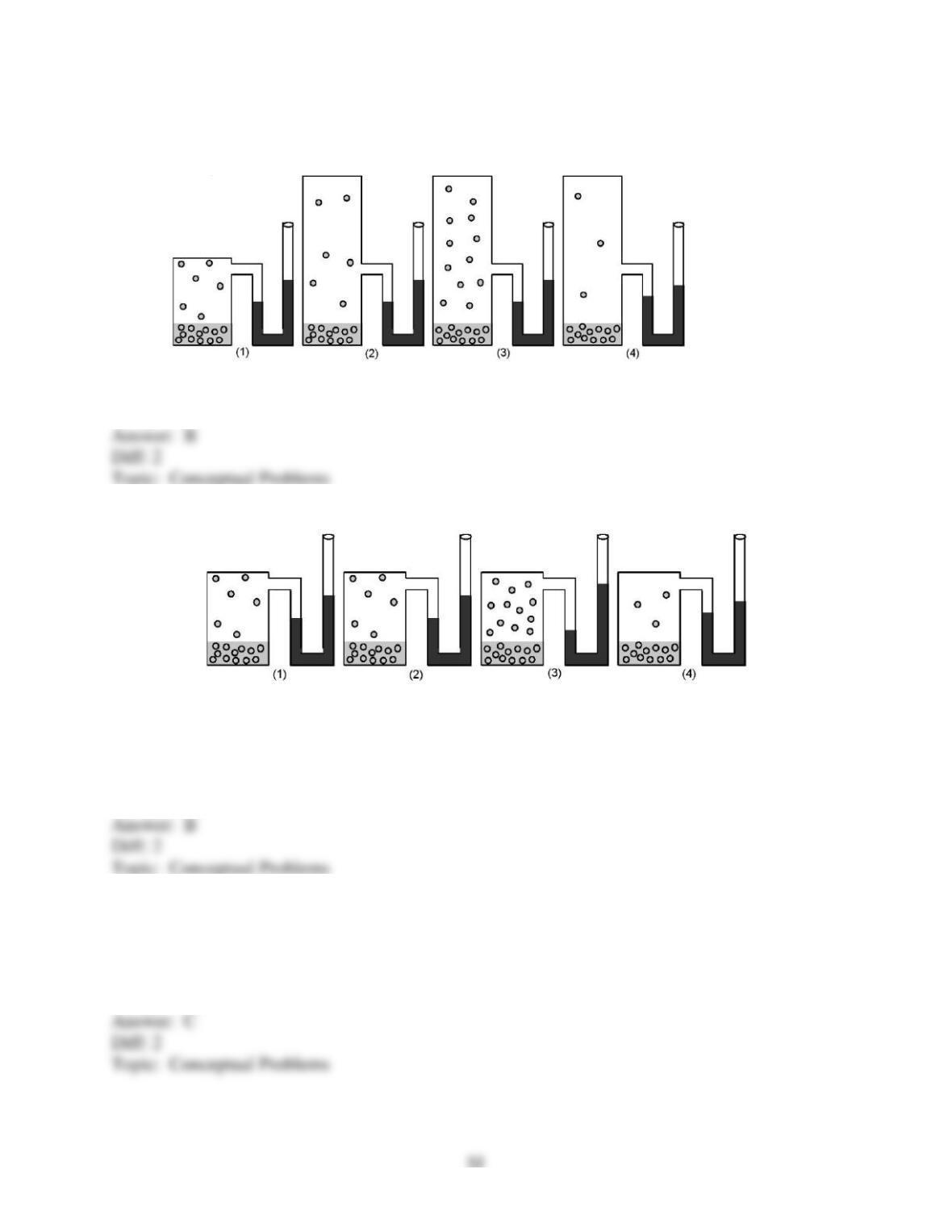
103) If figure (1) represents the vapor pressure of water at 25°C in a 1 liter container, which
figure represents the vapor pressure of water at 25°C in a 2 liter container?
A) figure (2)
B) figure (3)
C) figure (4)
104) If figure (1) represents the vapor pressure of water at 25°C, which figure represents the
vapor pressure of ethanol, CH3CH2OH at 25°C?
A) figure (2)
B) figure (3)
C) figure (4)
105) If figure (1) represents the vapor pressure of diethyl ether, CH3CH2OCH2CH3, at 25°C,
which figure represents the vapor pressure of ethanol at 25°C?
A) figure (2)
B) figure (3)
C) figure (4)
106) If figure (1) represents the vapor pressure of water, at 25°C, which figure represents the
vapor pressure of mercury at 25°C?
A) figure (2)
B) figure (3)
C) figure (4)
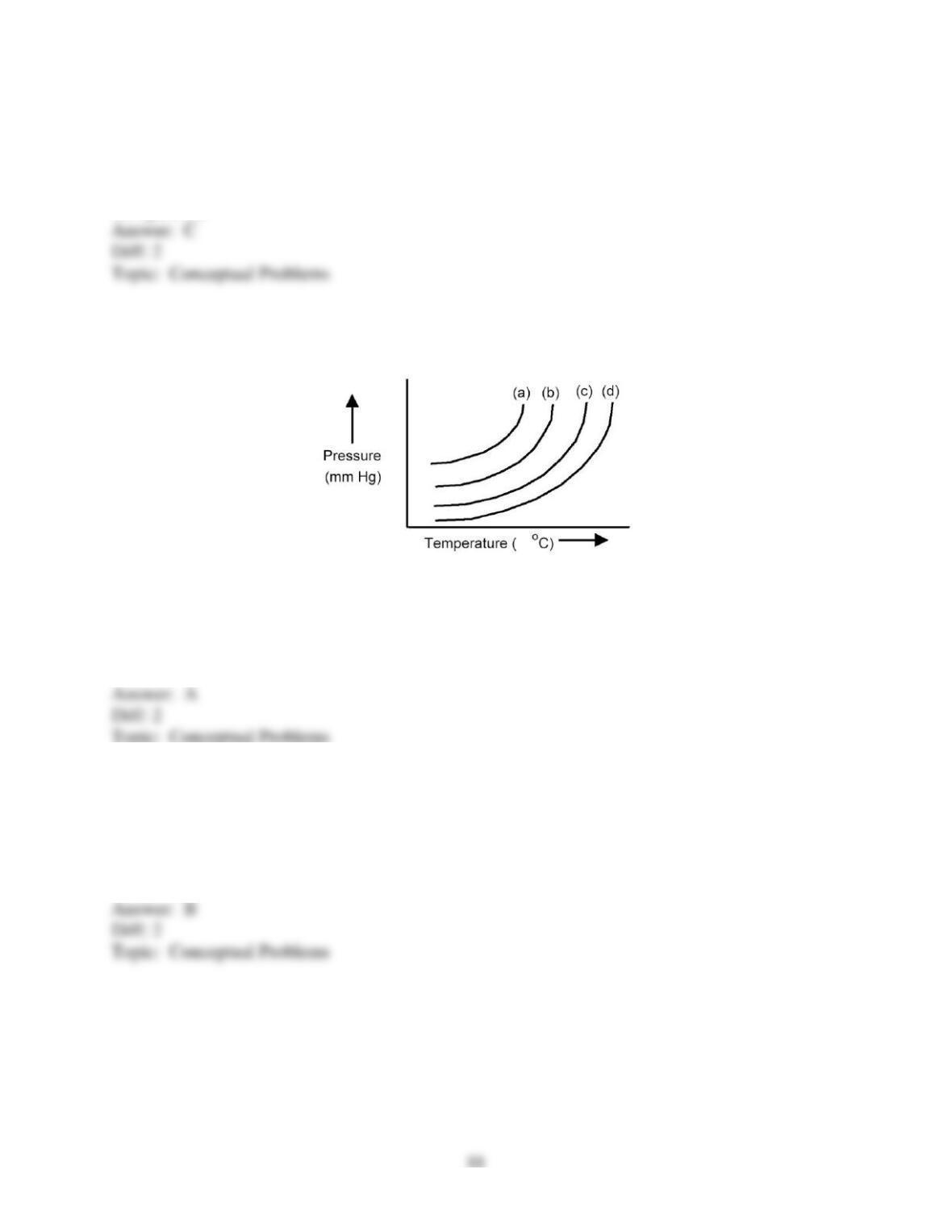
The plots below represent vapor pressure vs. temperature curves for diethyl ether, ethanol,
mercury, and water, not necessarily in that order.
107) Based on the relative strengths of the intermolecular forces of attraction of each substance,
which is the most likely vapor pressure vs. temperature curve for diethyl ether?
A) curve (a)
B) curve (b)
C) curve (c)
D) curve (d)
108) Based on the relative strengths of the intermolecular forces of attraction of each substance,
which is the most likely vapor pressure vs. temperature curve for ethanol?
A) curve (a)
B) curve (b)
C) curve (c)
D) curve (d)
109) Based on the relative strengths of the intermolecular forces of attraction of each substance,
which is the most likely vapor pressure vs. temperature curve for mercury?
A) curve (a)
B) curve (b)
C) curve (c)
D) curve (d)
110) Based on the relative strengths of the intermolecular forces of attraction of each substance,
which is the most likely vapor pressure vs. temperature curve for water?
A) curve (a)
B) curve (b)
C) curve (c)
D) curve (d)
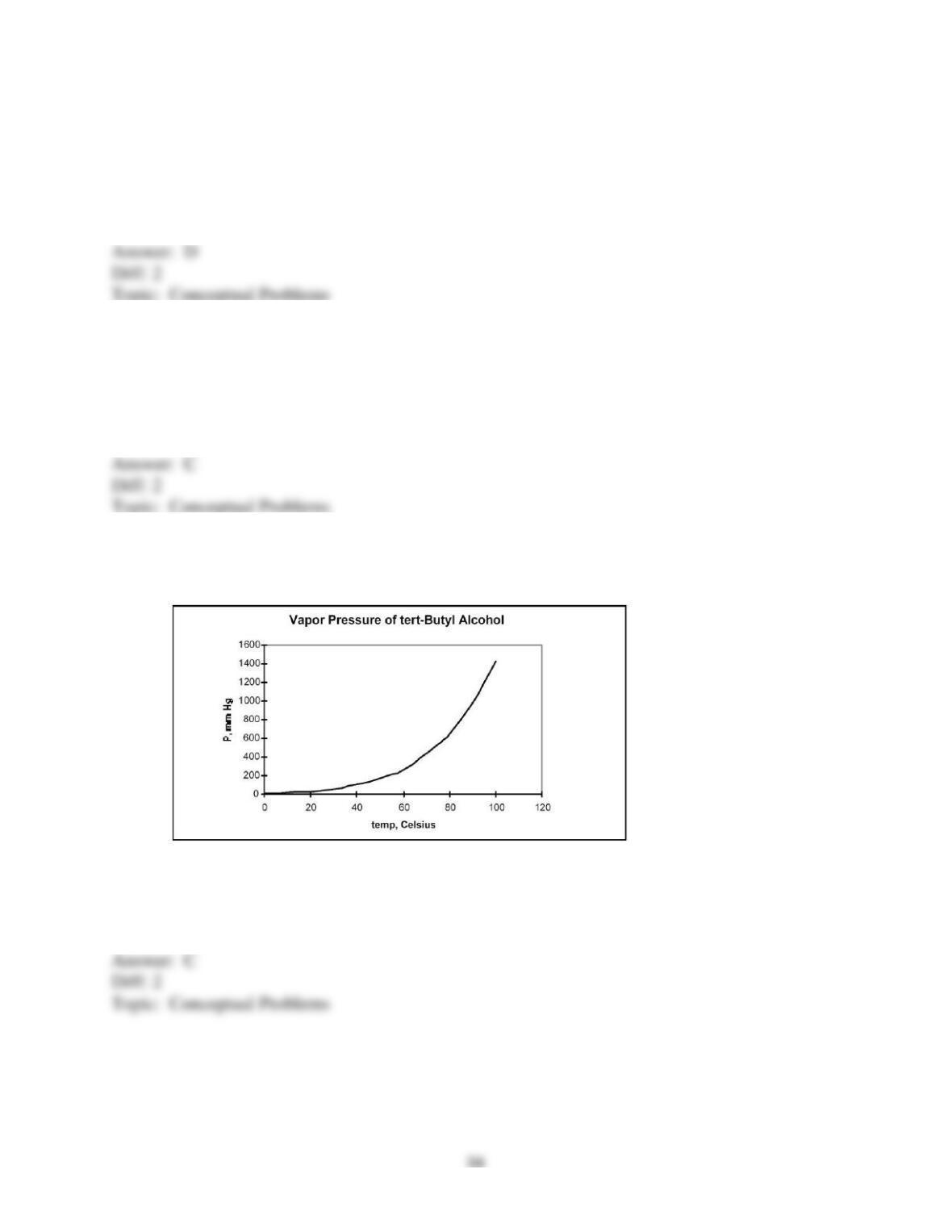
111) From the plot of vapor pressure as a function of temperature shown below, the normal
boiling point for tert-butyl alcohol is approximately
A) 0°C.
B) 40°C.
C) 85°C.
D) 100°C.
35
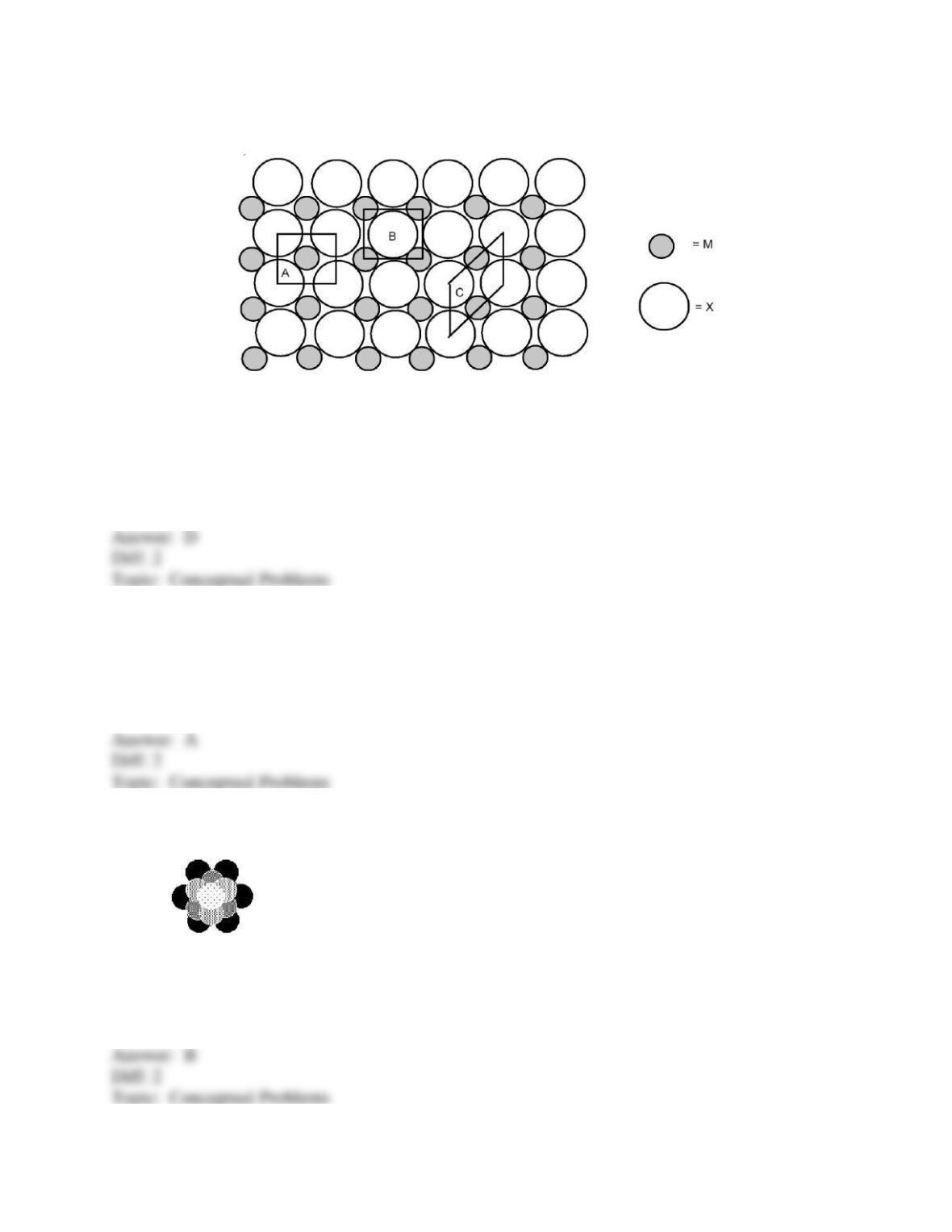
The picture shown below represents a two-dimensional lattice of atoms M and X.
112) Which of the areas designated A, B, and C are smallest repeating units, analogous to two-
dimensional unit cells?
A) only A
B) only B
C) only C
D) A, B, or C
113) What is the formula of the compound formed from M and X?
A) MX
B) MX2
C) MX3
D) MX4
114) Identify the packing in the figure shown below.
A) body-centered cubic
B) cubic closest packed (face-centered cubic)
C) hexagonal closest packed
D) simple cubic
115) Identify the packing in the figure shown below.
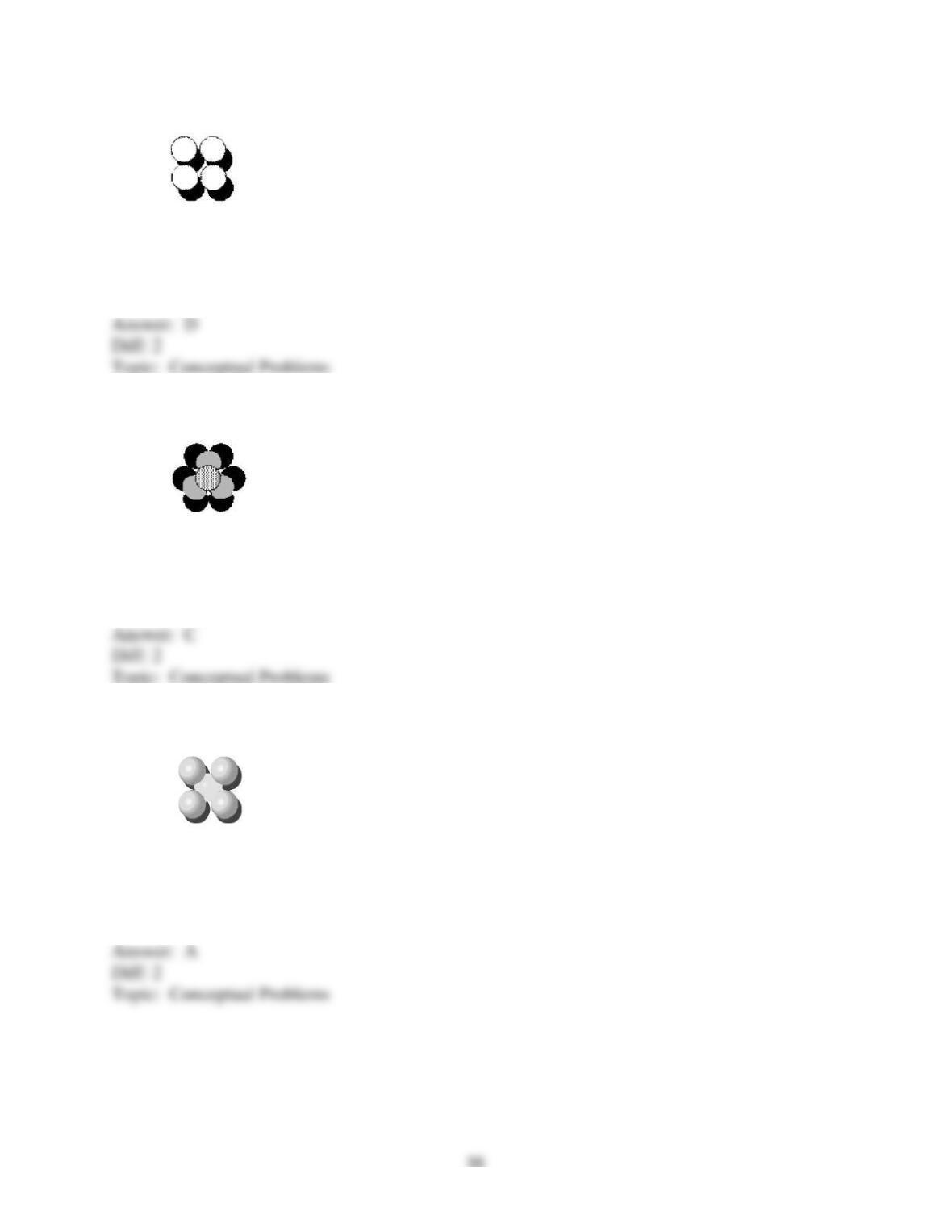
A) body-centered cubic
B) cubic closest packed (face-centered cubic)
C) hexagonal closest packed
D) simple cubic
116) Identify the packing in the figure shown below.
A) body-centered cubic
B) cubic closest packed (face-centered cubic)
C) hexagonal closest packed
D) simple cubic
117) Identify the packing in the figure shown below.
A) body-centered cubic
B) cubic closest packed (face-centered cubic)
C) hexagonal closest packed
D) simple cubic