38.
Stock Market Bubble If the NASDAQ stock market bubble peaked at 3,750, and two and a
half years later it had fallen to 2,200, what would be the percentage decline?
39.
Stock Market Bubble If the Japanese stock market bubble peaked at 37,500, and two and
a half years later it had fallen to 25,900, what was the percentage decline?
40.
Expected Return A company’s current stock price is $84.50 and it is likely to pay a $3.50
dividend next year. Since analysts estimate the company will have a 10 percent growth
rate, what is its expected return?
41.
Expected Return A company’s current stock price is $65.40 and it is likely to pay a $2.25
dividend next year. Since analysts estimate the company will have an 11.25 percent
growth rate, what is its expected return?
42.
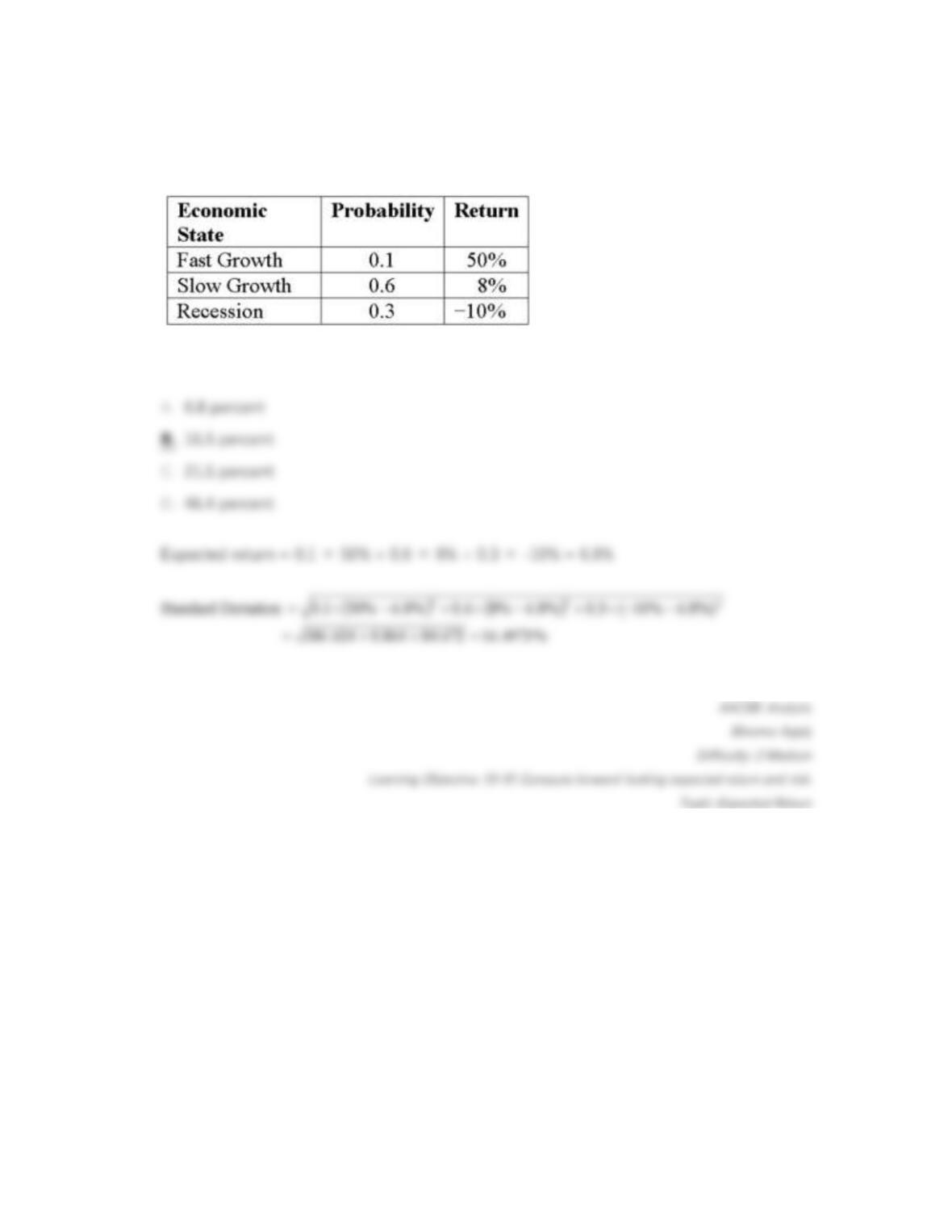
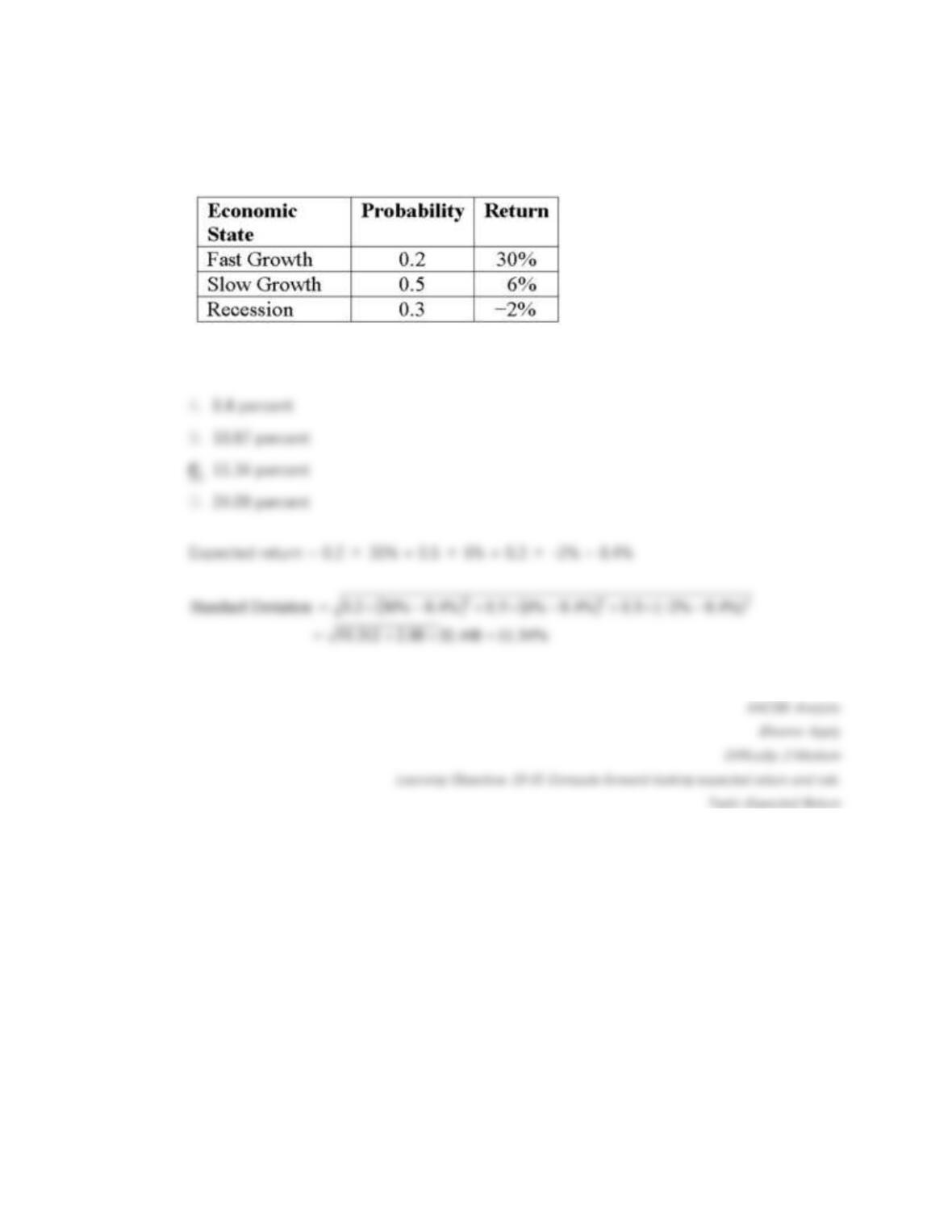
Expected Return Risk Compute the standard deviation of the expected return given these
three economic states, their likelihoods, and the potential returns:
43.
Expected Return Risk Compute the standard deviation of the expected return given these
three economic states, their likelihoods, and the potential returns:
44.
Under/Over-Valued Stock A manager believes his firm will earn a 16 percent return next
year. His firm has a beta of 1.5, the expected return on the market is 14 percent, and the
risk-free rate is 4 percent. Compute the return the firm should earn given its level of risk
and determine whether the manager is saying the firm is undervalued or overvalued.
45.
Under/Over-Valued Stock A manager believes his firm will earn a 12 percent return next
year. His firm has a beta of 1.2, the expected return on the market is 8 percent, and the
risk-free rate is 3 percent. Compute the return the firm should earn given its level of risk
and determine whether the manager is saying the firm is undervalued or overvalued.
46.
Under/Over-Valued Stock A manager believes his firm will earn a 7.5 percent return next
year. His firm has a beta of 2, the expected return on the market is 5 percent, and the risk–
free rate is 2 percent. Compute the return the firm should earn given its level of risk and
determine whether the manager is saying the firm is undervalued or overvalued.
47.
Portfolio Beta You own $2,000 of City Steel stock that has a beta of 2.5. You also own
$8,000 of Rent-N-Co (beta = 1.9) and $4,000 of Lincoln Corporation (beta = 0.25). What is
the beta of your portfolio?
48.
Portfolio Beta You own $1,000 of City Steel stock that has a beta of 1.5. You also own
$5,000 of Rent-N-Co (beta = 1.8) and $4,000 of Lincoln Corporation (beta = 0.9). What is
the beta of your portfolio?
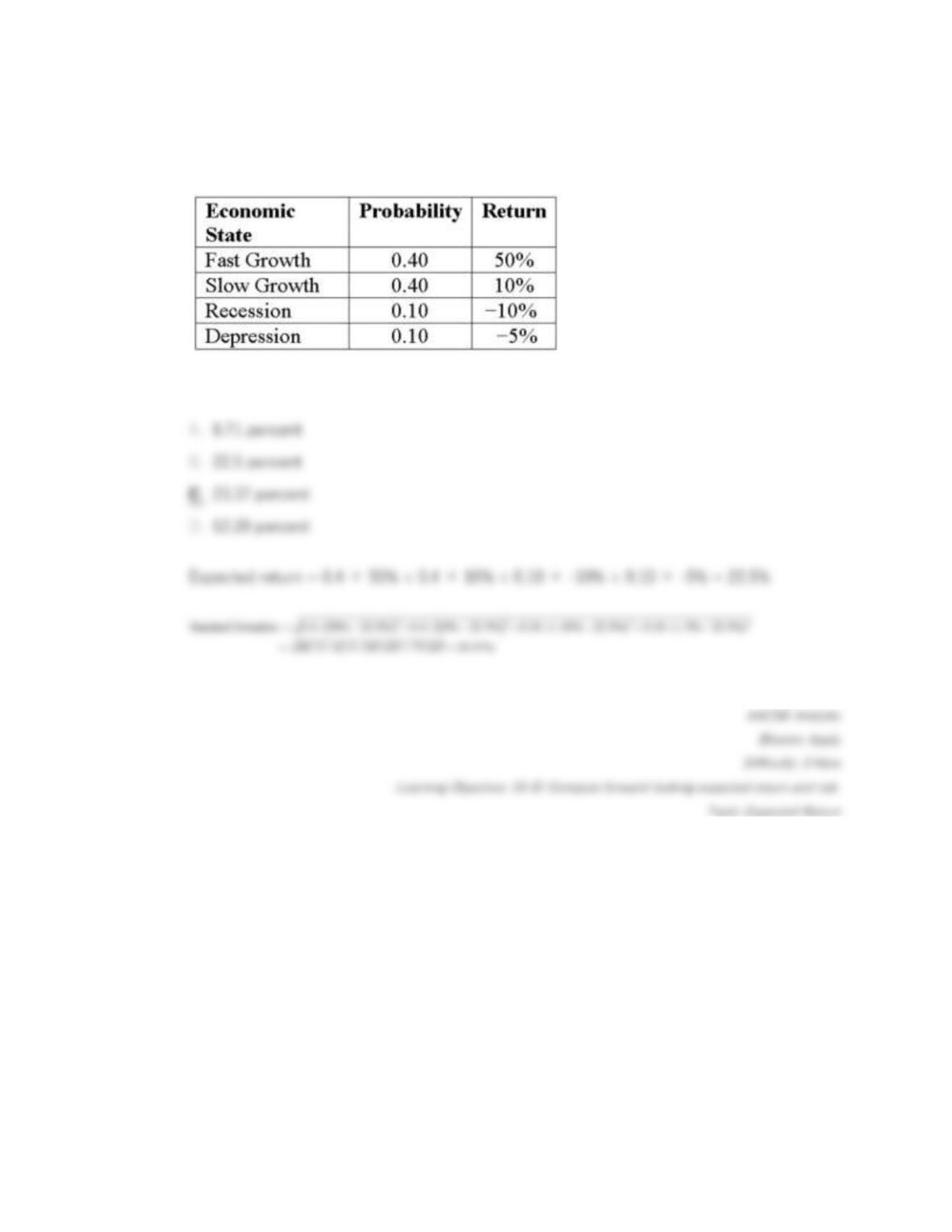
49.
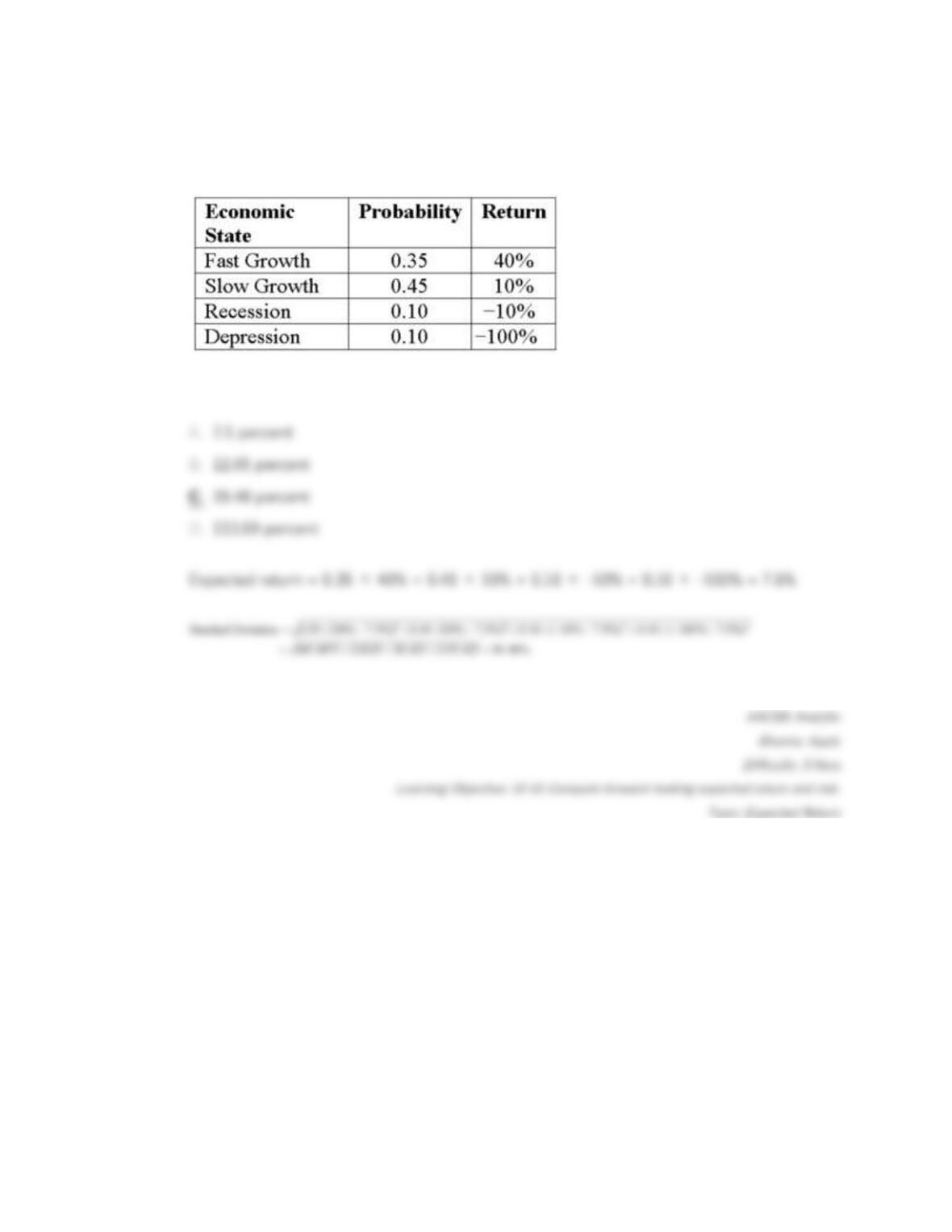
Expected Return and Risk Compute the standard deviation given these four economic
states, their likelihoods, and the potential returns:
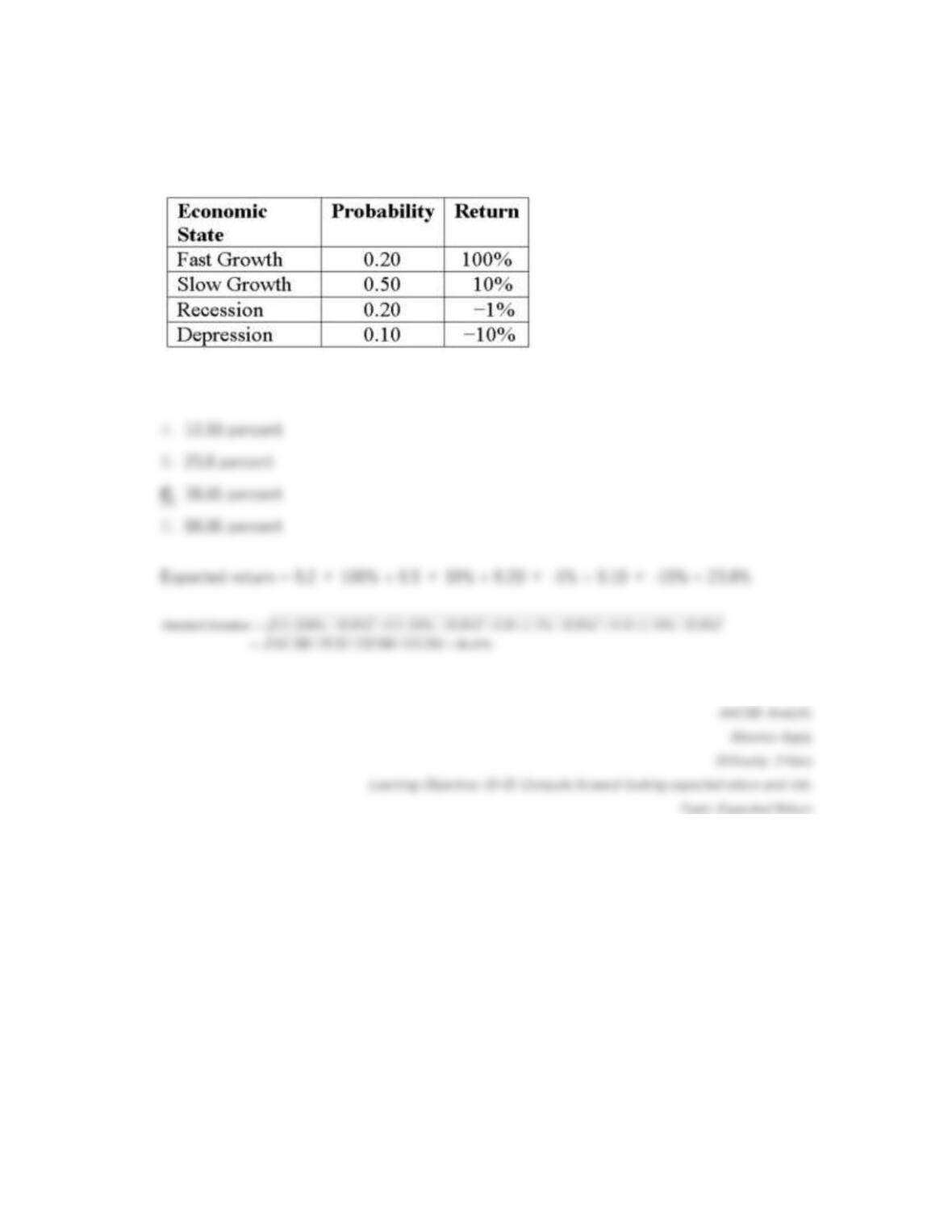
50.
Expected Return and Risk Compute the standard deviation given these four economic
states, their likelihoods, and the potential returns:
51.
Expected Return and Risk Compute the standard deviation given these four economic
states, their likelihoods, and the potential returns:
52.
Risk Premiums You own $14,000 of Diner’s Corp. stock that has a beta of 2.1. You also
own $14,000 of Comm Corp. (beta = 1.3) and $12,000 of Airlines Corp. (beta = 0.6).
Assume that the market return will be 15 percent and the risk-free rate is 6.5 percent.
What is the total risk premium of the portfolio?
53.
Risk Premiums You own $5,000 of Software Corp’s stock that has a beta of 3.75. You also
own $10,000 of Home Improvement Corp. (beta = 1.5) and $15,000 of Publishing Corp.
(beta = 0.35). Assume that the market return will be 13 percent and the risk-free rate is
4.5 percent. What is the risk premium of the portfolio?
54.
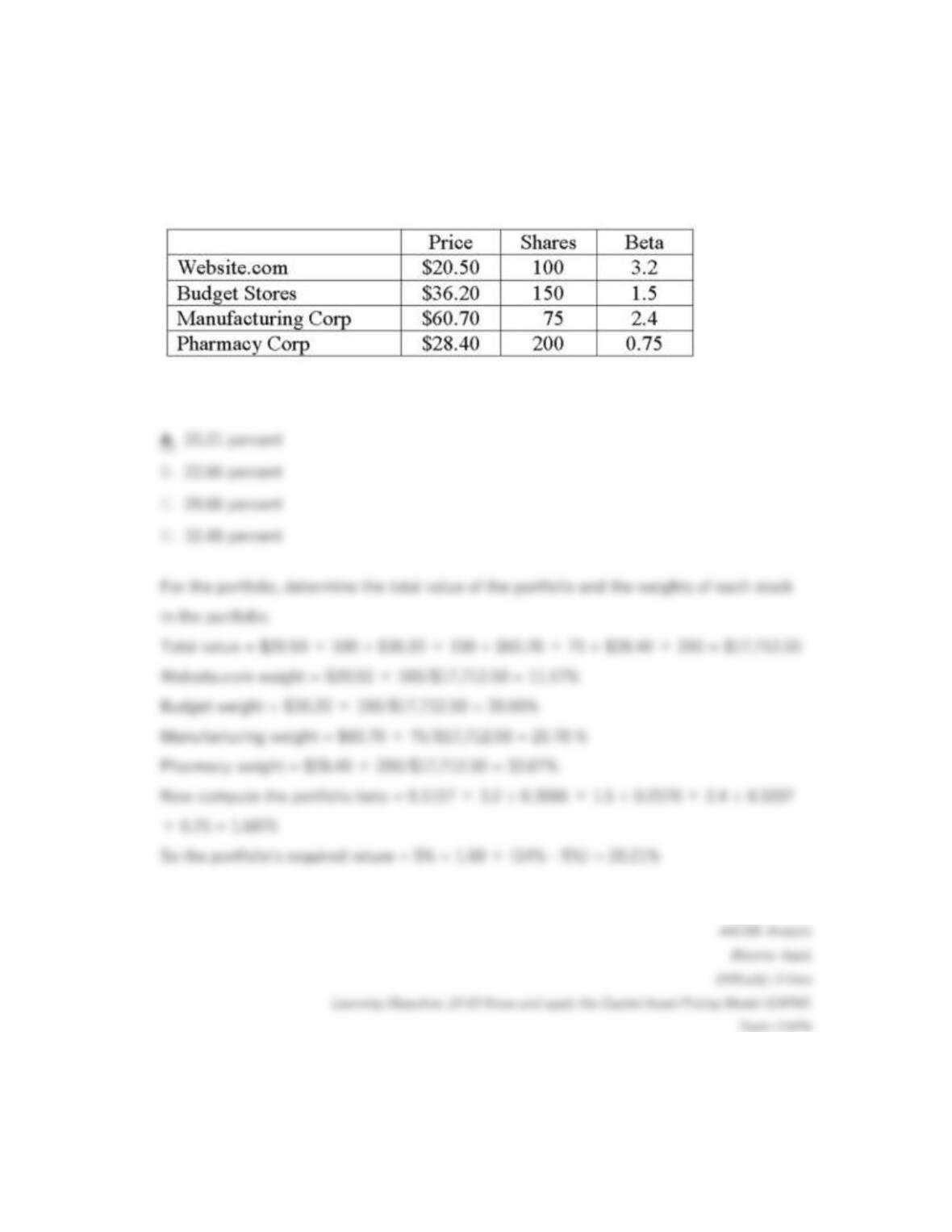
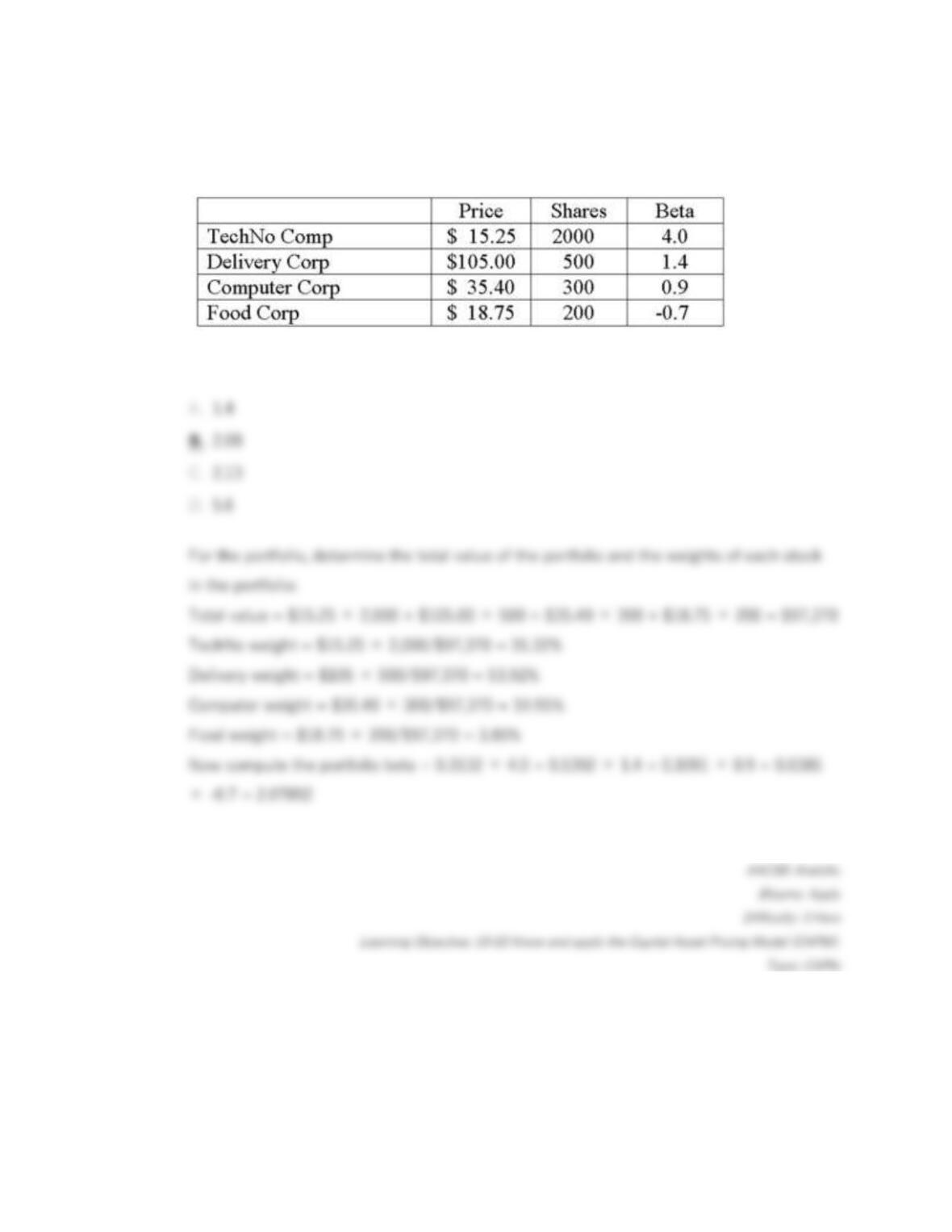
Portfolio Beta and Required Return You hold the positions in the following table. What is
the beta of your portfolio? If you expect the market to earn 14 percent and the risk-free
rate is 5 percent, what is the required return of the portfolio?
55.
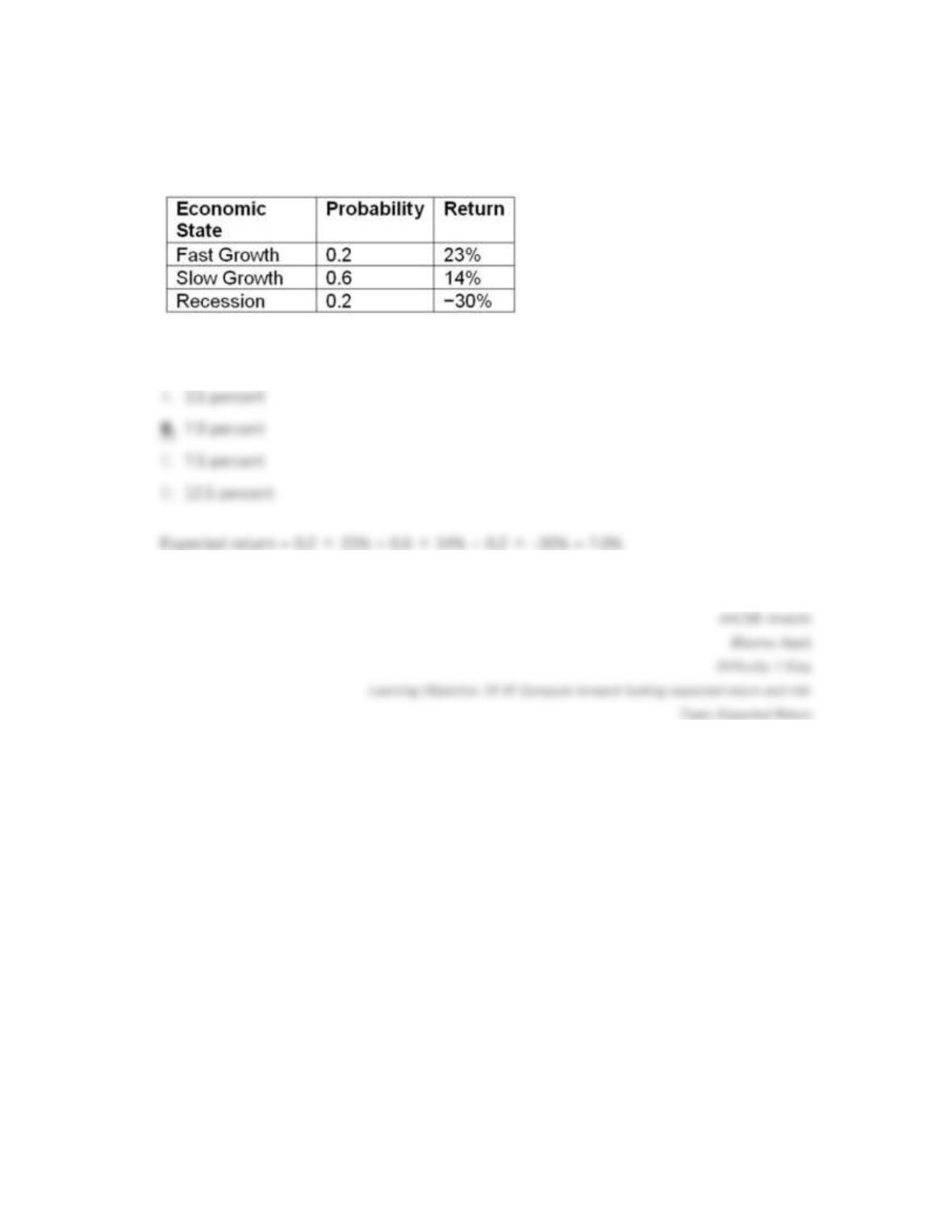
Portfolio Beta You hold the positions in the following table. What is the beta of your
portfolio?
56.
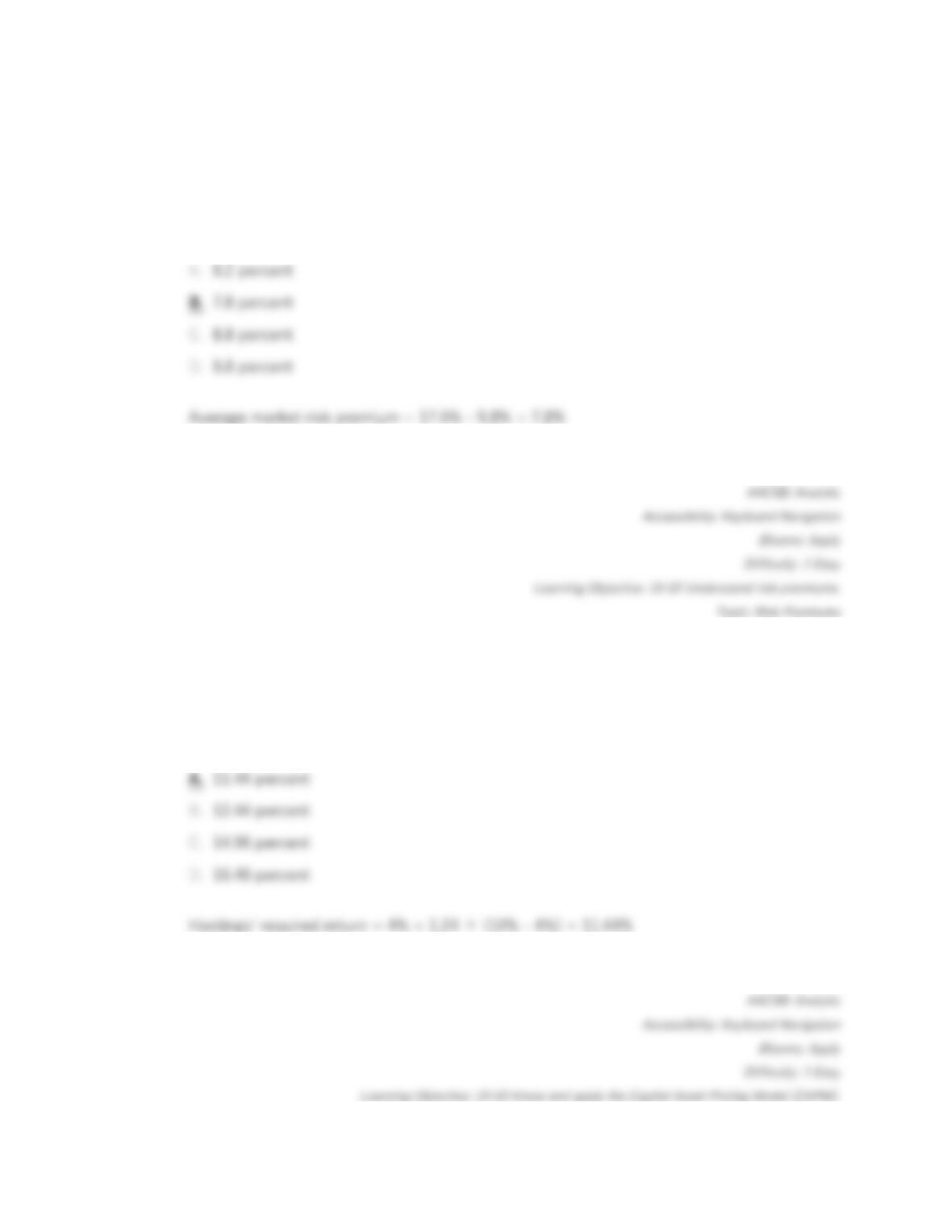
Compute the expected return given these three economic states, their likelihoods, and the
potential returns:
57.
The average annual return on the S&P 500 Index from 1986 to 1995 was 17.6 percent. The
average annual T-bill yield during the same period was 9.8 percent. What was the market
risk premium during these 10 years?
58.
Hastings Entertainment has a beta of 1.24. If the market return is expected to be 10
percent and the risk-free rate is 4 percent, what is Hastings’ required return?
59.
Netflicks, Inc. has a beta of 3.61. If the market return is expected to be 13.2 percent and
the risk-free rate is 7 percent, what is Netflicks’ risk premium?
60.
You have a portfolio with a beta of 3.1. What will be the new portfolio beta if you keep 85
percent of your money in the old portfolio and 15 percent in a stock with a beta of 4.5?