
60. Siddon Inc. is considering investing in equipment that costs $20,000. The equipment would be depreciated
using the straight-line method with no half-year convention over five years and have no salvage value. If the
company has a 40 percent income tax rate and desires an after-tax rate of return of 12 percent on investments,
the total present value of the depreciation tax shield is:
61. Grant Manufacturing is considering investing in equipment that costs $70,000. The equipment would be
depreciated using the straight-line method with no half-year convention over seven years and have no salvage
value. If the company has a 40 percent income tax rate and desires an after-tax rate of return of 14 percent on
investments, the total present value of the depreciation tax shield is:
62. Triangle Catering is considering investing in new equipment that costs $100,000. The equipment would be
depreciated using the straight-line method with no half-year convention over five years and have no salvage
value. If the company has a 35 percent income tax rate and desires an after-tax rate of return of 15 percent on
investments, the total present value of the depreciation tax shield is:
63. Buchanan Enterprises is considering investing in a machine that costs $400,000. The machine is expected to
generate revenues of $175,000 per year for five years. The machine would be depreciated using the straight-line
method over its five year life and have no salvage value. The company considers the impact of income taxes in
all of its capital investment decisions. The company has a 40 percent income tax rate and desires an after-tax
rate of return of 10 percent on its investment. The net present value of the machine is:
64. Tyson Enterprises is considering investing in a machine that costs $30,000. The machine is expected to
generate revenues of $10,000 per year for six years. The machine would be depreciated using the straight-line
method over its six year life and have no salvage value. The company considers the impact of income taxes in
all of its capital investment decisions. The company has a 40 percent income tax rate and desires an after-tax
rate of return of 12 percent on its investment. The net present value of the machine is:
65. A local day spa is considering investing in a machine that costs $60,000. The machine is expected to
generate revenues of $25,000 per year for five years. The machine would be depreciated using the straight-line
method over its five year life and have no salvage value. The company considers the impact of income taxes in
all of its capital investment decisions. The company has a 35 percent income tax rate and desires an after-tax
rate of return of 14 percent on its investment. The net present value of the machine is:
66. Jameson Inc. is considering investing in a new piece of equipment that costs $1,000,000. The equipment is
expected to generate revenues of $300,000 per year for ten years. The equipment would be depreciated using
the straight-line method over its ten year life and have a salvage value of $40,000. The company considers the
impact of income taxes in all of its capital investment decisions. The company has a 40 percent income tax rate
and desires an after-tax rate of return of 14 percent on its investment. The net present value of the machine is:
67. Pauline’s Products Inc. is considering investing in a new piece of equipment that costs $75,000. The
equipment is expected to generate revenues of $25,000 per year for five years. The equipment would be
depreciated using the straight-line method over its five year life and have a salvage value of $8,000. The
company considers the impact of income taxes in all of its capital investment decisions. The company has a 35
percent income tax rate and desires an after-tax rate of return of 12 percent on its investment. The net present
value of the equipment is:
68. Mac Products Inc. is considering the purchase of a new machine. The estimated cost of the machine is
$30,000. The machine is expected to generate annual cash inflows over the next three years as follows:
Year
Annual cash flow
1
$25,000
2
$20,000
3
$15,000
The machine will be depreciated over its three-year life using the straight-line method and is not expected to have a residual value at the end of its
useful life. The company considers income tax effects in all of its capital investment decisions. If the company’s income tax rate is 35% and they
desire an after-tax return of 14% on investments, the net present value of the new machine is:
69. The length of time needed for a long-term project to recapture its initial investment amount is called the:
70. Which of the following does not require time value of money computations in order to solve?
71. Hazir Products accepts capital investment projects with a payback period of four years or less. Under this
condition, which of the following projects would be acceptable?
Project #1
Project #2
Annual cash flows
$ 4,000
$12,000
Initial investment
20,000
36,000
72. Lee Enterprises accepts capital investment projects with a payback period of five years or less. Under this
condition, which of the following projects would be acceptable?
Project #1
Project #2
Annual cash flows
$ 25,000
$ 40,000
Initial investment
125,000
160,000
73. Bluefield Inc. is considering a project that will require an initial investment of $20,000 and is expected to
generate future cash flows of $5,000 for years 1 through 3 and $2,500 for years 4 through 6. The project’s
payback period is:
74. Chester Manufacturing is considering a project that will require an initial investment of $50,000 and is
expected to generate future cash flows of $20,000 for years 1 through 3 and $10,000 for years 4 through 7. The
project’s payback period is:
75. Putter Inc. requires all capital investment projects to have a payback period of 4 years or less. Putter is
currently considering an equipment purchase that has an initial cost of $80,000. The equipment is expected to
have a six year life and a salvage value of $4,000. Assuming cash flows are equal, what does the annual cash
flow generated by the equipment need to be in order to meet the payback period requirements?
76. Vinson Manufacturing requires all capital investment projects to have a payback period of 5 years or less.
Vinson is currently considering an equipment purchase that has an initial cost of $90,000. The equipment is
expected to have a ten year life and a salvage value of $5,000. Assuming cash flows are equal, what does the
annual cash flow generated by the equipment need to be in order to meet the payback period requirements?
77. Valeria Products is considering the purchase of a new machine costing $500,000. The machine is expected
to reduce annual operating costs by $90,000 and will be depreciated using the straight-line method (with no
half-year convention) over ten years with no salvage value at the end of its useful life. Assuming a 40 percent
income tax rate, the machine’s payback period is:
78. Clinton Inc. is considering the purchase of a new equipment costing $200,000. The equipment is expected to
reduce annual operating costs by $70,000 and will be depreciated using the straight-line method (with no half-
year convention) over five years with no salvage value at the end of its useful life. Assuming a 40 percent
income tax rate, the equipment’s payback period is:
79. Why do capital investment decisions require consideration of the time value of money?
80. What is the difference between the discount rate used for net present value computations and the internal
rate of return? Explain your answer.
81. Fill in the blank: Fill in the blank with either the phrase greater than, less than, or equal to.
A.
If a project’s net present value is positive, the actual internal rate of return is ___________ than the discount rate.
B.
If a project’s net present value is zero, the actual internal rate of return is ___________ than the discount rate.
C.
If a project’s net present value is negative, the actual internal rate of return is ___________ than the discount rate.
A.
greater than
B.
equal to
C.
less than
82. What is the difference between a screening decision and a preference decision?
83. How is net present value (NPV) computed and interpreted?
84. Answer the following questions with respect to a “depreciation tax shield”.
A.
What is a “depreciation tax shield”?
B.
What does it generate—a cash inflow or outflow?
C.
Can it impact the net present value of a capital investment? Why or why not?
85. Answer the following questions with respect to the payback method:
A.
What is the payback method used to determine?
B.
List one advantage and one disadvantage of this method.
B.
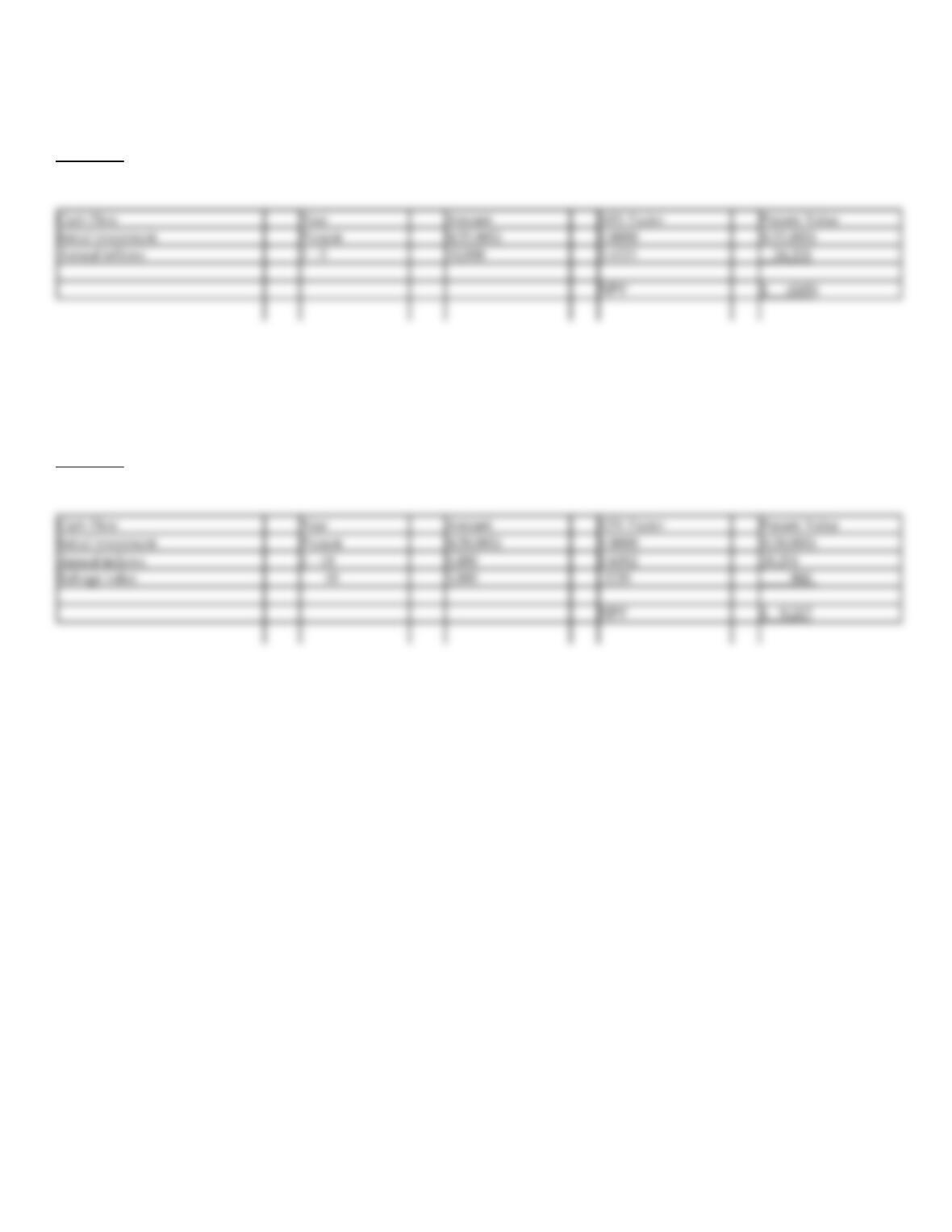
86. Mayberry Textiles Inc. is considering the purchase of a new machine which has an initial cost of $400,000.
Annual operating cash inflows are expected to be $100,000 each year for eight years. No salvage value is
expected at the end of the asset’s life. Mayberry’s cost of capital is 14 percent.
Required: Compute the net present value of the machine. (Ignore income taxes)
Cash Flow
Year
Amount
14% Factor
Present Value
Initial investment
Present
$(400,000)
1.0000
$(400,000)
Annual inflows
100,000
4.6389
463,890
NPV
$ 63,890
expense), which lowers taxable income and, therefore, income taxes.
B.
It generates a cash inflow.
87. A local merchant is considering the purchase of a new machine which has an initial cost of $35,000. Annual
operating cash inflows are expected to be $10,000 each year for five years. No salvage value is expected at the
end of the machine’s life. The company’s cost of capital is 14 percent.
Required: Compute the net present value of the machine. (Ignore income taxes)
88. Hi-Town Nursery is considering the purchase of a new greenhouse. The greenhouse will have an initial cost
of $20,000 and an estimated salvage value of $3,000 at the end of its useful life. The nursery expects annual net
operating cash inflows to increase $5,000 each year for ten years. The cost of capital is 12 percent.
Required: Compute the net present value of the new greenhouse. (Ignore income taxes)
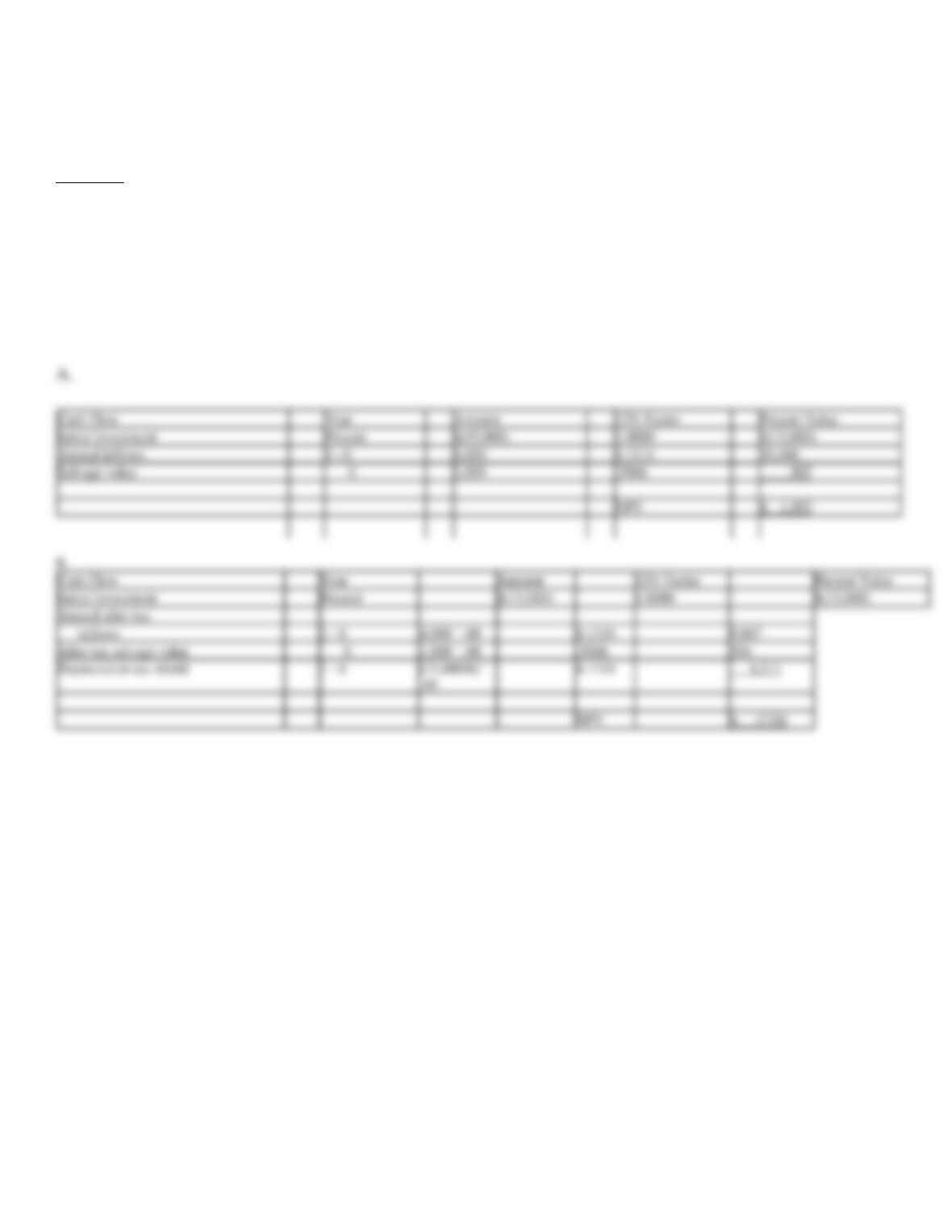
89. Clara’s Custom Curtains Inc. is considering the purchase of a new high-tech sewing machine. The machine
will have an initial cost of $15,000 and an estimated salvage value of $1,000 at the end of its useful life. The
company expects annual net operating cash inflows to increase $4,000 each year for six years. The company has
a cost of capital of 12 percent.
Required:
A.
If the company ignores income taxes, compute the net present value of the machine.
B.
If the company takes into account income taxes using a 40 percent income tax rate, and the machine will be depreciated over its six-year
life using the straight-line method, compute the net present value.
Cash Flow
Year
Amount
12% Factor
Present Value
Initial investment
Present
$(15,000)
1.0000
$(15,000)
Annual inflows
4,000
4.1114
16,446
Salvage value
6
1,000
.5066
507
NPV
$ 1,953
Cash Flow
Year
Amount
12% Factor
Present Value
Initial investment
Present
$(15,000)
1.0000
$(15,000)
inflows
4,000 ´ .60
4.1114
9,867
After-tax salvage value
6
1,000 ´ .60
.5066
Depreciation tax shield
[15,000/6] ´
4.1114
4,111
90. Palatial Products Inc. is considering the purchase of a new industrial machine. The estimated cost of the
machine is $150,000. The machine is expected to generate annual cash inflows for the next four years as
follows:
Year
Annual cash flow
1
$60,000
2
$50,000
3
$40,000
4
$40,000
The machine is not expected to have a residual value at the end of its useful life. The company uses a discount rate of 14%.
Required: Compute the net present value of the machine. (Ignore income taxes)
91. Meredith Products Inc. is considering a new equipment purchase. The estimated cost of the equipment is
$80,000. The equipment is expected to generate annual operating cash inflows for the next three years as
follows:
Year
Annual cash flow
1
$40,000
2
$30,000
3
$20,000
The equipment is expected to have a salvage value at the end of its useful life of $15,000. The company uses a discount rate of 14%.
Required: Compute the net present value of the equipment. (Ignore income taxes)
Cash Flow
Year
Amount
14% Factor
Present Value
Initial investment
Present
$(80,000)
1.0000
$(80,000)
Annual inflow
1
40,000
.8772
35,088
Annual inflow
2
30,000
.7695
23,085
Annual inflow
3
20,000
.6750
13,500
Salvage value
3
15,000
.6750
10,125
NPV
$ 1,798
Cash Flow
Year
Amount
14% Factor
Present Value
Initial investment
Present
$(150,000)
1.0000
$(150,000)
Annual inflow
1
60,000
.8772
52,632
Annual inflow
2
50,000
.7695
38,475
Annual inflow
3
40,000
.6750
27,000
Annual inflow
4
40,000
.5921
23,684
NPV
$ (8,209)
92. Bayleaf Inc. is considering the purchase of a machine that costs $250,000. The machine is expected to
generate revenues of $85,000 per year for five years. The machine would be depreciated using the straight-line
method over a five-year life and have no salvage value. The company considers the impact of income taxes in
all of its capital investment decisions. The company has a 40 percent income tax rate and desires an after-tax
rate of return of 12 percent on its investment.
Required: Compute the net present value of the machine.
93. Peddler Products Inc. requires all capital investments to generate an internal rate of return of 14%. The
company is currently considering an investment that is expected to generate annual cash inflows of $25,000 for
5 years.
Required: What amount should the cost of the investment not exceed? Show computations and ignore income
taxes.
94. A local company requires all capital investments to generate a minimum internal rate of return of 14%. The
company is currently considering an investment that is expected to generate annual cash inflows of $40,000 for
5 years. The cost of this investment is $150,000.
Required: Would you recommend the company make this investment? Why or why not? Show computations
and ignore income taxes.
95. Blue Fin Inc. requires all capital investments to generate a minimum internal rate of return of 15%. The
company is currently considering an investment that is expected to generate annual cash inflows of $10,000 for
6 years. The cost of this investment is $30,000.
Required: Would you recommend the company make this investment? Why or why not? Show computations
and ignore income taxes.
96. The Mayfield Company is considering a project that will require an initial investment of $24,000 and is
expected to generate future cash flows of $3,000 each year for the next 10 years.
Required: Calculate the payback period in years.
97. Vincent Products is considering a project that will require an initial investment of $45,000 and is expected
to generate future cash flows of $6,000 each year for the next 15 years.
Required: Calculate the payback period in years.
98. Putnam Manufacturing is considering a project that will require an initial investment of $52,000 and is
expected to generate future cash flows of $10,000 for years 1 through 3, $8,000 for years 4 and 5, $2,000 for
years 6 through 10.
Required: Calculate the project’s payback period in years.
The payback period is 8 years calculated as follows: