Exam
Name___________________________________
SHORT ANSWER. Write the word or phrase that best completes each statement or answers the question.
Provide an appropriate response.
1)
Explain the difference between time deposit accounts and passbook accounts.
1)
2)
If interest is compounded monthly at 10% per year for 15 years, explain how to find the
number of compounding periods and the interest rate per compounding period.
2)
3)
Explain the difference between simple interest and compound interest.
3)
4)
Explain what is meant by the present value of money.
4)
MULTIPLE CHOICE. Choose the one alternative that best completes the statement or answers the question.
5)
Find the amount by which the interest compounded annually is larger than the simple interest.
Round to the nearest cent. Use the formula M = P(1 + i)n to find the compound amount.
Principal: $710 Rate: 6% Years: 11
5)
A)
$135.50
B)
$410.59
C)
$879.19
D)
$169.19
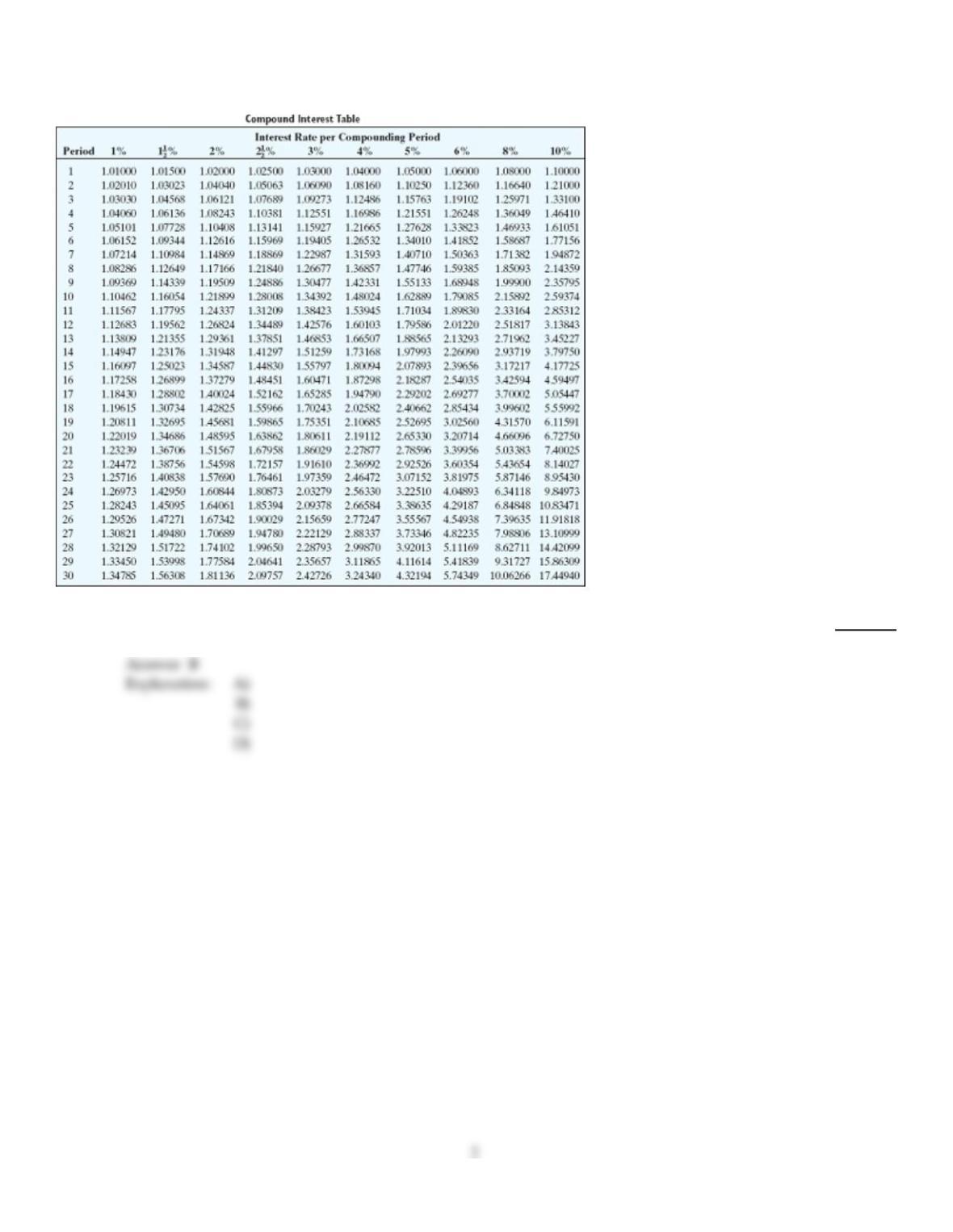
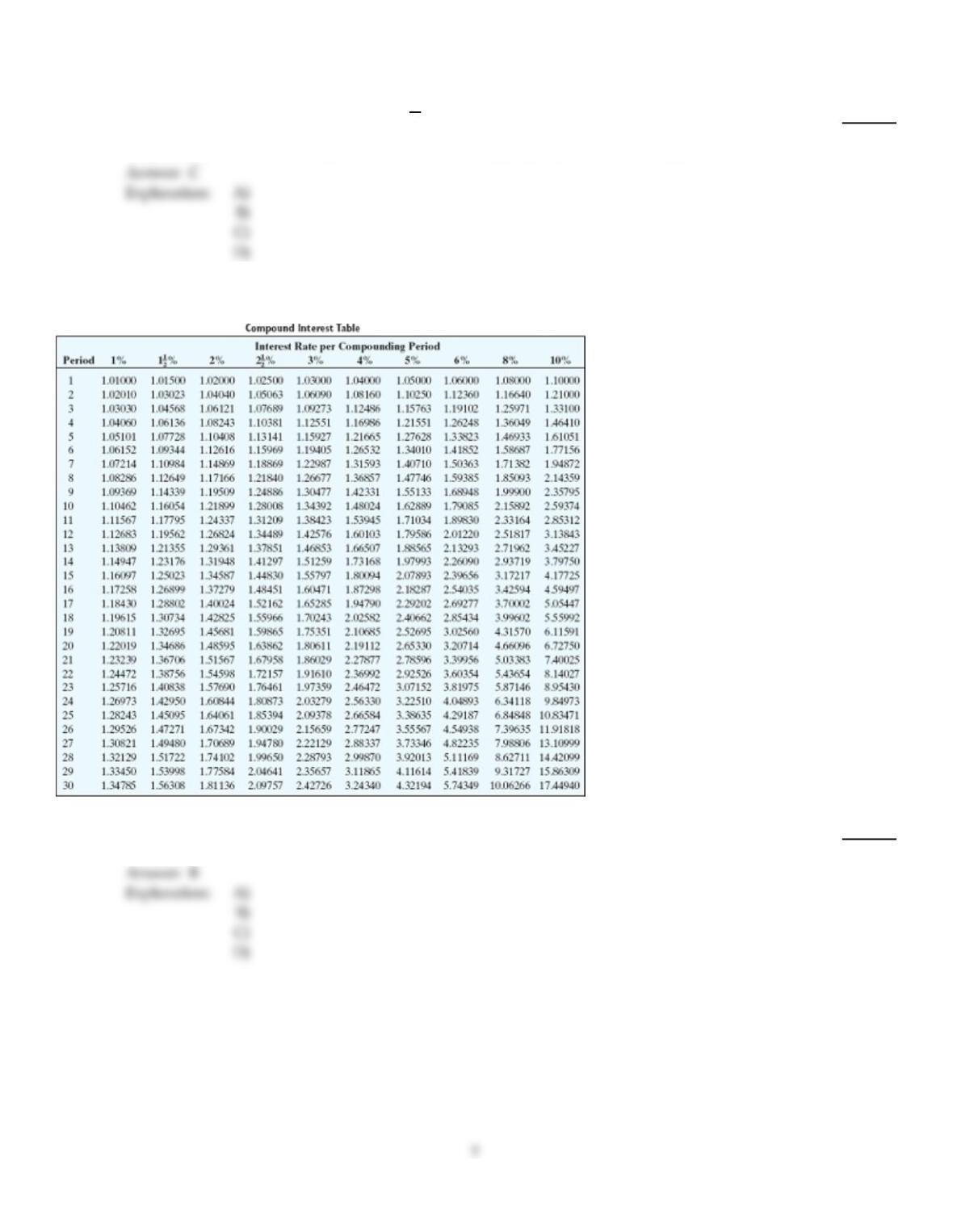
Use values from the compound interest table to find the compound interest. Round to the nearest cent.
6)
$1000 at 8% compounded semiannually for 12 years
6)
A)
$601.03
B)
$1563.30
C)
$960.00
D)
$1518.17
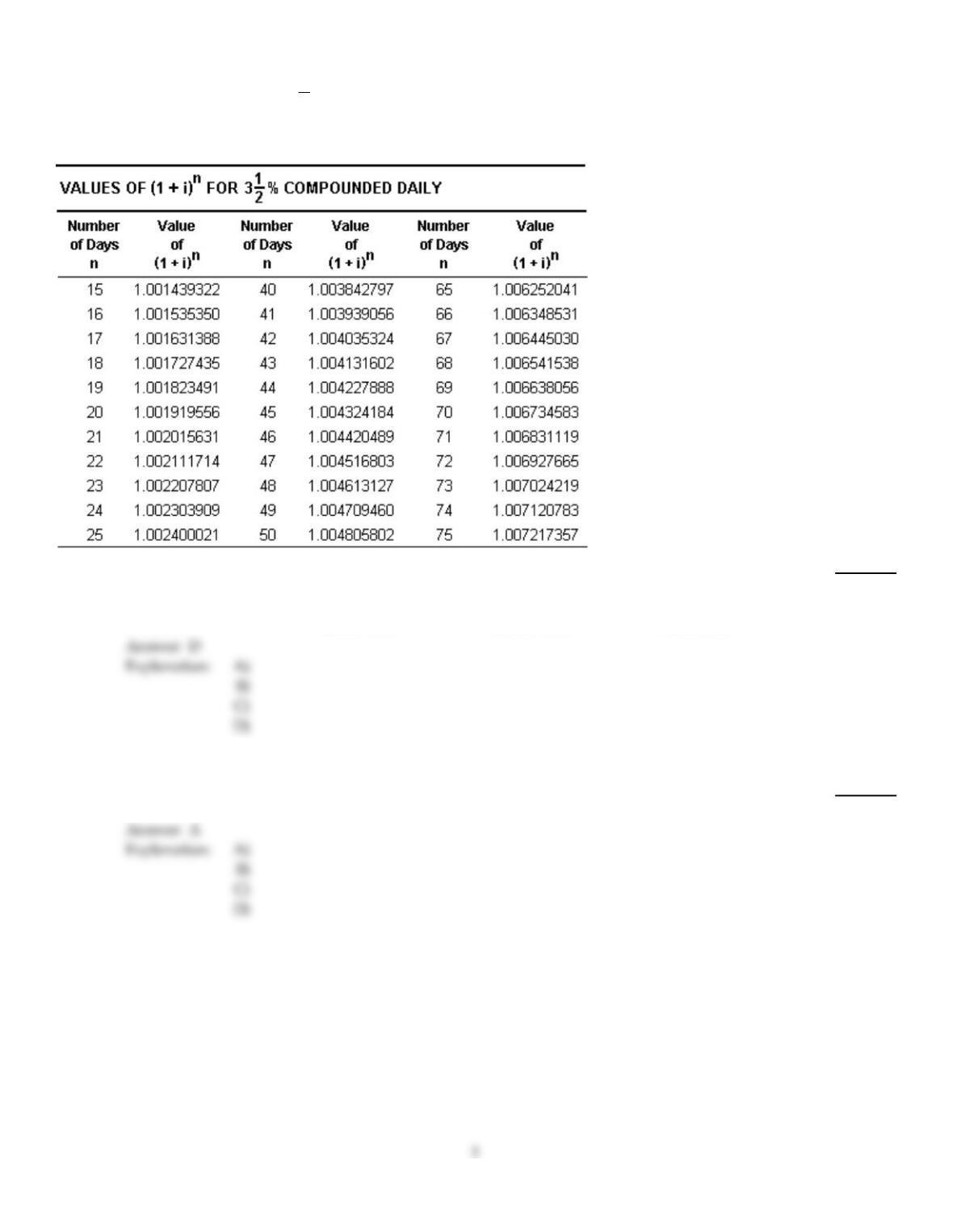
Find the interest earned. Assume 3 1
2% interest compounded daily, as in the following table, and use the exact number of
days. Round to the nearest cent.
7)
Amount: $8000
Deposited: Oct 27
Withdrawn: Nov 16
7)
A)
$48.47
B)
$8016.36
C)
$8015.36
D)
$15.36
Find the compound interest earned. Round to the nearest cent. Do not use an interest table.
8)
$13,000 at 10% compounded semiannually for 4 years
8)
A)
$6206.92
B)
$14,866.65
C)
$6033.30
D)
$5200.00
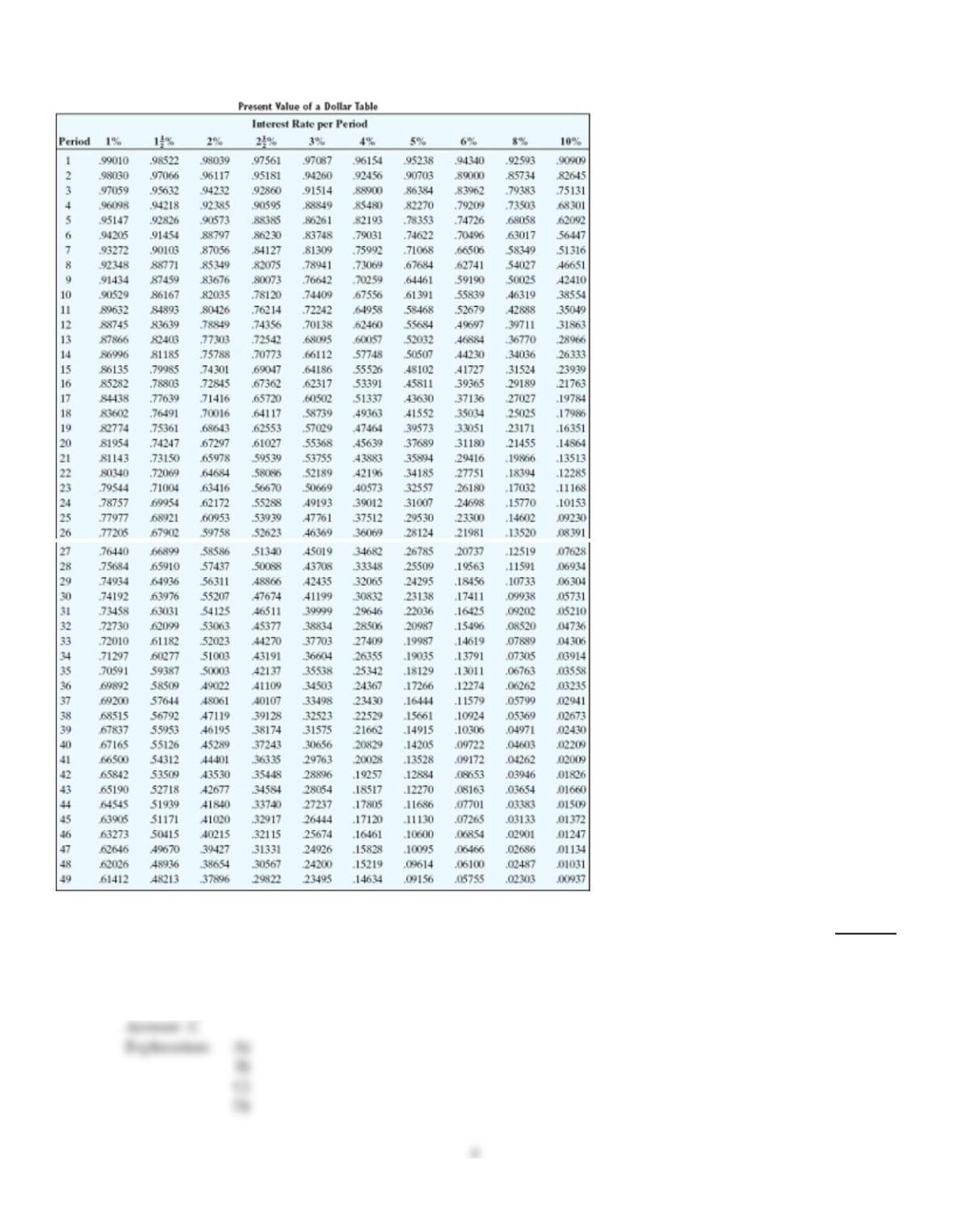
Solve the problem.
9)
An investment of $13,335 earns 12% interest compounded monthly for 2 years. (a) What is the
future value of the investment? (Use the compound interest table.) (b) If money can be deposited at
12% compounded quarterly, find the present value of the investment.
9)
A)
(a) $17,931.85
(b) $10,059.29
B)
(a) $16,764.27
(b) $9059.29
C)
(a) $16,931.85
(b) $13,366.17
D)
(a) $14,439.89
(b) $8539.25
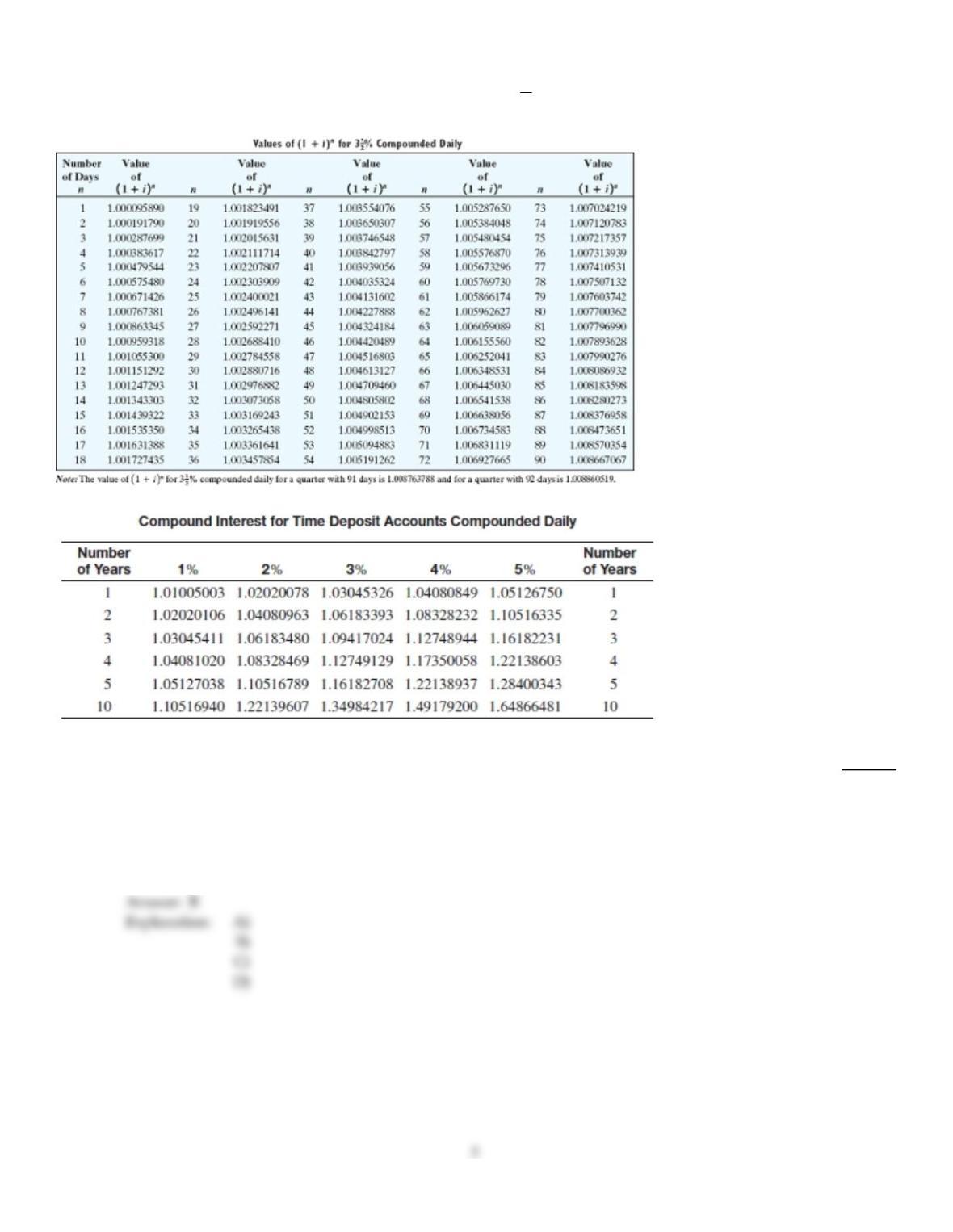
Solve the application problem. If no interest rate is given, assume 31
2% interest compounded daily. Round to the nearest
cent.
10)
A publishing company deposited $120,000 in a 2–year time deposit earning 6% compounded daily
with a Chicago bank as partial collateral for a loan. Find the compound amount and the interest
earned.
10)
A)
Compound amount =$146,566.32;
Interest =$12,619.60
B)
Compound amount =$132,619.60;
Interest =$12,619.60
C)
Compound amount =$132,619.60;
Interest =$72,619.60
D)
Compound amount =$252,619.60;
Interest =$619.60
Solve the problem.
11)
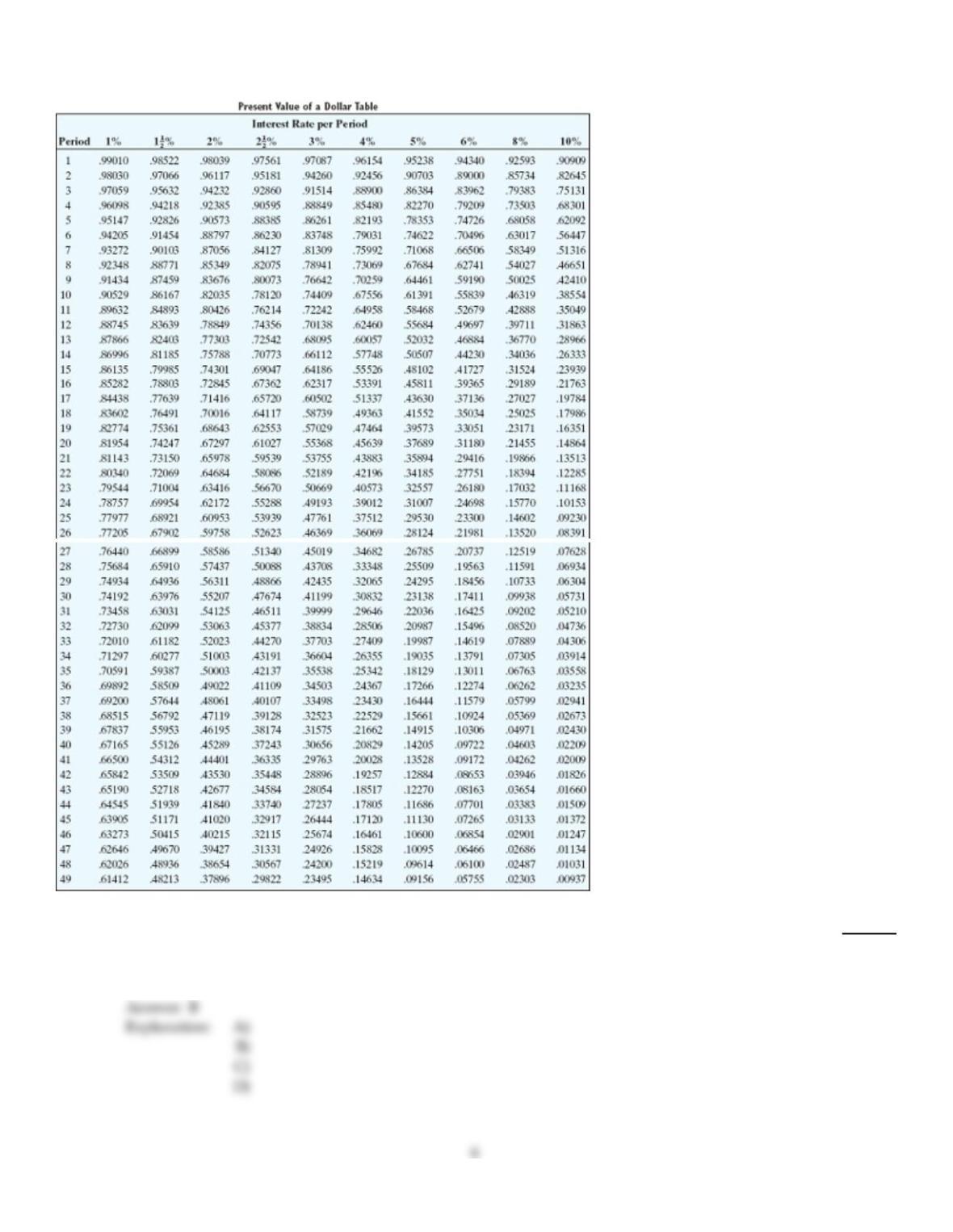
Southwest Dry Cleaners believes that it will need new equipment in 7 years. The equipment will
cost $26,000. What lump sum should be invested today at 10% compounded semiannually, to yield
$26,000?
11)
A)
$18,591.20
B)
$13,131.82
C)
$18,361.71
D)
$21,579.82
Find the compound interest earned. Round to the nearest cent. Do not use an interest table.
12)
$16,000 at 10% compounded quarterly for 3
4 year
12)
A)
$1185.59
B)
$4800.00
C)
$1230.25
D)
$5296.00
Use values from the compound interest table to find the compound interest. Round to the nearest cent.
13)
$580 at 8% compounded annually for 14 years
13)
A)
$649.60
B)
$1123.57
C)
$603.20
D)
$997.38
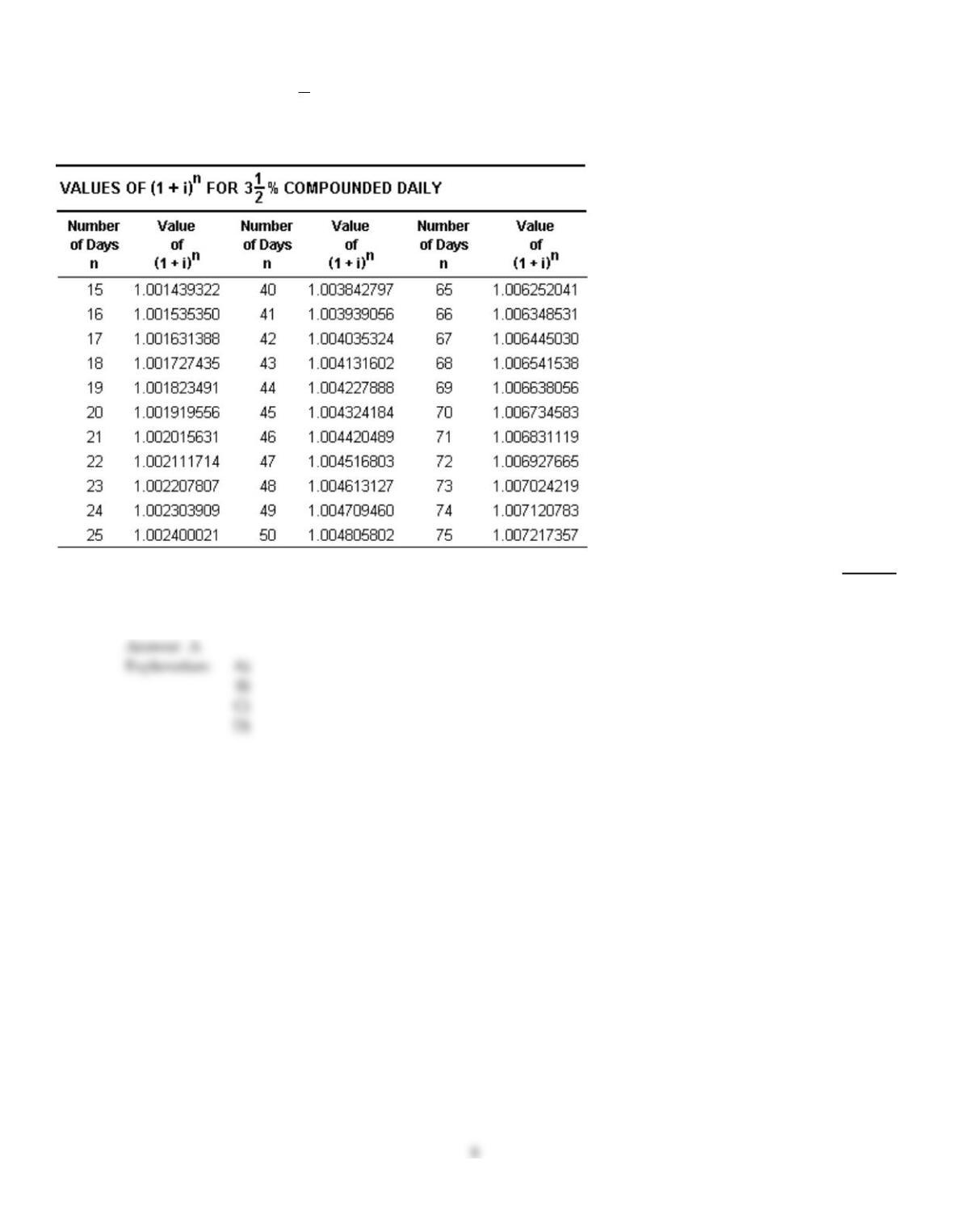
Find the interest earned. Assume 3 1
2% interest compounded daily, as in the following table, and use the exact number of
days. Round to the nearest cent.
14)
Amount: $16,038
Deposited: Mar 6
Withdrawn: May 11
14)
A)
$101.82
B)
$159.95
C)
$16,139.82
D)
$104.13
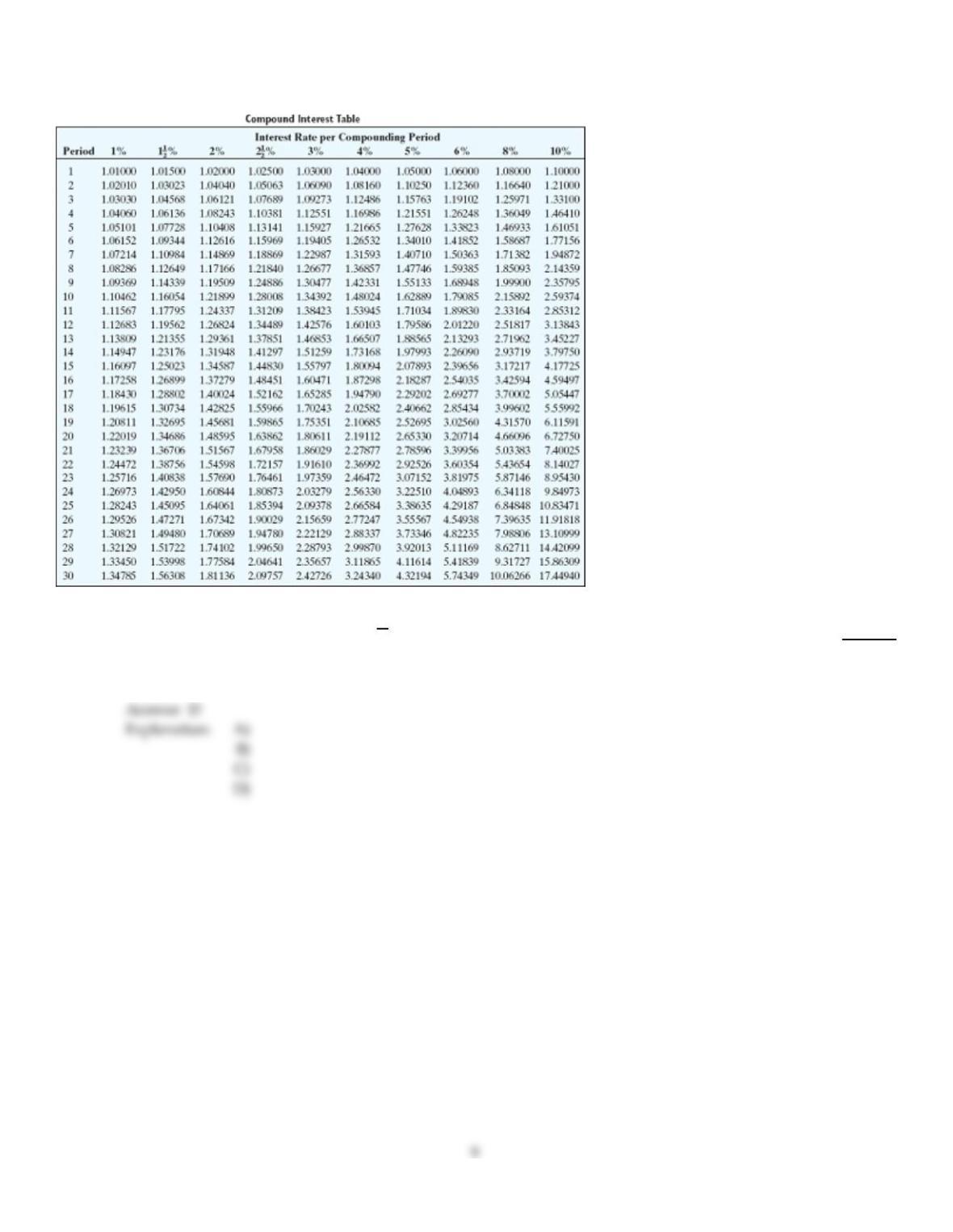
Use the table to solve the problem. Round to the nearest cent.
15)
Universal Bank lends $5,000,000 for 11
4 years at 10% compounded quarterly to Shining Shores
Development Company to fund the building of a condominium complex. Find the future value.
15)
A)
$8,052,550.00
B)
$5,632,650.00
C)
$5,625,000.00
D)
$5,657,050.00
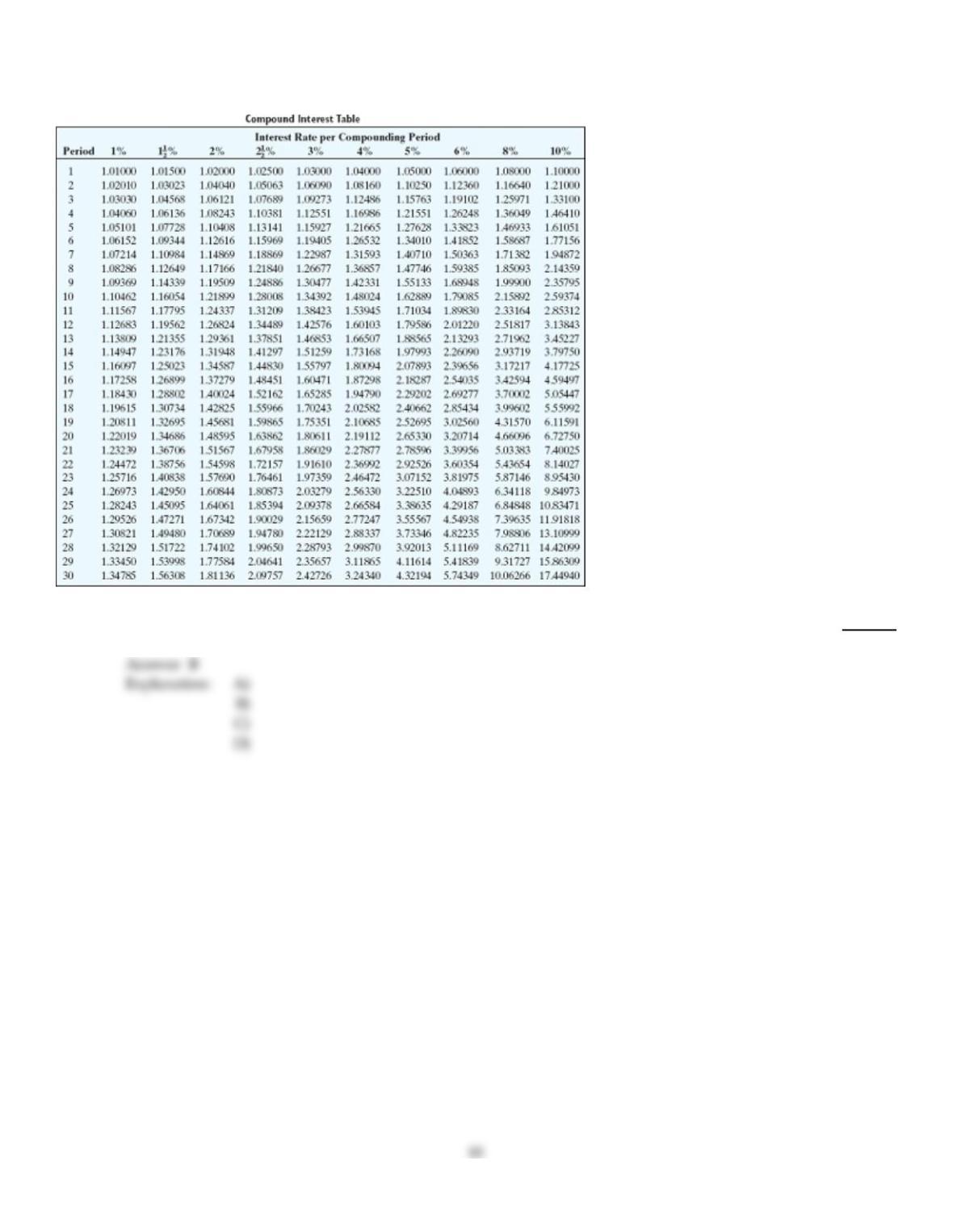
Use values from the compound interest table to find the compound amount. Round to the nearest cent.
16)
$8000 at 5% compounded semiannually for 6 years
16)
A)
$10,720.77
B)
$10,759.12
C)
$9277.55
D)
$10,400.00
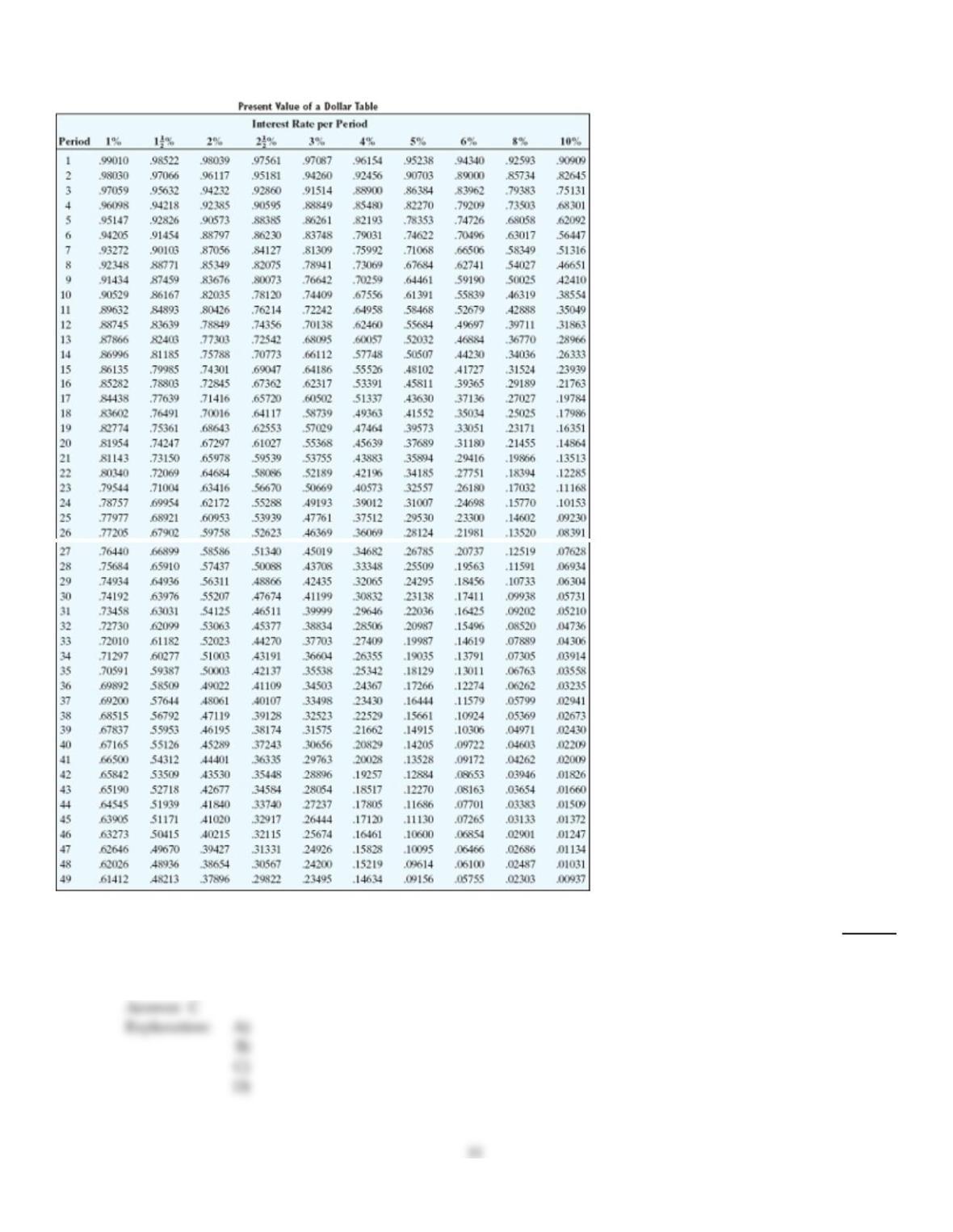
Solve the problem.
17)
Barbara knows that she will need to buy a new car in 2 years. The car will cost $15,000 by then.
How much should she invest now at 10%, compounded quarterly, so that she will have enough to
buy a new car?
17)
A)
$13,605.44
B)
$13,636.36
C)
$12,311.25
D)
$11,269.72
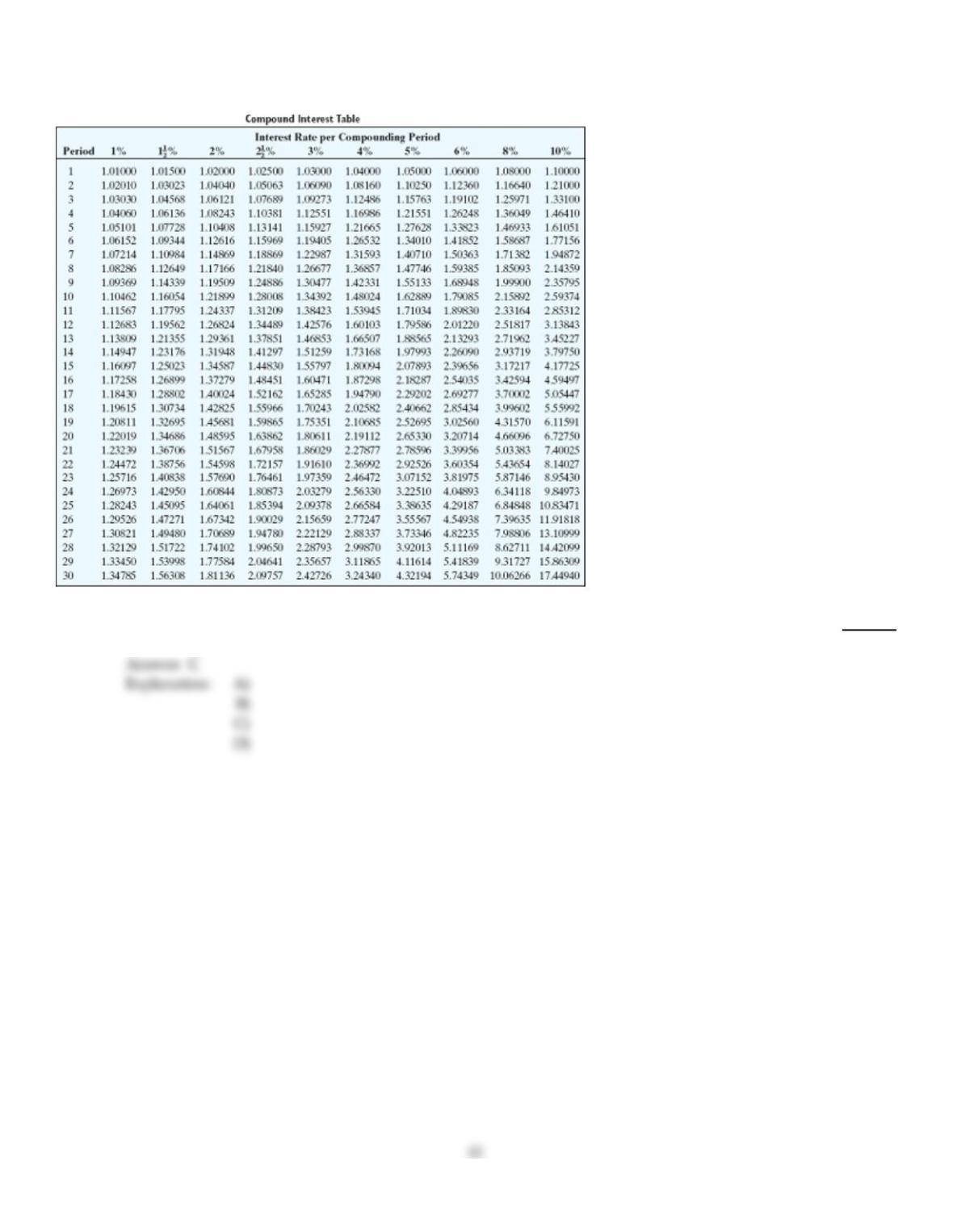
Use values from the compound interest table to find the compound amount. Round to the nearest cent.
18)
$4000 at 5% compounded annually for 3 years
18)
A)
$4410.00
B)
$4600.00
C)
$4630.52
D)
$4400.00
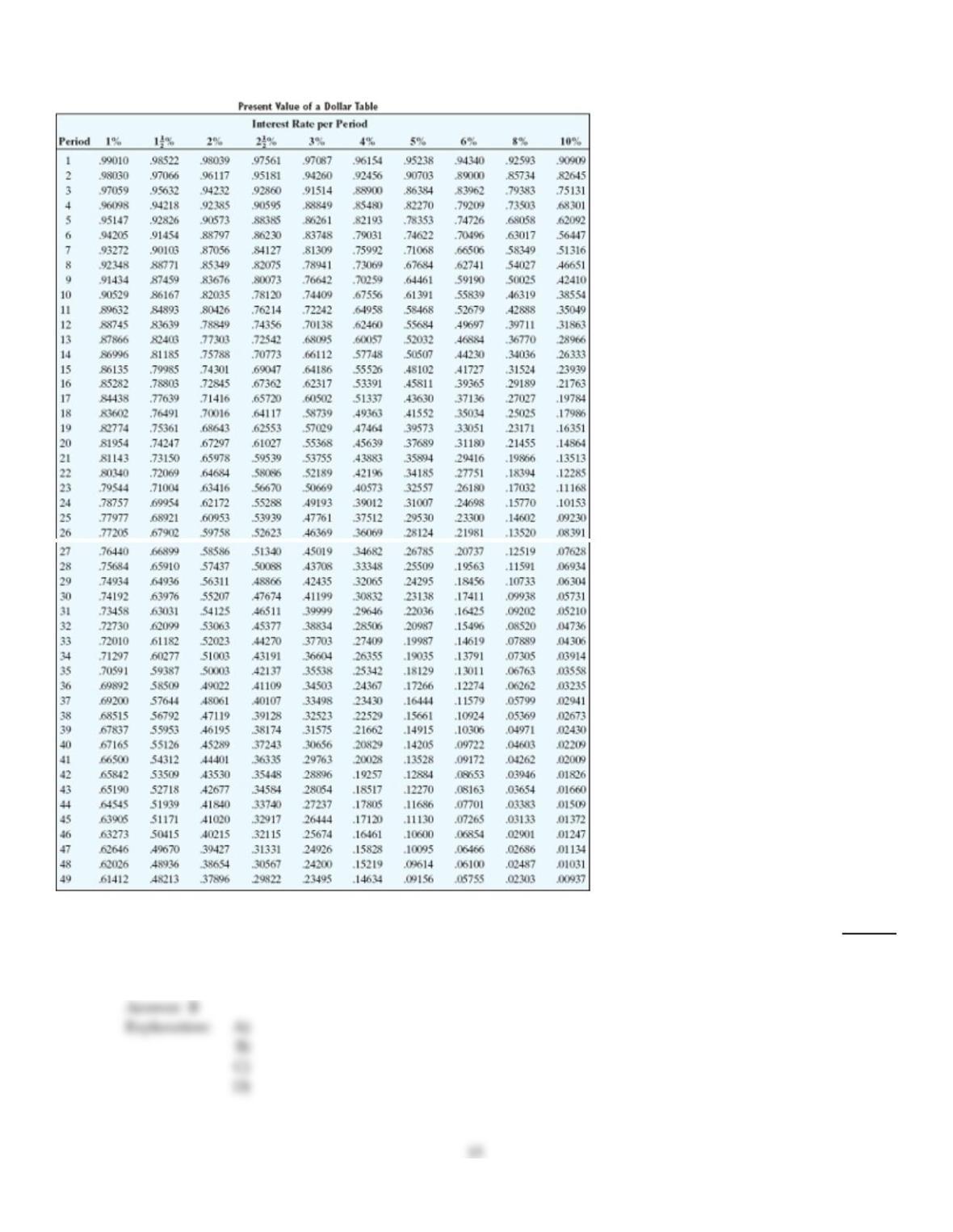
Find the present value. Round to the nearest cent.
19)
Amount Needed Time (Years) Interest Compounded
$11,500 610% annually
19)
A)
$5008.59
B)
$6491.41
C)
$20,372.95
D)
$7140.60
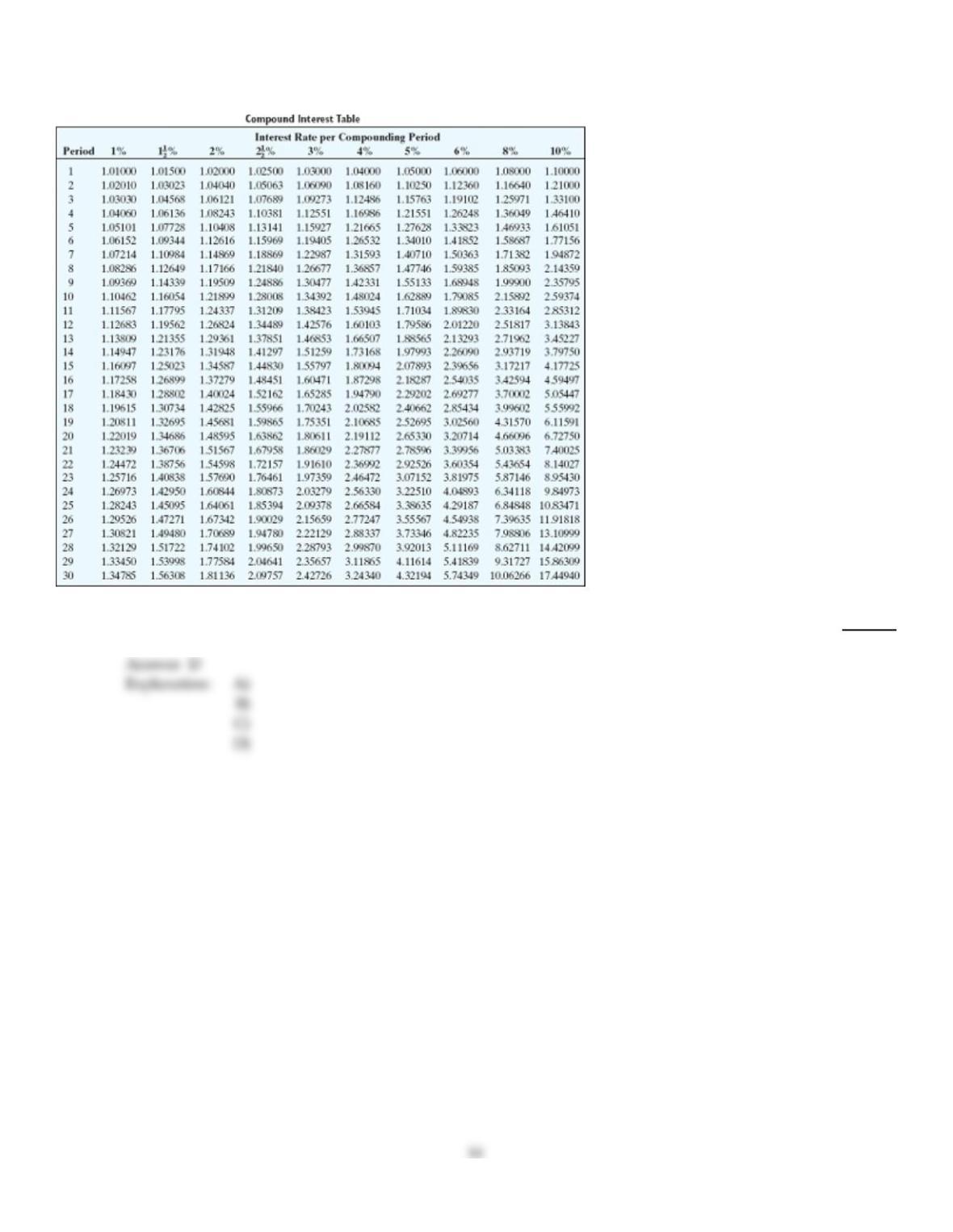
Use values from the compound interest table to find the compound interest. Round to the nearest cent.
20)
$3000 at 4% compounded annually for 6 years
20)
A)
$600.00
B)
$720.00
C)
$649.96
D)
$795.96
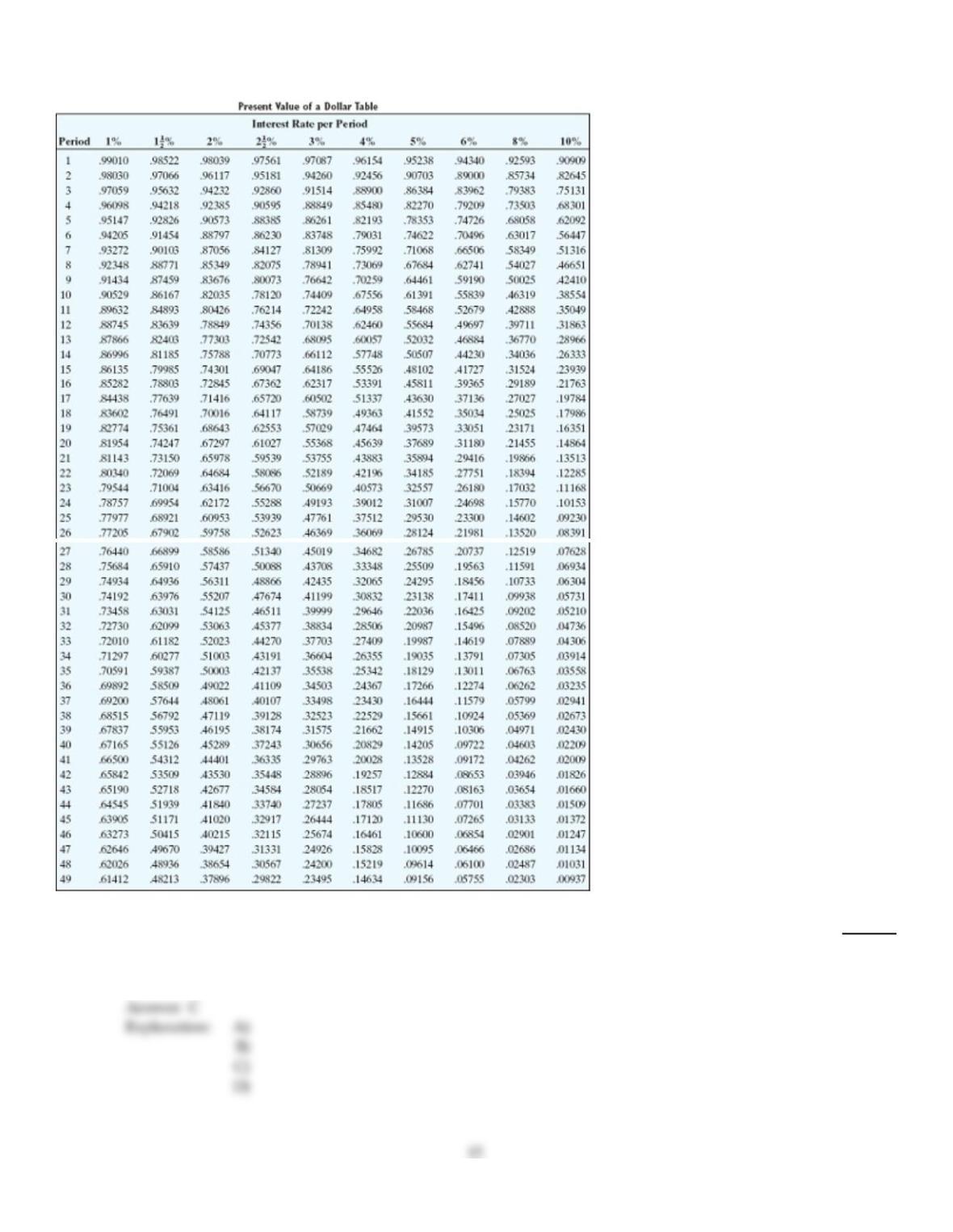
Find the present value. Round to the nearest cent.
21)
Amount Needed Time (Years) Interest Compounded
$7300 4 5% annually
21)
A)
$1294.29
B)
$8873.20
C)
$6005.71
D)
$6306.01
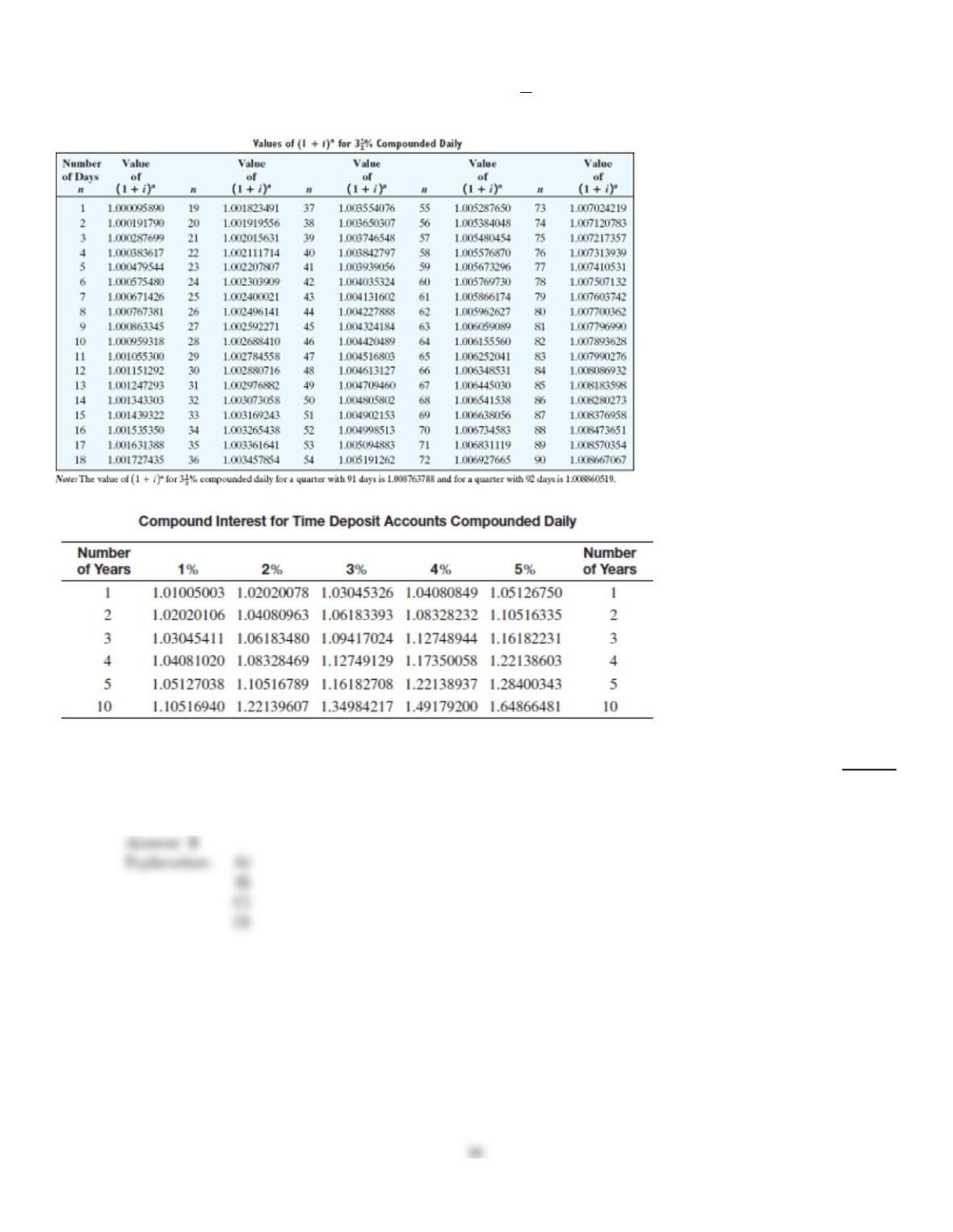
Solve the application problem. If no interest rate is given, assume 31
2% interest compounded daily. Round to the nearest
cent.
22)
A local business deposited $730,000 in a 2–year time deposit earning 4% compounded daily. At
maturity, what is the compound amount and interest earned?
22)
A)
$823,067.29; $93,067.29
B)
$790,796.09; $60,796.09
C)
$806,769.25; $76,769.25
D)
$891,611.82; $161,611.82
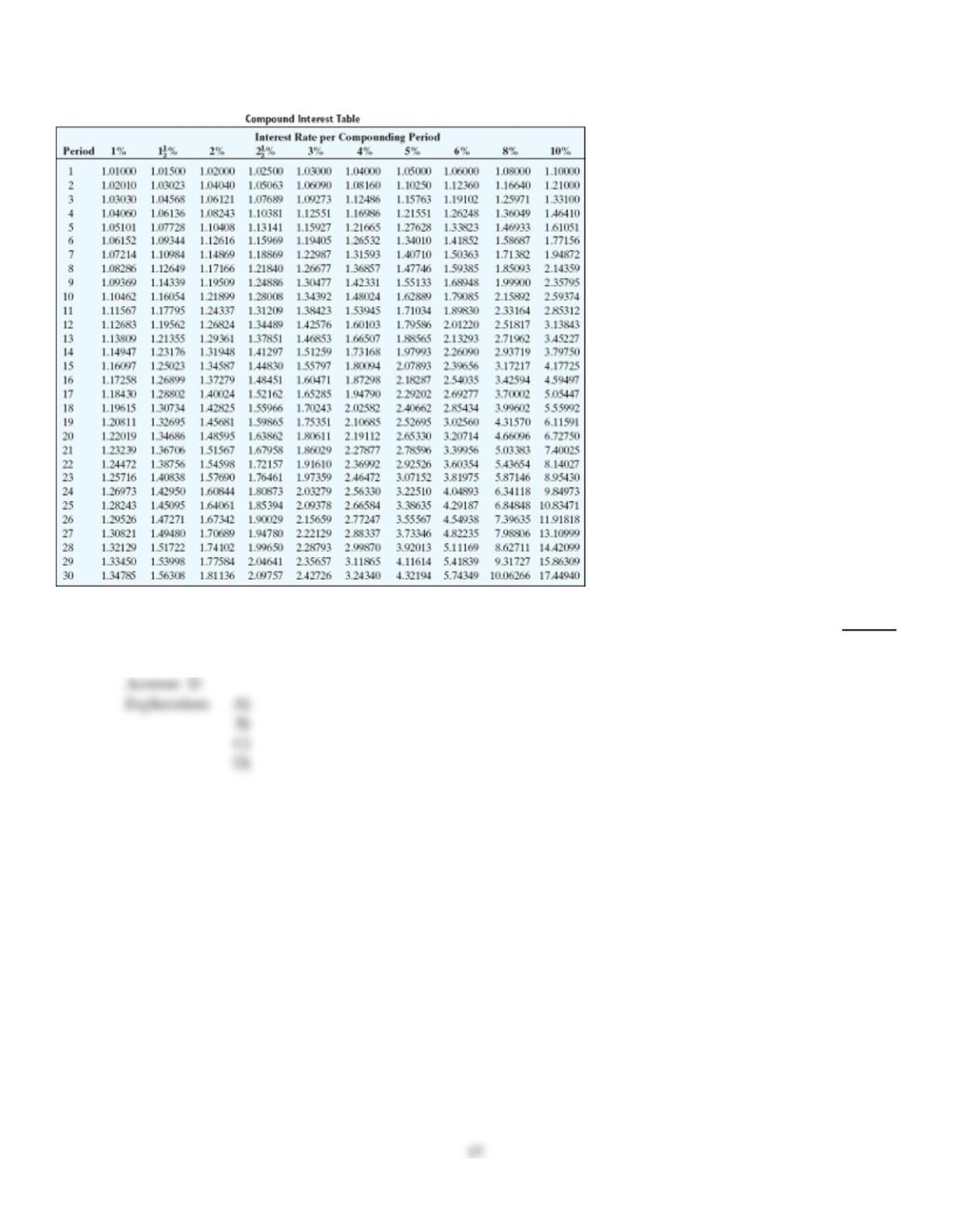
Use the table to solve the problem. Round to the nearest cent.
23)
Nora Oretega’s savings account has a balance of $3364. After 9 years, what will the amount of
interest be at 4% compounded semiannually?
23)
A)
$1345.60
B)
$23,553.00
C)
$23,539.00
D)
$23,548.00
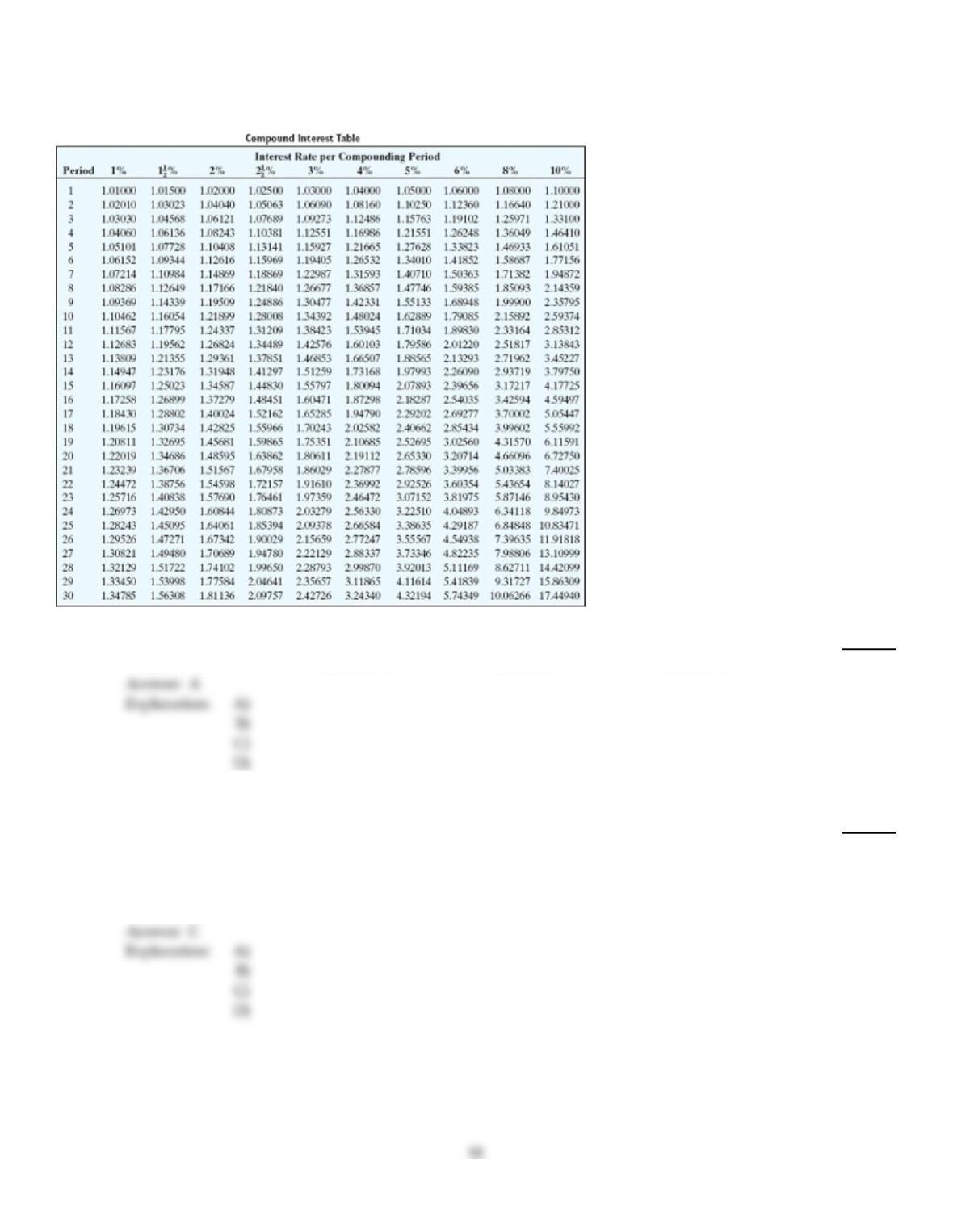
Find the simple interest for the period indicated. Then use table values to find the compound interest. Finally, find the
difference between compound interest and simple interest. Round to the nearest cent. (Interest is compounded
annually.)
24)
Principal: $790 Rate: 5% Years: 15
24)
A)
$259.85
B)
$1049.85
C)
$221.15
D)
$457.35
Provide an appropriate response.
25)
Find the amount by which the interest compounded annually is larger than the simple interest.
Round to the nearest cent. Use the formula M = P(1 + i)n to find the compound amount.
Principal: $5394 Rate: 8% Years: 5
25)
A)
$218.40
B)
$5767.96
C)
$373.96
D)
$3610.36
C
A
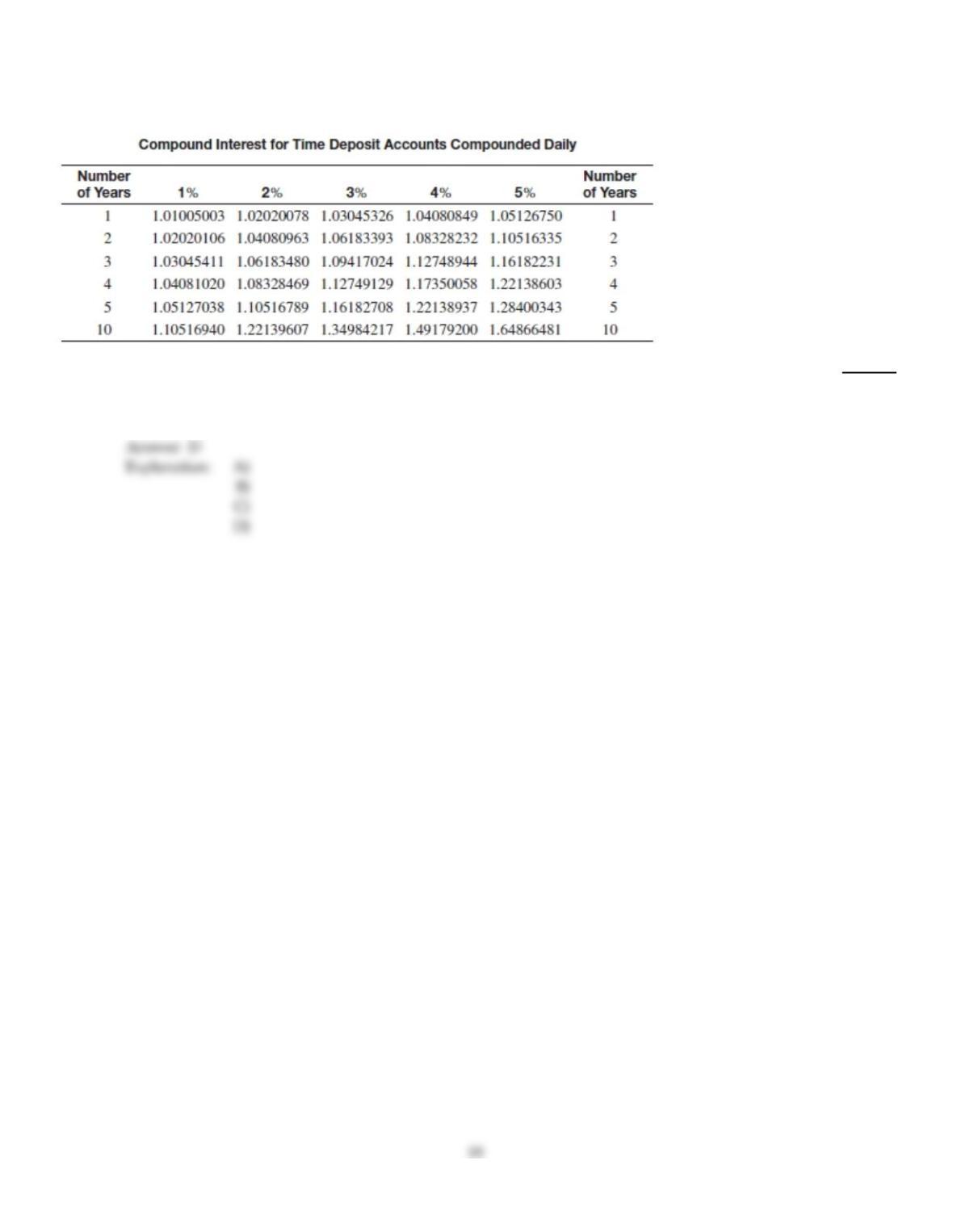
Find the compound amount for the certificate of deposit. Assume daily compounding using the following table. Round
to the nearest cent.
26)
Amount: $4895
Rate: 4%
Years: 5
26)
A)
$7302.32
B)
$5978.68
C)
$6285.20
D)
$5978.70
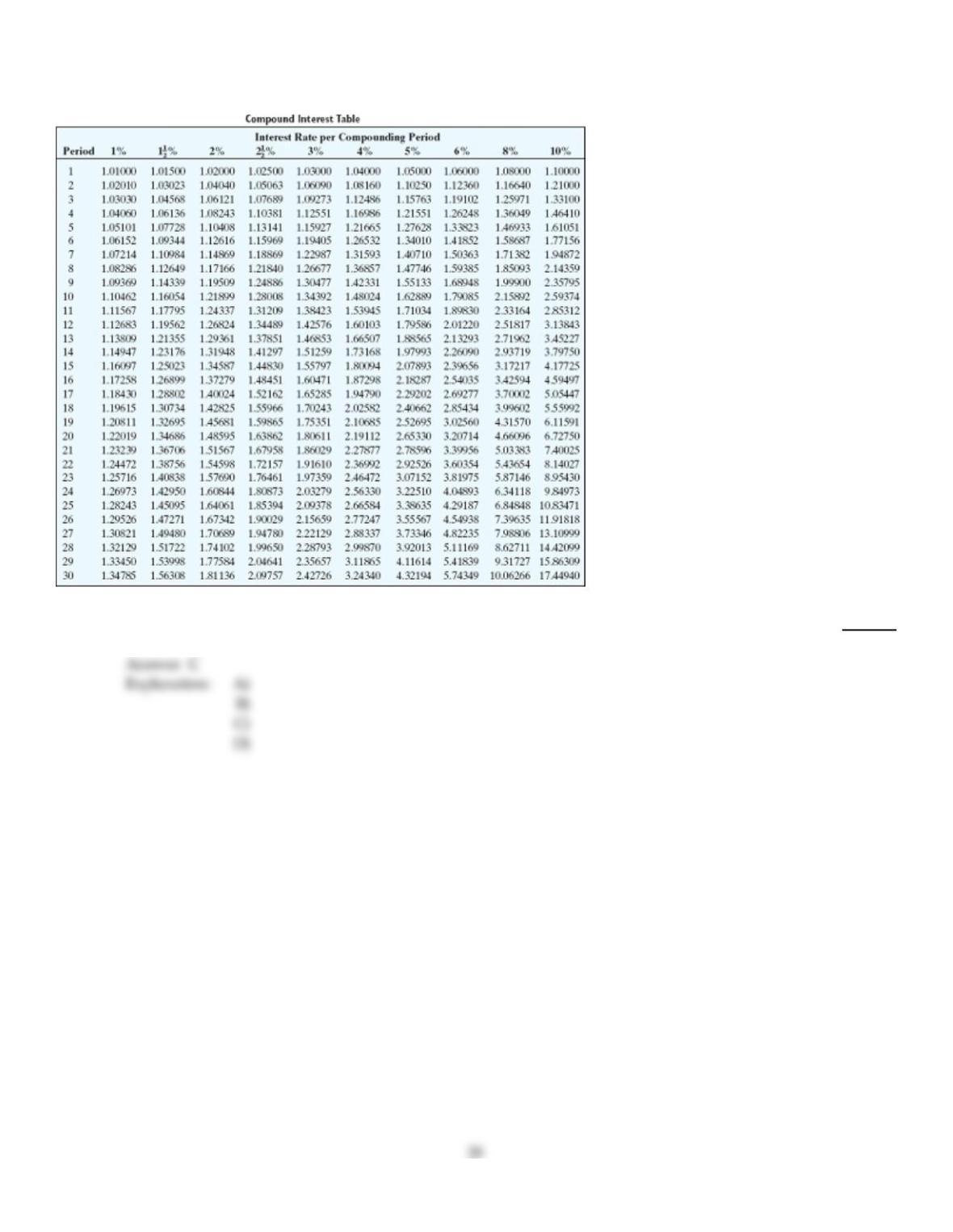
Use values from the compound interest table to find the compound amount. Round to the nearest cent.
27)
$7650 at 5% compounded semiannually for 5 years
27)
A)
$9763.55
B)
$8655.27
C)
$9792.61
D)
$9562.50