1.1 Graphs and Models
1
1.1 Graphs and Models
Multiple Choice
Identify the choice that best completes the statement or answers the question.
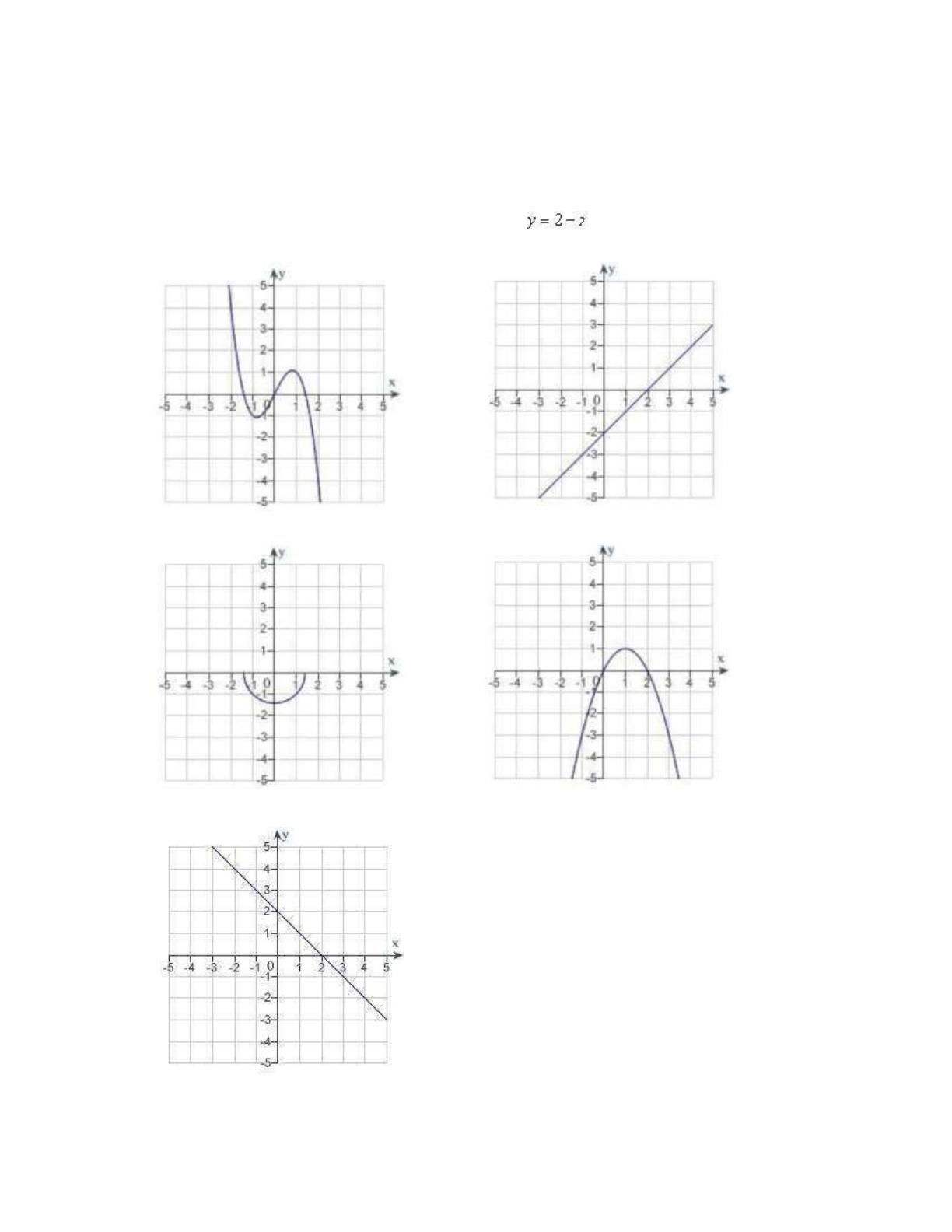
____ 1. Which of the following is the correct graph of ?
a. d.
b. e.
c.
2
Chapter 1: Preparation of Calculus
____
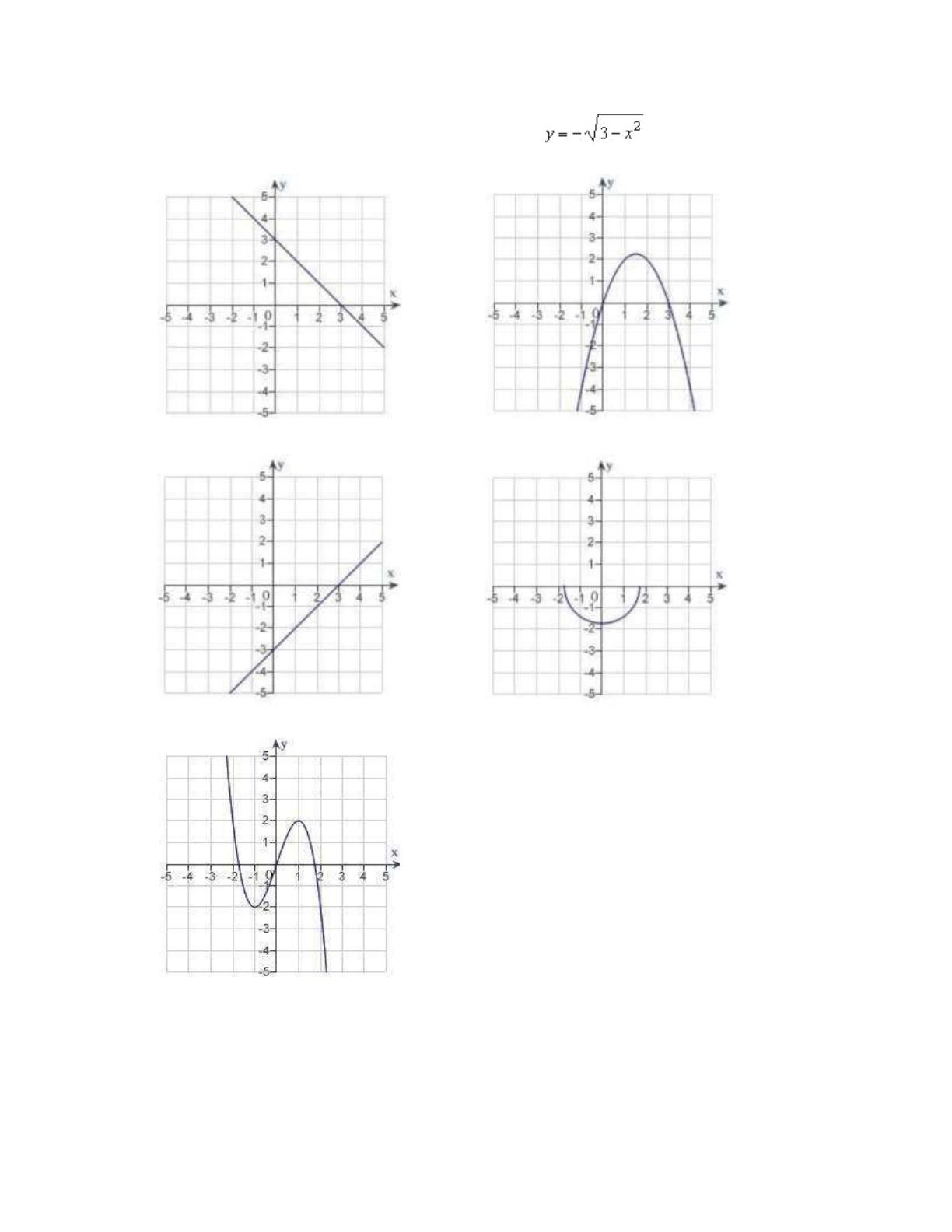
2.
Which of the following is the correct graph of
?
a.
d.
b. e.
c.
1.1 Graphs and Models
3
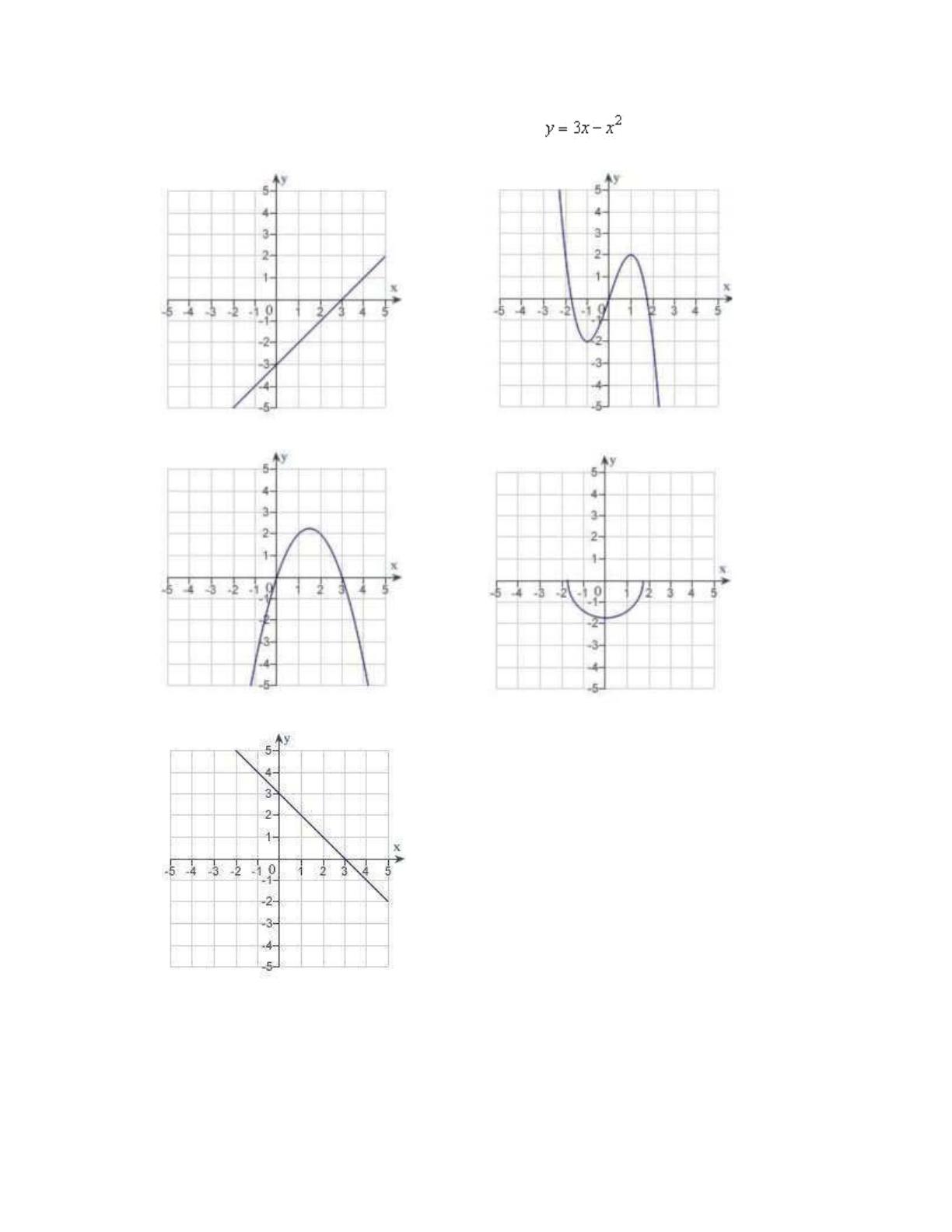
____ 3.
Which of the following is the correct graph of
?
a.
d.
b. e.
c.
4
Chapter 1: Preparation of Calculus
____
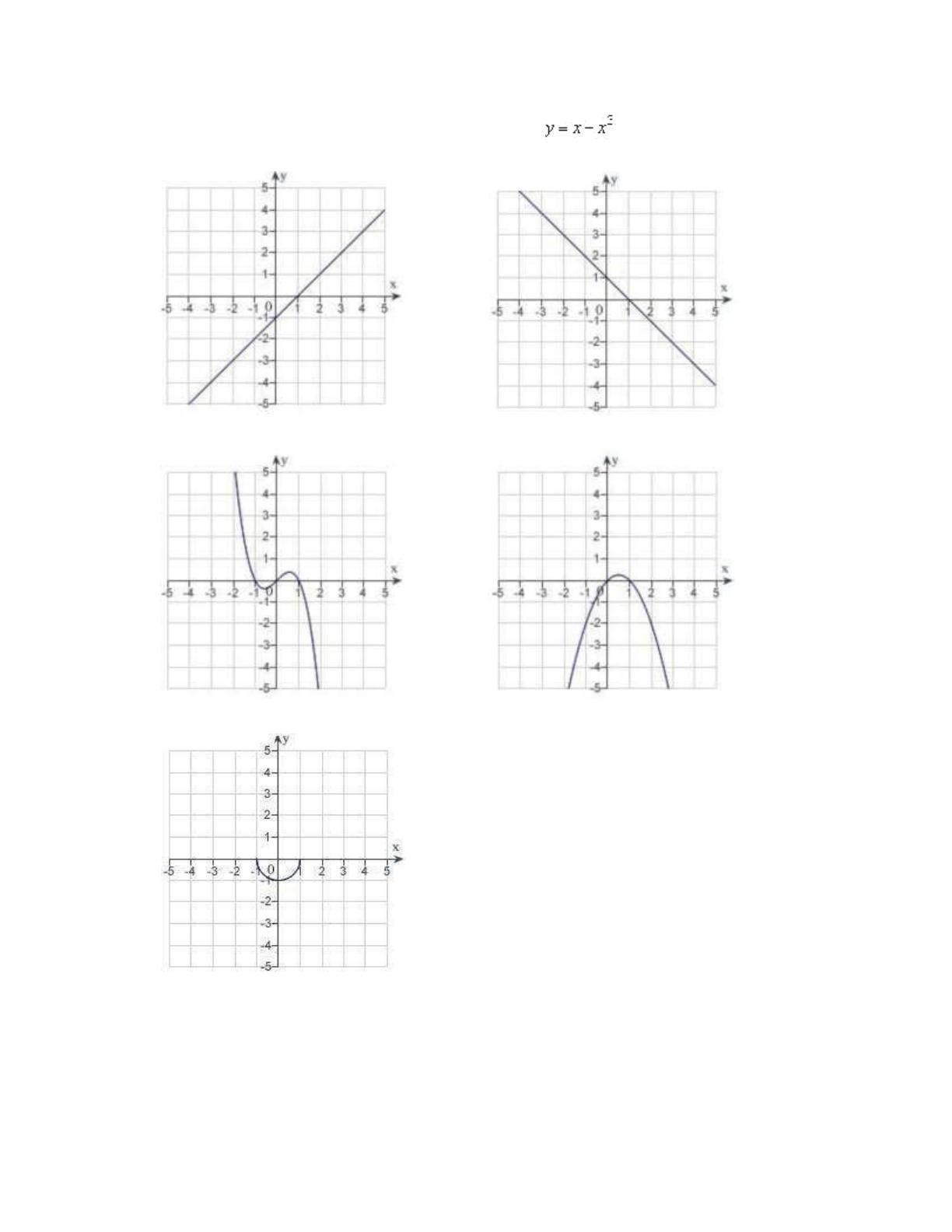
4.
Which of the following is the correct graph of
?
a.
d.
b. e.
c.
1.1 Graphs and Models
5
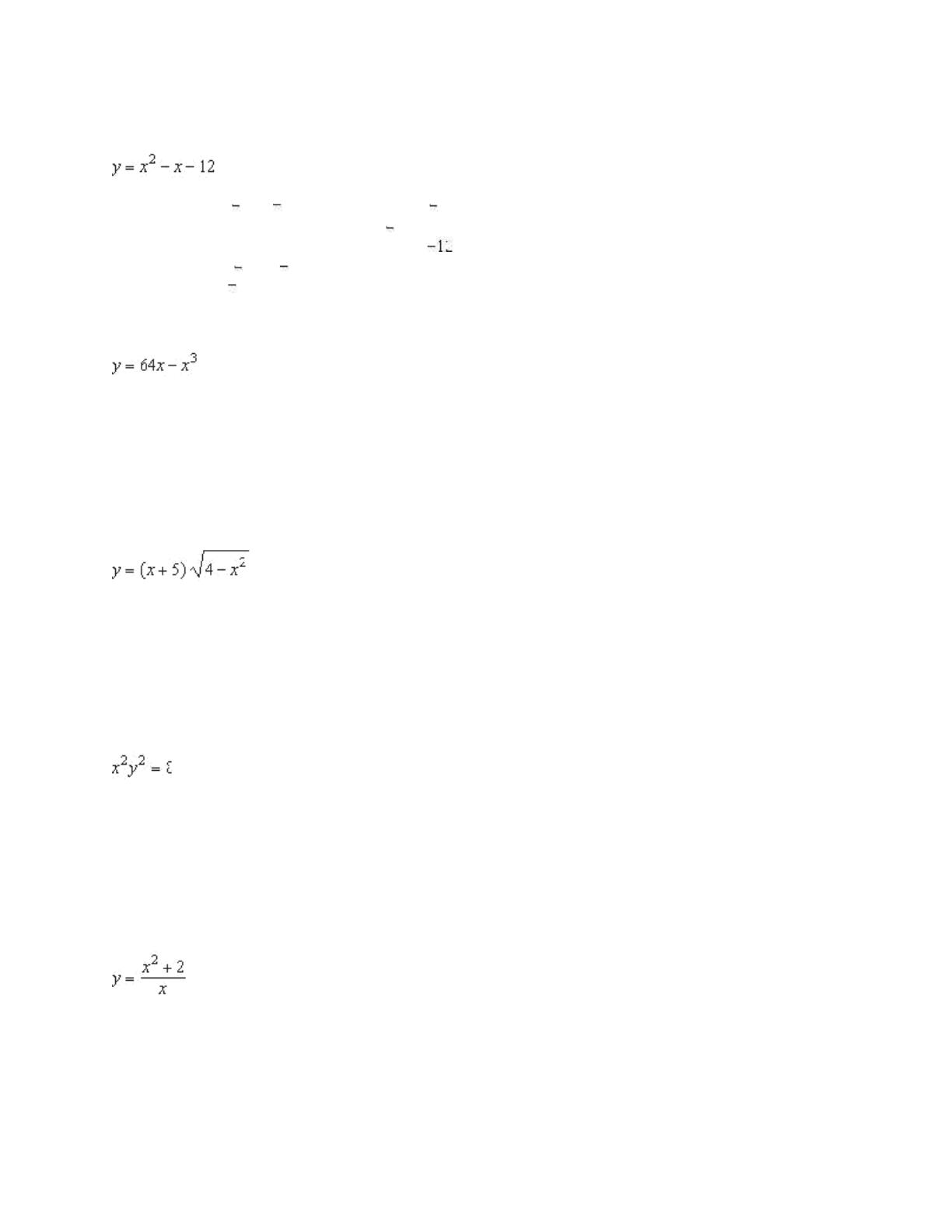
____ 5. Find all intercepts:
x-intercepts: ( ,0), ( ,0); y-intercepts: (0, ), (0, 3)
x-intercept: (12, 0); y-intercepts: (0, ), (0, 3)
x-intercepts: (4, 0), (–3,0); y-intercept: (0, )
x-intercepts: ( , 0), ( ,0); y-intercepts: (0, –12), (0, 12)
x-intercept: ( , 0); y-intercept: (0, –12)
____ 6. Find all intercepts:
x-intercepts: (–8, 0), (8, 0); no y-intercept
b. x-intercept: (0, 0); y-intercepts: (0, 0), (0, –8), (0, 8)
x-intercepts: (0, 0), (–8, 0), (8, 0); y-intercept: (0, 0)
d. x-intercepts: (0, 0), (–8, 0), (8, 0); no y–intercept
e. x-intercepts: (–8, 0), 8; y-intercept: (0, 0)
____ 7. Find all intercepts:
x-intercepts: (–5, 0), (–2, 0), (2, 0); y-intercepts: (0, 0), (0, 10)
x-intercepts: (–5, 0), (2, 0); y-intercept: (0, 10) c.
x-intercepts: (–5, 0), (2, 0); y-intercept: (0, –10)
d. x-intercepts: (–5, 0), (–2, 0), (2, 0); y-intercept: (0, 10)
x-intercepts: (–5, 0), (–2, 0), (2, 0); y-intercept: (0, –10)
____ 8. Test for symmetry with respect to each axis and to the origin.
symmetric with respect to the origin
symmetric with respect to the x-axis
symmetric with respect to the y-axis
no symmetry
e. A, B, and C
____ 9. Test for symmetry with respect to each axis and to the origin.
symmetric with respect to the origin
symmetric with respect to the y-axis
symmetric with respect to the x-axis
both B and C
e. no symmetry
6
Chapter 1: Preparation of Calculus
____
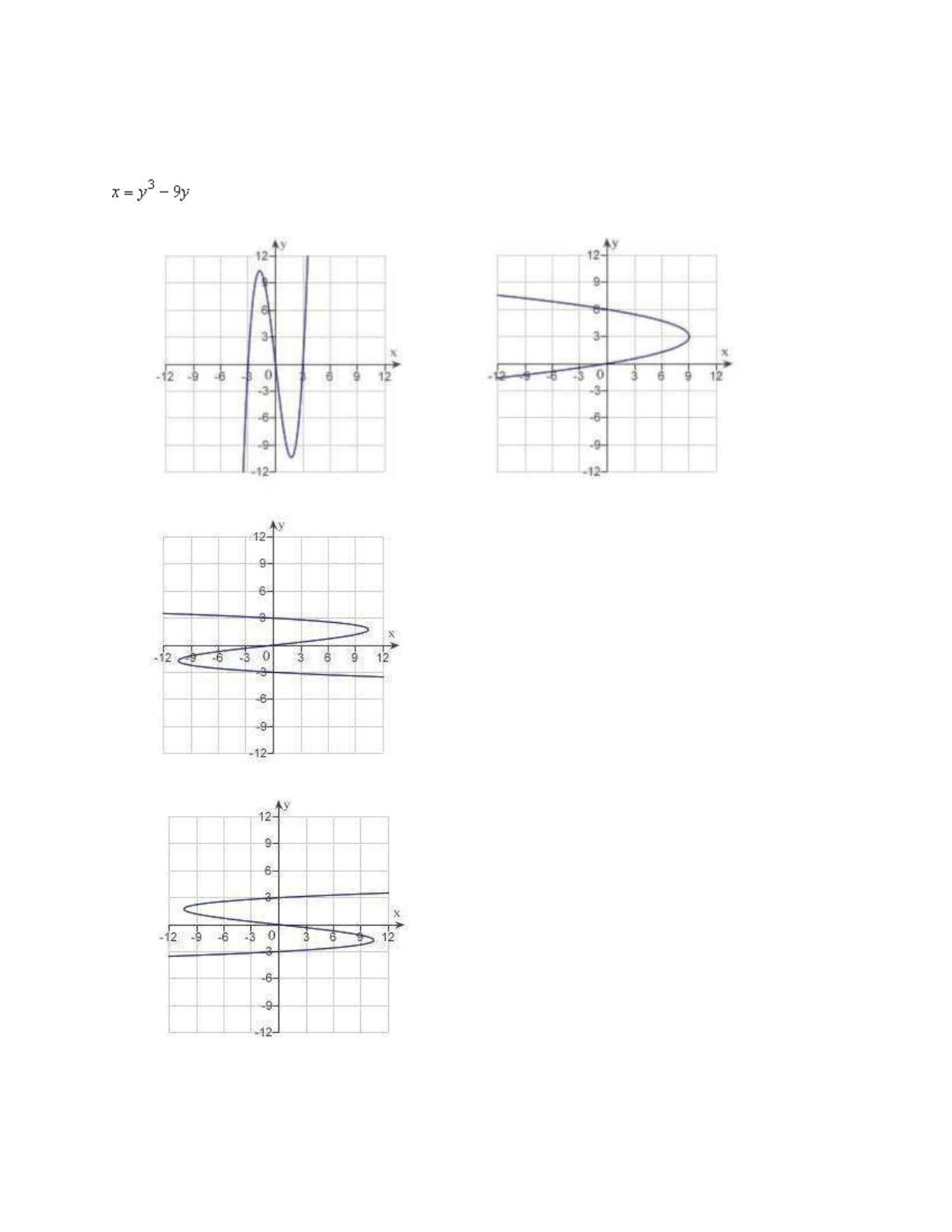
10.
Sketch the graph of the equation:
a.
d.
b. e. none of the above
c.
1.1 Graphs and Models
7
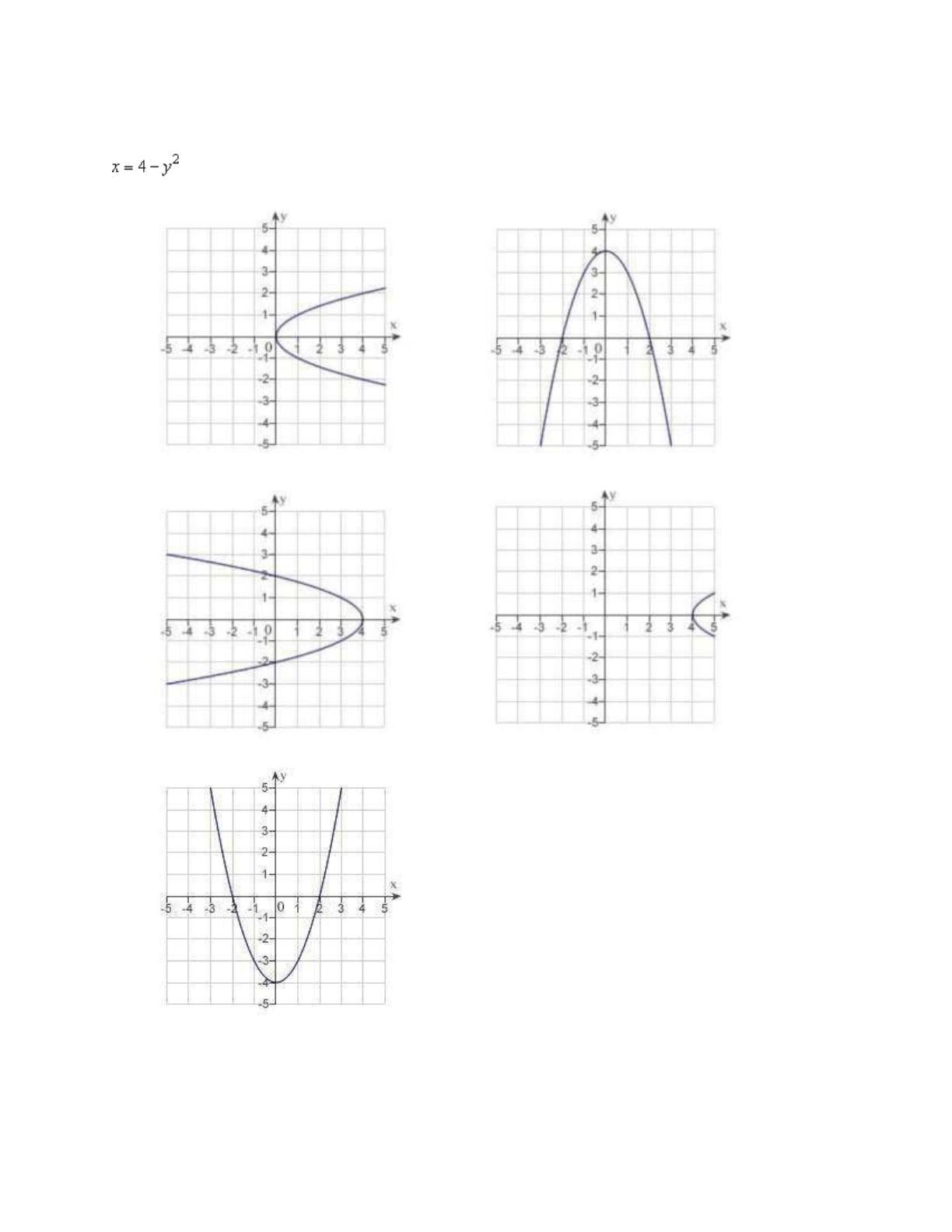
____ 11. Sketch the graph of the equation:
a. d.
b. e.
c.
8
Chapter 1: Preparation of Calculus
____
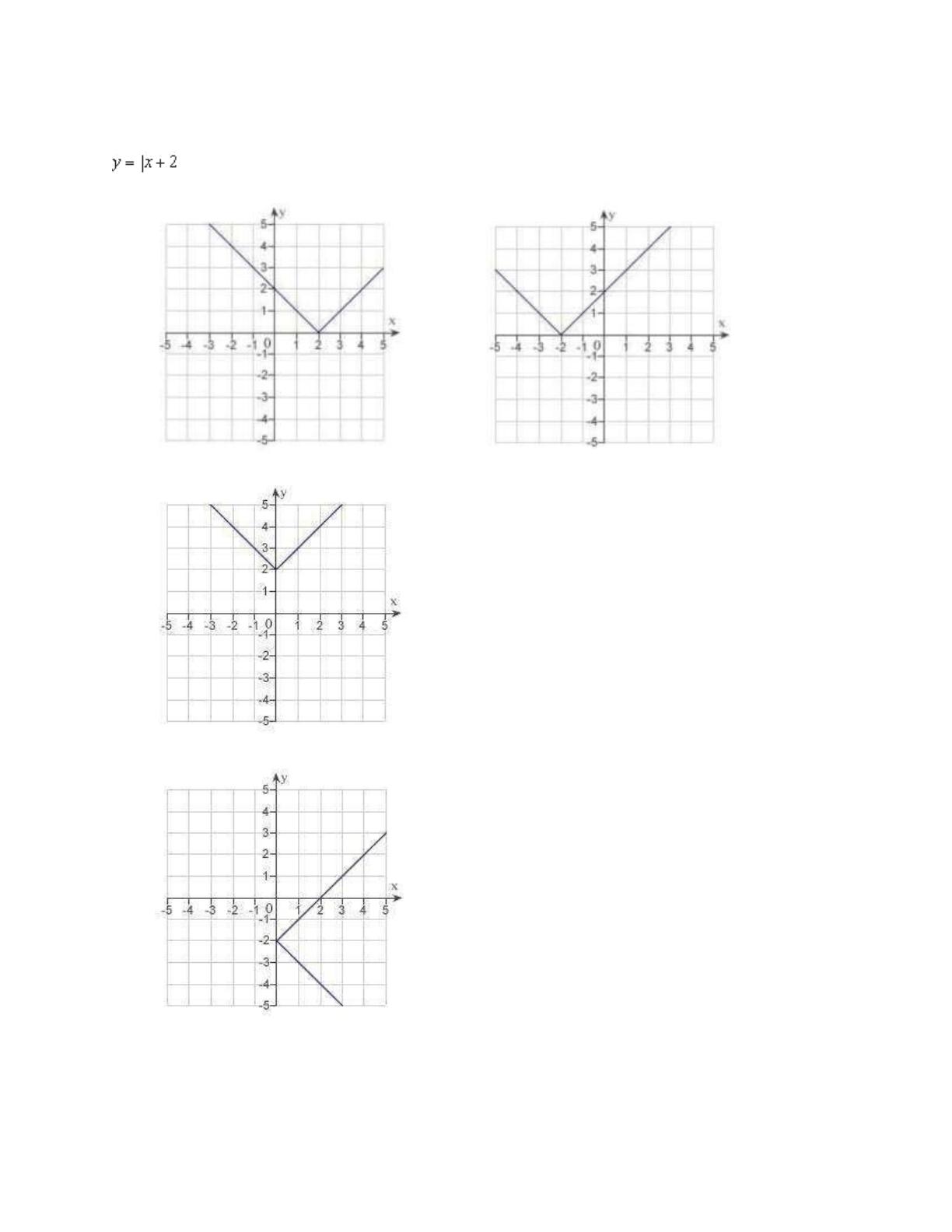
12.
Sketch the graph of the equation:
a. d.
b. e. none of the above
c.
1.1 Graphs and Models
9
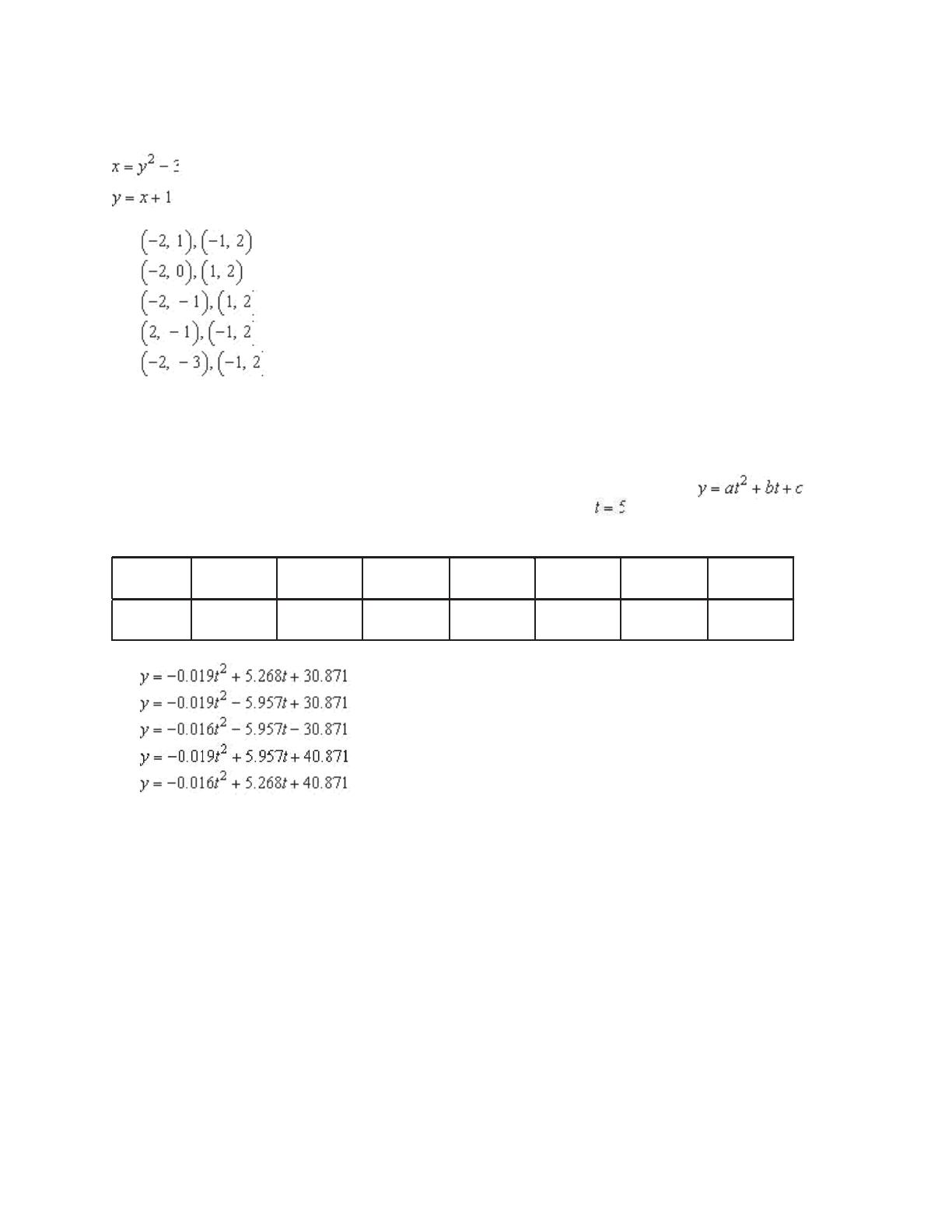
____ 13. Find the points of intersection of the graphs of the equations:
a.
b.
c.
d.
e.
____ 14.
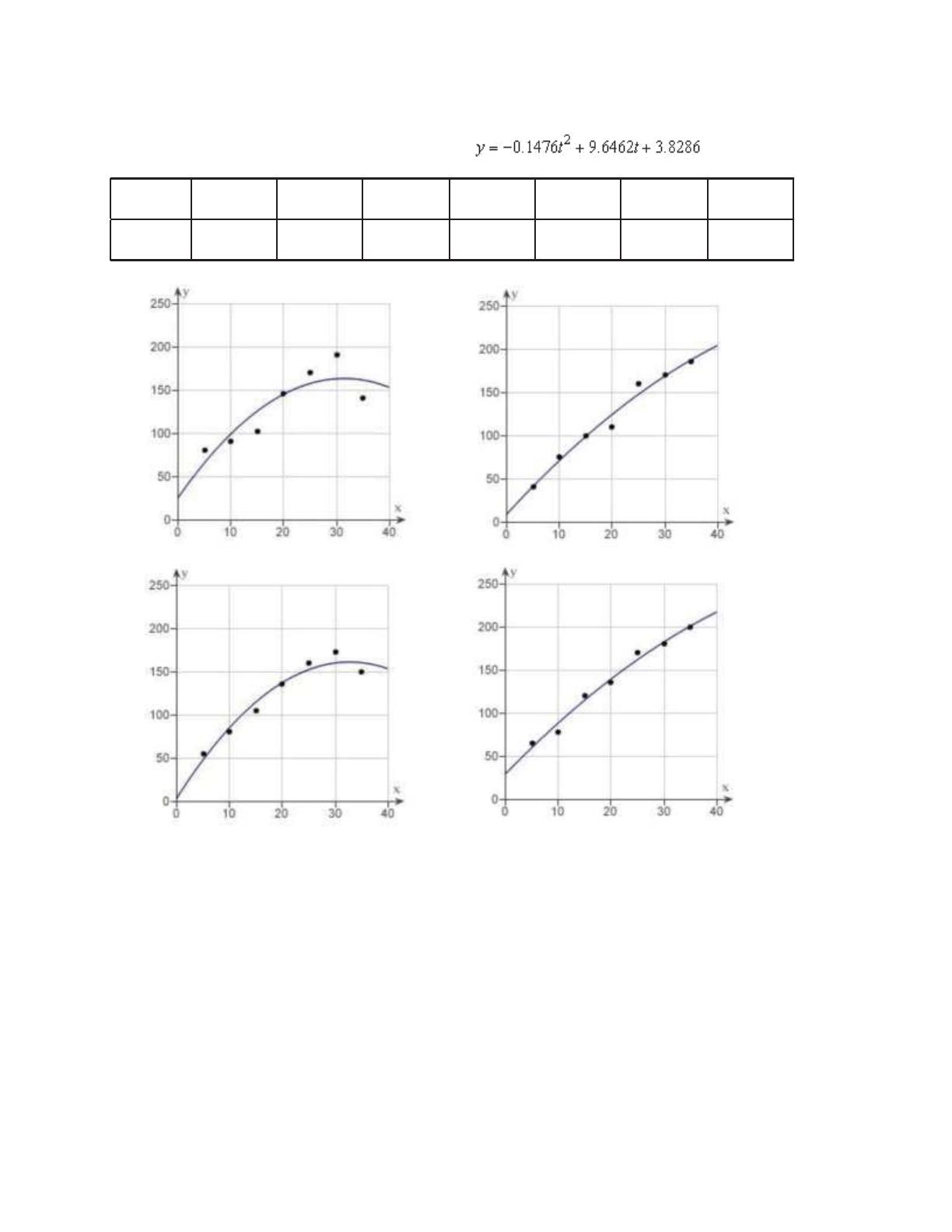
The table given below shows the Consumer Price Index (CPI) for selected years. Use the
regression capabilities of a graphing utility to find a mathematical model of the form
for the
data. In the model, y represents the CPI and t represents the year, with corresponding to 1975. Round all
numerical values in your answer to three decimal places.
ear
975
980
985
990
995
000
005
PI
7.8
0.6
03.6
30.7
52.4
70.5
92.5
a.
b.
c.
d.
e.
10
Chapter 1: Preparation of Calculus
____
15.
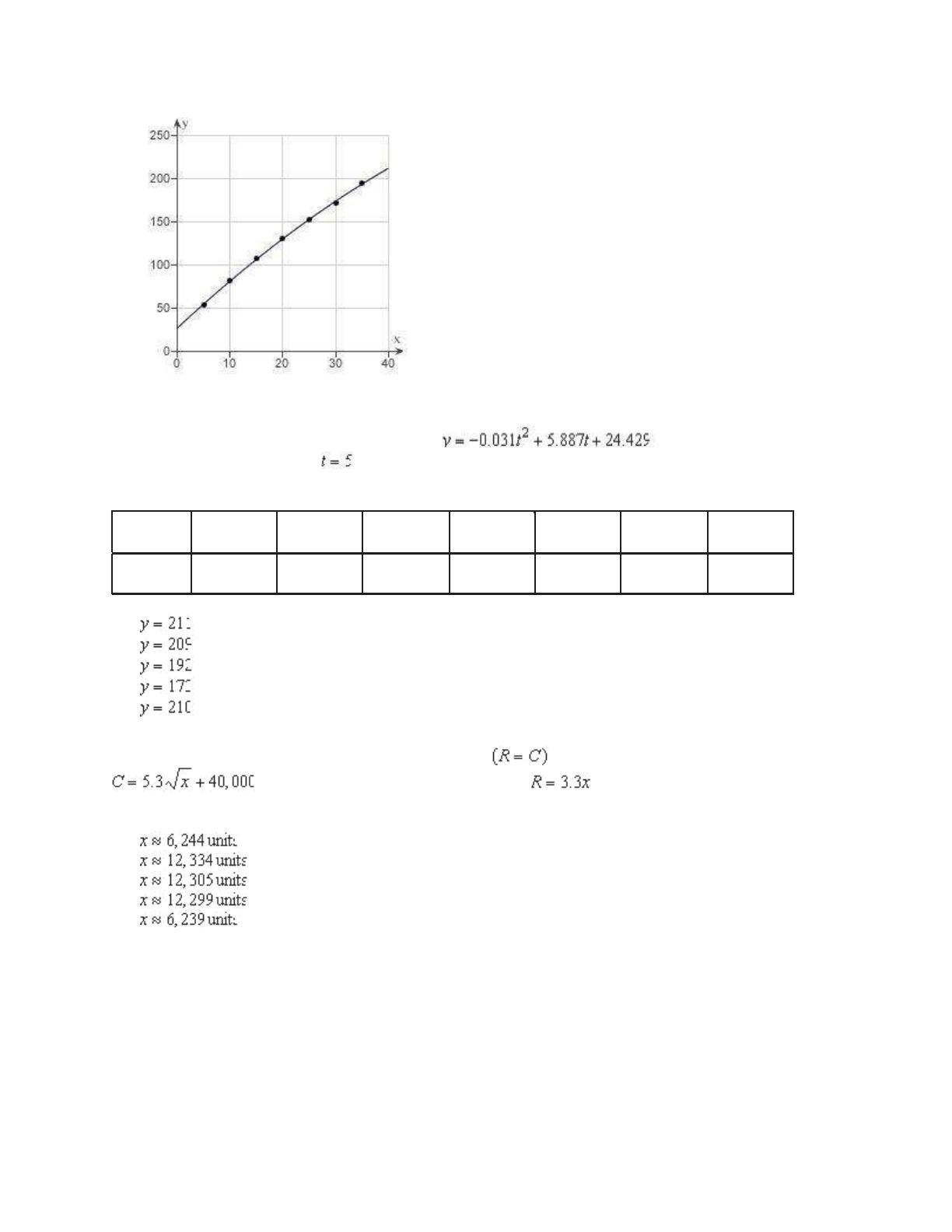
The table given below shows the Consumer Price Index (CPI) for selected years. Use a
graphing utility to plot the data and graph the model
.
ear
975
980
985
990
995
000
005
PI
5.5
0.6
05.5
35.5
60.5
72.5
50.5
a.
d.
b. e.
1.1 Graphs and Models
11
c.
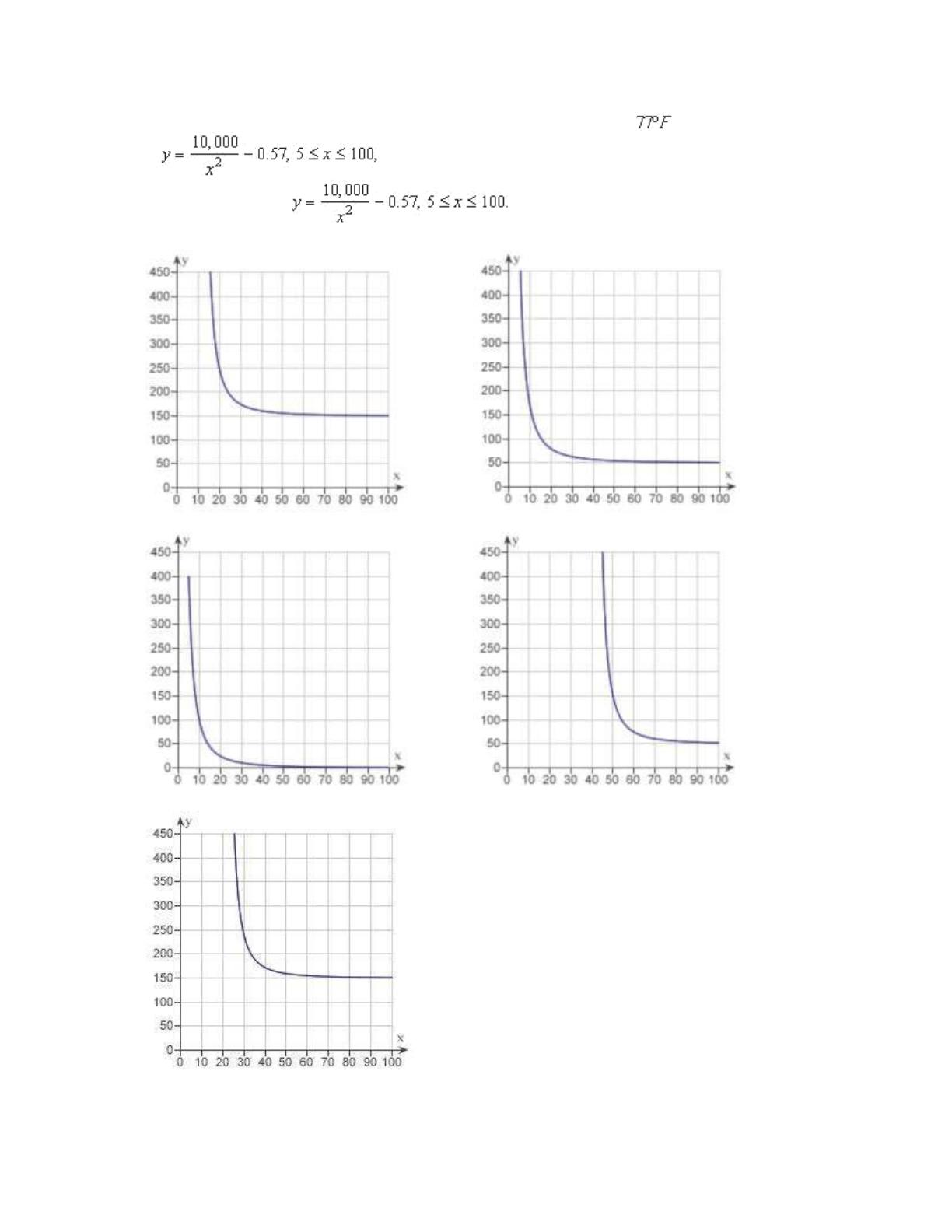
____ 16. The table given below shows the Consumer Price Index (CPI) for selected years. The
mathematical model for the data given below is where y represents the CPI
and t represents the year, with corresponding to 1975. Use the model to predict the CPI for the year
2010. Round your answer to the nearest integer.
ear
975
980
985
990
995
000
005
PI
2.8
0
06.6
30.7
52.4
71.2
94.3
a.
b.
c.
d.
e.
____ 17.
Find the sales necessary to break even
if the cost C of producing x units is
integer.
and the revenue R for selling x units is
. Round your answer to the nearest
a.
b.
c.
d.
e.
12
Chapter 1: Preparation of Calculus
____
18.
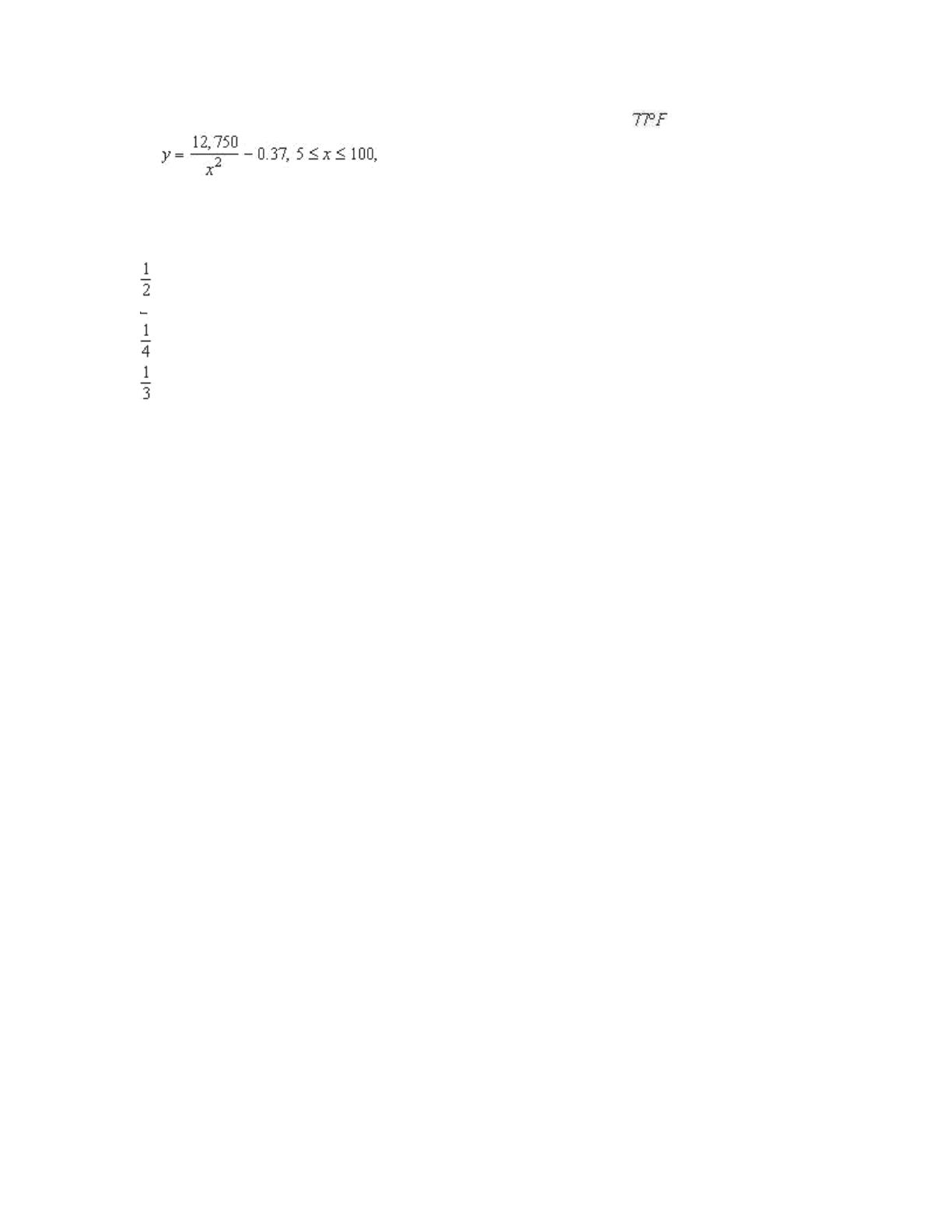
The resistance y in ohms of 1000 feet of solid metal wire at
can be approximated by the
model
where x is the diameter of the wire in mils (0.001 in). Use a graphing
utility to graph the model
a.
d.
b. e.
c.
1.1 Graphs and Models 13
____ 19. The resistance y in ohms of 1000 feet of solid metal wire at can be approximated by the
model where x is the diameter of the wire in mils (0.001 in). If the diameter
of the wire is doubled, the resistance is changed by approximately what factor? In determining your
answer, you can ignore the constant –0.37.
a.
b.
c.
d.
e.
14 Chapter 1: Preparation of Calculus
1.1 Graphs and Models
Answer Section
1.2 Linear Models and Rates of Change
15
1.2 Linear Models and Rates of Change
Multiple Choice
Identify the choice that best completes the statement or answers the question.
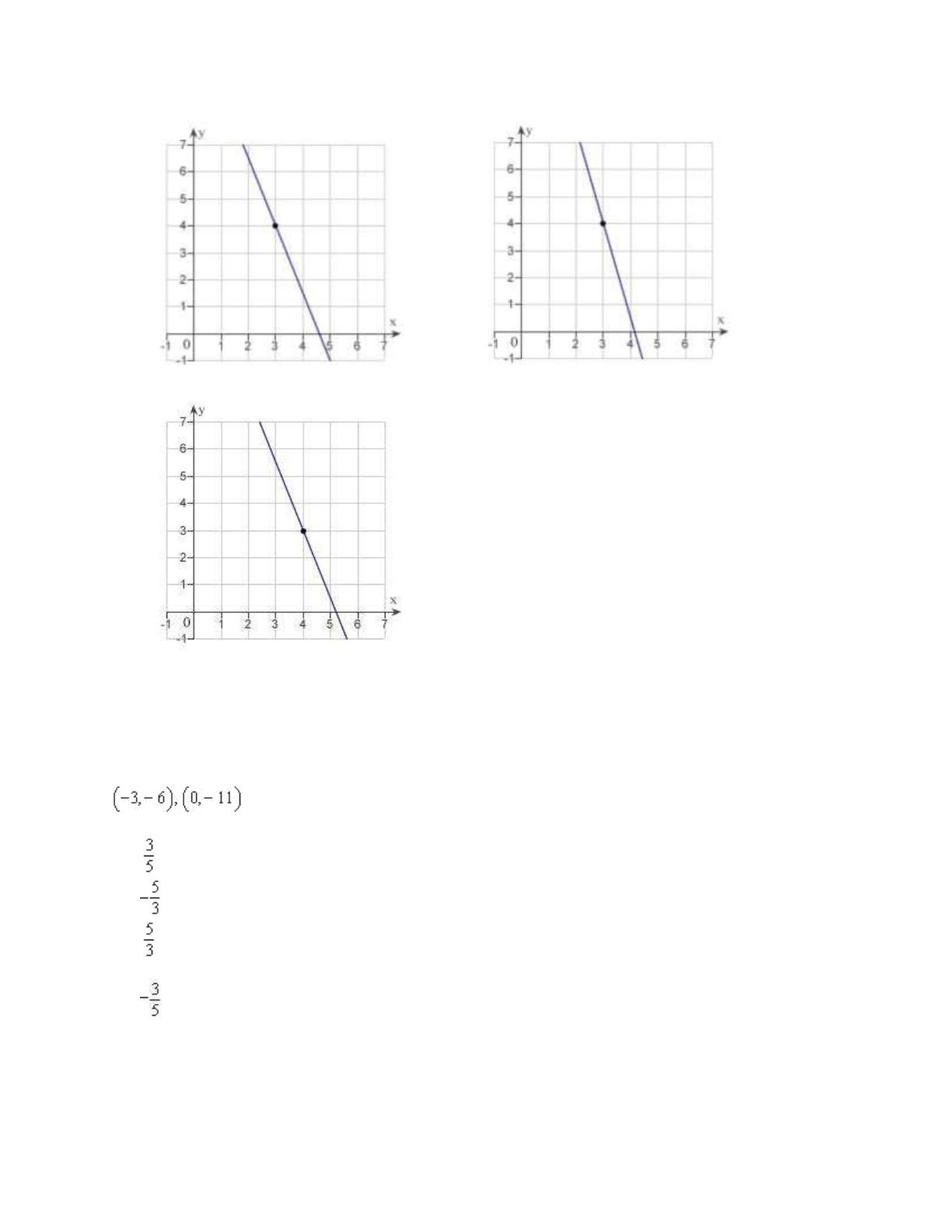
____ 1. Estimate the slope of the line from the graph.
5
2
e.
____ 2. Sketch the line passing through the point (3, 4) with the slope .
a. d.
16 Chapter 1: Preparation for Calculus
b. e.
c.
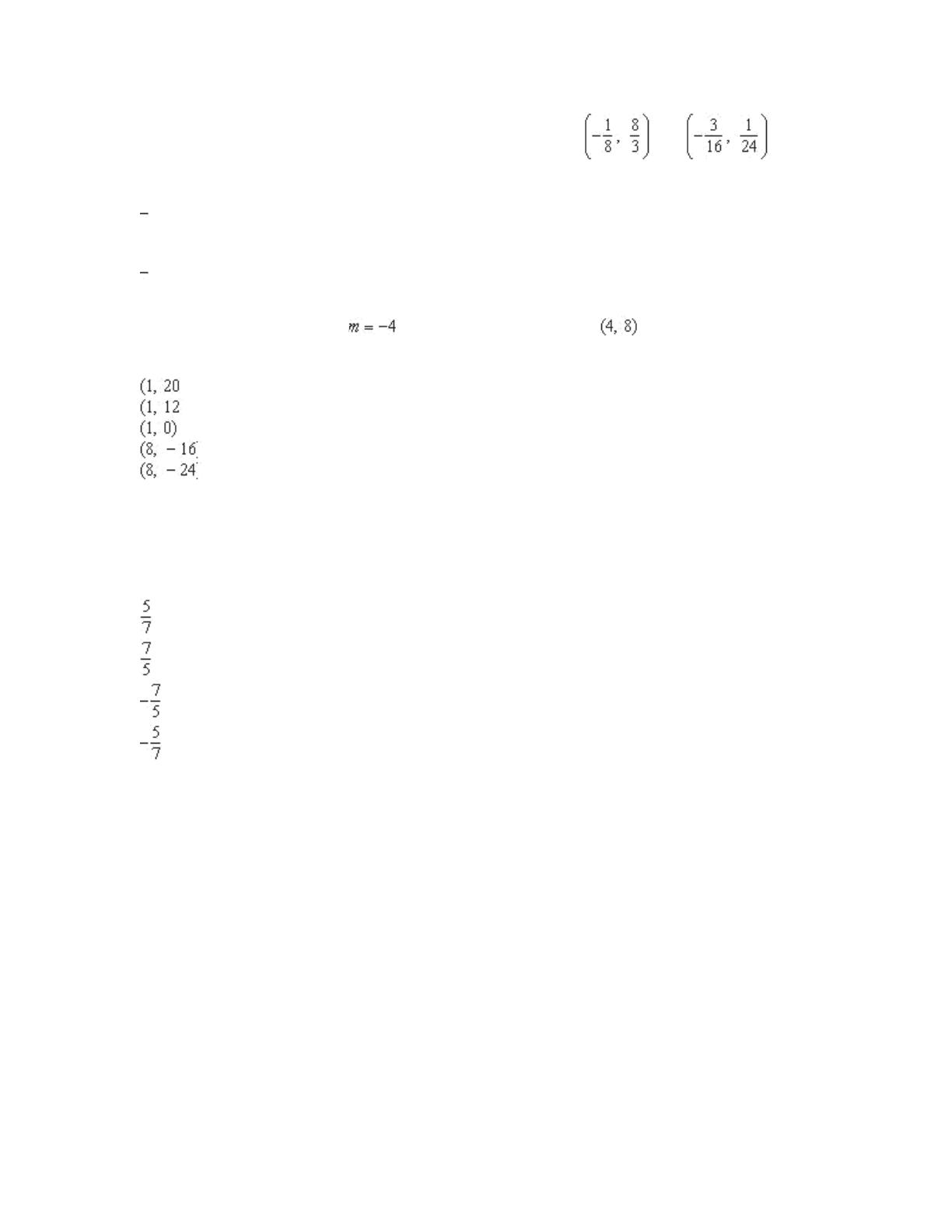
____ 3. Find the slope of the line passing through the pair of points.
a.
b.
c.
0
1.2 Linear Models and Rates of Change
17
____
4.
Find the slope of the line passing through the points
and
.
a.
63
b.
21
c.
42
d.
21
e.
42
____
5.
If a line has slope
and passes through the point
, through which of the
following points does the line also pass?
a.
b.
c.
d.
e.
____ 6. A moving conveyor is built to rise 5 meters for every 7 meters of horizontal change. Find
the slope of the conveyor.
a. 0
b.
c.
d.
e.
____ 7. A moving conveyor is built to rise 1 meter for every 5 meters of horizontal change.
Suppose the conveyor runs between two floors in a factory. Find the length of the conveyor if the
vertical distance between floors is 10 meters. Round your answer to the nearest meter.
61 meters
39 meters
51 meters
50 meters
41 meters
18
Chapter 1: Preparation for Calculus
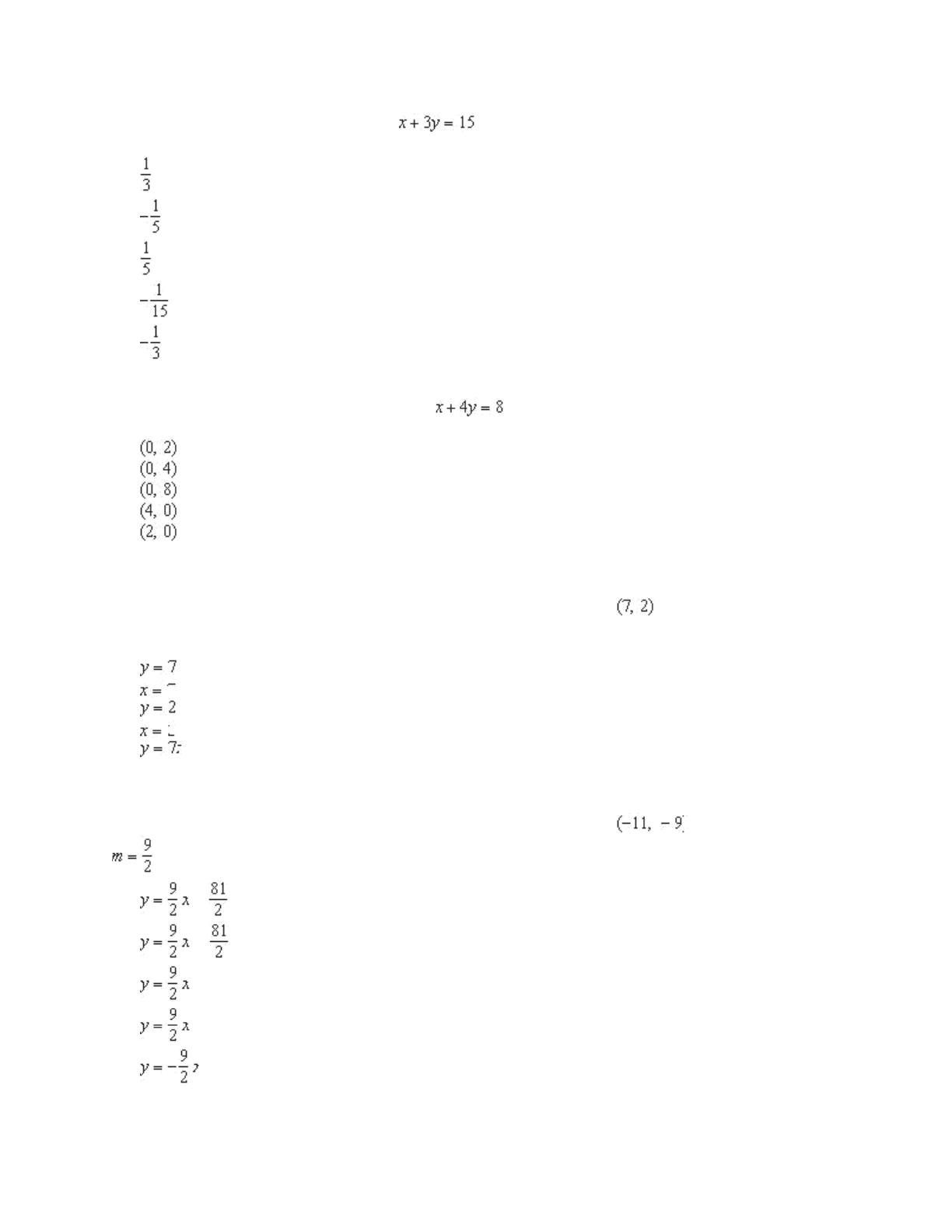
____
8.
Find the slope of the line
.
a.
b.
c.
d.
e.
____
9.
Find the y-intercept of the line
.
a.
b.
c.
d.
e.
____
10.
Find an equation of the line that passes through the point
and has the slope m
that is undefined.
a.
b.
c.
d.
e.
____
11.
Find an equation of the line that passes through the point
and has the slope
.
–
+
+ 162
e.
1.2 Linear Models and Rates of Change 19
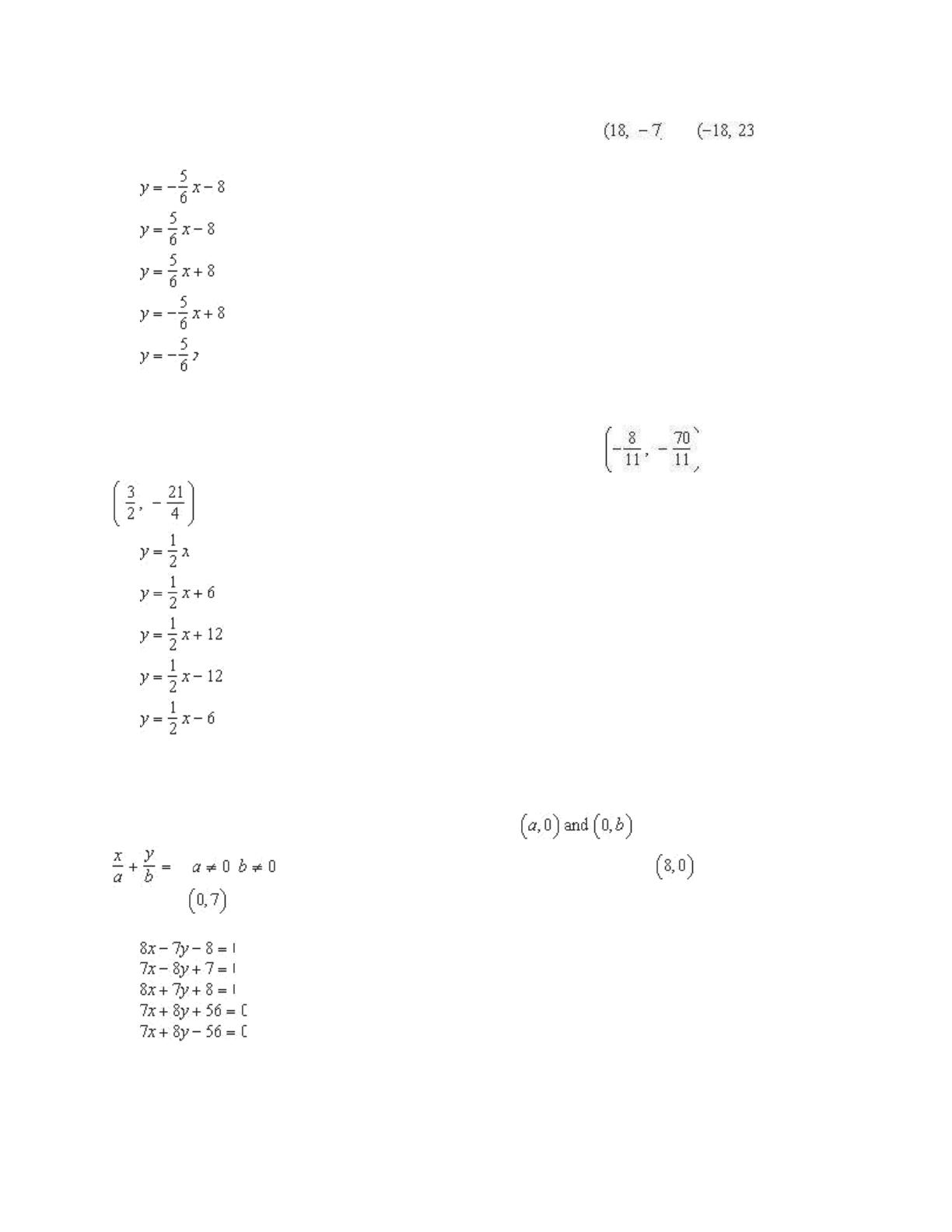
____ 12. Find an equation of the line that passes through the points and .
a.
b.
c.
d.
e.
____ 13. Find an equation of the line that passes through the points and
.
a.
b.
c.
d.
e.
____ 14.
Use the result, “the line with intercepts
has the equation
,
,
”, to write an equation of the line with x-intercept:
and y–
intercept:
.
a.
b.
c.
d.
e.
20
Chapter 1: Preparation for Calculus
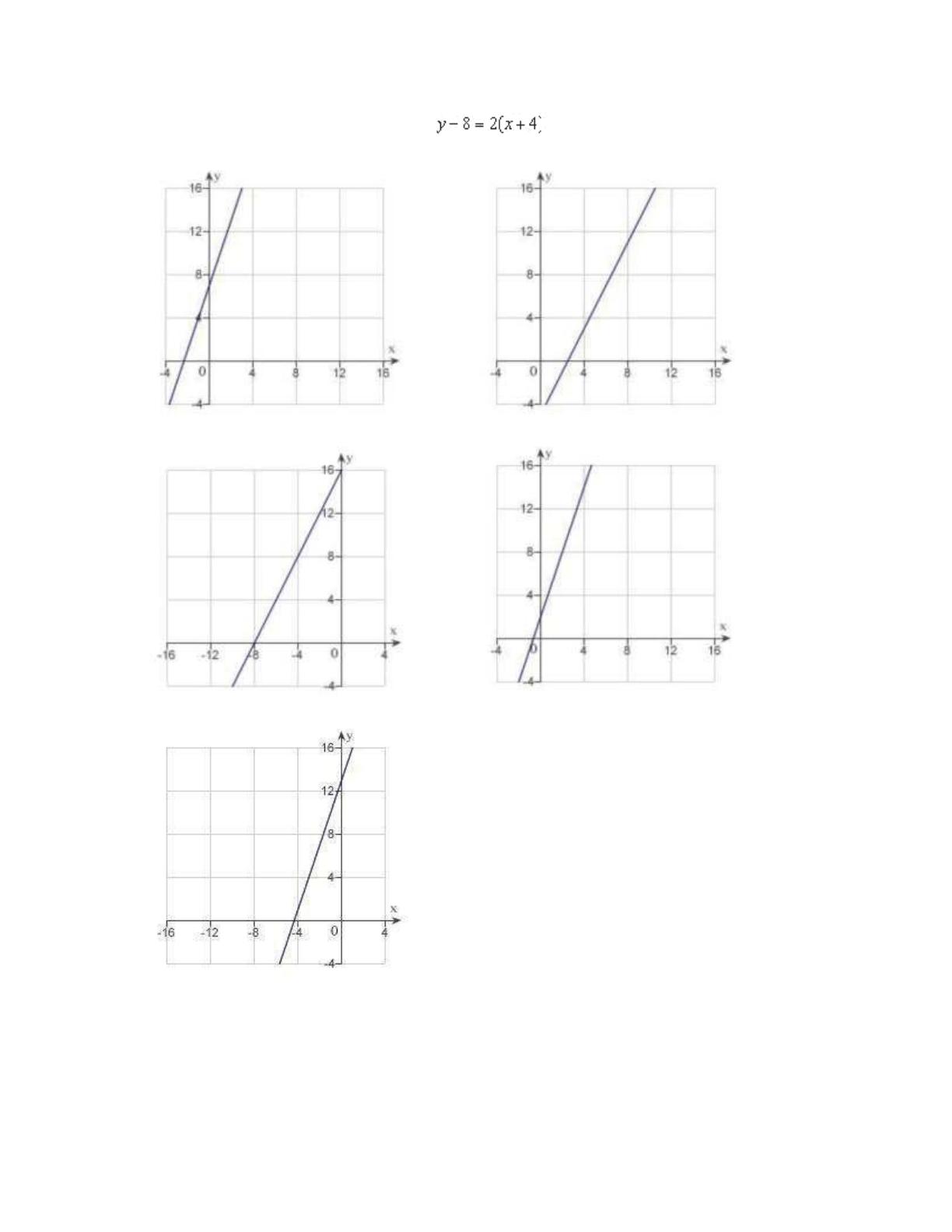
____
15.
Sketch a graph of the equation
.
a.
d.
b. e.
c.