Chapter 1—Accounting Information: Users and Uses Key
1. Which of the following is NOT typically true of accounting information?
2. Which of the following is true about the double-entry system of bookkeeping?
3. Businesses use accounting systems to
4. Which of the following is the most correct definition of accounting?
5. Which of the following is NOT a function of accounting?
6. Which of the following is NOT a key component of the definition of accounting?
7. Which of the following is NOT a step in the decision making process?
8. Accounting can be best described as a
9. Which of the following is NOT a typical source of monetary resources for a business enterprise?
10. Accountants typically perform what action related to the financial results of business activities?
11. The accounting cycle includes all of the following, EXCEPT:
12. The emphasis in financial accounting is on which of the following external user groups?
13. The primary internal group that uses accounting information is
14. Internal reports are generally used by
15. Which of the following is NOT an important aspect of management accounting?
16. The area of accounting that is concerned with providing information for external users is referred to as
17. Which of the following is NOT one of the three primary financial statements?
18. Which of the following financial statements reports a company’s resources, obligations, and owner’s equity?
19. Which of the following financial statements reports the excess of a company’s revenues over its expenses?
20. Which of the following financial statements reports the amount of cash collected and paid out by a
company?
21. Which of the following is NOT an external user of financial information?
22. Which of the following is NOT one of the factors that influences the accounting environment?
23. Which of the following is NOT true of the Financial Accounting Standards Board (FASB)?
24. Generally accepted accounting principles are
25. The initials GAAP stand for
26. The current standard-setting board for accounting in the private sector is the
27. Which of the following organizations has specific legal authority to establish accounting standards for
publicly held companies?
D. American Institute of Certified Public Accountants (AICPA)
28. The Sarbanes-Oxley Act created the
29. The initials CPA stand for
30. Which of the following is NOT a service typically provided by large public accounting firms?
31. Which of the following is the government agency that stipulates the rules and regulations that govern the
collection of taxes in the United States?
32. Accountants are MOST concerned with
33. The organization that develops worldwide accounting standards is the
34. Standards established by the International Accounting Standards Board are referred to as
35. In 2008, the SEC began to
36. Ethics are especially important in accounting because
37. Which of the following is NOT one of the ways that technology has changed the way accounting is done?
38. Which of the following is a reason that you may need to understand accounting information in the future?
39. Identify and describe the functions of an accounting system.
40. The definition of accounting is a system for providing “quantitative information, primarily financial in
nature, about economic entities that is intended to be useful in making economic decisions.” List and explain the
key components of this definition.
41. List the four steps in the decision making process.
42. Identify the three primary financial statements and discuss the content of each.
43. List six users of accounting information and indicate whether they are an internal or an external user.
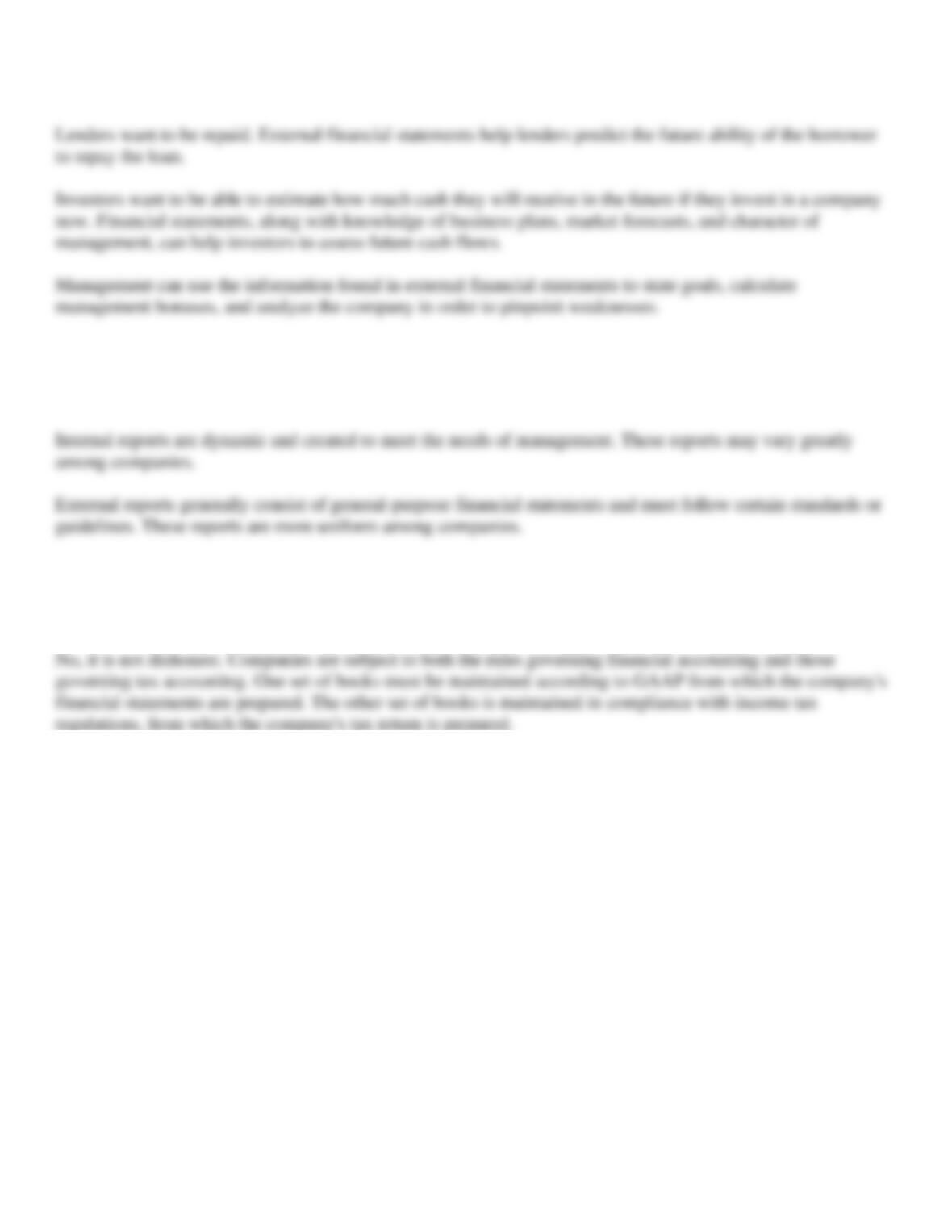
44. Lenders, investors, and management are three potential users of external financial statements. Discuss how
the information found in external financial statements can benefit each of these external users.
45. Describe the major difference between internal reports and external reports.
46. It is often said that companies must keep two sets of books. Isn’t this dishonest? Explain.
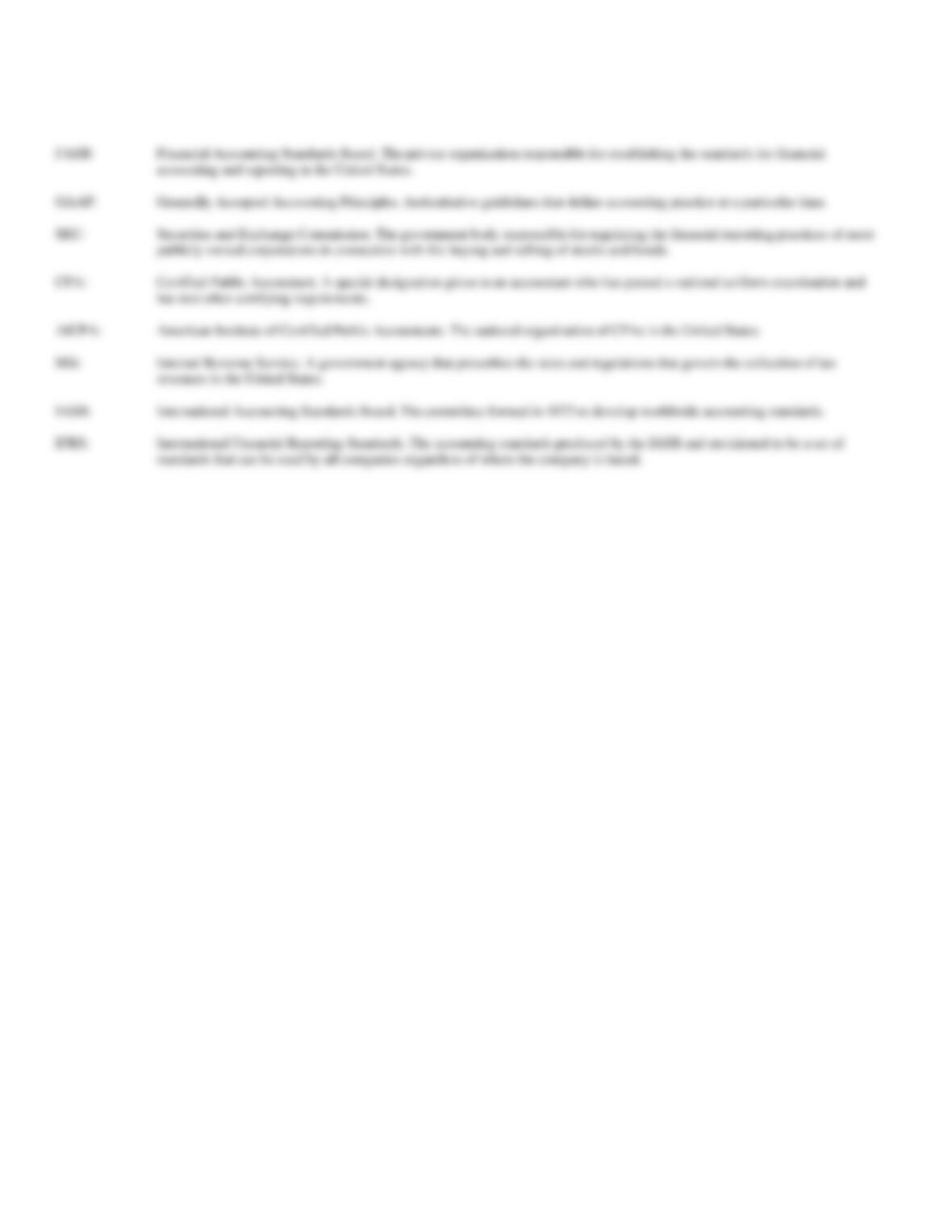
47. FASB, GAAP, SEC, CPA, AICPA, IRS, IASB, IFRS are all acronyms used in accounting. For the
preceding list of acronyms, state what the acronym stands for and then give a definition of each acronym.