1-100
194.
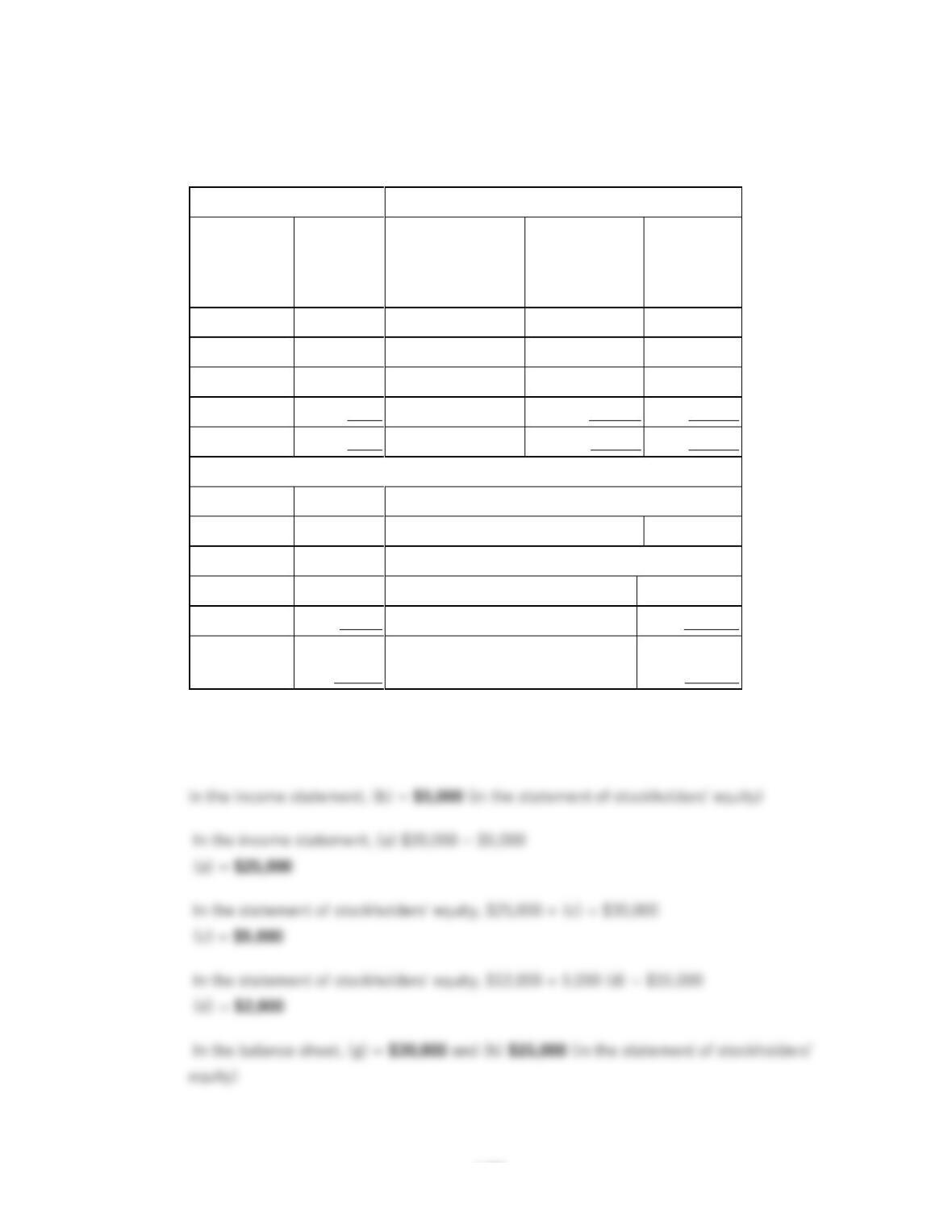
Below are incomplete financial statements for Beasley, Incorporated. Calculate the
missing amounts.
Income Statement
Statement of Stockholders’ Equity
Revenues
$(a)
Common Stock
Retained
Earnings
Expenses:
Beginning
$25,000
$12,000
Salaries
8,000
Issuances
(c)
Delivery
7,000
Net income
5,000
Utilities
5,000
Dividends
(d)
Net income
(b)
Ending
$30,000
$15,000
Balance Sheet
Assets:
Liabilities:
Cash
$15,000
Accounts payable
15,000
Supplies
7,000
Stockholders’ Equity:
Prepaid rent
(e)
Common stock
(g)
Equipment
35,000
Retained earnings
(h)
Total assets
(f)
Total liabilities and stockholders’
equity
(i)
1-102
195.
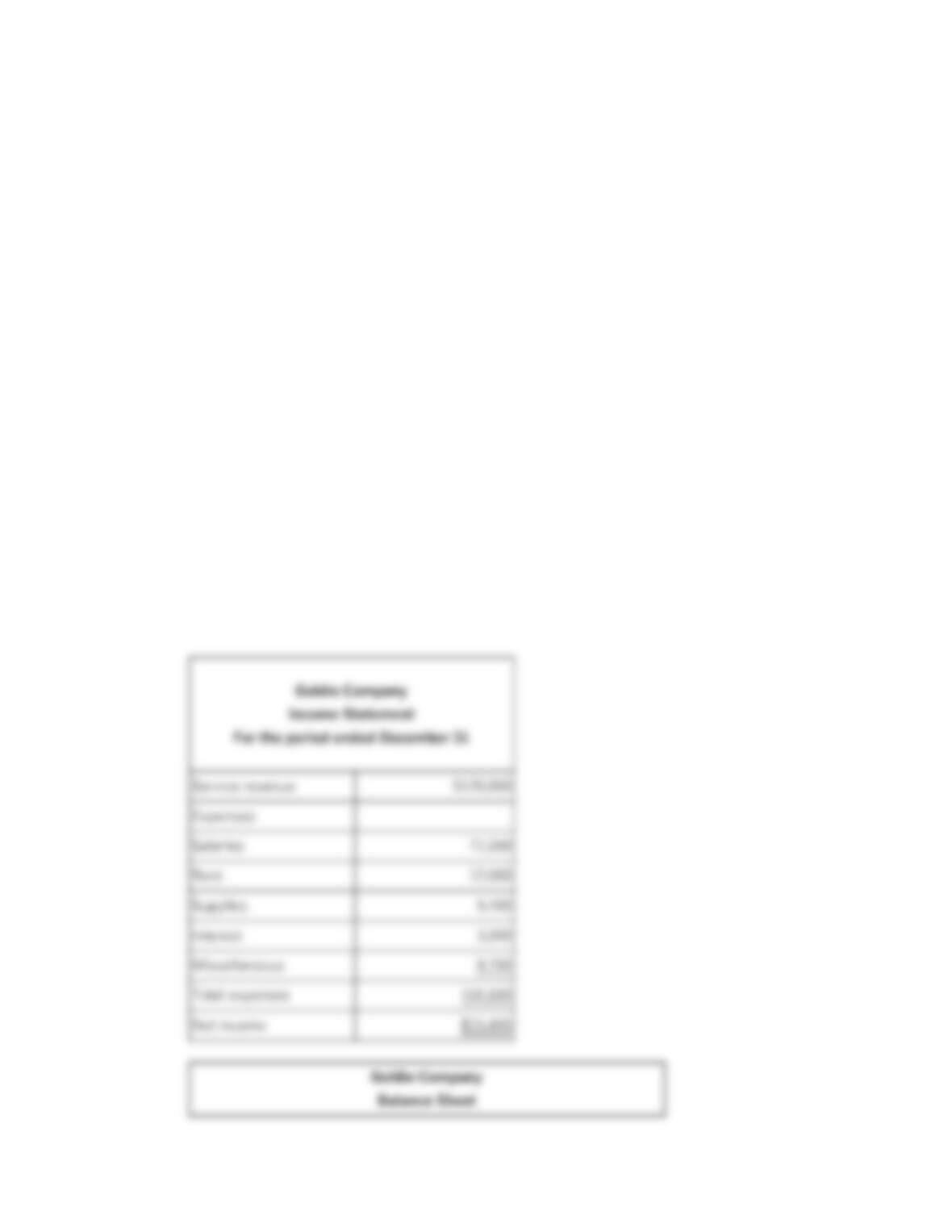
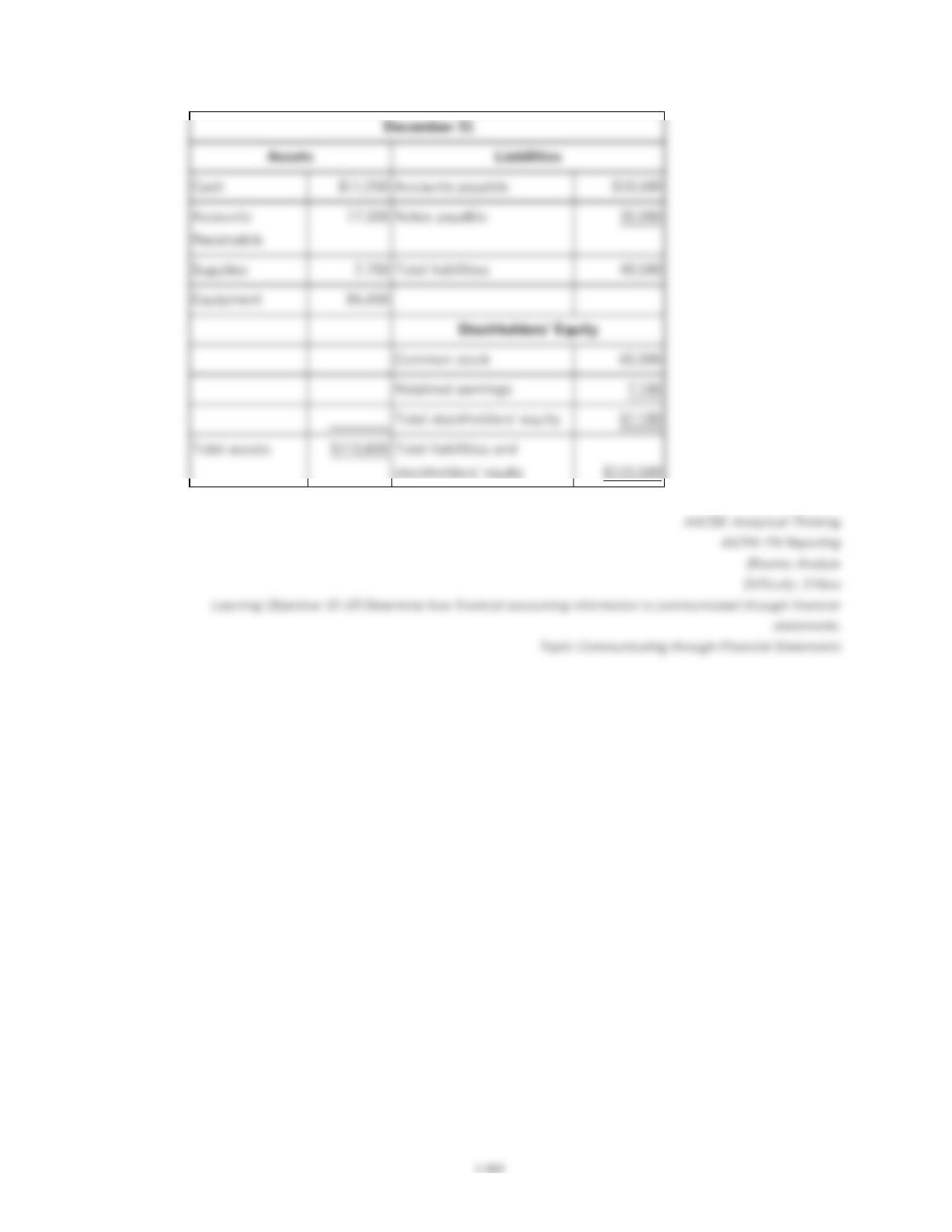
Use the following information available to prepare an income statement and balance sheet
on December 31 for Goldie Company.
Fees for services performed during the year, $120,000
Accounts payable, $18,500
Accounts receivable, $17,300
Miscellaneous costs for the year, $8,700
Supplies on hand, $2,700
Notes payable outstanding, $30,000
Interest cost on the note for the year, $3,000
Equipment, $84,400
Cash on hand, $11,200
Salaries cost for the year, $71,500
Supplies cost for the year, $9,400
Rent cost for the year, $12,000
Common stock that has been issued, $60,000
Retained earnings at the end of the year, $7,100
196.
Below are typical transactions for a company.
Type of
Business
Activity
Transactions
1.
__________
Issue common stock.
2.
__________
Collect cash from a bank loan.
3.
__________
Sell products to customers.
4.
__________
Pay employees’ wages.
5.
__________
Purchase equipment for manufacturing.
6.
__________
Pay dividends to stockholders.
7.
__________
Sell factory.
8.
__________
Purchase office supplies.
9.
__________
Pay utilities.
10.
__________
Pay for maintenance on delivery vehicles.
Transactions
Financing
Issue common stock.
Financing
Collect cash from a bank loan.
Operating
Sell products to customers.
Operating
Pay employees’ wages.
Investing
Purchase equipment for manufacturing.
Financing
Pay dividends to stockholders.
Investing
Sell factory.
Purchase office supplies.
Pay utilities.
Pay for maintenance on delivery vehicles.
Required:
Indicate whether each transaction is classified as a financing, investing, or operating
activity.
197.
Account classifications include assets, liabilities, stockholders’ equity, dividends,
revenues, and expenses.
Account
Classifications
Accounts
Related Transactions
1.
__________
Accounts Receivable
Provide services on account.
2.
__________
Land
Purchase land for operations.
3.
__________
Prepaid Rent
Purchase rent in advance.
4.
__________
Salaries Expense
Pay for cost of salaries.
5.
__________
Utilities Expense
Pay for cost of utilities.
6.
__________
Service Revenue
Provide services to customers.
7.
__________
Accounts Payable
Purchase materials on account.
8.
__________
Notes Payable
Borrow from the bank.
9.
__________
Dividends
Distribute cash to stockholders.
10.
__________
Common Stock
Issue stock to stockholders.
Account Classifications
Account Names
Asset
Accounts Receivable
Asset
Land
Asset
Prepaid Rent
Expense
Salaries Expense
Revenue
Service Revenue
Liability
Accounts Payable
Notes Payable
Common Stock
Required:
Indicate the account classification for each account name.
1-106
198.
Tiffany’s provides financial services related to investment selections, retirement planning,
and general insurance needs. For the current year, the company reports the following
amounts:
Advertising Expense
$31,200
Service Revenue
$129,300
Buildings
108,000
Interest Expense
3,500
Salaries Expense
67,800
Utilities Expense
14,500
Accounts Payable
6,300
Equipment
25,700
Cash
6,400
Notes Payable
30,000
In addition, the company had common stock of $60,000 at the beginning of the year and
issued an additional $15,000 during the year. The company also had retained earnings of
$20,000 at the beginning of the year and paid dividends of $3,500.
Required:
Prepare the income statement, statement of stockholders’ equity, and balance sheet for
Tiffany’s for the year ended December 31.
Service revenue
Expenses:
Advertising
1-108
199
.
Below are incomplete financial statements.
Income Statement
Statement of Stockholders’ Equity
Revenues
(a)
Common
Stock
Retained
Earnings
Expenses:
Beginning
$15,000
$8,000
Salaries
$11,000
Issuances
€
Rent
5,000
Net income
3,000
Advertising
7,000
Dividends
(d)
Net income
(b)
Ending
$18,000
$9,000
Balance Sheet
Assets:
Liabilities:
Cash
$6,000
Accounts payable
$5,000
Supplies
€
Stockholders’ Equity:
Land
7,000
Common Stock
(g)
Buildings
14,000
Retained Earnings
(h)
Total assets
(f)
Total liabilities and stockholders’ equity
(i)
Required:
Calculate the missing amounts.
1-110
200.
Simplex Corporation provides the following information at the end of the year.
Salaries payable to workers at the end of the year
$3,500
Advertising expense for the year
8,700
Building that has been purchased
70,000
Supplies at the end of the year
7,500
Retained earnings
38,000
Utilities expense for the year
4,200
Note payable to the bank
21,500
Service revenue earned during the year
67,800
Salary expense for the year
24,200
Accounts payable to suppliers
6,700
Dividends paid to shareholder during the year
?
Common stock that has been issued, including $8,000
that was issued this year
30,000
Cash remaining
5,500
Interest expense for the year
1,800
Accounts receivable from customers
16,700
Required:
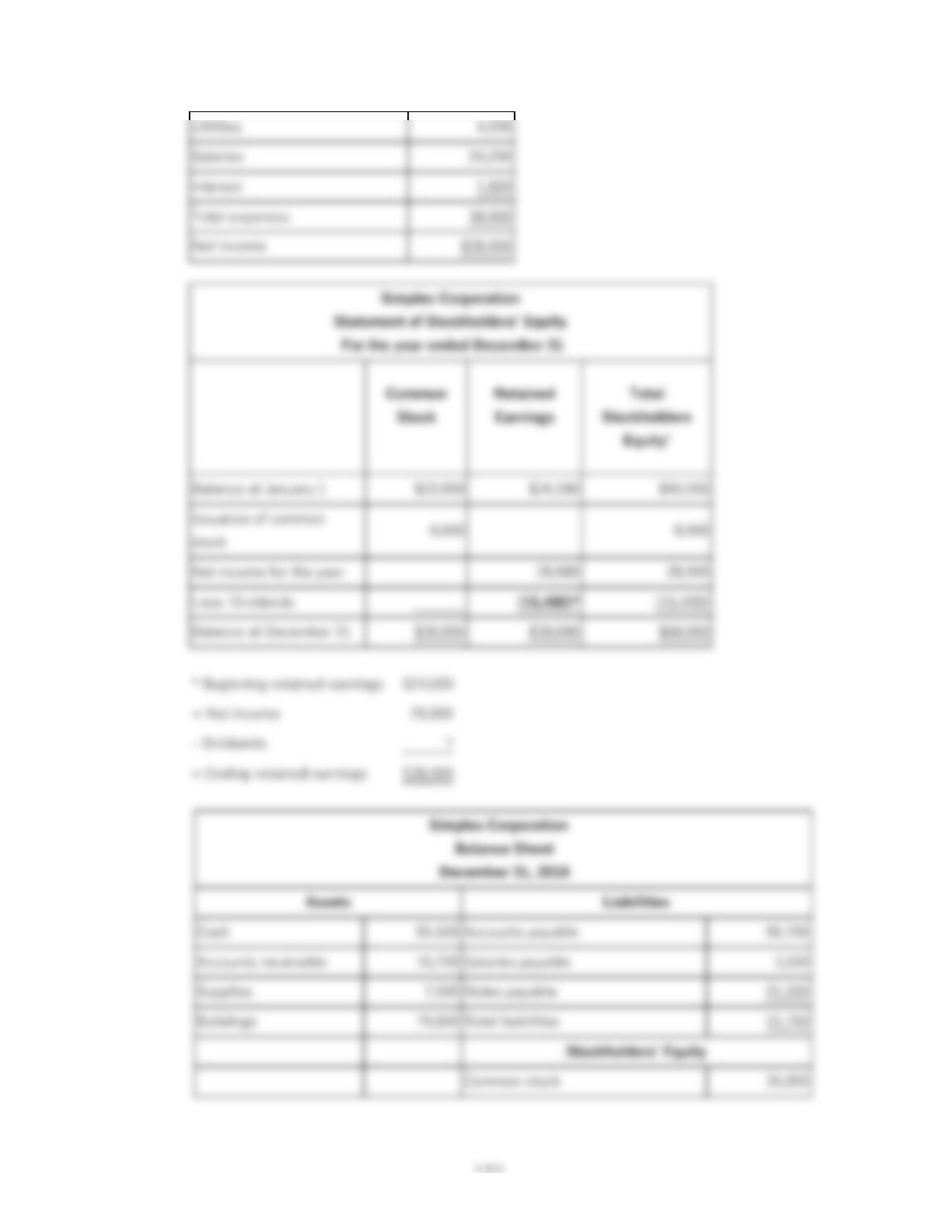
Prepare the income statement, statement of stockholders’ equity, and balance sheet for
Simplex Corporation on December 31. The balance of retained earnings at the beginning
of the year equals $24,500.
Service revenue
1-112
1-113
201.
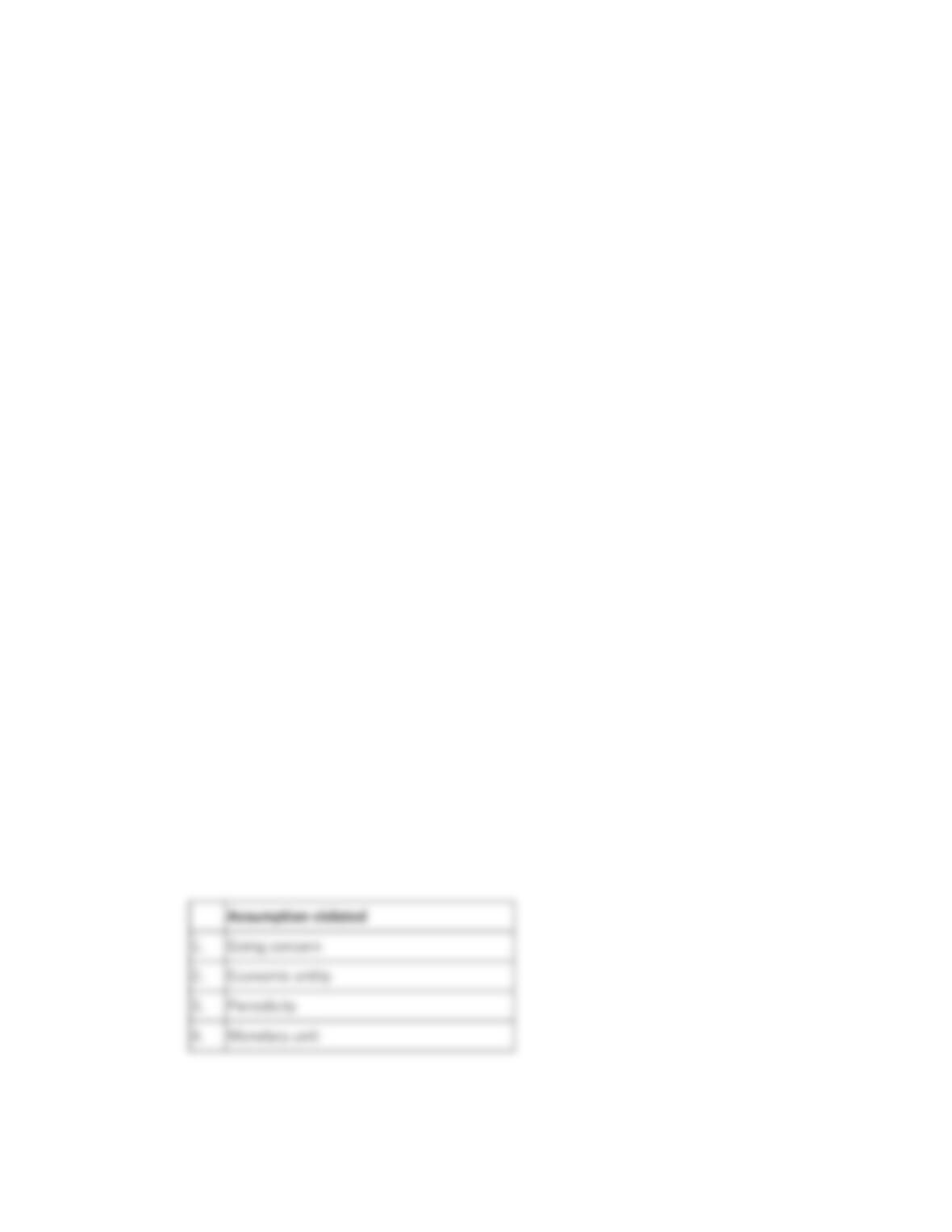
The four underlying assumptions of generally accepted accounting principles are
economic entity, monetary unit, periodicity, and going concern. Consider the following four
independent situations.
1. Masterson provides music cassettes for the past 30 years. Because of the advance in
electronic musical devices, customer demand has dwindled over the years to almost
nothing in the current year and the company can no longer pay its debts. For the most
recent year, the company reports its assets in the balance sheet at historical (original)
cost.
2. Phillips Flooring specializes in the installation of wood flooring. The company has the
usual business expenses: salaries, supplies, utilities, advertising, and taxes. Mr. Phillips
took his wife and two sons to Six Flags. Mr. Phillips reported the airfare and hotel
expenses in the income statement of Phillips Flooring.
3. Mama’s Restaurant has over 200 stores throughout the Southeast. Approximately
100,000 customers visit its stores each day. Because of the continual nature of dining, the
company does not publish an income statement. The company feels that it has an
indefinite life and a periodic report would mislead investors.
4. Indian Packaging delivers packages between the United States and India. During the
current year, the company delivered 2,000 packages for its American customers totaling
$75,000 in revenue. For its Indian customers, the company delivered 1,000 packages
totaling 1,500,000 Indian Rupee. The company’s income statement indicates that total
revenue equals 3,000 packages delivered with no corresponding amount in the income
statement.
Required:
For each situation, indicate which of the underlying assumptions of GAAP is violated.
202.
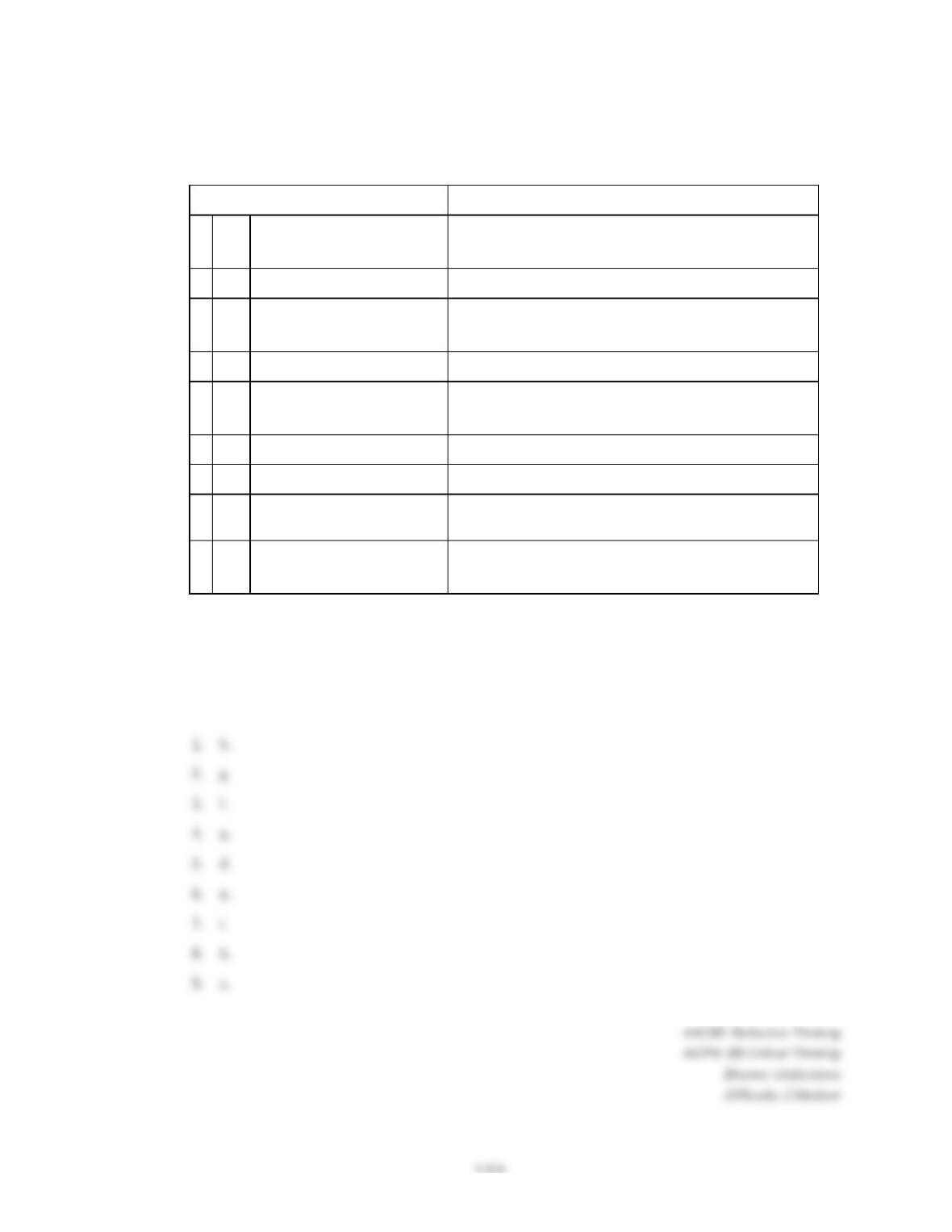
Listed below are several terms and definitions associated with the FASB’s conceptual
framework.
Terms
Definitions
1.
____
Verifiability
a. Requires the consideration of the costs and value of
information.
2.
____
Relevance
b. Recording transaction only for the company.
3.
____
Timeliness
c. The indefinite life of a company can be broken into
definite periods.
4.
____
Cost effectiveness
d. Accounting should be useful in making decisions.
5.
____
Decision usefulness
e. Agreement between a measure and the phenomenon
it represents.
6.
____
Faithful representation
f. Information arrives prior to the decision.
7.
____
Materiality
g. Information is related to the decision at hand.
8.
____
Economic entity assumption
h. Implies consensus among different measures.
9.
____
Periodicity assumption
i. Concerns the relative size of an item and its effect on
decisions.
Required:
Pair each term with its related definition.
203.
Define accounting. Describe the two primary functions of financial accounting and its role
in our society.
204.
Describe the three fundamental business activities that accountants measure. What
account classifications are typically associated with each type of business activity?
205.
List and describe the four financial statements most frequently provided to external users.
206.
How does the value of an audit affect financial statements?
207.
Define the four basic assumptions underlying Generally Accepted Accounting Principles:
(a) economic entity, (b) going concern, (c) periodicity, (d) monetary unit.