107. Education Power is a charitable organization that promotes educational opportunities for inner city
children and adults. Describe how the four common key activities would differ for this organization as opposed
to a for-profit business entity.
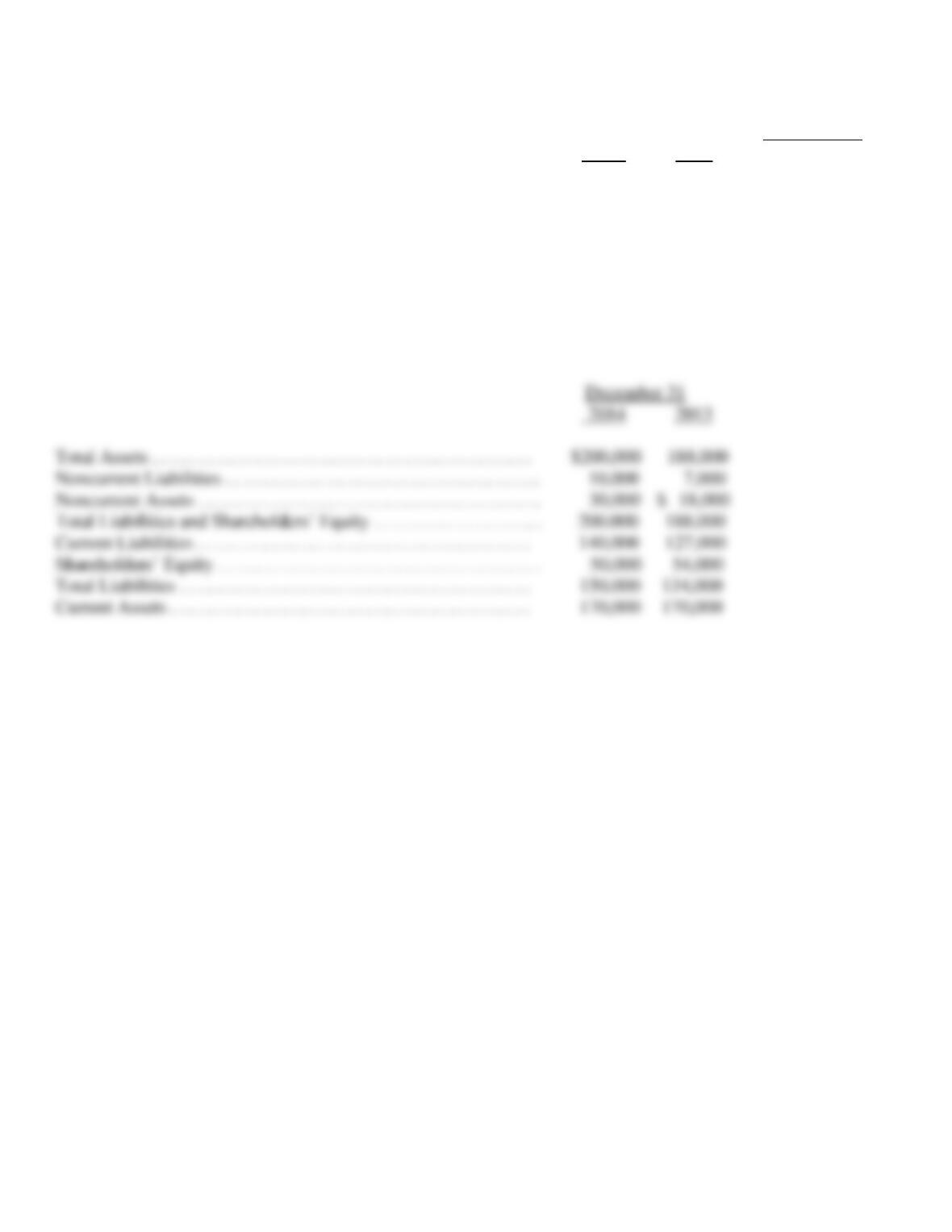
108. Selected balance sheet amounts for Puff Group International Limited, a diversified electronics firm,
appears next, as of December 31, 2014, and December 31, 2013. Compute the missing amounts for the two
years.
December 31
2014 2013
Total Assets . . . . . . . . . . . . . . . . . . . . . . . . . . . . . . . . . . . . . . . . . $200,000 ?
Noncurrent Liabilities . . . . . . . . . . . . . . . . . . . . . . . . . . . . . . . . . . 10,000 ?
Noncurrent Assets . . . . . . . . . . . . . . . . . . . . . . . … . . . . . . . . . . . . . . ? $ 18,000
Total Liabilities and Shareholders’ Equity . . . . . . . . . . . . . . . . . . . ? ?
Current Liabilities . . . . . . . . . . . . . . . . . . . . . . . . . . . . . . . . . . . . 140,000 127,000
Shareholders’ Equity . . . . . . . . . . . . . . . . . . . . . . . . . . . . . . . . . . . ? 54,000
Total Liabilities . . . . . . . . . . . . . . . . . . . . . . . . . . . . . . . . . . . . . . ? ?
Current Assets . . . . . . . . . . . . . . . . . . . . . . . . . . . . . . . . . .. . . . . . 170,000 170,000
109. Use the abbreviations below to classify the following balance sheet items.
CA
– Current assets
NA
– Noncurrent assets
CL
– Current liabilities
NL
– Noncurrent liabilities
SE
– Shareholders’ equity
X
– Item generally not appearing on a balance sheet
Balance Sheet Items
Example Corporation, Inc.
January 1, Year 1
a.
__________
Accounts payable
b.
__________
Accounts receivable
c.
__________
Bank loan payable, due April 5, Year 2
d.
__________
Bonds payable, due Year 17
e.
__________
Building, net of accumulated depreciation
f.
__________
Supplies inventory
g.
__________
Commissions paid to sales staff
h.
__________
Common stock
i.
__________
Equipment, net of accumulated depreciation
j.
__________
Income taxes expense
k.
__________
Land
l.
__________
Merchandise inventory
m.
__________
Note payable, due in March, Year 1
n.
__________
Note receivable, due June 1, Year 2
o.
__________
Note receivable, due December 2, Year 10
p.
__________
Retained earnings
q.
__________
Salaries expense
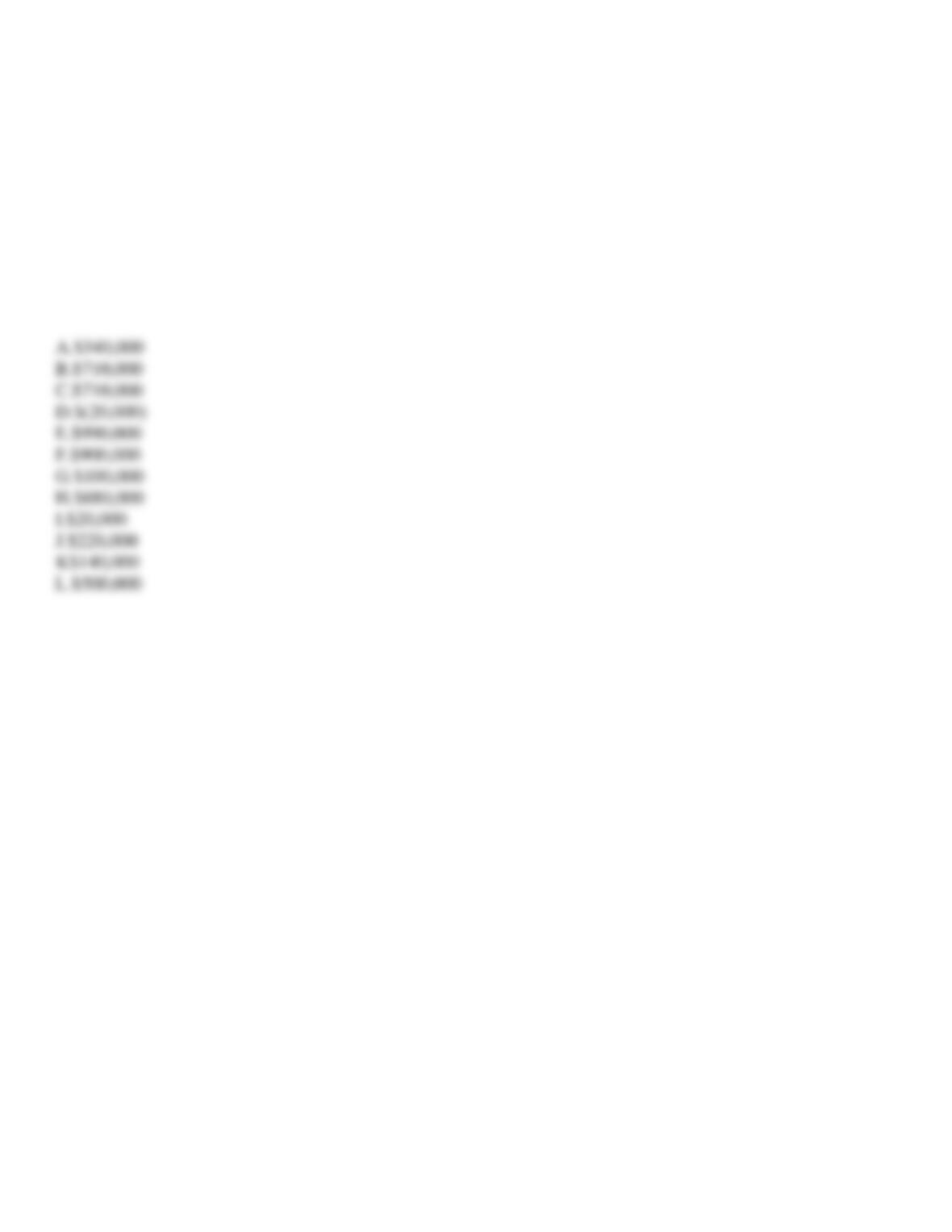
110. Compute the missing balance sheet amounts in each of the three independent cases that follow:
CASE A
CASE B
CASE C
Noncurrent assets
$460,000
$ 90,000
$280,000
Shareholders’ equity
A
870,000
340,000
Total assets
B
E
500,000
Current liabilities
270,000
20,000
I
Current assets
250,000
F
J
Noncurrent liabilities
100,000
G
K
Total liabilities and shareholders’ equity
C
990,000
L
Current assets minus current liabilities
D
H
200,000
111. Use the abbreviations below to classify the following income statement items.
R
Revenues
E
Expenses
X
Item generally not appearing on an income statement
Income Statement Items
Example Corporation, Inc.
For the year ended December 31, Year 1
a.
__________
Accounts payable
b.
__________
Sales
c.
__________
Dividends paid
d.
__________
Cost of goods sold
e.
__________
Cash from operating activities
f.
__________
Supplies inventory
g.
__________
Commissions earned by sales staff
h.
__________
Common stock
i.
__________
Yearly depreciation on equipment
j.
__________
Administrative office space rent on a month-to-month lease
k.
__________
Sales from services
l.
__________
Sales from products
m.
__________
Note payable, due in March, Year 1
n.
__________
Note receivable, due June 1, Year 2
o.
__________
Acquisition of common stock
p.
__________
Retained earnings
q.
__________
Officer salaries
112. Compute the missing amounts affecting the net income for Year 1 in each of the five independent cases
that follow. Amounts shown are in thousands.
CASE A
CASE B
CASE C
CASE D
CASE E
Sales revenue
$650
B
$400
$800
$390
Cost of goods sold
300
$110
C
400
200
Selling and
administrative expenses
150
150
120
65
E
Income tax expense
56
30
55
D
0
Net income
A
10
75
235
(15)
113. Compute the missing amount affecting retained earnings for Year 2 in each of the five independent cases
that follow. Amounts shown are in millions.
CASE A
CASE B
CASE C
CASE D
CASE E
Retained earnings, Dec. 31, Year 1
$95
B
$75
$ 87
$175
Net income
30
$450
45
D
(50)
Dividends declared and paid
10
120
C
35
E
Retained earnings, Dec. 31, Year 2
A
670
60
105
75
114. Accountants classify various items on the balance sheet or the income statement in one of the following
ways:
CA
– Current assets
NA
– Noncurrent assets
CL
– Current liabilities
NL
– Noncurrent liabilities
CC
– Contributed capital
RE
– Retained earnings
IS
– Income statement item (revenue or expense)
X
– Item generally not appearing on a balance sheet
Using the abbreviations above, indicate the classification of each of the following items:
a.
__________
Factory
b.
__________
Note payable, due in 7 years
c.
__________
Interest revenue
d.
__________
Common stock issued by the corporation
e.
__________
Trucks used for deliveries
f.
__________
Cash on hand
g.
__________
Unsettled damage suit against the corporation, probability and amount of settlement uncertain
h.
__________
Commissions earned by the sales staff
i.
__________
Employee taxes payable
115. Compute the missing amounts affecting the change in cash for Year 1 in each of the 5 independent cases
that follow. Amounts are in thousands.
CASE A
CASE B
CASE C
CASE D
CASE E
INFLOWS OF CASH:
Operations
$600
$450
$650
$(390)
E
New financing
200
120
C
400
$400
Sale of noncurrent
assets
190
50
0
160
50
OUTFLOWS OF
CASH:
Dividends
150
150
300
0
175
Reduction in financing
110
0
100
70
75
Acquisition of
noncurrent assets
650
B
900
180
200
Change in cash
A
50
(60)
D
100
116. Determine the missing amount “X” for each of the following:
Assets
Liabilities
Shareholders’ Equity
a. $85,700
$40,000
X
b. X
$66,570
$145,000
c. $57,900
X
$34,000
117. Compute the missing information in each of the four independent cases below. The letters in parentheses
refer to the following:
BS
– Balance sheet
IS
– Income statement
SCF
– Statement of cash flows
a.
Accounts Receivable, Jan. 1, Year 2 (BS)
$ 500
Sales on Account for Year 2 (IS)
1900
Collections from Customers on Account during Year 2 (SCF)
1,350
Accounts Receivable, Dec. 31, Year 2 (BS)
-?-
b.
Salaries Payable, Jan. 1, Year 2 (BS)
$ 175
Salary Expense for Year 2
-?-
Payments to Salaried Employees during Year 2 (SCF)
725
Salaries Payable, Dec. 31, Year 2 (BS)
100
c.
Equipment (net of depreciation), Jan. 1, Year 2(BS)
$ 900
Depreciation Expense for Year 2 (IS)
-?-
Sales of Equipment during Year 2 (SCF)
-0-
Acquisition of Equipment during Year 2 (SCF)
330
Equipment (net of depreciation), Dec. 31, Year 2 (BS)
910
d.
Retained Earnings, Jan. 1, Year 2 (BS)
$1,550
Net Income for Year 2 (IS)
400
Dividends Declared and Paid during Year 2 (SCF)
-?-
Retained Earnings, Dec. 31, Year 2 (BS)
1,350
118. (CMA adapted, Jun 94 #6) Accounting systems vary widely from one business to another, depending on
the size of the firm, the volume of data to be handled, and the nature of the business. An accounting system
should provide information for management decision-making and generate reports on the enterprise’s financial
condition and operations. The accounting profession relies on general-purpose financial statements to provide
information to users; the intent of these general-purpose statements is to provide the most useful information
possible to diverse user groups at minimal cost. The principal financial statements used for public reporting
purposes are the statement of earnings (income statement), statement of financial position (balance sheet), and
statement of cash flows.
Required:
a.
Financial statements should provide
information that is useful to users.
Describe the level of sophistication
expected of the external users of
financial statements.
b.
For each of the financial statements
listed below, define its purpose and
briefly explain how it meets the needs
of external users.
1.
Statement of earnings.
2.
Statement of financial position.
3.
Statement of cash flows.
c.
Footnotes and responsibility for the
financial statements
1.
Explain the role of the notes to the financial statements.
2.
Explain management’s responsibility for the financial statements.
3.
Explain the auditor’s responsibility for the financial statements.
119. Here is data from Cellular Communications, Inc.
December 31
BALANCE SHEET ITEMS
Year 7
Year 6
Accounts Payable
$ 5,219
$ 7,873
Accounts Receivable
58,363
48,645
Bonds Payable (due Year 20)
10,313
4,602
Cash
821
668
Common Stock
560
540
Income Taxes Payable
414
580
Inventories
33,305
30,752
Other Current Assets
2,681
742
Other Current Liabilities
185
1,115
Other Noncurrent Assets
90
152
Property, Plant, and Equipment
21,881
15,972
Retained Earnings
99,969
81,627
Salaries Payable
481
594
INCOME STATEMENT ITEMS
Year 7
Administrative Expense
$ 20,588
Cost of Goods Sold
246,864
Income Tax Expense
7,267
Interest Expense
1,803
Sales Revenue
361,026
Salary and Wage Expense
21,367
Selling Expense
44,795
Required:
a.
Prepare a comparative balance sheet for Cellular Communications Inc. as of December 31, Year 6 and Year 7. Classify
each balance sheet item into one of the following categories: current assets, noncurrent assets, current liabilities,
noncurrent liabilities, and shareholders’ equity.
b.
Prepare an income statement for Cellular Communications Inc. for Year 7.
c.
Prepare a schedule explaining the change in retained earnings between the beginning and the end of Year 7.
d.
Compare the amounts on Cellular Communications Inc. balance sheet on December 31, Year 6, and December 31, Year
7. Identify the major changes and suggest possible explanations for the changes.
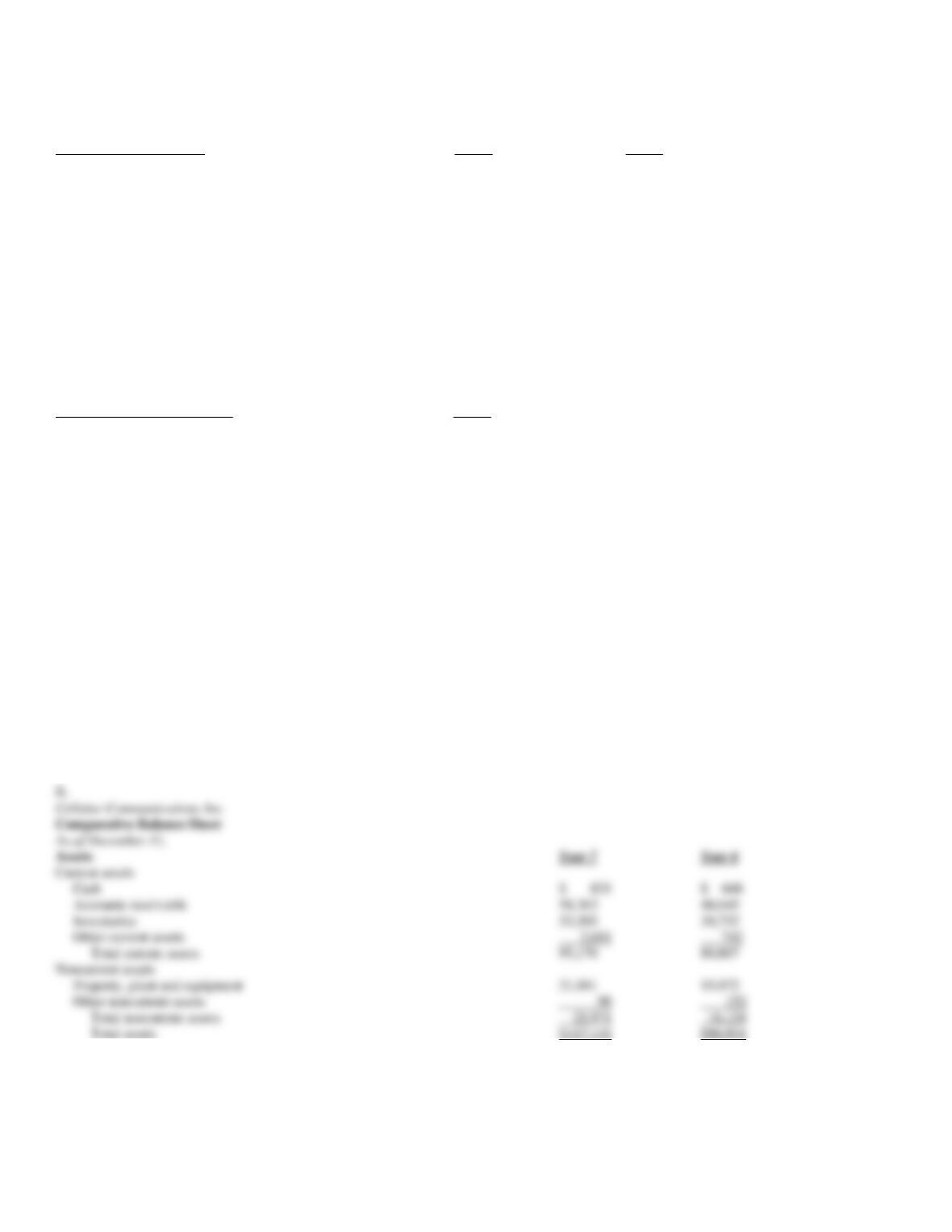
Year 7
Year 6
Current assets
Cash
$ 821
$ 668
Inventories
33,305
30,752
Other current assets
2,681
742
Total current assets
95,170
80,807
Noncurrent assets
Property, plant and equipment
21,881
15,972
Other noncurrent assets
152
Total noncurrent assets
21,971
16,124
Total assets
$117,141
$96,931