103) If 1.4% of the mass of a human body is calcium, how many kilograms of calcium are there in a
173-pound man?
A) 1.1 kg Ca
B) 5.3 kg Ca
C) 1.1 × 10² kg Ca
D) 5.3 × 10² kg Ca
104) A fishing boat accidentally spills 15 barrels of diesel oil into the ocean. Each barrel contains 42
gallons. If the oil film on the ocean is 2.5 × 10² nm thick, how many square meters will the oil slick
cover?
A) 9.5 × 10⁻³ m2
B) 9.5 × 10⁶ m2
C) 9.5 × 10⁷ m2
D) none of these
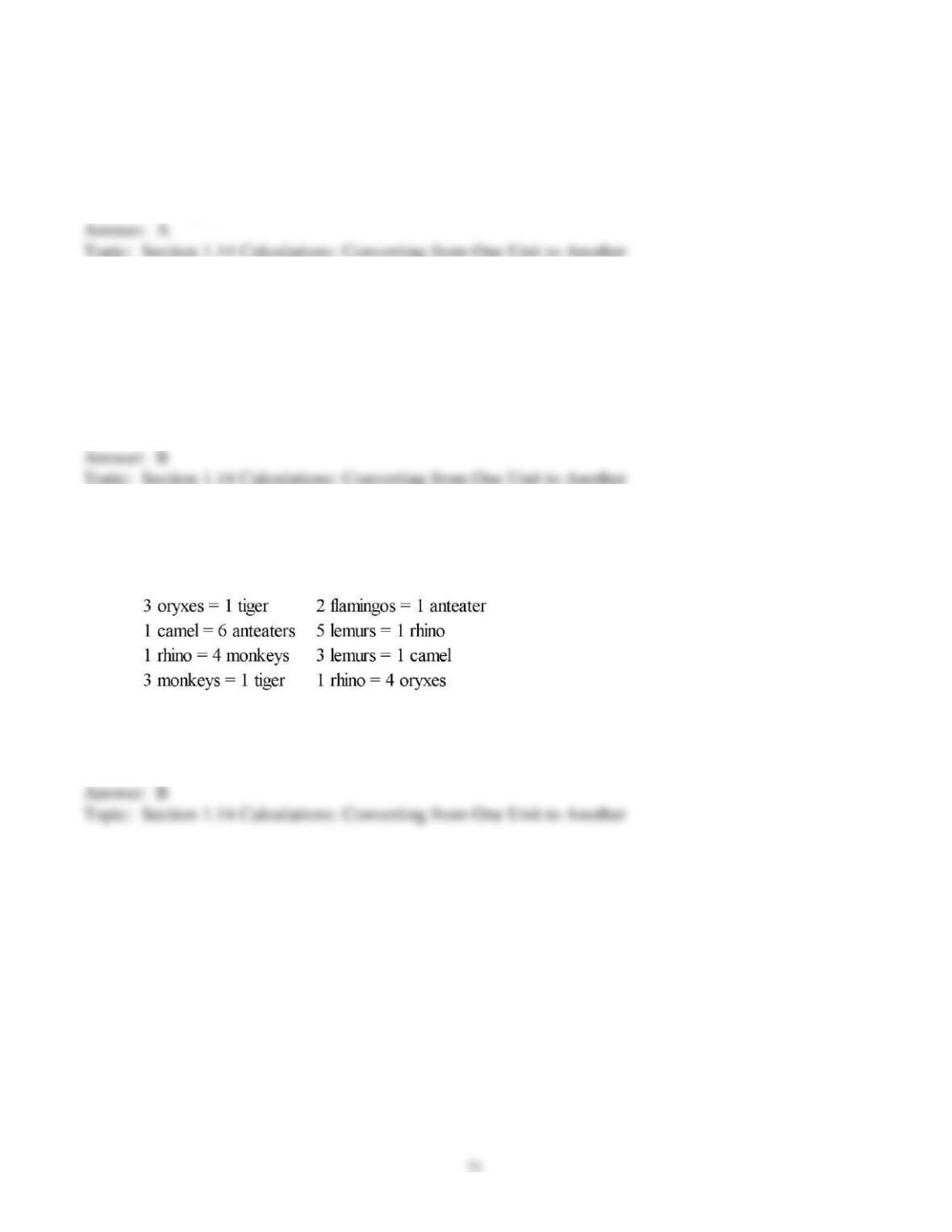
105) An international group of zookeepers with successful breeding programs made the following
animal exchanges last year. Using the same bartering system, how many oryxes can a zoo obtain in
exchange for 15 flamingos?
A) one oryx
B) three oryxes
C) four oryxes
D) five oryxes
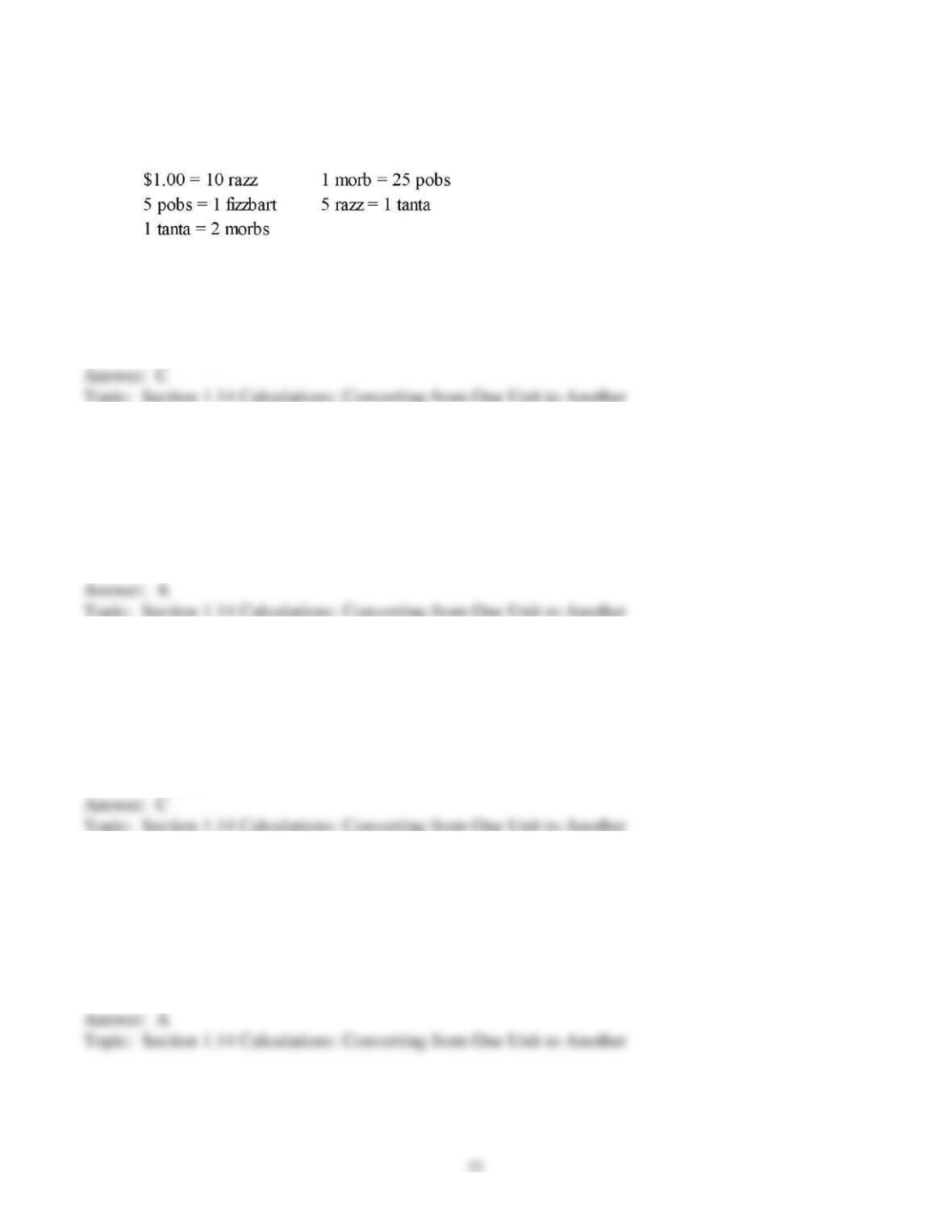
106) You are visiting the planet Lagmom. The money exchange rates are shown below. How many
Lagmom fizzbarts will you receive in exchange for $500 at the Lagmom Spaceport Currency Exchange
counter?
A) 5.00 × 10² fizzbarts
B) 1.00 × 10³ fizzbarts
C) 1.00 × 10⁴ fizzbarts
D) 5.00 × 10⁵ fizzbarts
107) Because of the high heat and low humidity in the summer in Death Valley, California, a visitor
requires about one quart of water for every two miles traveled on foot. Calculate the approximate
number of liters required for a person to walk 30. kilometers in Death Valley.
A) 8.8 L
B) 35 L
C) 91 L
D) 140 L
108) A college runner set a school record of 3:59.37 in the mile run. Assuming that the distance was
measured accurately to five significant figures, what was the runner’s average speed in kilometers per
hour?
A) 9.3454 km/hr
B) 10.375 km/hr
C) 24.203 km/hr
D) 26.869 km/hr
109) The winner of the men’s 1500-meter speed skating event at a recent Winter Olympics had a time of
1:45.57. Assuming that the distance was measured accurately to five significant figures, what was the
skater’s average speed in miles per hour?
A) 31.785 mi/hr
B) 38.418 mi/hr
C) 51.151 mi/hr
D) 61.826 mi/hr

24
110) A motorcycle emits 9.5 g of carbon monoxide per kilometer driven. How many pounds of carbon
monoxide does the motorcycle generate over 5.0 years if the motorcycle is driven 15,000 miles per year?
A) 8.9 × 101 lb CO
B) 9.8 × 10² lb CO
C) 2.5 × 10³ lb CO
D) 2.3 × 10⁴ lb CO
111) The temperature of 1.00 mL of water is raised by 1.00 oC for every 4.184 joules of heat absorbed
by the water. How many liters of water can be raised from 21.0 oC to 100.0 oC by the absorption of 8.88
kcal of heat generated by the combustion of natural gas?
A) 0.112 L
B) 2.13 L
C) 37.2 L
D) 168 L
112) Combustion of hydrogen releases 142 kJ per gram of hydrogen reacted. How many kilocalories of
energy are released by the combustion of 16.0 ounces of hydrogen?
A) 1.31 kcal
B) 19.2 kcal
C) 1.54 × 10⁴ kcal
D) 2.69 × 10⁵ kcal
113) When 1.0 gram of hydrogen reacts with 8.0 grams of oxygen 9.0 grams of water are produced and
142 kJ of heat are released. How many grams of hydrogen and how many grams of oxygen must react to
produce 250 kJ of heat?
A) 0.57 g H2 and 4.5 g O2
B) 0.57 g H2 and 14 g O2
C) 1.8 g H2 and 4.5 g O2
D) 1.8 g H2 and 14 g O2
114) The LD50 values for several chemicals are listed below. These chemicals were tested on laboratory
mice. Which was the most toxic to the mice in small amounts?
A) aspirin 1.5 g/kg
B) chloroform, 3.2 g/kg
C) ethyl alcohol, 10.6 g/kg
D) sodium cyclamate, 17 g/kg
115) The LD50 values for several chemicals are listed below. These chemicals were tested on laboratory
mice. Which was the least toxic to the mice in small amounts?
A) aspirin 1.5 g/kg
B) chloroform, 3.2 g/kg
C) ethyl alcohol, 10.6 g/kg
D) sodium cyclamate, 17 g/kg
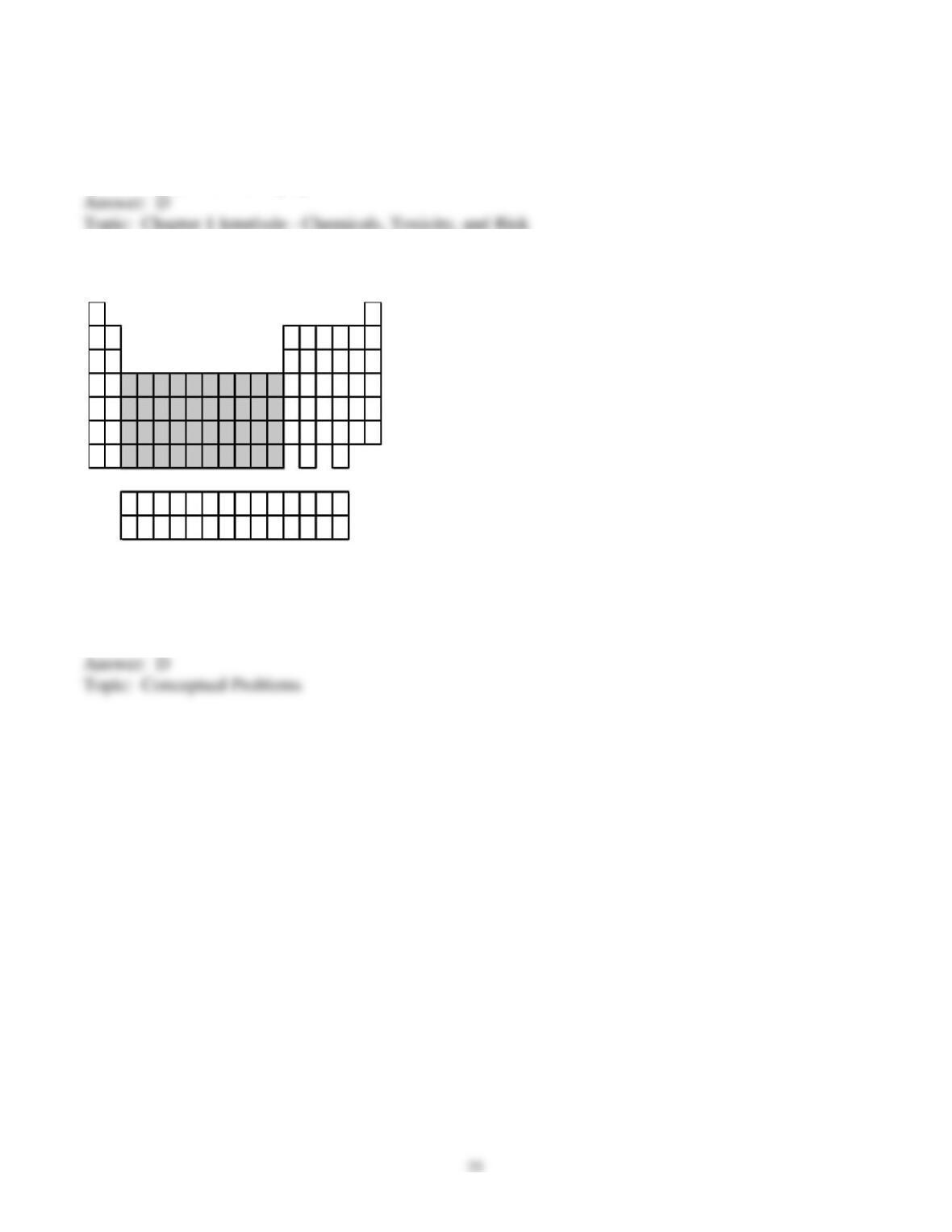
116) What group of elements does the shaded area in the following periodic table indicate?
A) alkali metals
B) alkaline earth metals
C) inner transition metals
D) transition metals
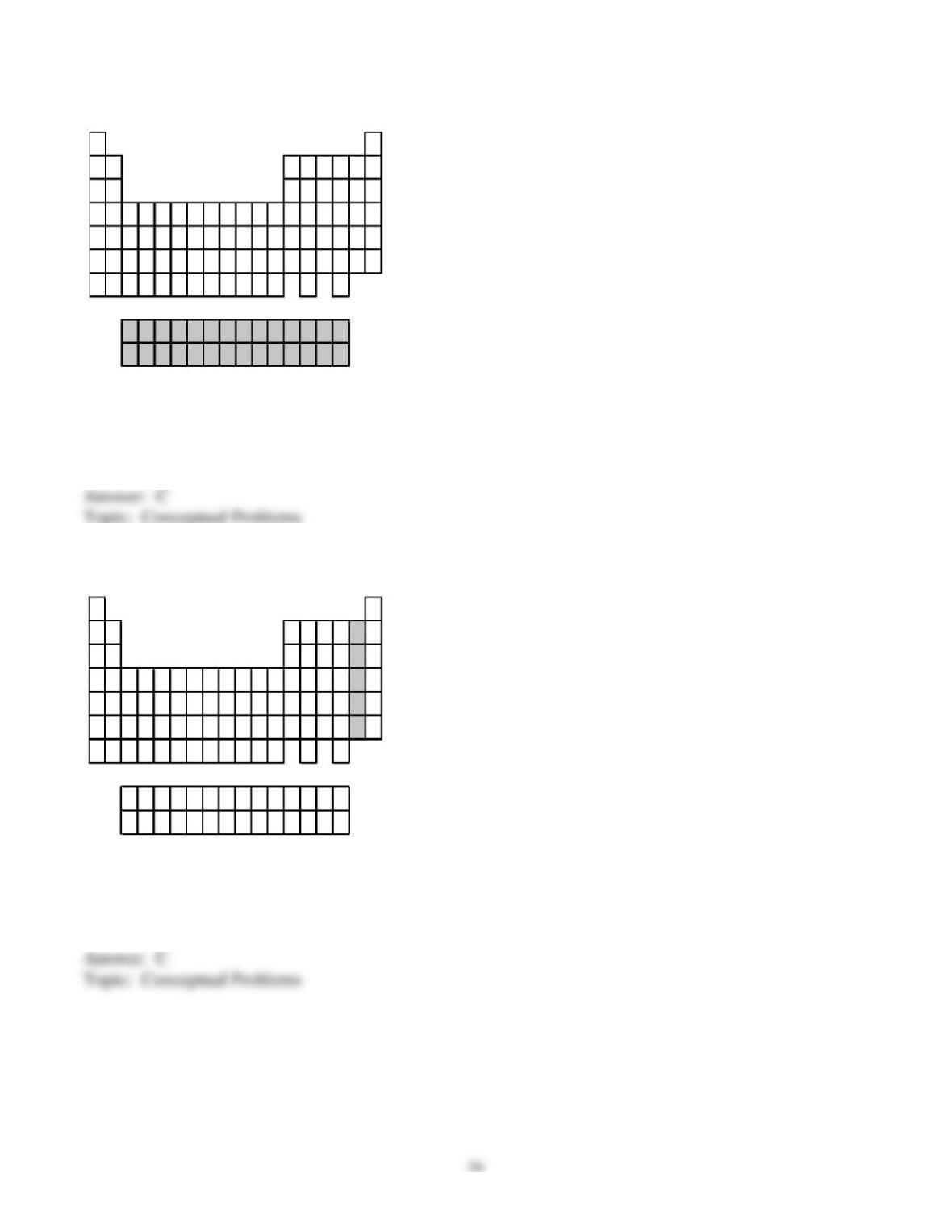
117) What group of elements does the shaded area in the following periodic table indicate?
A) alkali metals
B) alkaline earth metals
C) inner transition metals
D) transition metals
118) What group of elements does the shaded area in the following periodic table indicate?
A) alkali metals
B) alkaline earth metals
C) halogens
D) noble gases
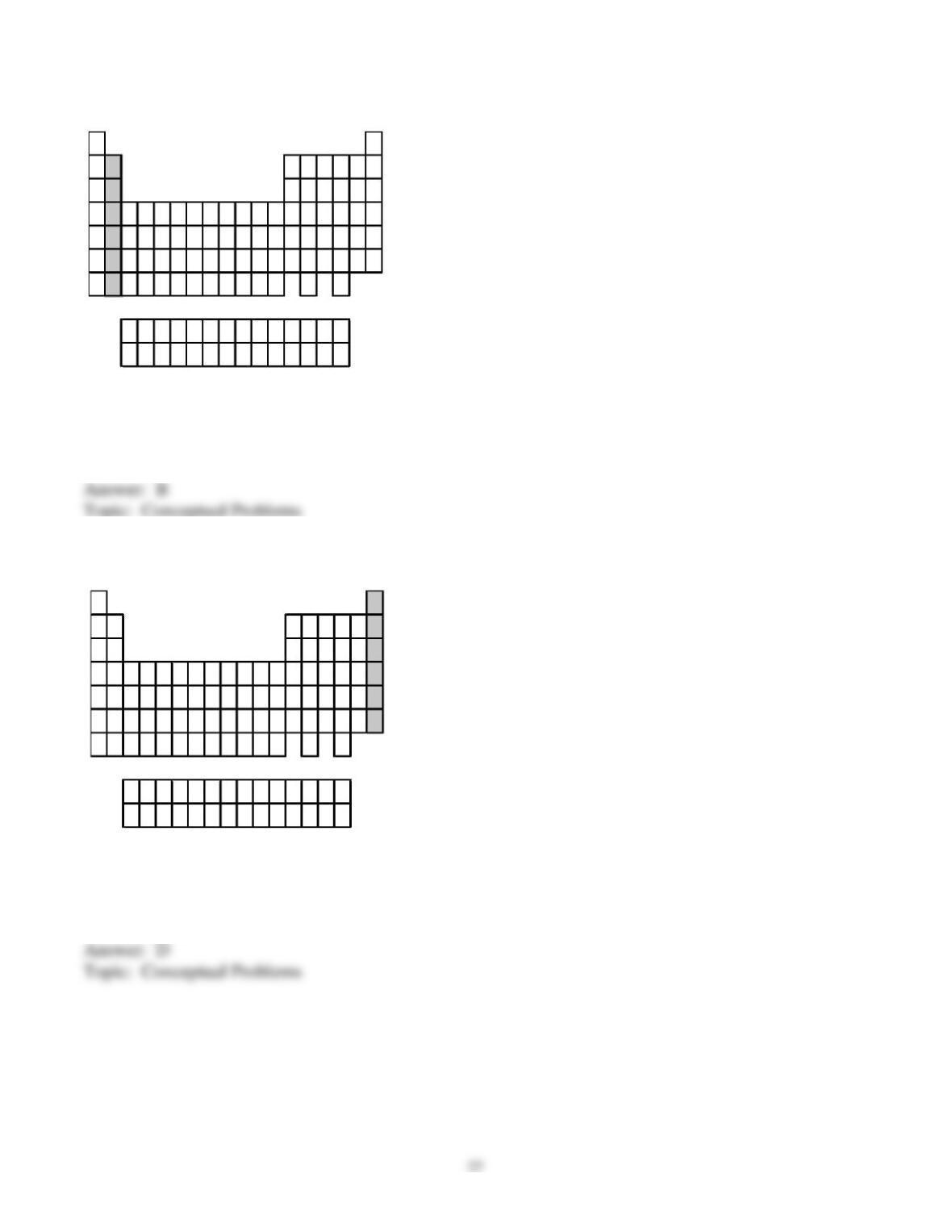
119) What group of elements does the shaded area in the following periodic table indicate?
A) alkali metals
B) alkaline earth metals
C) halogens
D) noble gases
120) What group of elements does the shaded area in the following periodic table indicate?
A) alkali metals
B) alkaline earth metals
C) halogens
D) noble gases
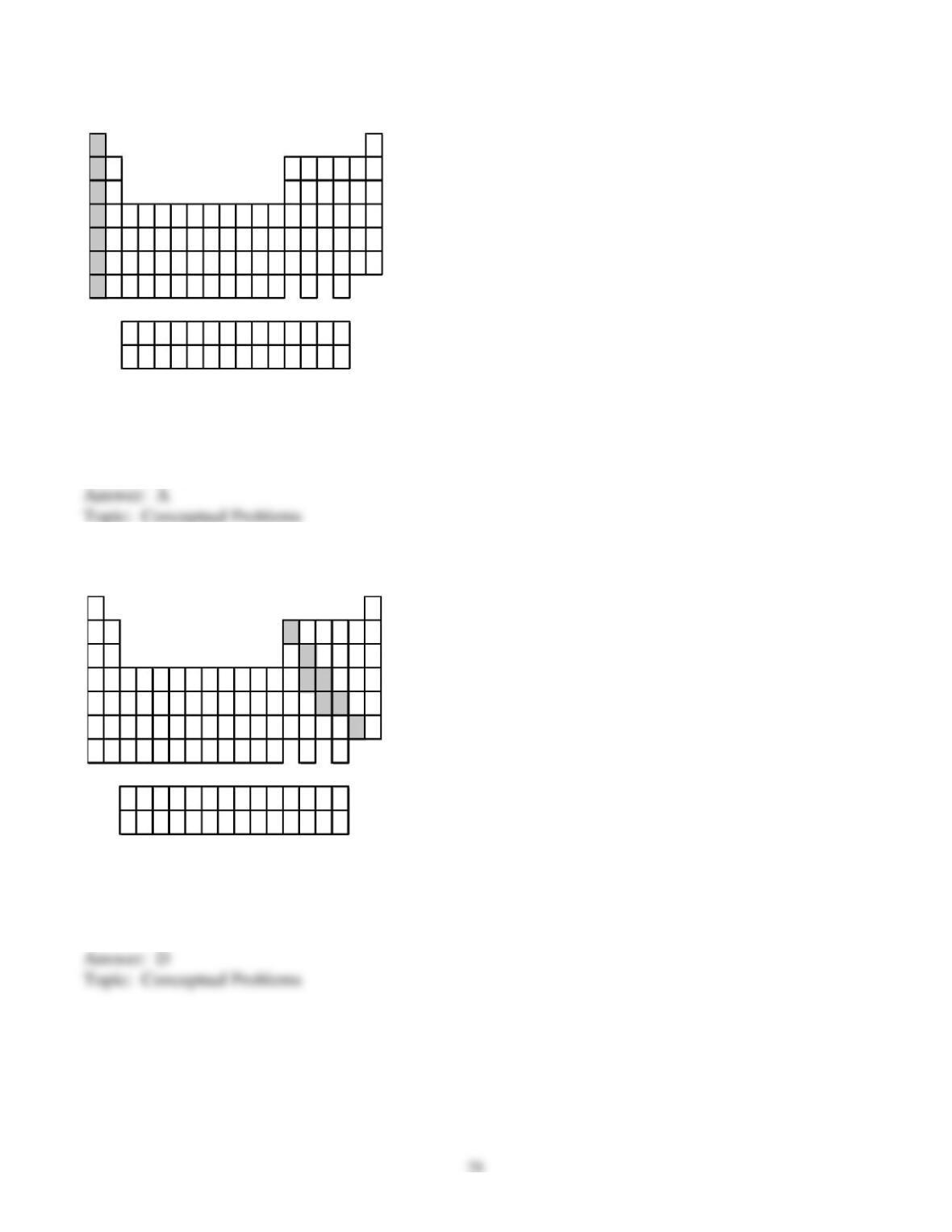
121) What group of elements does the shaded area in the following periodic table indicate?
A) alkali metals
B) alkaline earth metals
C) halogens
D) noble gases
122) What group of elements does the shaded area in the following periodic table indicate?
A) gases
B) metals
C) nonmetals
D) semimetals
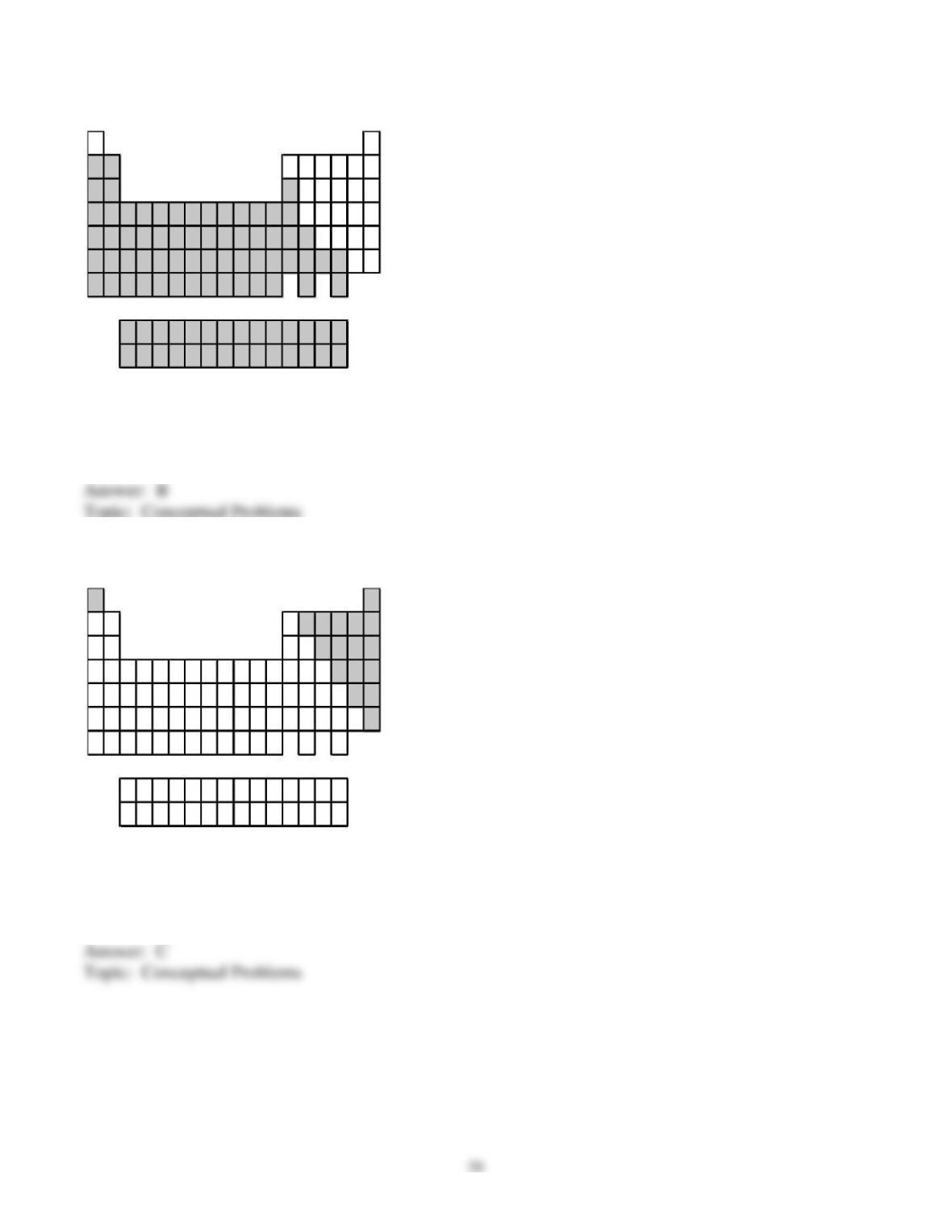
123) What group of elements does the shaded area in the following periodic table indicate?
A) gases
B) metals
C) nonmetals
D) semimetals
124) What group of elements does the shaded area in the following periodic table indicate?
A) gases
B) metals
C) nonmetals
D) semimetals
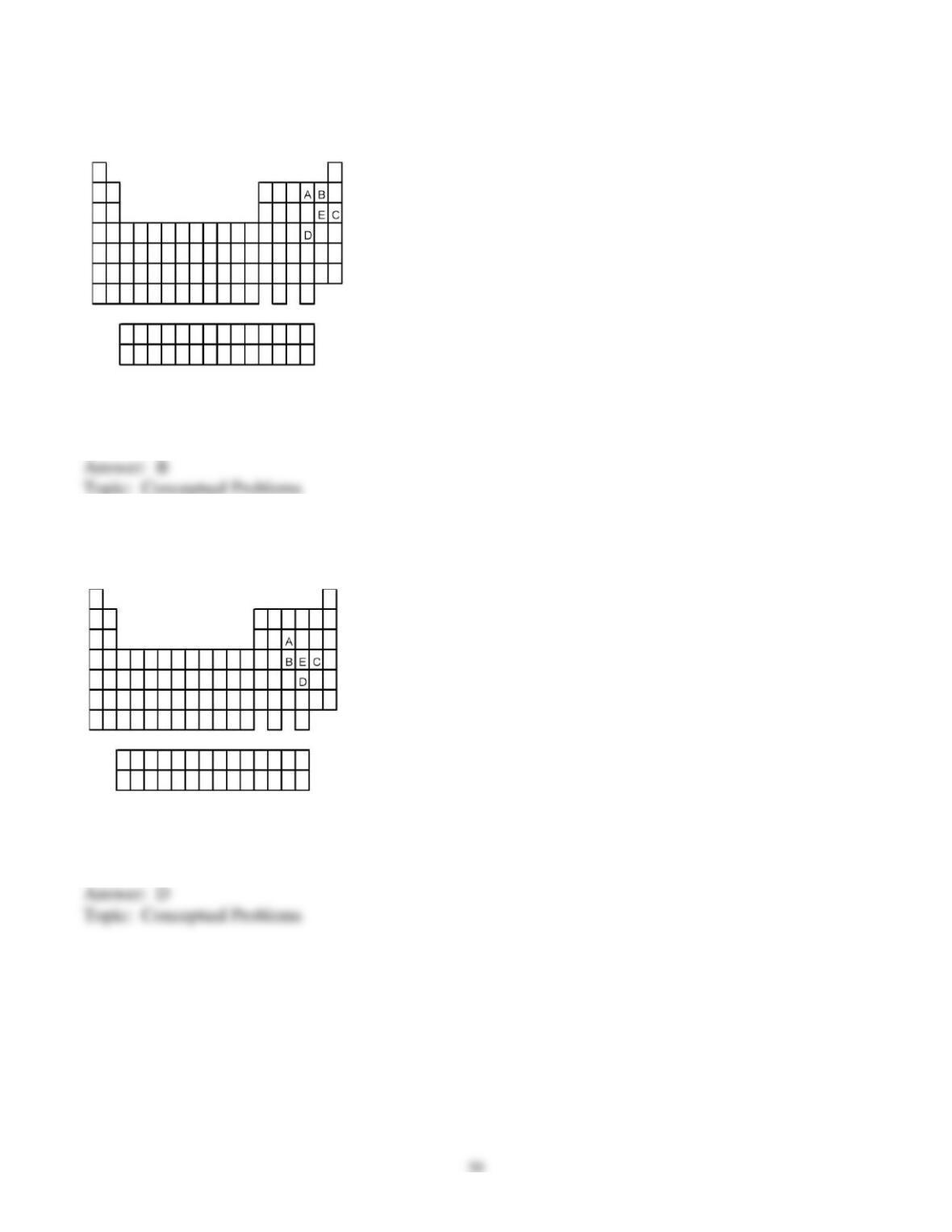
125) Which element is most chemically similar to the element indicated by the letter E in the following
periodic table?
A) A
B) B
C) C
D) D
126) Which element is most chemically similar to the element indicated by the letter E in the following
periodic table?
A) A
B) B
C) C
D) D
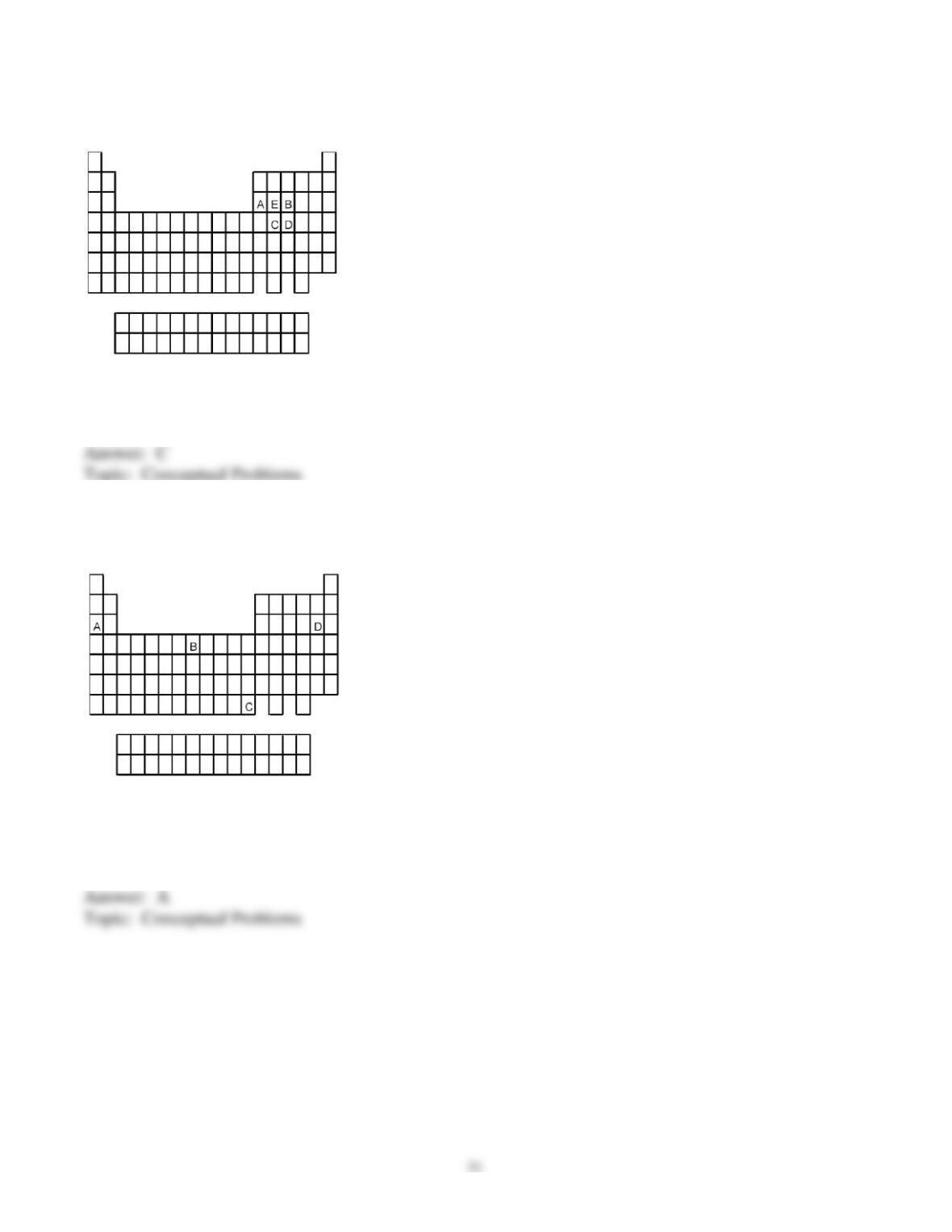
127) Which element is most chemically similar to the element indicated by the letter E in the following
periodic table?
A) A
B) B
C) C
D) D
128) Which element indicated by letter in the following periodic table reacts rapidly with water to form
an alkaline solution?
A) A
B) B
C) C
D) D
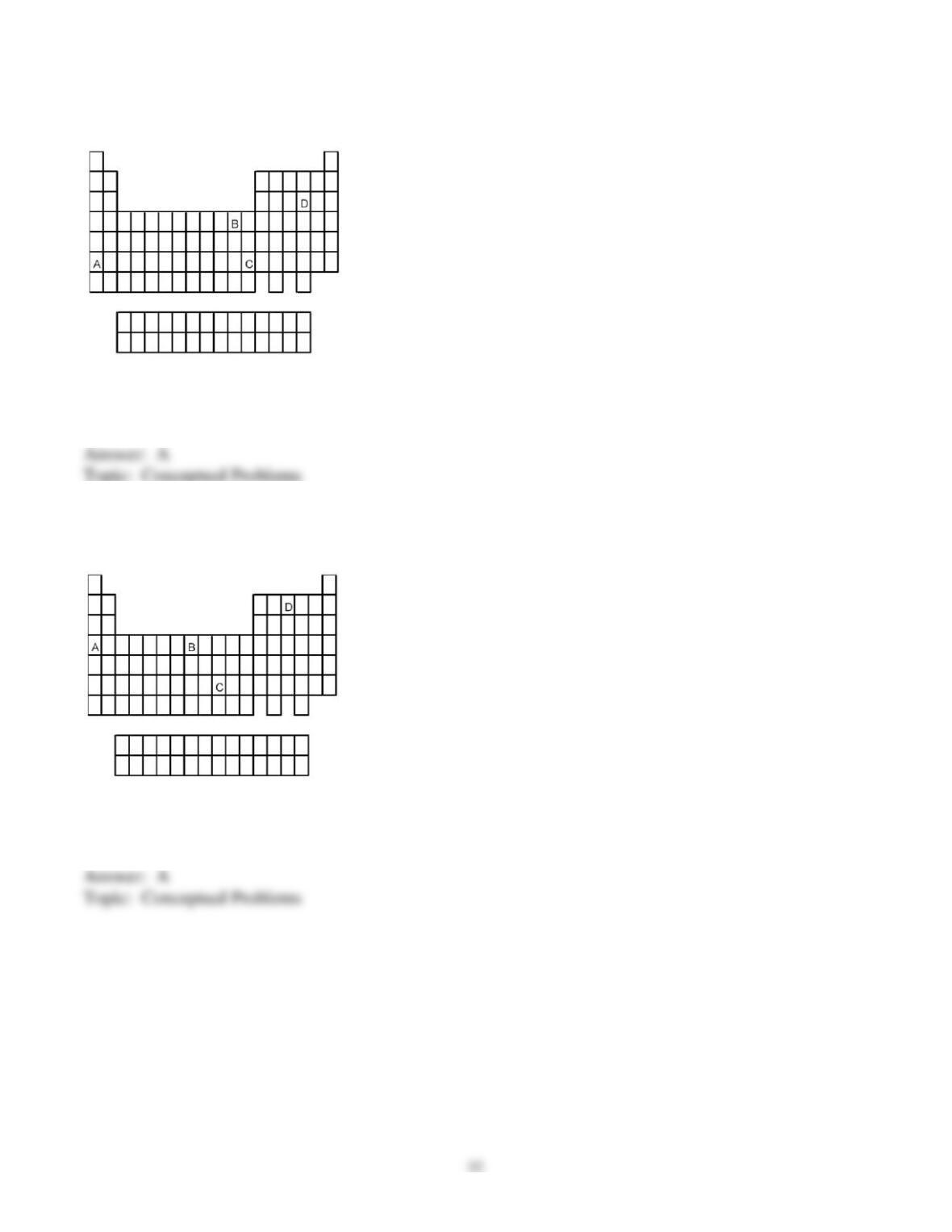
129) Which element indicated by letter in the following periodic table reacts rapidly with water to form
an alkaline solution?
A) A
B) B
C) C
D) D
130) Which element indicated by letter in the following periodic table reacts rapidly with water to form
an alkaline solution?
A) A
B) B
C) C
D) D
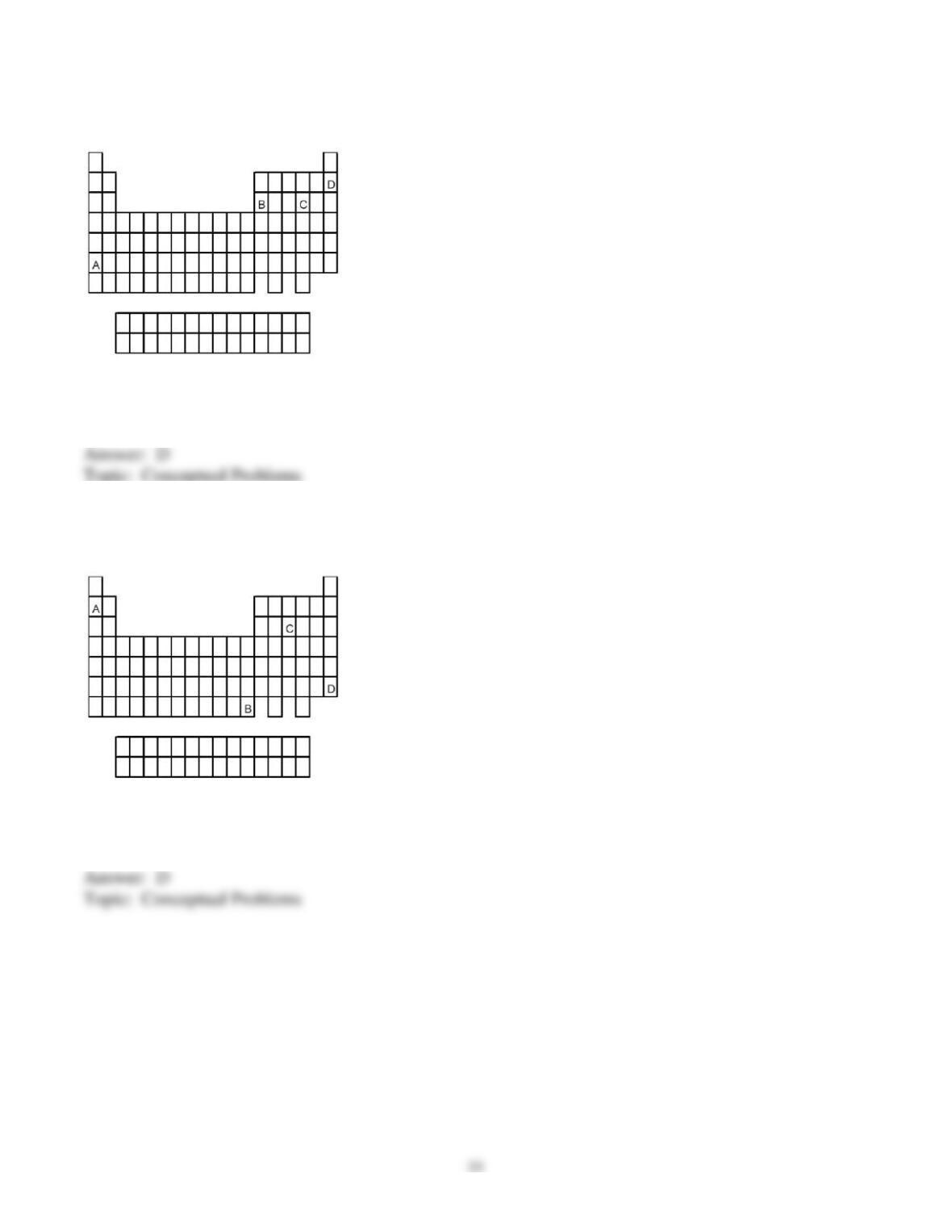
131) Which element indicated by letter in the following periodic table is a gas at room temperature and a
pressure of 1.0 atm?
A) A
B) B
C) C
D) D
132) Which element indicated by letter in the following periodic table is a gas at room temperature and a
pressure of 1.0 atm?
A) A
B) B
C) C
D) D
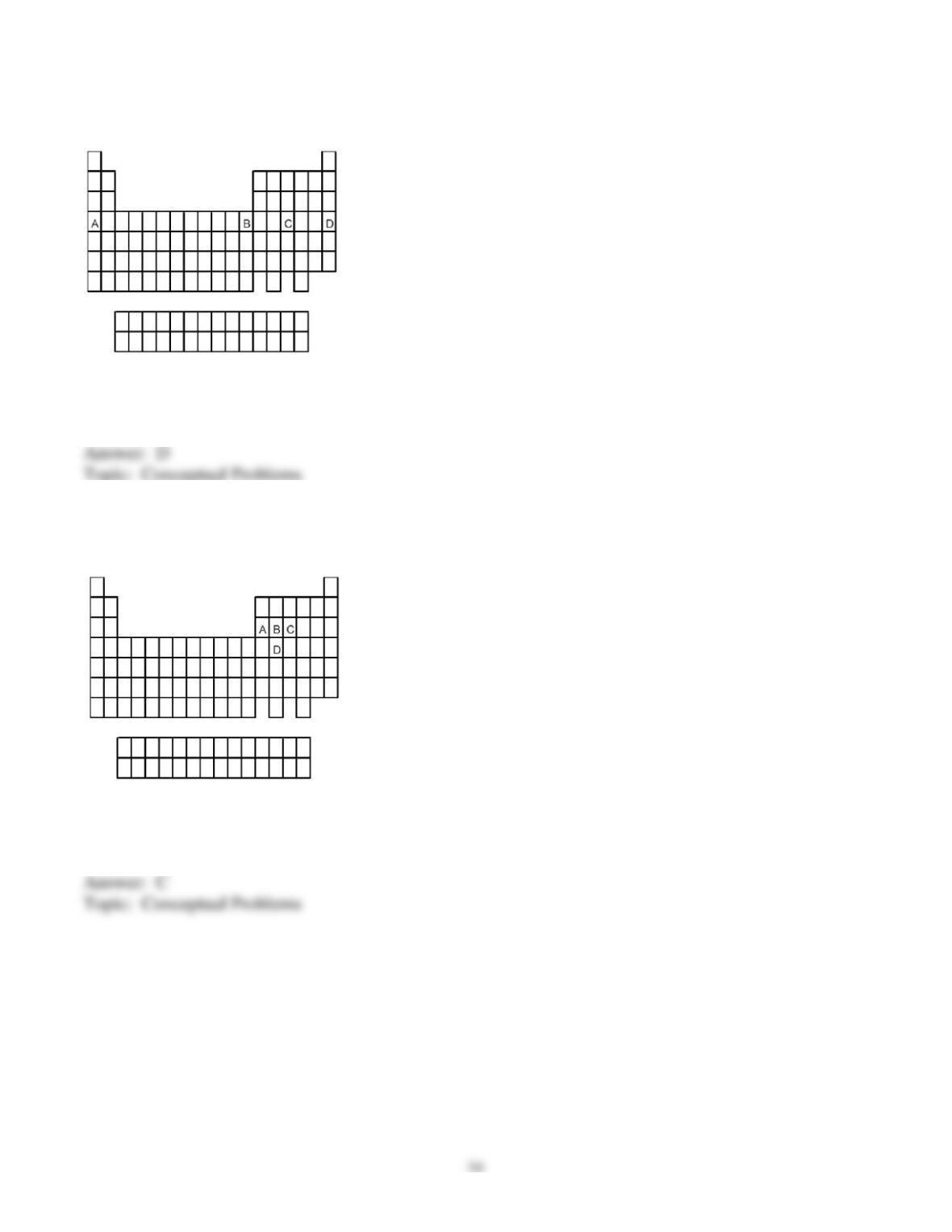
133) Which element indicated by letter in the following periodic table is a gas at room temperature and a
pressure of 1.0 atm?
A) A
B) B
C) C
D) D
134) Which element indicated by letter in the following periodic table is the poorest conductor of
electricity and heat?
A) A
B) B
C) C
D) D
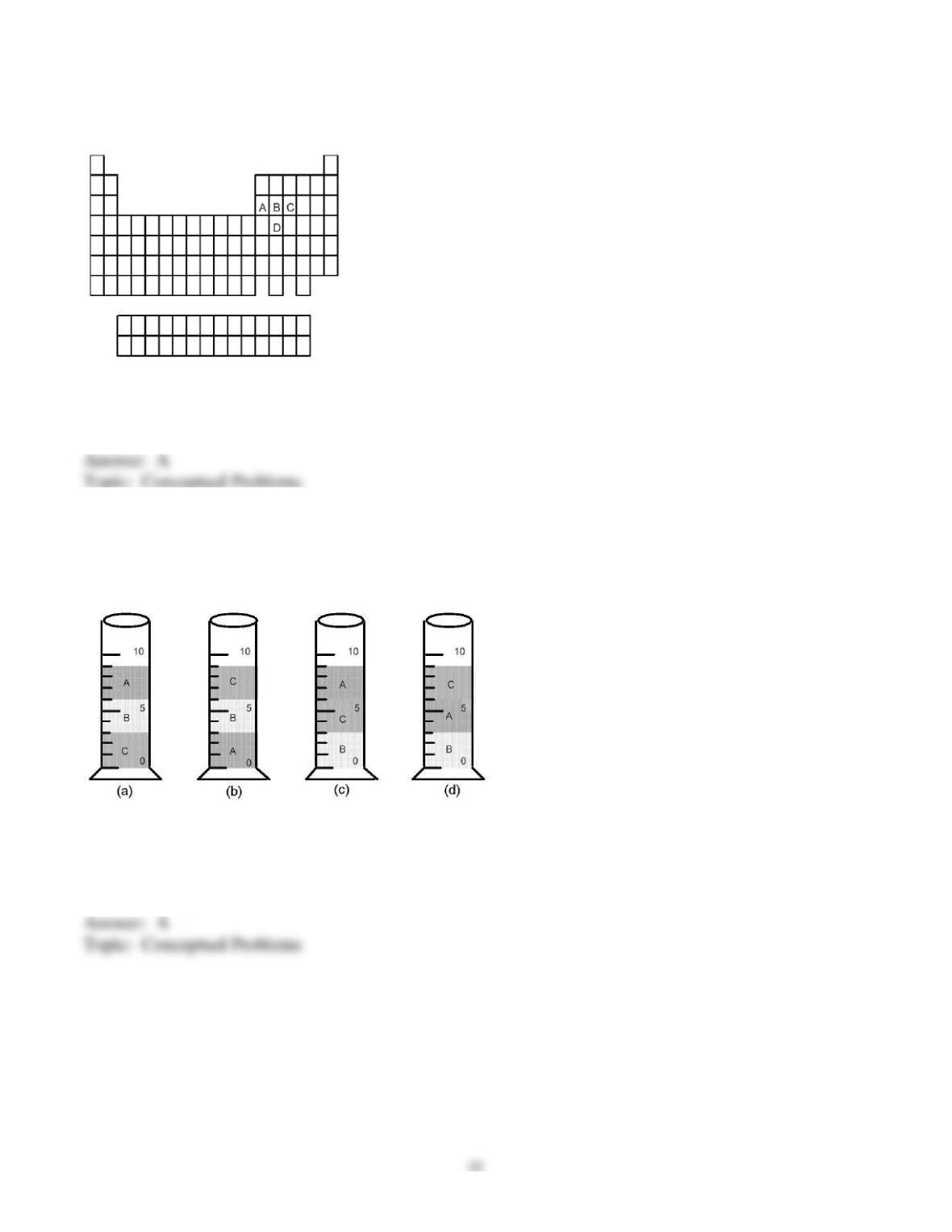
135) Which element indicated by letter in the following periodic table is the best conductor of electricity
and heat?
A) A
B) B
C) C
D) D
136) Liquids A, B, and C are insoluble in one another (i.e., they are immiscible). A, B, and C have
densities of 0.998 g/cm3, 1.050 g/cm3, and 1.102 g/cm3, respectively. Which drawing represents the
result of placing all three liquids into the same graduated cylinder?
A) drawing (a)
B) drawing (b)
C) drawing (c)
D) drawing (d)
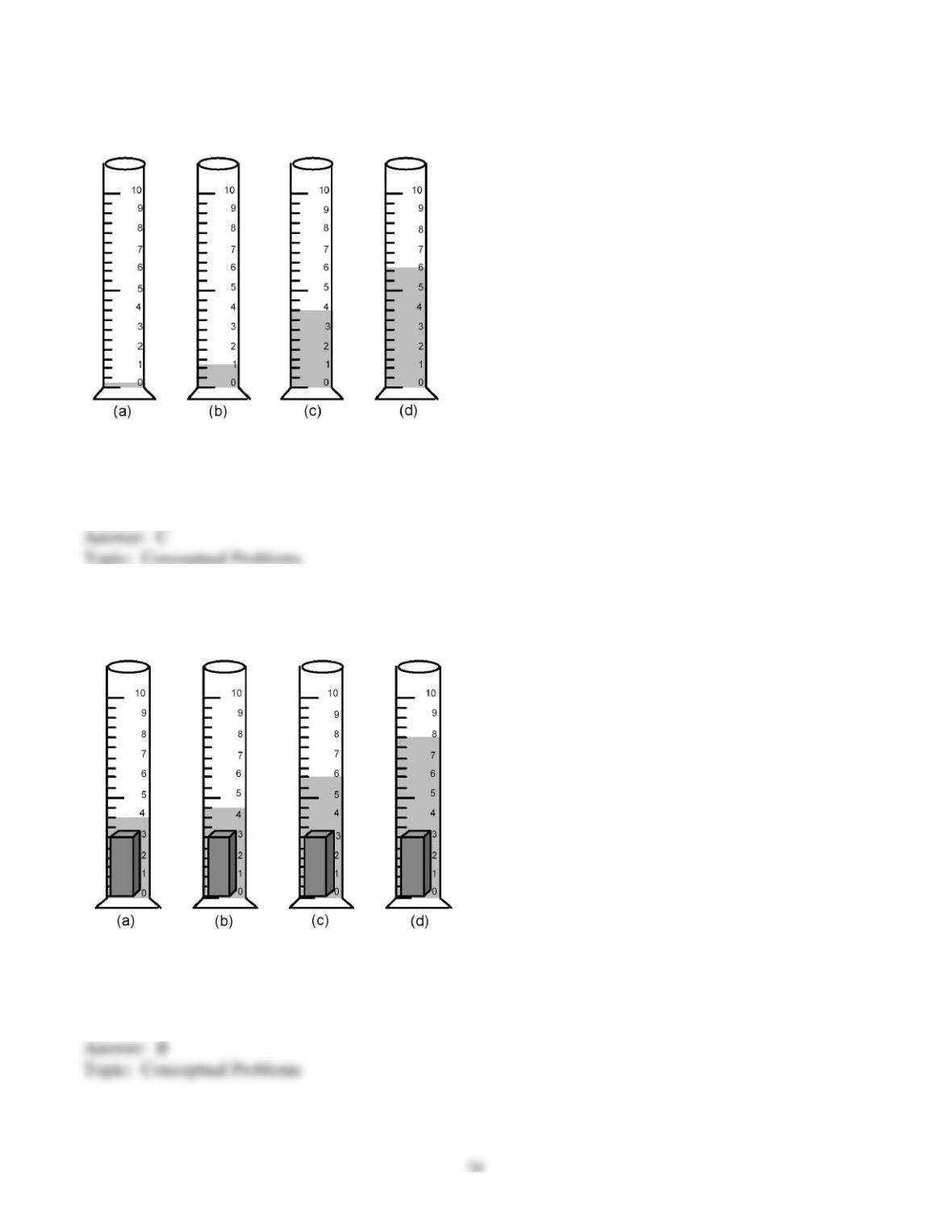
137) A certain liquid has a density of 1.25 g/cm3. Which drawing below most closely represents the
volume of this liquid needed to obtain 5.00 g of the liquid?
A) drawing (a)
B) drawing (b)
C) drawing (c)
D) drawing (d)
138) A certain solid has a density of 8.0 g/cm3. If 4.0 g of this solid are poured into 4.00 mL of water,
which drawing below most closely represents the volume of water after the solid is added?
A) drawing (a)
B) drawing (b)
C) drawing (c)
D) drawing (d)