Stewart_Calc_7ET ch01sec06
MULTIPLE CHOICE
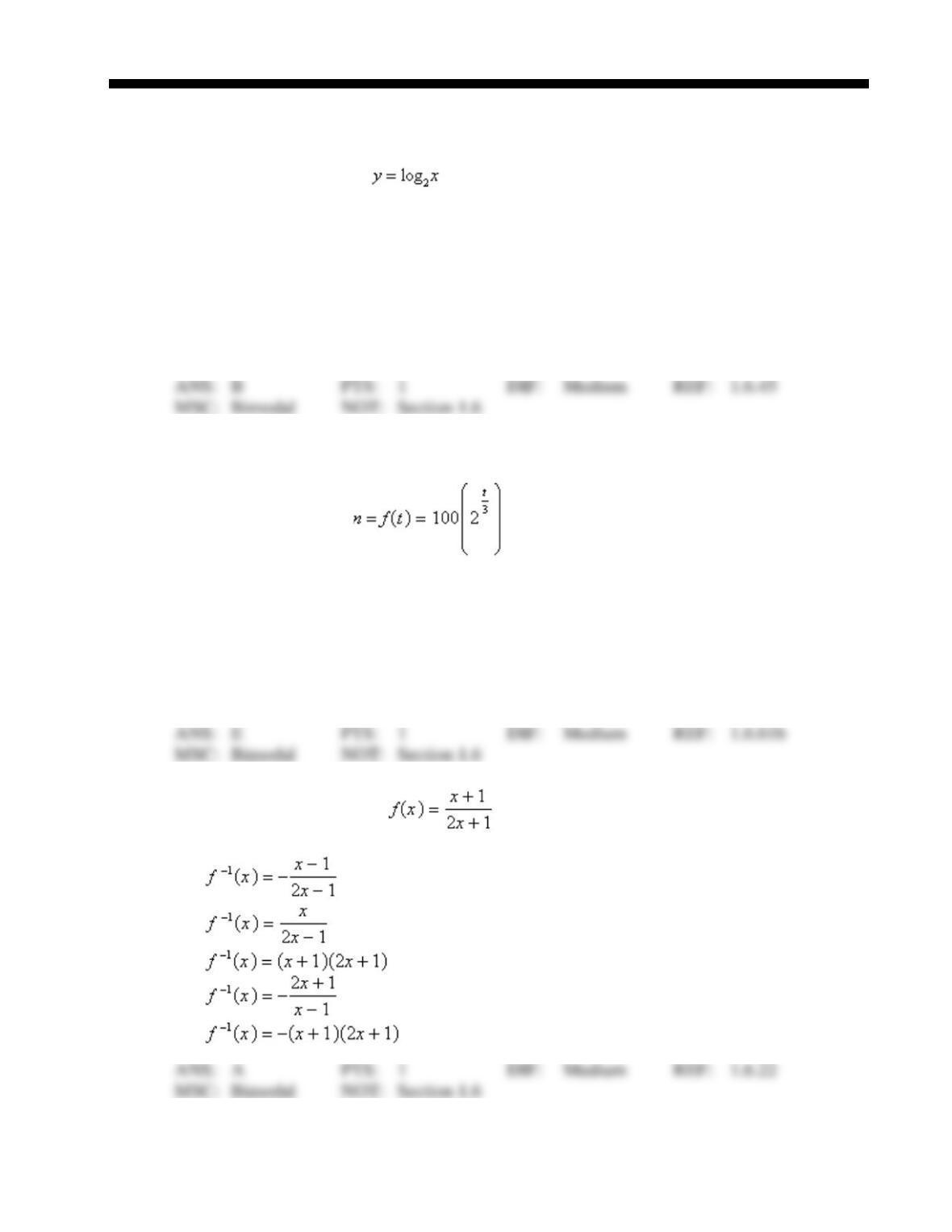
1. Suppose that the graph of is drawn on a coordinate grid where the unit of
measurement is an inch. How many miles to the right of the origin do we have to move
before the height of the curve reaches 3 ft? Rounded to the nearest mile.
a.
13015052.4 mi
b.
1084587.7 mi
c.
13,014,952 mi
d.
13,015,152 mi
e.
5.2 mi
2. If a bacteria population starts with 100 bacteria and doubles every three hours, then the
number of bacteria after t hours is
.
When will the population reach 35,000? Round the answer to the nearest tenth.
a.
30.4 hours
b.
15.4 hours
c.
20.4 hours
d.
35.4 hours
e.
25.4 hours
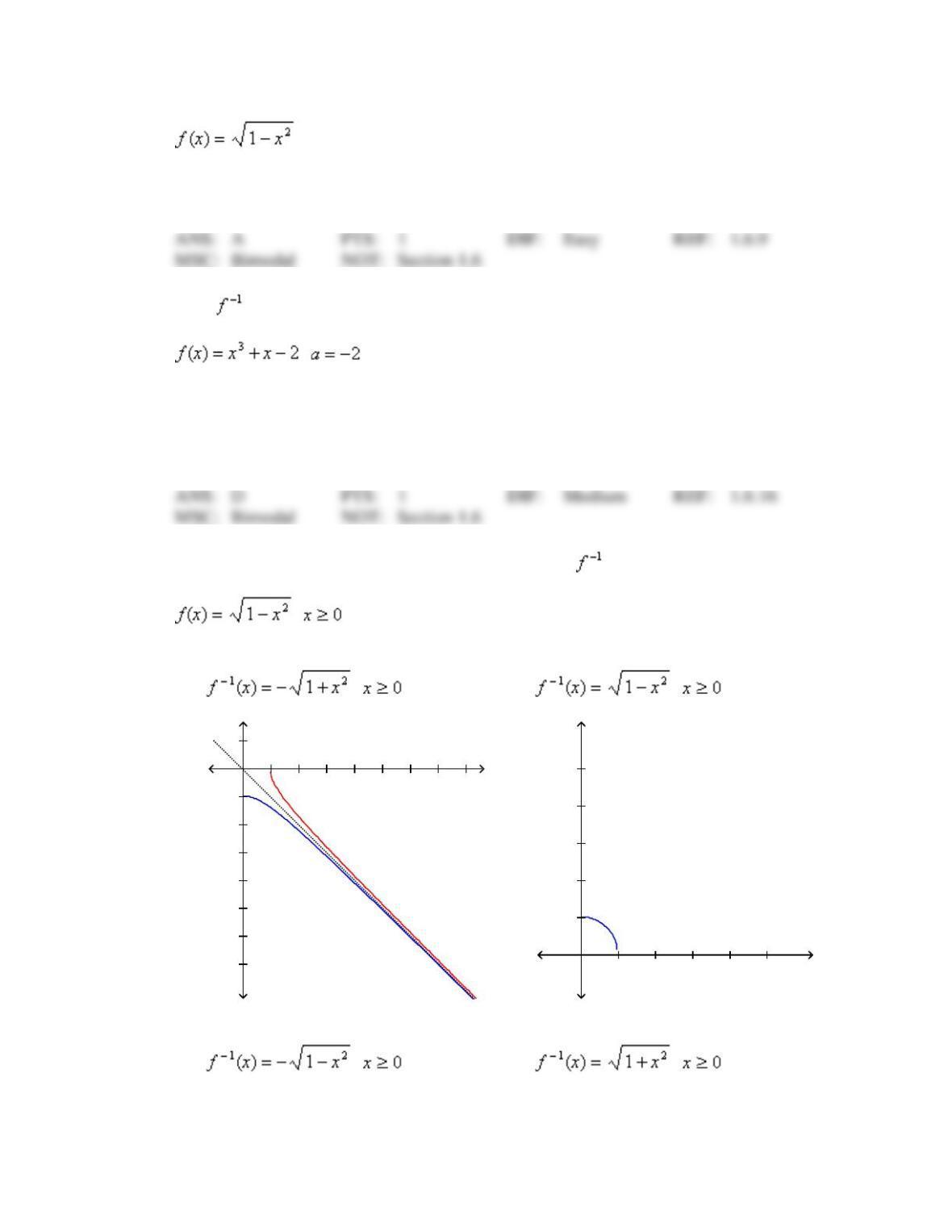
3. Find the inverse function of .
a.
b.
c.
d.
e.
4. Determine whether the function is one-to-one.
a.
No
b.
Yes
5. Find (a) for the function f and the real number a.
;
a.
2
b.
–1
c.
1
d.
0
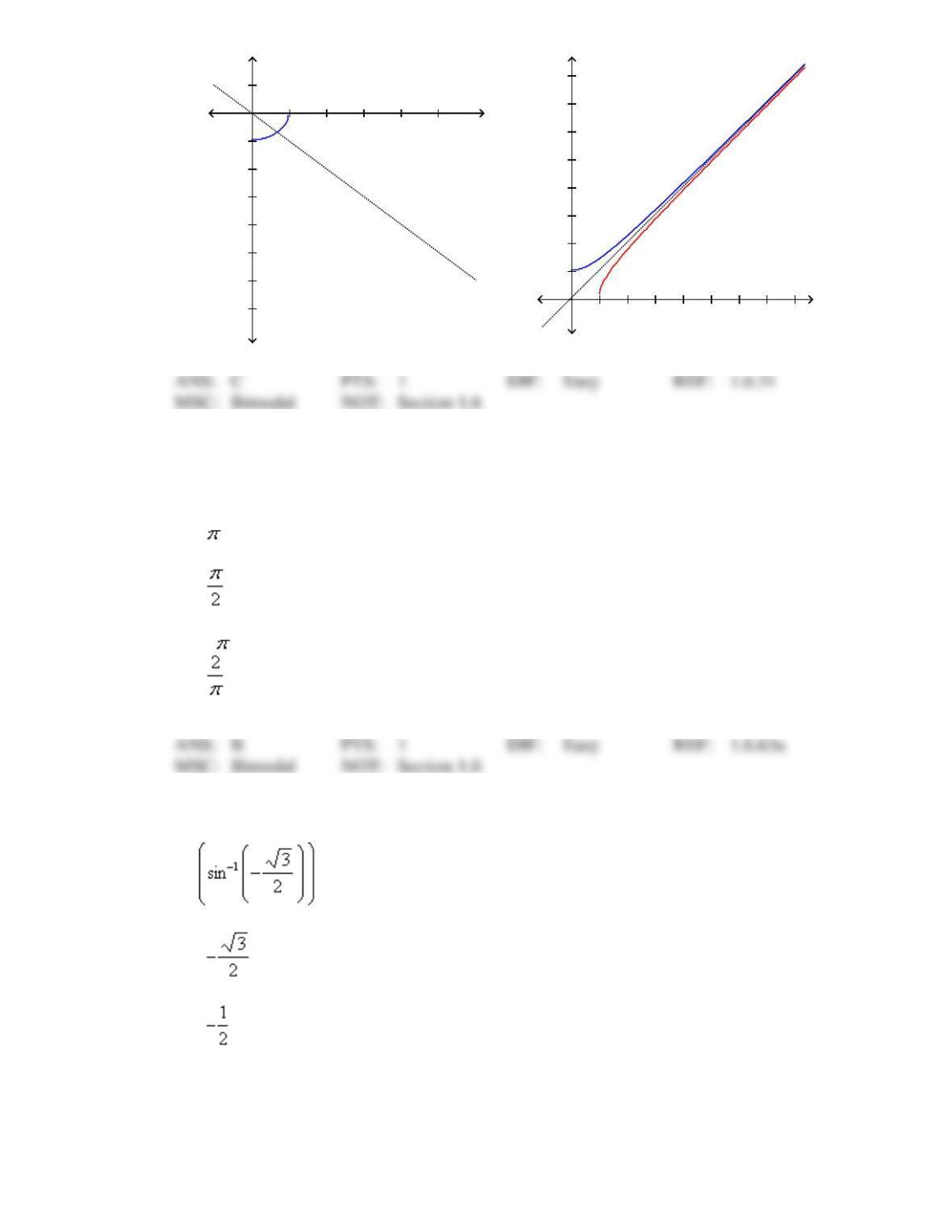
6. Find the inverse of f. Then sketch the graphs of f and on the same set of axes.
,
a.
,
c.
,
b.
,
d.
,
f
f–1
1 2 3 4 5 6 7 8 x
1
–1
–2
–3
–4
–5
–6
–7
y
f = f –1
1 2 3 4 5 x
1
2
3
4
5
y
7. Find the exact value of the given expression.
cos–1
a.
b.
c.
2
d.
8. Find the exact value of the given expression.
sin
a.
b.
c.
1
d.
0
f = f –1
1 2 3 4 5 x
1
–1
–2
–3
–4
–5
–6
–7
y
f
f–1
1 2 3 4 5 6 7 8 x
1
2
3
4
5
6
7
8
y
0
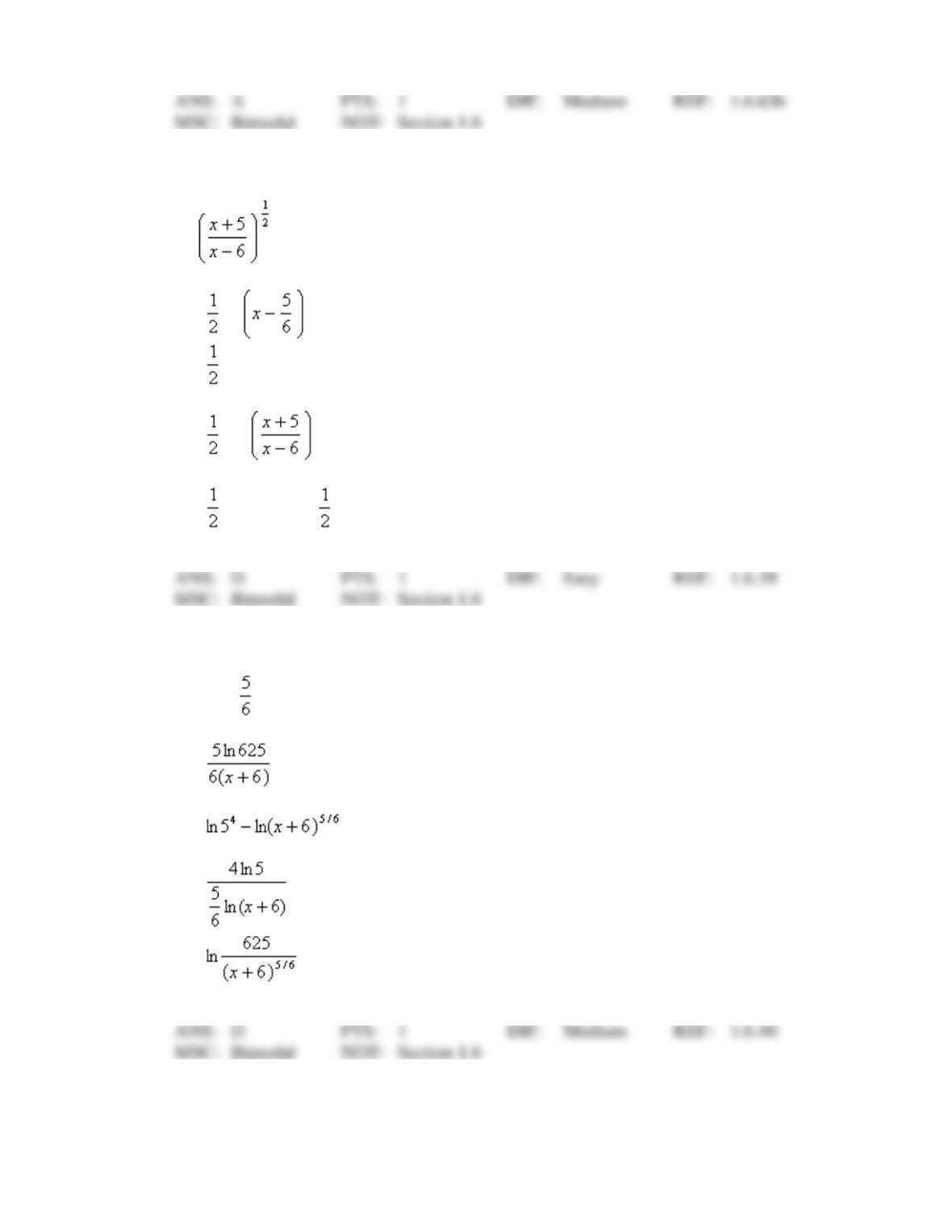
9. Use the laws of logarithms to expand the expression.
ln
a.
ln
b.
ln [(x + 5)(x – 6)]
c.
ln
d.
ln (x + 5) – ln (x – 6)
10. Use the laws of logarithms to write the expression as the logarithm of a single quantity.
4 ln 5 – ln (x + 6)
a.
b.
c.
d.
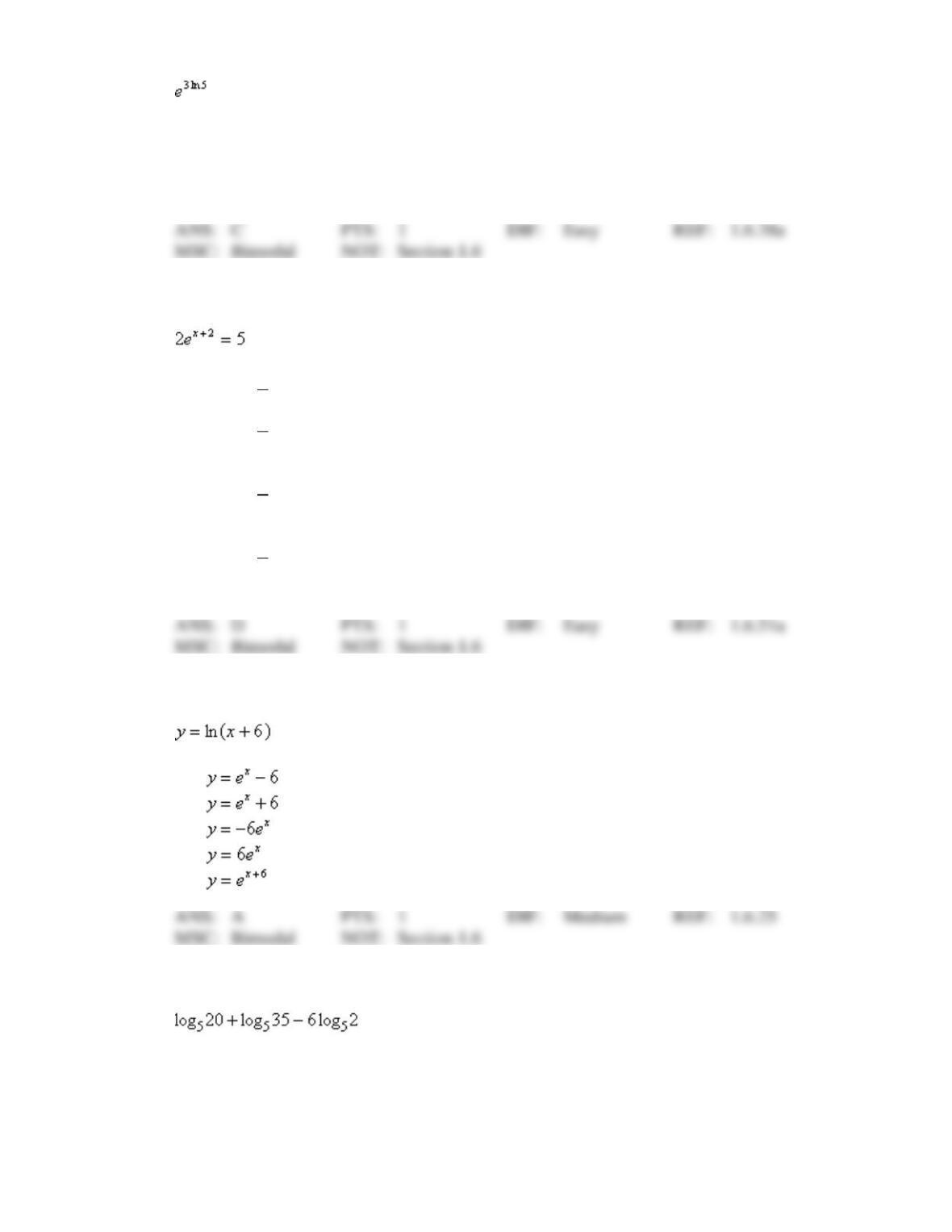
11. Simplify the expression.
a.
8
b.
15
c.
125
d.
243
12. Solve the equation.
a.
x = ln + 2
b.
x = ln – 2
c.
x = ln + 2
d.
x = ln – 2
13. Find a formula for the inverse of the function.
a.
b.
c.
d.
e.
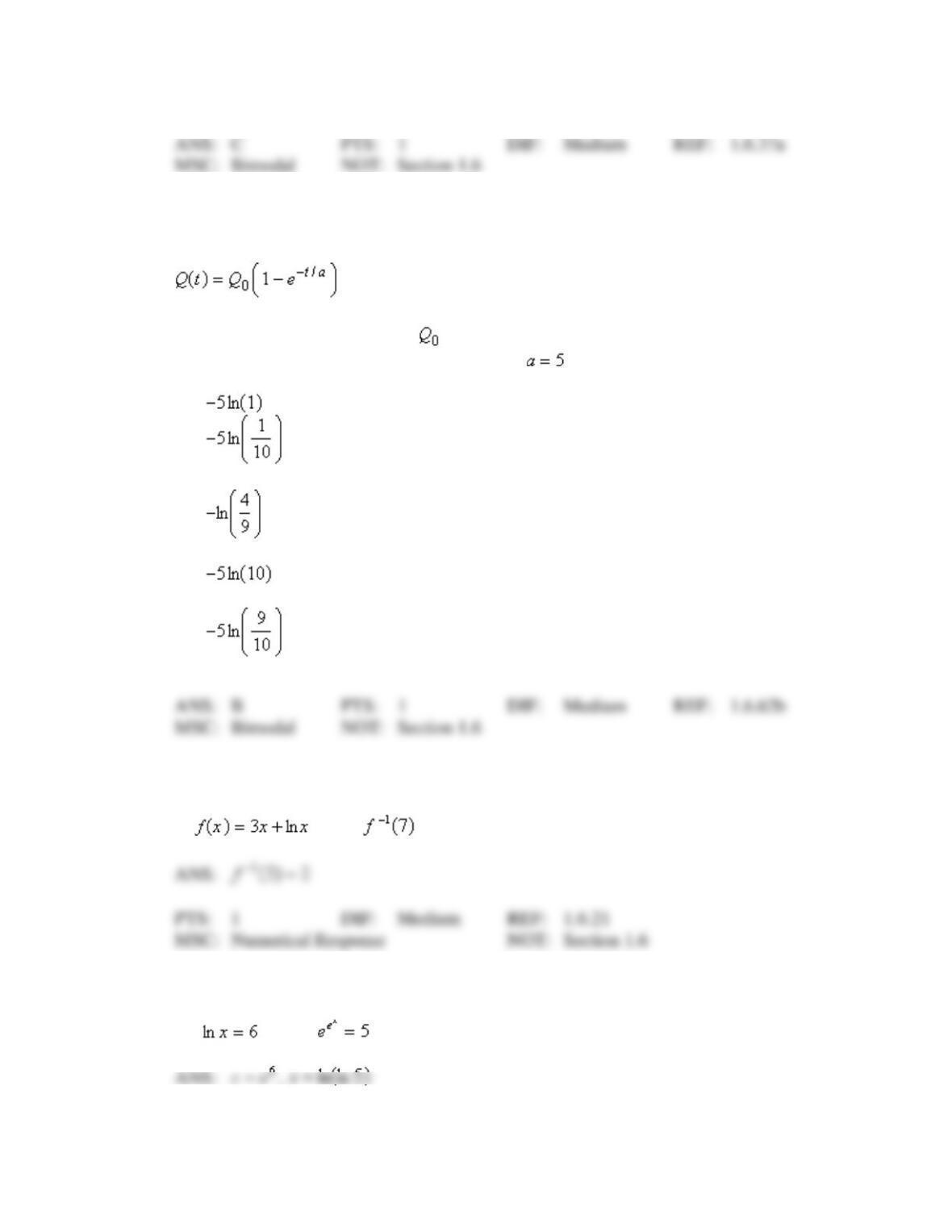
14. Find the exact value of the expression.
a.
4
b.
3
5
2
2
5
2
5
5
2
c.
1
d.
5
e.
2
15. When a camera flash goes off, the batteries immediately begin to recharge the flash’s
capacitor, which stores electric charge given by
(The maximum charge capacity is and t is measured in seconds.) How long does it take
to recharge the capacitor to 90% of capacity if ?
a.
seconds
b.
seconds
c.
seconds
d.
seconds
e.
seconds
NUMERIC RESPONSE
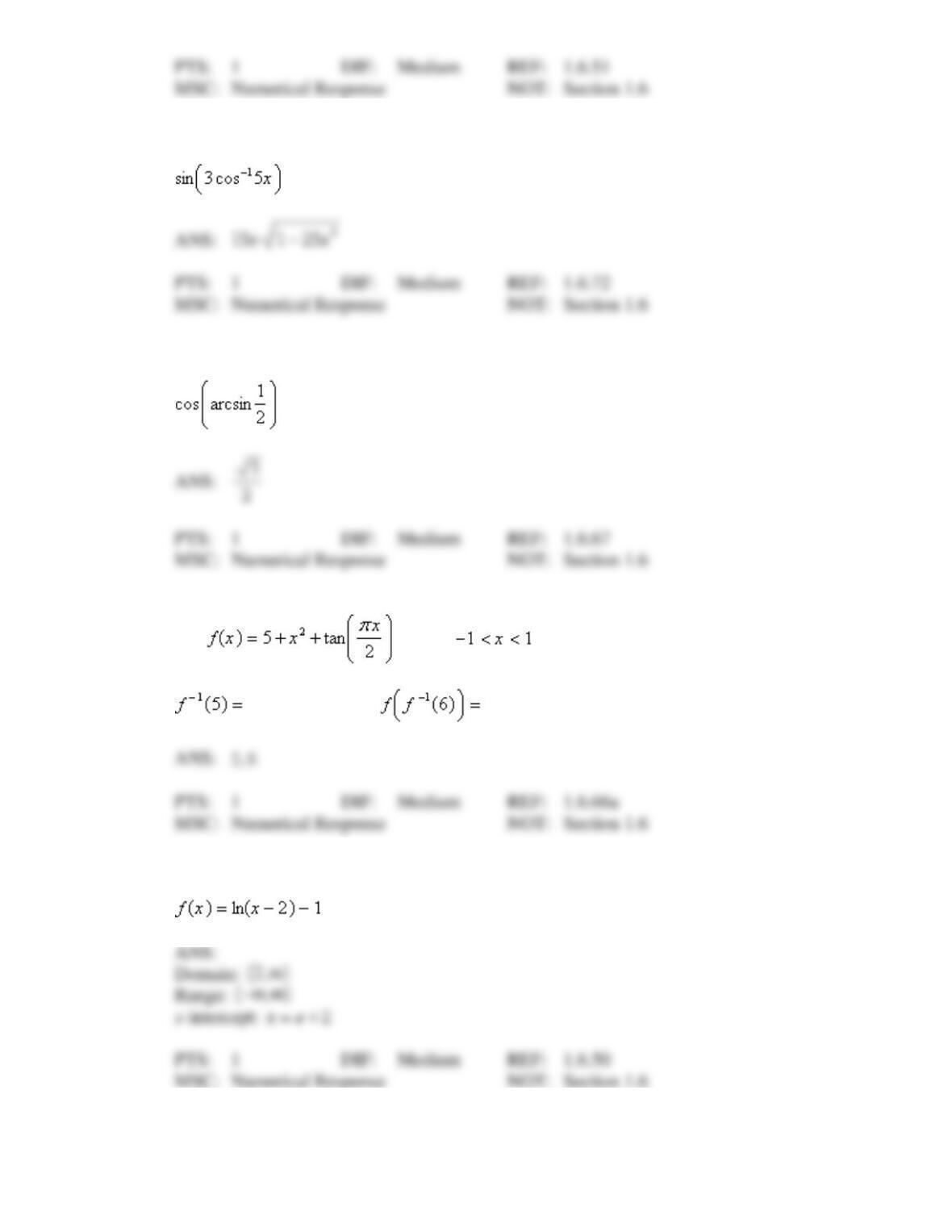
1. If , find .
2. Solve each equation for x.
(a) (b)
3. Simplify the expression.
4. Find the exact value of the expression.
5. Fill in the blanks.
Let , where .
__________ __________
6. Find the domain, range, and x-intercept(s) of the function.
SHORT ANSWER
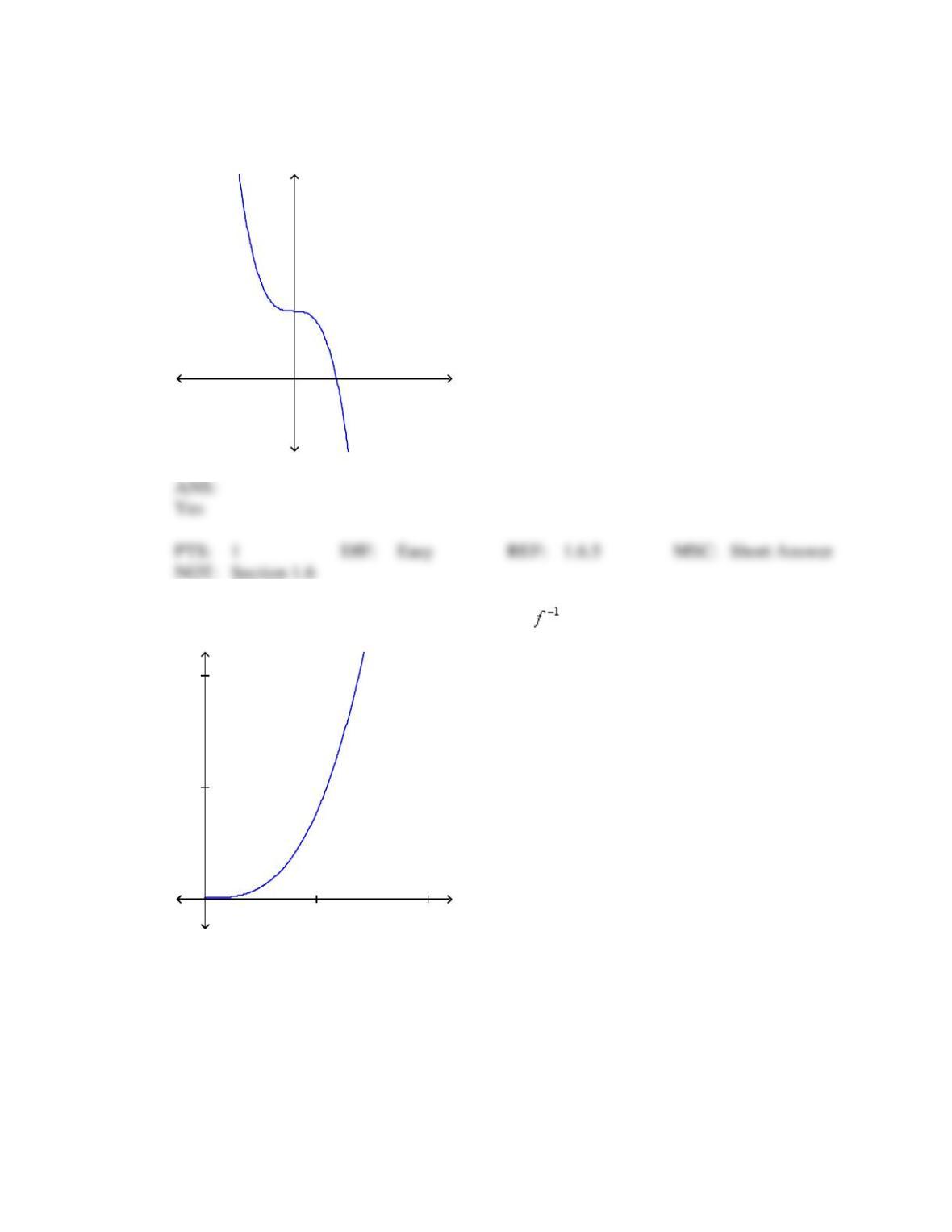
1. Determine whether f is one-to-one.
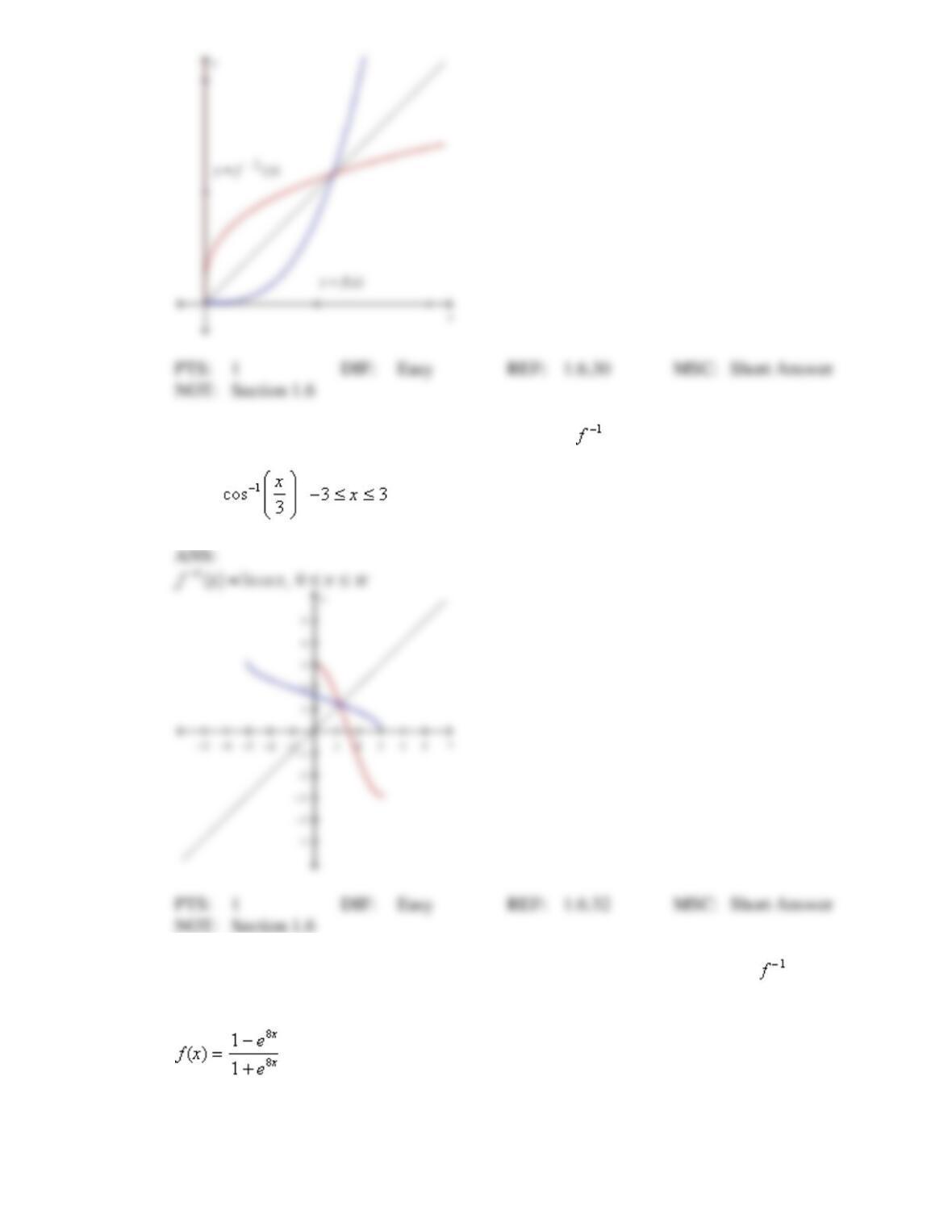
2. The graph of f is given. Sketch the graph of on the same set of axes.
3
ANS:
x
y
y = f x( )
0.5 1 x
0.5
1
y
3. Find the inverse of f. Then sketch the graphs of f and on the same set of axes.
f(x) = ,
4. Find the inverse of f. Then use a graphing utility to plot the graphs of f and on the
same set of axes.