CHAPTER 9
CURRENT LIABILITIES
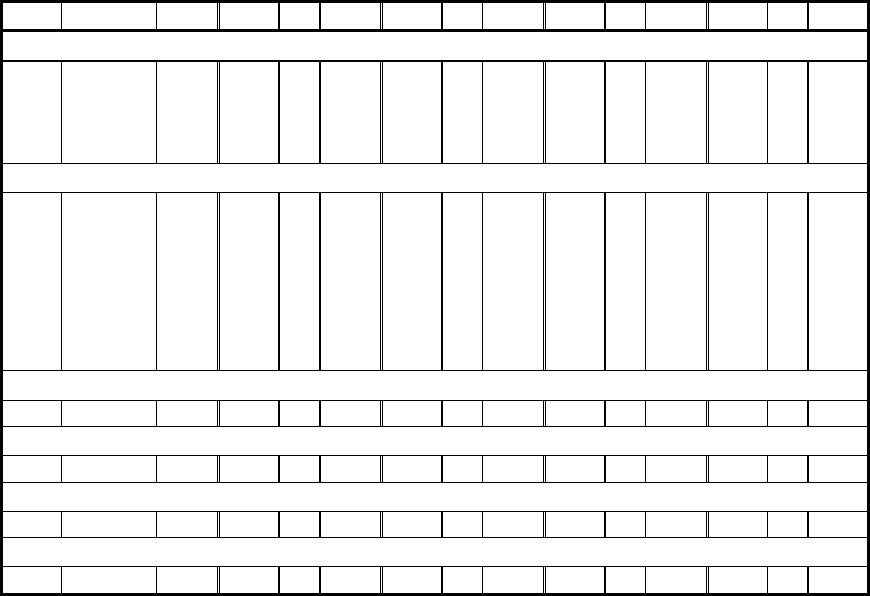
SUMMARY OF QUESTION TYPES BY LEARNING OBJECTIVE
AND LEVEL OF DIFFICULTY
Item
LO
LOD
Item
LO
LOD
Item
LO
LOD
Item
LO
LOD
Item
LO
LOD
True-False Statements
1.
1
E
5.
3
E
9.
3
E
13.
7
E
2.
1
E
6.
3
E
10.
4
E
14.
7
M
3.
2
E
7.
3
M
11.
5
M
15.
9
M
4.
2
E
8.
3
E
12.
5
M
16.
9
M
Multiple Choice Questions
17.
1
M
24.
3
E
31.
5
E
38.
5
H
45.
6
M
18.
1
E
25.
3
M
32.
5
M
39.
5
H
46.
6
M
19.
2
E
26.
4
E
33.
5
H
40.
5
H
47.
6
M
20.
2
E
27.
4
E
34.
5
E
41.
5
H
48.
7
M
21.
2
M
28.
4
M
35.
5
E
42.
5
H
49.
8
M
22.
3
E
29.
5
M
36.
5
E
43.
5
H
50.
8
M
23.
3
E
30.
5
M
37.
5
H
44.
6
M
51.
9
M
Exercises
52.
3,5–8
M
53.
5
M
54.
5
M
55.
6
M
56.
9
M
Matching
57.
1,3,6–8
E
Short-Answer Essay
58.
1
M
59.
2
M
60.
5
M
Essay
61.
5
M
Note: E = Easy M = Medium H = Hard
9 – 2 Test Bank for Understanding Financial Accounting, Canadian Edition
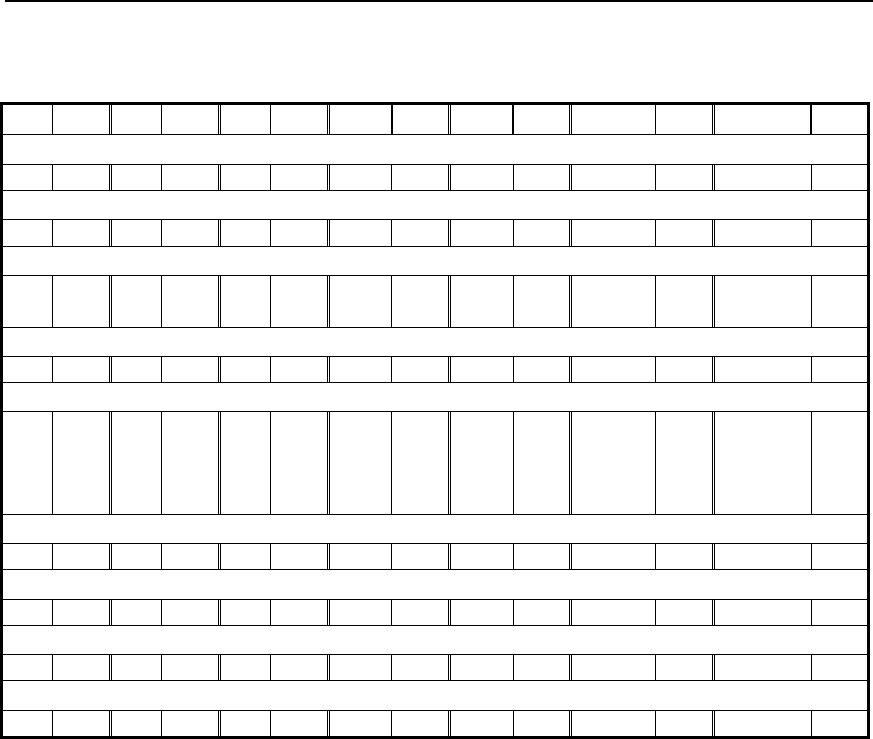
SUMMARY OF LEARNING OBJECTIVES BY QUESTION TYPE
Item
Type
Item
Type
Item
Type
Item
Type
Item
Type
Item
Type
Item
Type
Learning Objective 1
1.
TF
2.
TF
17.
MC
18.
MC
57.
Ma
58.
SAE
Learning Objective 2
3.
TF
4.
TF
19.
MC
20.
MC
21.
MC
52.
Ex
59.
SAE
Learning Objective 3
5.
TF
7.
TF
9.
TF
23.
MC
25.
MC
57.
Ma
6.
TF
8.
TF
22.
MC
24.
MC
52.
Ex
Learning Objective 4
10.
TF
26.
MC
27.
MC
28.
MC
Learning Objective 5
11.
TF
31.
MC
35.
MC
39.
MC
43.
MC
60.
SAE
12.
TF
32.
MC
36.
MC
40.
MC
52.
Ex
61.
Es
29.
MC
33.
MC
37.
MC
41.
MC
53.
Ex
30.
MC
34.
MC
38.
MC
42.
MC
54.
Ex
Learning Objective 6
44.
MC
45.
MC
46.
MC
47.
MC
52.
Ex
55.
Ex
57.
Ma
Learning Objective 7
13.
TF
14.
TF
48.
MC
52.
Ex
57.
Ma
Learning Objective 8
49.
MC
50.
MC
52.
Ex
57.
Ma
Learning Objective 9
15.
TF
16.
TF
51.
MC
56.
Ex
Note: TF = True-False Ex = Exercise SAE = Short-Answer Essay
MC = Multiple Choice Ma = Matching Es = Essay
Current Liabilities 9 – 3
CHAPTER LEARNING OBJECTIVES
1. Explain why current liabilities are of significance to users.
2. Describe the valuation methods for current liabilities.
3. Identify the current liabilities that arise from transactions with lenders and
explain how they are accounted for.
4. Identify the current liabilities that arise from transactions with suppliers and
explain how they are accounted for.
5. Identify the current liabilities that arise from transactions with customers and
explain how they are accounted for.
9 – 4 Test Bank for Understanding Financial Accounting, Canadian Edition
6. Identify the current liabilities that arise from transactions with employees and
explain how they are accounted for.
7. Identify the current liabilities that arise from transactions with government and
explain how they are accounted for.
8. Identify the current liabilities that arise from transactions with shareholders and
explain how they are accounted for.
9. Calculate the accounts payable turnover ratio and average payment period and
assess the results.
Current Liabilities 9 – 5

9 – 6 Test Bank for Understanding Financial Accounting, Canadian Edition
TRUE-FALSE STATEMENTS
1. All current liabilities are settled with cash.
2. Liabilities are the result of events or transactions that have already occurred.
3. Accounting standards require that liabilities be recorded at their present value.
4. The difference between the face value of a liability and its present value is due to the
time value of money.
5. All current liabilities have fixed due dates and fixed payment amounts.
6. A line of credit helps a company deal with temporary cash shortages.
7. Bankers will often compare current assets to current liabilities to assess viability.
8. Long-term debt that is due within one year is classified with other long-term debt.
9. A line of credit is always reflected under the current liabilities regardless of the size of
the debt.
10. Accounts receivable occur when a company buys goods or services on credit.
11. Gift cards are an example of a contingent liability.
12. Unearned revenue is an example of a liability that is settled by the provision of
services.
13. The balance for outstanding income tax balances are reported as a current liability.
14. The amount owing on income taxes is recorded as income taxes deferred.
15. The accounts payable turnover ratio measures the number of times per year that a
company settles their trades payable.

Current Liabilities 9 – 7
16. The accounts payable turnover ratio can be converted to days by using the accounts
payable payment period formula.
9 – 8 Test Bank for Understanding Financial Accounting, Canadian Edition
ANSWERS TO TRUE-FALSE STATEMENTS
Item
Ans.
Item
Ans.
Item
Ans.

Current Liabilities 9 – 9
MULTIPLE CHOICE QUESTIONS
17. Which of the following is NOT a characteristic of a liability?
a) There is a probable future sacrifice of resources.
b) There is a fixed payment amount and payment date.
c) There is little discretion to avoid the obligation.
d) The event giving rise to the liability has already occurred.
18. All of the following are examples of current liabilities, EXCEPT for
a) accrued expenses.
b) unearned revenues.
c) interest payable.
d) prepaid expenses.
19. Accounts payable are recorded on the books at their
a) net present value.
b) net amount.
c) net realizable value.
d) face value.
20. Non-current liabilities are recorded in the books at their
a) net present value.
b) net amount.
c) net realizable value.
d) gross amount.
21. On December 31, 2017, a company has a $500,000 15-year mortgage outstanding.
Over the next year they will make 12 monthly payments of $5,000 representing $33,500
of interest and $26,500 of principal repayment. Which of the following best represents
how the mortgage will be reported on the December 31, 2017 balance sheet?
Current liabilities Non-current liabilities
a) $26,500 $473,500
b) $26,500 $440,000
c) $60,000 $440,000
d) $60,000 $473,500
22. For which of the following reasons would a user examine the current liabilities?
a) to determine how quickly accounts receivable are collected
b) to determine how much cash will be required to meet obligations in the short-term
c) to determine how much cash will be required to meet obligations in the long–term
d) to evaluate company performance
23. A short-term liability used by a company to finance the purchase of current assets

9 – 10 Test Bank for Understanding Financial Accounting, Canadian Edition
and that is often secured by accounts receivable or inventory is referred to as a(n)
a) accounts payable.
b) current liability.
c) line of credit.
d) overdraft protection.
24. All of the following are ways that corporations can finance current cash shortages
EXCEPT a
a) line of credit.
b) current portion of long-term debt.
c) short-term loan.
d) working capital loan.
25. A company has $5,000,000 in long-term debt outstanding. They expect to repay it
evenly over the next four years. Which of the following represents how it will be shown
on the year-end balance sheet?
a) Accounts Payable: $1,250,000, Long-Term Debt: $3,750,000
b) Current Portion of Long-Term Debt: $1,250,000, Long-Term Debt: $3,750,000
c) Current Portion of Long-Term Debt: $2,500,000, Long-Term Debt: $2,500,000
d) Long-Term Debt: $5,000,000
26. Which of the following liabilities is often referred to as “free debt” because it rarely
carries any interest if paid within a specified period of time?
a) line of credit
b) working capital loan
c) accounts payable
d) None of the above—all current liabilities carry an interest rate.
27. Typically acquisition costs for inventory can be financed through the use of
a) overdraft protection.
b) accounts payable.
c) working capital.
d) notes payable.
28. Which of the following statements about accounts payable is NOT true?
a) They are usually due within 30 to 60 days.
b) They normally carry implicit interest charges.
c) There may be a penalty for late payment.
d) They are typically used to finance inventory purchases.
29. During 2017 Albany Appliances sold 400 appliances worth $2,000,000. Each
appliance comes with a one-year warranty, which Albany estimates will cost $75 each.
During the year Albany spent $12,500 on warranty costs for the appliances sold in 2017.
At the end of the 2017 the warranty liability and the warranty expense related to these
sales would be closest to

Current Liabilities 9 – 11
Warranty Liability Warranty Expense
a) $17,500 $12,500
b) $17,500 $30,000
c) $12,500 $12,500
d) $30,000 $30,000
30. Which of the following liabilities requires the use of an estimate when it is initially
recorded?
a) Wages Payable
b) Unearned Revenue
c) Warranty Obligation
d) Accounts Payable
31. Which of the following companies would be MOST likely to have an unearned
revenue account?
a) grocery store
b) department store
c) hotel chain
d) car dealership
32. Which of the following companies would usually NOT have an unearned revenue
account?
a) magazine publishing company
b) property management company
c) airline
d) hardware store
33. All of the following situations contribute to the need for a company to recognize
deferred revenues, EXCEPT for
a) partially executed contracts between buyers and sellers.
b) the requirement by sellers for the prepayment of goods and services.
c) mutually unexecuted contracts between buyers and sellers.
d) the seller has collected a deposit but not yet met the criteria for revenue recognition.
Use the following information for questions 34–35.
Malaya’s Manicures sells $2,500 worth of gift certificates in November and December.
25% of the gift certificates are redeemed in December prior to the December 31 year
end.
34. The entry to record the sale of the gift certificates is
a) Dr. Cash, Cr. Gift Card Revenue
b) Dr. Gift Card Revenue, Cr. Deferred Gift Card Revenue
c) Dr. Prepaid Gift Cards, Cr. Gift Card Revenue
d) Dr. Cash, Cr. Deferred Gift Card Revenue

9 – 12 Test Bank for Understanding Financial Accounting, Canadian Edition
35. The required year end adjusting entry is
a) Dr. Revenues $625, Cr. Deferred Gift Card Revenues $625
b) Dr. Revenues $1,875, Cr. Deferred Gift Card Revenues $1,875
c) Dr. Deferred Gift Card Revenues $625, Cr. Revenues $625
d) Dr. Gift Card Revenues $1,875, Cr. Revenues $1,875
36. Lokus Lofts is a rental company that requires its tenants to pay rent one month in
advance. Lokus should record the cash received as
a) Prepaid Rent.
b) Rent Revenue.
c) Unearned Revenue.
d) Accounts Payable.
Use the following information for questions 37–39.
Jems & Jewels Inc. offers a two-year warranty against failure of its products. The
estimated liability is 4% of sales in the year of sale and 6% in the second year. Sales for
2016 and 2017 were: $2,500,000 and $2,800,000, respectively. They incurred no
warranty costs in 2016 but in 2017 they spent $175,000 on repairs related to the
warranties from 2016 and 2017.
37. The warranty liability as at the year-end 2016 was
a) $0.
b) $100,000.
c) $150,000.
d) $250,000.
38. The warranty expense for 2016 was
a) $80,000.
b) $100,000.
c) $150,000.
d) $250,000.
39. The warranty liability as at the end of the 2017 year was
a) $75,000.
b) $280,000.
c) $355,000.
d) $530,000
Use the following information for questions 40–42.
Melman Microscopes Inc. offers a two-year warranty against failure of its products. The
estimated liability is 1.5% in the year of sale and 3% in the second year. Sales and

Current Liabilities 9 – 13
actual warranty expense for 2016 and 2017 were:
Sales Actual Warranty Costs Incurred During Year
2016 $3,500,000 $110,000
2017 $3,900,000 $195,000
40. The warranty liability on the December 31, 2016 balance sheet was
a) $47,500.
b) $105,000.
c) $110,000.
d) $157,500
41. The warranty liability on the December 31, 2017 balance sheet was
a) $0.
b) $28,000.
c) $138,000.
d) $175,500.
42. The warranty expense for 2017 was
a) $157,500.
b) $175,500.
c) $195,000.
d) $305,000.
43. The awarding of frequent flyer miles by airline companies is accounted for in a
manner similar to
a) warranty expenses.
b) accounts payable.
c) contingent liabilities.
d) commitments.
44. The following information relates to Blink & Block payroll for the month of March:
Total wages ………………………………. $15,000
Income tax withheld ……………………. 3,000
Employees’ CPP contributions …….. 7452.50
Employees’ EI contributions ………… 282
Company contributions for CPP …… 742.50
Company contributions for EI ………. 394.80
The total wage expense for Blink & Block for the month of March is closest to
a) $13,975.50.
b) $16,137.30.
c) $9,285.
d) $16,024.50.
45. Which of the following liabilities results from amounts owed by BOTH the employee

9 – 14 Test Bank for Understanding Financial Accounting, Canadian Edition
and the employer?
a) employee income tax payable
b) wages payable
c) employment insurance payable
d) vacation pay payable
46. An employee earns $1,500 a week and the deductions from that amount for her
contributions to EI, CPP, and income taxes are $185. The company must contribute an
additional $105 for EI and CPP. How much would the company record as salary
expense for that week?
a) $1,420
b) $1,500
c) $1,605
d) $1,790
47. Maynard Manufacturing has a two-week payroll of $8,200 for its eight employees.
Income tax of $1,080 is deducted from the employees’ cheques, as well as 4.95% for
CPP and 1.88% for EI. Wages deposited in employees’ bank accounts would be
a) $6,560.
b) $7,120.
c) $7,640.
d) $8,200.
48. Which of the following statements concerning income taxes in Canada is NOT true?
a) Income taxes must often be estimated based on prior years’ tax returns.
b) Income taxes are usually paid through instalment payments throughout the year.
c) The deadline for filing a corporate tax return and payment of any outstanding taxes is
six months after the company’s year-end.
d) Income taxes payable is reported as a current liability.
49. When the board declares dividends, the correct journal will be
a) Dividends Expense
Dividends Payable
b) Dividend Declared
Cash
c) Dividends Declared
Dividends Payable
d) Dividends Receivable
Dividends Revenue
50. Dividends Payable is the most common type of liability the corporation has to
a) the government.
b) the employees.
c) the shareholders.
d) the board of directors.

Current Liabilities 9 – 15
51. The accounts payable turnover ratio measures
a) number of times the company settles its trade payable.
b) average accounts payable balance.
c) the average number of times the industry settles their trade payable.
d) the average balance of accounts payable to current assets.
9 – 16 Test Bank for Understanding Financial Accounting, Canadian Edition
ANSWERS TO MULTIPLE CHOICE QUESTIONS
Item
Ans.
Item
Ans.
Item
Ans.
Item
Ans.
Item
Ans.
Item
Ans.
Current Liabilities 9 – 17
EXERCISES
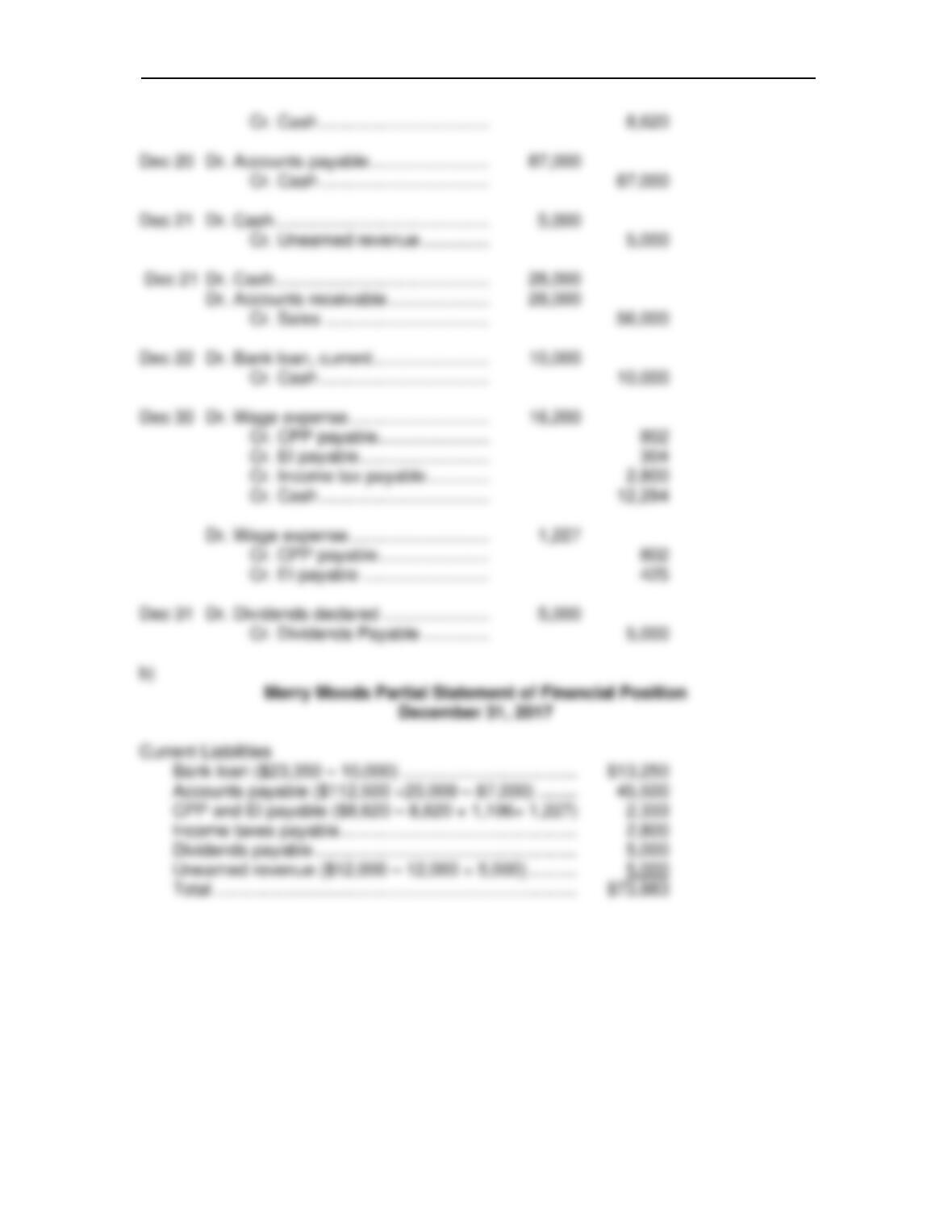
52. Merry Moods Limited has a December 31 year-end. On December 1, 2017 Merry
Moods had the following current liabilities listed on its books:
Bank overdraft …………………………………… $23,250
Accounts payable ………………………………. 112,500
CPP, EI and income tax payable ………….. 8,620
Unearned revenues ……………………………. 12,000
During December 2017 Sierra engaged in the following transactions:
Dec 1 Negotiated a $50,000 line of credit with their bank to replace the bank overdraft.
Dec 5 Sold goods worth $30,000 on which they had previously received a $12,000
deposit. The balance is due in 30 days.
Dec12 Bought $20,000 of inventory on credit, terms of 30 days.
Dec15 Paid amounts due the Government of Canada for the payroll amounts
outstanding from November 30.
Dec 20 Paid $87,000 owing to a supplier.
Dec 21 Received $5,000 from a client for work that will be performed in January 2018.
Dec 21 Sold $56,000 of goods half for cash, half on credit.
Dec 22 Made a $10,000 payment on the line of credit.
Dec 30 Paid the monthly payroll amounts to employees. The gross payroll was
$16,200. Amounts withheld from the employees‘ cheques were as follows:
• Canada pension plan premiums (CPP) $802
• Employment insurance premiums (EI) $304
• Income tax $2,800
At this time, the company also recorded their liability for amounts due to the
government for CPP and EI. Assume the employer must match the employees’
contribution for both EI and CPP.
Dec 31 Declared $5,000 of dividends payable next year.
Instructions
a) Prepare all of the journal entries required as a result of the above transactions.
b) Prepare the current liabilities section of the balance sheet at December 31, 2017.
Solution (25 min.)
9 – 18 Test Bank for Understanding Financial Accounting, Canadian Edition
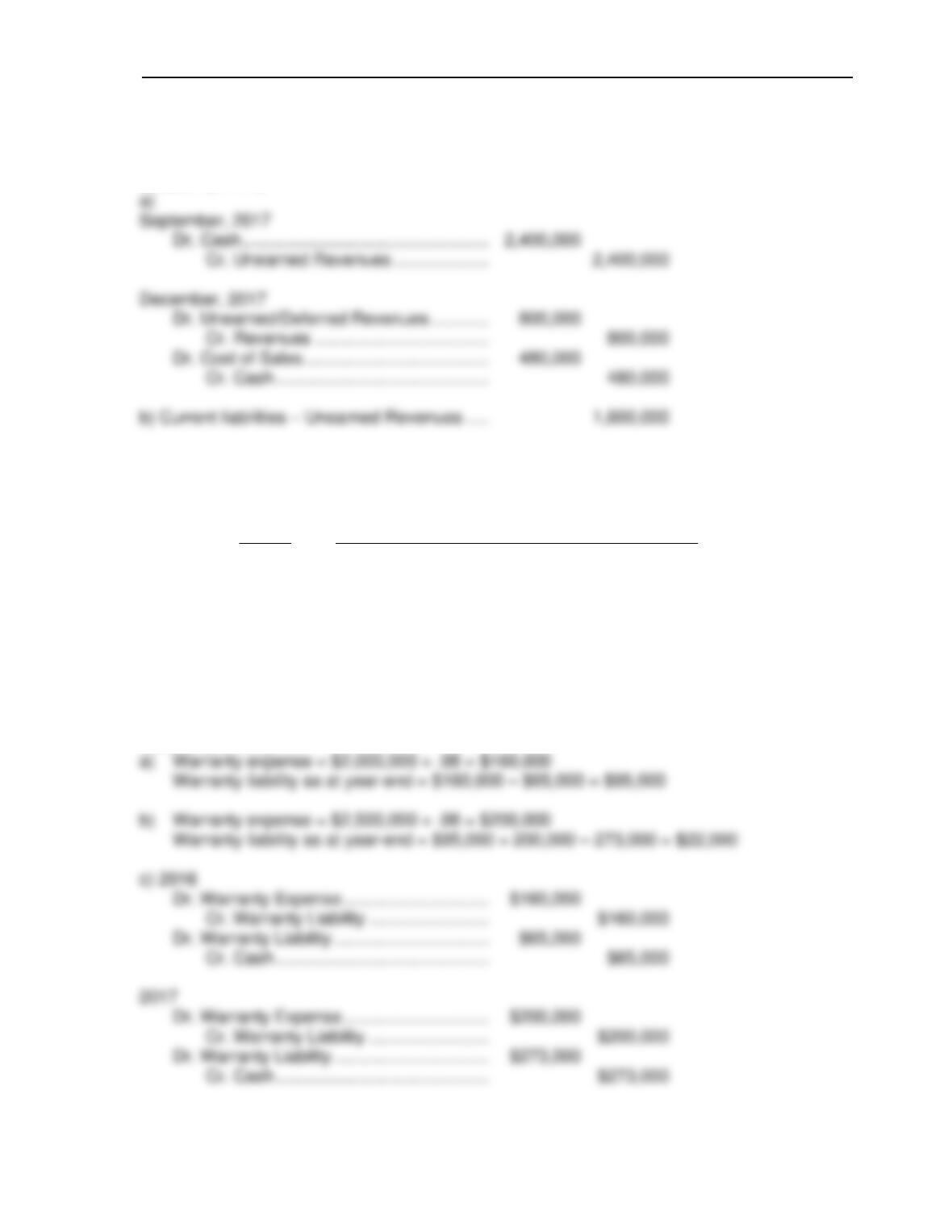
53. In September 2017, NorthWest Airlines sells all of its available seats for travel from
Calgary to Ixtapa, Mexico during the months of December, 2017 and January and
February, 2018. Total airfare collected by NorthWest for the sale of these airline tickets
is $2,400,000. There are an equal number of flights to Ixtapa each month. NorthWests’
estimated Cost of Sales (fuel, salaries, etc.) is 60%.
Instructions
a) Prepare all of the necessary journal entries for 2017.
Current Liabilities 9 – 19
b) What liabilities, if any, will need to be reflected on the December 2017 balance
sheet?
Solution (8 min.)
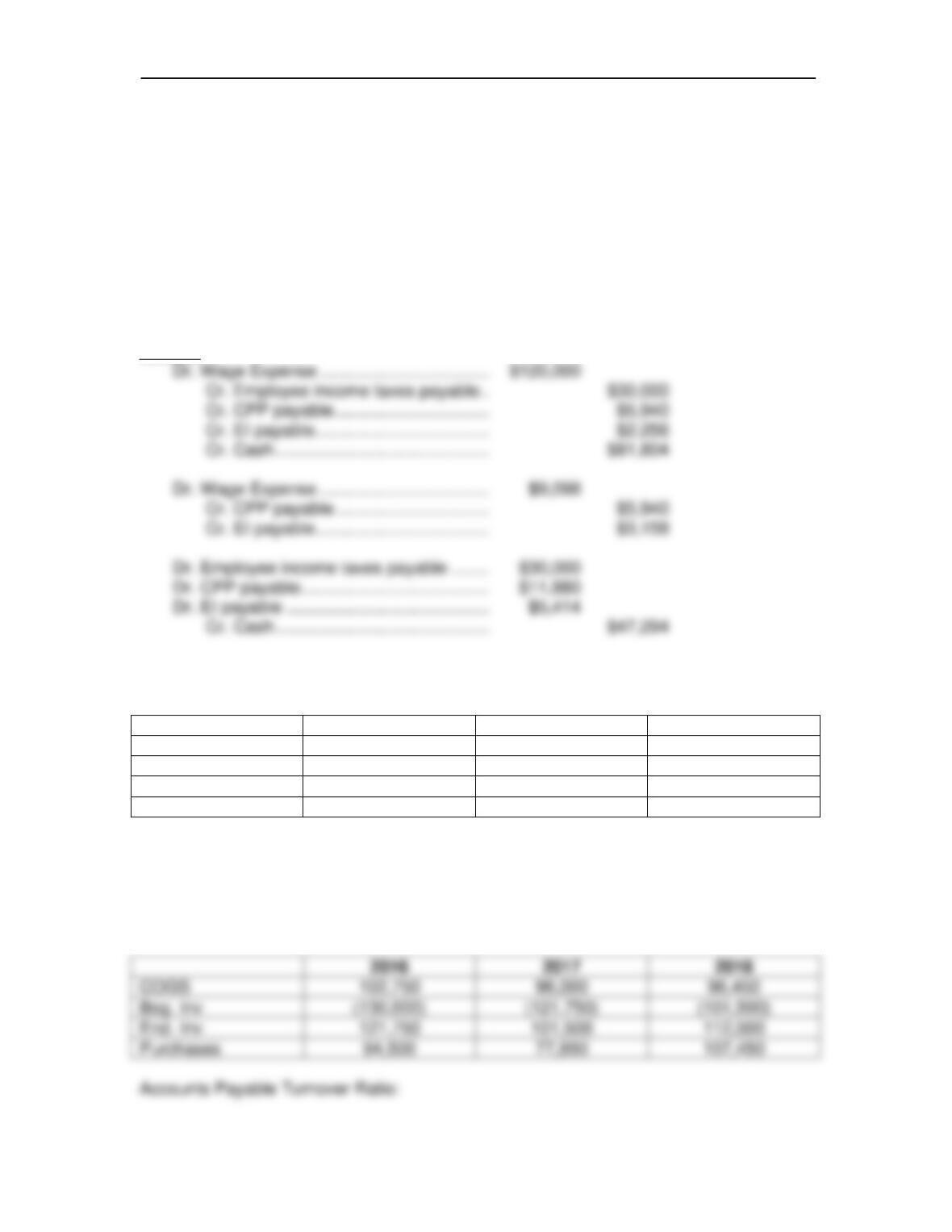
54. Lift Max Inc. provides a two-year warranty on its products. Estimates are that
warranty costs will be 3% of sales in the year of sale and 5% the following year. Sales
and actual warranty costs for Lift Max’s first two years of operations were
Sales Actual Warranty Costs Incurred During the Year
2016 $2,000,000 $ 65,000
2017 $2,500,000 $273,000
Instructions
a) Determine the warranty expense and warranty liability as at year-end for 2016.
b) Determine the warranty expense and warranty liability as at year-end for 2017
c) Prepare all relevant journal entries assuming that all actual warranty claims are
settled at year end.
Solution (12 min.)
9 – 20 Test Bank for Understanding Financial Accounting, Canadian Edition
55. During the current month, the employees of a company have earned wages of
$120,000 and the following source deductions were withheld:
• Income tax $30,000
• CPP premiums $5,940
• EI Premiums $2,256
On the 15th of the following month the employer paid all required remittances.
Instructions
Prepare all the necessary payroll journal entries, including the necessary remittance.
Solution
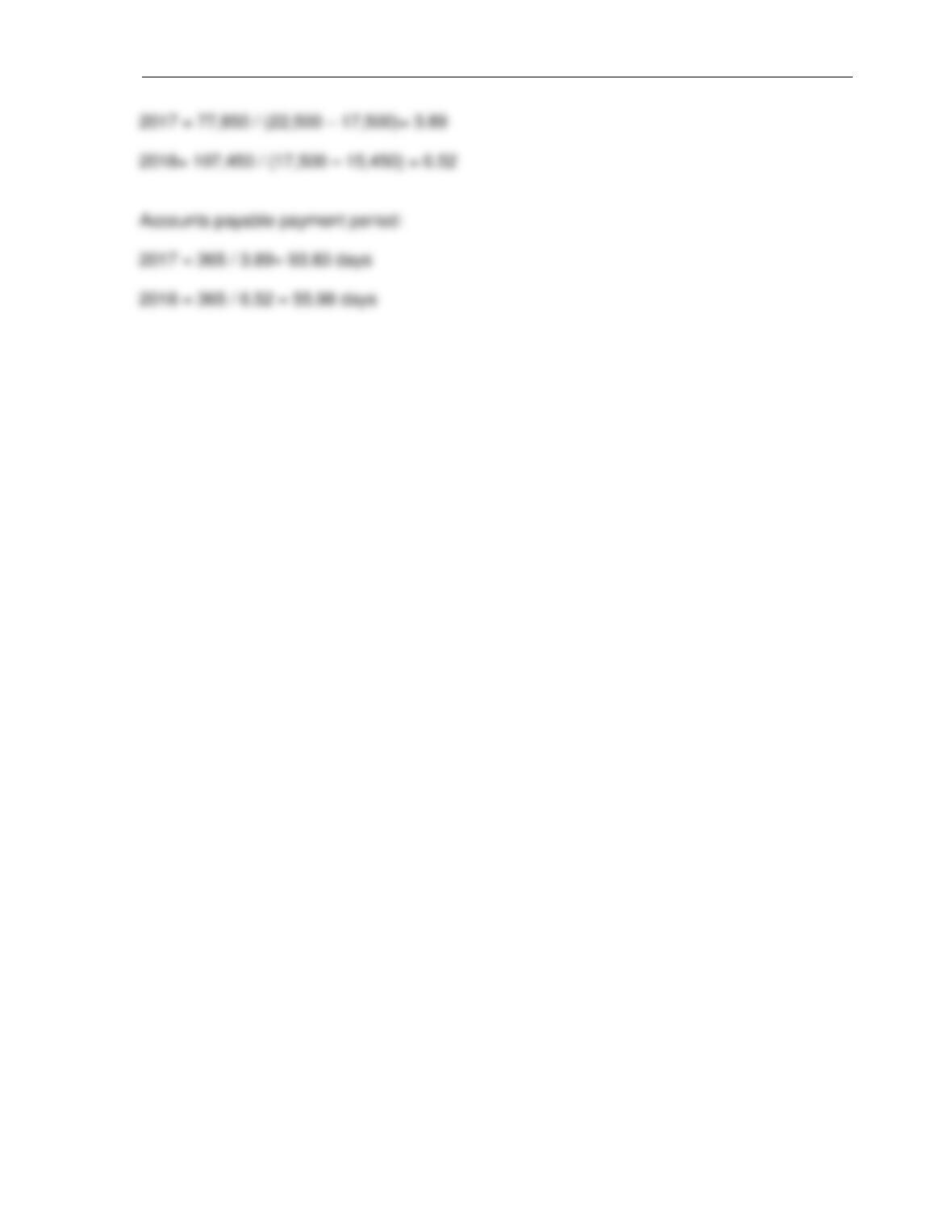
56. Below is the financial data pertaining to Regional Hockey Hoarders Inc.:
2016
2017
2018
Accounts Payable
22,500
17,500
15,450
COGS
102,750
98,000
96,450
Beg. Inv
130,000
121,750
101,500
End. Inv
121,750
101,500
112,500
Instructions
Compute the accounts payable turnover ratio and the accounts payable payment period
for 2017 and 2018.
Solution
2016
2017
2018
102,750
121,750
101,500
112,500
107,450
Current Liabilities 9 – 21
9 – 22 Test Bank for Understanding Financial Accounting, Canadian Edition
MATCHING
57. Listed below are several ways to classify liabilities followed by a series of situations.
Match the classifications to the situations by placing the appropriate letter in the space
provided.
CLASSIFICATIONS
A) Current Liabilities C. Non-current liabilities
B) Unearned Revenue D. Not a liability
SITUATIONS
____ 1. Gift cards sold
____ 2. Wages payable
____ 3. Wages Expense
____ 4. Warranty payable
____ 5. EI and CPP payable
____ 6. Annual corporate income tax payable
____ 7. Current portion of long-term debt
____ 8. Bank overdraft
____ 9. Dividend payable
____ 10. Warranty expense
Solution (3 min.)
Current Liabilities 9 – 23
SHORT-ANSWER ESSAY QUESTIONS
58. In order for an item to be classified as a liability, what three characteristics must it
have?
Solution (3 min.)
59. You have just started your new position at Entity Investments as the financial
statement analyst. Your boss is concerned about the value of liabilities reported on the
financial statements. The non-current liabilities are recorded using the discounted
present values and the currently liabilities are recorded using the face value.
Instructions
Explain to your boss why current liabilities and non- current liabilities are valued
differently.
Solution
60. Easy Electronics Inc. is a store specializing in electronic products. For the first time
this year they offered a one-year warranty on all products sold in the store and sold gift
cards. They estimate that the warranty costs should average 2% of sales (total sales of
$8,000,000 in this past year) and by year-end they had spent $40,000 on the program.
For gift cards, they sold $25,000 worth during the year, but only $5,000 had been
redeemed.
Instructions
The accountant has asked you to explain how these two new types of services should
be recorded.
Solution (10 min.)
9 – 24 Test Bank for Understanding Financial Accounting, Canadian Edition
Current Liabilities 9 – 25
ESSAY QUESTIONS
61. Several provinces have eliminated the expiry dates for gift cards with a dollar value.
What challenges this does this create for businesses issuing gift cards?
Solution (5 min.)
9 – 26 Test Bank for Understanding Financial Accounting, Canadian Edition
LEGAL NOTICE