94) What is the present value (PV) of $80,000 received ten years from now, assuming the interest rate is 5% per
year?
A) $38,422.76
B) $40,000.00
C) $49,113.06
D) $76,000.00
95) What is the present value (PV) of $50,000 received 20 years from now, assuming the interest rate is 4% per
year?
A) $5,242.88
B) $10,000.00
C) $22, 819.35
D) $40,000.00
96) What is the future value (FV) of $60,000 in five years, assuming the interest rate is 5% per year?
A) $62,500.00
B) $72,674.86
C) $75,000.00
D) $76,576.89
97) What is the future value (FV) of $10,000 in eight years, assuming the interest rate is 10% per year?
A) $16,212.78
B) $18,000.00
C) $18,756,22
D) $21,435.89
98) What is the future value (FV) of $20,000 in four years, assuming the interest rate is 12% per year?
A) $17,096.08
B) $28,292.66
C) $31,470.39
D) $32,020.64
99) If $15,000 is invested at 10% per year, in approximately how many years will the investment double?
A) 7.3 years
B) 8.4 years
C) 10.6 years
D) 14.8 years
100) If money is invested at 8% per year, after approximately how many years will the interest earned be equal to
the original investment?
A) 5 years
B) 6 years
C) 9 years
D) 12 years
101) Jeff has the opportunity to receive lump–sum payments either now or in the future. Which of the following
opportunities is the best, given that the interest rate is 7% per year?
A) one that pays $1,000 now
B) one that pays $1,200 in two years
C) one that pays $1,500 in five years
D) one that pays $1,800 in ten years
102) Sara wants to have $500,000 in her savings account when she retires. How much must she put in the account
now, if the account pays a fixed interest rate of 8%, to ensure that she has $500,000 in 20 years time?
A) $107,274
B) $144,616
C) $180,884
D) $231,480
103) On the day Harry was born, his parents put $1000 into an investment account that promises to pay a fixed
interest rate of 4 percent per year. How much money will Harry have in this account when he turns 18?
A) $1,720
B) $2,026
C) $2,804
D) $4,806
104) Which of the following statements is FALSE?
A) The process of moving a value or cash flow forward in time is known as compounding.
B) The effect of earning interest on interest is known as compound interest.
C) It is only possible to compare or combine values at the same point in time.
D) A dollar in the future is worth more than a dollar today.
105) Which of the following statements is FALSE?
A) Finding the present value (PV) and compounding are the same.
B) A dollar today and a dollar in one year are not equivalent.
C) If you want to compare or combine cash flows that occur at different points in time, you first need to
convert the cash flows into the same units or move them to the same point in time.
D) The equivalent value of two cash flows at two different points in time is sometimes referred to as the
time value of money.
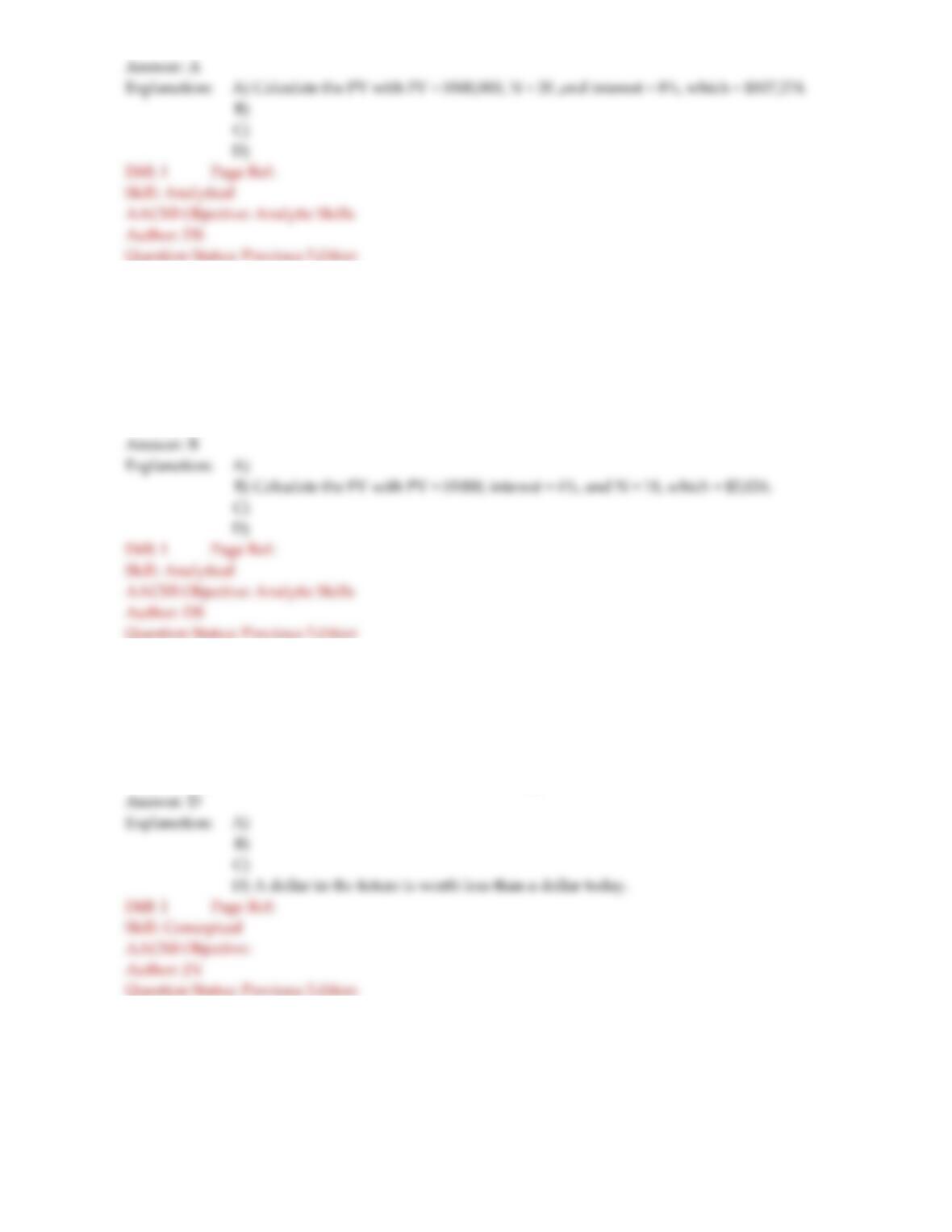
106) Consider the following timeline:
If the current market rate of interest is 9%, then the present value (PV) of this timeline as of year 0 is closest
to:
A) $492
B) $637
C) $600
D) $400
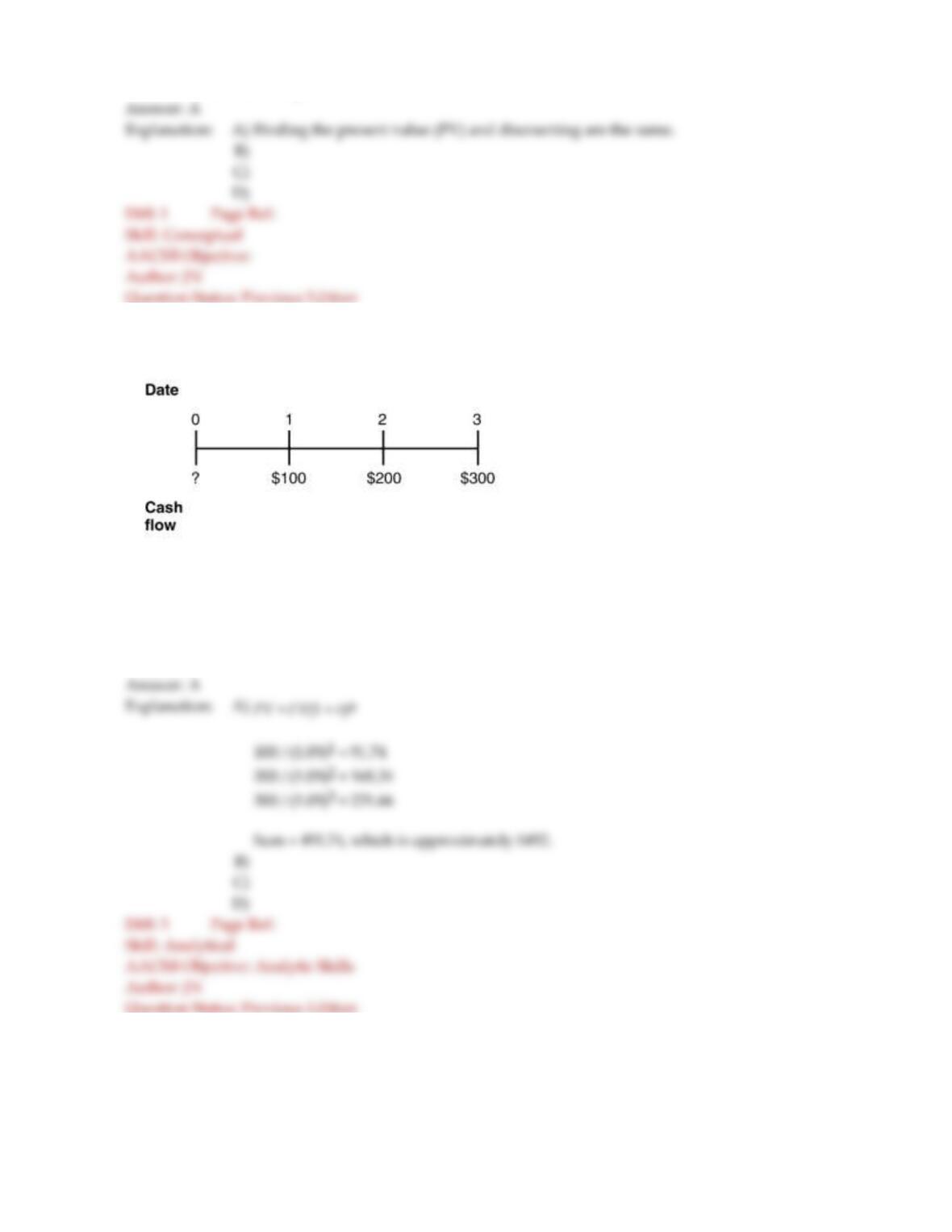
107) Consider the following timeline:
If the current market rate of interest is 12%, then the value of the cash flows in year 0 and year 2 as of year 1
is closest to:
A) $257.29
B) –$78.71
C) $78.71
D) $1.29
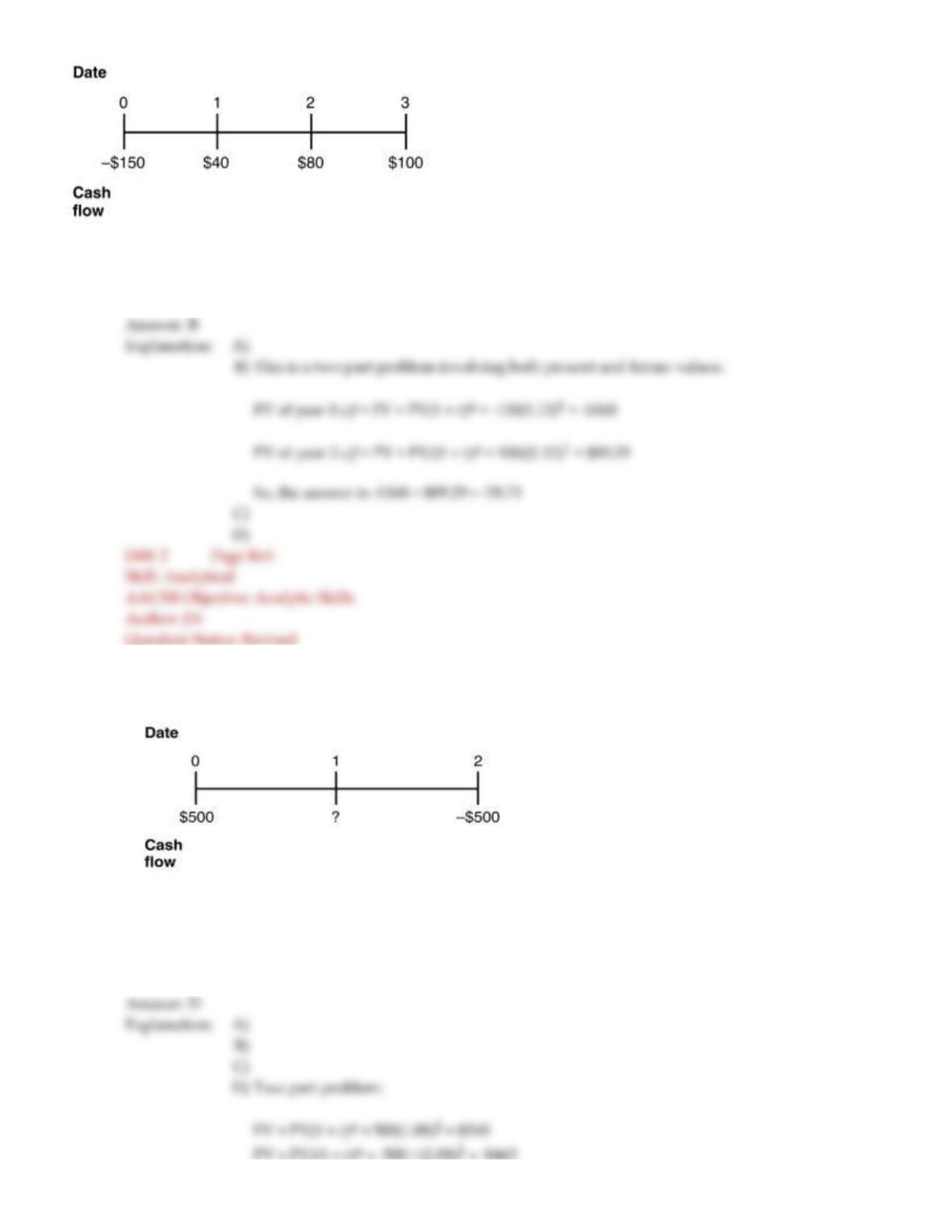
108) Consider the following timeline:
If the current market rate of interest is 8%, then the value as of year 1 is closest to:
A) $0
B) $1003
C) $540
D) $77
109) To compute the future value of a cash flow, you must:
A) discount it.
B) compound it.
C) double it.
D) arbitrage it.
110) An investment will pay you $100 in one year and $200 in two years. If the interest rate is 5%, what is the
present value of these cash flows?
A) $305.00
B) $285.71
C) $276.65
D) 258.32
111) If an analyst mistakenly adds cash flows occurring at different points in time, what is the implied
assumption in the process?
112) Why should interest rates be generally positive?