Larson_Calculus_10e ch00sec01
MULTIPLE CHOICE
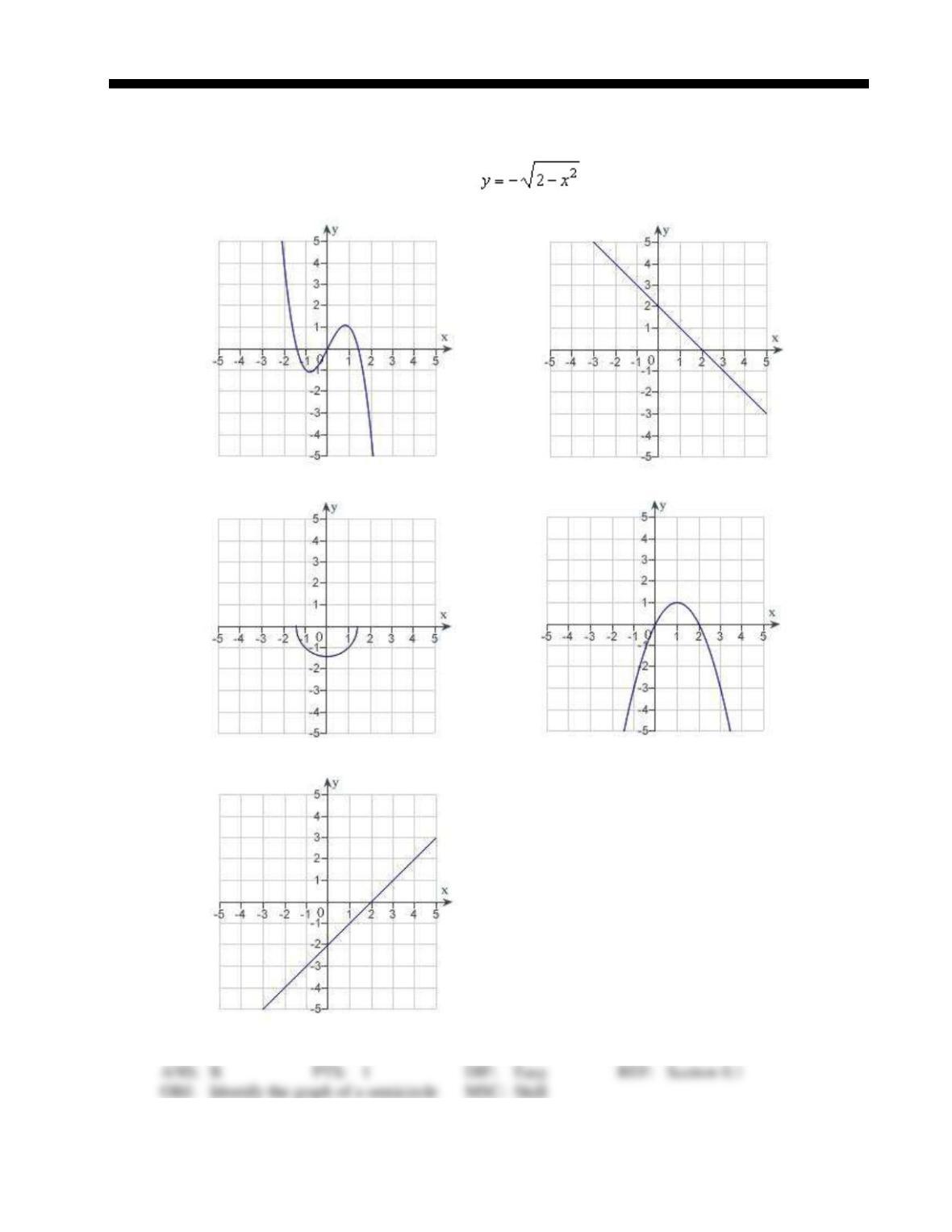
1. Which of the following is the correct graph of ?
a.
d.
b.
e.
c.
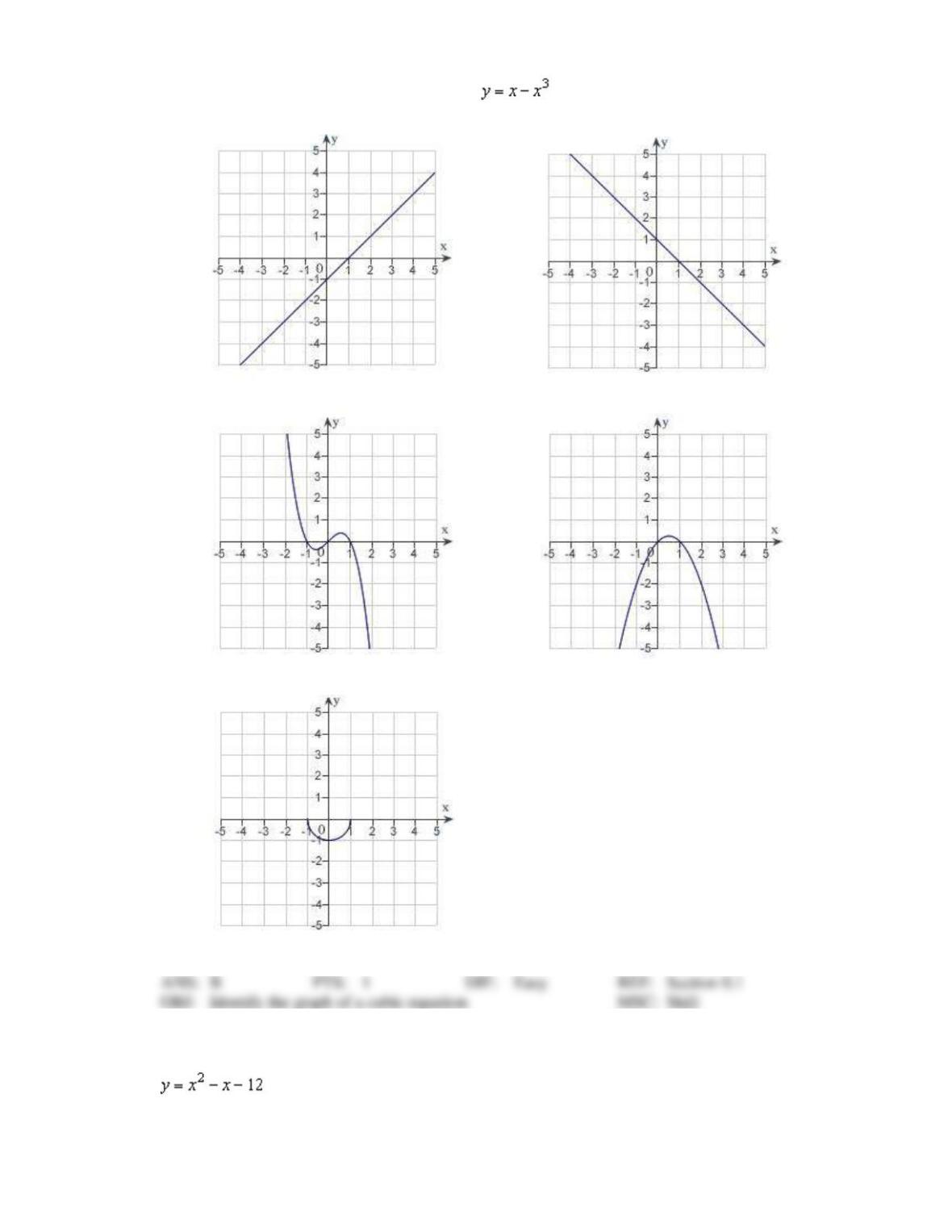
2. Which of the following is the correct graph of ?
a.
d.
b.
e.
c.
3. Find all intercepts:
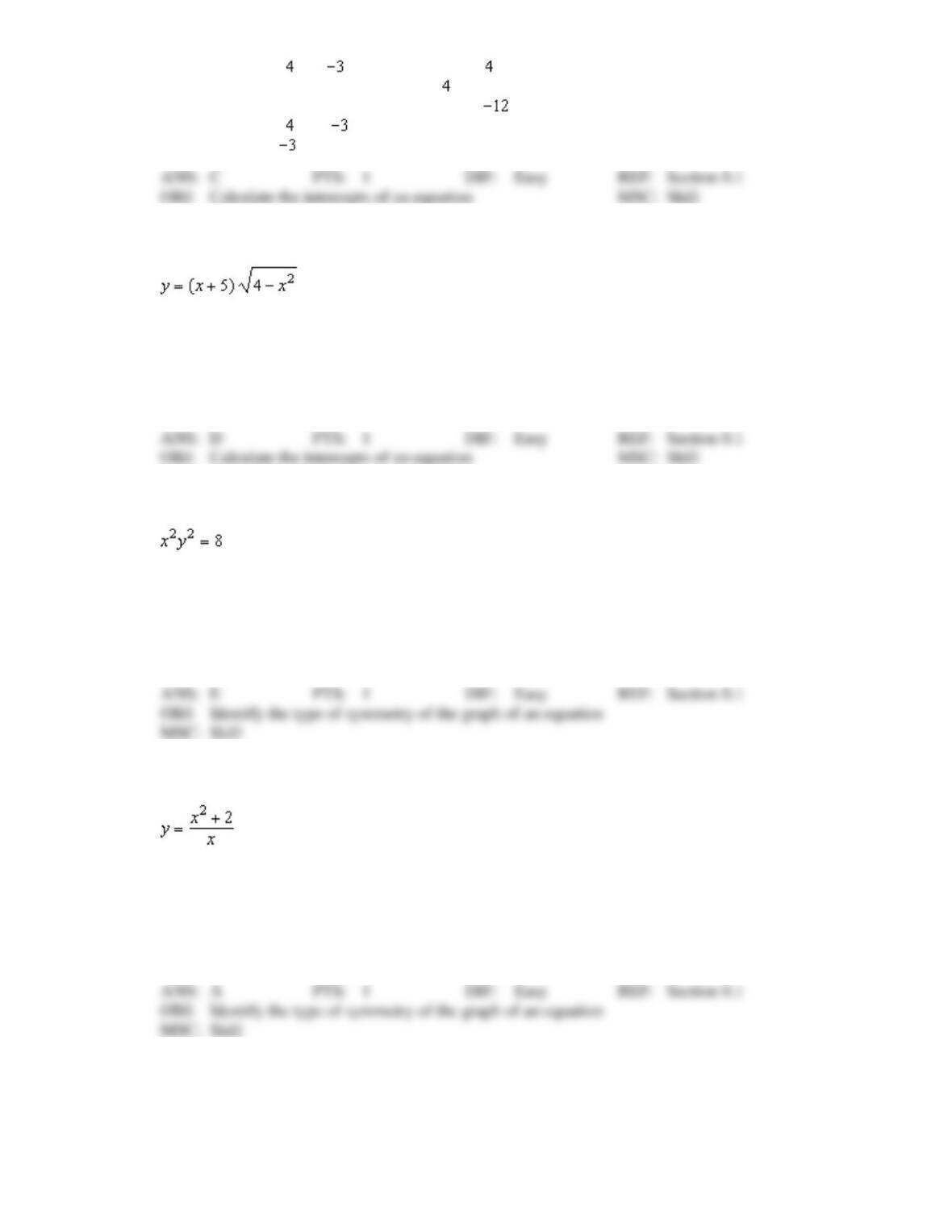
a.
x-intercepts: ( ,0), ( ,0); y-intercepts: (0, ), (0, 3)
b.
x-intercept: (12, 0); y-intercepts: (0, ), (0, 3)
c.
x-intercepts: (4, 0), (–3,0); y-intercept: (0, )
d.
x-intercepts: ( , 0), ( ,0); y-intercepts: (0, –12), (0, 12)
e.
x-intercept: ( , 0); y-intercept: (0, –12)
4. Find all intercepts:
a.
x-intercepts: (–5, 0), (–2, 0), (2, 0); y-intercepts: (0, 0), (0, 10)
b.
x-intercepts: (–5, 0), (2, 0); y-intercept: (0, 10)
c.
x-intercepts: (–5, 0), (2, 0); y-intercept: (0, –10)
d.
x-intercepts: (–5, 0), (–2, 0), (2, 0); y-intercept: (0, 10)
e.
x-intercepts: (–5, 0), (–2, 0), (2, 0); y-intercept: (0, –10)
5. Test for symmetry with respect to each axis and to the origin.
a.
symmetric with respect to the origin
b.
symmetric with respect to the x-axis
c.
symmetric with respect to the y-axis
d.
no symmetry
e.
A, B, and C
6. Test for symmetry with respect to each axis and to the origin.
a.
symmetric with respect to the origin
b.
symmetric with respect to the y-axis
c.
symmetric with respect to the x-axis
d.
both B and C
e.
no symmetry
7. Sketch the graph of the equation:
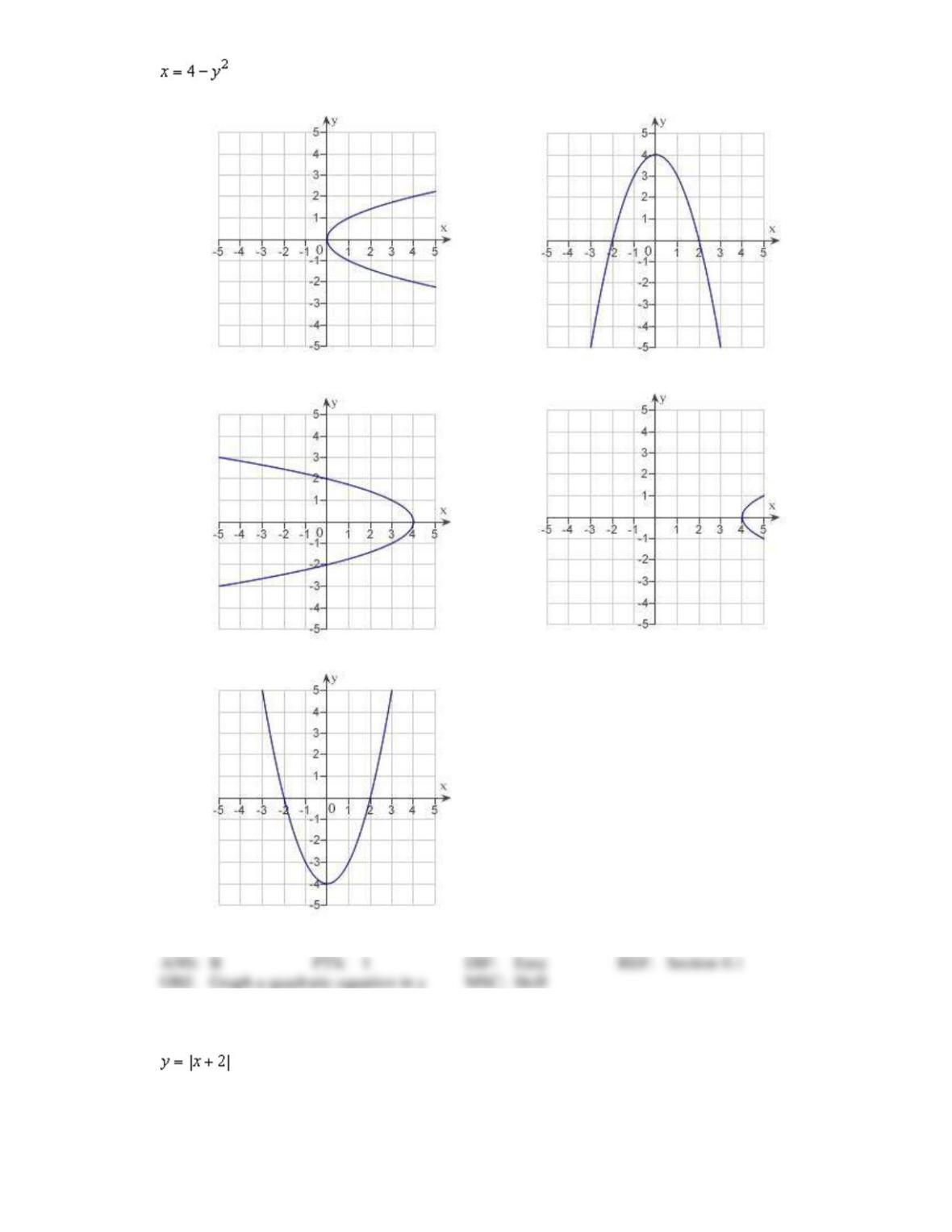
a.
d.
b.
e.
c.
8. Sketch the graph of the equation:
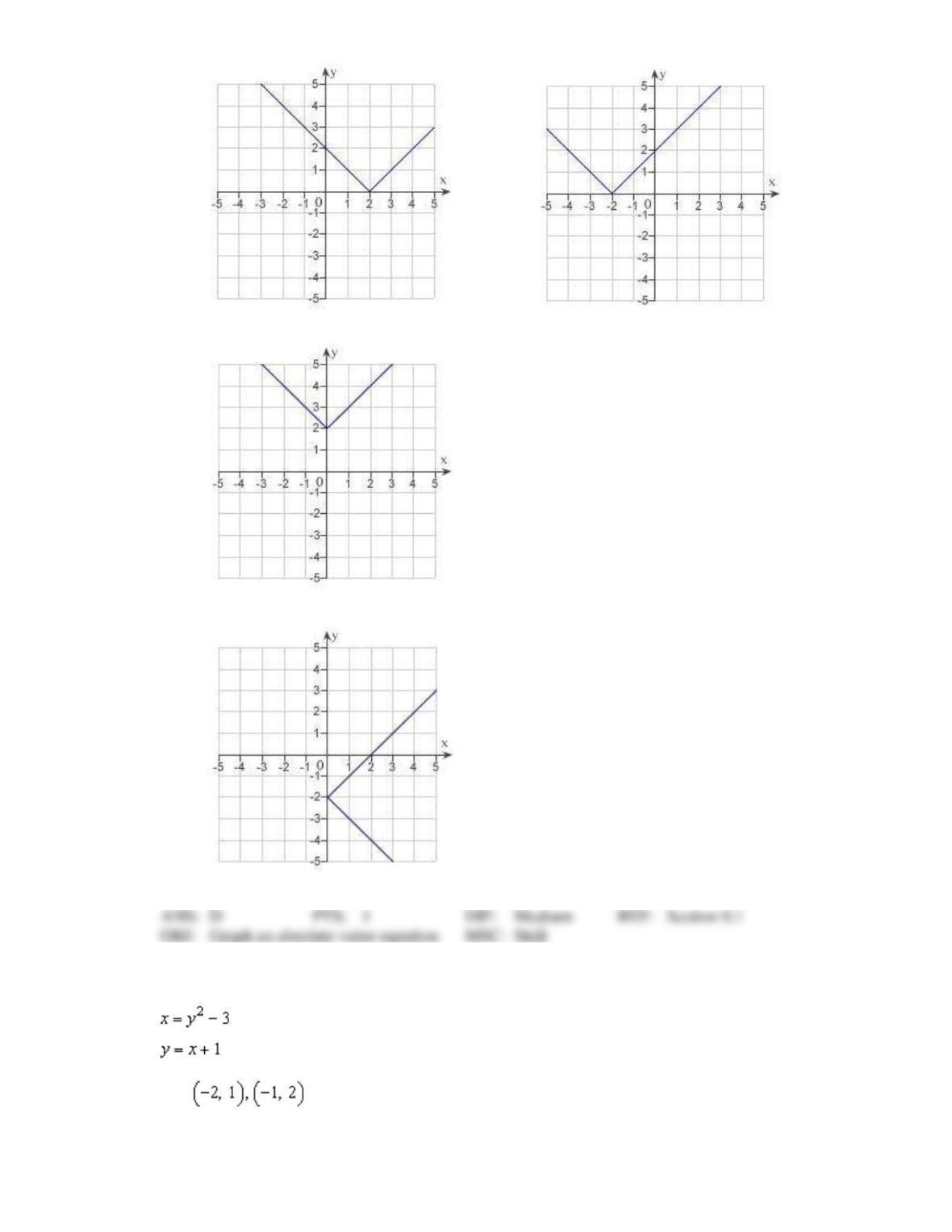
a.
d.
b.
e.
none of the above
c.
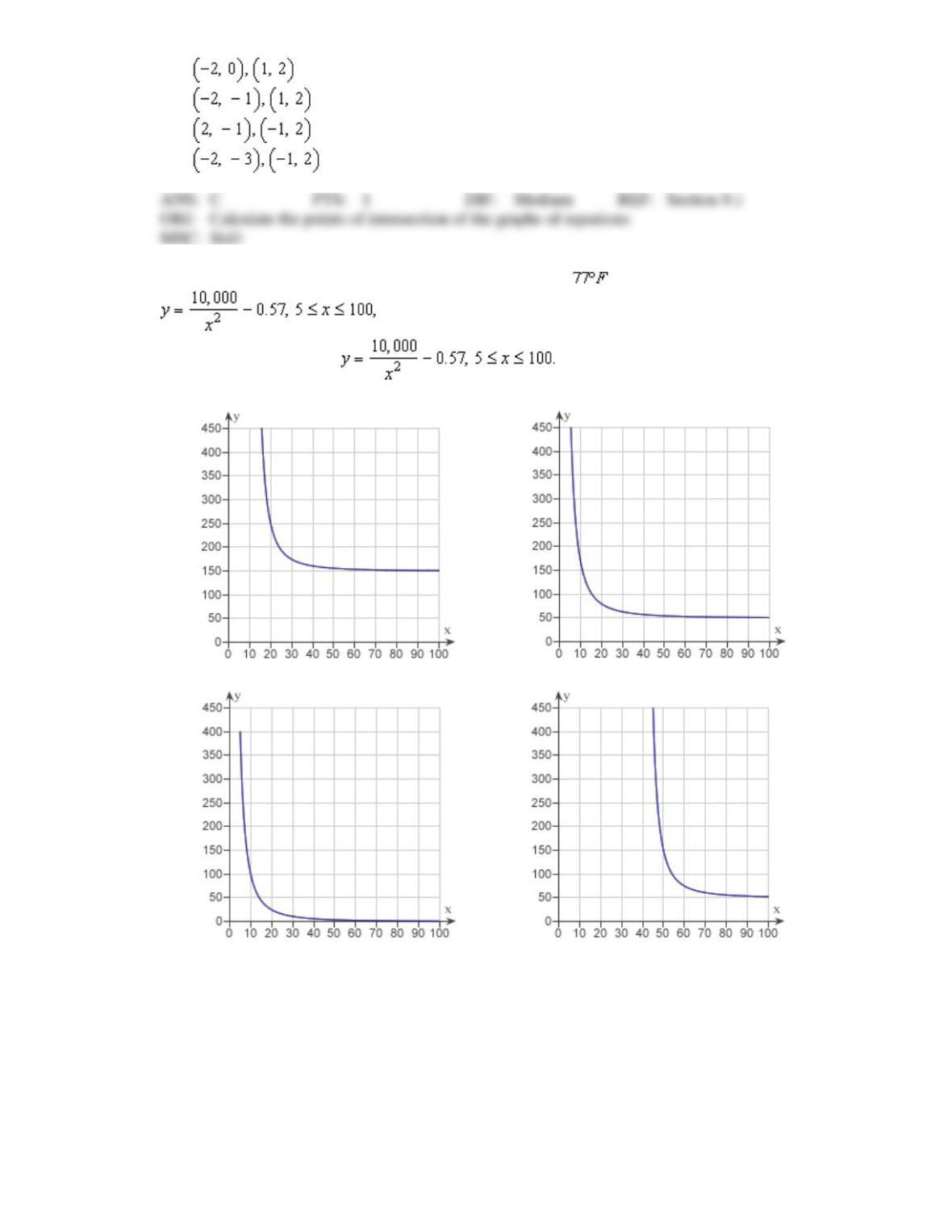
9. Find the points of intersection of the graphs of the equations:
a.
b.
c.
d.
e.
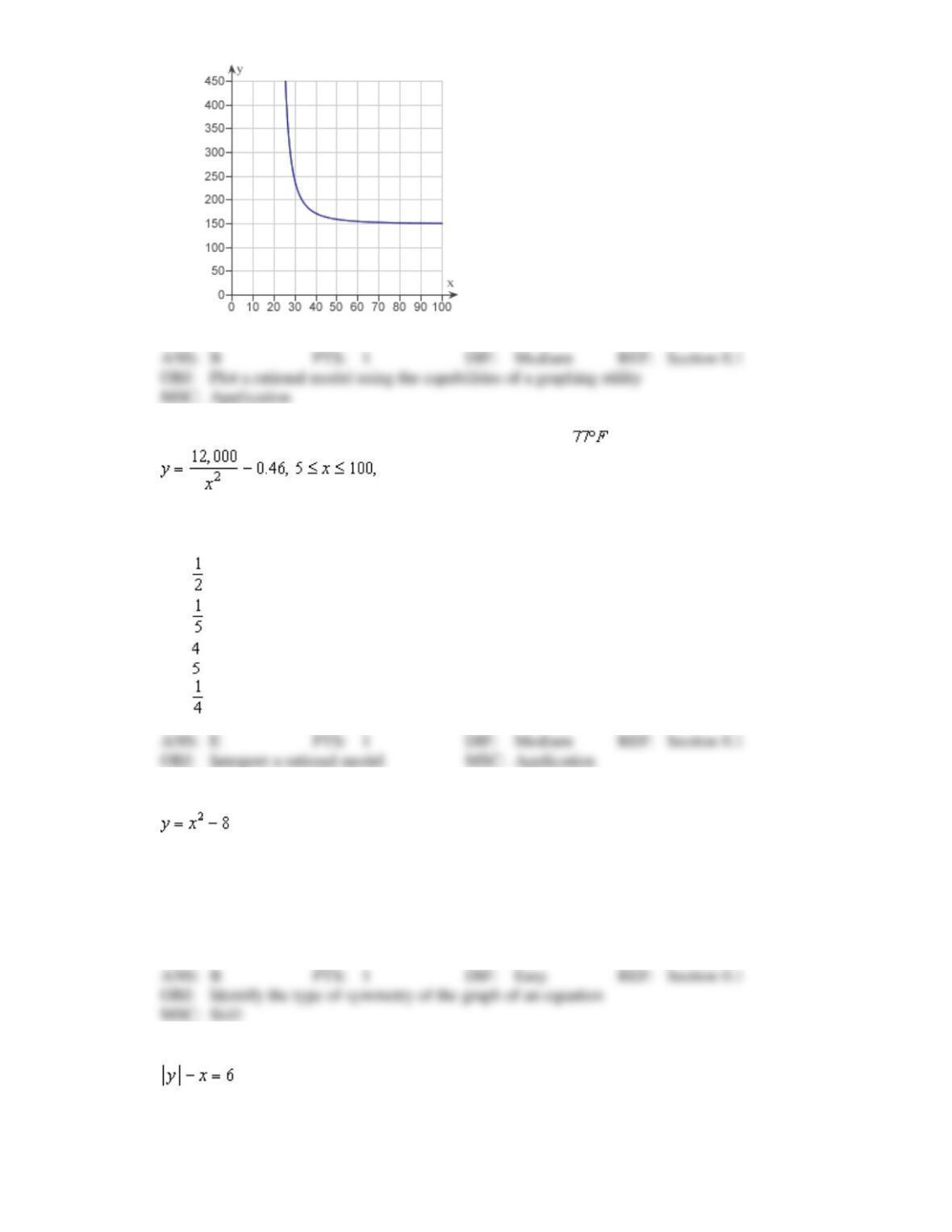
10. The resistance y in ohms of 1000 feet of solid metal wire at can be approximated by the model
where x is the diameter of the wire in mils (0.001 in). Use a graphing
utility to graph the model
a.
d.
b.
e.
c.
11. The resistance y in ohms of 1000 feet of solid metal wire at can be approximated by the model
where x is the diameter of the wire in mils (0.001 in). If the diameter
of the wire is doubled, the resistance is changed by approximately what factor? In determining your
answer, you can ignore the constant –0.46.
a.
b.
c.
d.
e.
12. Test for symmetry with respect to each axis and to the origin.
a.
symmetric with respect to the origin
b.
symmetric with respect to the y-axis
c.
symmetric with respect to the x-axis
d.
both B and C
e.
no symmetry
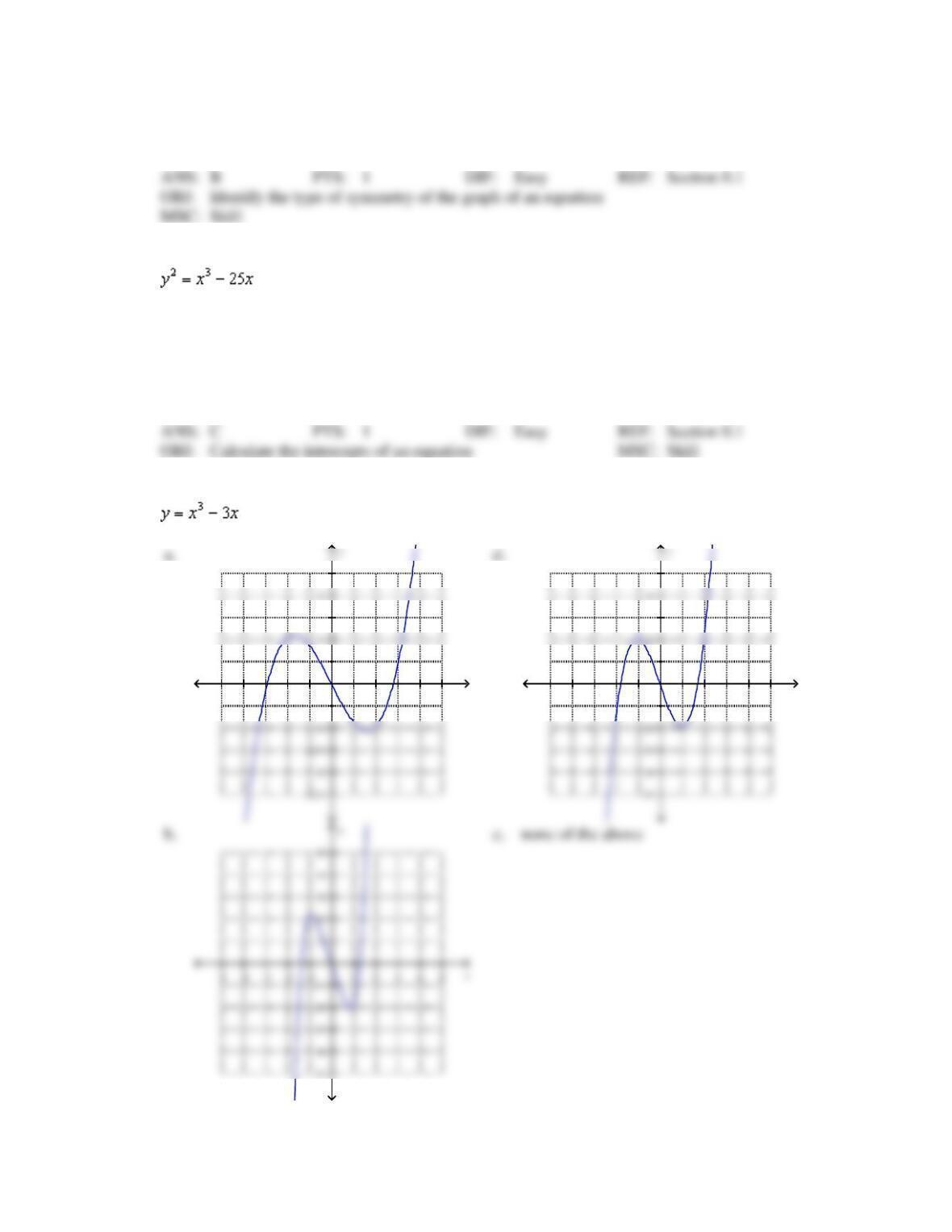
13. Test for symmetry with respect to each axis and to the origin.
a.
symmetric with respect to the origin
b.
symmetric with respect to the x-axis
c.
symmetric with respect to the y-axis
d.
no symmetry
e.
A, B, and C
14. Find all intercepts:
a.
x-intercepts: (0,0), (5,0), (-5,0); y-intercept: (0, -25)
b.
x-intercepts: (0,0), (5,0); y-intercept: (0, 0)
c.
x-intercepts: (0,0), (5,0), (-5,0); y-intercept: (0, 0)
d.
x-intercepts: (0,0), (5,0); y-intercept: (0, 5)
e.
x-intercepts: (0,0), (5,0), (25,0); y-intercept: (0, 0)
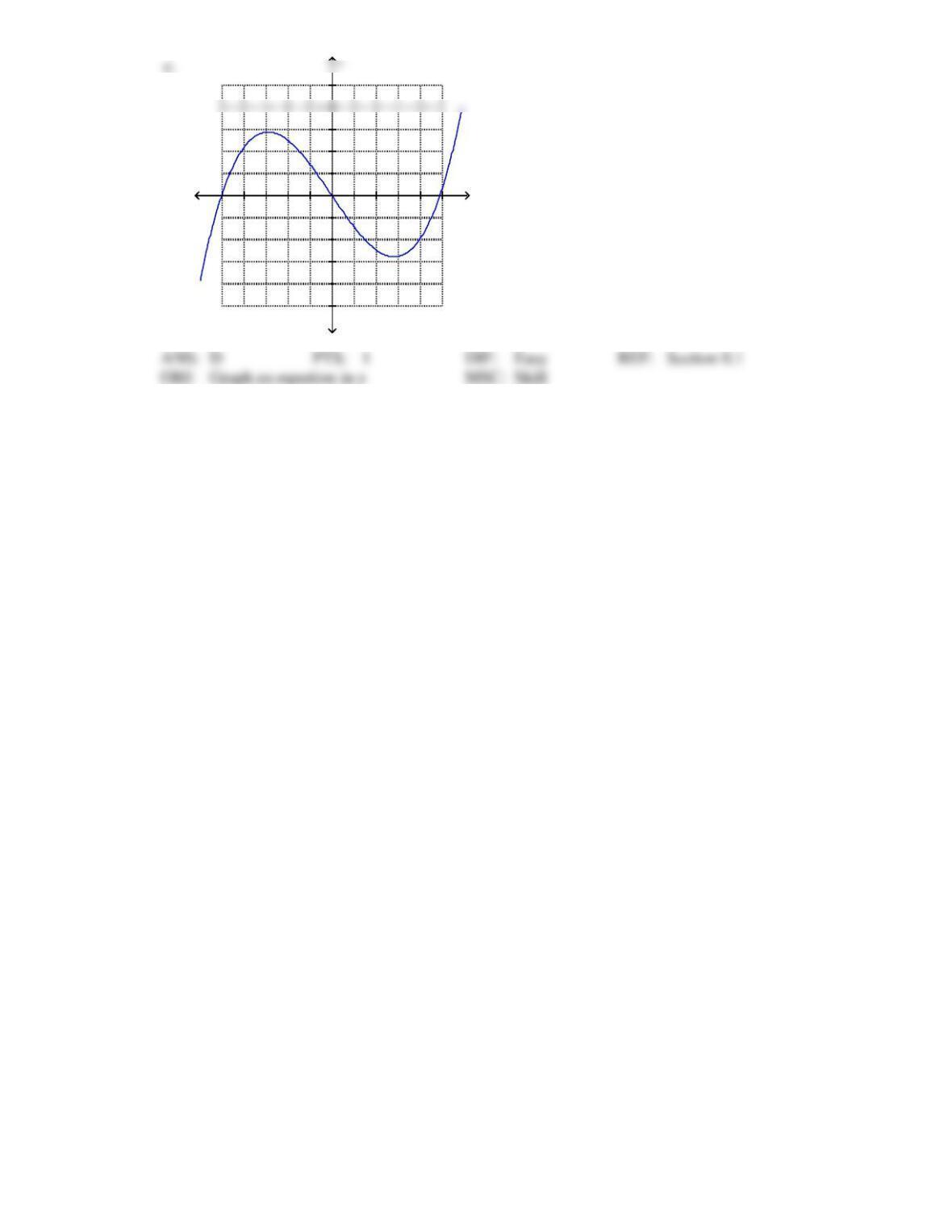
15. Sketch the graph of the equation:
0.5 1 1.5 2 2.5–0.5–1–1.5–2–2.5 x
0.5
1.5
2.5
–0.5
1 2 3 4 5–1–2–3–4–5 x
1
3
5
–1
0.25 0.5 0.75 1 1.25–0.25–0.5–0.75–1–1.25 x
0.25
0.5
0.75
1.25
–0.25
–0.5
–0.75
–1
–1.25