Rents, executive salaries, and insurance are typical examples of
a. variable costs.
b. fixed costs.
c. unit costs.
d. marginal costs.
e. total costs.
Answer:
The wholesalers that perform all channel functions and are found in the health foods,
automotive parts, and seafood industries would be _________.
a. specialty wholesalers
b. full-line wholesalers
c. limited-wholesalers
d. universal wholesalers
e. cash and carry wholesalers
Answer:
A test where consumers are invited to view new television shows or movies that also
include test commercials is called the _________.
a. sales test
b. jury test
c. theater test
d. attitude test
e. portfolio test
Answer:
Hard Candy is a cosmetics company that markets the Palm Paletteall the make-up a
“girl-on-the-go” needs without a cumbersome make-up bag. It comes in three
shadesglam, funky, and girlies. Hard Candy targets women who are twenty somethings.
Which one of Porter’s generic business strategies does Hard Candy use?
a. differentiation focus
b. cost focus
c. differentiation
d. cost leadership
e. profit enhancement
Answer:
There are three key factors when choosing among place-based media options for an
advertising campaign: (1) the media habits of the target audience; (2) the product’s
attributes; and (3) __________.
a. cost.
b. the perceived risk.
c. the reputation of the prospective media firm.
d. the length of time required to get the message across.
e. the sustainability of the message.
Answer:
Consumers buy water and soda from vending machines. Traditionally, the price of each
of these products is about $1.. If a marketer charges a significantly higher price for such
products dispensed by vending machines, sales are likely to decline. In order to avoid
declines in sales, marketers tend to be very consistent in the prices they charge for
vending machine products. This is an example of marketers employing a __________
strategy.
a. below-market pricing
b. skimming pricing
c. penetration pricing
d. loss-leader pricing
e. customary pricing
Answer:
The first objective in marketing is to discover consumer __________.
a. diversity of opinion to create advertising messages
b. income to determine the ability to pay
c. lifetime value
d. characteristics to segment markets
e. needs to identify reasons for buying
Answer:
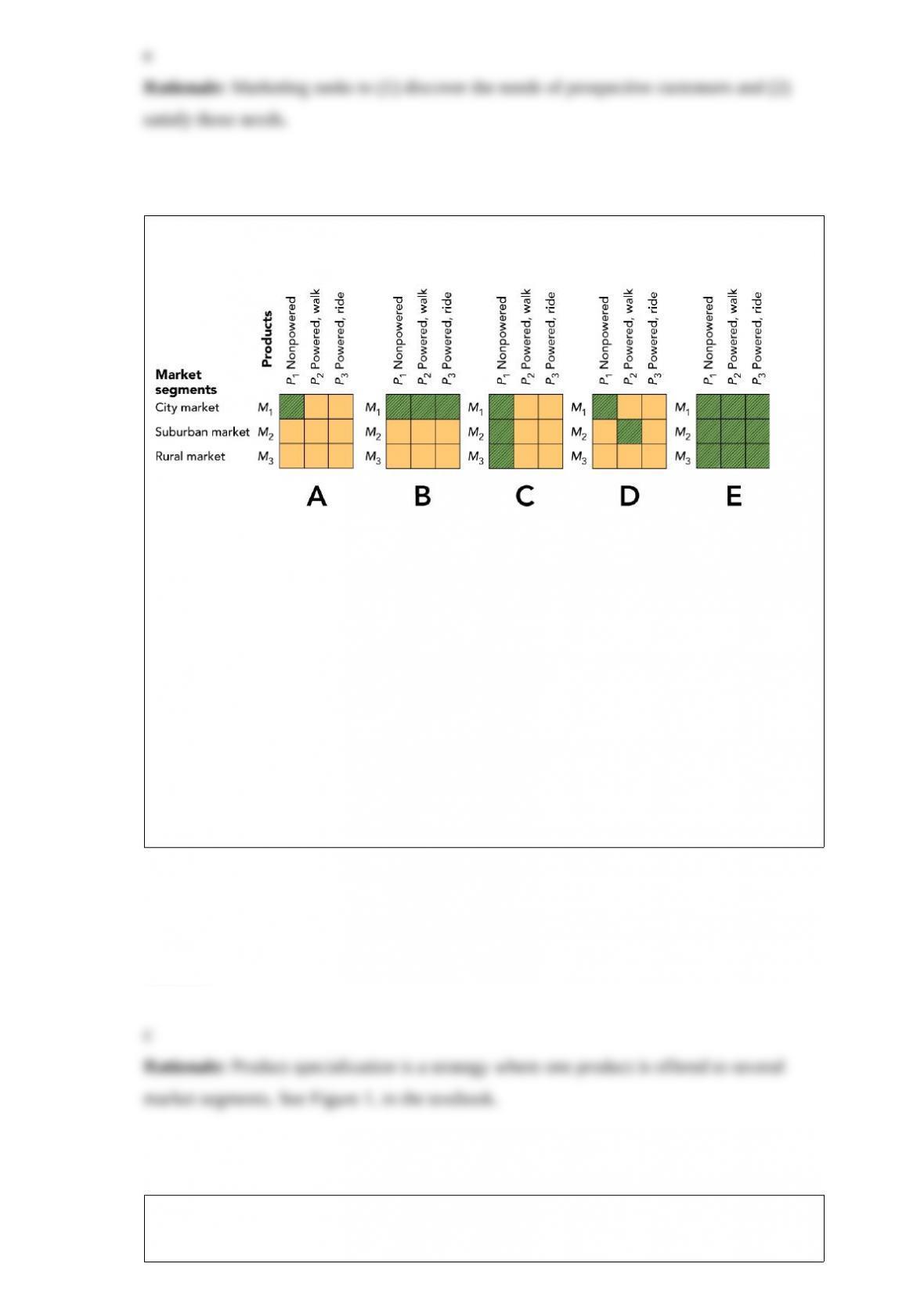
Figure 1.
In Figure 1. above, the market-product grid labeled “C” illustrates which of the
following market-product strategies?
a. full coverage
b. market specialization
c. product specialization
d. selective specialization
e. market-product concentration
Answer:
Consumers’ purchases are often influenced by the views, opinions, or behaviors of
others. Two aspects of personal influence that are important to marketers are opinion
leadership and __________.
a. consumer socialization
b. word-of-mouth activity
c. peer pressure
d. government regulation
e. sales promotion
Answer:
Intertype competition refers to competition between
a. very similar types of retail outlets that results from a single-product/single-line
merchandising policy.
b. retailers when the items they sell are virtually indistinguishable from one another.
c. national and generic brands that are sold side-by-side in a retail outlet.
d. retailers located in separate quadrants of the retail positioning matrix.
e. very dissimilar types of retail outlets that results from a scrambled merchandising
policy.
Answer:
The challenges of packaging and labeling are often global. Two of the particular types
of challenges facing global manufacturers are health and safety concerns and
__________.
a. making packaging a less expensive part of the marketing strategy
b. creating larger size packages to be sold at warehouse stores.
c. ensuring total quality management across national boundaries
d. creating packaging sensitive to cultural diversity
e. addressing ongoing environmental concerns
Answer:
Figure 1.
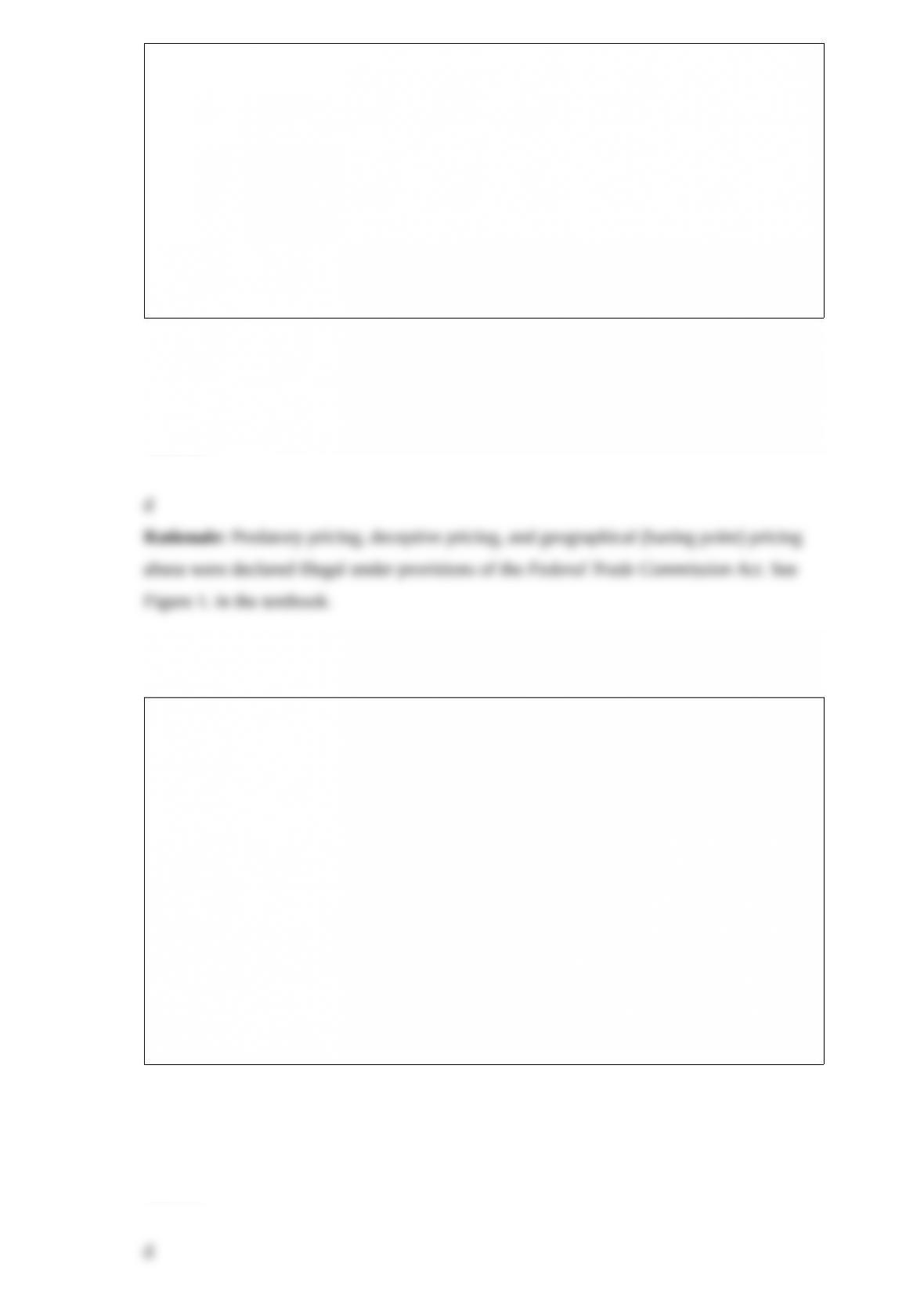
Consider Figure 1. above. “C” represents which of the following legislative acts?
a. The Robinson-Patman Act
b. The Clayton Act
c. The Sherman Act
d. The Federal Trade Commission Act
e. The Consumer Goods Pricing Act
Answer:
ABB is a Swiss-based manufacturer of industrial equipment with annual sales of $30
billion. At one time, ABB had one salesforce that sold only generators, one that sold
only boilers, another that sold only transformers, and so forth. Each salesperson was an
expert on the items he or she sold. Its salesforce was organized by __________.
a. workload
b. customer
c. geography
d. product
e. size
Answer:
Which of the following companies would be most likely to use target
return-on-investment pricing?
a. a farmer
b. a florist shop
c. a book publisher
d. a veterinarian
e. an automobile manufacturer
Answer:
Another name for a drop shipper is a __________.
a. desk jobber
b. drop runner
c. transport vendor
d. container transport vendor
e. stock jobber
Answer:
Using an existing brand name to introduce a product that is new to the company into a
totally new, unfamiliar market seems like a good idea. This is what Bic did when it
introduced __________, and it failed quickly.
a. aspirin
b. yogurt
c. disposable underwear
d. soda (soft drink)
e. lemonade
Answer:
In the hierarchy of effects, evaluation refers to
a. the consumer’s ability to recognize and remember the product or brand name.
b. the consumer’s appraisal of the product or brand on important attributes.
c. an increase in the consumer’s desire to learn about some of the features of the product
or brand.
d. a favorable experience on the first trial, resulting in the consumer’s repeated purchase
and use of the product or brand.
e. the consumer’s first actual purchase and use of the product or brand.
Answer:
A process that automatically groups people with similar buying intentions, preferences,
and behaviors and predicts future purchases is referred to as __________.
a. a choiceboard
b. collaborative filtering
c. connectivity
d. interactive marketing
e. personalization
Answer:
The solicitation of a consumer’s consent to receive e-mail and advertising based on
personal data supplied by the consumer is called “__________.”
a. opt-in
b. opt-out
c. cookies
d. spam
e. phishing
Answer:
Which stage in the product life cycle is characterized by a slowing of total industry
sales or product class revenue?
a. introduction
b. growth
c. maturity
d. decline
e. decelerated implementation
Answer:
E-marketplace can take two different formats, which are
a. bricks-and-mortar exchanges and clicks-and-mortar exchanges.
b. privately-owned trading communities and open-to-the-public trading communities.
c. networked exchanges or public trading communities.
d. independent trading communities or private exchanges.
e. public exchanges and networked exchanges.
Answer:
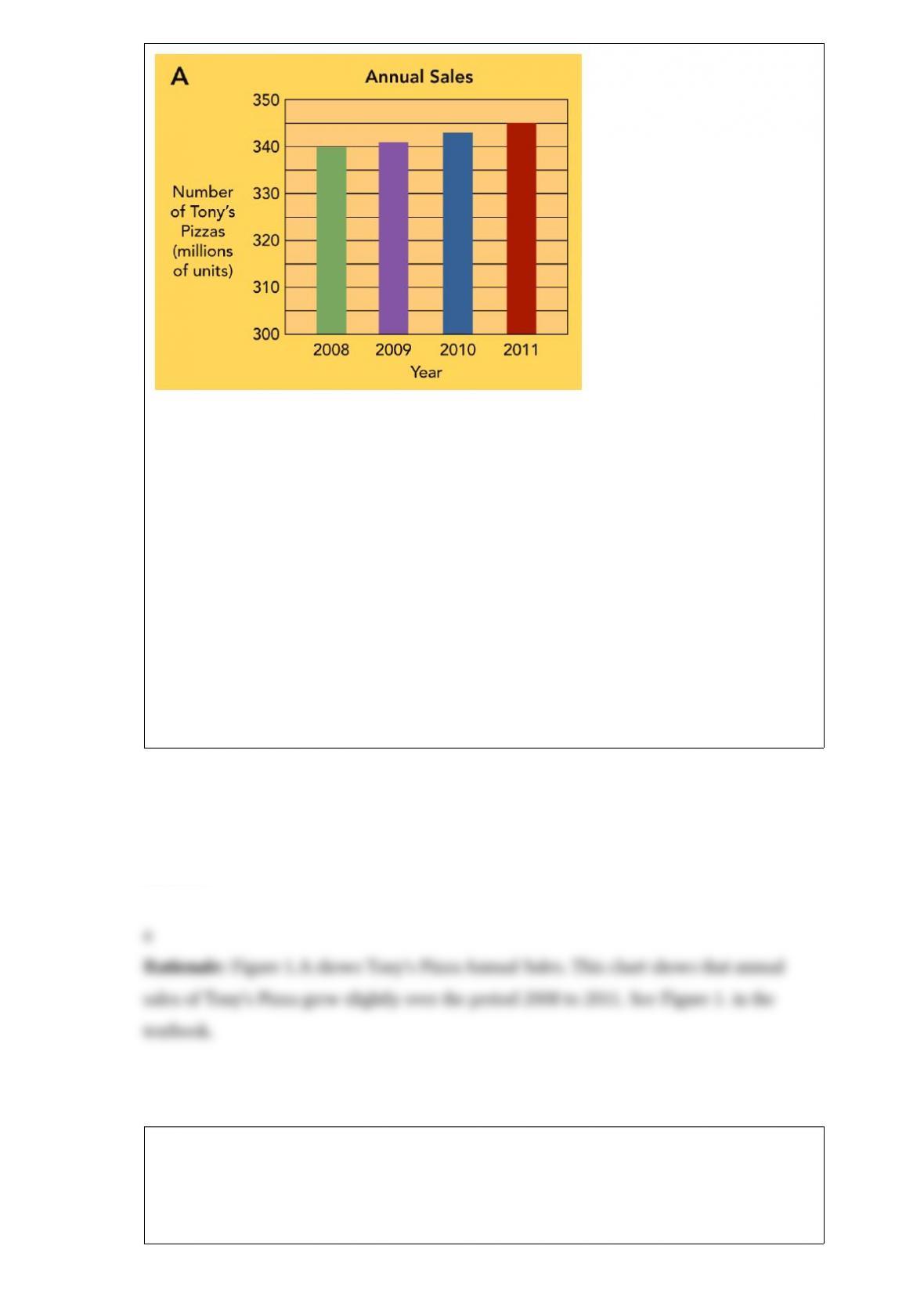
Figure 1.A: Annual Sales of Tony’s Pizza
Figure 1.A above indicates that
a. annual sales of Tony’s Pizza grew slightly over the period 2008 to 2011.
b. annual sales of Tony’s Pizza grew significantly over the period 2008 to 2011.
c. children ate more pizzas.
d. households with two or more members ate more Tony’s Pizza over the period 2008 to
2011, which drove this sales increase.
e. there was a greater change in growth in the monthly sales of Tony’s Pizza between
2008 and 2009 than there was between 2010 and 2011.
Answer:
In the 20th century, railroads may have let other forms of transportation take business
away from them because their definition included only the railroad business, rather than
a broader definition that encompassed __________.
a. transportation
b. transcontinental shipping
c. passenger travel
d. product delivery
e. air cargo
Answer:
Tariffs refer to
a. government payments to companies or industries that primarily serve to create
competitive advantage for domestic products.
b. government taxes on goods or services entering a country that primarily serve to raise
prices on imports.
c. a restriction placed on the amount of a product allowed to enter or leave a country.
d. a minimum requirement for the purchase between two or more nations of products or
services.
e. a refusal to purchase or exchange goods or services with another nation unless certain
financial or ideological requirements have been satisfied.
Answer:
An Internet-enabled promotional strategy that encourages individuals to forward
marketer-initiated messages to others via e-mail, social networking, and blogs is
referred to as __________.
a. buzz marketing
b. customerization
c. viral marketing
d. “liking”
e. permission marketing
Answer:
A source refers to
a. any paid form of advertising.
b. consumers who read, hear, or see the message during the communications process.
c. a company or person who has information to convey during the communications
process.
d. people with similar understanding and knowledge who are willing to share that
knowledge with others.
e. a group of individuals who are willing to receive information from others.
Answer:
An ad for Hydrozycut, an advanced weight loss formula by GNC, shows a beautiful
woman who claims that she lost “an incredible 23 pounds.” This ad is using a(n)
__________.
a. rhetorical appeal
b. sex appeal
c. humorous appeal
d. appeal to self-esteem
e. fear appeal
Answer:
Western Digital, the Irvine, California-based maker of disk drives, recalled about
400,000 of its hard drives because of a faulty internal chip. The chip will not affect the
disk drive motor until after six to twelve months of use. This delay in the problem’s
appearance means that many consumers would not think to blame the disk drive
manufacturer. But, instead of taking the less expensive route of remaining quiet about
the problem, Western Digital chose to offer replacement disk drives for all the disk
drives that had the faulty chip. This action is an example of ________.
a. hedonism
b. utilitarianism
c. moral idealism
d. existentialism
e. socialism
Answer:
For a promotional campaign, hierarchy of effects refers to the stages a prospective
buyer goes through, which include:
a. awareness, interest, evaluation, trial, and rejection.
b. interest, adoption, and brand loyalty.
c. cognitive, affective, and behavioral.
d. awareness, interest, evaluation, trial, and adoption.
e. see an ad, try the product, and buy the product.
Answer:
Organizational buyers refer to
a. manufacturers, wholesalers, retailers, and government agencies that buy goods and
services exclusively for resale.
b. manufacturers, wholesalers, retailers, and government agencies that buy goods and
services for their own use or for resale.
c. manufacturers, wholesalers, retailers, and government agencies that buy goods and
services exclusively for their own use.
d. firms that buy physical products and resell them again without any reprocessing.
e. firms that in some way reprocess a product or service they buy before selling it again
to the next buyer.
Answer:
The groups primarily served by a firm exhibiting profit responsibility include
a. the general public, public interest groups, and the environment.
b. consumers, employees, and supplier/distributors.
c. owners and stockholders.
d. the general public, owners, and stockholders.
e. government, owners, and stockholders.
Answer: