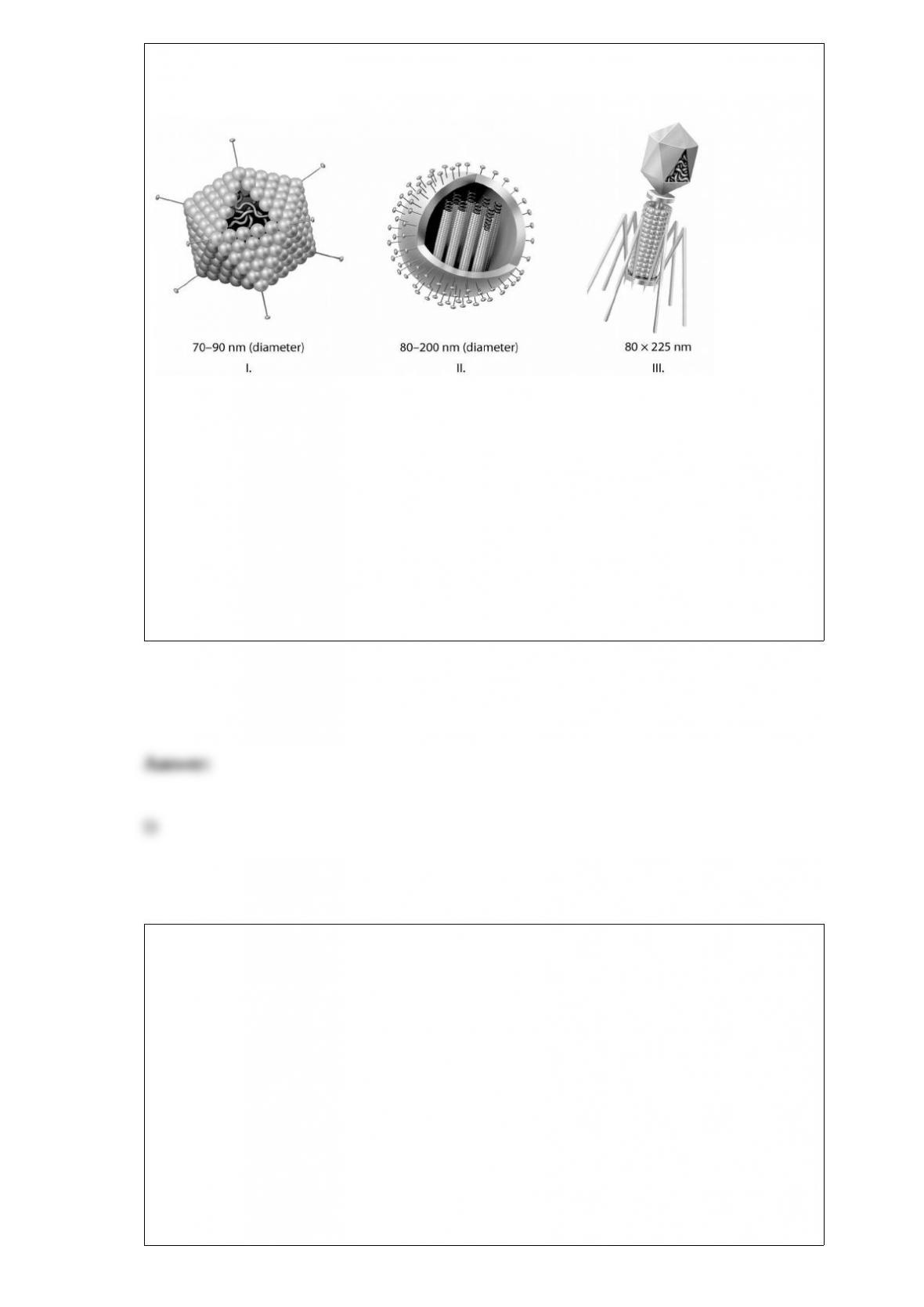
Which of the three types of viruses shown above would you expect to include
glycoproteins?
A) I only
B) II only
C) III only
D) I and II only
For your internship at the local zoo, you have been assigned to help with the new
orangutan-breeding program. Little is known about orangutan reproductive hormones,
but hormone feedback cycles are often the same in closely related animals. You have
been asked to use your knowledge of the interactions of human reproductive hormones
to recommend injections to promote ovulation in a female orangutan when a visiting
male arrives for a brief breeding visit.
Refer to the paragraph on the orangutan breeding program. Which of the following
hormones would you use if you want to induce ovulation right away?
A) estradiol (estrogen)

B) progesterone
C) luteinizing hormone (LH)
D) human chorionic gonadotropin (hCG)
Why might researchers choose to use molecular data (such as ribosomal RNA
sequences) rather than morphological data to study the evolutionary history of animals?
A) Molecular data can be gathered in the lab, while morphological data must be
gathered in the field.
B) Sequence data can be gathered faster than morphological data, and morphological
data provides a different perspective.
C) Morphological changes usually do not result from molecular changes.
D) Some phyla vary too widely in morphological characteristics to be classified
accurately.
If one organ is an exaptation of another organ, then these two organs _____.
A) are homologous
B) are undergoing convergent evolution
C) are found in the same species

D) have the same function
Which statement about the domain Archaea is true?
A) Genetic prospecting has recently revealed the existence of many previously
unknown archaean species.
B) The genomes of archaeans are unique, containing no genes that originated within
bacteria.
C) No archaeans can inhabit solutions that are nearly 30% salt.
D) No archaeans are adapted to waters with temperatures above the boiling point.
Most land-dwelling invertebrates and all of the amphibians _____.
A) are ectothermic organisms with variable body temperatures
B) alter their metabolic rates to maintain a constant body temperature of 37C
C) are endotherms but become thermoconformers when they are in water
D) become more active when environmental temperatures drop below 15C

The greatest number of endemic species is expected in environments that are _____.
A) easily reached and ecologically diverse
B) isolated and show little ecological diversity
C) isolated and ecologically diverse
D) easily reached and show little ecological diversity
Research indicates that ibuprofen, a drug used to relieve inflammation and pain, is a
mixture of two enantiomers; that is, molecules that _____.
A) have identical chemical formulas but differ in the branching of their carbon
skeletons
B) are mirror images of each other
C) differ in the location of their double bonds
D) differ in the arrangement of atoms around their double bonds

Whiteflies are common pest insects found on cotton, tomato, poinsettia, and many other
plants. Nymphs are translucent and mostly sessile, feeding on their host plants’ phloem
(sap) from the undersides of leaves. They undergo incomplete metamorphosis into
winged adults. Because whitefly nymphs cannot escape predation by moving, you
hypothesize that their translucent bodies make them hard to spot by predators. How
could you directly test this hypothesis?
A) Compare rates of predation on whitefly nymphs on plant leaves of different colors
(for example, red vs. green poinsettia leaves).
B) Compare rates of predation on whitefly nymphs coated with a nontoxic dye vs.
undyed whitefly nymphs.
C) Compare rates of predation on whitefly nymphs vs. whitefly adults.
D) Compare rates of predation on whitefly nymphs by predators that are translucent vs.
predators that are not translucent.
Which of the following is a major difference between prokaryotic cells and eukaryotic
cells?
A) Prokaryotes have cells while eukaryotes do not.
B) Eukaryotic cells have more intracellular organelles than prokaryotes.
C) Prokaryotes are not able to carry out aerobic respiration, relying instead on
anaerobic metabolism.
D) Prokaryotes are generally larger than eukaryotes.

The Brazil nut tree, Bertholletia excels (n = 17), is native to tropical rain forests of
South America. It is a hardwood tree that can grow to over 50 meters tall, is a source of
high-quality lumber, and is a favorite nesting site for harpy eagles. As the rainy season
ends, tough-walled fruits, each containing 8-25 seeds (Brazil nuts), fall to the forest
floor. Brazil nuts are composed primarily of endosperm. About $50 million worth of
nuts are harvested each year. Scientists have discovered that the pale yellow flowers of
Brazil nut trees cannot fertilize themselves and admit only female orchid bees as
pollinators. The agouti (Dasyprocta spp.), a cat-sized rodent, is the only animal with
teeth strong enough to crack the hard wall of Brazil nut fruits. It typically eats some of
the seeds, buries others, and leaves still others inside the fruit, which moisture can now
enter. The uneaten seeds may subsequently germinate.
Animals that consume Brazil nuts derive nutrition mostly from tissue whose nuclei
have how many chromosomes?
A) 17
B) 34
C) 51
D) 68
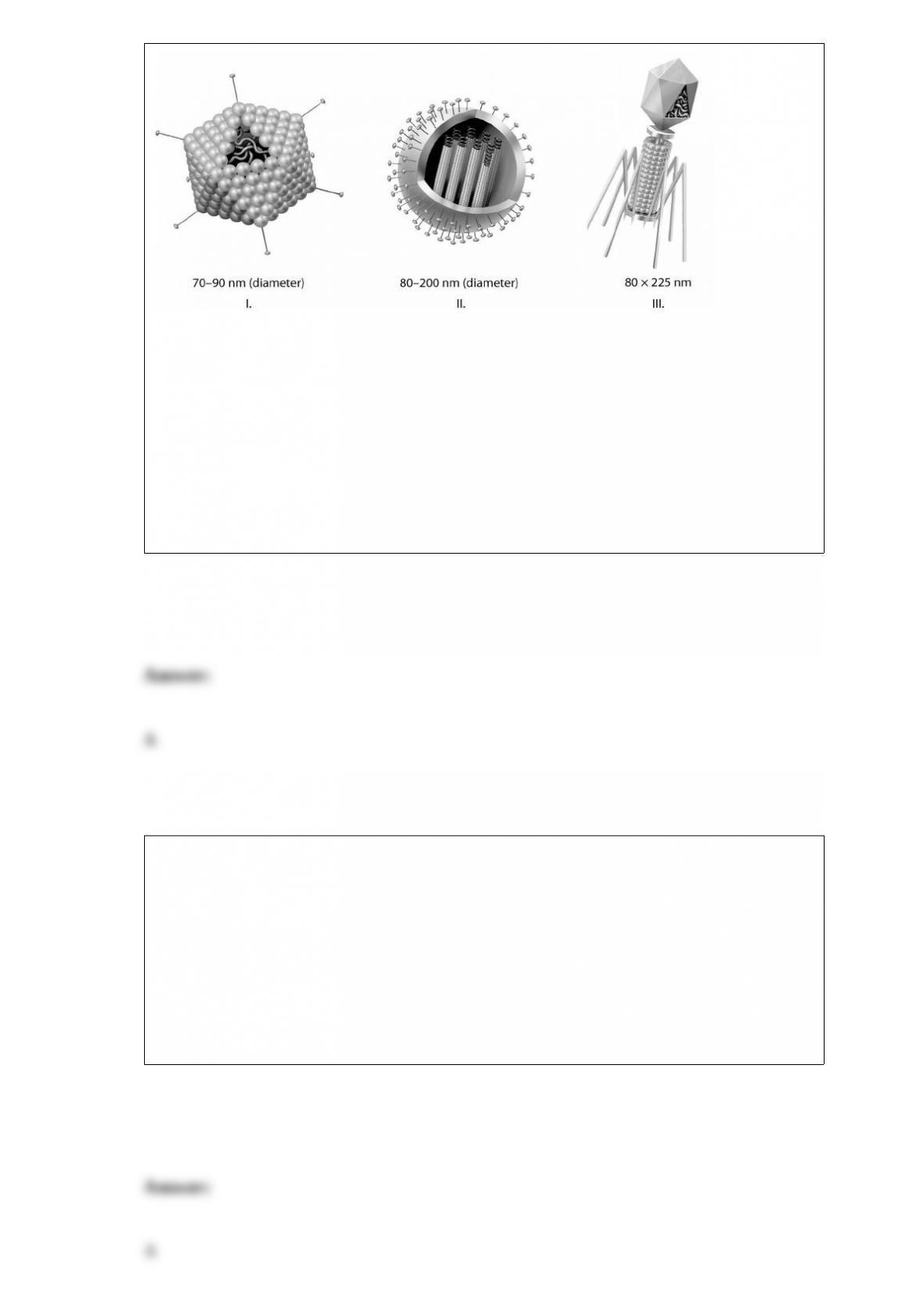
Which of the following supports the argument that viruses are nonliving?
A) They are not cellular.
B) Their DNA does not encode proteins.
C) They have RNA rather than DNA.
D) They do not evolve.
Which of the following flower parts develops into a seed?
A) ovule
B) ovary
C) stamen
D) carpel
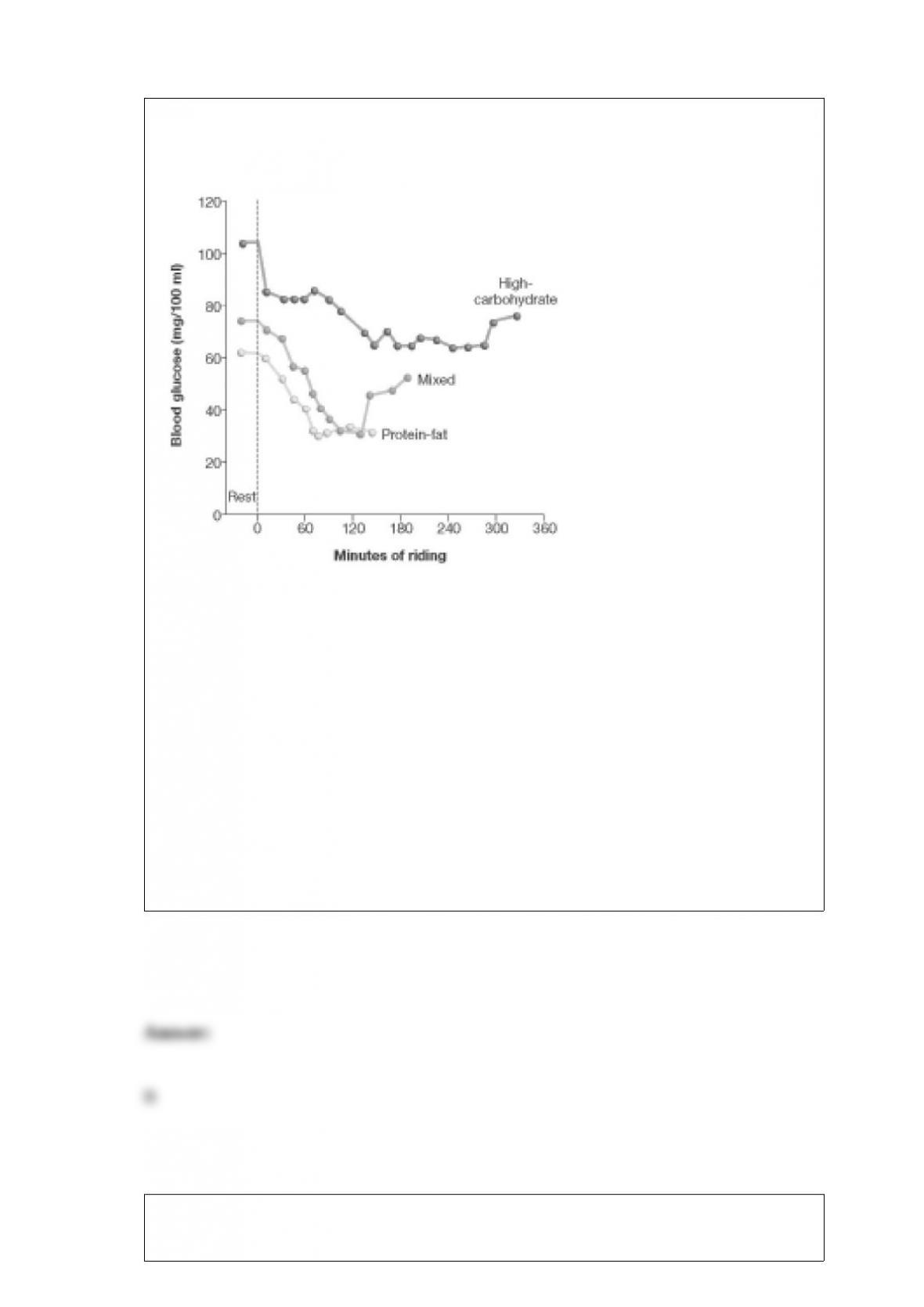
Three groups of cyclists consumed three different types of diets: high-carbohydrate; a
diet mixed in carbohydrates, fat, and protein; or a diet higher in protein and fat. The
average time each group could spend cycling over a six-hour period is shown in the
above graph. What conclusion from the data would help an athlete or trainer improve
performance?
A) Endurance is entirely related to diet.
B) Maintaining elevated blood sugar improves performance.
C) An early 50 percent drop in blood glucose is associated with improved endurance.
D) Diet is not at all related to endurance.
A swim bladder is a gas-filled sac that helps fish maintain buoyancy. The evolution of
the swim bladder from lungs of an ancestral fish is an example of _____.

A) exaptation
B) changes in Hox gene expression
C) paedomorphosis
D) adaptive radiation
Which organelle is the primary site of ATP synthesis in eukaryotic cells?
A) lysosome
B) mitochondrion
C) Golgi apparatus
D) peroxisome
Macroevolution is _____.
A) the same as microevolution, but includes the origin of new species
B) evolution above the species level
C) defined as the evolution of microscopic organisms into organisms that can be seen
with the naked eye

D) defined as a change in allele or gene frequency over the course of many generations
Refer to the treatments listed below to answer the following question(s).
You isolate an infectious substance capable of causing disease in plants, but you do not
know whether the infectious agent is a bacterium, virus, viroid, or prion. You have four
methods at your disposal to analyze the substance and determine the nature of the
infectious agent.
I. Treat the substance with enzymes that destroy all nucleic acids and then determine
whether the substance is still infectious.
II. Filter the substance to remove all elements smaller than what can be easily seen
under a light microscope.
III. Culture the substance on nutritive medium, away from any plant cells.
IV. Treat the sample with proteases that digest all proteins and then determining
whether the substance is still infectious.
If you already know that the infectious agent was either bacterial or viral, which
method(s) listed above would allow you to distinguish between these two possibilities?
A) I
B) II
C) II or III
D) IV

The difference in lipid and protein composition between the membranes of the
endomembrane system is largely determined by the _____.
A) transportation of membrane lipids among the membranes of the endomembrane
system by small membrane vesicles
B) function of the Golgi apparatus in sorting and directing membrane components
C) modification of the membrane components once they reach their final destination
D) synthesis of different lipids and proteins in each of the organelles of the
endomembrane system
If you applied a fungicide to a cornfield, what would you expect to happen to the rate of
decomposition and net ecosystem production (NEP)?
A) Both decomposition rate and NEP would decrease.
B) Both decomposition rate and NEP would increase.
C) Decomposition rate would increase and NEP would decrease.
D) Decomposition rate would decrease and NEP would increase.
If all prokaryotes on Earth suddenly vanished, which of the following would be the

most likely and most direct result?
A) Human populations would thrive in the absence of disease.
B) Bacteriophage numbers would dramatically increase.
C) The recycling of nutrients would be greatly reduced, at least initially.
D) There would be no more pathogens on Earth.
One of the buffers that contribute to pH stability in human blood is carbonic acid
(H2CO3). Carbonic acid is a weak acid that, when placed in an aqueous solution,
dissociates into a bicarbonate ion (HCO3-) and a hydrogen ion (H+), as noted below.
If the pH of blood drops, one would expect _____.
A) a decrease in the concentration of H2CO3 and an increase in the concentration of
HCO3
–
B) the concentration of bicarbonate ions (HCO3
–) to increase
C) the HCO3
– to act as a base and remove excess H+ by the formation of H2CO3
D) the HCO3
– to act as an acid and remove excess H+ by the formation of H2CO3

What evidence do paleobotanists look for that indicates the movement of plants from
water to land?
A) waxy cuticle to decrease evaporation from leaves
B) loss of structures that produce spores
C) sporopollenin to inhibit evaporation from leaves
D) remnants of chloroplasts from photosynthesizing cells
Plants photosynthesize _____.
A) only in the light but respire only in the dark
B) only in the dark but respire only in the light
C) only in the light but respire in light and dark
D) and respire only in the light
Two species of tree frogs that live sympatrically in the northeastern United States differ
in ploidy: Hyla chrysoscelis is diploid, and Hyla versicolor is tetraploid. The frogs are
identical in appearance, but their mating calls, which females use to find mates, differ.
Which difference most likely evolved first?
A) polyploidy

B) difference in mating calls
C) Polyploidy and different mating calls must have evolved at the same time.
A rabbit taken from a meadow near sea level and moved to a meadow high on a
mountainside would have some trouble breathing. Why?
A) The percentage of oxygen in the air at high elevations is lower than at sea level.
B) The percentage of oxygen in the air at high elevations is higher than at sea level.
C) The partial pressure of oxygen in the air at high elevations is lower than at sea level.
D) The partial pressure of oxygen in the air at high elevations is higher than at sea level.
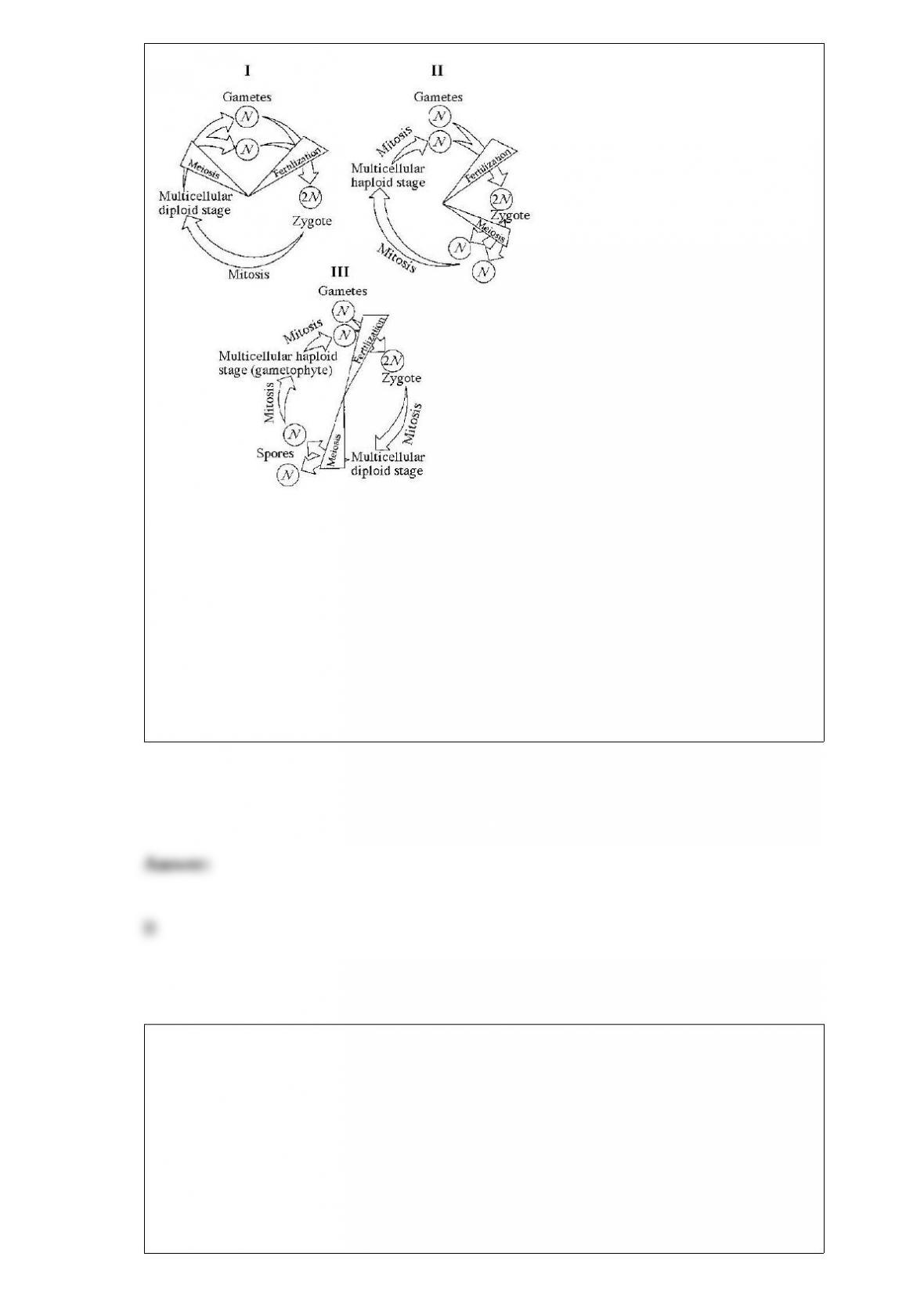
Homologous chromosomes _____.
A) are identical
B) carry information for the same traits
C) carry the same alleles
D) align on the metaphase plate in meiosis II
The steroid hormone that coordinates molting in arthropods is _____.
A) ecdysteroid
B) glucagon
C) thyroxine
D) growth hormone

If a farmer wanted more loosely packed clusters of grapes, he would most likely spray
the immature bunches with_____.
A) auxin
B) gibberellins
C) cytokinins
D) abscisic acid
In birds, sex is determined by a ZW chromosome scheme that is much like the typical
XY scheme seen in humans and many other organisms, except that the system is
reversed: Males are ZZ (similar to XX in humans) and females are ZW (similar to XY
in humans). A lethal recessive allele that causes death of the embryo occurs on the Z
chromosome in pigeons. What would be the sex ratio in the offspring of a cross
between a male heterozygous for the lethal allele and a normal female?
A) 1:1 male to female
B) 3:1 male to female
C) 1:2 male to female
D) 2:1 male to female