Mendel’s second law of independent assortment has its basis in which of the following
events of meiosis I?
A) synapsis of homologous chromosomes
B) crossing over
C) alignment of tetrads at the equator
D) separation of cells at telophase
Refer to the information and figure below to answer the following question(s).
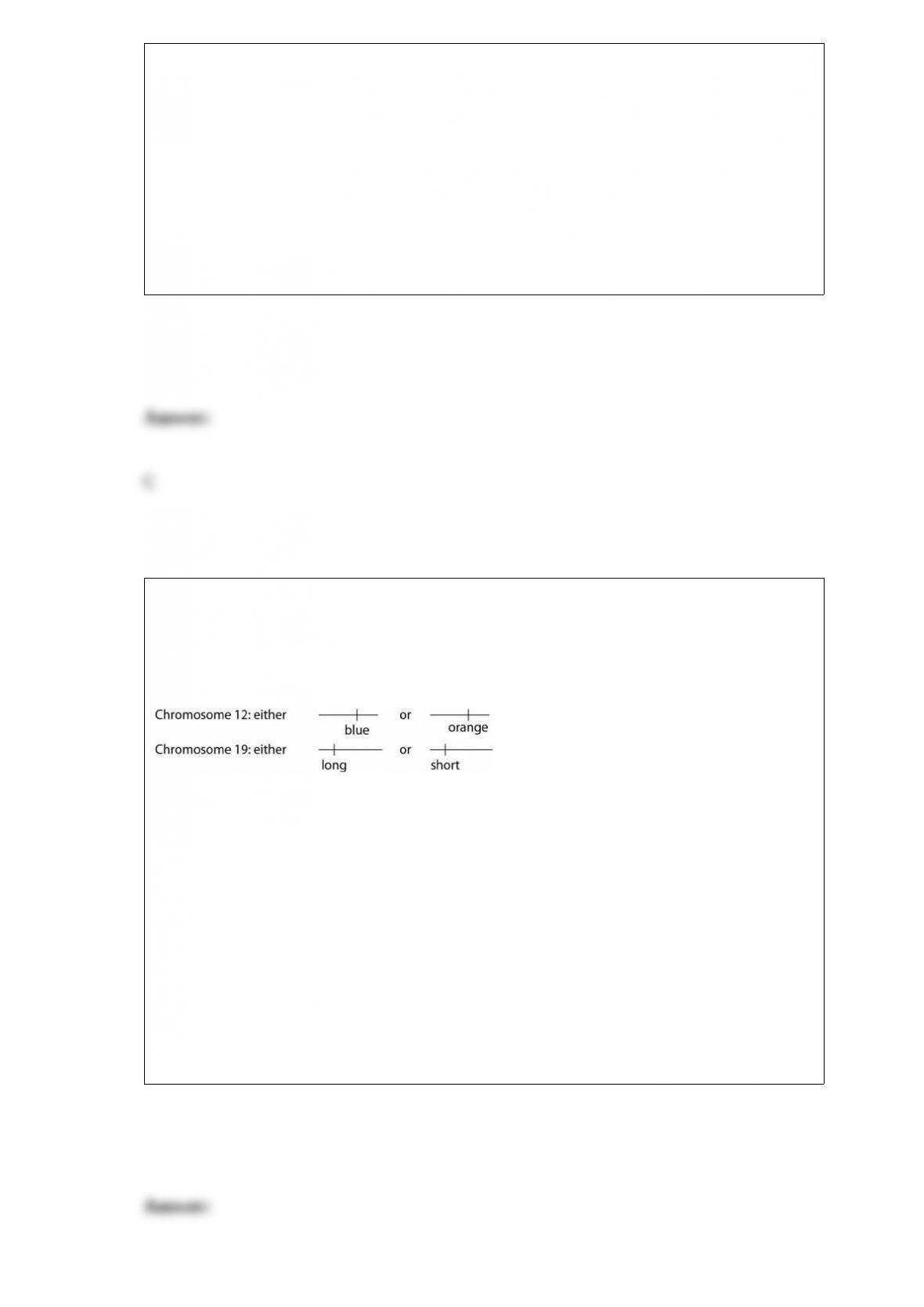
A certain (hypothetical) organism is diploid, has either blue or orange wings as the
consequence of one of its genes on chromosome 12, and has either long or short
antennae as the result of a second gene on chromosome 19, as shown in the figure.
A female with a paternal set of one orange and one long gene chromosome and a
maternal set comprised of one blue and one short gene chromosome is expected to
produce which of the following types of eggs after meiosis?
A) All eggs will have maternal types of gene combinations.
B) All eggs will have paternal types of gene combinations.
C) Half the eggs will have maternal and half will have paternal combinations.
D) Each egg has a one-fourth chance of having either blue long, blue short, orange
long, or orange short combinations.

Use the following information to answer the question(s) below.
In the United States and Canada, bats use one of two strategies to survive winter: They
either migrate south, or they hibernate. Recently, those that hibernate seem to have
come under attack by a fungus, Geomyces destructans (Gd), an attack that is occurring
from Missouri to southern Canada. Many infected bats have a delicate, white
filamentous mat on their muzzles, which is referred to as white-nose syndrome (WNS).
The fungus invades the bat tissues, causes discomfort, and awakens the bat from its
hibernation. The bat fidgets and wastes calories, using up its stored fat. The bat then
behaves abnormally, leaving its cave during daytime in winter to search for food. Their
food, primarily insects, is scarce during the winter, and the bats ultimately starve to
death. Since 2007, it is estimated that up to one million bats have perished from WNS.
Fungi have an extremely high surface-area-to-volume ratio. What is the advantage of
this to an organism that gets most of its nutrition through absorption?
A) The larger surface area allows for more material to be transported through the cell
membrane.
B) The lower volume prevents the cells from drying out too quickly, which can interfere
with absorption.
C) This high ratio creates more room inside the cells for additional organelles involved
in absorption.
D) This high ratio means that fungi have a thick, fleshy structure that allows the fungi
to store more of the food it absorbs.
Compared to viewing a distant object, a human viewing an object held within five
centimeters of the eye requires a lens that _____.
A) has been flattened, as a result of contraction of the ciliary muscles
B) has been made more spherical, as a result of contraction of the ciliary muscles

C) has been flattened, as a result of relaxation of the ciliary muscles
D) has been made more spherical, as a result of relaxation of the ciliary muscles
The common ancestors of birds and mammals were very early (stem) reptiles, which
almost certainly possessed three-chambered hearts (two atria, one ventricle). Birds and
mammals, however, are alike in having four-chambered hearts (two atria, two
ventricles). The four-chambered hearts of birds and mammals are best described as
_____.
A) structural homologies
B) vestiges
C) homoplasies
D) the result of shared ancestry
Which taxon is essentially equivalent to the “embryophytes”?
A) Plantae
B) Pterophyta
C) Bryophyta

D) Charophycea
The lakes of northern Minnesota are home to many similar species of damselflies of the
genus Enallagma. These species have apparently undergone speciation from ancestral
stock since the last glacial retreat about ten thousand years ago. Sequencing which of
the following would probably be most useful in sorting out evolutionary relationships
among these closely related species?
A) conserved regions of nuclear DNA
B) mitochondrial DNA
C) amino acids in proteins
D) ribosomal RNA
The stingers of honeybees have a function most similar to that of _____.
A) rhinophores
B) dorsal plummules
C) cerata
D) chemoreceptors

Why are C4 plants able to photosynthesize with no apparent photorespiration?
A) They do not participate in the Calvin cycle.
B) They use PEP carboxylase to initially fix CO2.
C) They conserve water more efficiently.
D) They exclude oxygen from their tissues.
Cooking oil and gasoline (a hydrocarbon) are not amphipathic molecules because they
_____.
A) do not have a polar or charged region
B) do not have a nonpolar region
C) have hydrophobic and hydrophilic regions
D) are highly reduced molecules

Short-term and long-term memory are related but have important differences.
Short-term memory _____.
A) involves temporary links formed in the cerebral cortex while long-term memory
involves permanent connections within the hippocampus
B) and long-term memory store information in the cerebellum but use different
neurotransmitters
C) is essential for acquiring and retaining long-term memories
D) is essential for acquiring new long-term memories but not for maintaining them
An ectopic pregnancy occurs when a fertilized egg implants somewhere other than in
the lining of the uterus. Usually it implants in the oviduct. Which of the following
would be the most likely explanation for such a pregnancy being unsuccessful?
A) The orientation of the baby would be sideways.
B) Human chorionic gonadotropin (hCG) cannot be produced in the oviduct.
C) The lining of the oviduct is unable to support the developing fetus.
D) The necessary hormones cannot reach the developing fetus in the oviduct.
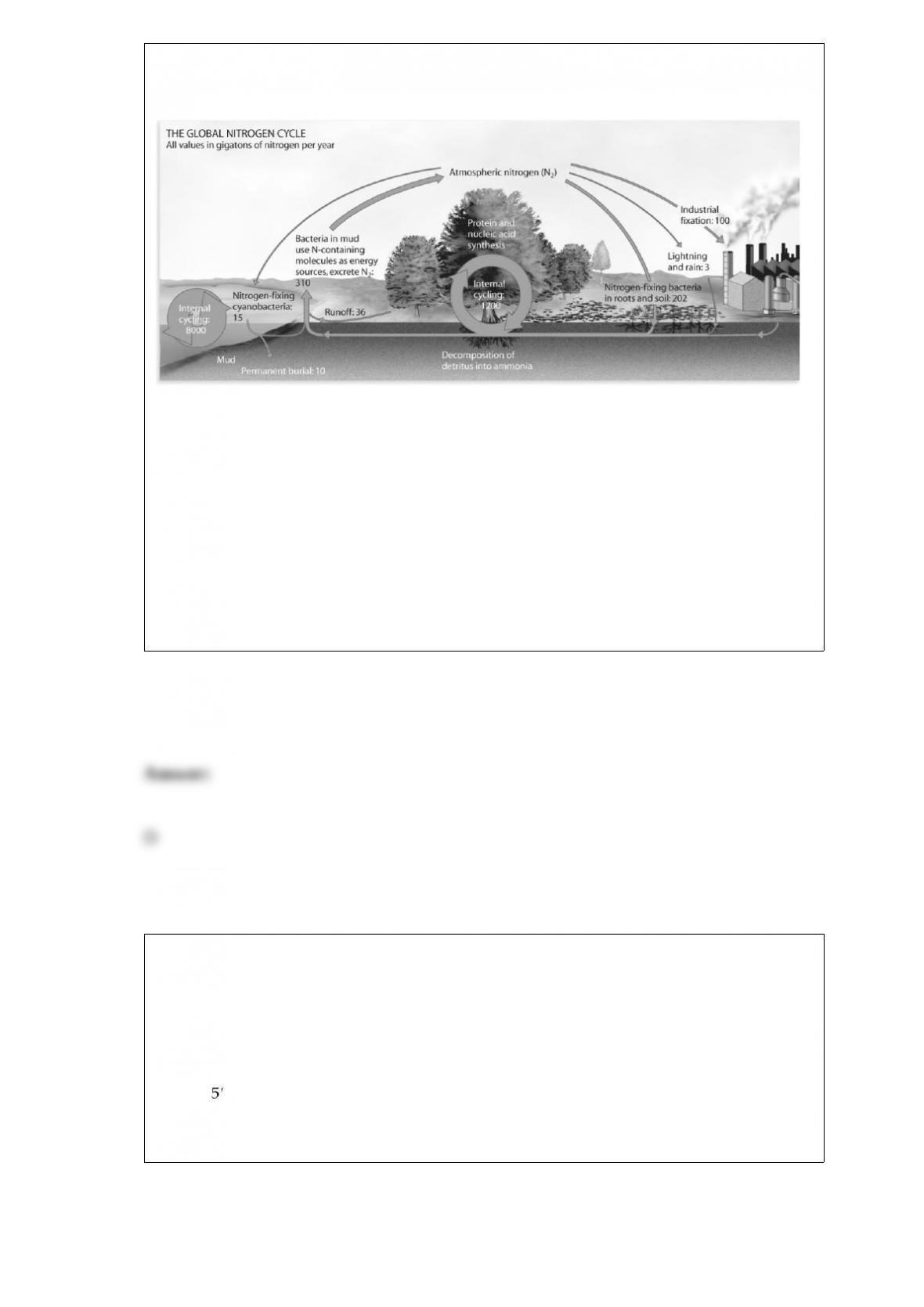
Consider the global nitrogen cycle depicted in the figure above. What is the limiting
portion of the cycle for plants?
A) industrial nitrogen fixation
B) nitrogen lost to the atmosphere
C) internal nitrogen cycling in the oceans
D) nitrogen fixation by bacteria
How does termination of translation take place?
A) The end of the mRNA molecule is reached.
B) A stop codon is reached.
C) The cap is reached.
D) The poly-A tail is reached.

When an action potential from a motor neuron arrives at the neuromuscular junction
(NMJ), a series of events occurs that leads to muscle contraction. Which of the
following events will occur last (that is, after all of the others)?
A) acetylcholine (ACh) release
B) conformational change in troponin
C) depolarization of the muscle cell
D) release of Ca2+ from the sarcoplasmic reticulum
Which of the following has the LEAST affiliation with all of the others?
A) Glomeromycota
B) mycorrhizae
C) lichens
D) arbuscules

Choose the correct match of glial cell type and function.
A) astrocytes metabolize neurotransmitters and modulate synaptic effectiveness
B) oligodendrocytes produce the myelin sheaths of myelinated neurons in the peripheral
nervous system
C) radial glia the source of immunoprotection against pathogens
D) Schwann cells provide nutritional support to non-myelinated neurons
Which of the following statements about independent assortment and segregation is
correct?
A) The law of independent assortment requires describing two or more genes relative to
one another.
B) The law of segregation requires describing two or more genes relative to one
another.
C) The law of independent assortment is accounted for by observations of prophase I.
D) The law of segregation is accounted for by anaphase of mitosis.
Use the following information to answer the question(s) below.

In those parts of equatorial Africa where the malaria parasite is most common, the
sickle-cell allele constitutes 20% of the β hemoglobin alleles in the human gene pool.
In the United States, the parasite that causes malaria is not present, but
African-Americans whose ancestors were from equatorial Africa are present. What
should be happening to the sickle-cell allele in the United States, and what should be
happening to it in equatorial Africa?
A) stabilizing selection; disruptive selection
B) disruptive selection; stabilizing selection
C) directional selection; disruptive selection
D) directional selection; stabilizing selection
Use the following information to answer the question(s) below.
The following are an abstract and figure from a paper that explores the evolutionary
relationship between a protein kinase and behavior (M. Fitzpatrick and M. Sokolowski.
2004. In search of food: Exploring the evolutionary link between cGMP-dependent
protein kinase (PKG) and behavior. Integrative and Comparative Biology 44:28-36).
Abstract:
Despite an immense amount of variation in organisms throughout the animal kingdom,
many of their genes show substantial conservation in DNA sequence and protein
function. Here we explore the potential for a conserved evolutionary relationship
between genes and their behavioral phenotypes. We investigate the evolutionary history
of cGMP-dependent protein kinase (PKG) and its possible conserved function in
food-related behaviors. First identified for its role in the foraging behavior of fruit flies,
the PKG encoded by the foraging gene had since been associated with the maturation of
behavior (from nurse to forager) in honey bees and the roaming and dwelling
food-related locomotion in nematodes. These parallels encouraged us to construct
protein phylogenies using 32 PKG sequences that include 19 species. Our analyses
suggest five possible evolutionary histories that can explain the apparent conserved link
between PKG and behavior in fruit flies, honey bees, and nematodes. Three of these
raise the hypothesis that PKG influences the food-related behaviors of a wide variety of
animals including vertebrates. Moreover it appears that the PKG gene was duplicated
some time between the evolution of nematodes and a common ancestor of vertebrates
and insects whereby current evidence suggest only the for-like PKG might be
associated with food-related behavior.
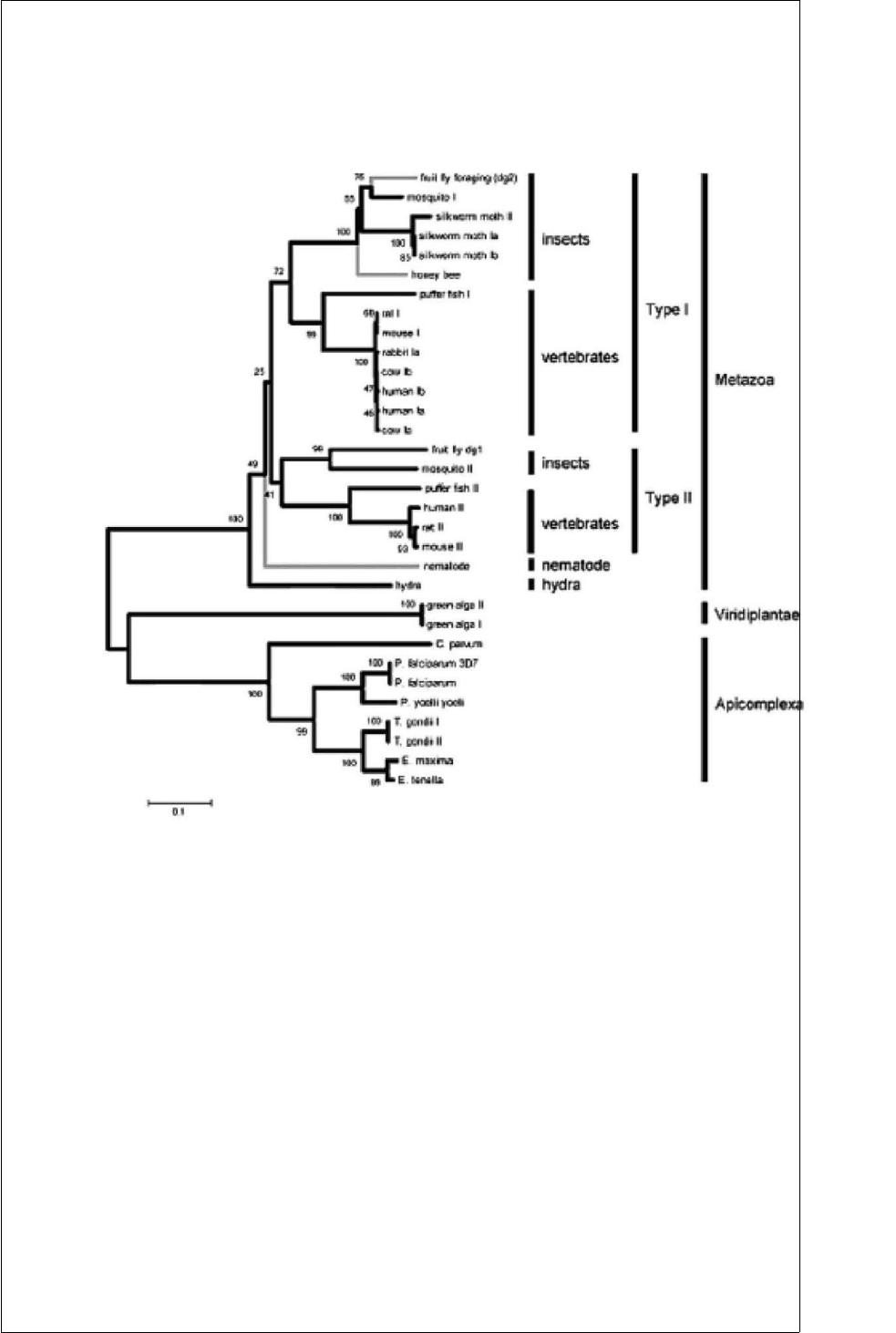
Neighbor joining trees depicting the evolutionary relationships of 32 PKG kinase
domain and C-terminal amino acid sequences spanning 19 species of protozoans and
metazoans. Values at the nodes represent the results of 5000 bootstrap replications.
Lineages with known behavioral links with PKG are indicated by gray branches.
Using the figure above and the accompanying paragraph, and knowing that the PKG
encoded by the foraging gene has recently been associated with the maturation of
out-of-nest behavior in honeybees, what would be a logical explanation for this
relationship? As animals mature, they _____.
A) require more food; therefore, PKG levels must increase.
B) are more likely to forage; therefore, PKG levels must increase.
C) respond to pheromones from the queen, which increases PKG levels.
D) are able to fly, an activity that is connected to the increase in PKG levels.

Use the following information to answer the question(s) below.
Healthy individuals of Paramecium bursaria contain photosynthetic algal
endosymbionts of the genus Chlorella. When within their hosts, the algae are referred to
as zoochlorellae. In aquaria with light coming from only one side, P. bursaria gather at
the well-lit side, whereas other species of Paramecium gather at the opposite side. The
zoochlorellae provide their hosts with glucose and oxygen, and P. bursaria provides its
zoochlorellae with protection and motility. P. bursaria can lose its zoochlorellae in two
ways: (1) if kept in darkness, the algae will die; and (2) if prey items (mostly bacteria)
are absent from its habitat, P. bursaria will digest its zoochlorellae.
A P. bursaria cell that has lost its zoochlorellae is aposymbiotic. If aposymbiotic cells
have population growth rates the same as those of healthy, zoochlorella-containing P.
bursaria in well-lit environments with plenty of prey items, then such an observation
would be consistent with which type of relationship?
A) parasitic
B) commensalistic
C) toxic
D) mutualistic
An unlabeled signaling diagram for steroid hormones: Fig. 11.8 p. 213, Campbell 8e.
A steroid hormone, like estrogen, passes through the plasma membrane and binds to an
intracellular protein as shown in the diagram below. This activates a signal-transduction
pathway which results in an increased production of a specific protein.

Which of the following statements would explain what would occur as a result of the
signal pathway represented by the diagram?
A) Transfer RNA (t-RNA) would accumulate in high levels because it is not required
for protein synthesis.
B) Ribosomal RNA (r-RNA) levels would increase because ribosomes are specific for
the messenger RNA (m-RNA) with which they bind during transcription of the
polypeptide.
C) DNA levels would increase in the nucleus as a result of the binding of the
hormone-receptor complex with the DNA.
D) Messenger RNA (m-RNA) levels would increase in order to be translated into the
protein required by the cell.
Food chains are sometimes short because _____.
A) only a single species of herbivore feeds on each plant species
B) local extinction of a species causes extinction of the other species in its food chain
C) most of the energy in a trophic level is lost as it passes to the next higher level
D) predator species tend to be less diverse and less abundant than prey species
Burning fossil fuels releases oxides of sulfur and nitrogen. These air pollutants can be
responsible for _____.
I) the death of fish in lakes
II) precipitation with a pH as low as 3.0
III) eutrophication of lakes
A) only I
B) only II
C) only III
D) only I and II
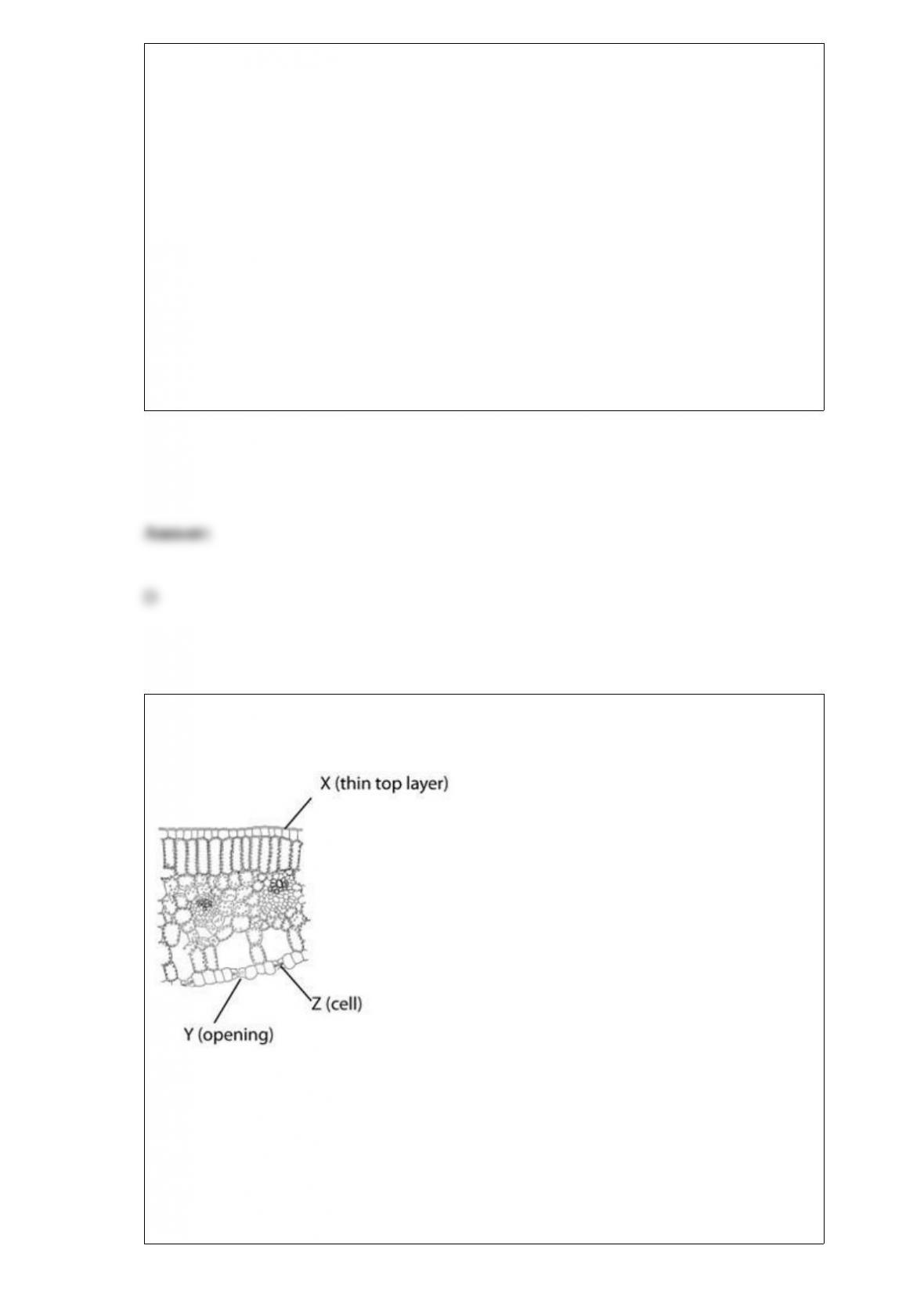
The following diagram is of a cross section of a plant leaf. Use the diagram to answer
the question(s) below.
The main function associated with structure Y is _____.
A) absorption of carbon dioxide
B) retention of water
C) collection of light

D) release of carbon dioxide
The most immediate potential benefits of introducing genetically modified crops
include _____.
I) creating crops that can grow on land previously unsuitable for agriculture
II) creating crops with better potential for biofuel production
III) creating crops with better nutritional attributes
IV) increasing crop yield
V) decreasing the mutation rate of certain genes
A) only II, III, and IV
B) only I, II, III, and IV
C) only III, IV, and V
D) I, II, III, IV, and V
The water vascular system of echinoderms _____.
A) functions as a circulatory system that distributes nutrients to body cells

B) functions in locomotion and feeding
C) is bilateral in organization, even though the adult animal is not bilaterally
symmetrical
D) is analogous to the gastrovascular cavity of flatworms
Turnover of water in temperate lakes during the spring and fall is made possible by
which of the following?
A) warm, less dense water layered at the top
B) cold, more dense water layered at the bottom
C) a distinct thermocline between less dense, warm water and cold, dense water
D) the changes in the density of water as seasonal temperatures change
In which of the following pairs are the two terms equivalent?
A) ovule egg
B) embryo sac female gametophyte
C) seed zygote

D) microspore pollen grain
Among these choices, the largest cell involved in frog reproduction is _____.
A) an egg
B) a blastomere in the vegetal pole
C) a blastomere in the animal pole
D) one of the products of the first cleavage
At the beginning of this century there was a general announcement regarding the
sequencing of the human genome and the genomes of many other multicellular
eukaryotes. Many people were surprised that the number of protein-coding sequences
was much smaller than they had expected. Which of the following could account for
much of the DNA that is not coding for proteins?
A) DNA that consists of histone coding sequences
B) DNA that is translated directly without being transcribed
C) non-protein-coding DNA that is transcribed into several kinds of small RNAs with
biological function
D) non-protein-coding DNA that serves as binding sites for reverse transcriptase

If carbon dioxide levels continue to increase and climate change continues over the next
century, which of the following would best predict the directional migration of the
North American ecosystems from the biomes shown in this climograph?
A) The ecosystems will shift to the south due to decreasing transpiration rates.
B) The ecosystems will move to both the eastern and western coastlines as these areas
will be more moderate.
C) The ecosystems will move down mountains as the temperatures warm.
D) The ecosystems will shift to the north as temperatures warm.