
Choose the one most appropriate response for each.
a. contain enzymes for intracellular digestion
b. are primary cellular organelles where proteins are assembled
c. package cellular secretions for export
d. extract energy stored in carbohydrates; synthesize ATP; produce water and carbon
dioxide
e. synthesize subunits that will be assembled into two-part ribosomes in the cytoplasm
f. transcribe, translate hereditary instructions into specific proteins
g. store substances
h. encode hereditary information
i. help distribute chromosomes to the new cells during cell division
j. convert light energy to chemical energy stored in the chemical bonds of glucose or
starch
Mitochondria
Hershey and Chase
Choose the one most appropriate answer for each.
a. discovered that the hereditary system of one strain of bacteria could be transformed
by the hereditary system from another strain of bacteria
b. first to discover DNA and isolate it from fish sperm
c. discovered that DNA-digesting enzymes prevented bacterial transformation
d. the first to build an accurate model of DNA and to describe it explicitly in a
publication
e. the first to demonstrate, through the use of radioactive isotopes, that DNA, not
protein, is the genetic material
f. provided two important clues to the structure of DNA; one clue is that A = T and the
other is that C = G
g. discovered the structure of collagen
h. obtained excellent X-ray diffraction photographs that suggested that DNA was a
long, thin molecule with regularly repeating units
The following questions refer to the figure above illustrating Miller’s reaction chamber.
This apparatus was used in the primitive Earth atmosphere simulation experiments
performed by
a. Stanley Miller.
b. Thomas Brock.
c. Australian researchers.
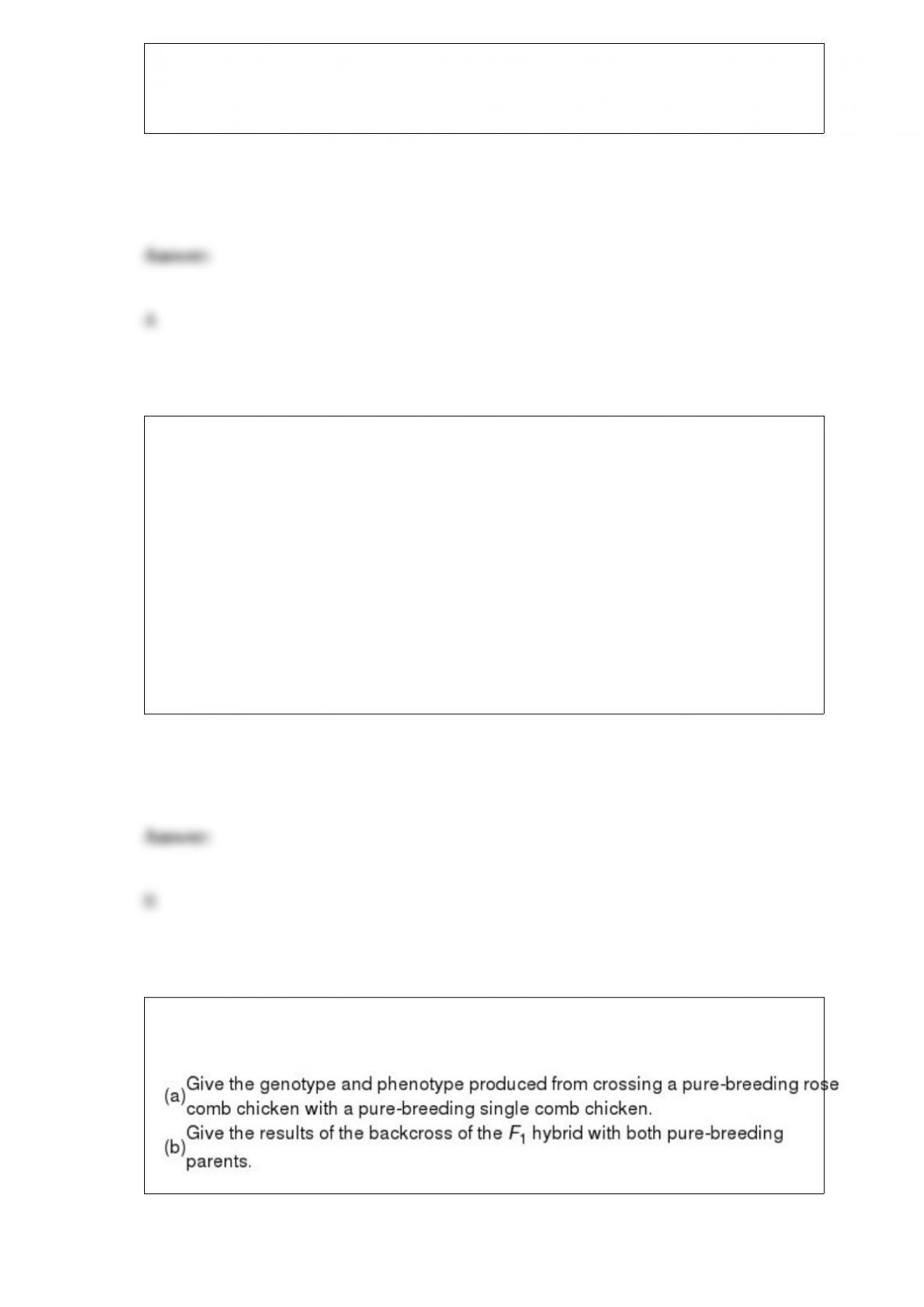
d. Jeon Kwang.
e. Lynn Margulis.
The endosymbiont hypothesis is supported by the work of ____ on bacteria-infected
Amoeba proteus.
a. Stanley Miller
b. Kwang Jeon
c. Thomas Brock
d. Lynn Margulis
e. Australian researchers
In poultry, rose comb is controlled by a dominant allele, and its recessive allele controls
single comb.

Select the best choice for the following statements in reference to the four groups of
protists listed below.
a. stramenopiles
b. amoebozoans
c. alveolates
d. parabasalids and diplomonads
The common amoeba, Amoeba proteus, is a member of this group.
cold response
Choose the one most appropriate answer for each.
a. do not maintain the same body temperature at all times; are capable of internal heat
production
b. heat energy is released to the air when liquid water converts to gaseous form
c. bulk flow of protein-free plasma from capillaries into Bowman’s capsule

d. animals with more or less constant body temperature
e. emission of heat from body surface when environmental temperature is lower than
the body temperature
f. movement of ions from peritubular capillaries into nephron tubules
g. loss of too much body heat
h. heat next to the body’s surface undergoes mass transport by air or water currents
i. active and passive transport of solutes from peritubular capillaries into the glomerular
capillaries
j. a long, slender, tubular unit in the vertebrate kidney that forms urine
k. body temperatures rise and fall with environmental changes
l. secreted by adrenal glands; influences sodium reabsorption
m. passive transport of water; active and passive transport of solutes out of the nephron
into peritubular capillaries
n. heat energy is transferred from high to low temperature regions due to collisions
between adjacent molecules
o. released from the posterior lobe of the pituitary in response to hypothalamic signals
p. toxic substances are extracted from blood circulating in cellophane tubes suspended
in a warm-water bath
q. erection of hairs and feathers by smooth muscles in the skin
If fermentation pathways follow glycolysis,
a. CO2 will be one of the products as pyruvate is converted to lactate.
b. the two NADH molecules produced during glycolysis will (depending on the
organism) be used to reduce pyruvate to either lactate or ethanol and CO2.

c. ATP will be required to convert pyruvate to either lactate or ethanol and CO2.
d. oxidative phosphorylation occurs either on the plasma membrane or on derivatives of
the plasma membrane.
e. none of these will occur.
Glyptodonts are fossil forms that resemble
a. ostriches.
b. armadillos.
c. kangaroos.
d. turtles.
e. sloths.
All of the following statements are true concerning phloem tissue EXCEPT that
a. it transports plant-manufactured products.
b. it stores organic compounds.
c. it is composed of living cells.

d. only some of its cells have nuclei.
e. it does not transport minerals.
Choose the one most appropriate answer for each.
a. gives rise to periderm
b. nucleate phloem cells that help load and unload the phloem
c. dead cells with perforation plates; more efficient at water conduction than other
xylem cells
d. living nonnucleated cells that conduct food from photosynthetic source area to
storage sink area
e. a cylinder of parenchyma cells outside the vascular tissue but inside the endodermis
f. clusters of strands containing xylem, phloem, and vascular cambium
g. dead cells without perforation plates; the principal xylem cells of nonflowering
vascular plants
h. cells with thick secondary walls impregnated with lignin that are especially abundant
in some fruits and seeds
i. the principal photosynthetic region of a leaf
j. regions that can undergo mitosis
k. gas exchange and storage plus photosynthesis
Pericycle

Speciation caused by a change in the course of a river is an example of ____ speciation.
a. divergent
b. parapatric
c. allopatric
d. convergent
e. sympatric
gastrula
Choose the one best answer for each numbered item.
a. visible marker of the site where an amphibian’s body axis will be established and
where gastrulation will begin
b. the formation of two or three embryonic tissue layers
c. the fusion of male and female nuclei
d. the entire body divides transversely; each half grows and regenerates the missing part
e. selective gene expression results in different cell types
f. subdividing of the zygote by mitosis; no growth occurs
g. region of zygote that has less yolk and is pigmented
h. an embryonic stage of development that has three primary tissue layers before

organogenesis begins
i. the formation of organs
j. one body part develops in response to signals from an adjacent part
k. the growth, shaping, and spatial coordination of tissues and organs so that a
predefined pattern of the whole organism results
l. occurs in the formation of the human hand
Which of these occurs during vigorous exercise?
a. ATP accumulation
b. actin depletion
c. lactate formation
d. glycogen buildup
e. creatine phosphate formation
The flow of nutrients through living organisms is best characterized as
a. circular.

b. a ladder.
c. a web.
d. one way.
e. a funnel.
Before messenger RNA is mature,
a. all exons are deleted and removed.
b. a cap and a tail are provided.
c. anticodons are assembled.
d. the transfer RNA transfers the messenger RNA to the ribosome.
e. the single RNA strand duplicates itself in much the same way as DNA.
Caring for young by both parents is most common in
a. birds.
b. amphibians.
c. mammals.

d. reptiles.
e. amphibians and reptiles.
Which of the following parts of angiosperms is not a food source?
a. roots.
b. fruits.
c. shoots.
d. nectar.
e. all of these are food sources.
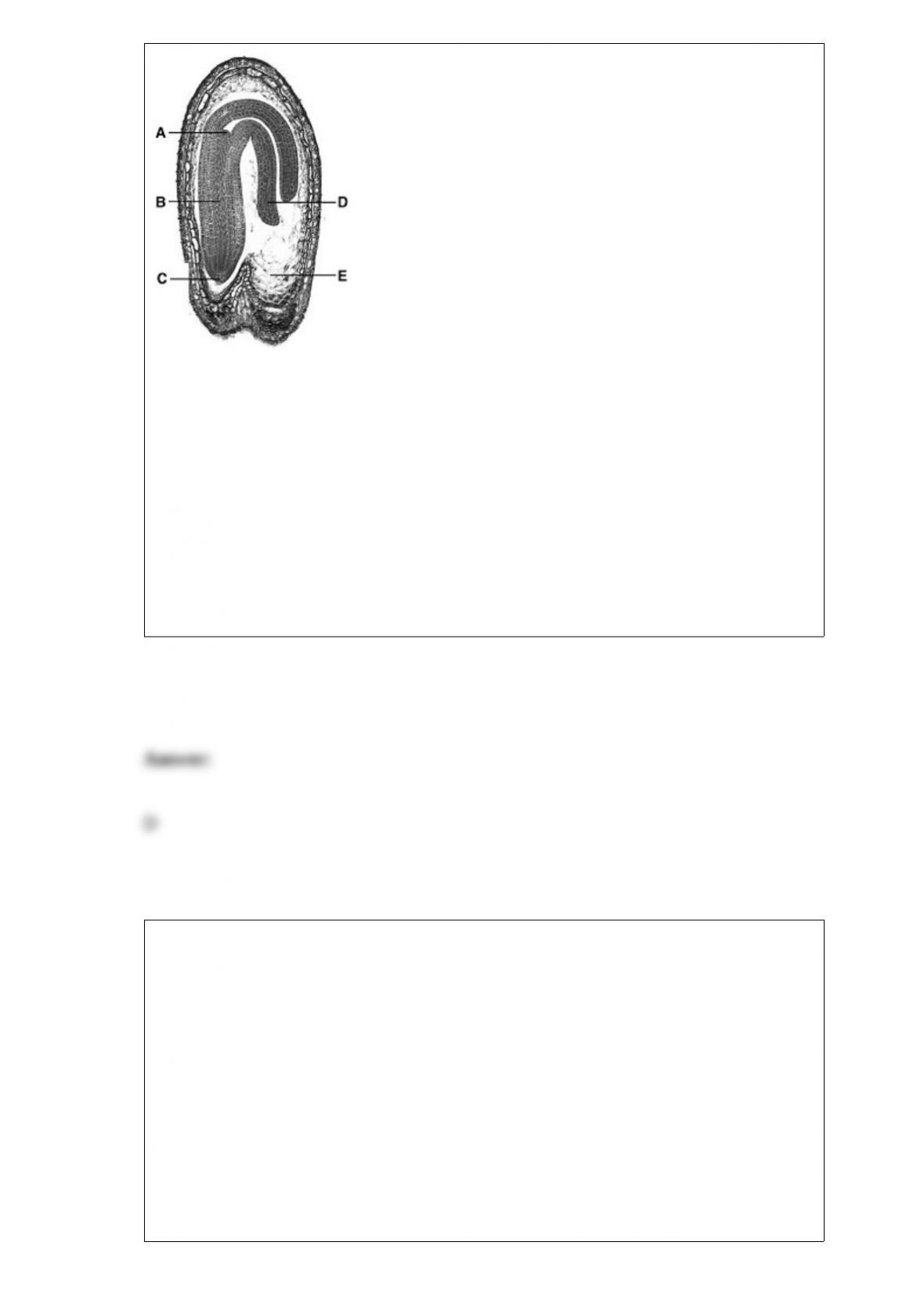
A cotyledon is indicated by
a. A.
b. B.
c. C.
d. D.
e. E.
Respond to the following statements with reference to the five trophic categories listed
below.
a. producer
b. primary consumer
c. secondary consumer
d. tertiary consumer
e. decomposer
Most fungi function as this.
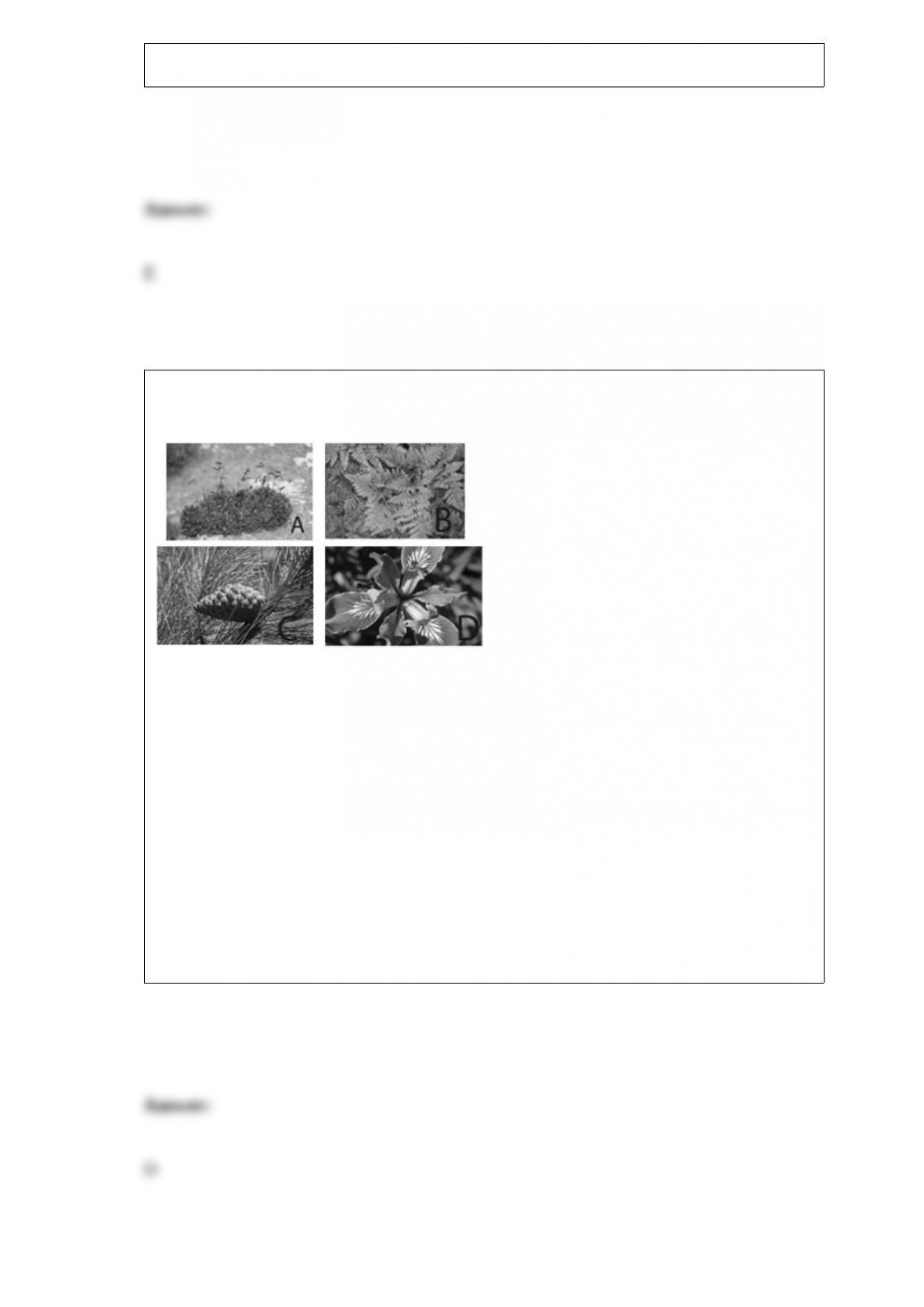
The following questions refer to the figure above.
Which of the photographs in the above figure represents the angiosperms?
a. moss
b. fern
c. conifer
d. monocot
e. all of these

Proximity of capillaries to tissue cells is crucial because
a. bulk flow operates to move protein-free plasma through clefts between endothelial
cells.
b. red cells have to squeeze single file through capillaries.
c. some proteins exit capillaries by endocytosis and exocytosis.
d. this is where nutrient and waste exchange occur.
e. all of these are true.
Which of the following is a deforested area more likely to experience?
a. nutrient poor soils.
b. soil loss.
c. loss of species diversity.
d. warmer temperatures.
e. all of these.
The least inclusive of the taxonomic categories listed here is

a. family.
b. phylum.
c. class.
d. order.
e. genus.
Answer the following questions using the group of answers below.
a. 4
b. 6
c. 8
d. 12
e. 24
In a dihybrid cross between a parent that is a double heterozygote (Aa Bb) and a parent
that is homozygous dominant for one gene and heterozygous for the other (AA Bb), how
many unique genotypes potentially will be present in their offspring?
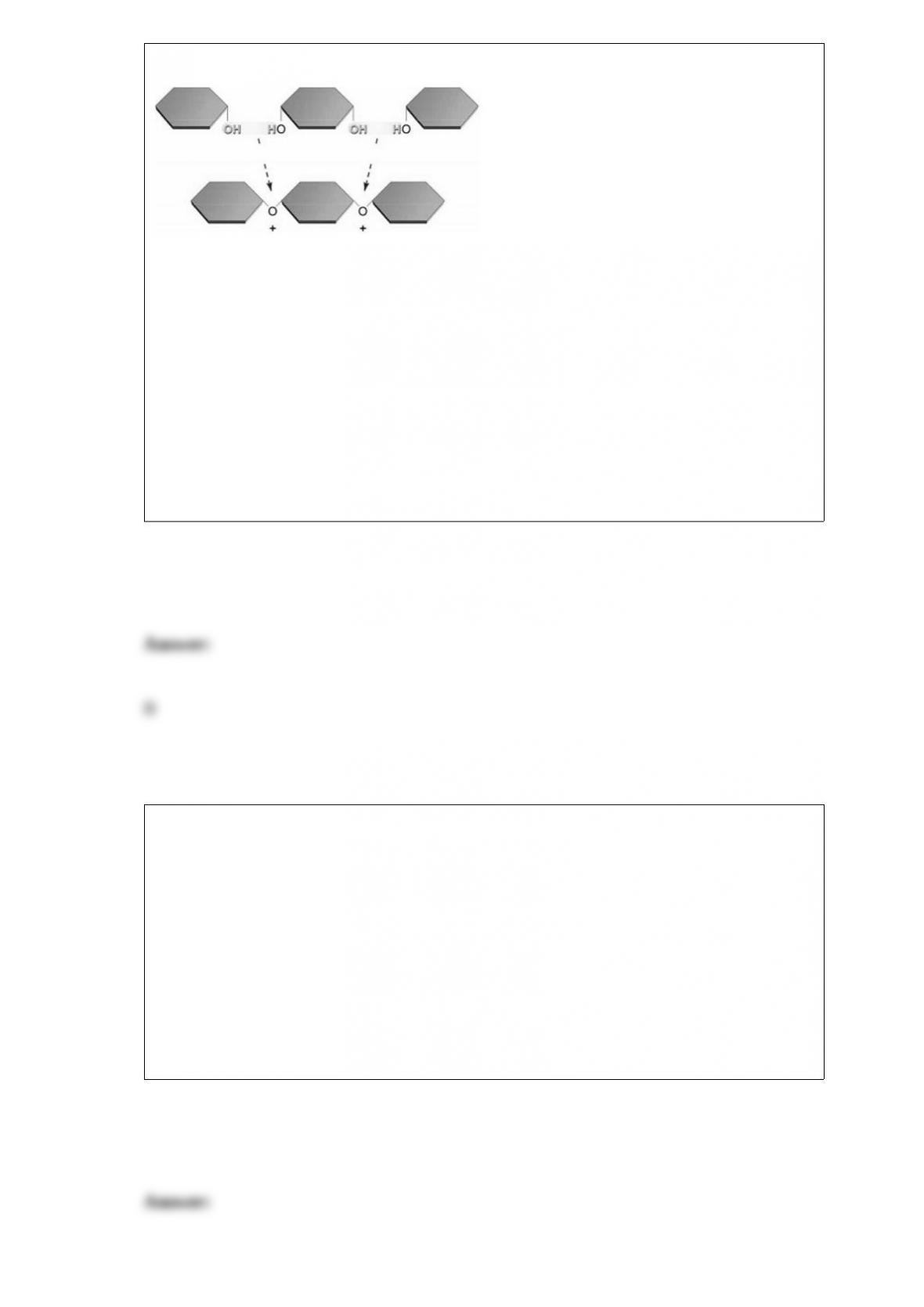
The figure above illustrates a ____ reaction that produces two _____ and a ____.
a. condensation; hydroxyls; polymer
b. condensation; water molecules; polymer
c. cleavage; water molecules; monomer
d. rearrangement; water molecules; polymer
e. rearrangement; hydrogen ions; polymer
Which of the following is not an environmental cue for plants?
a. Length of night.
b. Temperature.
c. Earth’s magnetic field.
d. Presence of pathogens.
e. Gravity.

Which of the following is the least successful method of birth control?
a. early withdrawal
b. a condom alone
c. a spermicidal jelly or foam alone
d. douching
e. the Pill
Which pigment(s) is(are) characteristic of chlorophytes?
a. chlorophyll a
b. phycobilins
c. chlorophyll b
d. phycoerythrins
e. chlorophylls a and b

vas deferens
Choose the one most appropriate answer for each.
a. acts to trigger ovulation in females
b. structures that secrete mucus and nutrients absorbable by sperm; open into the
ejaculatory duct
c. forms as an outgrowth of the yolk sac; becomes part of umbilical cord and urinary
bladder
d. a drug that causes severely deformed arms and legs in developing embryos
e. two of these connect seminiferous tubules with vasa deferentia
f. opening between uterus and vagina
g. organ that supplies the embryo/fetus with nutrients and removes wastes
h. connects epididymis with ejaculatory duct
i. hormones that stimulate uterine contractions in the female
j. cap over the head of a sperm; contains lytic enzymes to penetrate egg membranes
k. inner cell mass plus trophoblast; attaches to uterine wall
l. testosterone produced here
m. sensitive to sexual stimulation; develops from same embryonic tissues as does the
penis in males
n. the uterine lining
o. acts on gonad to help mature gametes; released from anterior lobe of pituitary
Seed banks
a. provide a source of seeds for farmers.
b. preserve seeds for museums.
c. preserve plant genetic diversity to be tapped by genetic engineers.
d. distribute seeds to member seed companies.
e. do all of these.
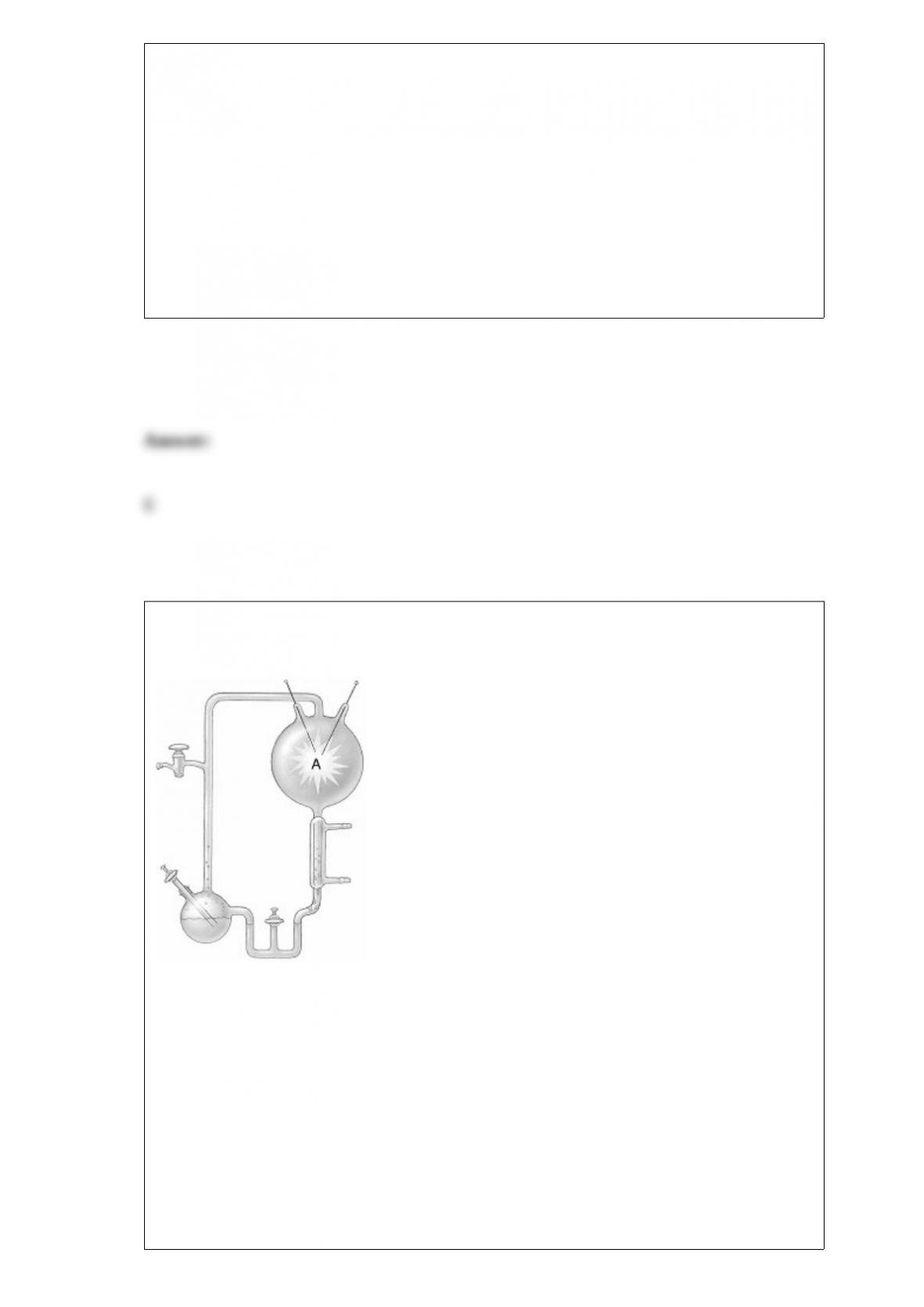
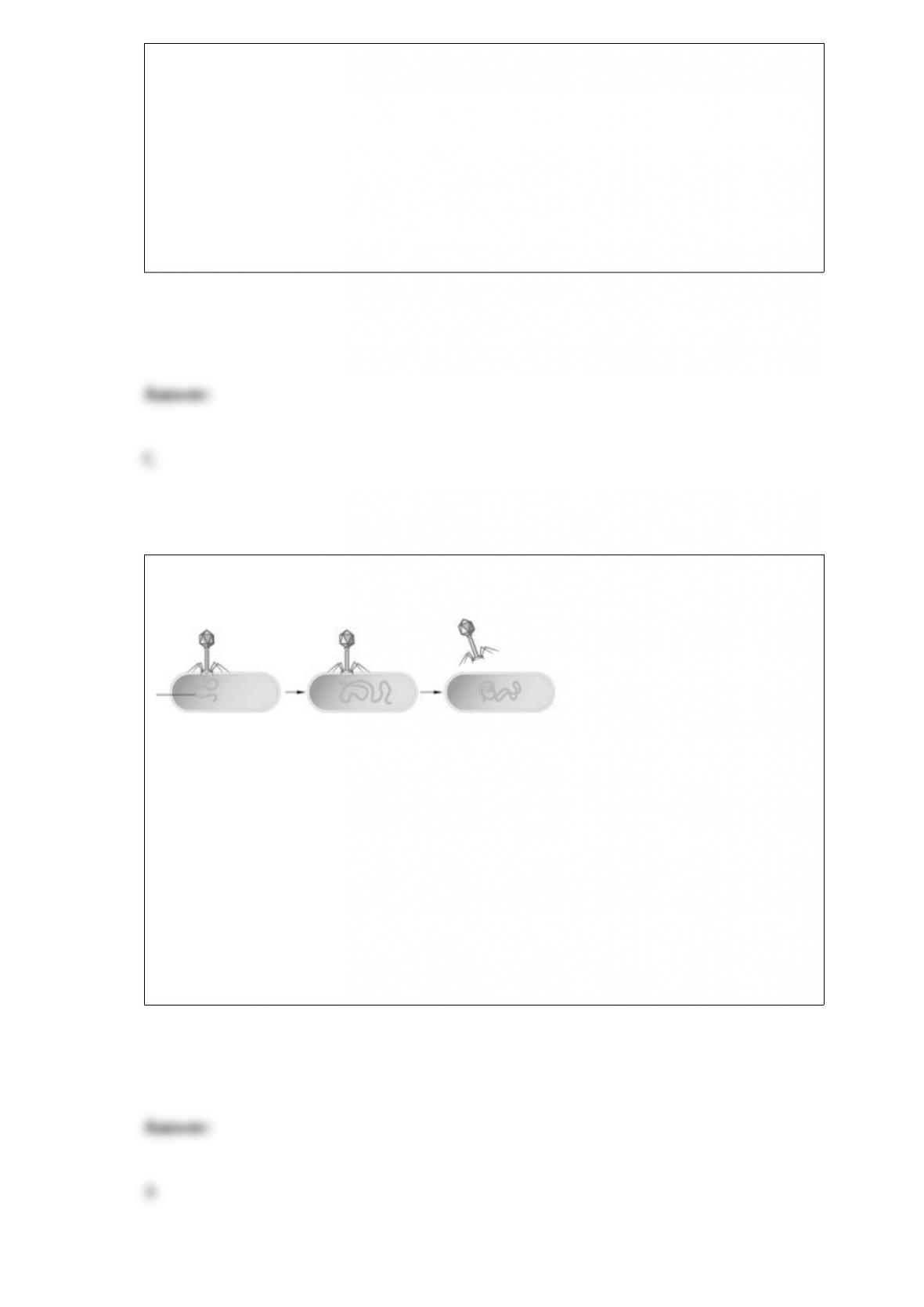
The concept proven by the experiment in this figure is that
a. protein is not the encoding material.
b. protein enters the host cell.
c. protein denatures due to radiation.
d. protein is composed of subunits with phosphate.
e. all of these are correct.

If you skip a meal, which of the following conditions will prevail?
a. Insulin levels will rise.
b. Glucagon levels will rise.
c. Glycogen will be converted to glucose.
d. Insulin levels will rise, and glycogen will be converted to glucose.
e. Glucagon levels will rise, and glycogen will be converted to glucose.
__________ are proteins, Y-shaped antigen receptors made only by __________ cells.
__________ refers to an individual’s observable traits.

__________ are multiple copies of a short DNA sequence that follow one another along
a chromosome.
Most animals on land have __________ fertilization; gametes meet in a female’s body.
A population’s __________ is the average number of children born to women during
their reproductive years.
Explain why the autonomic nervous system could also be called the involuntary
nervous system?

Deviations from __________ indicate that a population is evolving.
Long-term exposure to cold can alter metabolism and encourage __________ in which
brown adipose tissue produces heat.
Explain why grandsons of boys who survived a famine lived longer than grandsons of
boys who did not experience the famine?
Why does vascular cambium produce annual rings in xylem but not in phloem?
Why are viruses not considered to be alive?
___________, such as sea stars, are invertebrate members of the deuterostome lineage.
If black fur color is controlled by a dominant allele (B) and brown by its recessive allele
(b), give the genotypes of the parents and offspring of a cross of a black male with a
brown female that produces 1/2 black offspring and 1/2 brown offspring.
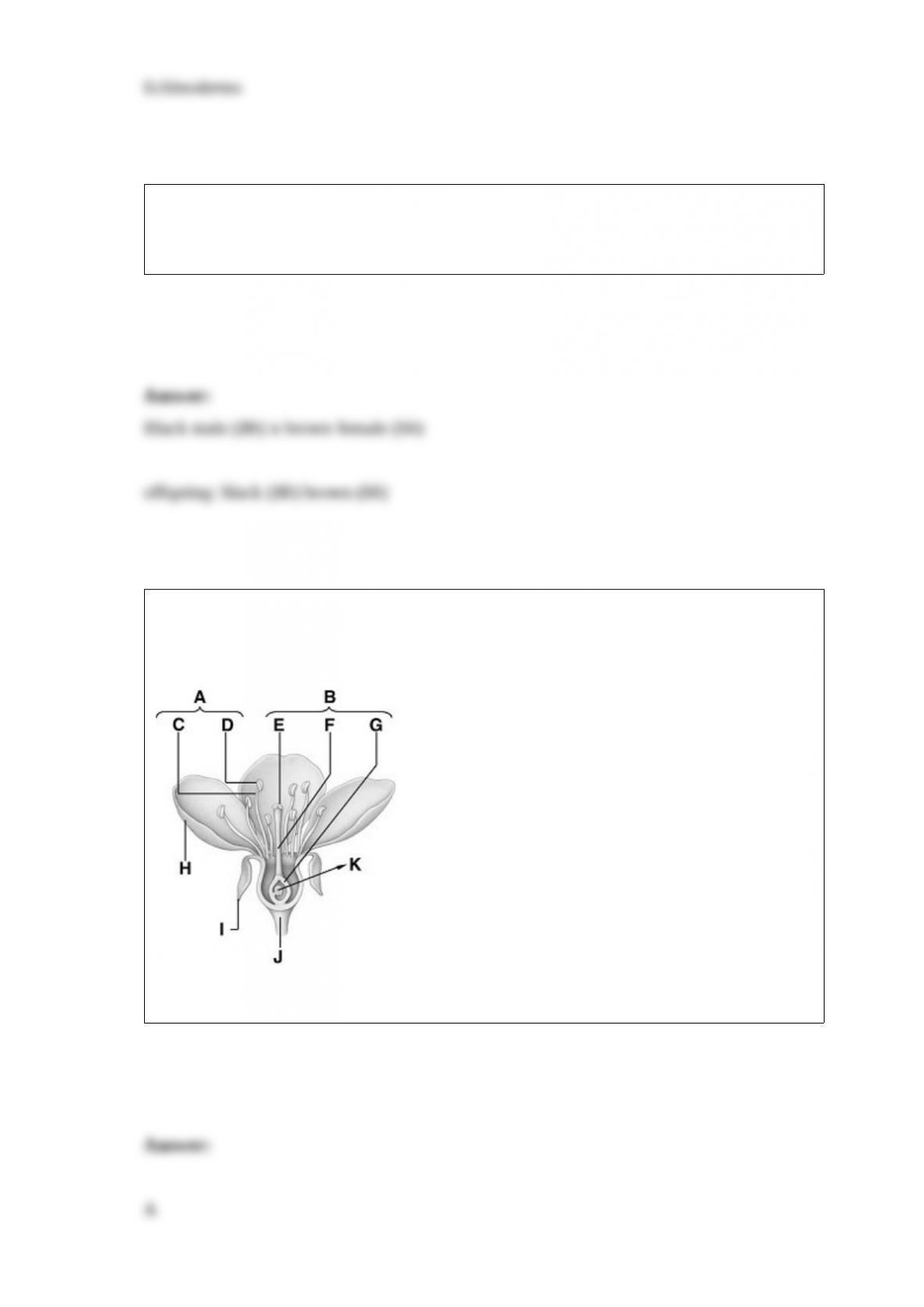
Labeling.
Stamen
Golgi body
The 3 types of horizontal gene flow that occur in bacteria are __________,
__________, and __________.
As males and females age they produce lower volumes of sex hormones. For women,
taking testosterone to increase libido in becoming more common. Why is the same not
common for males?

Provide evidence to both support and refute the current existence of life on Mars?