
What is the biological significance of genetic diversity between populations?
A) Genes for traits conferring an advantage to local conditions make microevolution
possible.
B) The population that is most fit would survive by competitive exclusion.
C) Genetic diversity allows for species stability by preventing speciation.
D) Diseases and parasites are not spread between separated populations.
How many electrons are involved in a double covalent bond?
A) one
B) two
C) three
D) four

The activation of the parasympathetic branch of the autonomic nervous system is
associated with _____.
A) resting and digesting
B) release of epinephrine into the blood
C) increased metabolic rate
D) intensive aerobic exercise
In a developing frog embryo, most of the yolk is _____.
A) located near the animal pole
B) located near the vegetal pole
C) found within the cleavage furrow
D) distributed equally throughout the embryo
Use the following information when answering the corresponding question(s).
Rhodopsins are light-sensitive molecules composed of a protein (opsin) and retinal
(derivative of vitamin A). Opsin is a membrane protein with several α-helical segments
that loop back and forth through the plasma membrane. There are two classes of
rhodopsins. According to Oded Beje, one class has relatively slow dynamics (a

photocycle of approximately 0.5 second) and is well suited for light detection. The
second class has faster dynamics (a photocycle of approximately 0.02 seconds) and is
well suited for chemiosmosis: pumping of protons or chloride ions across cell
membranes. Oded Beje was the first, in September 2000, to report on a rhodopsin
(proteorhodopsin) found in the domain Bacteria. [SOURCE: O. Beje et al., Science 289
(2000): 1902.]
Proteorhodopsin consists of a single polypeptide chain. What is the highest level of
structure found in this protein?
A) primary
B) secondary
C) tertiary
D) quaternary
What property of steroid hormones allows them to cross the phospholipid bilayer?
A) Steroid hormones are lipid soluble and easily cross the phospholipid bilayer.
B) Steroid hormones can act in very small concentrations and very few molecules of
steroids need to cross the lipid bilayer.
C) Steroid hormones act on cells close to where they were produced and very few
molecules are required to travel such a short distance to cross the lipid bilayer.
D) Steroid hormones act on the same cells in which they are produced and, therefore,
are within the cell they are acting upon.

You have two beakers. One contains pure water, the other contains pure methanol
(wood alcohol). The covalent bonds of methanol molecules are nonpolar, so there are
no hydrogen bonds among methanol molecules. You pour crystals of table salt (NaCl)
into each beaker. Predict what will happen.
A) Equal amounts of NaCl crystals will dissolve in both water and methanol.
B) NaCl crystals will not dissolve in either water or methanol.
C) NaCl crystals will dissolve readily in water but will not dissolve in methanol.
D) NaCl crystals will dissolve readily in methanol but will not dissolve in water.
A patient was involved a serious accident and lost a large quantity of blood. In an
attempt to replenish body fluids, distilled waterequal to the volume of blood lostis
added to the blood directly via one of his veins. What will be the most probable result
of this transfusion?
A) The patient’s red blood cells will shrivel up because the blood has become hypotonic
compared to the cells.
B) The patient’s red blood cells will swell and possibly burst because the blood has
become hypotonic compared to the cells.
C) The patient’s red blood cells will shrivel up because the blood has become
hypertonic compared to the cells.
D) The patient’s red blood cells will burst because the blood has become hypertonic
compared to the cells.
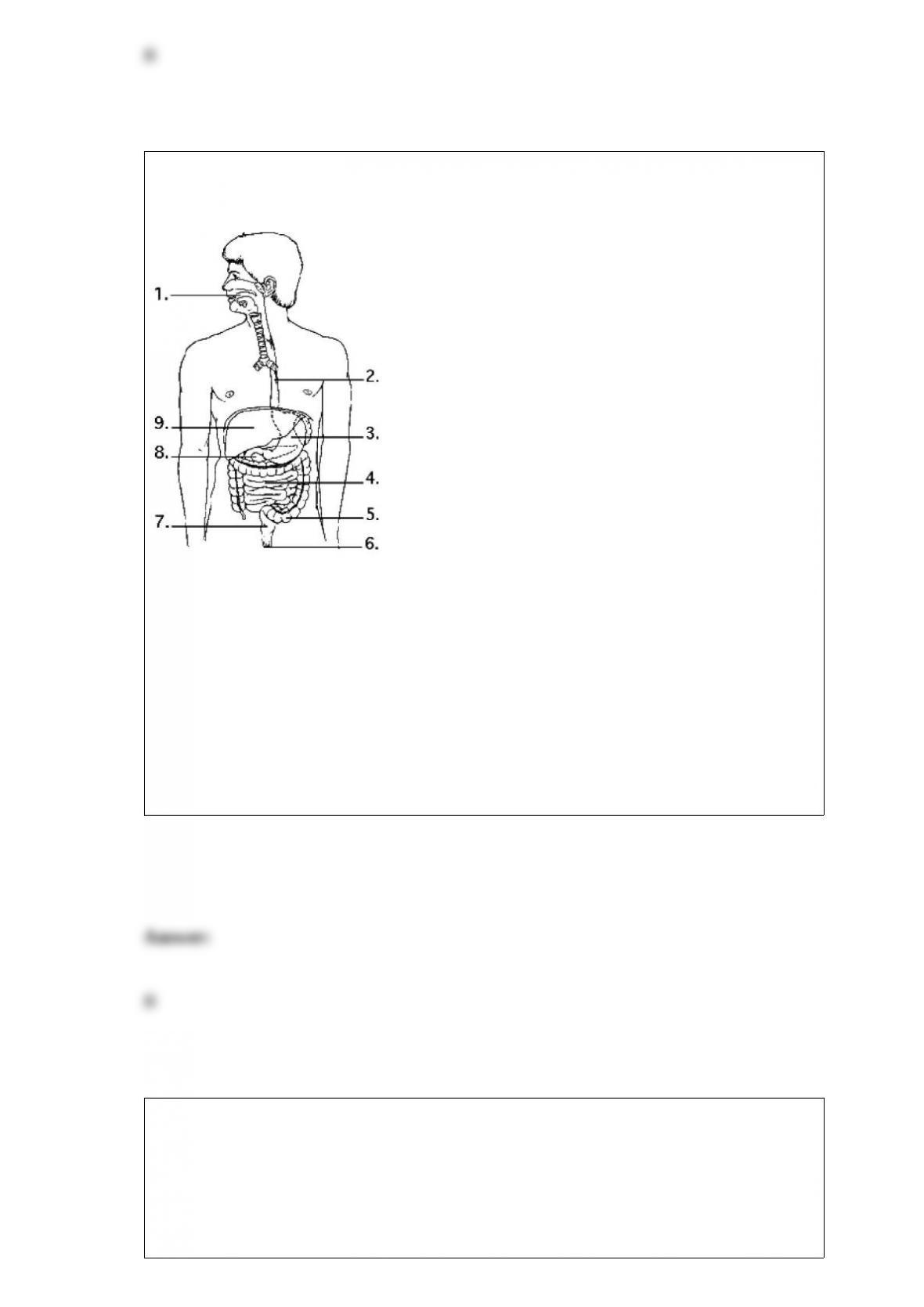
Examine the digestive system structures in the figure above. The highest rate of nutrient
absorption occurs at location_____.
A) 1
B) 4
C) 5
D) 8
The ability of some viruses to remain inactive (latent) for a period of time is
exemplified by _____.
A) influenza, a particular strain of which returns every 10-20 years
B) herpes simplex viruses (oral or genital) whose reproduction is triggered by

physiological or emotional stress in the host
C) Kaposi’s sarcoma, which causes a skin cancer in people with AIDS but rarely in
those not infected by HIV
D) the virus that causes a form of the common cold, which recurs in patients many
times in their lives
An embryo with meroblastic cleavage, extraembryonic membranes, and a primitive
streak must be that of _____.
A) an insect
B) an amphibian
C) a bird
D) a sea urchin
What is the main structural difference between enveloped and nonenveloped viruses?
A) Enveloped viruses have their genetic material enclosed by a layer made only of
protein.
B) Nonenveloped viruses have only a phospholipid membrane, while enveloped viruses
have two membranes, the other one being a protein capsid.

C) Enveloped viruses have a phospholipid membrane outside their capsid, whereas
nonenveloped viruses do not have a phospholipid membrane.
D) Both types of viruses have a capsid and phospholipid membrane; but in the
nonenveloped virus the genetic material is between these two membranes, while in the
enveloped virus the genetic material is inside both membranes.
Which of the following steps has yet to be accomplished by scientists studying the
origin of life?
A) synthesis of small RNA polymers by ribozymes
B) abiotic synthesis of polypeptides
C) formation of molecular aggregates with selectively permeable membranes
D) formation of protocells that use DNA to direct the polymerization of amino acids
Arthropod exoskeletons and mollusk shells both _____.
A) completely replace the hydrostatic skeleton
B) are secreted by the mantle
C) help retain moisture in terrestrial habitats
D) are comprised of the polysaccharide chitin

What type of signal is brief and can work among obstructions at night?
A) olfactory
B) visual
C) auditory
D) magnetic
To reproduce, many plants produce seeds’structures containing embryonic offspring
along with nutrients inside a tough case. These offspring develop after being released
by the parent plant. To which animal reproductive strategy is seed production most
comparable?
A) oviparous reproduction
B) ovoviviparous reproduction
C) viviparous reproduction

The cells involved in innate immunity, whose absence increases the chances of
developing malignant tumors, are _____.
A) cytotoxic T cells
B) natural killer cells
C) macrophages
D) B cells
Anchorage dependence of animal cells in vitro or in vivo depends on which of the
following?
A) attachment of spindle fibers to centrioles
B) response of the cell cycle controls to signals from the plasma membrane
C) the binding of cell-surface phospholipids to those of adjoining cells
D) response of the cell cycle controls to the binding of cell-surface phospholipids
Which of the following is a potential advantage of introducing apomixis into hybrid
crop species?

A) Cultivars would be better able to cope with a rapidly changing environment.
B) They would have a larger potential genome than inbred crops.
C) All of the desirable traits of the cultivar would be passed on to offspring.
D) They would benefit from positive mutations in their DNA.
When Stanley Miller applied heat and electrical sparks to a mixture of simple inorganic
compounds such as methane, hydrogen gas, ammonia, and water vapor, what
compounds were produced?
A) only simple organic compounds such as formaldehyde and cyanide
B) mostly hydrocarbons
C) only simple inorganic compounds
D) simple organic compounds, amino acids, and hydrocarbons
Telomere shortening puts a limit on the number of times a cell can divide. Research has
shown that telomerase can extend the life span of cultured human cells. How might
adding telomerase affect cellular aging?
A) Telomerase will speed up the rate of cell proliferation.
B) Telomerase eliminates telomere shortening and retards aging.
C) Telomerase shortens telomeres, which delays cellular aging.
D) Telomerase would have no effect on cellular aging.
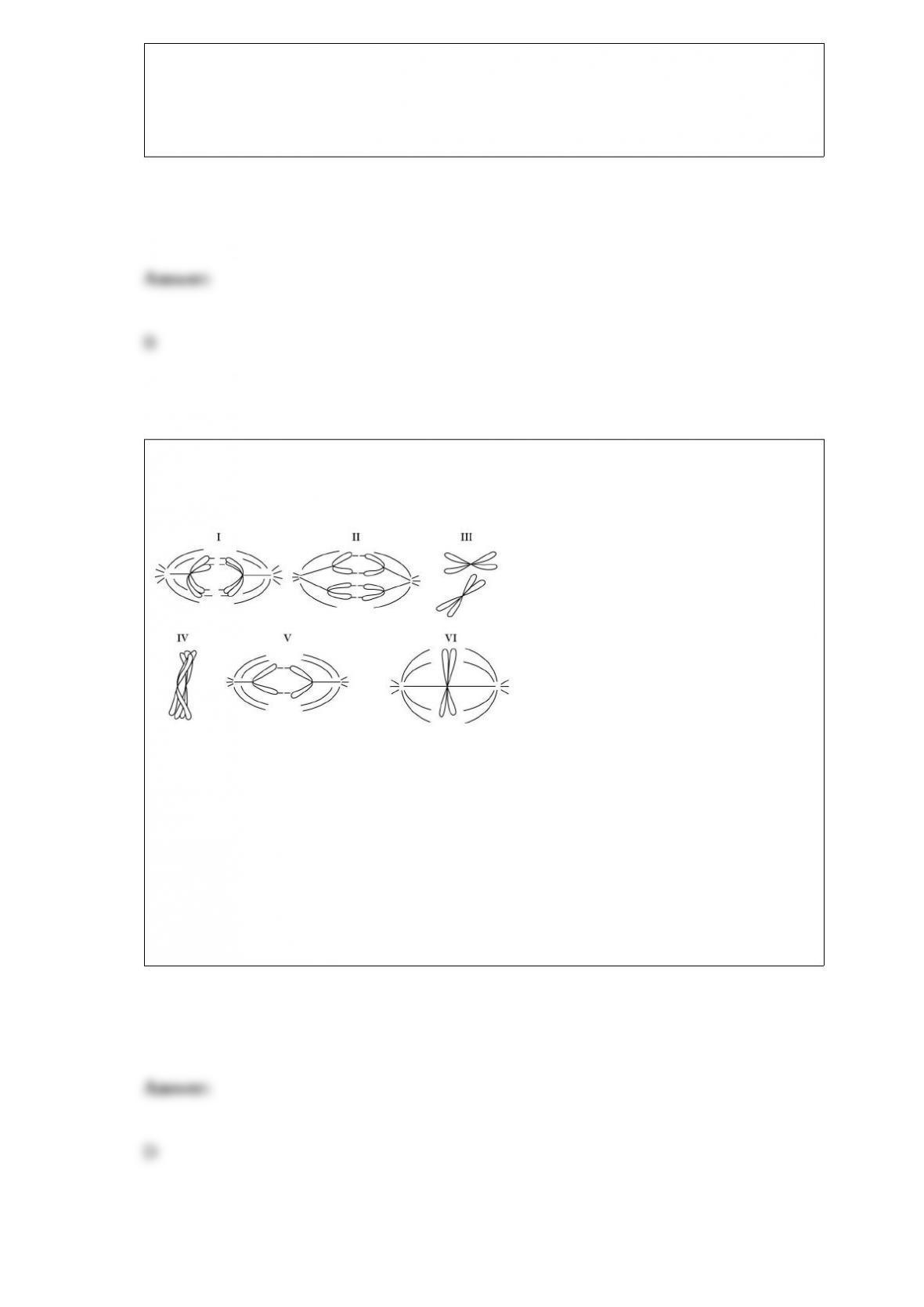
Refer to the drawings in the figure below of a single pair of homologous chromosomes
as they might appear during various stages of either mitosis or meiosis, and answer the
following questions.
Which diagram represents anaphase II of meiosis?
A) I
B) III
C) IV
D) V

You have captured a number of rats from a wild population and quickly surmise with
tests that they are very good at avoiding food with poisons. What would best explain
this observation?
A) Rats are probably just intelligent enough to avoid poison.
B) Rats may experience a large variety of toxins in their environment and learn to avoid
them.
C) Rats are taught by their parents to test small bits of food first and then return later if
the food seems safe.
D) Rats may be able to tolerate large amounts of poison.
At which phase are centrioles beginning to move apart in animal cells?
A) anaphase
B) prometaphase
C) metaphase
D) prophase
When the Bicoid protein is expressed in Drosophila, the embryo is still syncytial
(divisions between cells are not yet fully developed). This information helps to explain
which observation by Nsslein-Volhard and Wieschaus?

A) mRNA from the egg is translated into the Bicoid protein.
B) Bicoid protein diffuses throughout the embryo in a concentration gradient.
C) Bicoid protein serves as a transcription regulator.
D) Bicoid protein determines the dorsoventral axis of the embryo.
The absorption of fats differs from that of carbohydrates in that _____.
A) fat absorption primarily occurs in the stomach, whereas carbohydrates are absorbed
from the small intestine
B) carbohydrates need to be emulsified before they can be digested, whereas fats do not
C) most absorbed fat first enters the lymphatic system, whereas carbohydrates directly
enter the blood
D) fats, but not carbohydrates, are digested by bacteria before absorption
How might an ecologist test whether a species is occupying all of its fundamental niche
or only a portion of it?
A) Study the temperature range and humidity requirements of the species.
B) Observe if the niche size changes after the introduction of a similar non-native

species.
C) Measure the change in reproductive success when the species is subjected to
environmental stress.
D) Observe if the species expands its range after the removal of a competitor.
Which of the following statements are correct?
I) Hormones often regulate homeostasis through antagonistic functions.
II) Hormones of the same chemical class usually have the same function.
III) Hormones are secreted by specialized cells usually located in exocrine glands.
IV) Hormones are often regulated through feedback loops.
A) only II and III
B) only I and III
C) only III and IV
D) only I and IV
Use the following figure to answer the questions below.
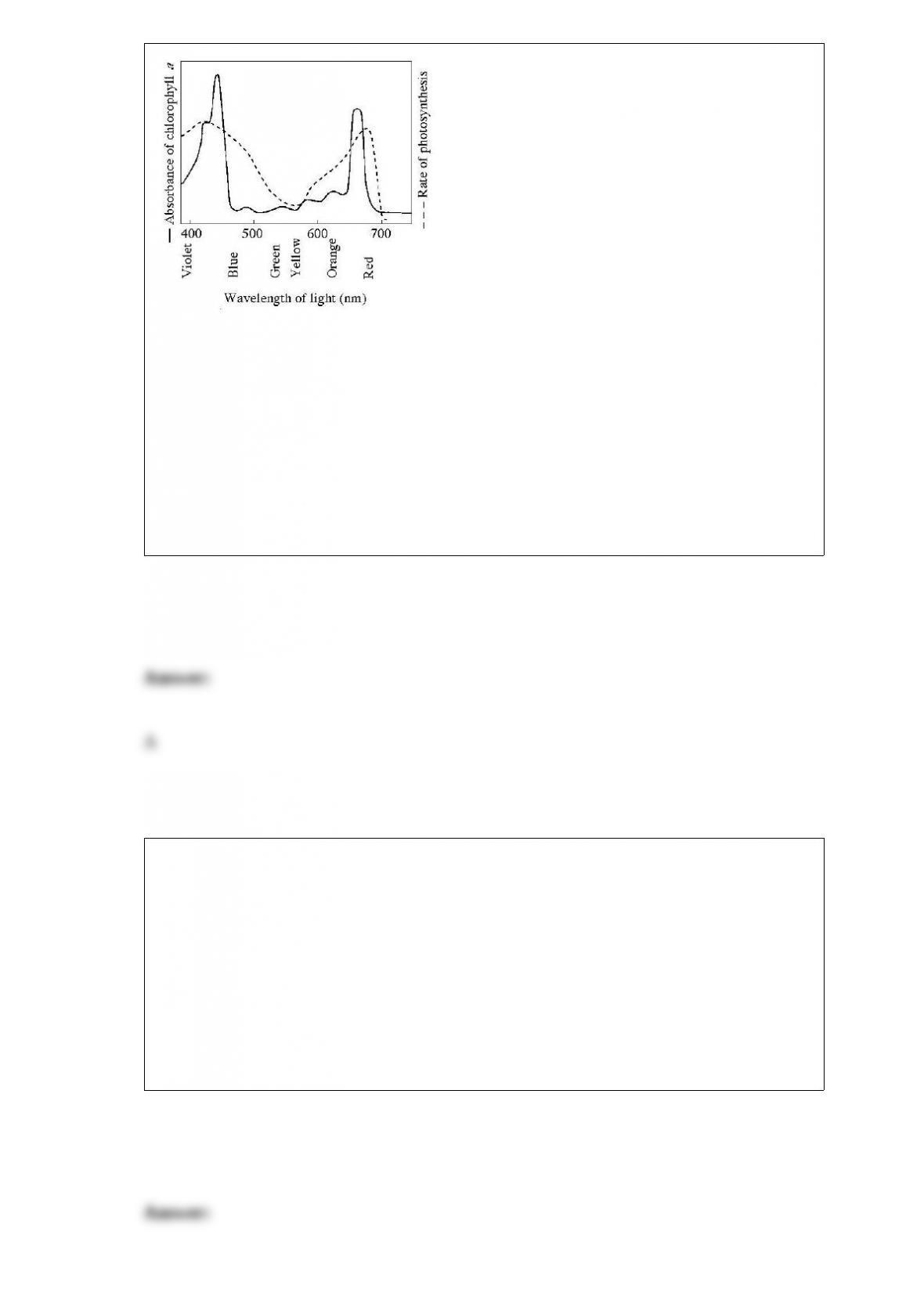
What wavelength of light in the figure is most effective in driving photosynthesis?
A) 420 mm
B) 575 mm
C) 625 mm
D) 730 mm
Which of the following aspects of eukaryotic reproduction are found only among
invertebrate animals?
A) sexual and asexual reproduction
B) external and internal fertilization
C) hermaphroditism and parthenogenesis
D) fission and budding

Which of the following sequences is most likely to be cut by a restriction enzyme?
A) AATTCT
TTAAGA
B) AATATT
TTATAA
C) AAAATT
TTTTAA
D) ACTACT
TGATGA