
Which of the following calculations require that you utilize the addition rule?
A) Calculate the probability of black offspring from the cross AaBb x AaBb, where B is
the symbol for black.
B) Calculate the probability of children with both cystic fibrosis and polydactyly when
parents are each heterozygous for both genes.
C) Calculate the probability of each of four children having cystic fibrosis if the parents
are both heterozygous.
D) Calculate the probability of a child having either sickle-cell anemia or cystic fibrosis
if parents are each heterozygous for both.
For a science fair project, two students decided to repeat the Hershey and Chase
experiment, with modifications. They decided to label the nitrogen of the DNA, rather
than the phosphate. They reasoned that each nucleotide has only one phosphate and two
to five nitrogens. Thus, labeling the nitrogens would provide a stronger signal than
labeling the phosphates. Why won’t this experiment work?
A) There is no radioactive isotope of nitrogen.
B) Radioactive nitrogen has a half-life of 100,000 years, and the material would be too
dangerous for too long.
C) Although there are more nitrogens in a nucleotide, labeled phosphates actually have
sixteen extra neutrons; therefore, they are more radioactive.
D) Amino acids (and thus proteins) also have nitrogen atoms; thus, the radioactivity
would not distinguish between DNA and proteins.

The developmental precursors to the gonadal tissues of Caenorhabditis elegans
uniquely contain _____.
A) proteins of maternal origin
B) high concentrations of potassium ions
C) T tubules for the propagation of action potentials
D) P granules of mRNA and protein
Which of the following is most likely associated with the evolution of mating systems?
A) population density
B) territoriality
C) certainty of paternity
D) sexual dimorphism
Assume that some members of an aquatic species of motile, photosynthetic protists
evolve to become parasitic to fish. They gain the ability to live in the fish gut, absorbing
nutrients as the fish digests food. Over time, which of the following phenotypic changes
would you expect to observe in this population of protists?

A) loss of motility
B) loss of chloroplasts
C) gain of a rigid cell wall
D) gain of meiosis
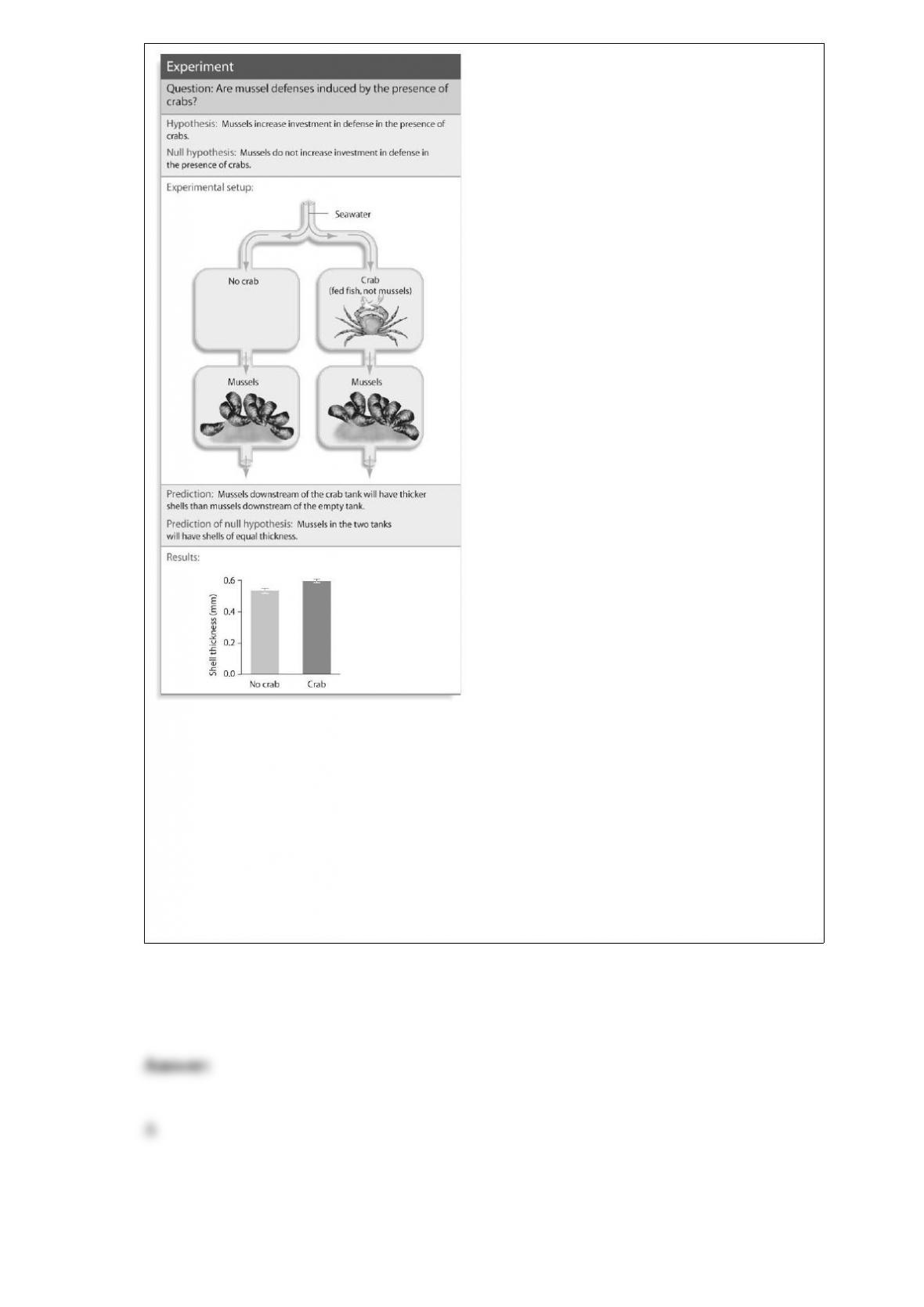
What conclusion can you draw from the figure above?
A) Without direct contact, mussels can sense the presence of crabs.
B) Mussels can sense the presence of crabs only visually.
C) Mussels are increasing their shell thickness in response to water current.
D) Crabs hunt for mussels by focusing on the chemicals they emit into the water.

The active site of an enzyme is the region that _____.
A) binds allosteric regulators of the enzyme
B) is involved in the catalytic reaction of the enzyme
C) binds noncompetitive inhibitors of the enzyme
D) is inhibited by the presence of a coenzyme or a cofactor
What is the greatest benefit of having used a testcross for this experiment?
A) The homozygous recessive parents are obvious to the naked eye.
B) The homozygous parents are the only ones whose crossovers make a difference.
C) The phenotypes of the progeny reveal the allelic content of the gamete from the
heterozygous parent.
D) All of the progeny will be heterozygous.
Which principle of heat exchange is the most important explanation for why birds look
larger in colder weather because they fluff their feathers?
A) Fluffing feathers results in less cooling by radiation because feathers emit less
infrared radiation than other tissues do.

B) Fluffing decreases the amount of heat lost by conduction when the bird makes
contact with cold objects in its environment.
C) Fluffing creates a pocket of air near the bird that acts as insulation.
D) Fluffing decreases the surface-area-to-volume ratio, thus decreasing the amount of
heat lost to the environment.
Besides the ability of some cancer cells to overproliferate, what else could logically
result in a tumor?
A) changes in the order of cell cycle stages
B) lack of appropriate cell death
C) inability to form spindles
D) inability of chromosomes to meet at the metaphase plate
Not long ago, it was believed that a count of the number of protein-coding genes would
provide a count of the number of proteins produced in any given eukaryotic species.
This is incorrect, largely due to the discovery of widespread _____.
A) chromatin condensation control
B) transcriptional control
C) alternative splicing
D) translational control
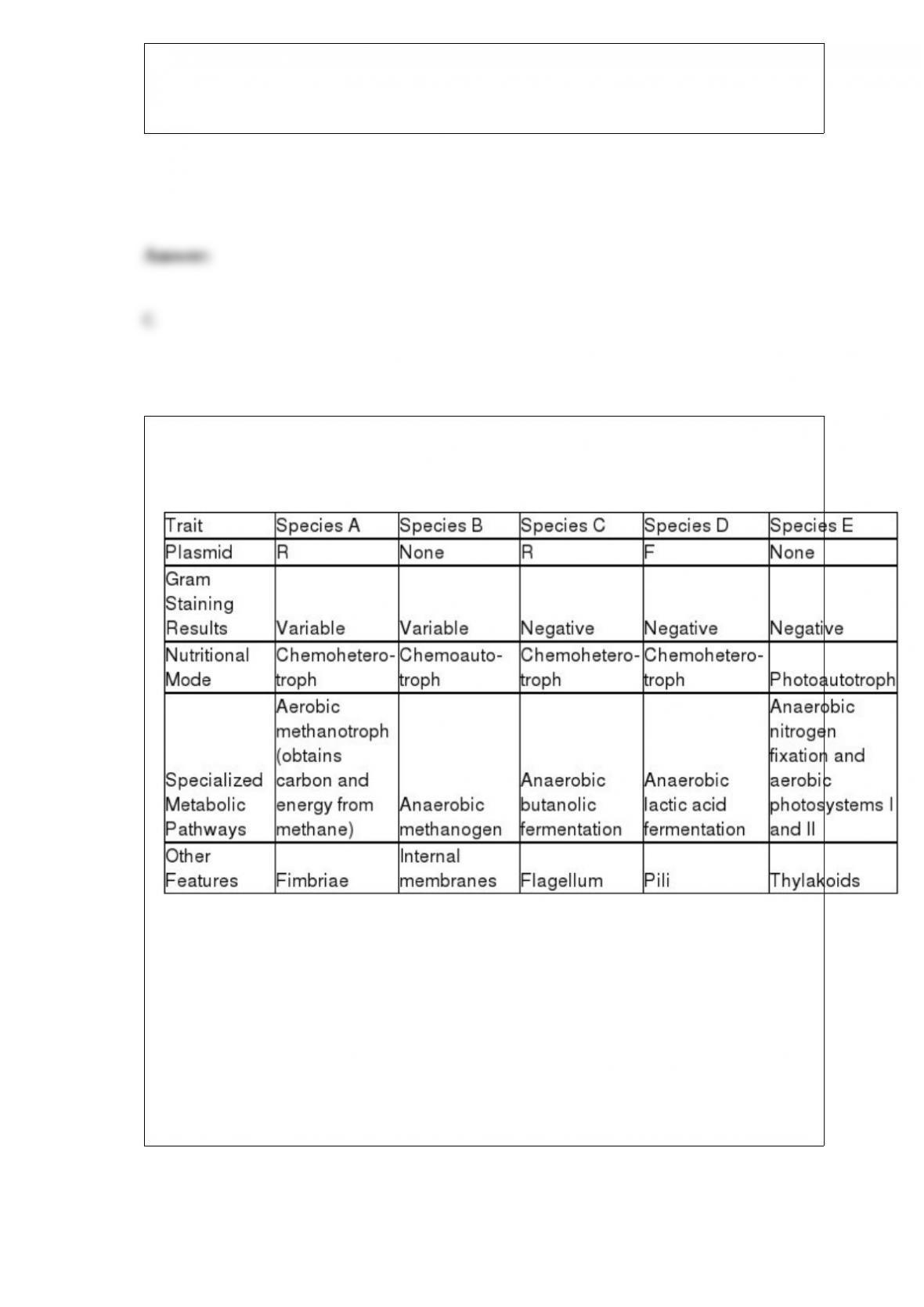
The following table depicts characteristics of five prokaryotic species (A-E). Use the
information in the table to answer the question(s) below
Which species might be able to include Hfr cells?
A) species A
B) species B
C) species C
D) species D

Experiments with genetically altered mice showed that the mice would consume
abnormally high amounts of bitter-tasting compounds in water after their _____.
A) hormone receptors for digestive hormones were reduced or eliminated, showing that
bitter tastes are reinforced by digestive responses
B) salt-taste cells were altered to express receptors for bitter tastants, suggesting that
animals have unregulated salt appetites
C) visual sense was reduced or eliminated, suggesting that mice learn visual cues about
bitter tastes
D) sweet-taste cells were altered to express receptors for bitter tastants, suggesting that
the sensation of taste depends only on which taste cell is stimulated
Most of the CO2 from the catabolism of glucose is released during _____.
A) glycolysis
B) electron transport
C) chemiosmosis
D) the citric acid cycle
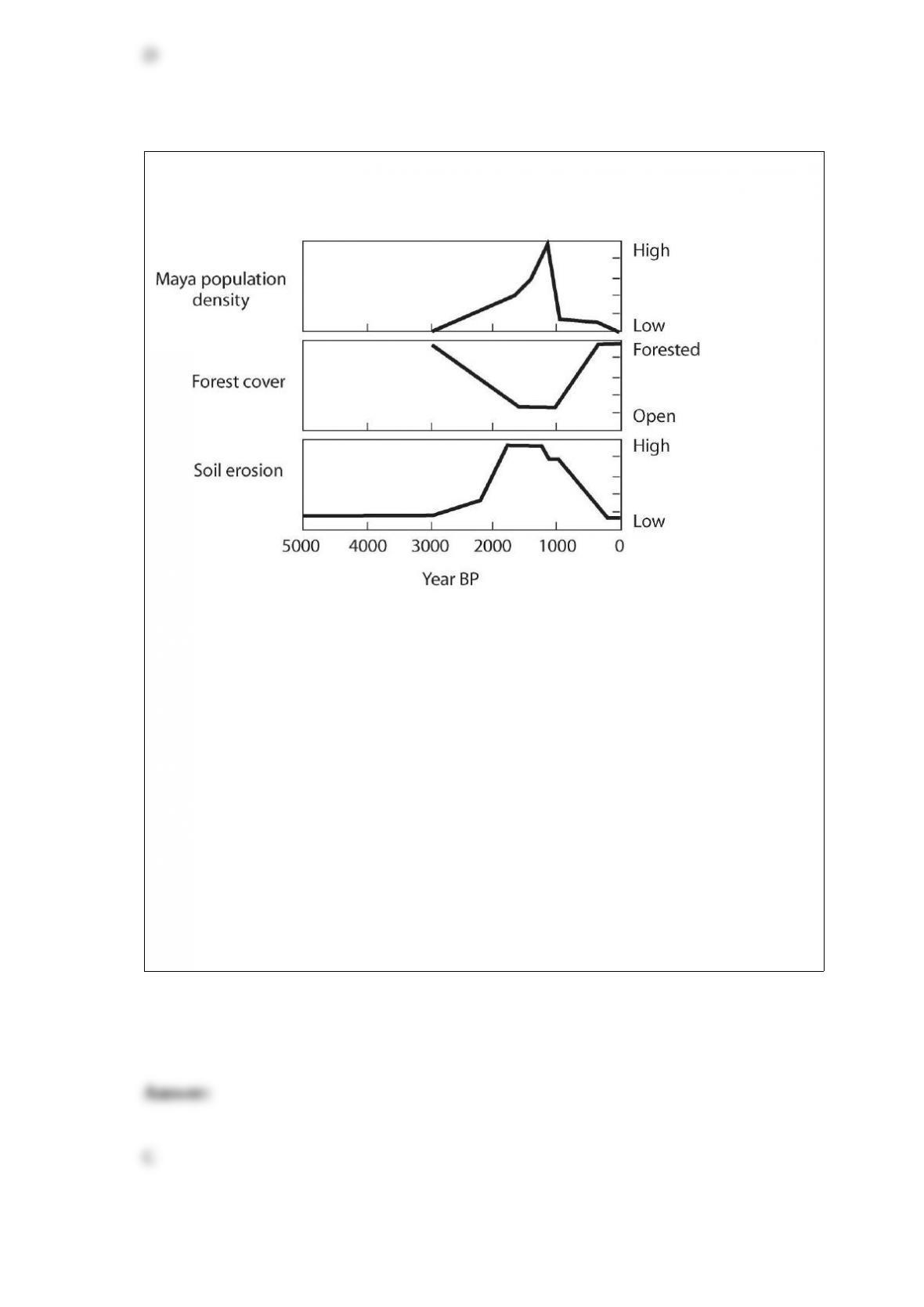
Copyright 2003 American Institute of Biological Sciences. (Foster, D.R., F. Swanson, J.
Aber, D. Tilman, N. Brokaw, I. Burke and A. Knapp. 2003. The importance of land-use
and its legacies to ecology and environmental management. BioScience 53:77-88.)
Based on the figure above, what can you conclude about the history of land use in the
southern Yucatn?
A) Massive soil erosion caused the Mayan population to crash.
B) Reduction in forest cover caused the Mayan population to crash.
C) As Mayan population increased, deforestation increased, probably leading to
increased soil erosion.
D) This Mayan population practiced sustainable development.

If the pH of a solution is decreased from 9 to 8, it means that the concentration of
_____.
A) H+ has decreased to one-tenth (1/10) what it was at pH 9
B) H+ has doubled compared to what it was at pH 9
C) H+ has increased tenfold (10X) compared to what it was at pH 9
D) OH- has increased tenfold (10X) compared to what it was at pH 9
The archenteron of the developing sea urchin eventually develops into the _____.
A) blastocoel
B) heart and lungs
C) digestive tract
D) brain and spinal cord
An inhibitor of which of the following could be used to block the release of calcium
from the endoplasmic reticulum?
A) serine/threonine kinases
B) phosphodiesterase

C) phospholipase C
D) adenylyl cyclase
What is a major difference between mitosis and meiosis I in a diploid organism?
A) Sister chromatids separate in mitosis, while homologous pairs of chromosomes
separate in meiosis I.
B) Sister chromatids separate in mitosis, while homologous pairs of chromosomes
separate in meiosis II.
C) DNA replication takes place prior to mitosis, but not before meiosis I.
D) Only meiosis I results in daughter cells that contain identical genetic information.
A relatively long cecum is characteristic of animals that are_____.
A) carnivores
B) herbivores
C) autotrophs
D) omnivores

Vertebrates and tunicates share _____.
A) jaws adapted for feeding
B) a high degree of cephalization
C) the formation of structures from the neural crest
D) a notochord and a dorsal, hollow nerve cord
What does it mean to say that a signal is transduced?
A) The signal enters the cell directly and binds to a receptor inside.
B) The physical form of the signal changes from one form to another.
C) The signal is amplified, such than even a single molecule evokes a large response.
D) The signal triggers a sequence of phosphorylation events inside the cell.

On the volcanic, equatorial West African island of Sao Tom, two species of fruit fly
exist. Drosophila yakuba inhabits the island’s lowlands, and is also found on the African
mainland, located about two hundred miles away. At higher elevations, and only on Sao
Tom, is found the very closely related Drosophila santomea. The two species can
hybridize, though male hybrids are sterile. A hybrid zone exists at middle elevations,
though hybrids there are greatly outnumbered by D. santomea. Studies of the two
species’ nuclear genomes reveal that D. yakuba on the island is more closely related to
mainland D. yakuba than to D. santomea (2n = 4 in both species). Sao Tom rose from
the Atlantic Ocean about fourteen million years ago.
Using only the information provided in the paragraph, which of the following is the best
initial hypothesis for how D. santomea descended from D. yakuba?
A) allopolyploidy
B) autopolyploidy
C) habitat differentiation
D) sexual selection
The motor cortex is part of the _____.
A) cerebrum
B) cerebellum
C) spinal cord
D) medulla oblongata

Artificial electrical stimulation of a human’s menthol-sensitive neurons would likely
produce the sensation of _____.
A) cold temperature
B) hot temperature
C) odor of pepper
D) deep pressure
Currently, two extant elephant species (X and Y) are classified in the genus Loxodonta,
and a third species (Z) is placed in the genus Elephas. Thus, which statement should be
true?
A) Species X and Y are not related to species Z.
B) Species X and Y share a greater number of homologies with each other than either
does with species Z.
C) Species X and Y share a common ancestor that is alive today.
D) Species X and Y are the result of artificial selection.

Which of the following help(s) to hold the DNA strands apart while they are being
replicated?
A) primase
B) ligase
C) DNA polymerase
D) single-strand DNA binding proteins
Which of the following statements correctly describes cis-trans isomers?
A) They have variations in arrangement around a double bond.
B) They have an asymmetric carbon that makes them mirror images.
C) They have the same chemical properties.
D) They have different molecular formulas.
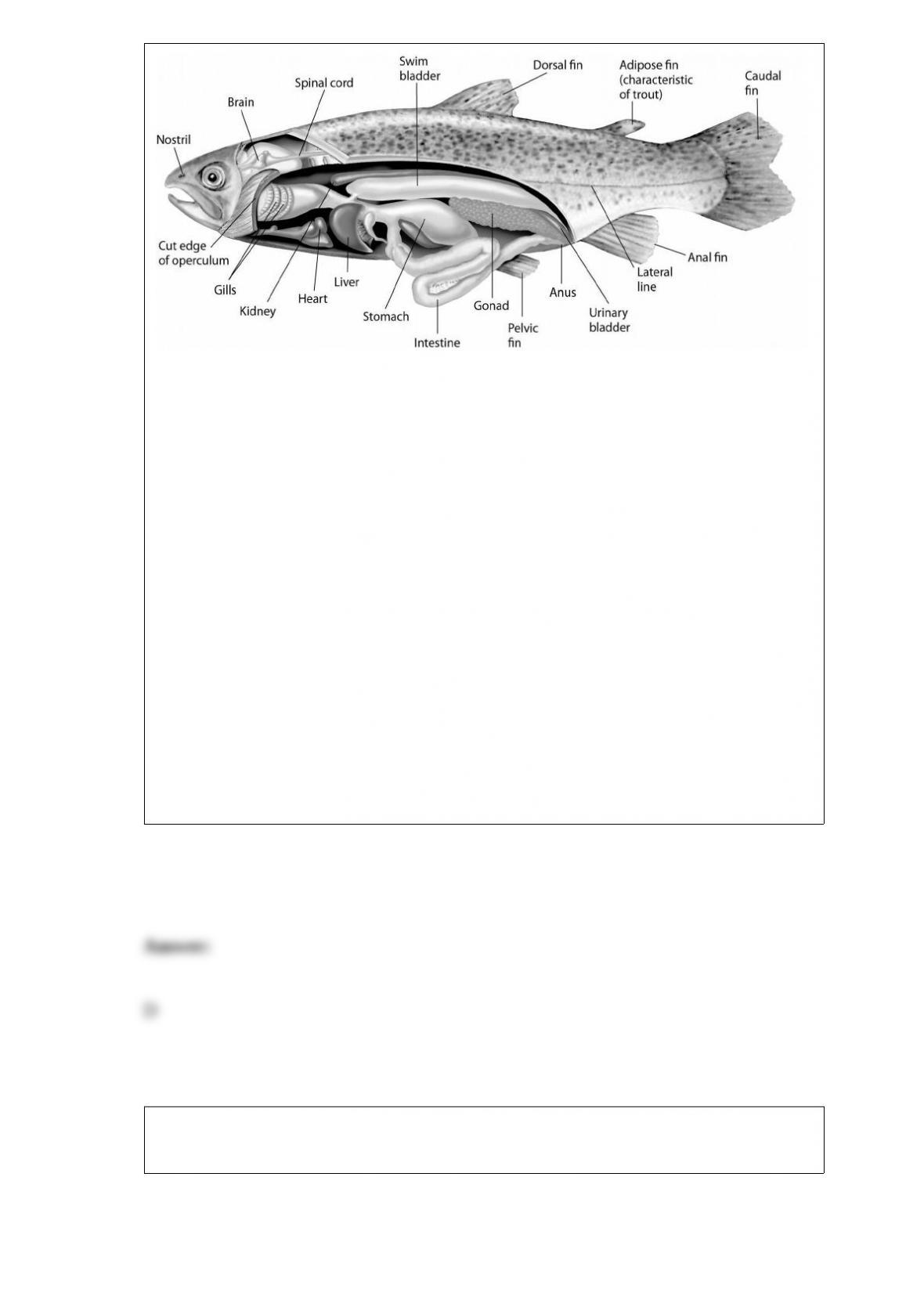
Fishes that have swim bladders can regulate their density and, thus, their buoyancy.
There are two types of swim bladder: physostomous and physoclistous. The ancestral
version is the physostomous version, in which the swim bladder is connected to the
esophagus via a short tube (see the figure above). The fish fills this version by
swimming to the surface, taking gulps of air, and directing them into the swim bladder.
Air is removed from this version by “belching.” The physoclistous version is more
derived, and has lost its connection to the esophagus. Instead, gas enters and leaves the
swim bladder via special circulatory mechanisms within the wall of the swim bladder.
The presence of a swim bladder allows the typical ray-finned fish to stop swimming
and still _____.
A) effectively circulate its blood
B) use its lateral line system
C) use its swim bladder as a respiratory organ
D) not sink
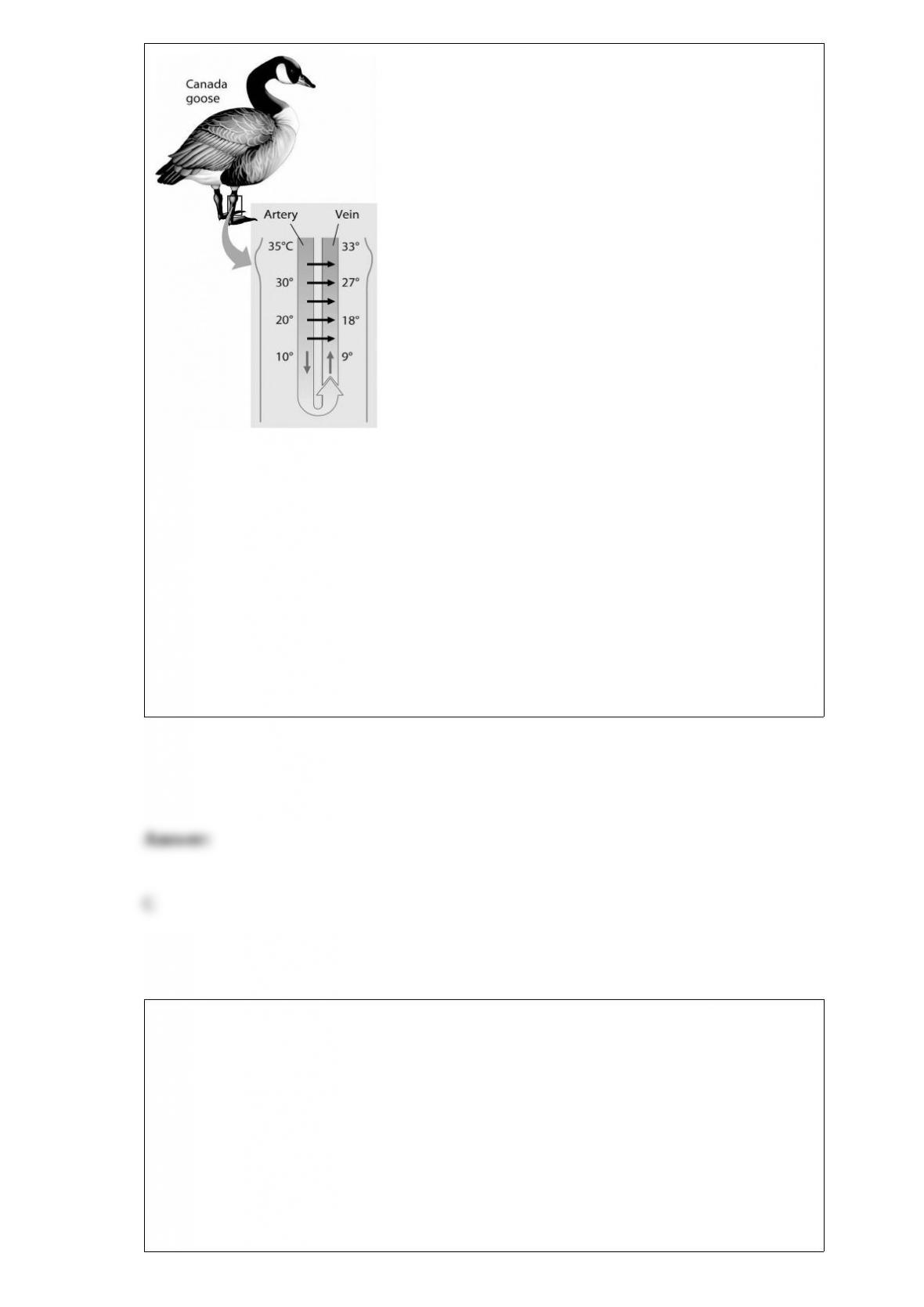
The thin horizontal arrows in the figure above show that the _____.
A) warmer arterial blood can bypass the legs as needed, when the legs are too cold to
function well
B) warmer venous blood transfers heat to the cooler arterial blood
C) warmer arterial blood transfers heat to the cooler venous blood
D) arterial blood is always cooler in the abdomen, compared to the temperature of the
venous blood in the feet of the goose
If a DNA sample were composed of 10% thymine, what would be the percentage of
guanine?
A) 10
B) 40
C) 80
D) It is impossible to tell from the information given.

Quaking aspen can send out underground stems for asexual reproduction. Sexual
reproduction is not as common, but when it does happen, the haploid gametes have 19
chromosomes. How many chromosomes are in the cells of the underground stems?
A) 9
B) 10
C) 19
D) 38
The application of scientific knowledge for some specific purpose is known as _____.
A) technology
B) deductive science
C) inductive science
D) pure science
Which of these observations gives the most support to the endosymbiotic theory for the
origin of eukaryotic cells?
A) the existence of structural and molecular differences between the plasma membranes
of prokaryotes and the internal membranes of mitochondria and chloroplasts
B) the similarity in size between the cytosolic ribosomes of prokaryotes and the
ribosomes within mitochondria and chloroplasts
C) the size disparity between most prokaryotic cells and most eukaryotic cells
D) the observation that some eukaryotic cells lack mitochondria
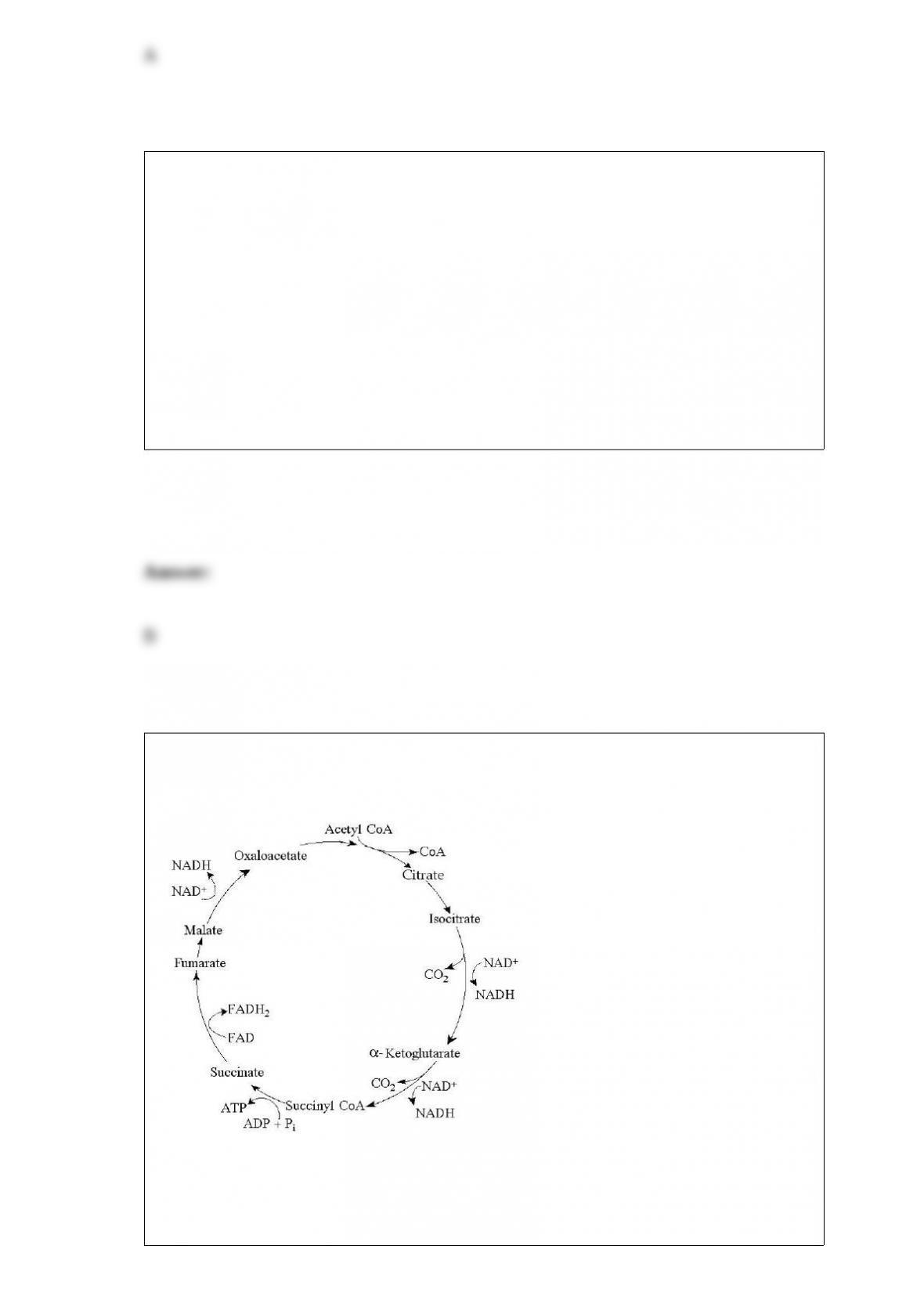
The citric acid cycle.
If pyruvate oxidation is blocked, what will happen to the levels of oxaloacetate and
citric acid in the citric acid cycle shown in the accompanying figure?

A) Oxaloacetate will decrease and citric acid will accumulate.
B) Oxaloacetate will accumulate and citric acid will decrease.
C) Both oxaloacetate and citric acid will decrease.
D) Both oxaloacetate and citric acid will accumulate.