
How does a scientific theory differ from a scientific hypothesis?
A) Theories are proposed to test scientific hypotheses.
B) Theories are usually an explanation for a more general phenomenon; hypotheses
typically address more specific issues.
C) Hypotheses are usually an explanation for a more general phenomenon; theories
typically address more specific issues.
D) Confirmed theories become scientific laws; hypotheses become theories.
After the drought of 1977, researchers on the island of Daphne Major hypothesized that
medium ground finches that had large, deep beaks, survived better than those with
smaller beaks because they could more easily crack and eat the tough Tribulus cistoides
fruits. If this hypothesis is correct, what would you expect to observe if a population of
these medium ground finches colonizes a nearby island where Tribulus cistoides is the
most abundant food for the next 1000 years? Assume that (1) even the survivors of the
1977 drought sometimes had difficulty cracking the tough T. cistoides fruits and would
eat other seeds when offered a choice; and (2) food availability is the primary limit on
finch fitness on this new island.
A) evolution of yet larger, deeper beaks over time
B) evolution of smaller, pointier beaks over time
C) random fluctuations in beak size and shape
D) no change in beak size and shape

The production of sterile mules by interbreeding between female horses (mares) and
male donkeys (jacks) is an example of _____.
A) reduced hybrid viability
B) hybrid breakdown
C) reduced hybrid fertility
D) mechanical isolation
Retrotransposons _____.
A) use an RNA molecule as an intermediate in transposition
B) are found only in animal cells
C) generally move by a cut-and-paste mechanism
D) contribute a significant portion of the genetic variability seen within a population of
gametes
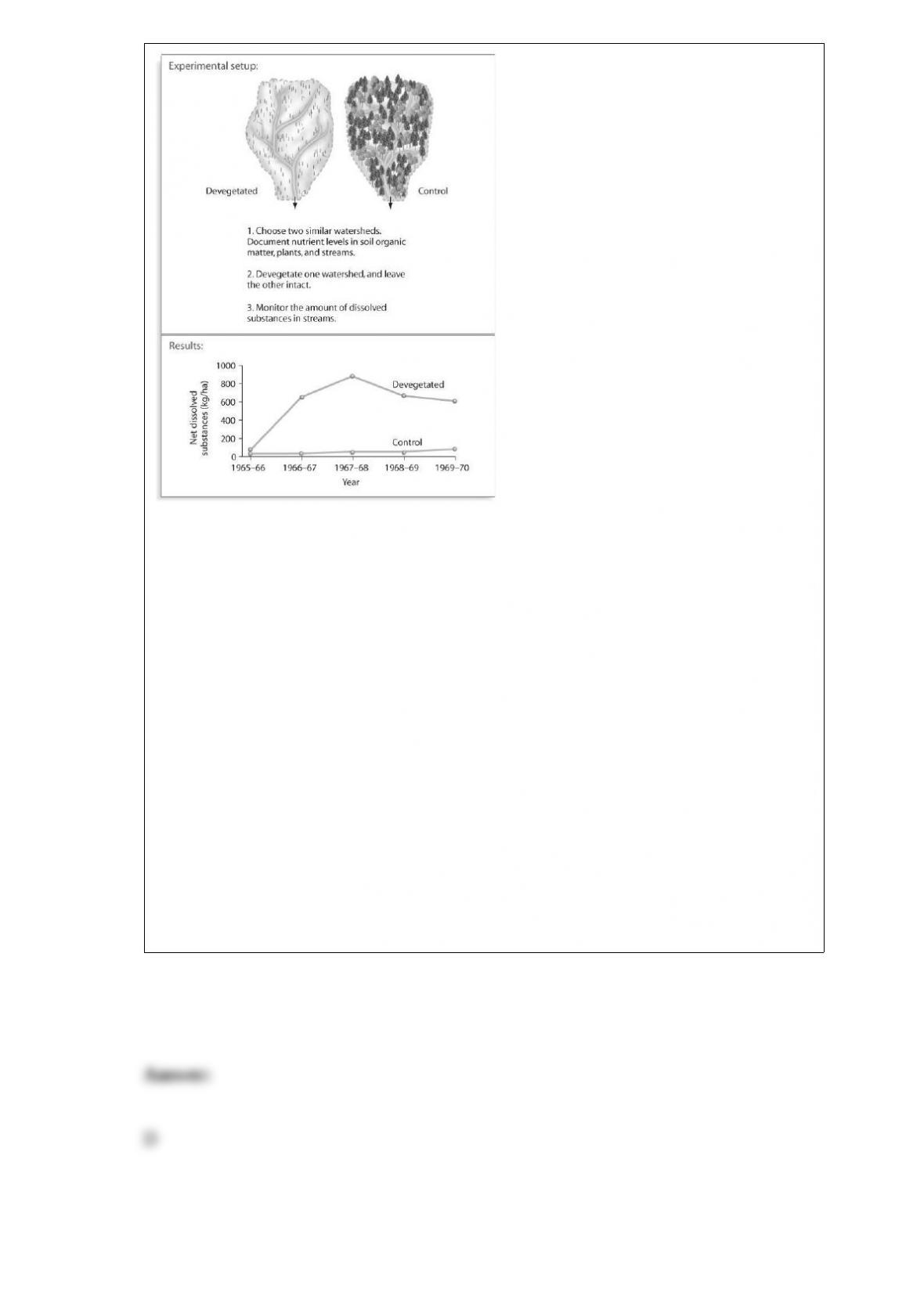
Based on the experiment in the figure above, which of the following are plausible
reasons for the result?
I) No nutrients evaporate now that vegetation is absent.
II) Nutrients dissolve in the water running through the watershed.
III) Nutrients are attached to small particles of sand or clay that leave the watershed.
IV) Plant roots that held soil particles in place are no longer there.
A) only I and III
B) only II and IV
C) only I, II, and IV
D) only II, III, and IV
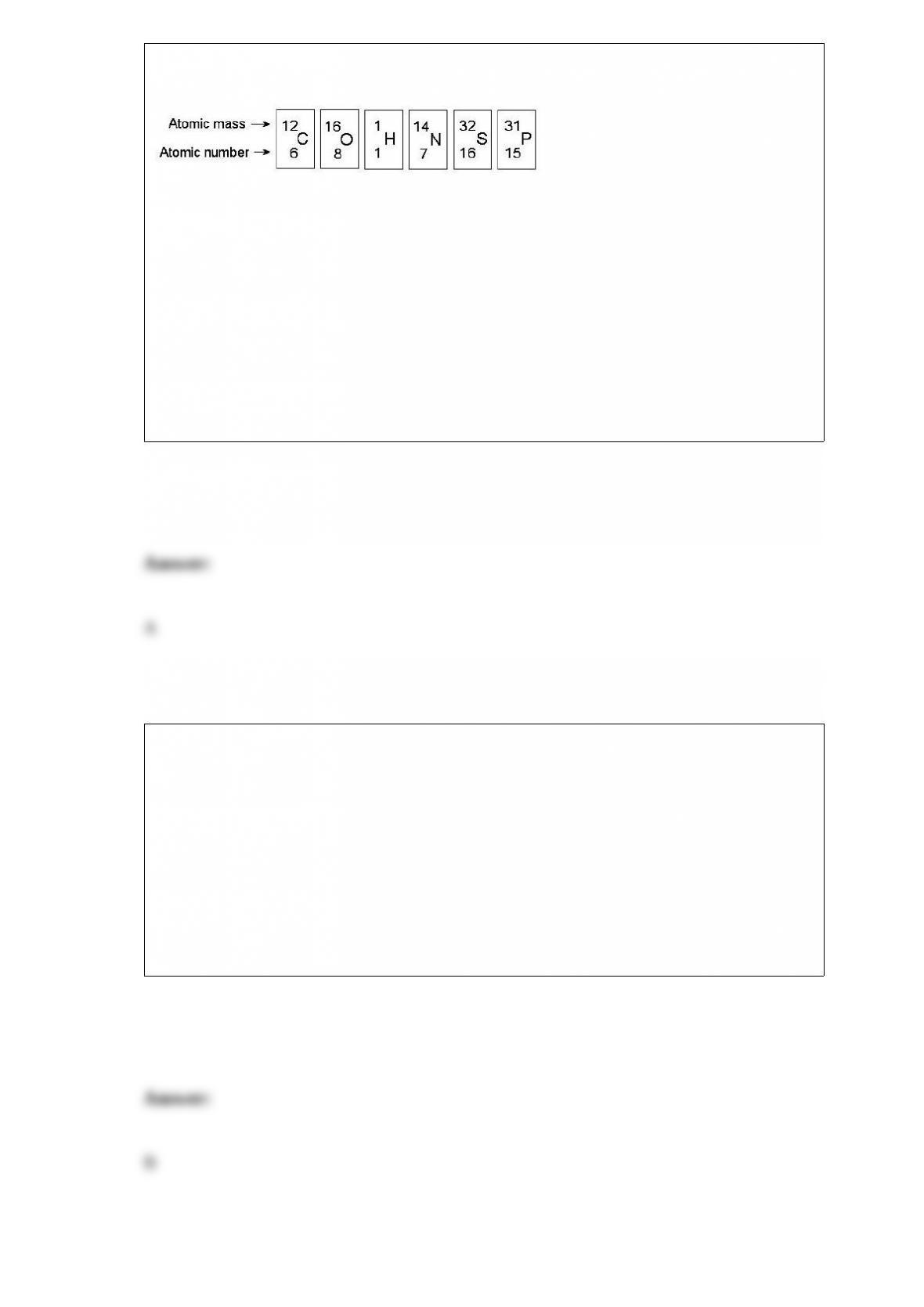
How many electrons will a single atom of sulfur with no charge and no bonds have in
its valence shell (see the figure above)?
A) 6
B) 8
C) 16
D) 32
A single base substitution mutation is least likely to be deleterious when the base
change results in _____.
A) a stop codon
B) a codon that specifies the same amino acid as the original codon
C) an amino acid substitution that alters the tertiary structure of the protein
D) an amino acid substitution at the active site of an enzyme

If a cell has completed meiosis I and is just beginning meiosis II, which of the
following is an appropriate description of its contents?
A) It has half the amount of DNA as the cell that began meiosis.
B) It has half the chromosomes but twice the DNA of the originating cell.
C) It has one-fourth the DNA and one-half the chromosomes as the originating cell.
D) It is identical in content to another cell formed from the same meiosis I event.
In cats, black fur color is caused by an X-linked allele; the other allele at this locus
causes orange color. The heterozygote is tortoiseshell. What kinds of offspring would
you expect from the cross of a black female and an orange male?
A) tortoiseshell females; tortoiseshell males
B) black females; orange males
C) tortoiseshell females; black males
D) orange females; black males
Sutherland discovered that the signaling molecule epinephrine _____.
A) brings about a decrease in levels of cAMP as a result of bypassing the plasma
membrane

B) causes lower blood glucose by binding to liver cells
C) interacts directly with glycogen phosphorylase
D) elevates cytosolic concentrations of cyclic AMP
What is meant by the description “antiparallel” regarding the strands that make up
DNA?
A) The twisting nature of DNA creates nonparallel strands.
B) The 5′ to 3′ direction of one strand runs counter to the to direction of the other
strand.
C) Base pairings create unequal spacing between the two DNA strands.
D) One strand contains only purines and the other contains only pyrimidines.
The mechanism of cell crawling in protist species is not well defined. Pseudopodia
extension involves interactions between actin and myosin (the same molecules that are
involved in vertebrate muscle contraction). However, prior to the study described
below, no one had provided convincing data that actin and myosin were actually
involved in cell crawling in protists. Anatomical studies had identified the cytoskeletal
protein actin just below the surface of the cell membrane in several species of protist,
but physiological studies had failed to show a functional link between actin, myosin,
and cell crawling.
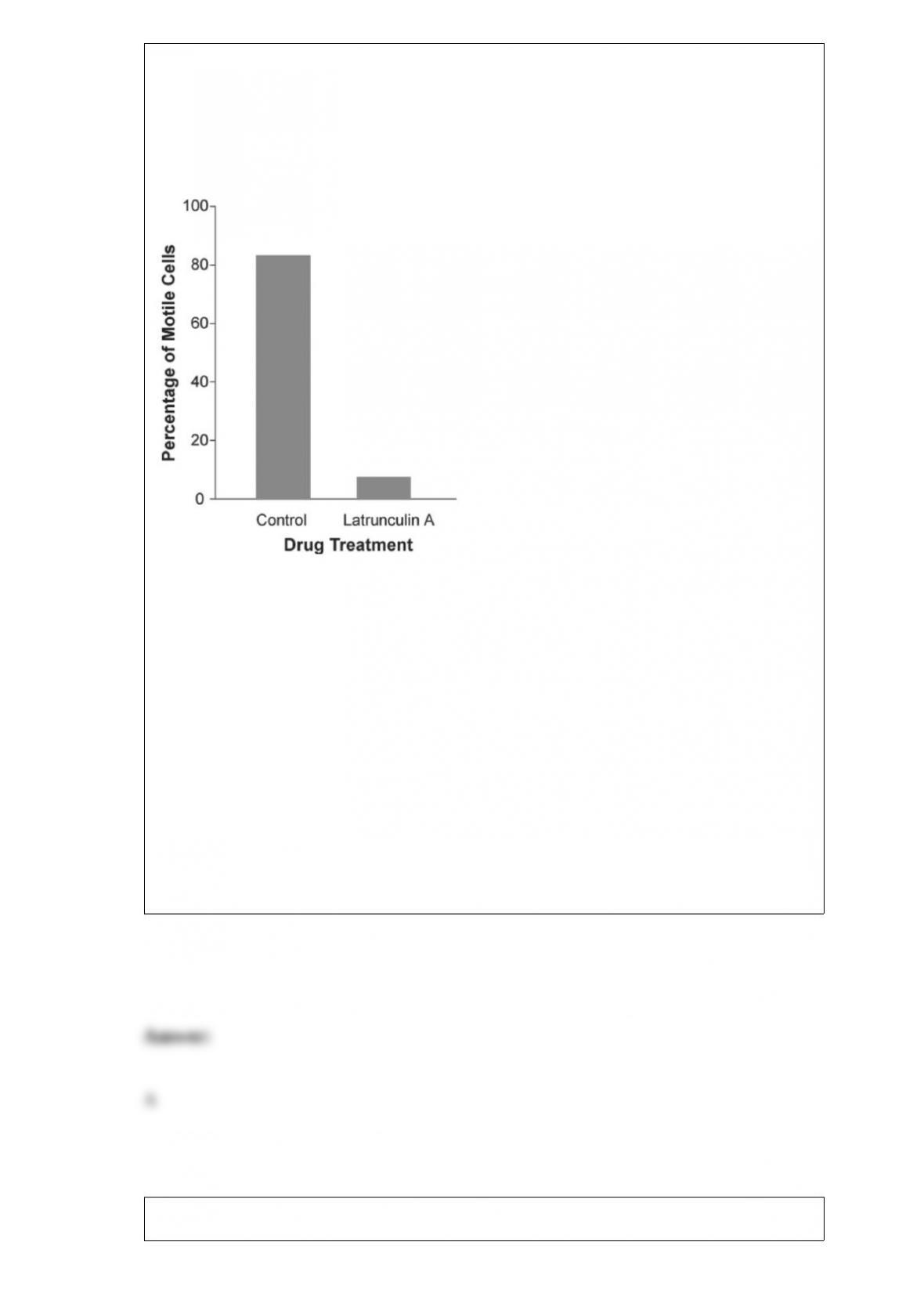
In a study by N. Poulsen et al. (Diatom gliding is the result of an actin-myosin motility
system, Cell Motility and the Cytoskeleton 44 (1999):23-22), researchers tested whether
motility in a particular species of diatom involves interactions between actin and
myosin.
Refer to the study by Poulsen et al. and the figure above. The data graphed in the figure
could be an artifact if latrunculin A kills this species of diatoms (that is, that may be
why the cells are not moving). Which of the following would be the best evidence that
latrunculin A is NOT killing the cells?
A) When the toxin was washed off the culture, the cells began to move again.
B) There were still a small percentage of motile cells in the culture treated with the
toxin.
C) Most of the cells in the control were moving, indicating that they were alive.
D) When the toxin was applied to another species of diatom, 25% of them continued to
move.
Contact of a sea urchin egg with signal molecules on sperm causes the egg to undergo a

brief _____.
A) mitosis
B) membrane depolarization
C) vitellogenesis
D) acrosomal reaction
If the mitosomes of Giardia contain no DNA, yet are descendants of what were once
free-living organisms, then where are we likely to find the genes that encode their
structures, and what accounts for their current location there?
A) plasmids; conjugation
B) plasmids; transformation
C) nucleus; horizontal gene transfer
D) nucleus; S phase
Semiconservative replication involves a template. What is the template?
A) single-stranded binding proteins
B) DNA polymerase

C) one strand of the DNA molecule
D) an RNA molecule
The complement system is _____.
A) a set of proteins involved in innate but not acquired immunity
B) a group of proteins that includes interferons and interleukins
C) a group of antimicrobial proteins that act together in a cascade fashion
D) a set of proteins that act individually to attack and lyse microbes
Which of the following organisms would be most likely to fossilize?
A) a rare worm
B) a common worm
C) a rare squirrel
D) a common squirrel

The herpes viruses are important enveloped DNA viruses that cause disease in
vertebrates and in some invertebrates such as oysters. Some of the human forms are
herpes simplex virus (HSV) types I and II, causing facial and genital lesions, and the
varicella zoster virus (VSV), causing chicken pox and shingles. Each of these three
actively infects nervous tissue. Primary infections are fairly mild, but the virus is not
then cleared from the host; rather, viral genomes are maintained in cells in a latent
phase. The virus can later reactivate, replicate again, and infect others.
In electron micrographs of HSV infection, it can be seen that the intact virus initially
reacts with cell surface proteoglycans, then with specific receptors. This is later
followed by viral capsids docking with nuclear pores. Afterward, the capsids go from
being full to being “empty.” Which of the following best fits these observations?
A) Viral capsids are needed for the cell to become infected; only the capsids enter the
nucleus.
B) The viral envelope is not required for infectivity, since the envelope does not enter
the nucleus.
C) Only the genetic material of the virus is involved in the cell’s infectivity, and is
injected like the genome of a phage.
D) The viral envelope mediates entry into the cell, the capsid mediates entry into the
nuclear membrane, and the genome is all that enters the nucleus.
Most Swiss starlings produce four to five eggs in each clutch. Starlings producing fewer
or more than this have reduced fitness. Which of the following terms best describes this
situation?
A) directional selection

B) stabilizing selection
C) disruptive selection
D) sexual selection
Atmospheric pressure at sea level is equal to a column of 760 mm Hg. Oxygen makes
up 21 percent of the atmosphere by volume. The partial pressure of oxygen ( ) in
such conditions is _____.
A) 160 mm Hg
B) 16 mm Hg
C) 21/760
D) 760/21
During meiosis, a defect occurs in a cell that results in the failure of microtubules,
spindle fibers, to bind at the kinetochores, a protein structure on chromatids where the
spindle fibers attach during cell division to pull sister chromatids apart. Which of the
following is the most likely result of such a defect?
A) New microtubules with more effective binding capabilities to kinetochores will be
synthesized to compensate for the defect.

B) Excessive cell divisions will occur resulting in cancerous tumors and an increase in
the chromosome numbers known as polyploidy.
C) The defect will be bypassed in order to and ensure normal chromosome distribution
in the new cells.
D) The resulting cells will not receive the correct number of chromosomes in the
gametes, a condition known as aneuploidy.
Stomach cells are moderately well adapted to the acidity and protein-digesting activities
in the stomach by having _____.
A) a sufficient colony of H. pylori
B) a thick, mucous secretion and active mitosis of epithelial cells
C) a high level of secretion of enzymes by chief cells
D) a cell wall impermeable to acid
Action potentials are normally carried in only one direction: from the axon hillock
toward the axon terminals. If you experimentally depolarize the middle of the axon to
threshold, using an electronic probe, then _____.
A) no action potential will be initiated
B) an action potential will be initiated and proceed only in the normal direction toward

the axon terminal
C) an action potential will be initiated and proceed only back toward the axon hillock
D) two action potentials will be initiated, one going toward the axon terminal and one
going back toward the hillock
A cell with a predominance of free ribosomes is most likely _____.
A) primarily producing proteins for secretion
B) primarily producing proteins in the cytosol
C) constructing an extensive cell wall or extracellular matrix
D) enlarging its vacuole
Among mammals, it is generally true that _____.
A) all types of foods begin their enzymatic digestion in the mouth
B) after leaving the oral cavity, the bolus enters the larynx
C) the epiglottis prevents swallowed food from entering the trachea
D) the trachea leads to the esophagus and then to the stomach
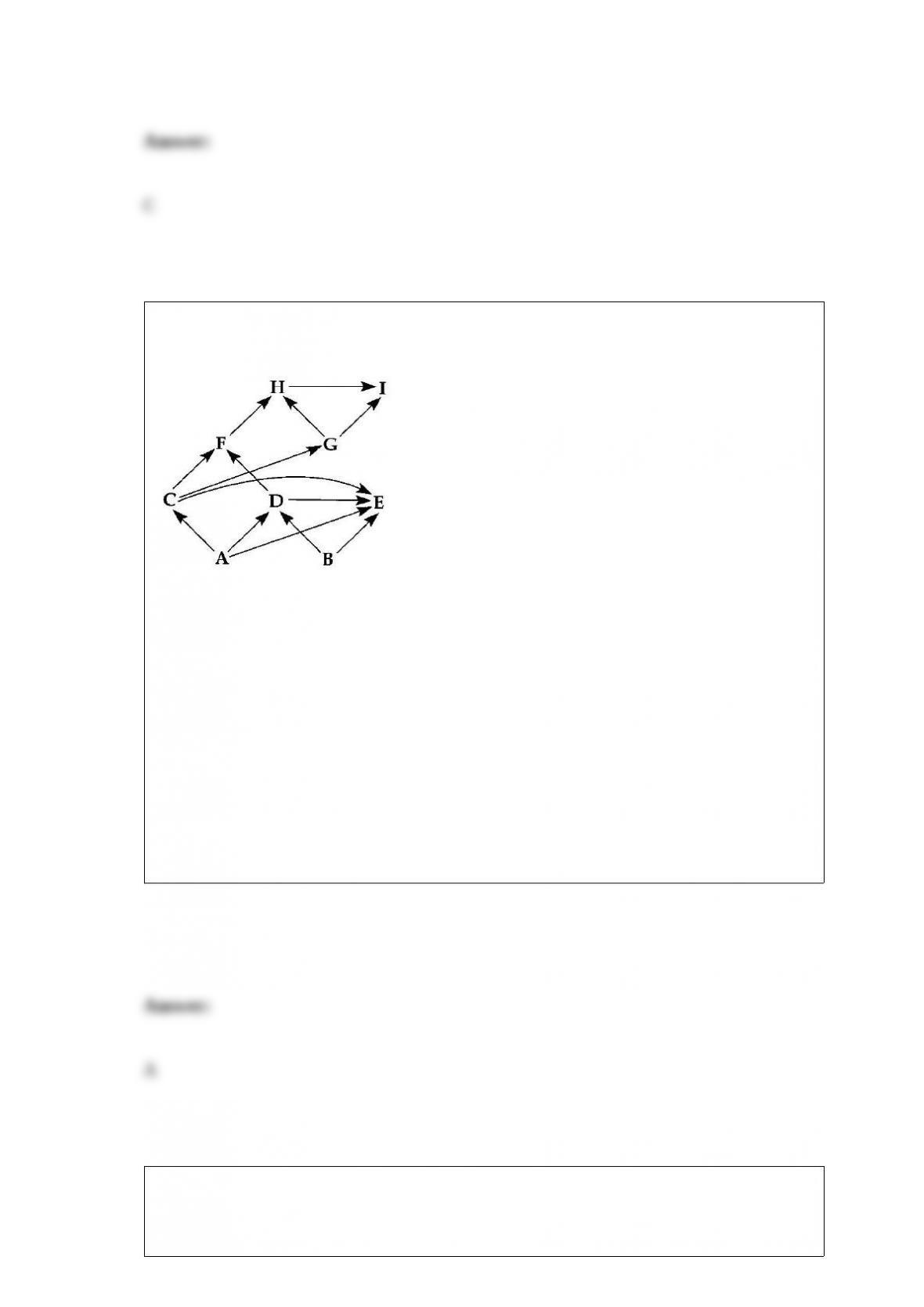
Diagram of a food web (arrows represent energy flow and letters represent species)
If the figure above represents a marine food web, the smallest organism might be
_____.
A) A
B) C
C) I
D) E
Which of the following viruses would most likely have reverse transcriptase?
A) an RNA-based lytic virus

B) an RNA-based lysogenic virus
C) a DNA-based lytic virus
D) a DNA-based lysogenic virus
The central nervous system is lacking in animals that have _____.
A) a complete gut
B) bilateral symmetry
C) radial symmetry
D) a closed circulatory system
The soil layer surrounding plant roots, called the rhizosphere, has been shown in some
cases to _____.
A) contain fungi that produce an endotoxin which inhibits the growth rhizomes
B) inhibit the growth of fungal pathogens
C) produce vitamins essential for the uptake of nitrogen
D) contain archaea which produce antibiotics that prevent the growth of most bacteria

Which of the following statements about essential nutrients are true? Essential nutrients
_____.
I) are necessary for plant growth and reproduction
II) are required for a specific structure or metabolic function
III) cannot be synthesized by a plant
IV) are produced by symbiotic bacteria
A) I and IV
B) II, III, and IV
C) I, II, and III
D) I, II, III, and IV
A hypothetical bacterium swims among human intestinal contents until it finds a
suitable location on the intestinal lining. It adheres to the intestinal lining using a
feature that also protects it from phagocytes, bacteriophages, and dehydration. Fecal
matter from a human in whose intestine this bacterium lives can spread the bacterium,
even after being mixed with water and boiled. The bacterium is not susceptible to the
penicillin family of antibiotics. It contains no plasmids and relatively little
peptidoglycan.
The cell also lacks F factors and F plasmids. Upon its death, this bacterium should be

able to participate in _____.
A) conjugation
B) transduction
C) transformation
D) conjugation and transduction
The rapid leaf movements resulting from a response to touch (thigmotropism) primarily
involve_____.
A) potassium channels
B) nervous tissue
C) aquaporins
D) stress proteins
In an egg cell treated with a chemical that binds calcium and magnesium ions, the
_____.
A) acrosomal reaction would be blocked
B) fusion of sperm and egg nuclei would be blocked

C) fast block to polyspermy would not occur
D) fertilization envelope would not be formed
For which of the following is the number the same in spermatogenesis and oogenesis?
A) timing of meiotic divisions
B) functional gametes produced by meiosis
C) meiotic divisions required to produce each gamete
D) different cell types produced by meiosis