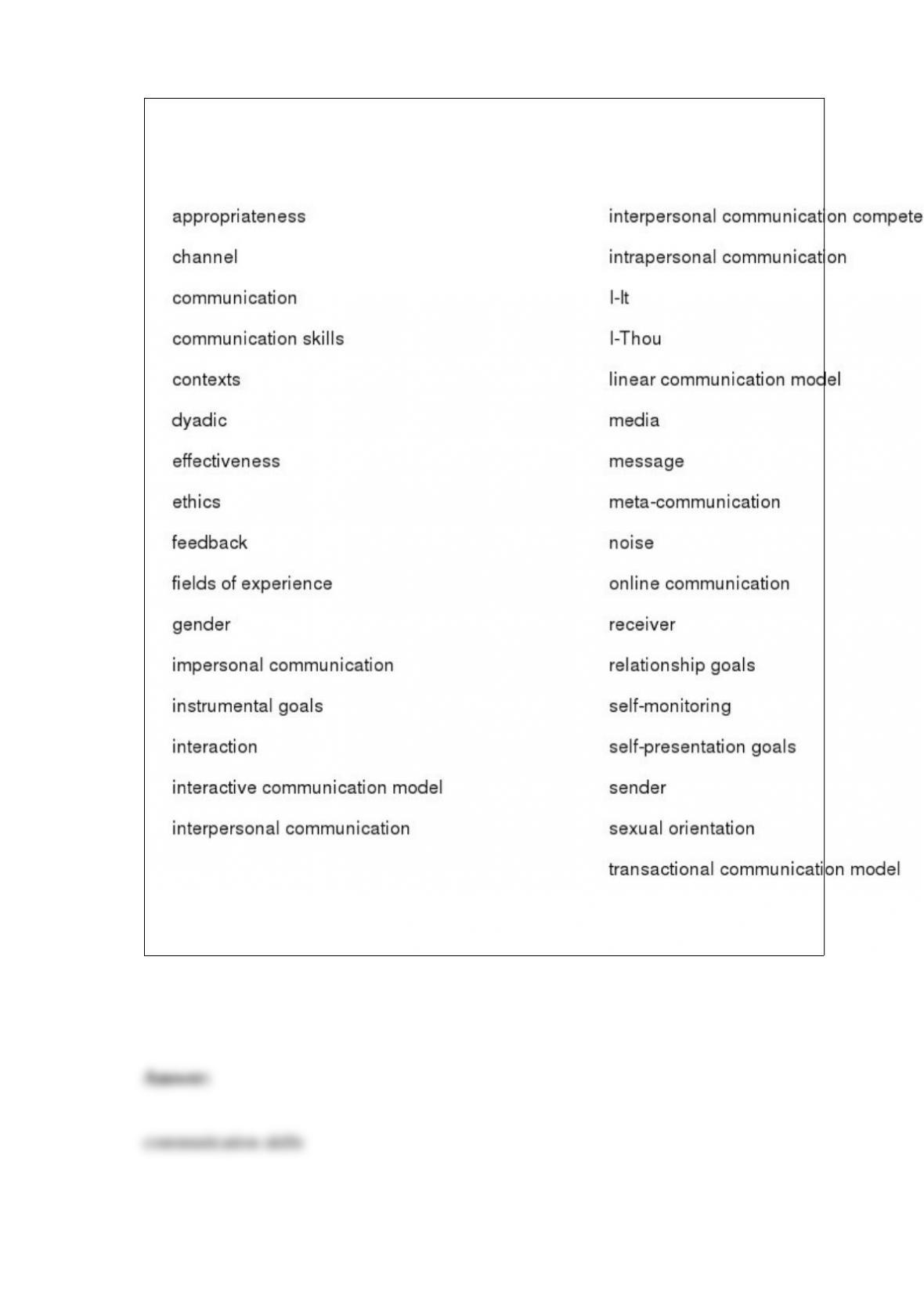
Match the concept, term, or theory with its correct response or definition.
Goal-directed behaviors routinely practiced in one’s interpersonal relationships.
What does an organization’s climate comprise?
How can families use different types of technology to maintain their relationship?
Nonverbal communication can be either intentional or unintentional.
Match the concept, term, or theory with its correct response or definition.
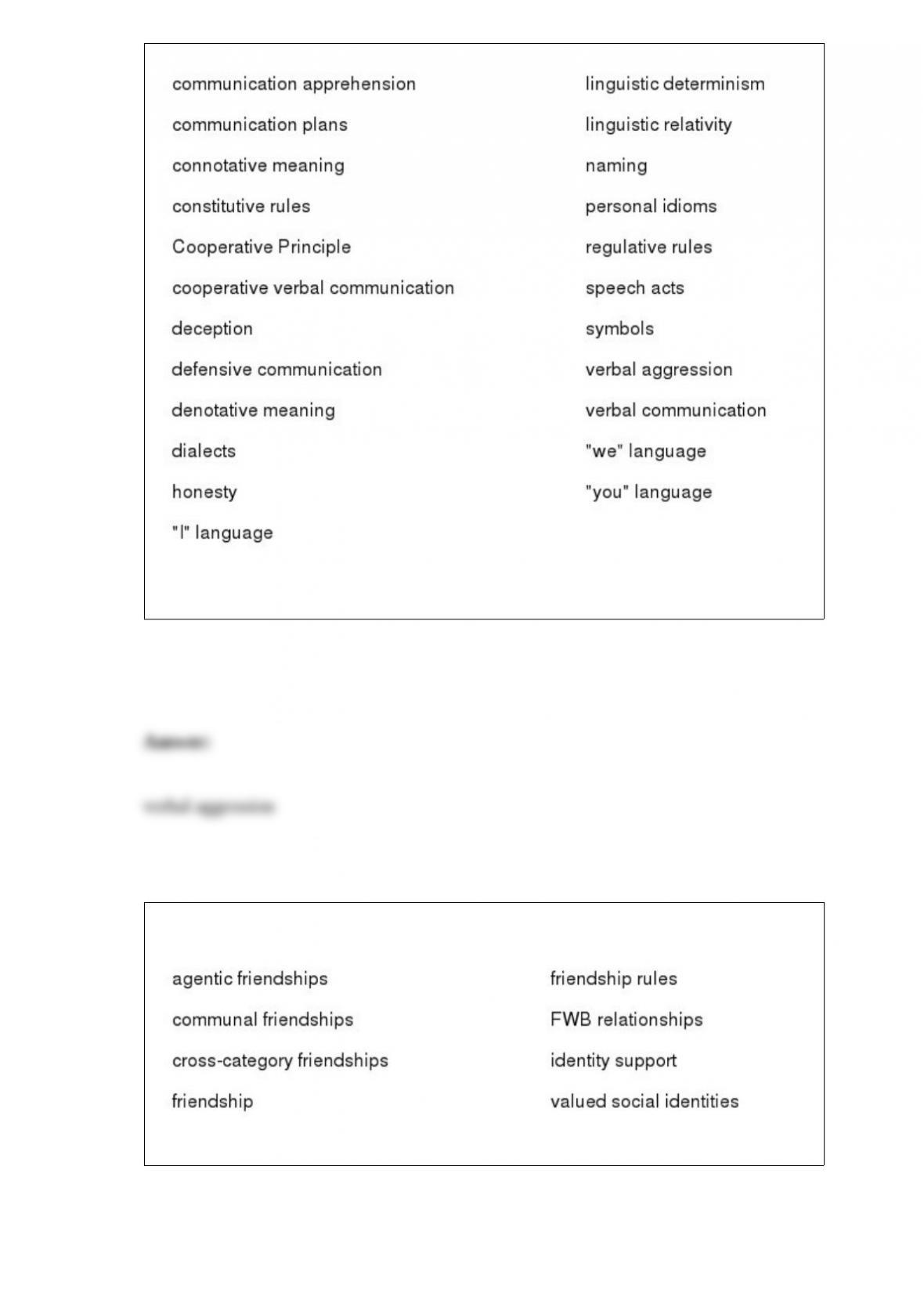
Communication that attacks others’ self-concepts, rather than their positions or topics of
conversation.
Match the concept, term, or theory with its correct response or definition.
A voluntary interpersonal relationship characterized by intimacy and liking.
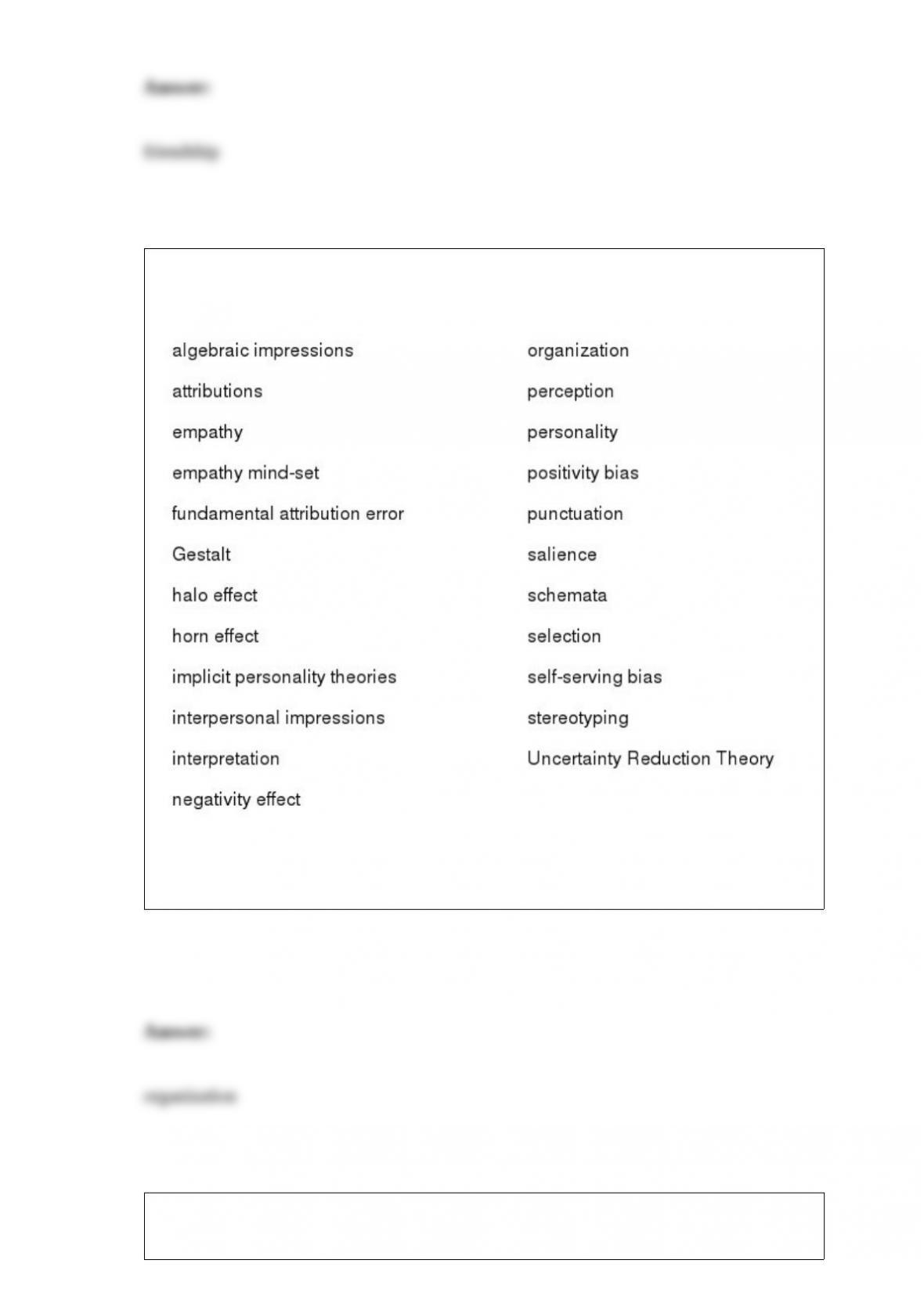
Match the concept, term, or theory with its correct response or definition.
A phase of the perception process in which we structure information into coherent,
meaningful patterns in our minds.
Define and give an example of the five power currencies used in our personal
relationships.
How does the mere exposure effect explain the importance of proximity to attraction?
Avoidance is the most frequently used approach to managing conflict.
Professional peers are coworkers who hold positions of higher power than we do.
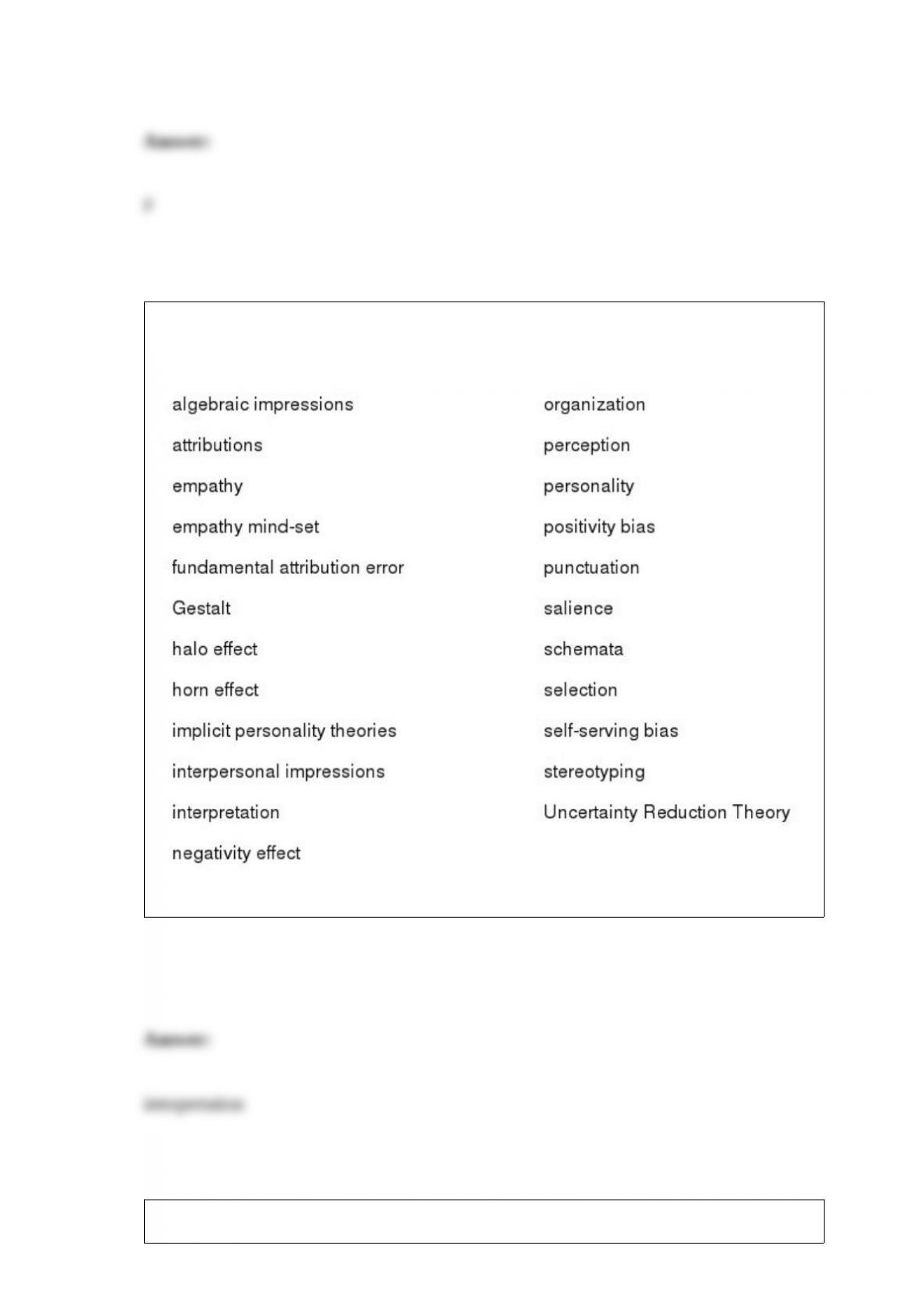
Match the concept, term, or theory with its correct response or definition.
The process of assigning meaning to information we have selected.
We should avoid mental bracketing because we can easily fall prey to our wandering

attentions.
Discuss problems associated with online listening.
Identify and explain two barriers to cooperative verbal communication.

Identify the three defining characteristics of interpersonal communication competence.
The competing impulses, or tensions, between ourselves and our feelings toward others
are known as relational dialectics.
Male and female same-sex friendships are more similar than they are different.