1) The maximal-flow technique would be helpful to city planners in determining how
freeways should be expanded.
2) A scatter diagram is a graphical depiction of the relationship between the dependent
and independent variables.
3) Saying that a set of events is mutually exclusive and collectively exhaustive implies
that one and only one of the events can occur on any trial.
4) The study of waiting lines is called queuing theory.
5) One of the most significant benefits of PERT is that it forces the project manager to
sit down and plan the project in great detailand thus come to an understanding of
relationships between the activities.
6) From an Analytic Hierarchy Process analysis, » is computed to be 4.840, n = 3, RI =
0.58. Compute the consistency index.
A) 0.92
B) 1.5862
C) 1.092
D) 8.3448
E) None of the above
7) The demand during the lead-time is normally distributed with a mean of 40 and a
standard deviation of 4. If the company wishes to maintain a 90 percent service level,
how much safety stock should be held?
A) 45.12
B) 41.28
C) 1.28
D) 5.12
E) None of the above
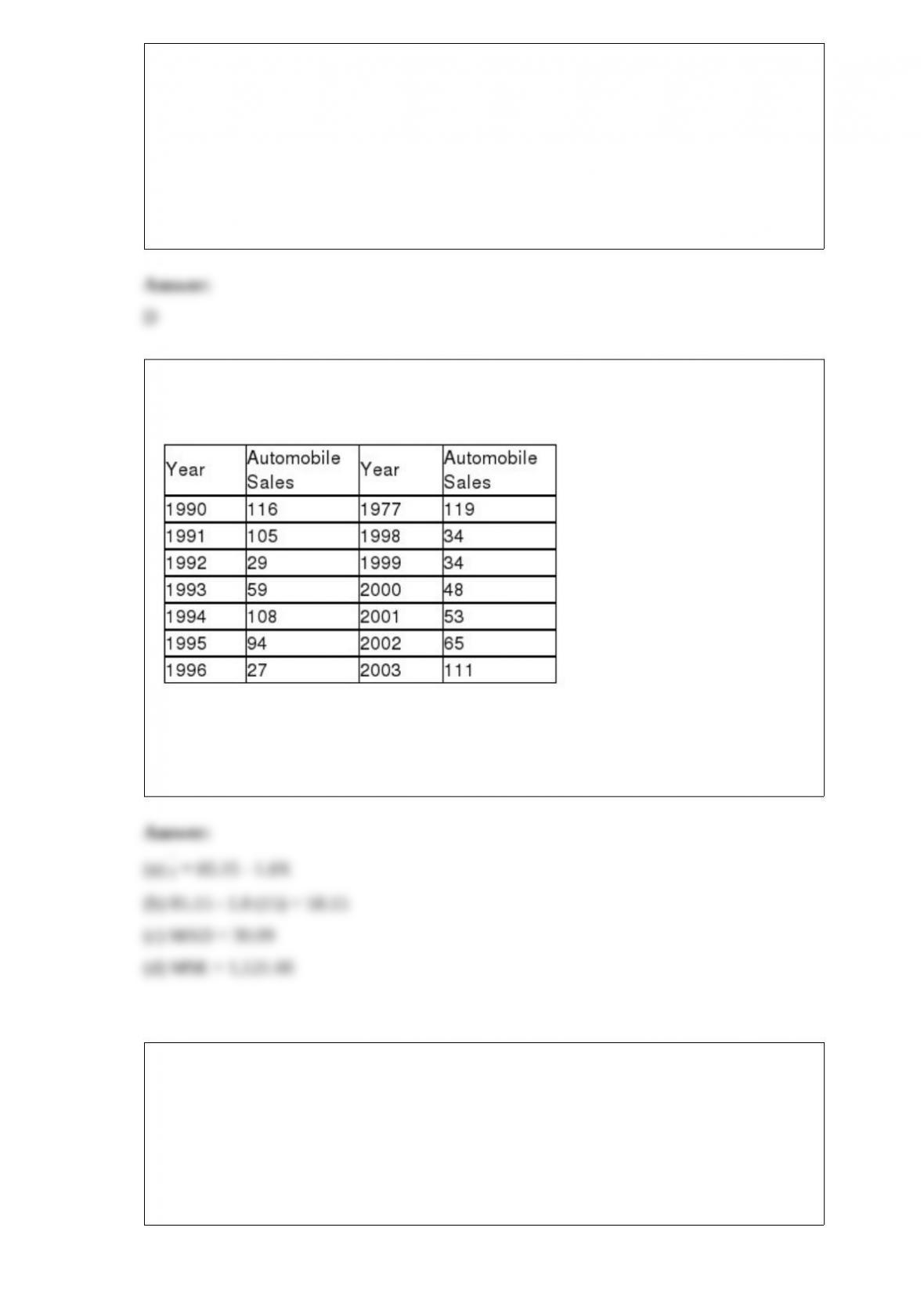
8) For the data below:
(a) Determine the least squares regression line.
(b) Determine the predicted value for 2004.
(c) Determine the MAD.
(d) Determine the unadjusted forecasting MSE.
9) Why don’t we want to use the transportation algorithm to solve the assignment
problem?
A) It would likely lead to an unbounded solution.
B) It would likely lead to a degenerate solution.
C) It would likely lead to an infeasible solution.
D) It would likely lead to multiple optima.
E) It would likely lead to an unbalanced solution.
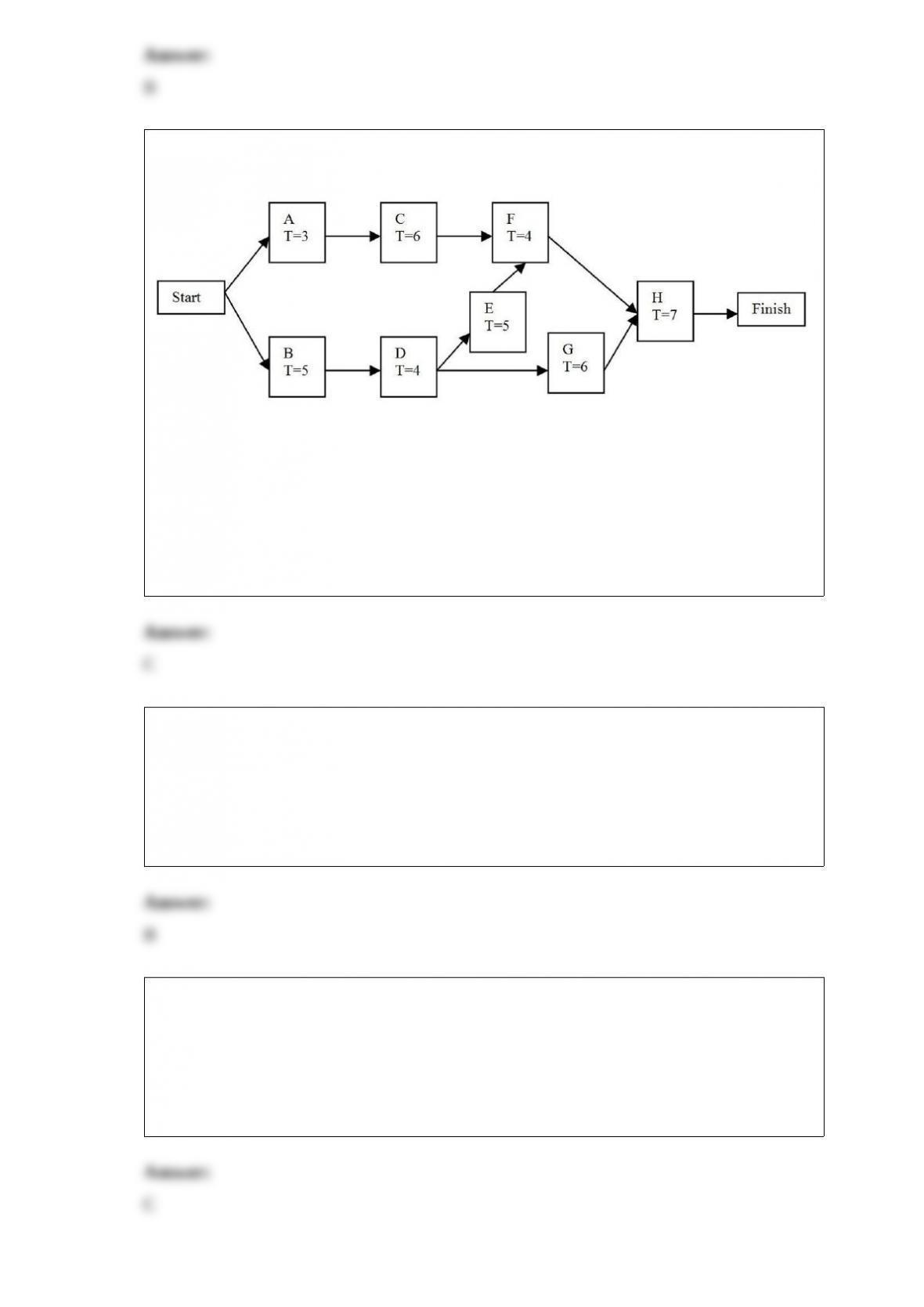
10) Figure 11-1
Given the network in Figure 11-1, the time to complete those activities on the critical
path is expected to be
A) 20.
B) 22.
C) 25.
D) 26.
E) None of the above
11) What do we do when solving for equilibrium conditions?
A) conduct a statistical t-test
B) drop one equation
C) partition the matrix of transition probabilities
D) subtract matrix B from the identity matrix
E) multiply the fundamental matrix by the A matrix
12) An n x m matrix, when multiplied by an m x p matrix, yields
A) an n x m x m x p matrix.
B) an n x m x p matrix.
C) an n x p matrix.
D) a p matrix.
E) None of the above
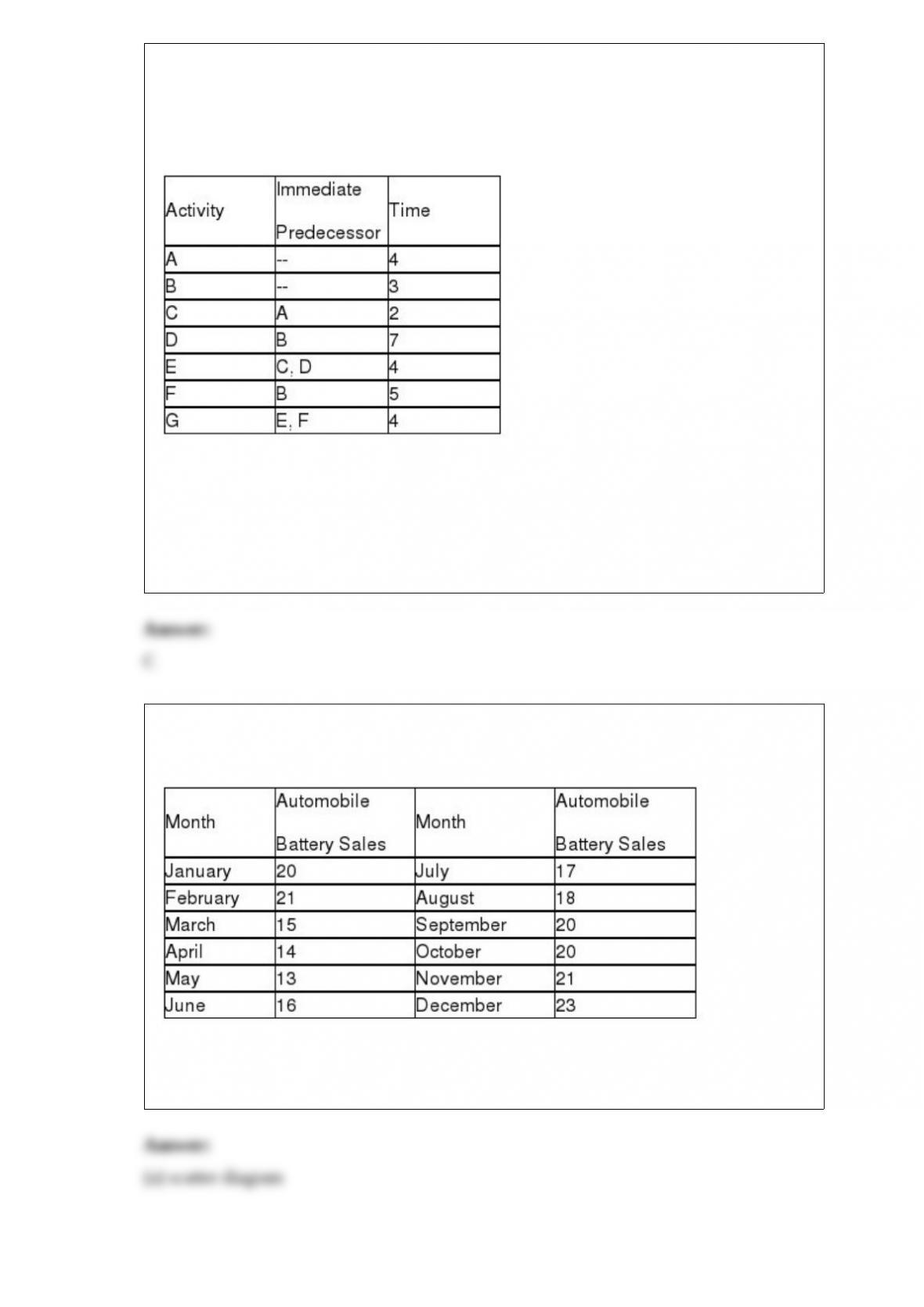
13) Table 11-4
The following represents a project with known activity times. All times are in weeks.
Using the data in Table 11-4, compute the latest finish time for activity E.
A) 4
B) 10
C) 14
D) 25
E) None of the above
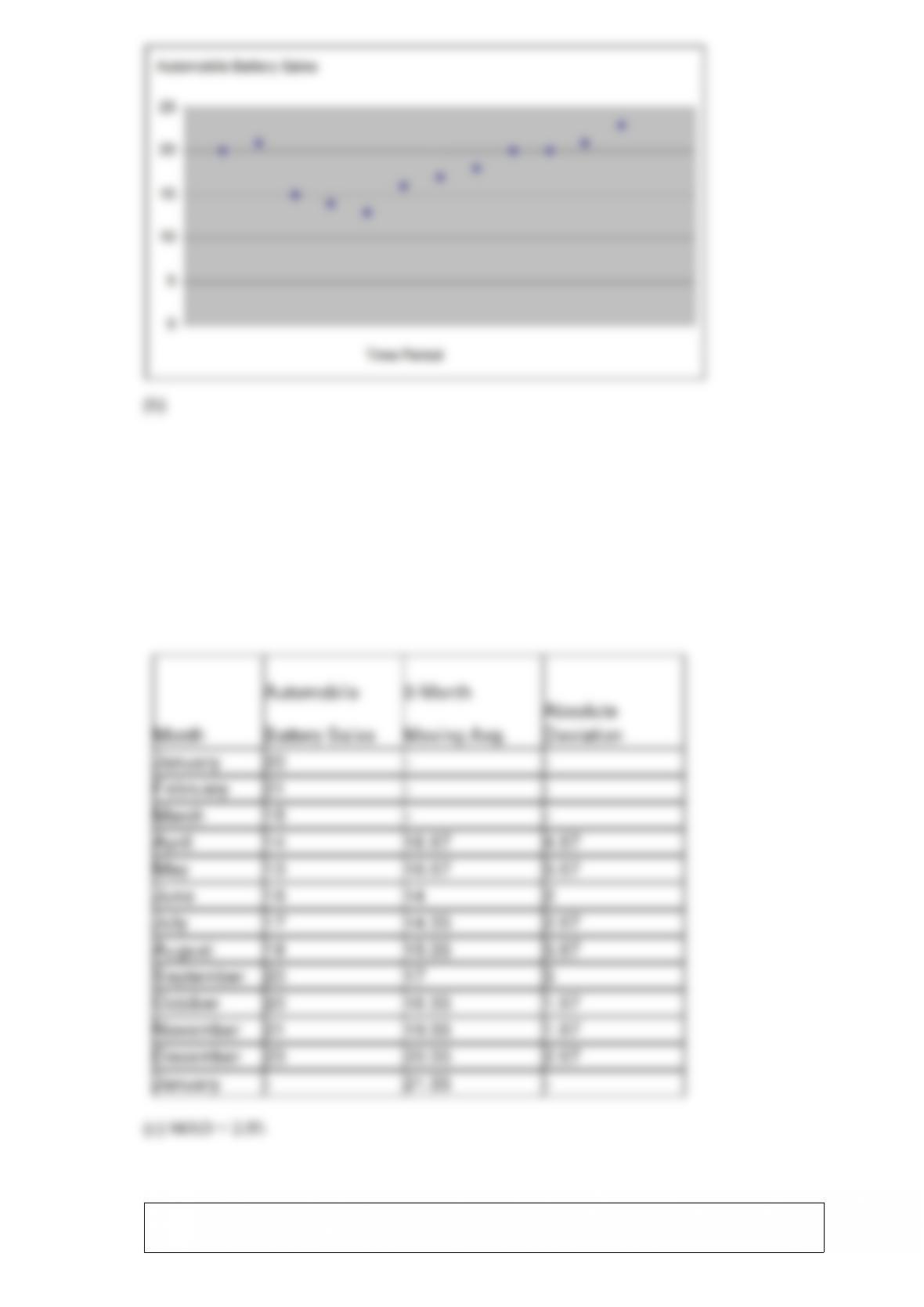
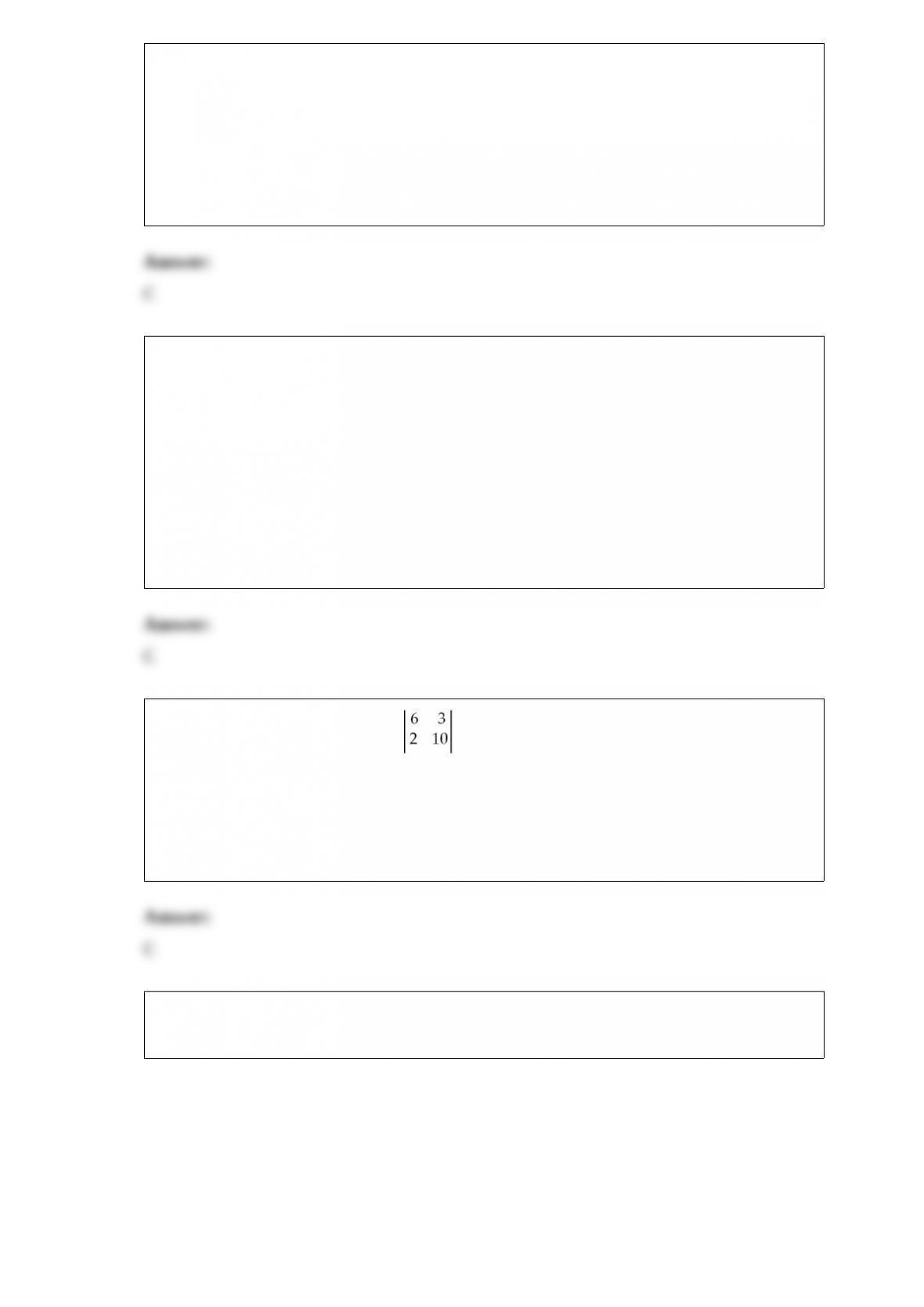
14) For the data below:
(a) Develop a scatter diagram.
(b) Develop a three-month moving average.
(c) Compute MAD.
15) The Cj – Zj row of a simplex tableau gives
A) the number of units of each basic variable that must be removed from the solution if
a new variable is entered.
B) the gross profit or loss given up by adding one unit of a variable into the solution.
C) the net profit or loss that will result from introducing one unit of the variable
indicated in that column into the solution.
D) the maximal value a variable can take on and still have all the constraints satisfied.
E) None of the above
16) There are three items (A, B, and C) that are to be shipped by air. The weights of
these are 4, 5, and 3 tons, respectively, and the plane can carry 13 tons. The profits (in
thousands of dollars) generated by these are 3 for A, 4 for B, and 2 for C. There are four
units of each available for shipment. If this were to be solved as a dynamic
programming problem, how many stages would there be?
A) 1
B) 2
C) 3
D) 4
E) None of these
17) The value of the determinant is
A) 60.
B) 6.
C) 54.
D) 21.
E) None of the above
18) Table M8-9
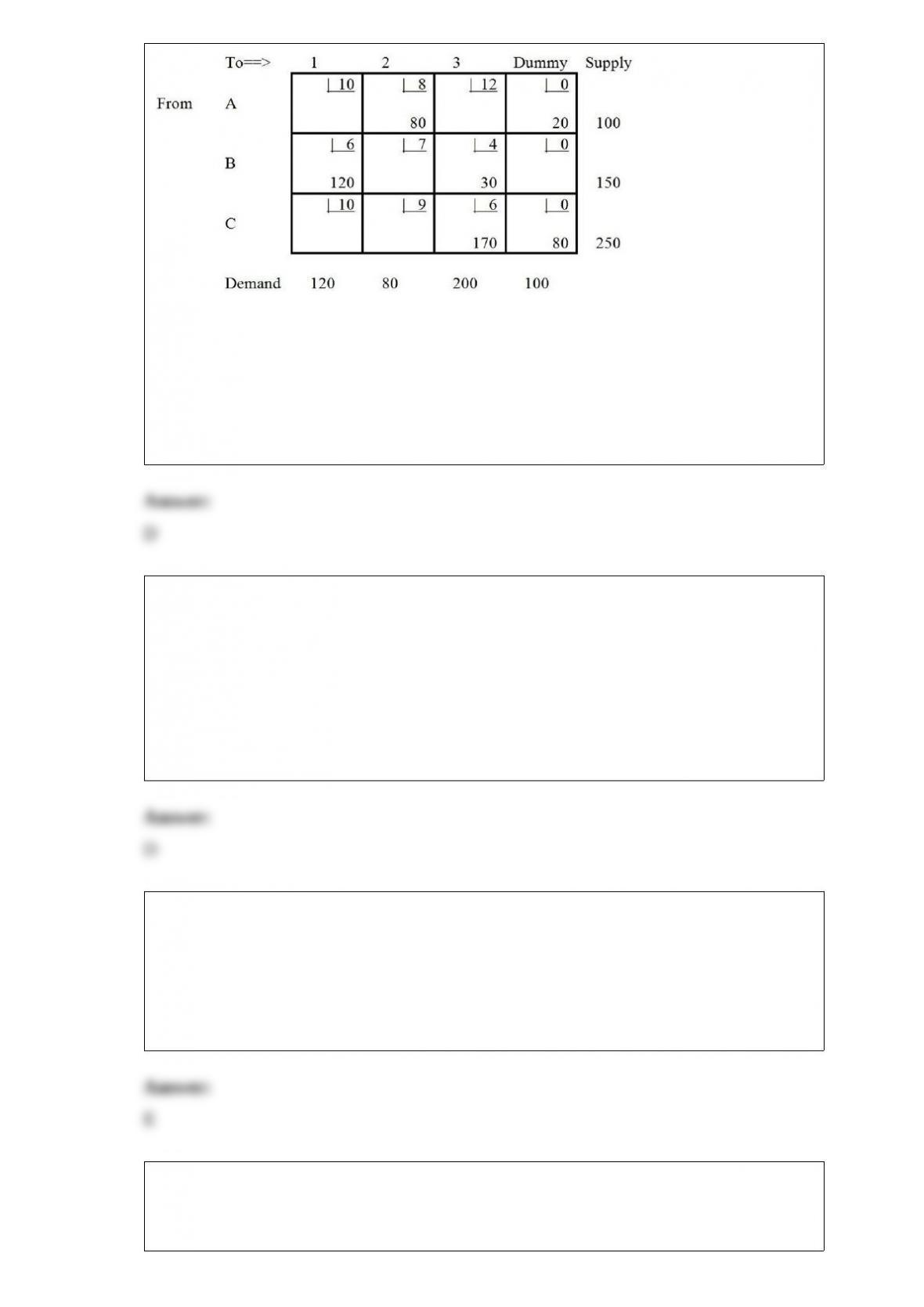
The solution presented in Table M8-9 is
A) infeasible.
B) degenerate.
C) unbounded.
D) optimal.
E) None of the above
19) The maximal-flow technique might be used
A) to help design the moving sidewalks transporting passengers from one terminal to
another in a busy airport.
B) by someone designing the traffic approaches to an airport.
C) by someone attempting to design roads that would limit the flow of traffic through
an area.
D) All of the above
E) None of the above
20) For every primal
A) that is a maximization problem, the dual is a minimization problem.
B) the right-hand side quantities become the dual’s objective function coefficients.
C) constraint inequality signs are reversed in the dual.
D) the transpose of the constraint coefficients become the dual’s constraint coefficients.
E) All of the above
21) Average demand is estimated at 1,200 units/month. It is believed there is a 20%
chance for demand to be higher than 1,800. Determine the ¼ and of a normal
distribution that estimates demand.
22) What is the decision criterion for a knapsack problem?
23) List the five major decision criteria used when making decisions under uncertainty.
24) Describe the steps of the shortest-route technique.
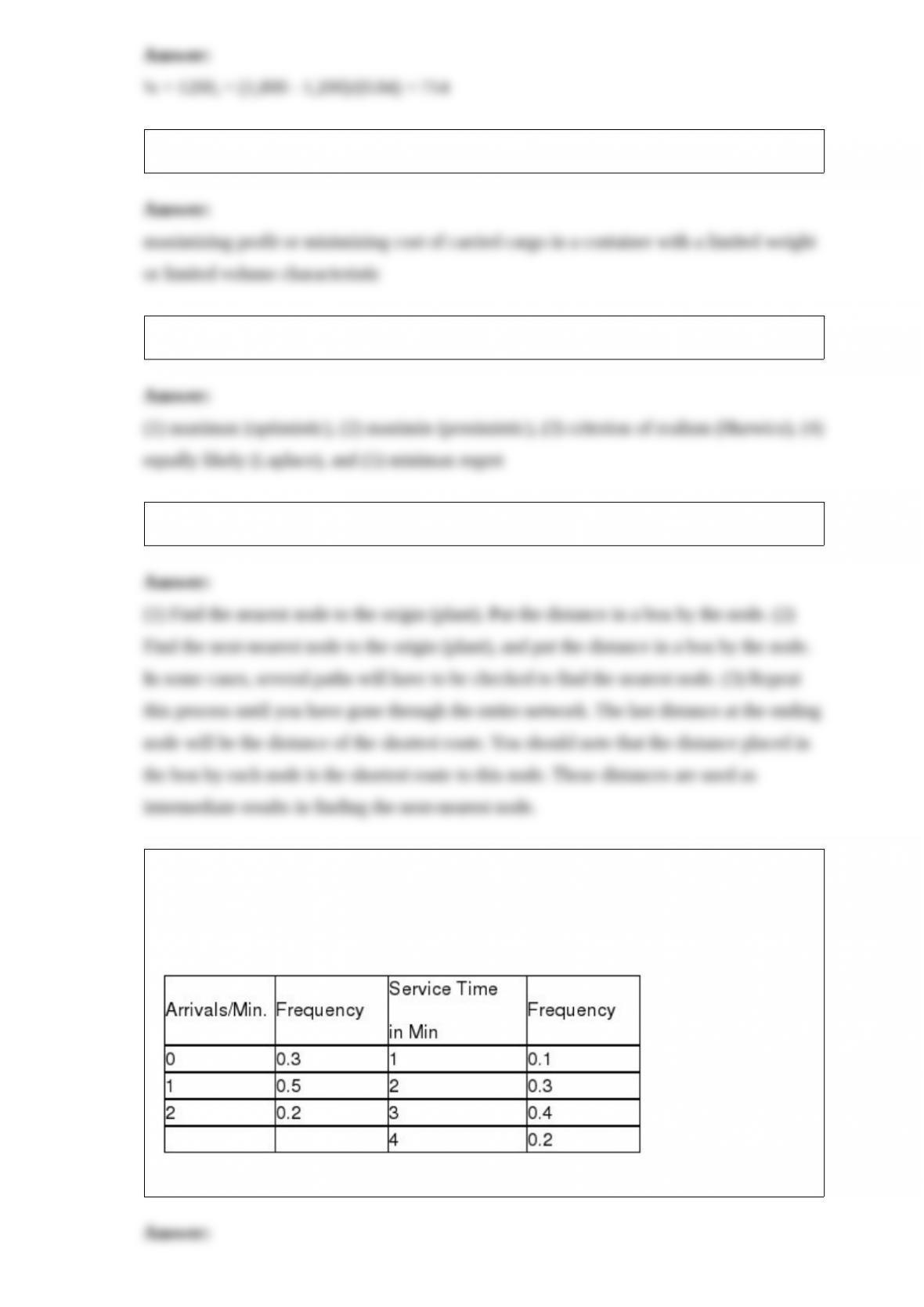
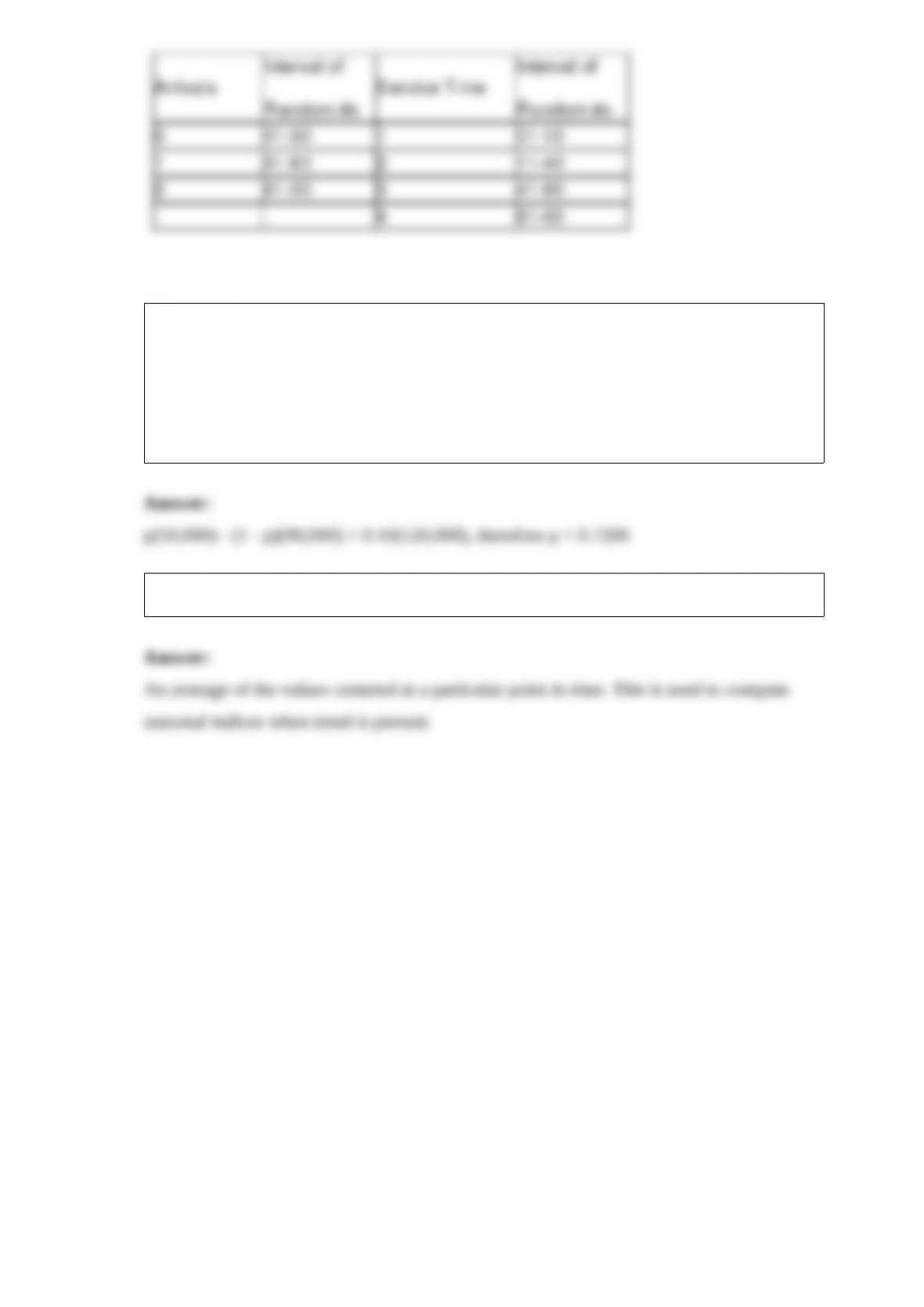
25) A certain grocery store has noted the following figures with regard to the number of
people who arrive at its three checkout stands ready to check out, and the time it takes
to check out the individuals.
Create an appropriate table of interval of random numbers for both variables.
26) David N. Goliath is planning to open a sporting goods store. However, the initial
investment is $120,000. He currently has this money in a certificate of deposit earning
10 percent. He may leave it there if he decides not to open the store. If he opens the
store and it is successful he will generate a profit of $50,000. If it is not successful, he
will lose $90,000. What would the probability of a successful store have to be for David
to prefer this to investing in a CD?
27) In general terms, describe a centered moving average.