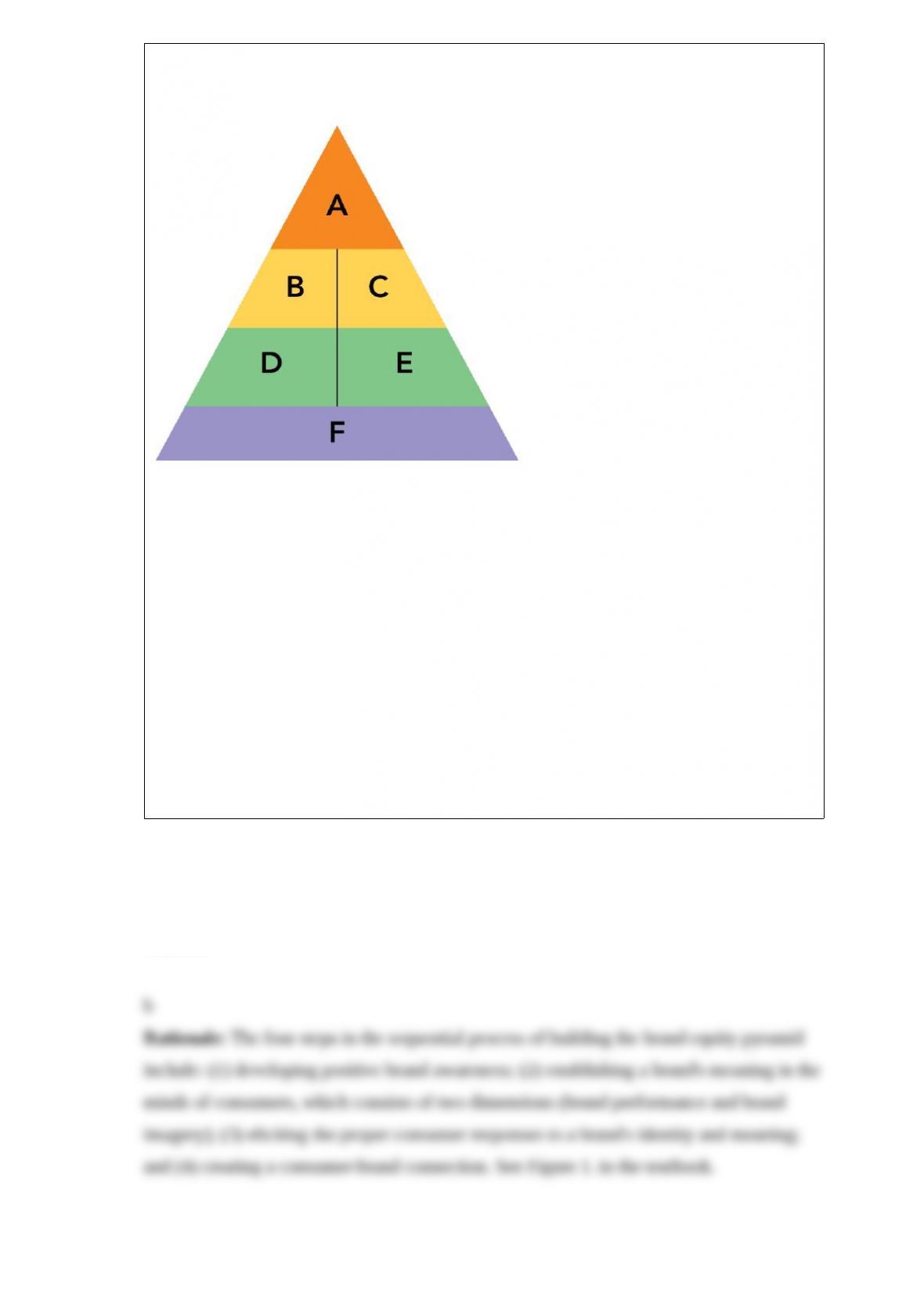
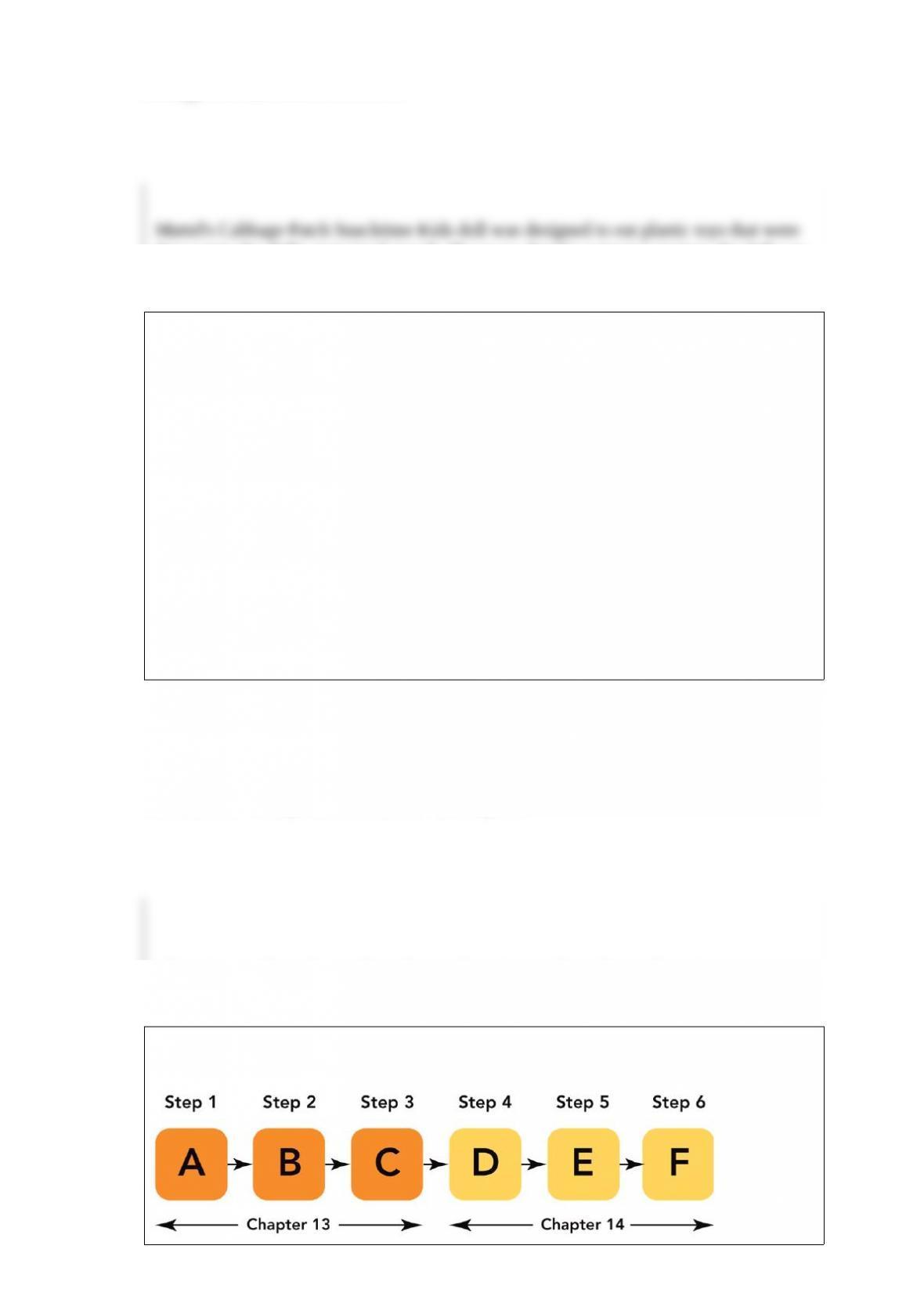
Figure 1.
Figure 1. above shows the sequential process of building brand equity. The second step
is to establish a brand’s meaning in the minds of consumers. This step consists of two
dimensions, “D” and “E,” which stand for __________ and __________.
a. brand identity; brand emotion
b. brand performance; brand imagery
c. consumer judgments; consumer feelings
d. brand awareness; consumer-brand connection
e. consumer feelings; brand imagery
Answer:
In an inflationary economy, the cost to produce and buy products and services
__________ as prices __________.
a. increases; increase
b. increases; decrease
c. decreases; increase
d. decreases; decrease
e. does not change; increase
Answer:
Which cost-oriented pricing method holds that a product’s unit costs predictably decline
by 10 to 30 percent each time its production volume doubles?
a. experience curve pricing
b. cost-plus percentage-of-cost pricing
c. cost-plus fixed-fee pricing
d. standard markup pricing
e. derived demand pricing
Answer:

A(n) __________ is a supplier’s attempt to stipulate to whom distributors may resell the
supplier’s products and in what specific geographical areas or territories they may sell.
a. oligopolistic practice
b. monopolistic practice
c. refusal to deal
d. tying arrangement
e. resale restriction
Answer:
Penetration pricing is intended to appeal to which market?
a. highly selective, quality-seeking consumers
b. price-insensitive markets
c. specialty product markets
d. the same markets as those targeted with a skimming pricing strategy
e. the mass market
Answer:

Newman’s Own is a company that gives all of its profits to charities. The company
produces popcorn, salsa, pasta sauce, and salad dressings under the Newman’s Own
brand name. These product lines comprise the company’s
a. product mix.
b. stock keeping units.
c. product category.
d. product class.
e. marketing category.
Answer:
A(n) __________ reimburses a retailer for extra in-store support or special featuring of
a brand.
a. organizational allowance
b. case allowance
c. finance allowance
d. manufacturer’s inducement
e. merchandise allowance

Answer:
Collaborative filtering gives marketers the ability to make a dead-on sales
recommendation to a buyer in _________.
a. true time
b. real time
c. click time
d. genuine time
e. bona fide time
Answer:
Another name for efficient consumer response systems is __________.
a. customer logistics factors
b. order replenishment systems
c. minimum-inventory systems
d. quick response systems
e. web-based response systems
Answer:
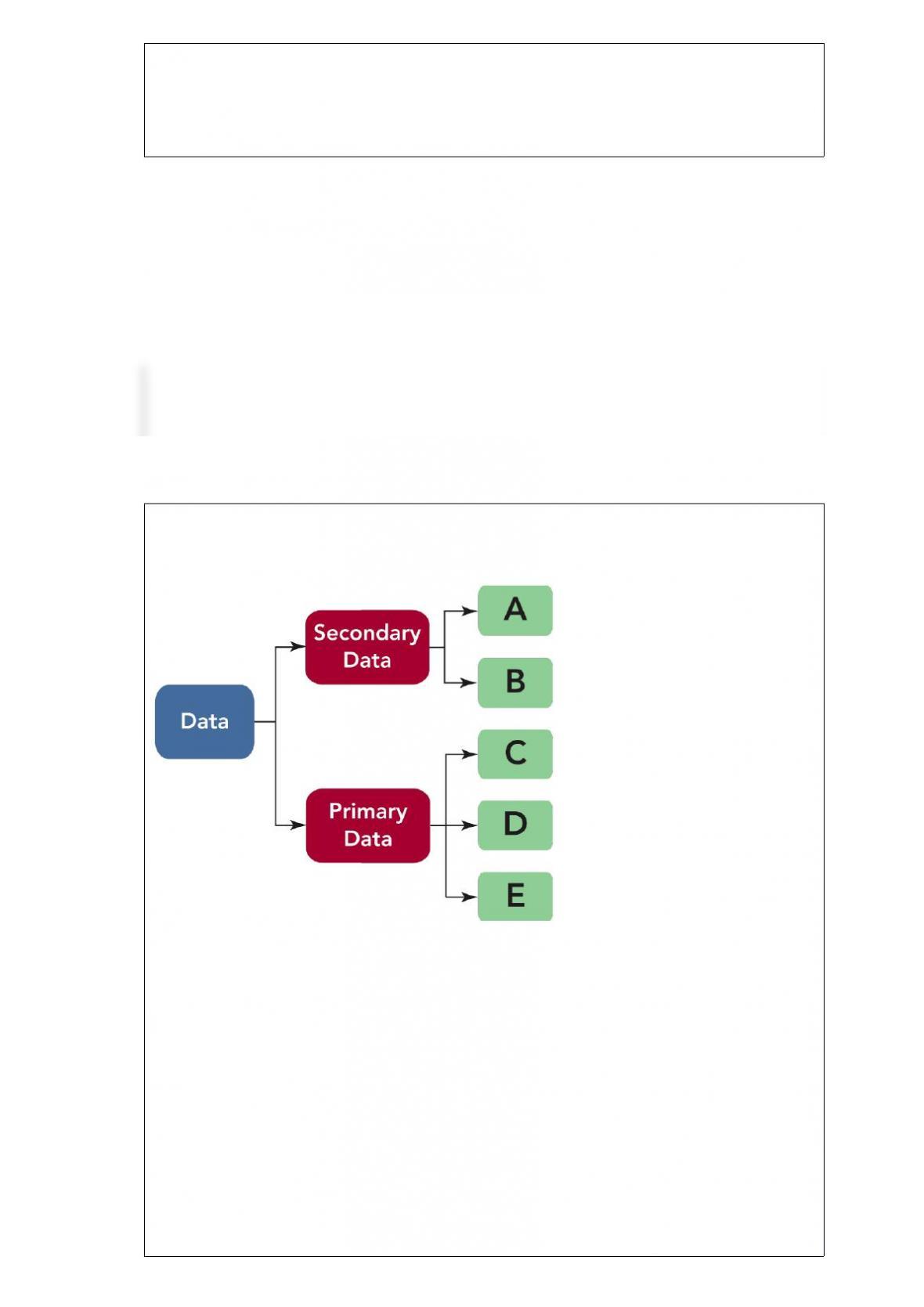
Figure 1.b
Figure 1.b above shows that primary data may be divided into three related parts. If “C”
represents data collected from mechanical, personal, or neuromarketing methods, which
type of data is “C?”
a. questionnaire data
b. mined data
c. internal secondary data
d. external secondary data
e. observational data
Answer:
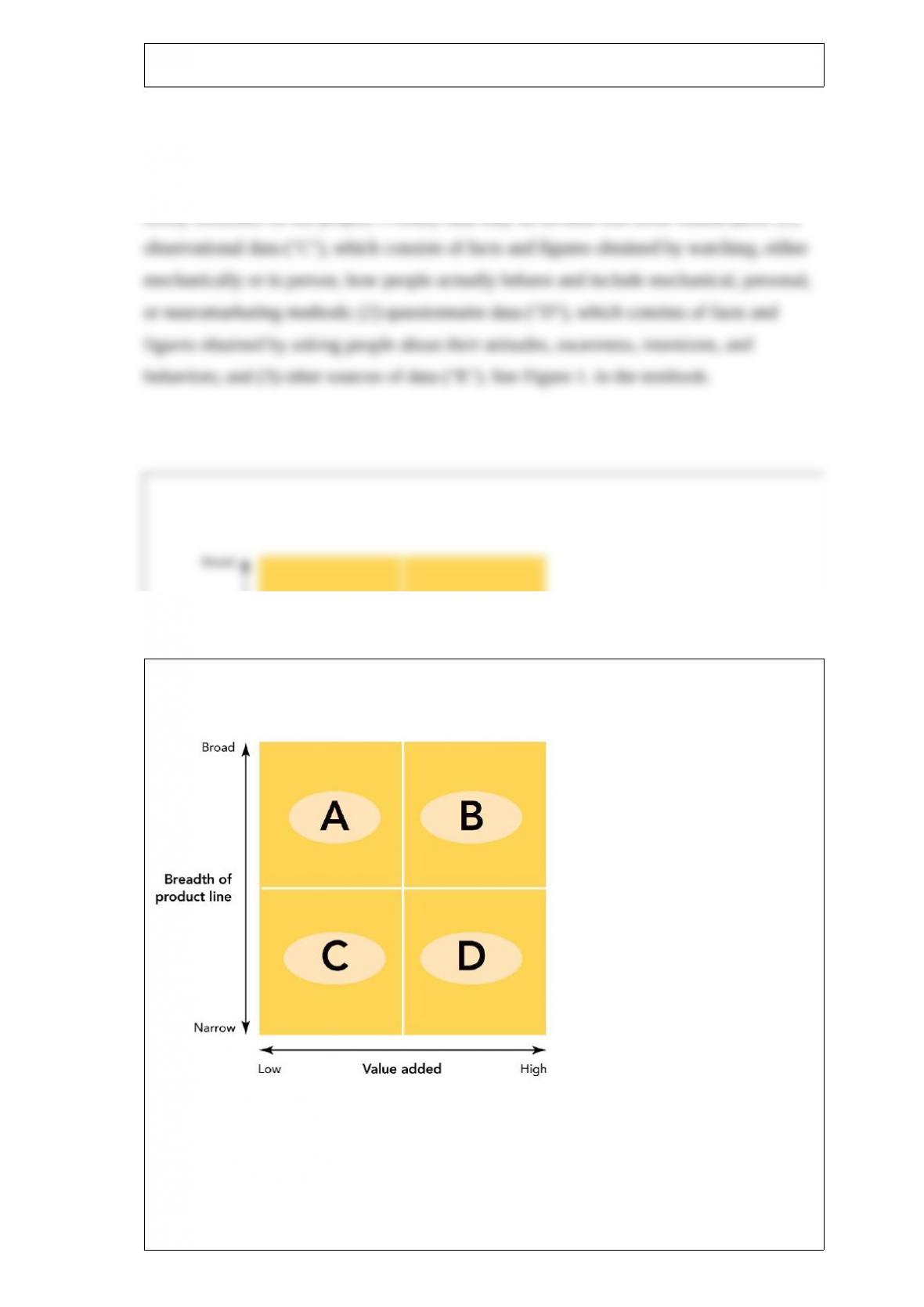
Figure 1.
Which of the following stores would best fit in “B” shown in Figure 1. above?
a. Kmart
b. Payless ShoeSource
c. Bloomingdales department store
d. 7-Eleven
e. Lamborghini automobile dealer
Answer:
Which of the following statements regarding retail pricing is most accurate?
a. Consumers will often base their perceptions of a store’s prices on a benchmark of the
highest priced item in the store.
b. Consumers are influenced more by a store’s ambiance than its product prices.
c. Stores that offer rebates and take an excessive amount of time to process them may
create negative consumer perceptions.
d. New technology has almost made shrinkage a thing of the past.
e. The only difference between everyday low pricing and everyday fair pricing is
whether the store sells food or non-food items.
Answer:
Inventory carrying costs can be reduced by
a. using a straight salary compensation plan.
b. hiring additional full-time personnel.
c. allowing personnel to work overtime.
d. increasing the hours worked per week.
e. using a commission compensation system.
Answer:
Figure 1.
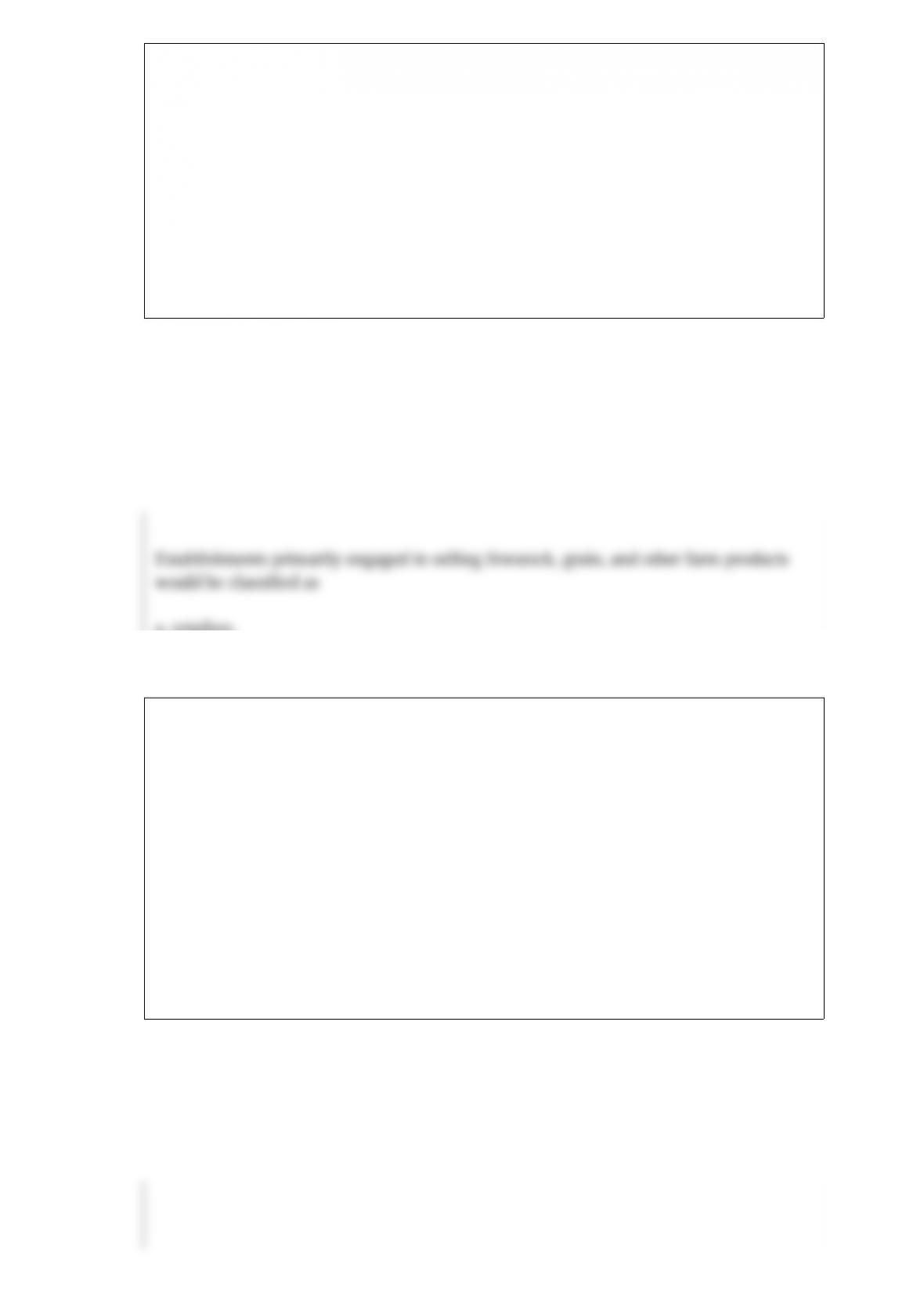
Channel “A” in Figure 1. above represents which type of promotional channel strategy?
a. direct
b. indirect
c. push
d. pull
e. vertical
Answer:
Establishments primarily engaged in selling livestock, grain, and other farm products
would be classified as
a. retailers.
b. brokers.
c. ultimate consumers.
d. wholesalers.
e. middlemen.
Answer:
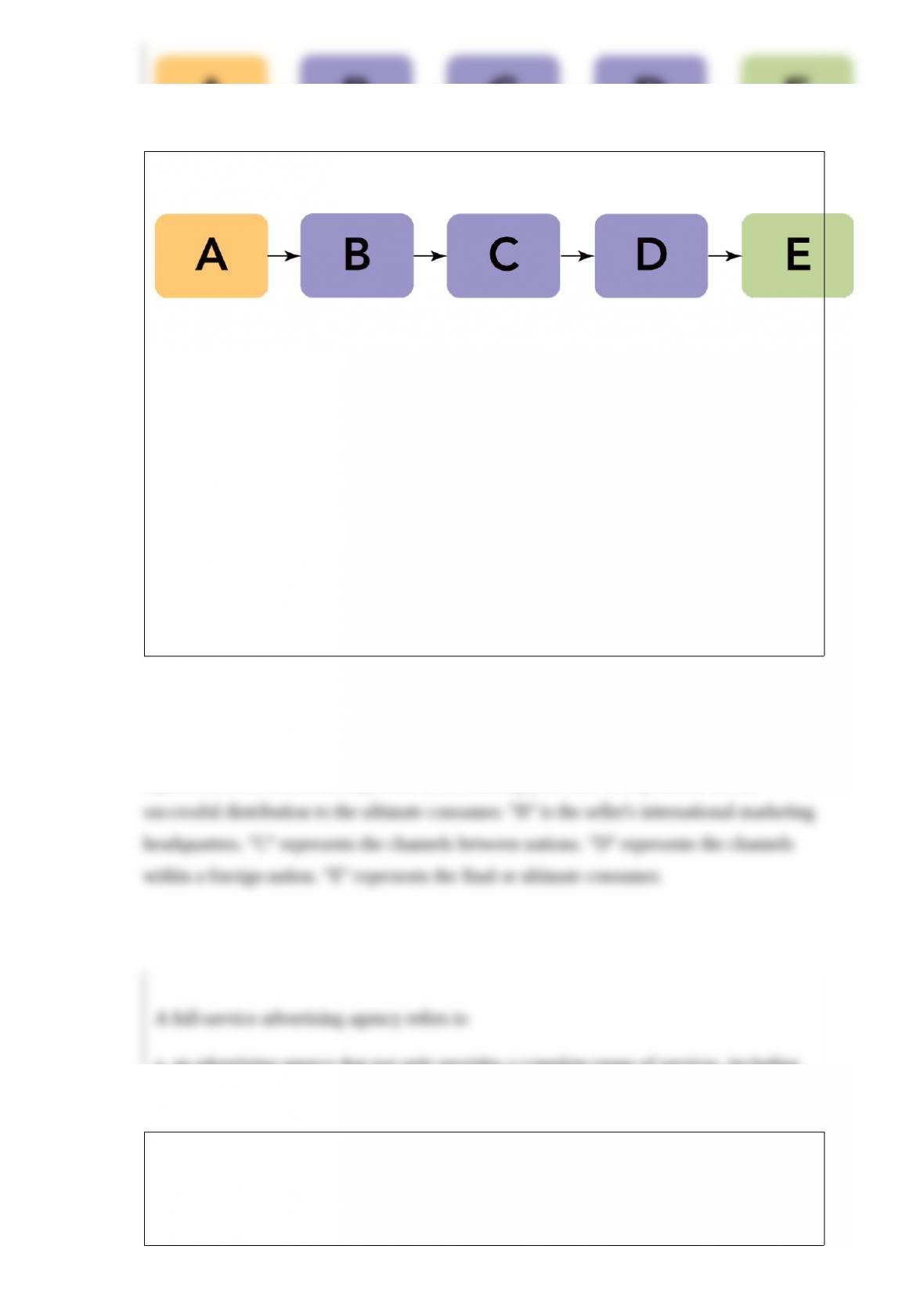
Figure 1.
Figure 1. above outlines the distribution channels through which a product
manufactured in one country must travel to reach its destination in another country. “C”
represents the
a. seller.
b. seller’s international marketing headquarters.
c. channels between nations.
d. channels within foreign nations.
e. final consumer.
Answer:
A full-service advertising agency refers to
a. an advertising agency that not only provides a complete range of services, including
market research, media selection, copy development, artwork, and production, but also
has input into actual product design.
b. an advertising agency that specializes in one aspect of the advertising process such as
developing advertising copy or providing social media services.
c. an advertising agency that provides the most complete range of services, including
market research, media selection, copy development, artwork, and production.
d. firms that are large enough to carry their own in-house advertising staff to provide all
advertising services the company needs.
e. an organization that sets a firm’s advertising objectives, designs the market research,
recommends media selection, suggests copy development and artwork, and then allows
the firm to implement the recommendations in order to save the firm money.
Answer:
Which of the following is the best example of an organizational buyer?
a. a mother buying milk for her young son
b. a computer programmer buying the latest game for his PlayStation 3
c. a store owner buying hand-painted slate signs to sell in her store
d. a botanist buying a rose bush for his home garden
e. a parent buying a softball glove for a daughter
Answer:
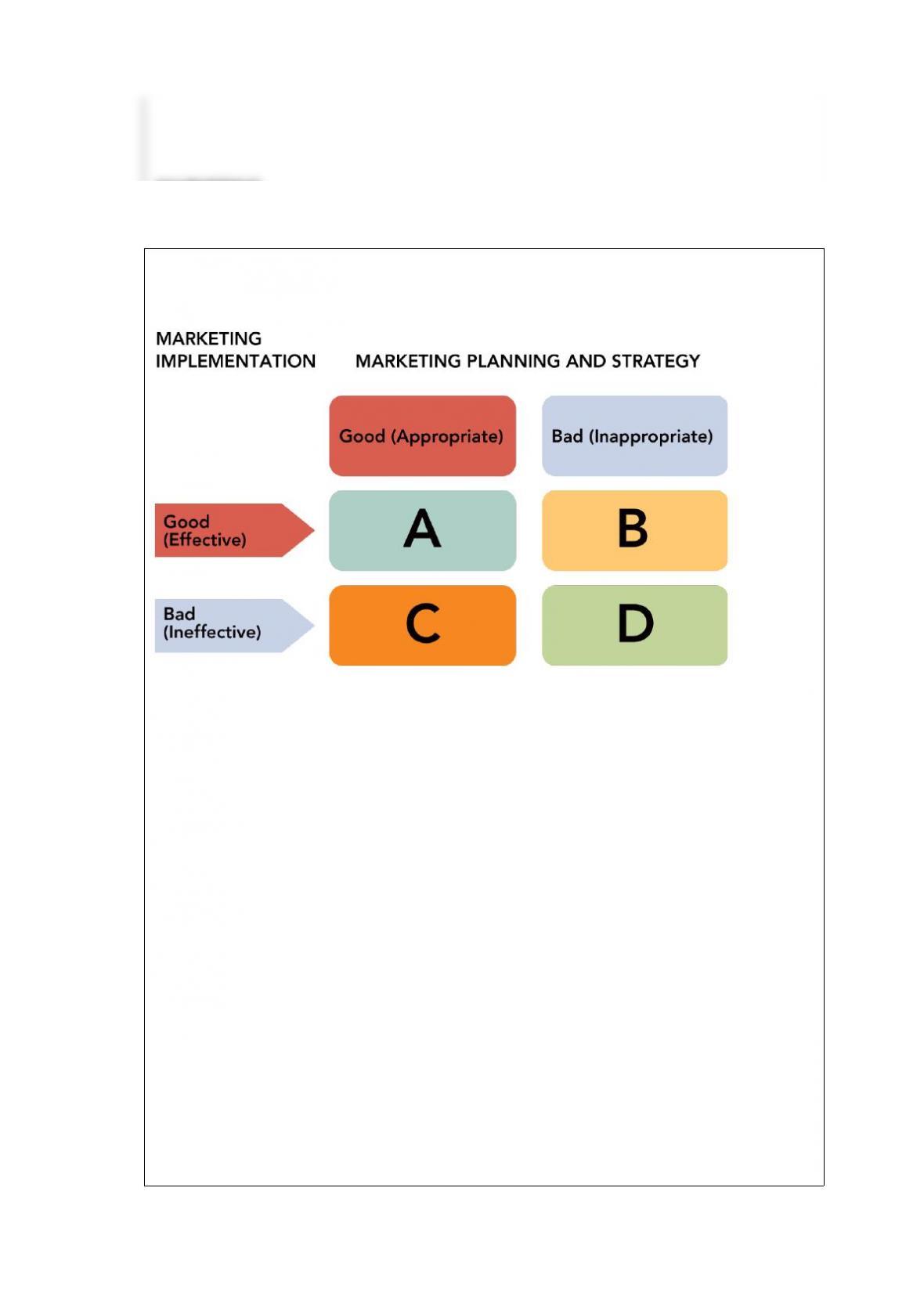
Figure 22-A
Consider Figure 22-A above. Effective managers track the progress of their marketing
plans to identify problems that need to be corrected. Sometimes, the problems are with
the marketing plan and its strategies; at other times, they may be due to their
implementation; and at still other times, they may be due to both. Recall that research
on what really works shows that successful firms have excellence on both the planning
and strategy side and the implementation or execution side. As Figure 22-A shows,
marketers can develop and implement strategies that have four possible results. For “B,”
identify the likely result of the planning and implementation of the marketing plan and
its strategies for a product or service.
a. Trouble: The solution is to recognize that only implementation is at fault and to
correct it.
b. Success: The marketing program achieves its objectives.
c. Failure: The marketing program flounders and fails to achieve its objectives.
d. Trouble: The solution is to recognize that only the strategy is at fault and to correct it.
e. Cannot be determined with the information provided.
Answer:
Mattel’s Cabbage Patch Snacktime Kids doll was designed to eat plastic toys that were
drawn into the doll’s motorized mouth. However, despite extensive testing, the doll was
found to “eat” the child’s hair and was subsequently recalled and discontinued. Mattel
discontinued the item because of consumers’ right to
a. choose.
b. be informed.
c. be treated courteously.
d. safety.
e. happiness.
Answer:
Figure 1.
Figure 1. above represents the six steps in the price-setting process. Which letter
represents the step where a firm would consider a one price or flexible price strategy;
company, customer and competitive effects; and incremental costs and revenues?
a. “B”
b. “C”
c. “D”
d. “E”
e. “F”
Answer:
A new beverage by Snapple is currently being sold only in the western United States.
Over the next year, Snapple plans to introduce the beverage sequentially into areas in
the eastern U.S. This is referred to as a
a. limited rollout.
b. phased rollout.
c. regional rollout.
d. market-product expansion.
e. phased commercialization.
Answer:
Three different objectives relate to a firm’s profit, which have different implications for
pricing strategy. The three profit-oriented objectives include managing for long-run
profits, maximizing current profit objectives, and __________.
a. accumulating profits
b. reinvesting profits
c. redistributing profits
d. maximizing gross margin
e. achieving a target return
Answer:

A market-product grid refers to
a. a visual representation of all products offered within a specific product class.
b. a framework used to compare the relative market share of one firm’s product
offerings to those of its competitors.
c. a technique that seeks opportunities by finding the optimum balance between
marketing efficiencies versus R&D”manufacturing efficiencies.
d. a framework used to relate the market segments of potential buyers to products
offered or potential marketing actions by an organization.
e. a technique that helps a firm search for growth opportunities from among current and
new markets as well as current and new products.
Answer:
Dutch tulip growers have developed pre-sprouted bulbs, which will bloom in
consumers’ gardens just a few weeks after spring planting so people who didn’t or
couldn”t plant bulbs in the fall will have spring flowers. Nurseries plan to promote the
pre-sprouted tulips to people who appreciate “finer things” and will pay the premium
price. Which of the following VALS segments would be most suitable for this product?
a. Survivors
b. Believers
c. Makers
d. Innovators
e. Experiencers

Answer:
When Keith Monroe told his father the family needed a new computer, the father told
Keith to determine what features it should have. Keith’s mother suggested the new
computer needed an ergonomic keyboard because she was having some problems with
her wrists. Wendy, Keith’s sister, asked that the new computer have a lot of memory so
she can edit her photos more quickly. Mr. Monroe said what they bought would depend
on what Keith learned. Which of the following sentences best describes the roles each
family member played in making this decision?
a. Keith’s mother and Wendy acted as information gatherers, users, and decision
makers.
b. Keith took on all the roles except that of purchaser.
c. Keith’s father took on all of the roles.
d. Wendy acted as a user and an influencer.
e. Keith’s mother acted as an information gatherer, a user, an influencer, and a
gatekeeper.
Answer:

The size and number of JCPenney catalogs designed and mailed to consumers would
determine how much paper JCPMedia would need to buy. This is an example of
__________.
a. derived demand
b. reciprocity
c. a tying agreement
d. a transactional sale
e. elastic supply
Answer:
Manufacturer’s agents refer to agents who
a. furnish the racks or shelves that display merchandise in retail stores, perform all
channel functions, and sell on consignment to retailers.
b. take title to merchandise but sell only to buyers who call on them, pay cash for
merchandise, and furnish their own transportation for merchandise.
c. own the merchandise they sell but do not physically handle, stock, or deliver it.
d. have a small warehouse from which they stock their trucks for distribution to
retailers.
e. work for several producers and carry noncompetitive, complementary merchandise in
an exclusive territory.
Answer:
Which of the following statements regarding price lining is most accurate?
a. In order for price lining to be effective, there should be at least 10 specified price
points.
b. Price lining assumes that demand is inelastic at each price point but elastic between
price points.
c. Price lining assumes that demand is elastic at each price point but inelastic between
price points.
d. Price lining is the preferred pricing strategy for governmental contracts.
e. Price lining is the same as above-, at-, or below-market pricing.
Answer:
Alice Faulkner is a professional salesperson. She earns her living by selling advertising
for The New York Times newspaper. In addition to selling advertising to her regular
accounts, Alice is responsible for generating new advertising accounts for the
newspaper. In order to fulfill her responsibilities, Faulkner works hard to make sure the
potential customers she sells to are qualified prospects. How can Faulkner know if the
prospects she is selling to are in fact qualified prospects?
a. Qualified prospects have an interest in buying display advertising in the paper.
b. Qualified prospects have the money to buy display advertising in the paper.
c. Qualified prospects have a need for the advertising, can afford to buy it, and have the
authority to make the purchase decision.
d. Qualified prospects have the authority to influence decision makers.
e. Qualified prospects read the newspaper daily and recognize that it is a good
advertising medium.
Answer:
Figure 1.
In Figure 1. above, “B” represents the
a. functional level.
b. board of directors.
c. corporate level.
d. department level.
e. strategic business unit level.
Answer:
Figure 1.
Figures 1. above shows that in 2007, digital music downloads were in which stage of
the product life cycle?
a. introduction
b. growth

c. maturity
d. harvest
e. decline
Answer:
When thousands of college-age “brand ambassadors” at colleges and universities across
the U.S. needed to recruit volunteers to help incoming freshmen on campus move-in
day, the most effective way to reach the greatest number of students was by using
a. the campus radio.
b. social media.
c. phone solicitations.
d. ads in the campus newspaper.
e. hanging ads on dorm-room handles.
Answer:

Another name for flexible-price policy is __________.
a. target pricing
b. fluid pricing
c. price lining
d. market-based pricing
e. dynamic pricing
Answer: