Chapter 3
Media Traditions and the Paradox of Professionalism
Fill-in-the-Blank Questions
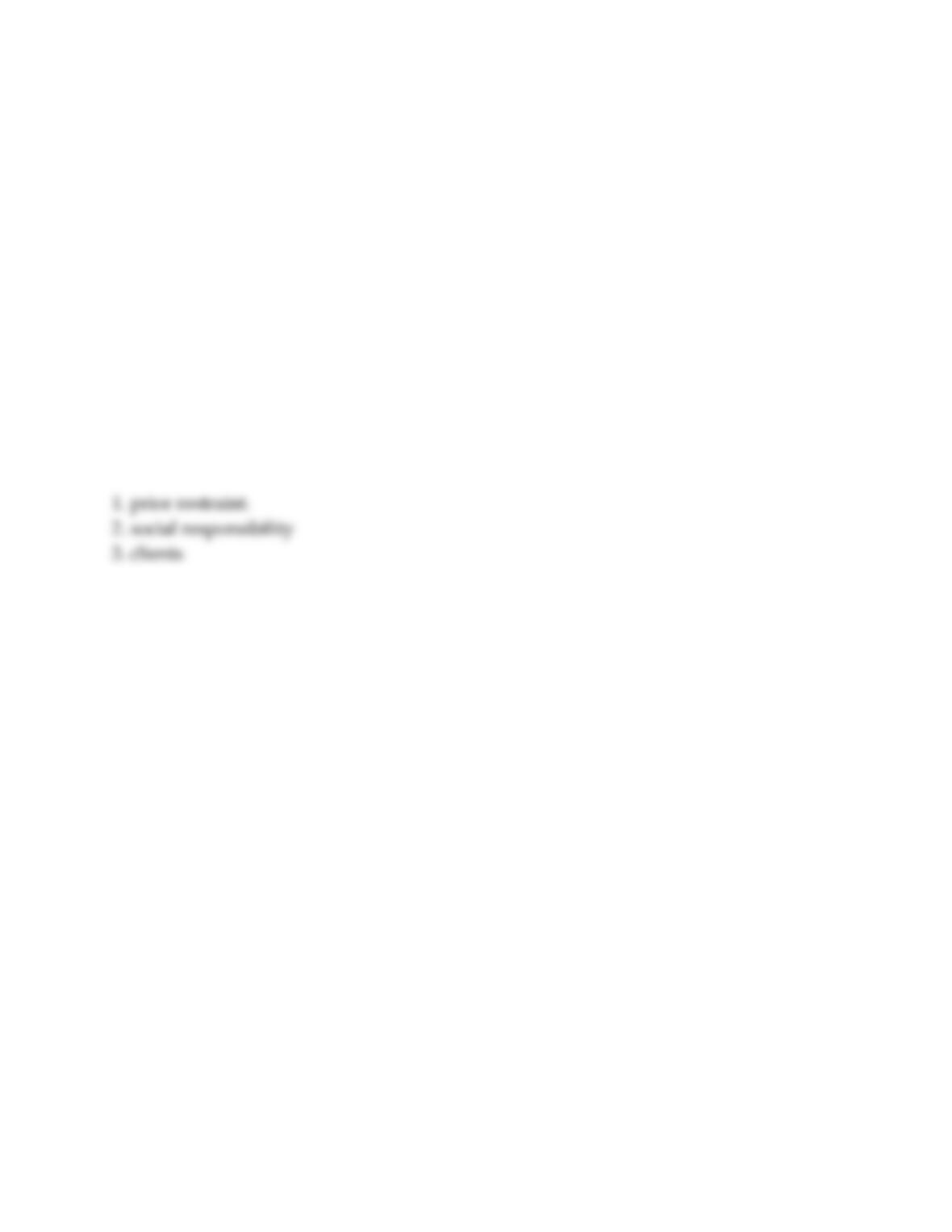
1. When government censors information, that is an example of ____________
_________________. (Hint: The Supreme Court ruled it illegal in the case of the
Pentagon Papers.)
2. The Hutchings Commission report contributed to the _______________
__________________ theory of the press.
3. A professional has a relationship with _____________, not customers.
Answers to fill-in-the-blank questions
1. Freedom House reports state that more than half of the world’s population lives in
nations with a free press.
2. Libertarian systems of government tend to have few forms of control over mass
media.
3. John Milton argued that media needed to be censored to protect the people whom
God put in positions of authority.
4 The First Amendment to the U.S. Constitution was based upon libertarian theory.
5. The social responsibility theory of the press is required by the First Amendment.
6. The social responsibility theory was a response to the Red Scare in America during
the early 1950s.
7. Democratic socialist theories of the press are used in Denmark and other
Scandinavian countries.
8. U.S. media practitioners are professionals because of the barriers to entry to their
fields.
9. Some thinkers say news media are not professions because they rely on advertising
and therefore are not autonomous.
10. The Hutchins Commission argued that mass media should focus on “freedom from”
instead of “freedom for” issues.
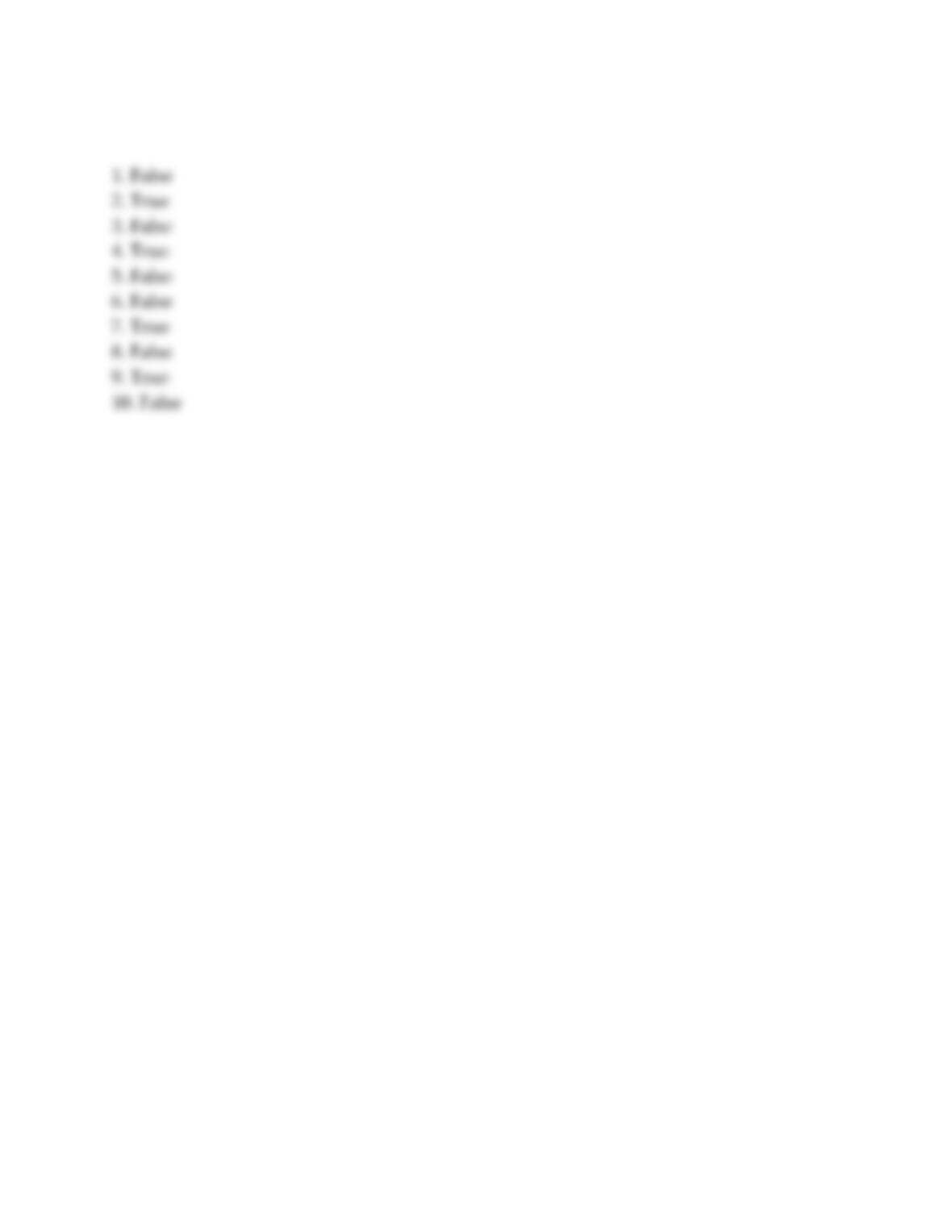
Answers to true/false questions
1. Which of these mass media theories was NOT a part of the original Four Theories of
the Press?
A. Authoritarian
B. Communism
C. Democratic socialist
D. Libertarianism
E. Social responsibility
2. The realization that “knowledge is power” was used to seek to justify the
________________ theory of mass media.
A. Authoritarian
B. Communism
C. Democratic socialist
D. Libertarianism
E. Social responsibility
3. The government is most likely to own the press under the ____________ theory of
mass media.
A. Authoritarian
B. Communism
C. Democratic socialist
D. Libertarianism
E. Social responsibility
4. John Stuart Mill’s argument that freedom of expression was essential was based on
his belief in theories of:
A. deontology.
B. libertarianism.
C. utilitarianism.
D. pure reason.
E. prima facie duties.
5. Laissez faire approaches to economics and government:
A. suggest that the government should implement many rules to protect its citizens.
B. argues the fewer rules, generally the better.
C. is tied to the democratic socialism theory of the press.
D. often leads to ad hoc moralizing.
E. requires journalists and advertising practitioners to follow the same rules.
6. Professions are often seen as engaging in a complex struggle for all of these EXCEPT:
A. power.
B. privilege.
C. platonic responsibility.
D. prestige.
7. The _______________ theory of mass media tends to be transitory in nature, as the
societies tend to be changing in nations that are home to this theory.
A. Democratic socialist
B. Revolutionary
C. Dominant
D. Authoritarian
E. Social Responsibility
8. Which of these was NOT on Abraham Flexner’s 1915 list of criteria for professionals?
A. They have intellectual operations with large individual responsibility.
B. They work up to a practical end.
C. They derive their raw material from science and learning.
D. They have high social and financial status.

E. They tend to self-organize.
Answers to multiple choice questions
1. Discuss differences in how occupational sociologists and philosophers would define
professionalism in the context of mass media. Which group might be more likely to
think of mass media practitioners are professionals?
2. Discuss the finding and importance of the Hutchins Commission in its relationship to
the social responsibility theory of mass media.