
If a product is a necessity and has no substitutes at all, demand for the product is most
likely to be:
A) very inelastic.
B) inelastic.
C) unitary elastic.
D) elastic.
The rational outcome of a guaranteed price matching or “meet-the-competition” policy
is that:
A) both firms will sell at the low price.
B) one firm will sell at a low price and the competitor will sell at a high price.
C) both firms will sell at the high price.
D) consumers will be better off.
Daily Output of Scotland and Poland
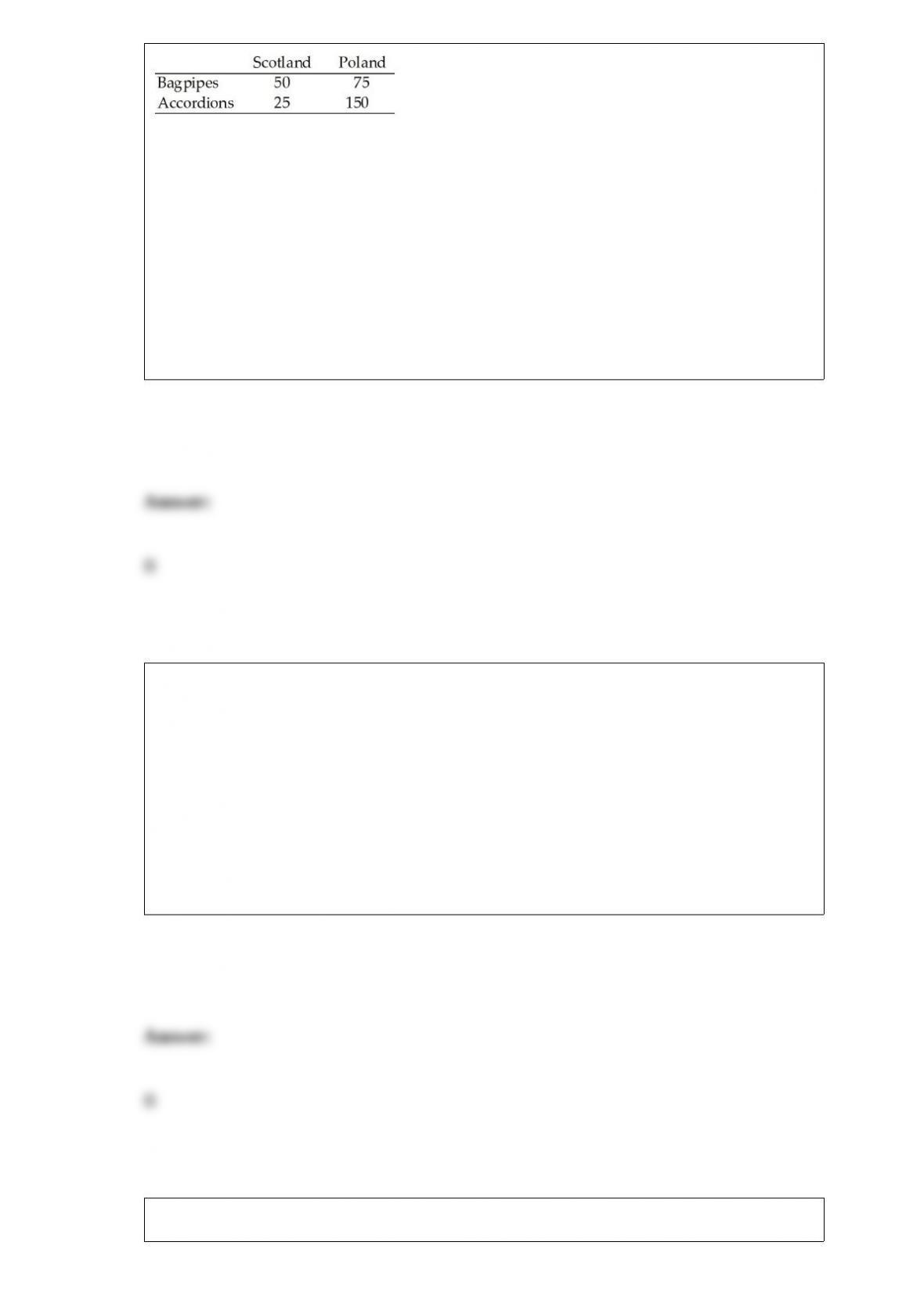
Table 18.1
Refer to Table 18.1. The opportunity cost of an accordion in Poland is:
A) 2 bagpipes.
B) 1/2 bagpipe.
C) 6 bagpipes.
D) 1/3 bagpipe.
Suppose you operate in a monopolistically competitive market. If you sell your good at
a price of $10 and your average cost of production is $8:
A) your market is in long-run equilibrium.
B) we can expect firms to enter your market and sell a similar good in the long run.
C) there will be no incentive for competing firms to enter your market in the long run.
D) you cannot be in short-run equilibrium.
During the 1980s, firms from ________ were accused of dumping VCRs in Europe.

A) Taiwan
B) Japan
C) Mexico
D) Korea
Health insurance companies face an asymmetric information problem because:
A) companies have superior information concerning the risk of illness or injury of those
insured.
B) buyers have superior information concerning their risk of illness or injury.
C) the insurance companies and buyers both have equal information concerning the risk
of illness or injury of those insured.
D) the probability of becoming ill or injured is unrelated to the insured person’s
occupation.
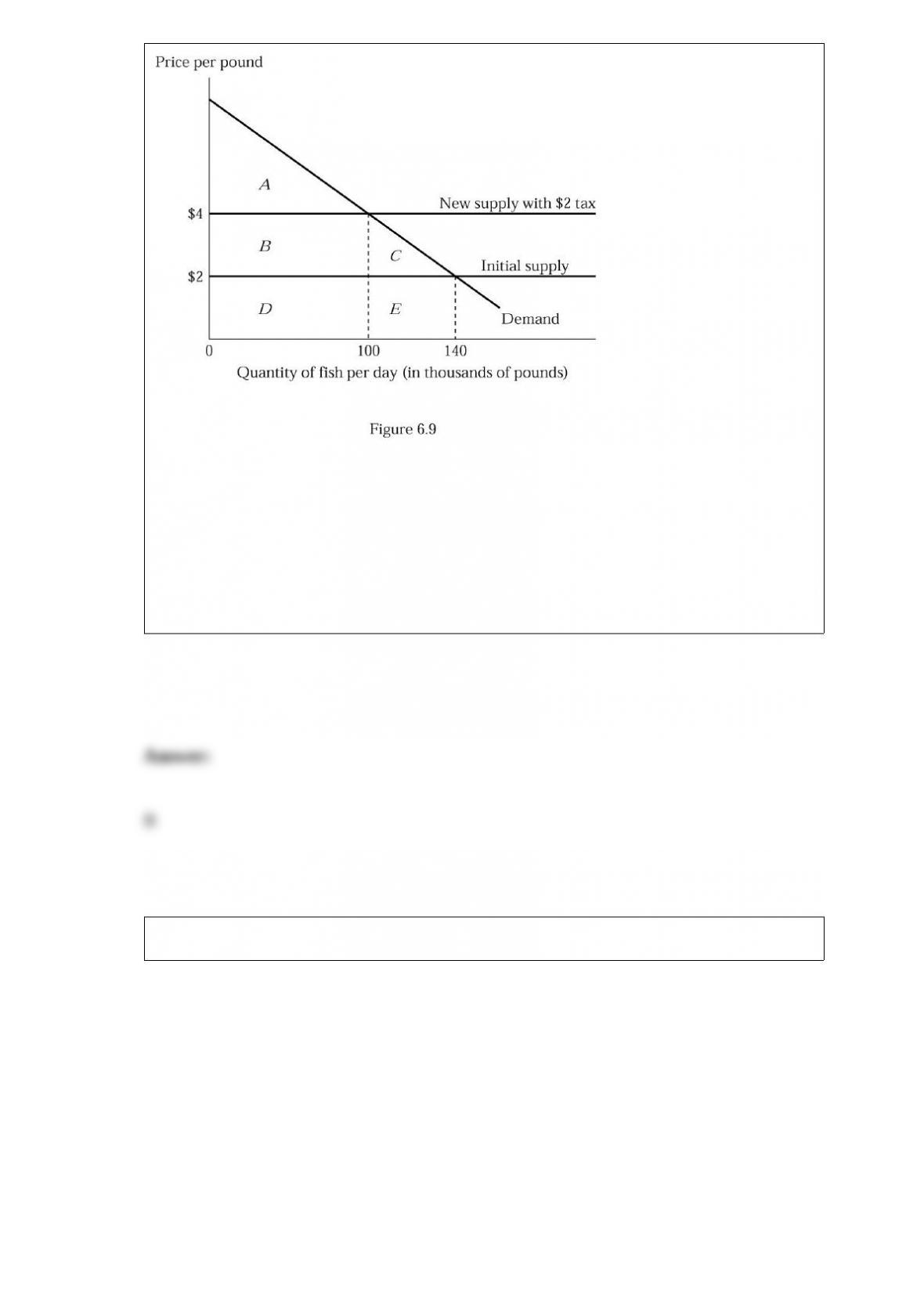
Figure 6.9 depicts a hypothetical fish market with a horizontal supply curve. Suppose
the government imposes a tax of $2 per pound of fish, and the tax is paid in legal terms
by producers. Which of the following shows the extra money consumers must pay for
the 100,000 pounds of fish they purchase?
A) Triangle A
B) Rectangle B
C) Triangle A + Rectangle B
D) Rectangle B + Triangle C
Consider Figure 12.5. If player A confesses and player B does not, then:
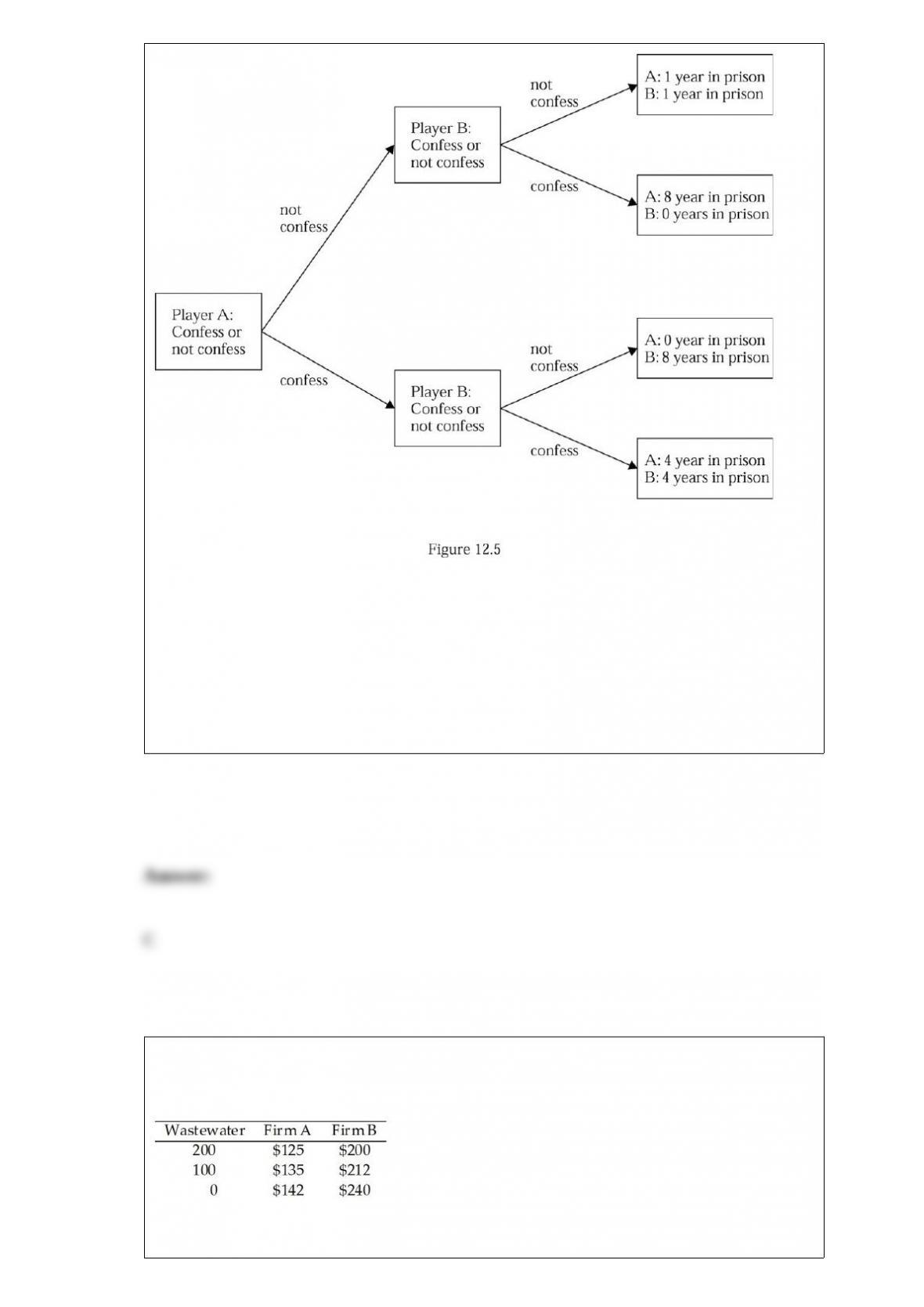
A) both players spend 4 years in jail.
B) both players spend 1 year in jail.
C) player A spends 0 years in jail, and player B spends 8 years in jail.
D) player A spends 8 years in jail, and player B spends 0 years in jail.
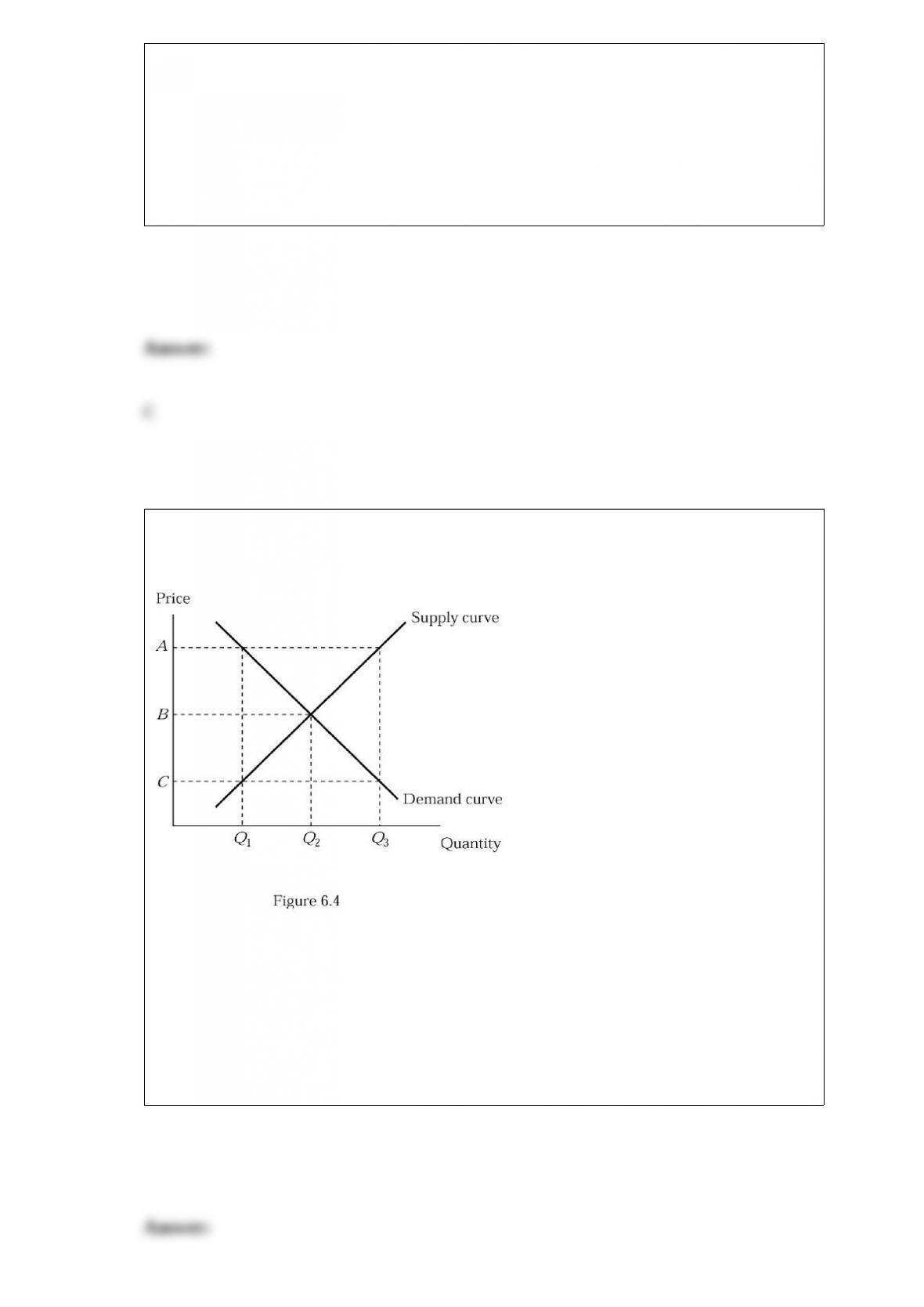
Consider the data in Table 16.2. If each firm is currently generating 100 gallons of
wastewater per day, Firm A would need to be paid at least ________ from Firm B to
reduce wastewater production to 0 gallons per day.
Table 16.2
A) $12
B) $10
C) $7
D) $5
Refer to Figure 6.4. If a market experiences excess demand and fails to maximize total
surplus, a maximum price must have been set at:
A) A.
B) B.
C) C.
D) There is not sufficient information.

A perfectly competitive market is a market that has:
A) many buyers.
B) many sellers.
C) no single buyer or seller who can affect the price.
D) All of the above are correct.
People who complete college provide a signal to employers about their skills and thus
face better employment opportunities than equally skilled high school graduates. This is
called:
A) the learning effect of a college education.
B) the signaling effect of a college education.
C) the discriminatory effect of a college education.
D) none of the above
In a perfectly competitive industry, in the long run:
A) firms earn a positive economic profit.
B) firms earn zero economic profit.
C) firms earn a negative economic profit.
D) firms might earn a positive, zero, or negative economic profit.
The GATT was initiated in 1947 by the U.S. and how many other countries?
A) 23
B) 13
C) 40
D) 147
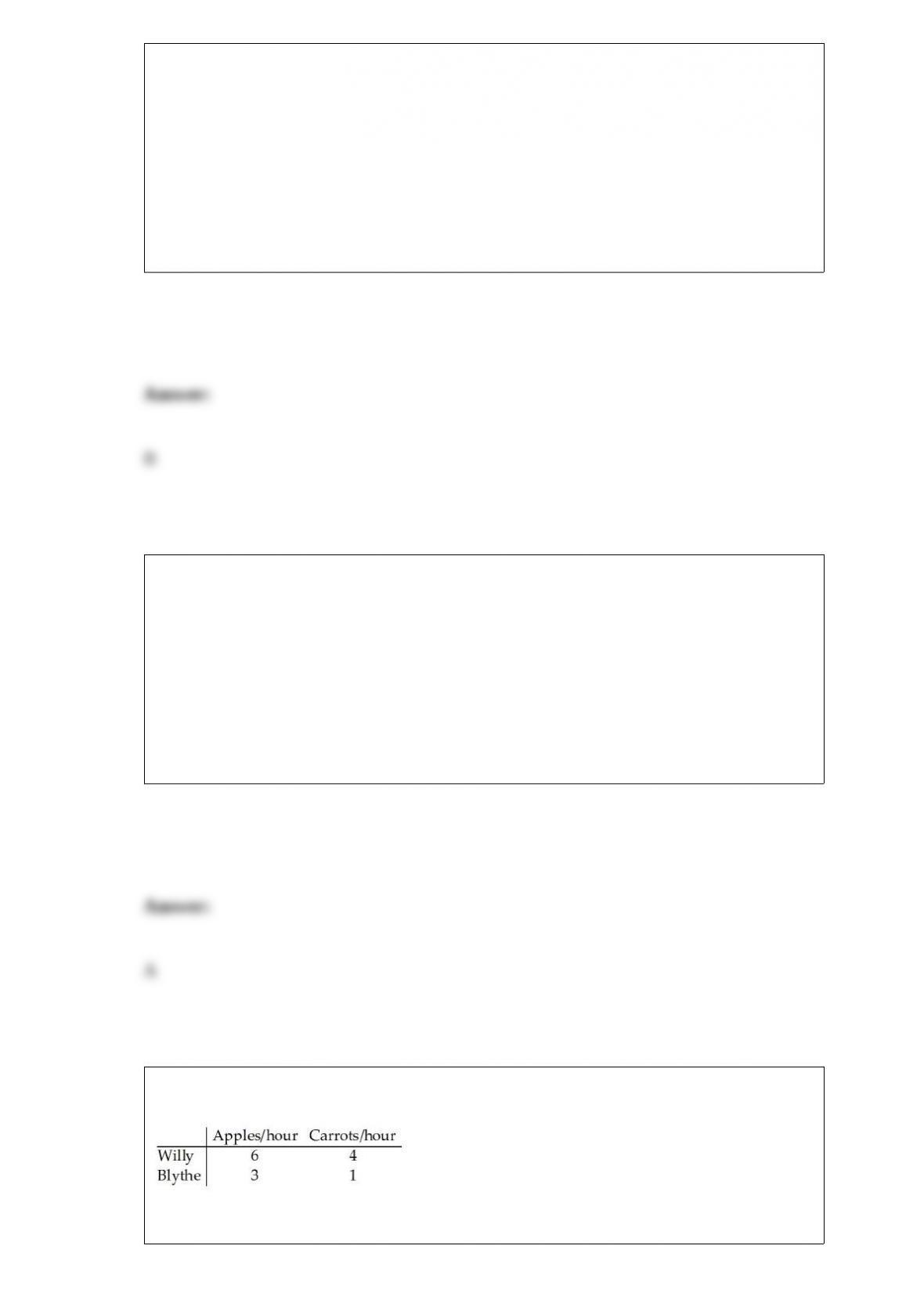
Table 3.1 illustrates Willy and Blythe’s hourly production for apples and carrots. From
the table, we can conclude that:
Table 3.1

A) Willy has both an absolute and comparative advantage in apple production.
B) Willy has both an absolute and comparative advantage in carrot production.
C) Willy has neither an absolute nor comparative advantage in apple production.
D) Willy has neither an absolute nor a comparative advantage in carrot production.
Suppose 100 townspeople value a statue of the local hero at $1 each, and construction
of the statue would cost $90. Which of the following is true?
A) It would be efficient to build the statue, but it may not be built because some of the
townspeople who value the statue will not contribute to its construction.
B) It would be efficient to build the statue and it will be built because at least ninety of
the townspeople will contribute to its construction.
C) The statue will not be built because it is not efficient to build a statue that costs $90
if the townspeople value it at only $1.
D) The statue will not be built because the local government does not have the power to
tax only those who value it.
If the nominal minimum wage is unchanged while prices fall, then the real minimum
wage:
A) rises.
B) falls.
C) stays the same.
D) is unaffected.
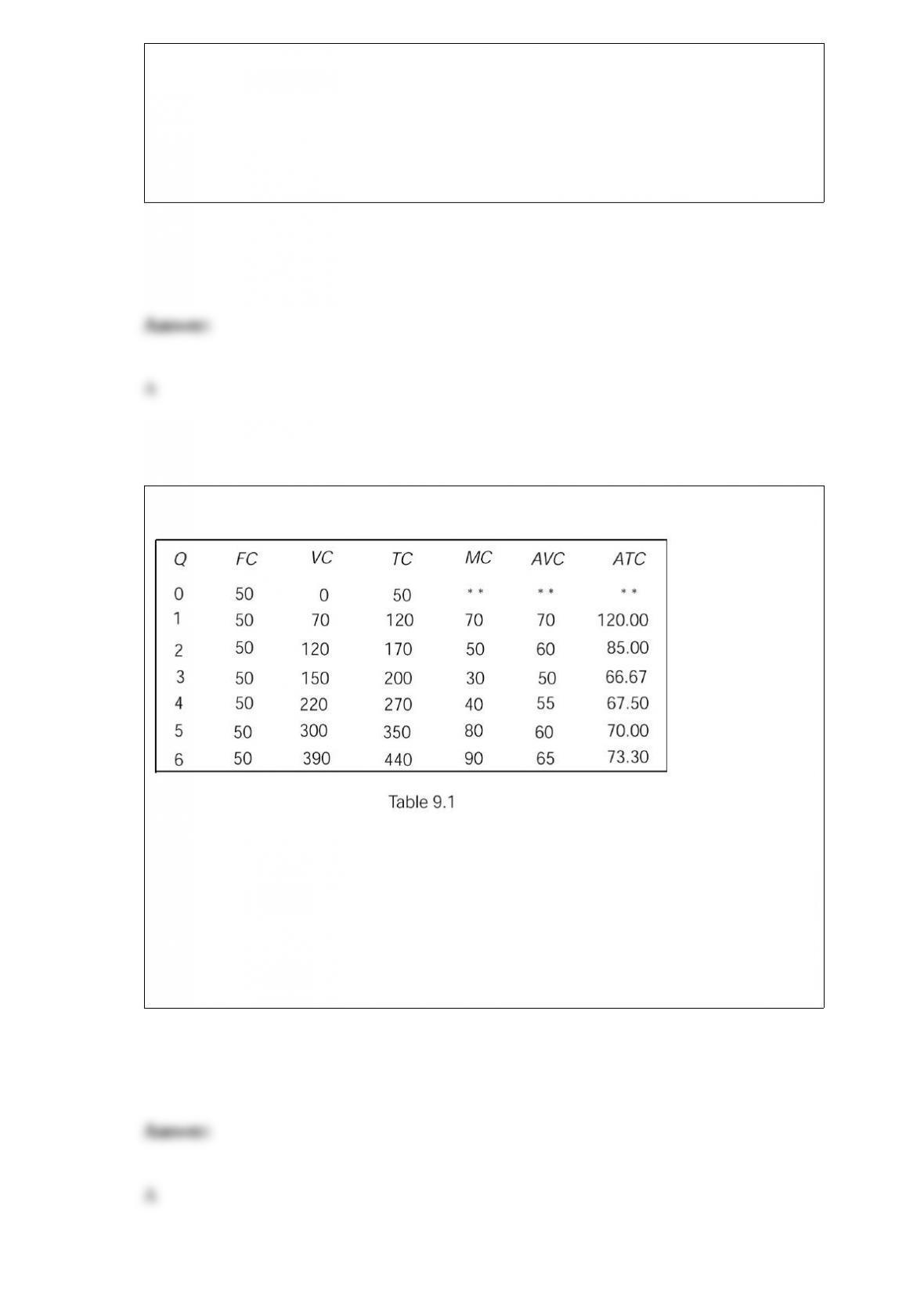
Refer to Table 9.1. If the market price is $80, then this firm’s profit would be:
A) $50.
B) $44.
C) $60.
D) $70.
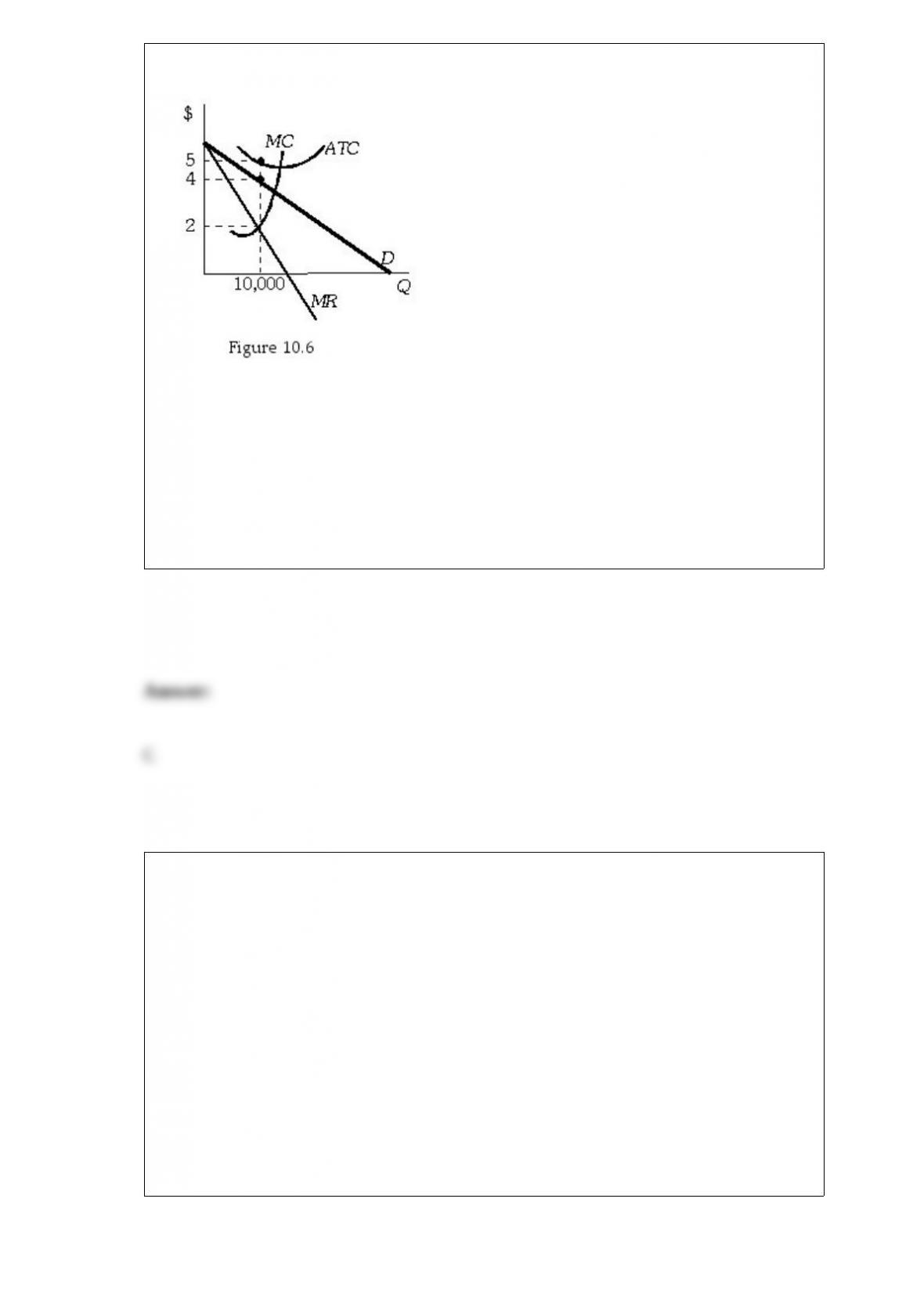
Refer to Figure 10.6. At the profit-maximizing level of output, the firm has a:
A) profit of $10,000.
B) profit of $20,000.
C) loss of $10,000.
D) break-even position.
Recall Application 3, “Civil Liberties and the Efficiency of Government,” to
answer the following questions:
According to the application, improved civil liberties has been shown to be positively
correlated with:
A) return to government investment projects.
B) the number of failed government projects.
C) the size of the government.
D) the number of successful private investment projects.

Daily Output of Scotland and Poland
Table 18.1
Refer to Table 18.1. The opportunity cost of a bagpipe in Poland is:
A) 2 accordions.
B) 1/2 accordion.
C) 6 accordions.
D) 1/3 accordion.
A mixed market is one in which:
A) consumers can be buyers and sellers and producers can be sellers and buyers.
B) there are different qualities of a good being sold in the market and there is imperfect
information about the quality of each good.
C) a seller of a good requires that the purchase of one good be tied to the purchase of
another.
D) demand is positively sloped and supply is negatively sloped.
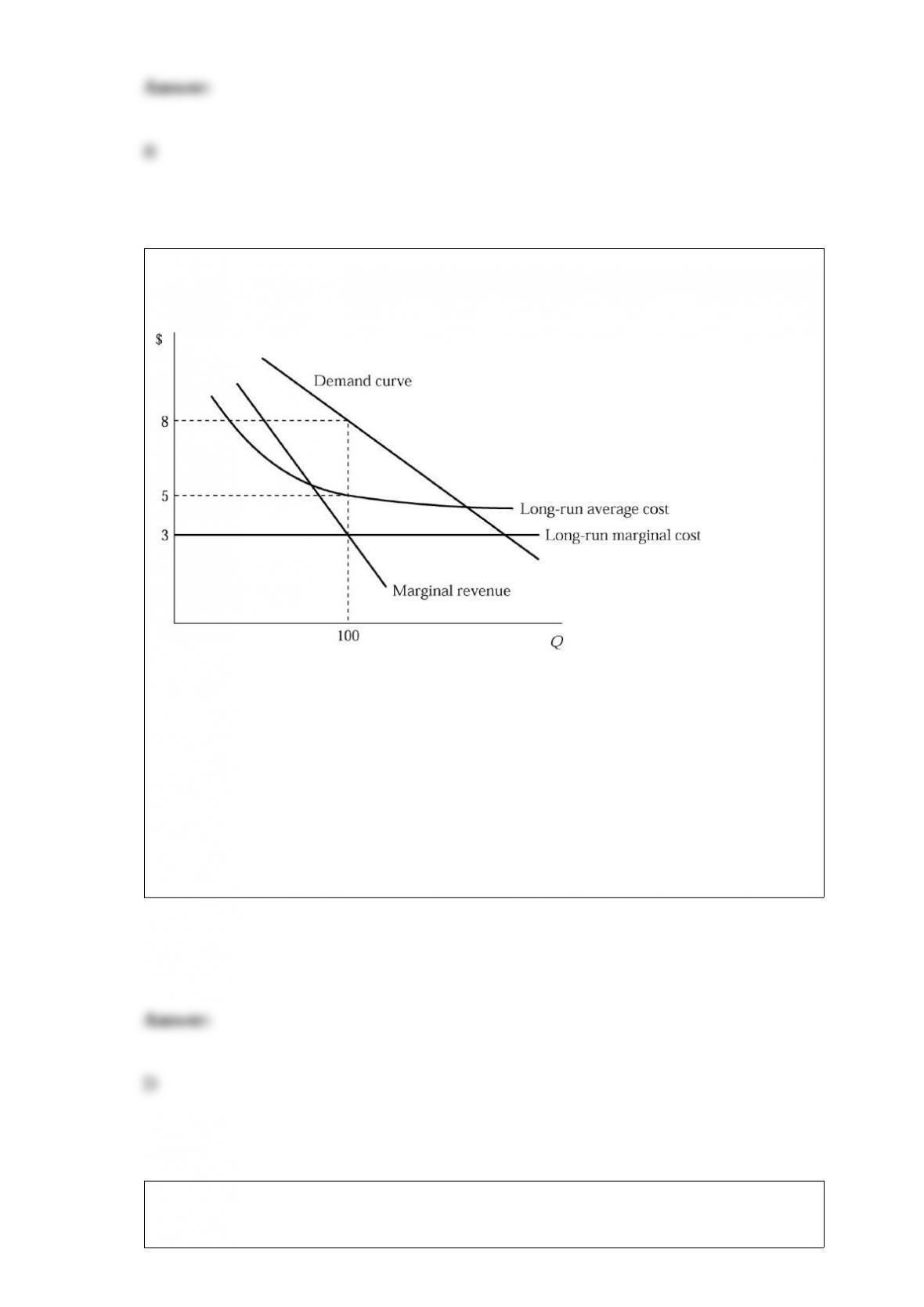
Figure 11.4 depicts demand and costs for a monopolistically competitive firm. In the
long run we expect:
Figure 11.4
A) more firms to enter the market.
B) the firm’s demand curve to shift to the left.
C) the firm’s average cost of production to increase.
D) all of the above
Monopolistically competitive markets are like perfectly competitive markets because in
both markets firms:
A) have some control over price.
B) face substantial barriers to entry.
C) face a large number of competitors.
D) have no control over price.
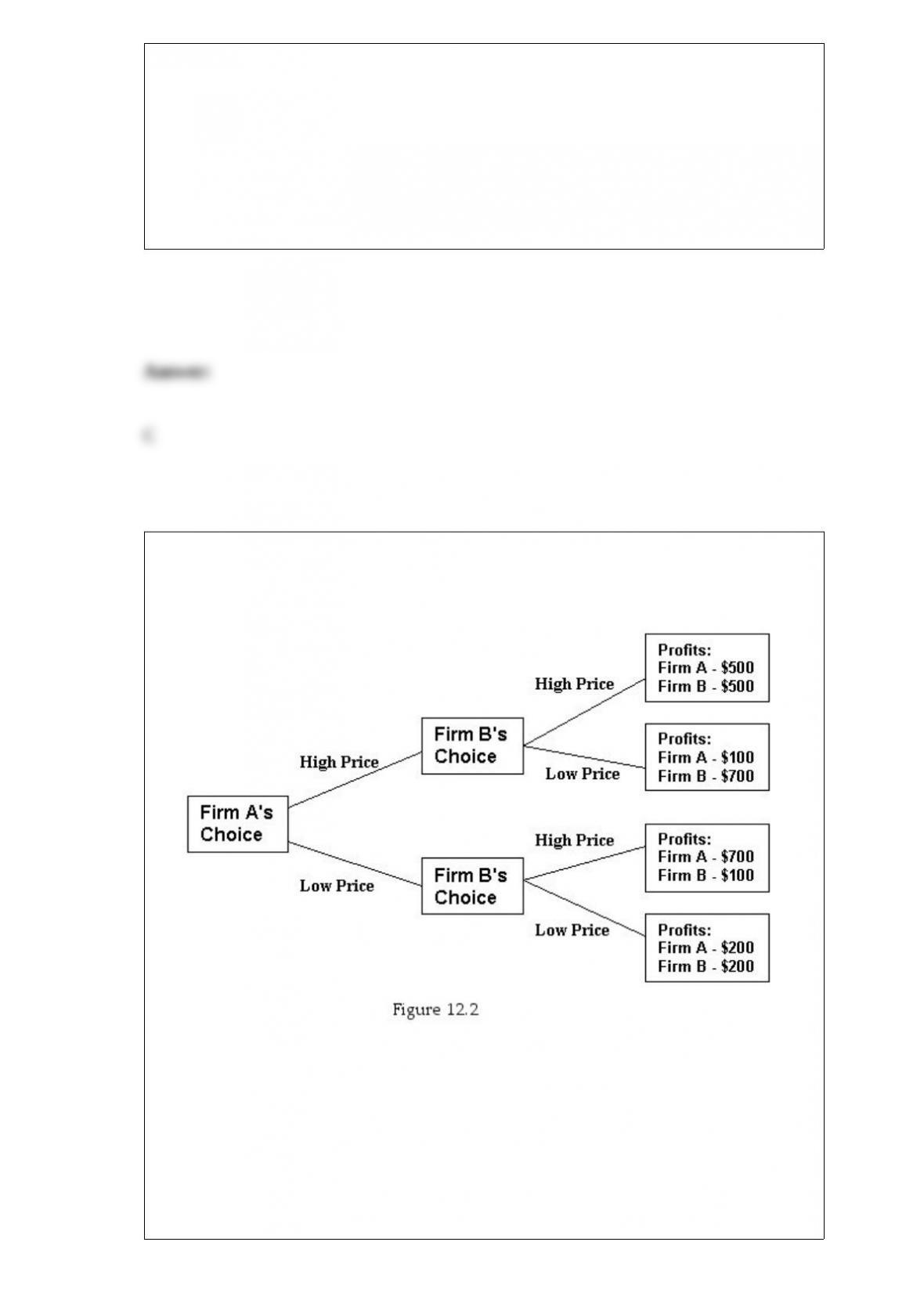
Figure 12.2 shows the decision tree for setting price for the only two firms in a market.
The dominant strategy for firm A:
A) is to set price low.
B) is to set price high.
C) depends on what B does.
D) is to do the opposite of whatever B does.

Economics is the study of:
A) how to invest in the stock market.
B) how society uses limited resources.
C) the role of money in markets.
D) how government officials decide which goods and services are produced.
The effort used to coordinate the factors of production and produce goods and services
is called:
A) entrepreneurship.
B) capital accumulation.
C) land ownership.
D) land.

A centrally planned economy has a planning authority that decides:
A) what products to produce.
B) how the products are produced.
C) who receives the products.
D) all of the above.
In the short run, the firm’s total cost equals:
A) the total fixed costs + the total variable costs.
B) the average fixed costs +average variable costs.
C) the average fixed cost + the marginal cost.
D) the total variable costs only.
Figure 17.1 depicts a firm’s marginal revenue product curve. If the prevailing hourly
wage increases:
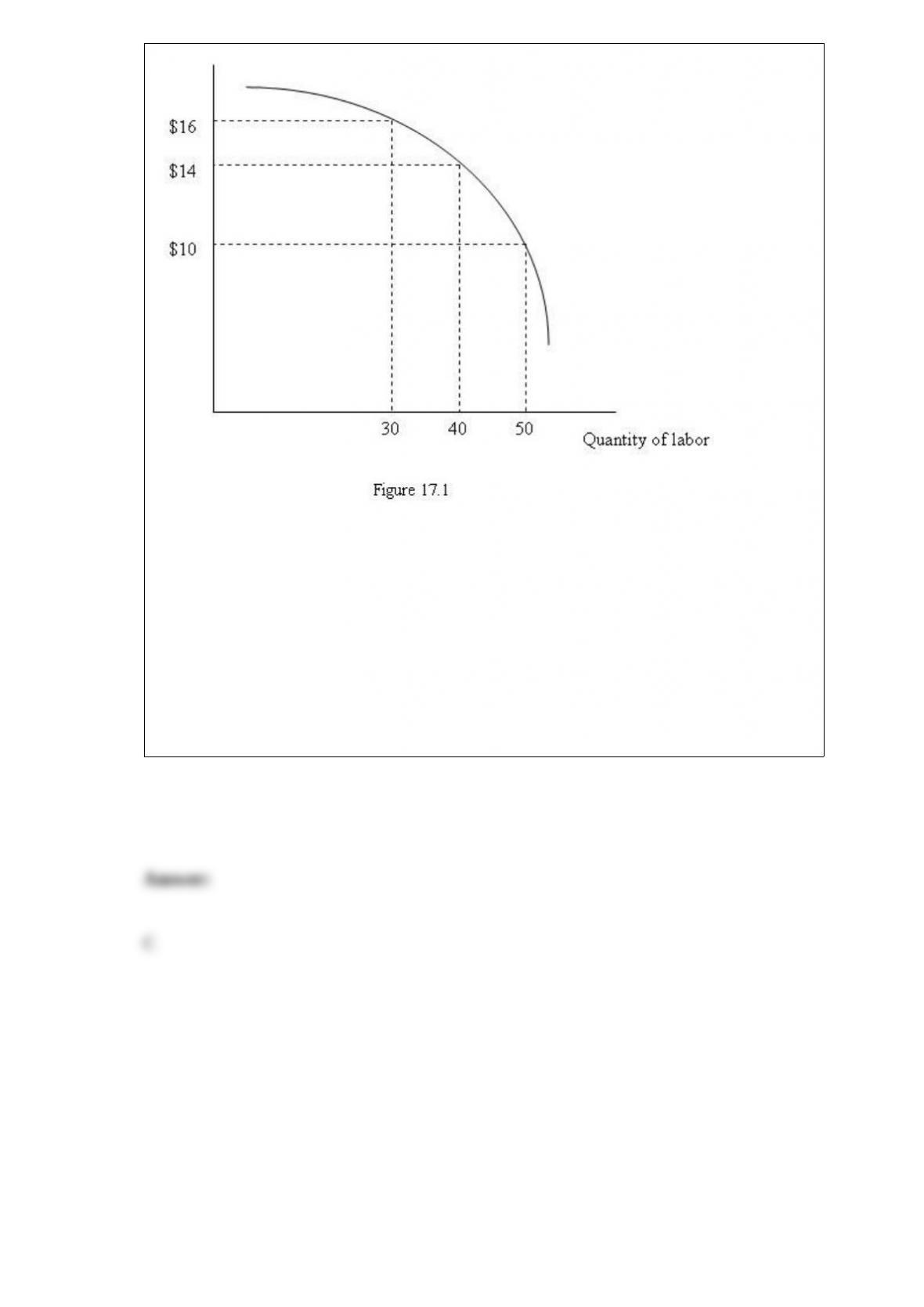
A) the marginal revenue product curve shifts upward.
B) the marginal revenue product curve shifts downward.
C) the marginal revenue product curve does not shift but there is a movement upward
along the curve.
D) the marginal revenue product curve does not shift but there is a movement
downward along the curve.