A corporation is owned by its
A) board of directors.
B) stockholders.
C) employees.
D) CEO.
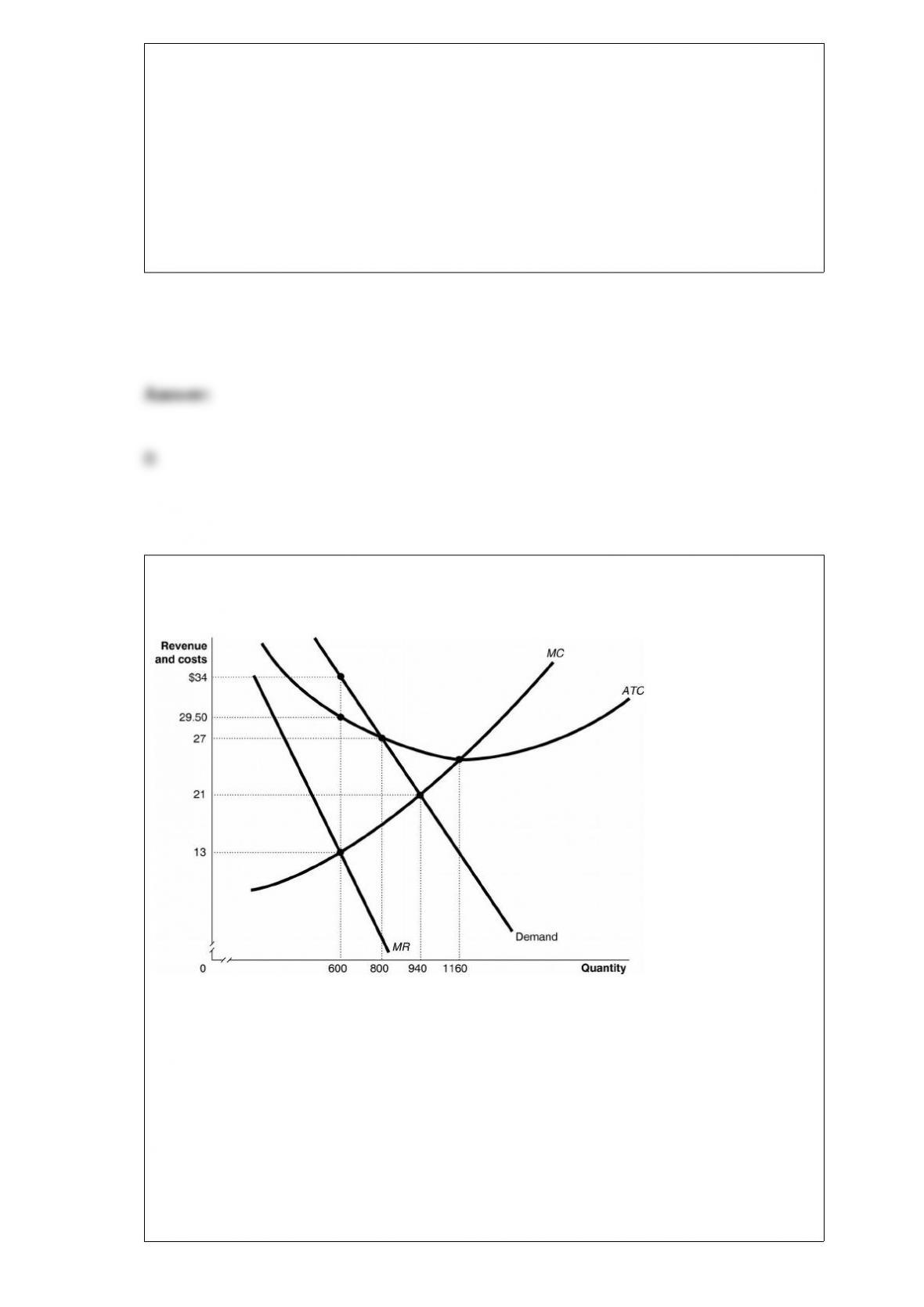
Figure 15-4
Figure 15-4 shows the demand and cost curves for a monopolist.
Refer to Figure 15-4. What is the profit-maximizing/loss-minimizing output level?
A) 600 units
B) 800 units
C) 940 units
D) 1,160 units
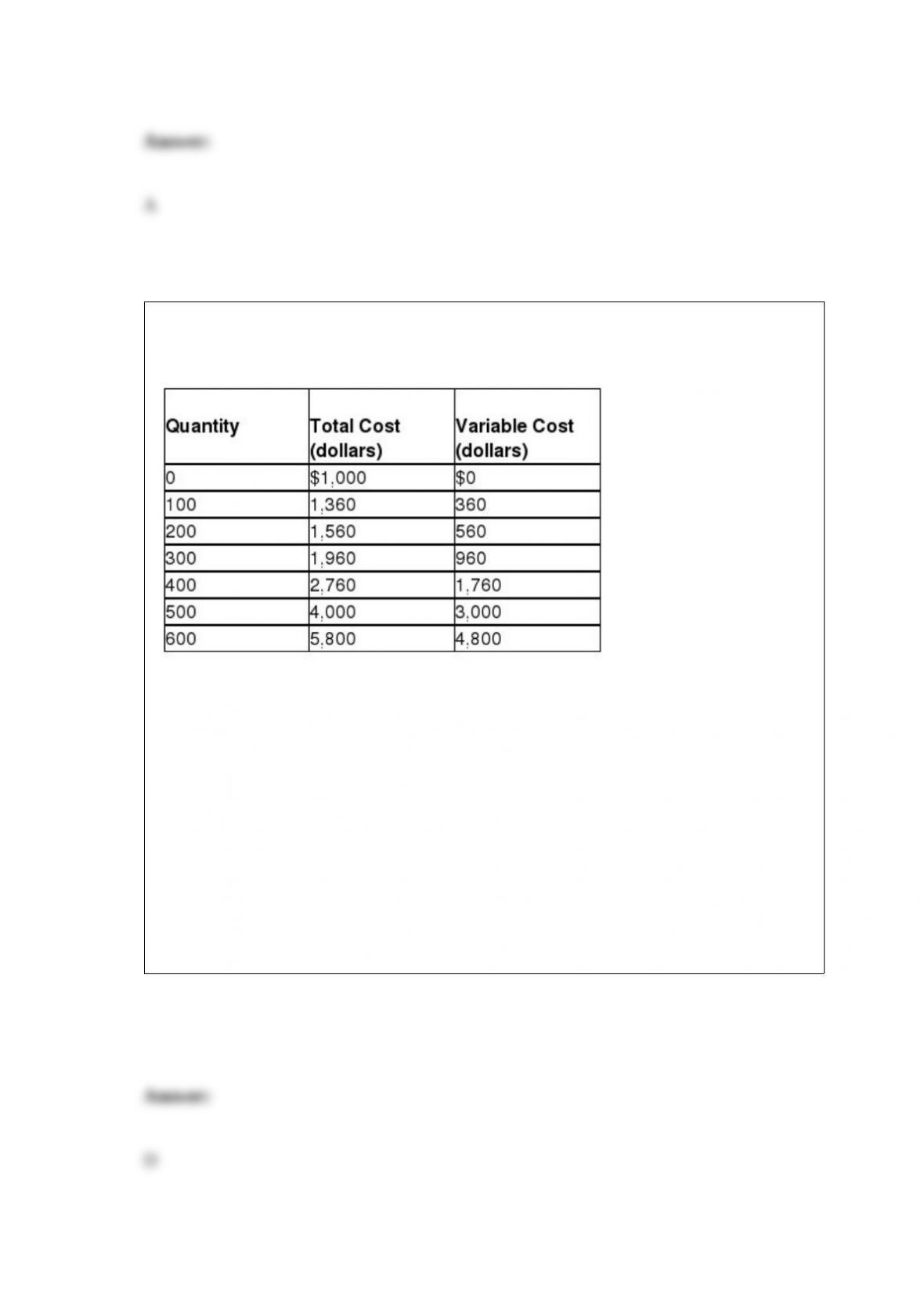
Table 12-1
Table 12-1 shows the short-run cost data of a perfectly competitive firm that produces
plastic camera cases. Assume that output can only be increased in batches of 100 units.
Refer to Table 12-1. The firm will not produce in the short run if the output price falls
below
A) $8.
B) $4.
C) $3.20.
D) $2.80.
A curve showing the lowest cost at which a firm is able to produce a given level of
output in the long run is
A) a long-run production function.
B) a long-run marginal cost curve.
C) a minimum efficient scale curve.
D) a long-run average total cost curve.
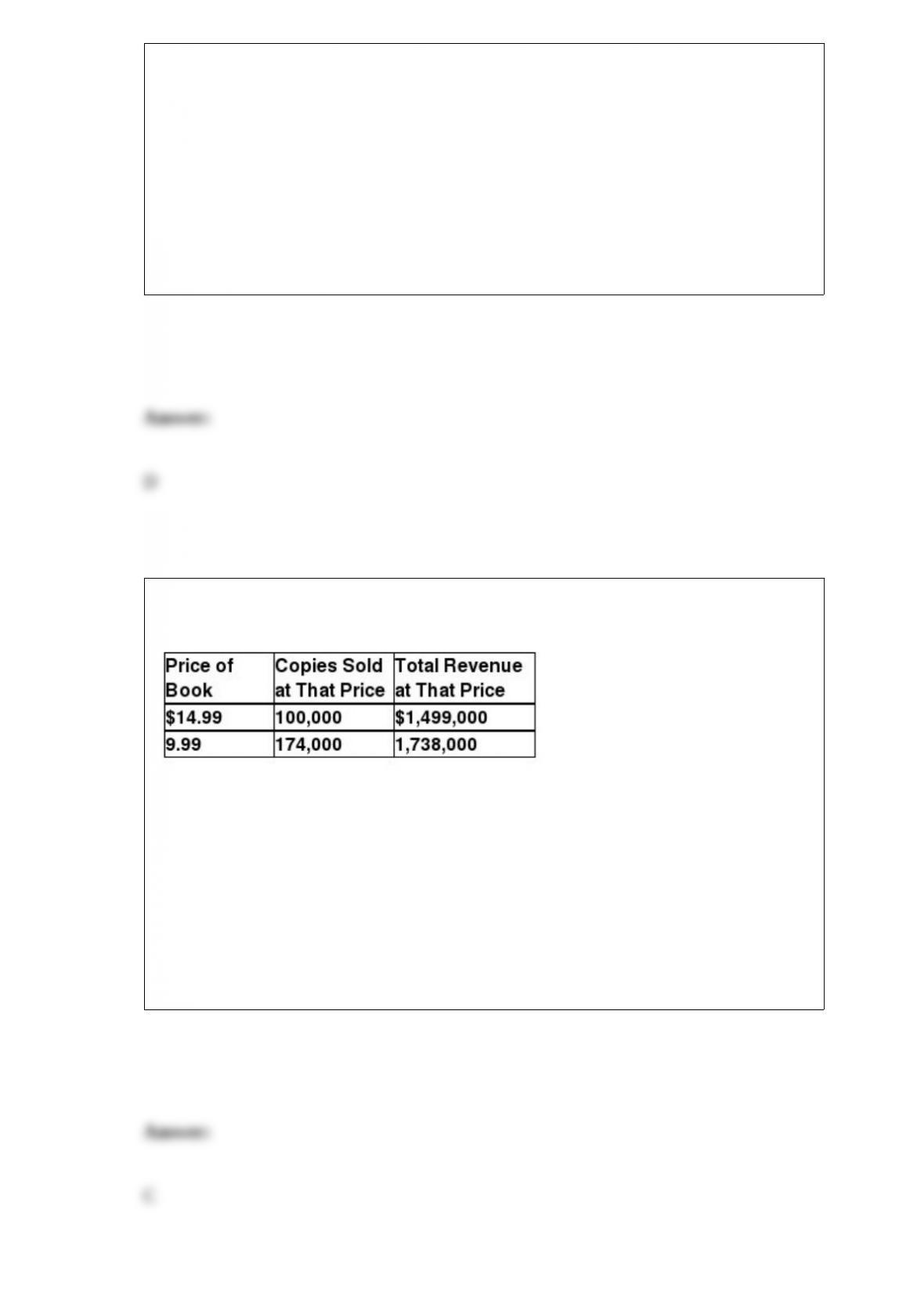
Table 6-6
Refer to Table 6-6. Based on the data in the table, between a price of $9.99 and $14.99,
the price elasticity of demand for books is
A) -0.74.
B) -1.16.
C) -1.35.
D) -14.8.
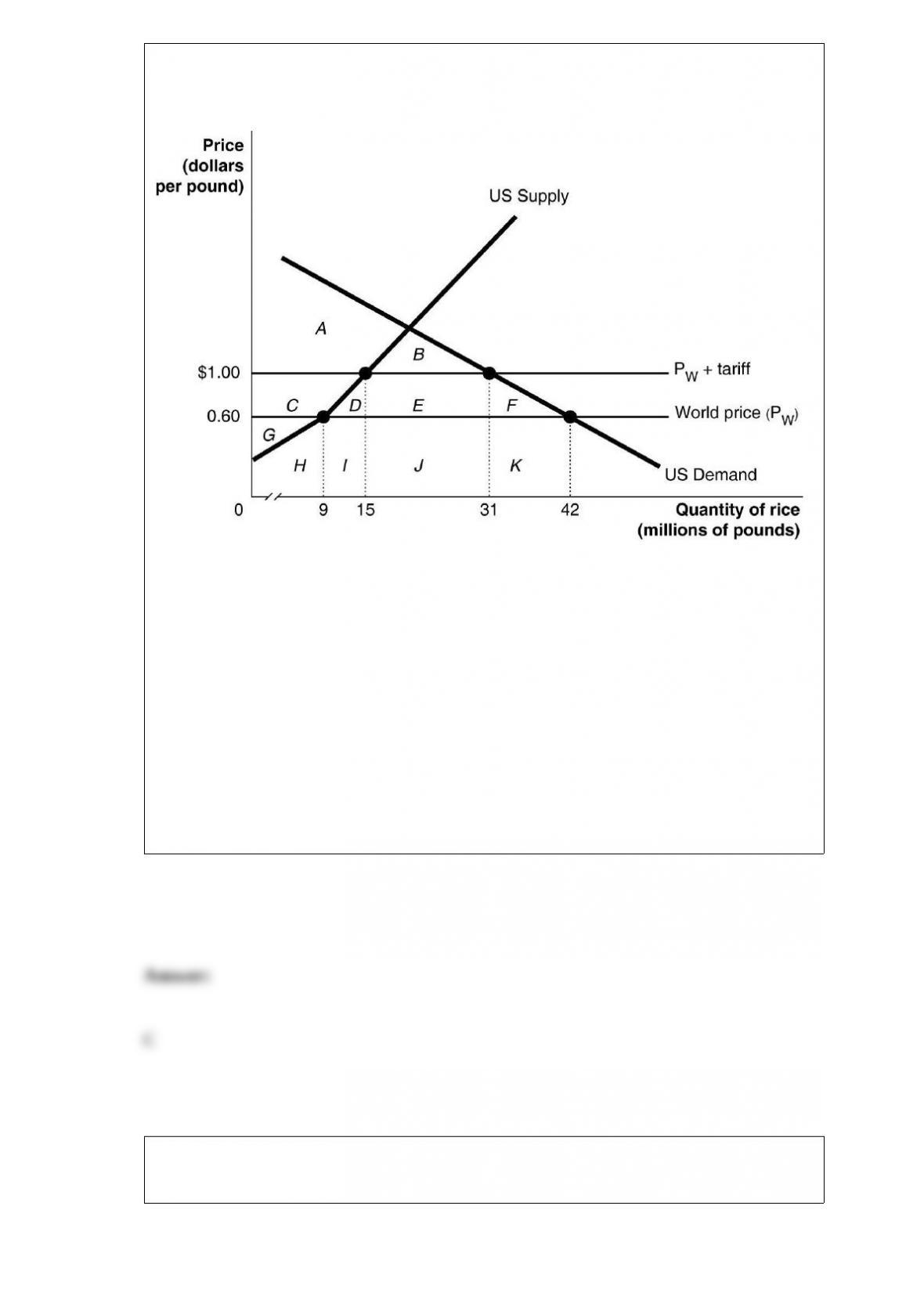
Figure 9-2
Suppose the U.S. government imposes a $0.40 per pound tariff on rice imports. Figure
9-2 shows the impact of this tariff.
Refer to Figure 9-2. The loss in domestic consumer surplus as a result of the tariff is
equal to the area
A) B + D + E + F.
B) D + E + F.
C) C + D + E + F.
D) B.
Figure 9-1
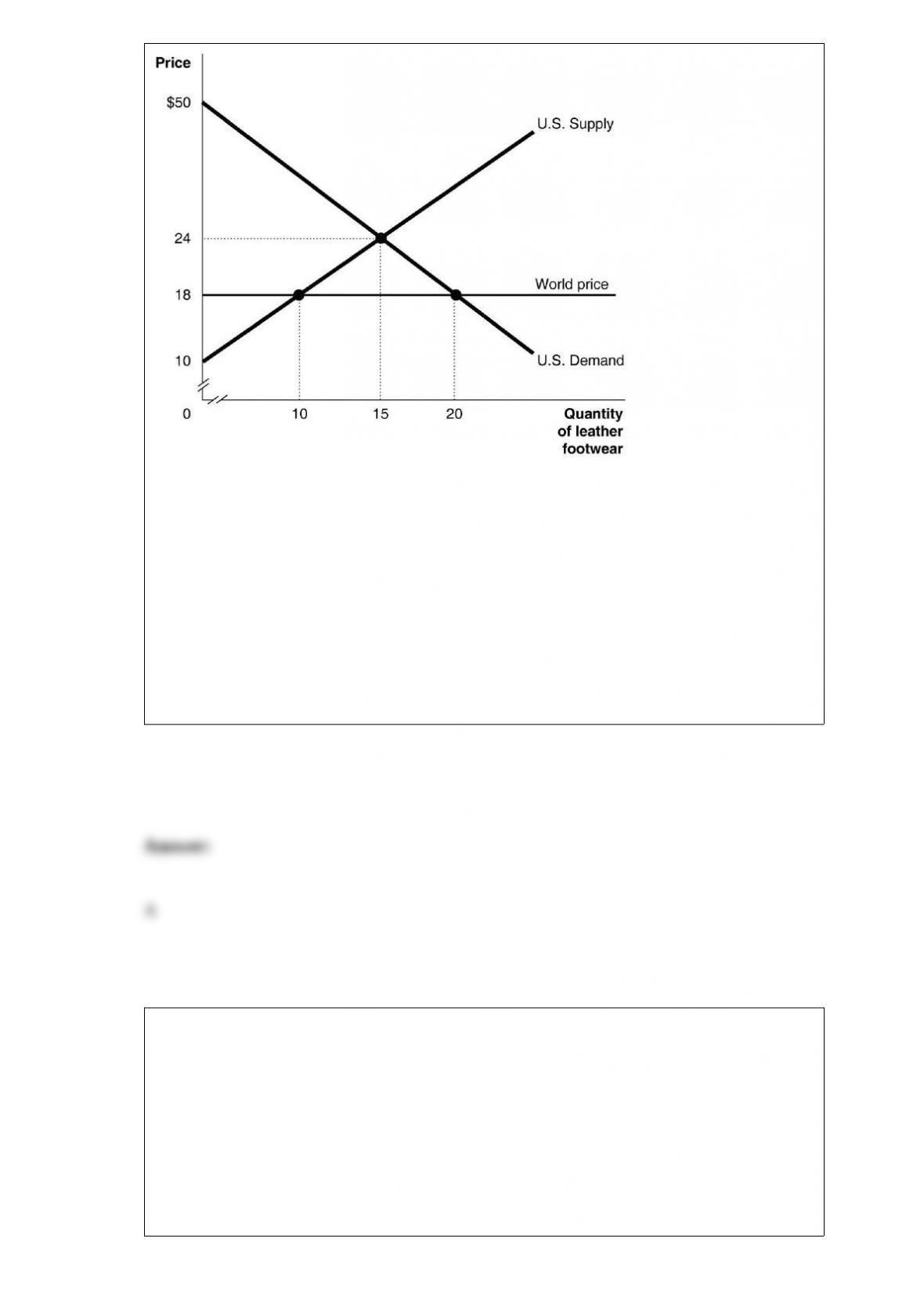
Figure 9-1 shows the U.S. demand and supply for leather footwear.
Refer to Figure 9-1. Under autarky, the consumer surplus is
A) $195.
B) $260.
C) $300.
D) $555.
Diseconomies of scale occur when
A) long-run average costs rise as a firm increases its output.
B) long-run average costs fall as a firm expands its plant size.
C) short-run average costs rise as a firm expands its plant size.
D) long-run labor costs rise as a firm increases its output.

A common belief among political analysts is that someone running for his or her party’s
nomination for president of the United States must choose a different strategy once the
nomination is secured. To be nominated, the candidate must appeal to voters from one
party – Democrat or Republican – but in a general election a party’s nominee must
appeal to voters from both parties as well as independent voters. Which of the following
offers the best explanation for this change in strategy?
A) the Arrow impossibility theorem
B) the voting paradox
C) the median voter theorem
D) rent seeking
A firm’s technology may depend on which of the following factors?
A) the skill of its managers
B) the training of its workers
C) the speed and efficiency of its equipment
D) all of the above

Jewelry manufacturers produce a range of products such as rings, necklaces, bracelets,
and brooches. What fundamental economic question are they addressing by offering
this range of items?
A) How to produce goods that consumers want?
B) Why produce a variety of items?
C) What to produce?
D) Who to produce the items for?
Mr. Peabody chooses to invest in companies that produce goods and services based on
consumer preferences. Mr. Peabody is investing in companies that are attempting to be
A) allocatively efficient.
B) productively efficient.
C) guaranteed to make a profit.
D) all of the above
Consider the stock of ocean tuna which is massively overfished. It is rational for an
individual to exploit the resource rather than to conserve the stock because
A) the private benefit of harvesting tuna is higher than the social benefit of harvesting
it.
B) the private benefit of harvesting tuna is lower than the social benefit of harvesting it.
C) the social cost of harvesting the fish is lower than the private cost.
D) the private cost of harvesting the fish is lower than the social cost.
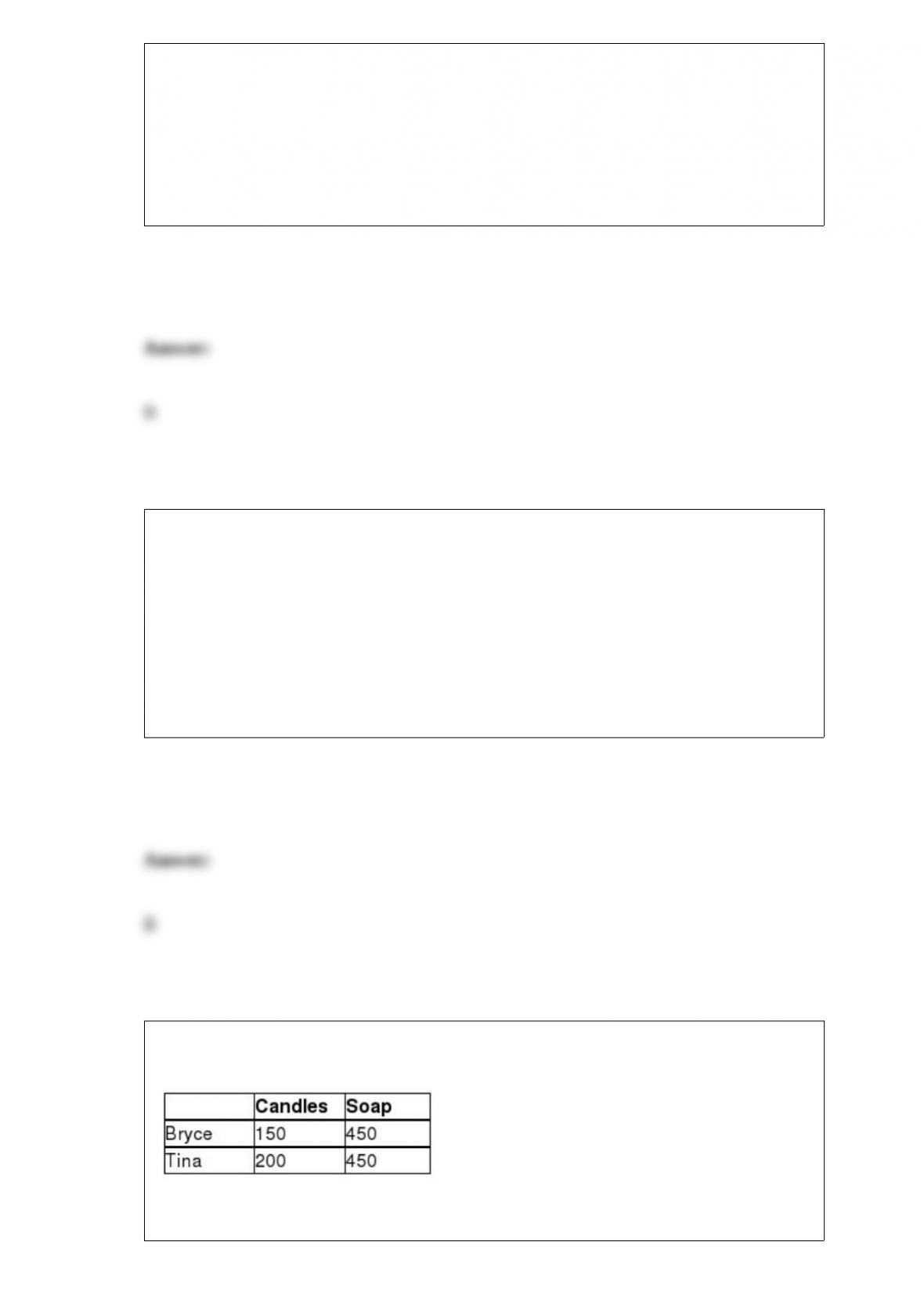
Table 13-3
Table 13-3 shows the demand and cost schedules for a monopolistically competitive
firm.
Refer to Table 13-3. What is the best course of action for the firm in the short run?
A) It should shut down.
B) It should stay in business because it covers some of its fixed cost.
C) It should increase its sales by lowering its price.
D) It should not cut its price but it should increase its sales by advertising.
A marginal tax rate is
A) the fraction of income that must be paid in taxes.
B) the fraction of each additional dollar of income that must be paid in taxes.
C) the incremental income one must earn to offset each additional dollar of tax.
D) the ratio of a change in income to a change in taxes paid.
Table 9-3
Bryce and Tina are artisans who produce homemade candles and soap. Table 9-3 lists

the number of candles and bars of soap Bryce and Tina can each produce in one month.
Refer to Table 9-3. Select the statement that accurately interprets the data in the table.
A) Bryce has an absolute advantage in making candles and soap.
B) Tina has an absolute advantage in making candles and soap.
C) Neither Bryce nor Tina has an absolute advantage in making candles.
D) Neither Bryce nor Tina has an absolute advantage in making soap.
An increase in the demand for orthodontic services leads to
A) an increase in the supply of orthodontists.
B) lower prices for orthodontic care.
C) an increase in the demand for orthodontists.
D) a rise in the rates of dental insurance.
A constant-cost, perfectly competitive market is in long-run equilibrium. At present,
there are 1,000 firms each producing 400 units of output. The price of the good is $60.
Now suppose there is a sudden increase in demand for the industry’s product which
causes the price of the good to rise to $64. In the new long-run equilibrium, how will
the average total cost of producing the good compare to what it was before the price of
the good rose?

A) The average total cost will be higher than it was before the price increase since the
increase in demand will drive up input prices.
B) The average total cost will be lower than it was before the price increase because of
economies of scale.
C) The average total cost will be higher than it was before the price increase because of
diseconomies of scale arising from the increased demand.
D) The average total cost will be the same as it was before the price increase.
Suppose a 4 percent increase in price results in a 2 percent increase in the quantity
supplied of a good. Calculate the price elasticity of supply and characterize the product.
A) 2; The product is elastic.
B) 2; The product is inelastic.
C) 5; The product is inelastic.
D) 50%; The product is inelastic.
A monopoly differs from monopolistic competition in that
A) a monopoly has market power while a firm in monopolistic competition does not
have any market power.

B) a monopoly can never make a loss but a firm in monopolistic competition can.
C) in a monopoly there are significant entry barriers but there are low barriers to entry
in a monopolistically competitive market structure.
D) a monopoly faces a perfectly inelastic demand curve while a monopolistic
competitor faces an elastic demand curve.
Ronald Coase was awarded the 1991 Nobel Prize in Economics primarily for
addressing problems related to externalities. Which of the following describes Coase’s
work?
A) Coase argued that government intervention is necessary to achieve economic
efficiency in markets that are affected by externalities.
B) Coase proved that economic efficiency cannot be achieved in a market that is
affected by positive or negative externalities.
C) Coase argued that under some circumstances private solutions to the problems of
externalities will occur.
D) Coase proved that a competitive market achieved a greater degree of economic
efficiency than a non-competitive market when externalities occur.
If the market price is $25, the average revenue of selling five units is
A) $5.
B) $12.50.
C) $25.
D) $125.
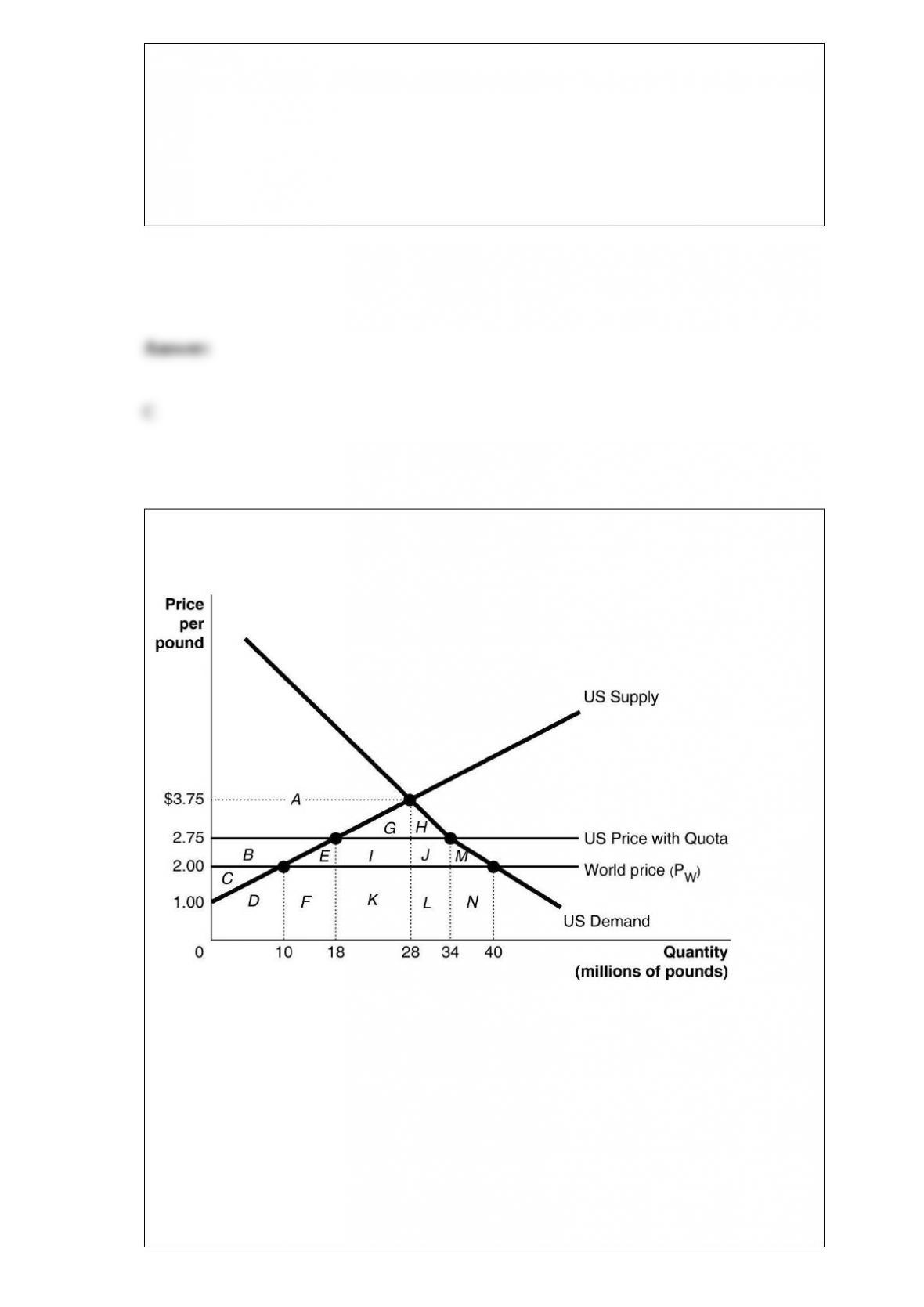
Figure 9-3
Since 1953 the United States has imposed a quota to limit the imports of peanuts.
Figure 9-3 illustrates the impact of the quota.
Refer to Figure 9-3. What is the area that represents revenue to foreign producers who
are granted permission to sell in the U.S. market when there is a quota?
A) I + J
B) E + I + J + M
C) I + J + K+ L

D) G + H + I + J
Twenty-nine countries in Europe have eliminated all tariffs with each other. This group
of countries is known as the
A) European Union.
B) United Federation of Europe.
C) Gruppo Euro.
D) European Free Trade Association.
Which of the following is a problem inherent in centrally planned economies?
A) Households and firms make poor decisions in choosing how resources are allocated.
B) There is too little production of low-cost, high-quality goods and services.
C) Production managers are more concerned with satisfying consumer wants than with
satisfying government’s orders.
D) Exports tend to exceed imports.

During a study session for an economics exam with three other students, Peter Daltry
commented on an example of a consumer who had to decide on number of slices of
pizza and cups of Coca-Cola he would consume. Peter explained that “To maximize his
utility this consumer must equate the marginal utility per dollar for pizza and
Coca-Cola.” Was Peter’s analysis correct?
A) Peter described one of the conditions necessary for utility maximization. The
consumer also must equate the marginal utility of pizza and the marginal utility of cups
of Coca-Cola.
B) Peter’s statement is correct.
C) Peter’s statement is correct but we must also assume that the consumer is rational.
D) Peter describes one of the conditions necessary for utility maximization. The second
condition is that total spending on both goods must equal the amount available to be
spent.
Table 9-6
Production and
Consumption Production
Without Trade With Trade
Denmark and Belize can produce both clocks and hats. Table 9-6 shows the production
and consumption quantities without trade, and the production numbers with trade.

Refer to Table 9-6. Which country has a comparative advantage in producing hats?
A) Denmark
B) Belize
C) both countries
D) neither country
Over ninety-five percent of all new businesses that open each year in the United States
employ ________ workers.
A) only one or two
B) fewer than 20
C) 50 or more
D) over 100
A monopolistically competitive firm that earns an accounting profit in the short run
A) must also earn an economic profit in the short run.
B) does not earn enough to earn an economic profit in the short run.

C) could earn an economic profit, break even, or suffer an economic loss in the short
run.
D) could earn an economic profit or break even, but could not suffer an economic loss
in the short run.
Which of the following statements is consistent with the views of Joseph Schumpeter?
A) Research and development by competitive firms is responsible for most
technological changes.
B) An economy benefits from firms having market power because these firms are more
likely to be able to commit funds for research and development.
C) Enforcement of antitrust laws is necessary to promote competition among firms.
D) A lack of competition discourages firms from developing new technologies.