
University A sets tuition at the equilibrium level based on price and then imposes
entrance requirements in the form of minimum high school GPA and SAT scores.
Enrollment at this school will likely be
a. at the equilibrium level.
b. below the equilibrium level because of the use of non-price rationing devices.
c. above the equilibrium level because of the combination of price and the use of
non-price rationing devices.
d. none of the above
Which of the following statements is false?
a. If total utility rises, so must marginal utility.
b. If marginal utility rises, so must total utility.
c. If marginal utility falls, so must total utility.
d. If total utility falls, marginal utility is negative.
e. a and c
If workers can do the work in both the unionized sector and the nonunionized sector,
then an increase in the wage rate paid in the unionized sector (relative to the wage rate
paid in the nonunionized sector), which is brought about by a permanent leftward shift
in the labor supply curve, will lead to
a. an increase in the supply of labor in the nonunionized sector and lower wages in that
sector.
b. an increase in the supply of labor in the unionized sector and lower wages in that
sector.
c. no change in the supply of labor in either of the sectors mentioned.
d. an increase in the supply of labor in the unionized sector and even higher wages in
that sector.
e. There is not enough information to answer the question.
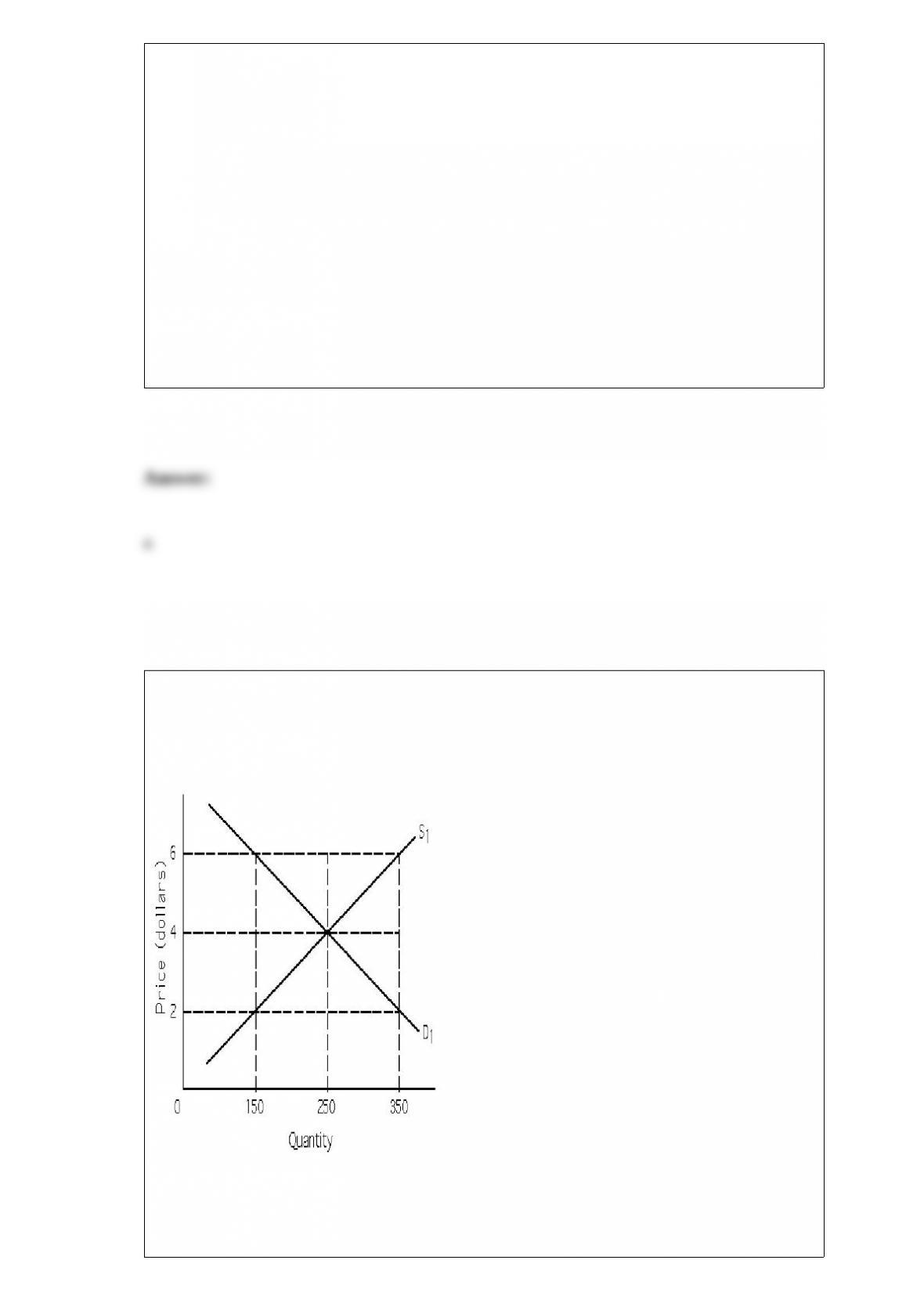
Refer to Exhibit 20-9.What is the price elasticity of demand between $4 and $6?
Exhibit 20-9
a. 0.825
b. 0.833

c. 1.25
d. 1.20
If the supply of aisle seats and middle seats on an airplane is the same, but the demand
for aisle seats is greater than the demand for middle seats, then the equilibrium price of
aisle seats will be less than the equilibrium price of middle seats.
a. True
b. False
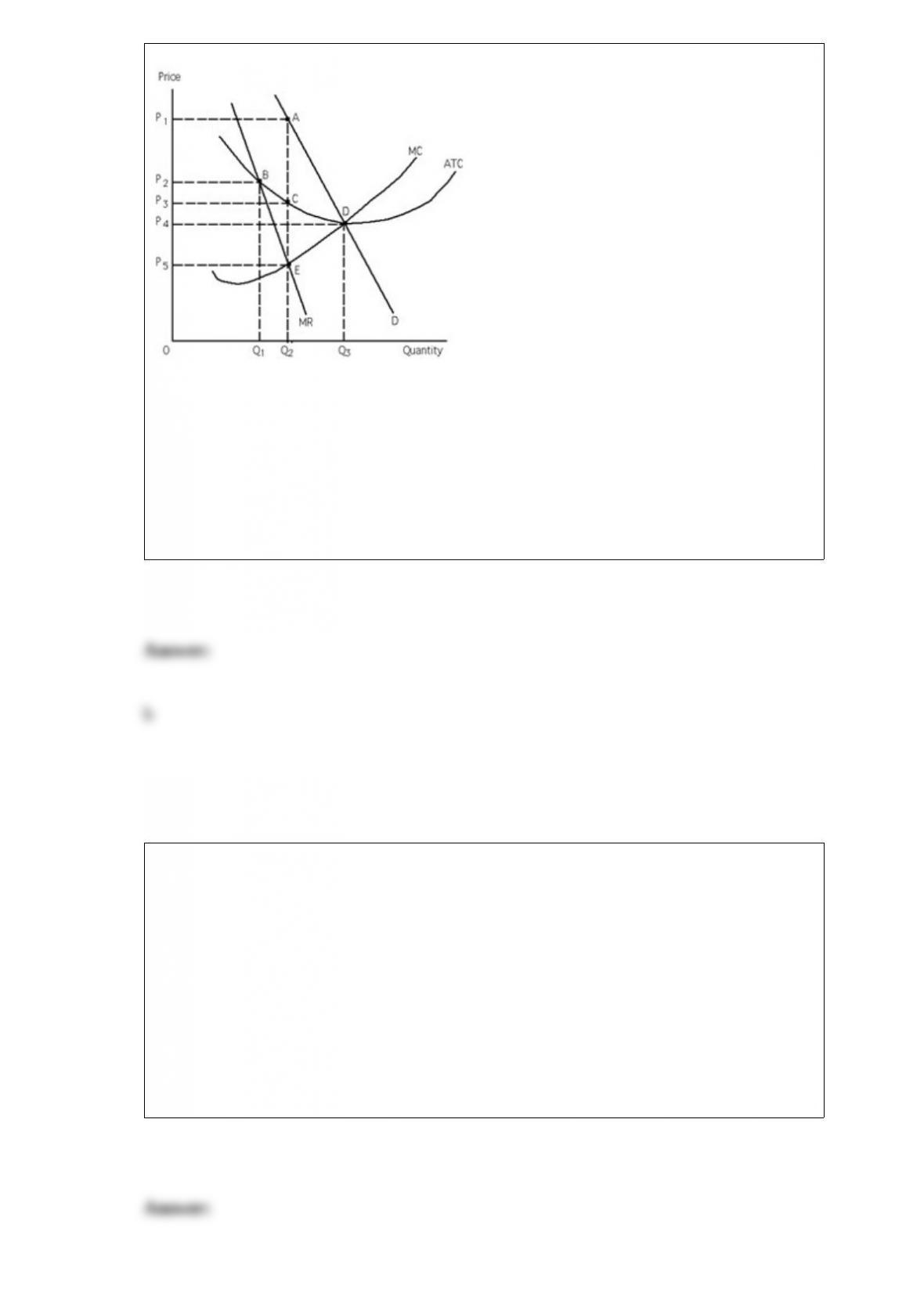
Refer to Exhibit 25-3. Total cost of this profit maximizing monopolistic competitor is
represented by the area
Exhibit 25-3
a. 0P1AQ2.
b. 0P3CQ2.
c. P3P1AC.
d. P4P1AD.
The profit-maximization rule is as follows:
a. Produce the quantity of output at which price equals average total cost (unit cost).
b. Produce as much output as can be sold.
c. Produce the quantity of output at which marginal revenue equals marginal cost.
d. Produce the quantity of output at which marginal revenue equals unit cost.
e. Produce the quantity of output at which total cost is minimized.

Average fixed cost
a. is greater at lower levels of output than at higher levels.
b. does not change as output changes.
c. exists only in the short run.
d. is usually greater at higher levels of output than at lower levels of output.
e. a and c
Which of the following theories is not falsifiable or refutable?
a. Everything that has happened to Jane throughout her life happened to her specifically
because she was born on June 23, 1993.
b. People with blue eyes tend to be more sensitive to light than people with brown eyes.
c. Women who are electrical engineers tend to have fewer children than women who are
retail cashiers.
d. People who watch more than six hours of television per day tend to weigh more than
people who watch fewer hours of television daily.
e. all of the above

The perfectly competitive firm will seek to produce the level of output for which
a. average variable cost is at a minimum.
b. average total cost is at a minimum.
c. average fixed cost is at a minimum.
d. marginal cost equals marginal revenue.
If the “minimum efficient scale” in an industry is at 25 percent of market sales, what is
the maximum number of efficient firms the economy can support in this industry?
a. 75
b. 25
c. 10
d. 4
Labor unions generally favor
a. import restrictions.

b. strict immigration laws.
c. increasing the minimum wage.
d. a and c
e. a, b, and c
Which of the following statements is false?
a. If the MC curve is rising, the AVC curve must be rising.
b. If MC is below ATC, ATC must be falling.
c. If MC is above AVC, then AVC must be rising.
d. If MC is above ATC, then ATC must be rising.
As presented in the textbook, research on neuroeconomics has shown that when
individuals are presented with present-future choices the
a. analytic system (which weights the future heavily) seems to win out over the limbic
system (which weights the present heavily).
b. limbic system (which weights the present heavily) seems to win out over the analytic
system (which weights the future heavily).
c. limbic system and the analytic system are equally weighted, making the individuals
indifferent to the choices presented.
d. limbic system (which weights the future heavily) seems to win out over the analytic
system (which weights the present heavily).
If the quantity demanded of medical care is higher at a zero price than at some positive
price, then it follows that the demand for those specific items that make up health care
will be higher (than it would be if the quantity demanded of health care were lower).
a. True
b. False
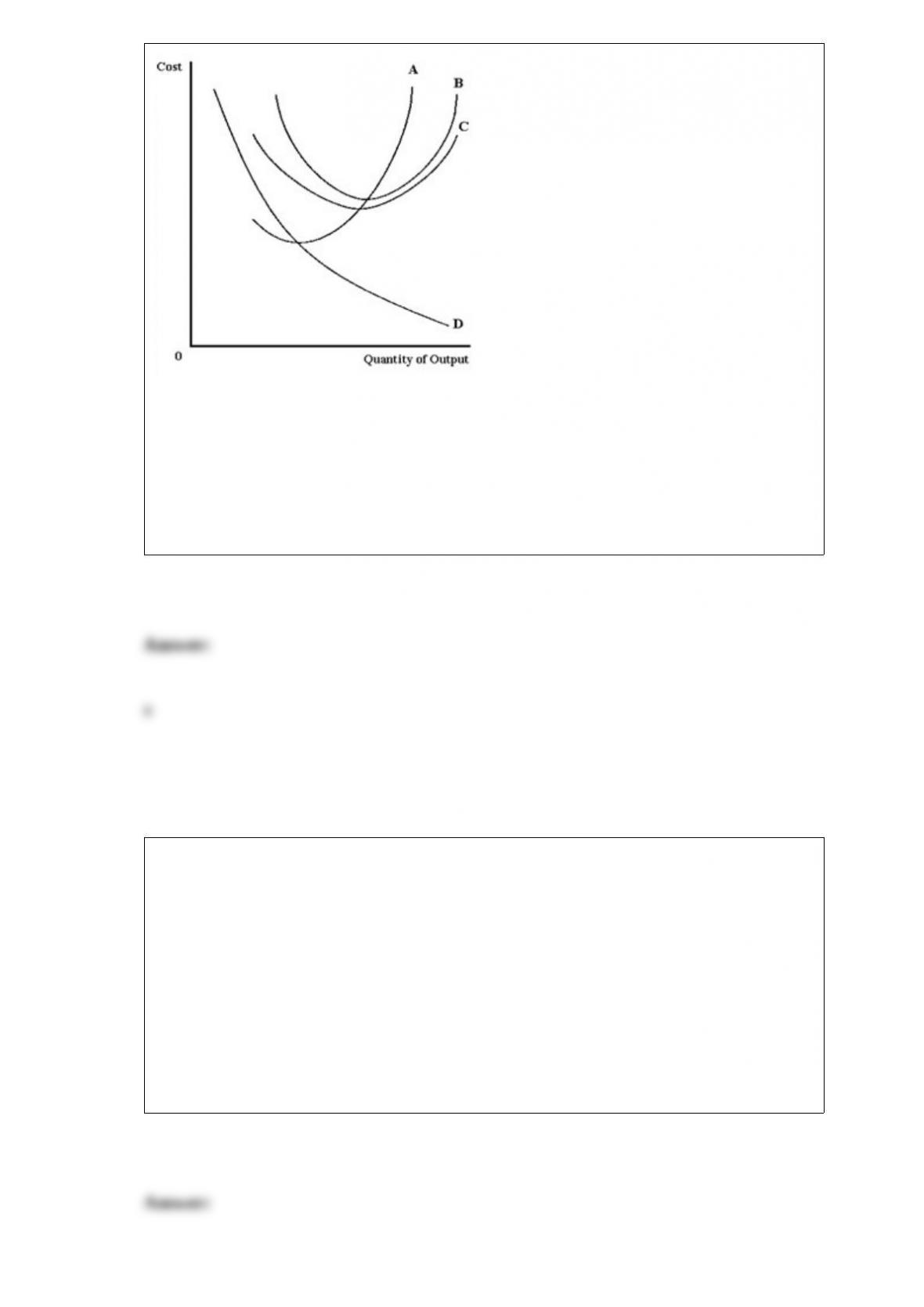
Refer to Exhibit 22-4. Curve A is a(n) __________ cost curve.
Exhibit 22-4
a. marginal
b. average variable
c. average total
d. average fixed
A factor price taker faces
a. a perfectly elastic demand curve for the product it sells.
b. a downward-sloping demand curve for the product it sells.
c. a perfectly elastic supply curve of factors.
d. an upward-sloping supply curve of factors.
e. a perfectly inelastic supply curve of factors.
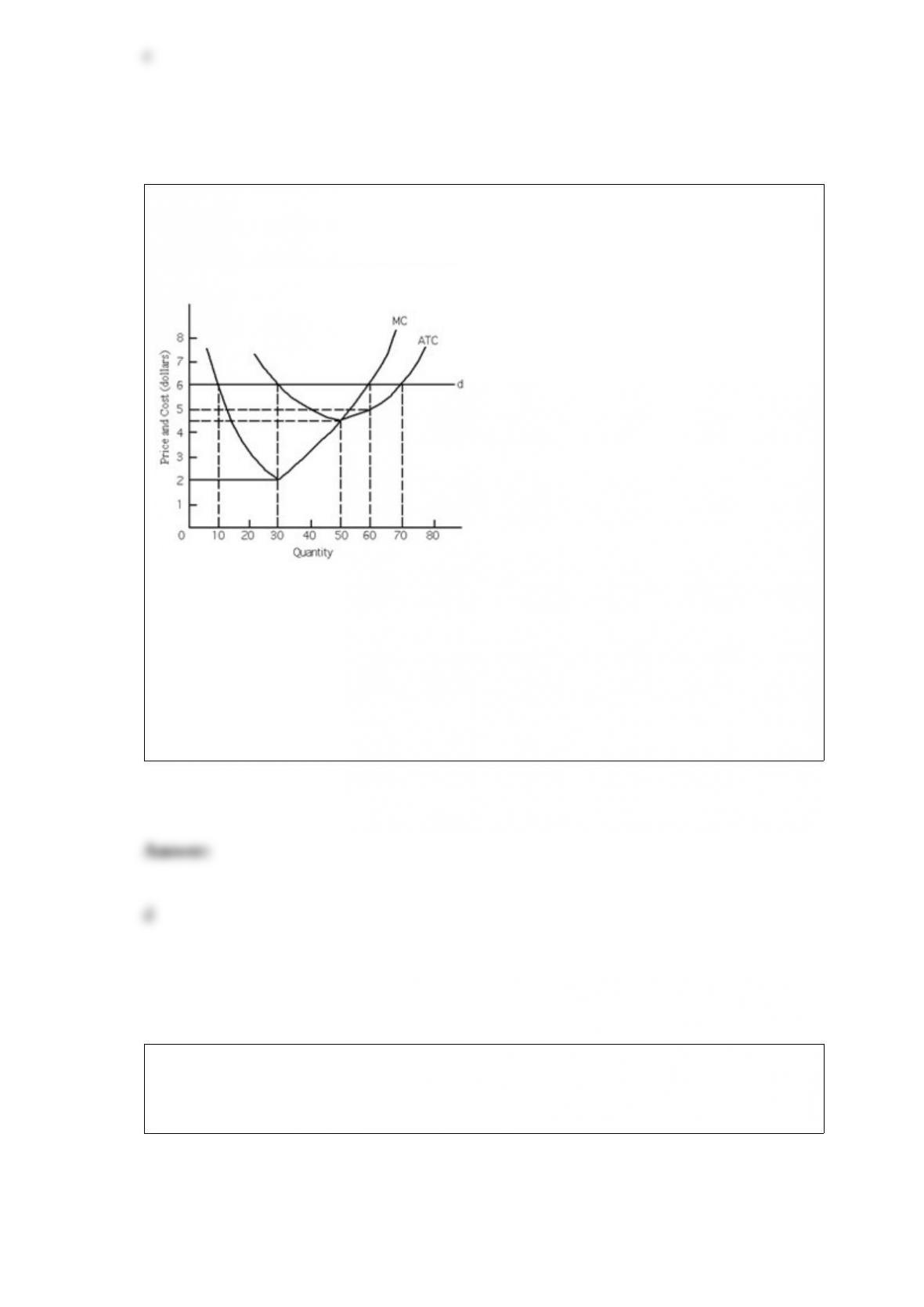
Refer to Exhibit 23-7. At the profit-maximizing level of output, marginal cost is
Exhibit 23-7
a. $60.00.
b. $4.50.
c. $5.00.
d. $6.00.
e. This cannot be determined based on the information provided.
Refer to Exhibit 34-5. The opportunity cost of one unit of good A is __________ for
country 1 and __________ for country 2.
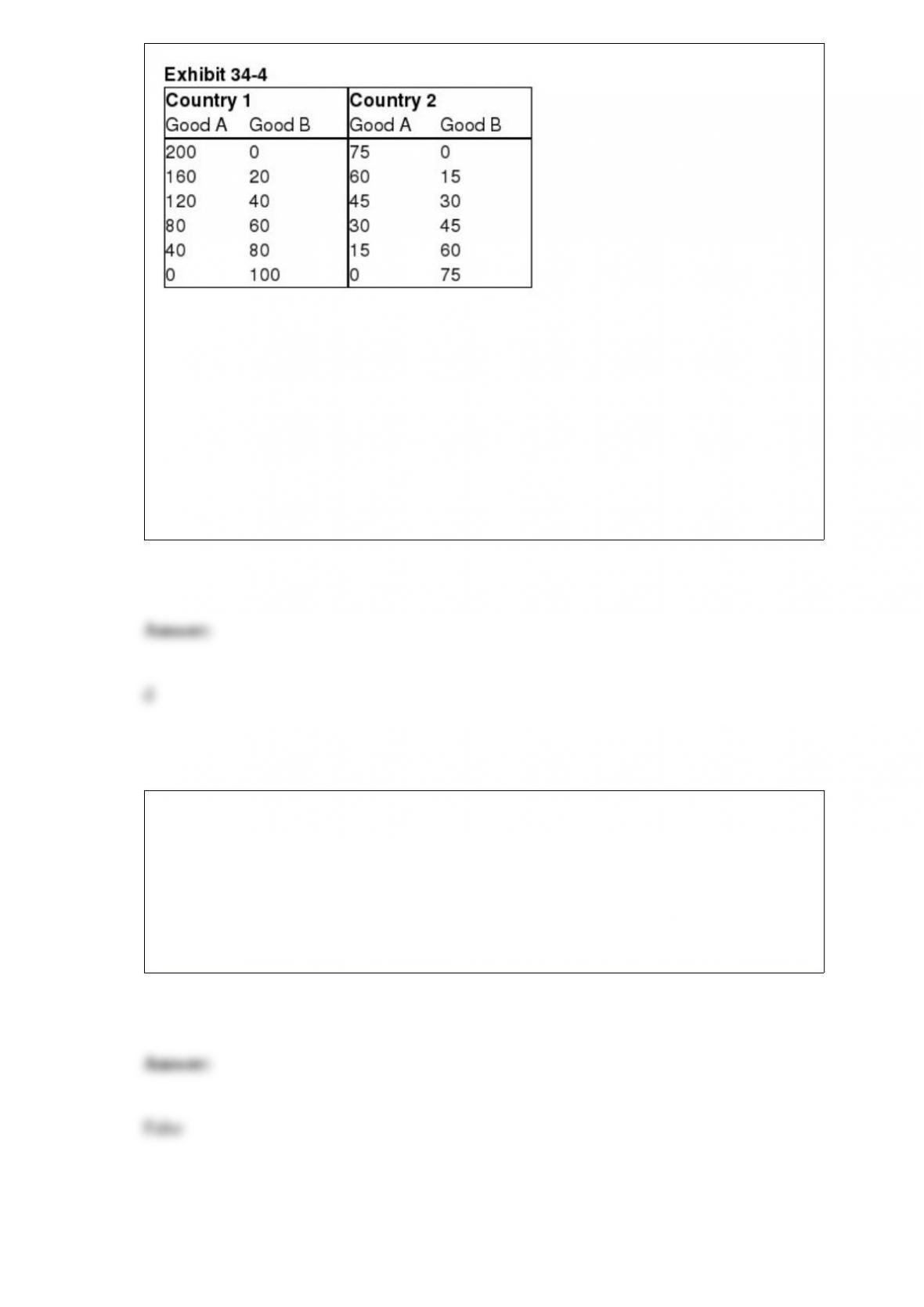
a. 20B; 15B
b. 10B; 15B
c. 2B; 1B
d. 1/2B; 2B
e. 1/10B; 1B
If new legislation allowed patients to sue their health-maintenance organization (HMO),
we would expect the supply curve for HMO-provided health care to shift to the right
and the price of such coverage to fall.
a. True
b. False

Marginal cost regulatory pricing turns out to be the same as output regulation (for a
natural monopoly firm) if the output level set by government is the
a. amount at which marginal cost equals average total cost.
b. resource-allocative efficient amount.
c. amount at which average total cost is at its highest level.
d. amount at which marginal revenue equals marginal cost.
e. none of the above
In order for a monopolist to be earning a profit, price must be greater than
a. average total cost.
b. marginal revenue.
c. total cost.
d. marginal cost.