
1) Marginal resource cost is:
A.the increase in total resource cost associated with the production of one more unit of
output.
B.the increase in total resource cost associated with the hire of one more unit of the
resource.
C.total resource cost divided by the number of inputs employed.
D.the change in total revenue associated with the employment of one more unit of the
resource.
2) In many of the sub-Saharan African nations:
A.population is growing more rapidly than food production.
B.population growth is causing deforestation and diminished land quality.
C.governments have favored investment in industry and military spending rather than
investment for agriculture.
D.all of these have been true.
3) the essential difference between sales and excise taxes is that:
a.sales taxes apply to a wide range of products, while excise taxes apply only to a select
group of products.
b.excise taxes apply to a wide range of products, while sales taxes apply only to a select
list of products.
c.sales taxes are consumption taxes, while excises are not.
d.excise taxes are consumption taxes, while sales taxes are not.
4) The largest component of the money supply (M1) is:
A.gold certificates.
B.checkable deposits.
C.currency in circulation.
D.travelers’ checks.
5) The fact that international specialization and trade based on comparative advantage
can increase world output is demonstrated by the reality that:
A.the production possibilities curve of any two nations are identical.
B.a nation’s production possibilities and trading possibilities lines coincide.
C.a nation’s trading possibilities line lies to the right of its production possibilities line.
D.a nation’s production possibilities line lies to the right of its trading possibilities line.
6) In 2006, the highest quintile of households in the U.S. income distribution received
about:
A.35 percent of the income.
B.54 percent of the income.
C.60 percent of the income.
D.50 percent of the income.
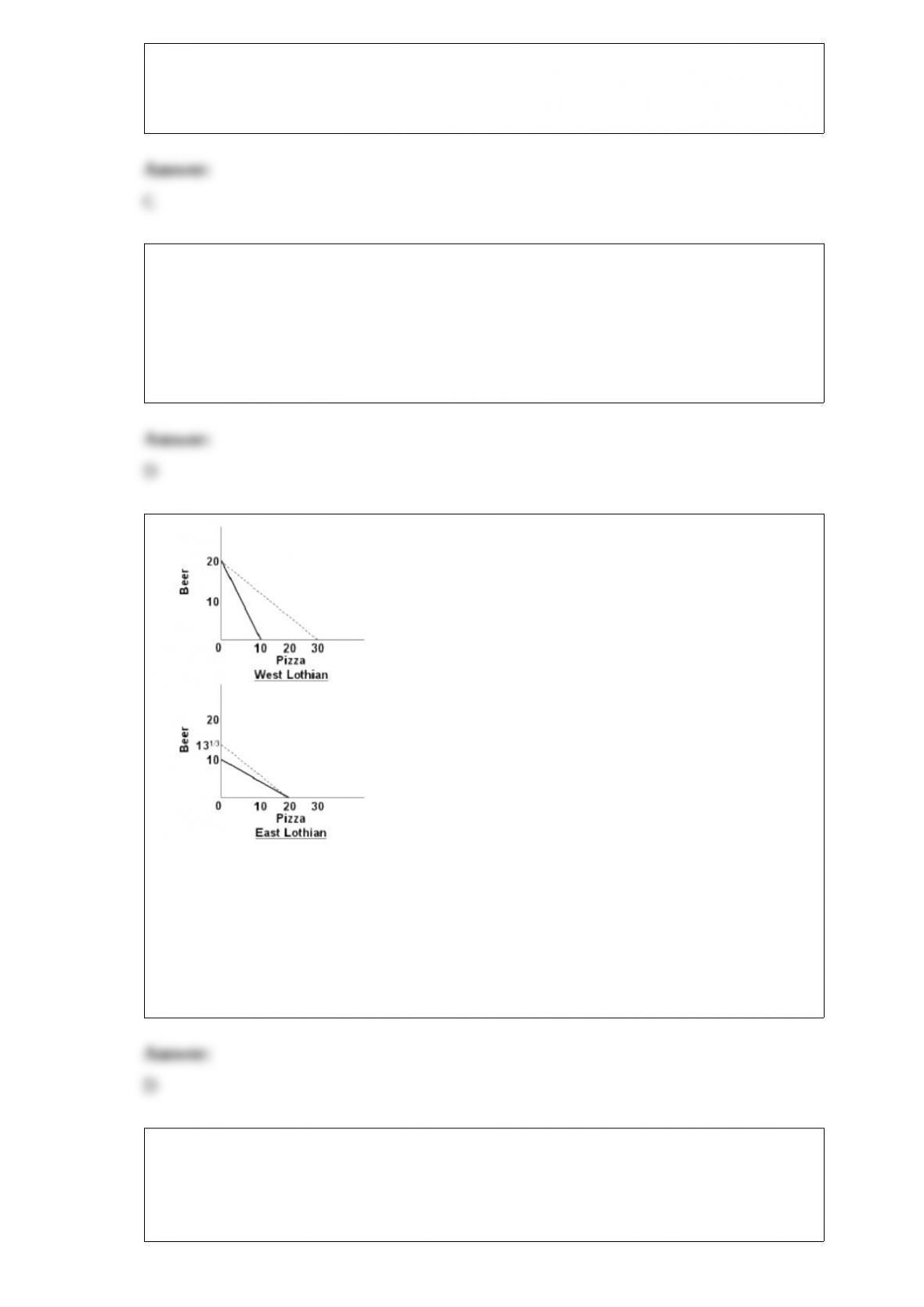
7)
Refer to the above diagrams. The solid lines are production possibilities curves; the
dashed lines are trading possibilities curves. The trading possibilities curves suggest
that the terms of trade are:
A.1.5 beers for 1 pizza.
B.1 beer for 2 pizzas.
C.2 beers for 1 pizza.
D.1 beer for 1.5 pizzas.
8) If a firm is hiring a certain type of labor under purely competitive conditions:
A.its labor demand curve will be perfectly elastic at the market-determined wage rate.
B.the labor supply curve will lie above the marginal labor cost curve.
C.the labor supply and marginal labor (resource) cost curves will coincide and be
upsloping.
D.the labor supply and marginal labor (resource) cost curves will coincide and be
perfectly elastic.
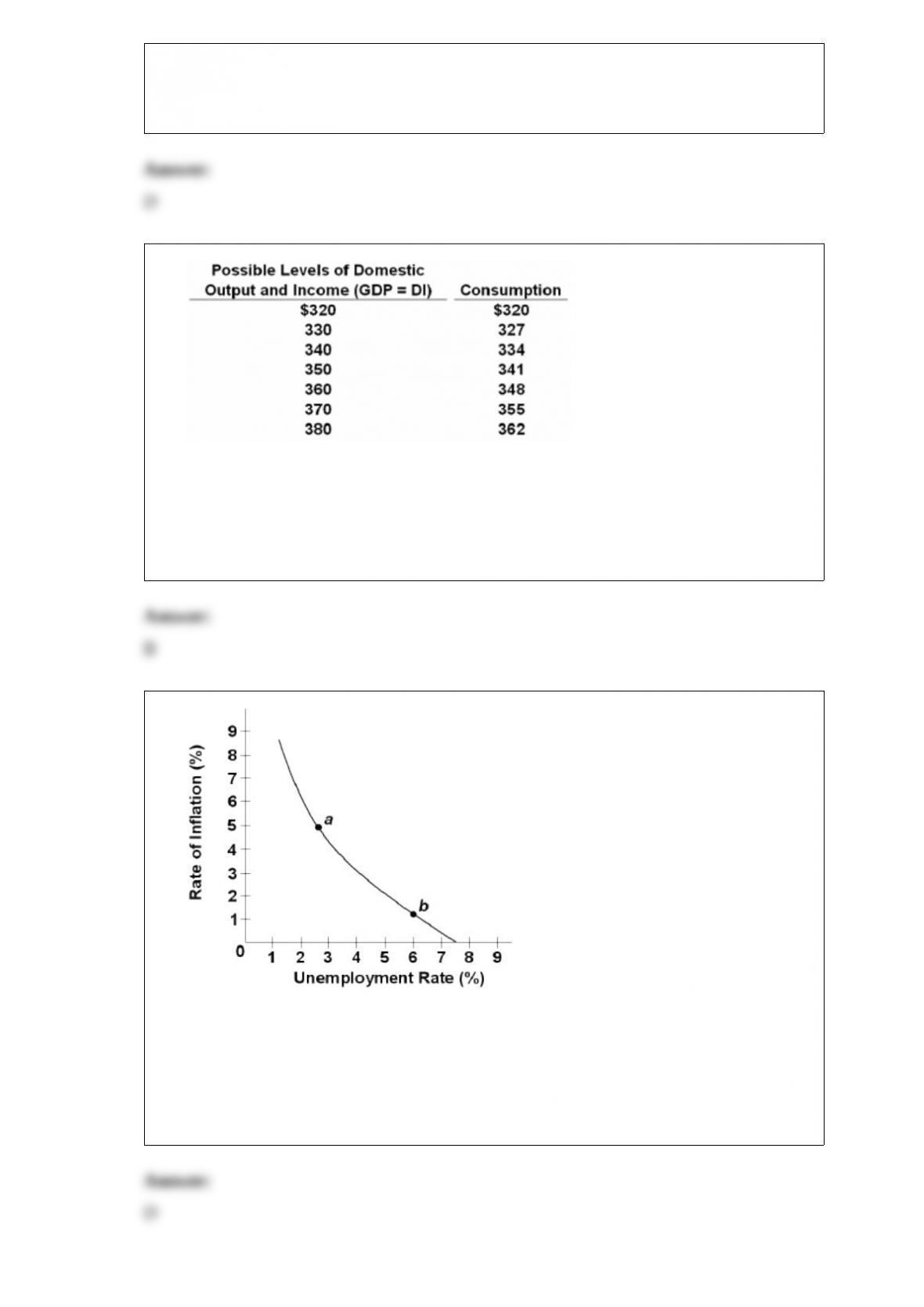
9)
Refer to the above data. The MPS is:
A.7/10.
B.3/10.
C.2/5.
D.3/5.
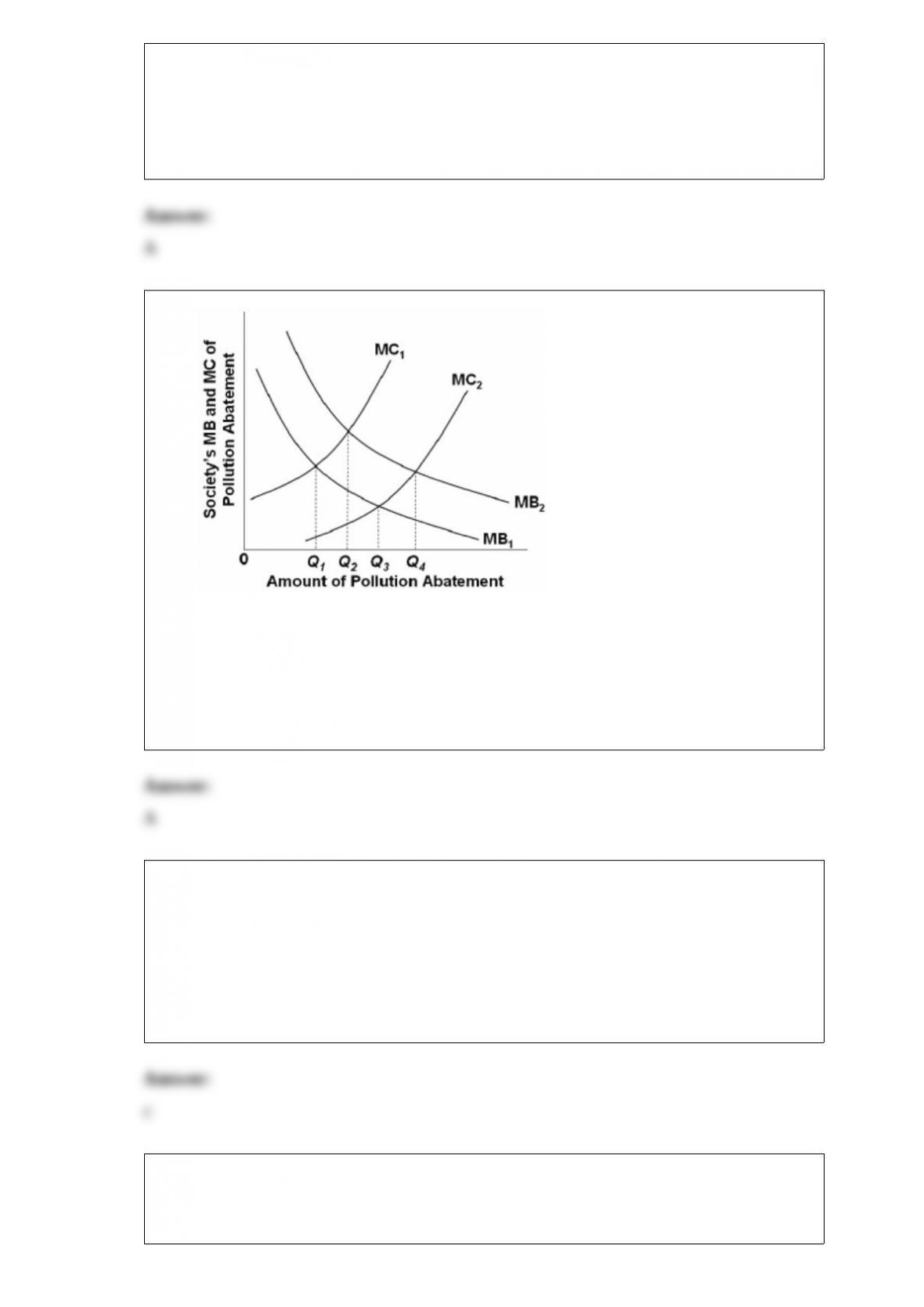
10)
Refer to the above diagram for a specific economy. An increase in aggregate demand
will:
A.shift this curve to the right.
B.shift this curve to the left.
C.move this economy southeast along the curve.
D.move this economy northwest along the curve.
11) The value of money varies:
A.inversely with the price level.
B.directly with the volume of employment.
C.directly with the price level.
D.directly with the interest rate.
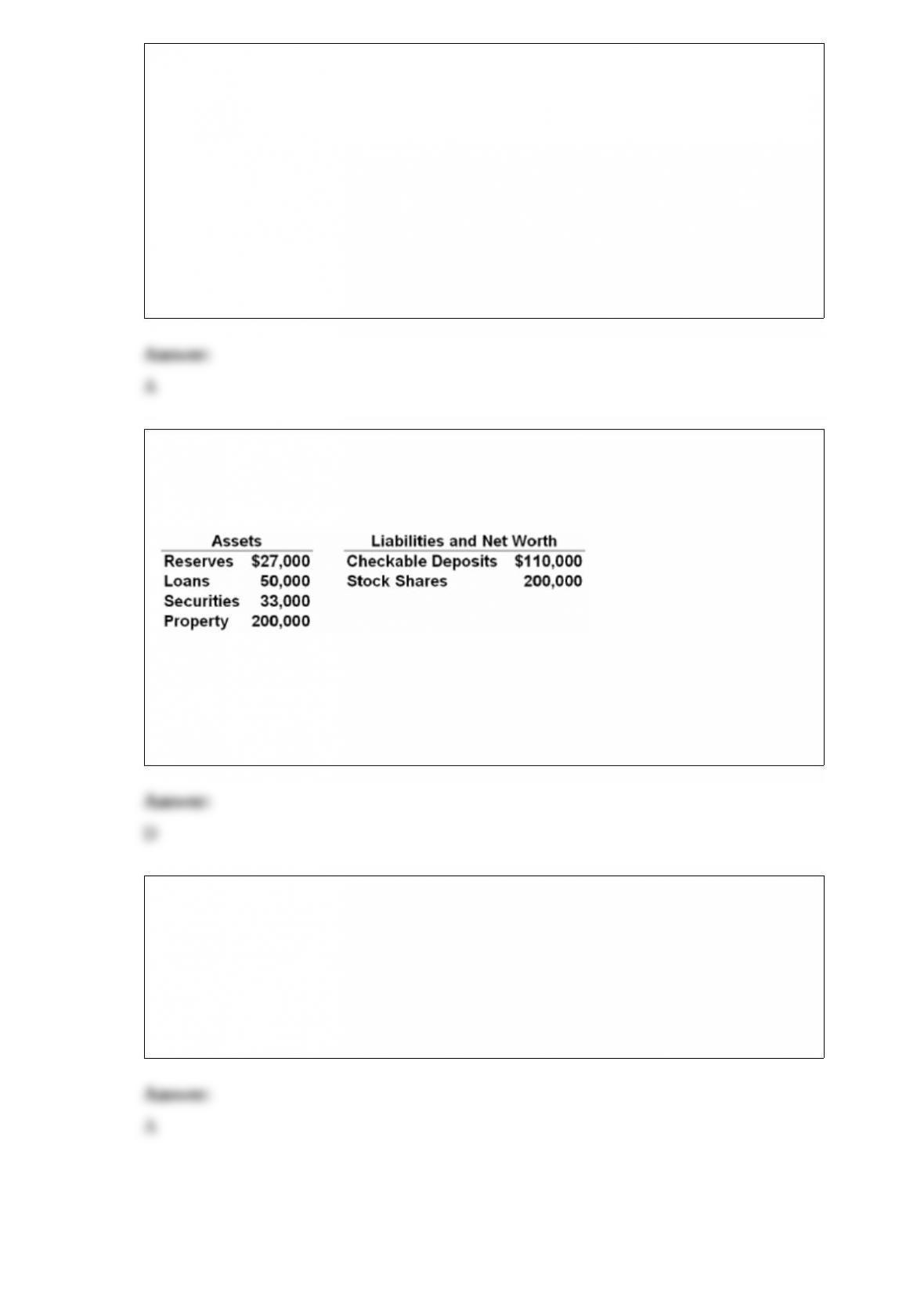
12)
Refer to the above diagram. With MB1 and MC1, society’s optimal amount of pollution
abatement is:
A.Q1.
B.Q2.
C.Q3.
D.Q4.
13) (last word) the fallacy of composition states that:
a.because economic systems are composed of so many diverse economic units,
economic laws are necessarily inexact.
b.the anticipation of a particular event can affect the composition of that event when it
occurs.
c.what is true for the individual must necessarily be true for the group.
d.because event a precedes event b, a is necessarily the cause of b.
14) the failure of soviet central planning was reflected in:
a.a declining growth rate.
b.poor quality goods.

c.the failure to provide promised consumer goods.
d.all of these.
15) The market shares of firms in three different industries are listed in the table below.
Use this information to calculate the Herfindahl index for each industry.
(a)Which industry is has the greatest market power? The least?
(b)Based on your findings, is the number of firms in the industry a good predictor of the
competitiveness of an industry? Why or why not?
16) if a pure monopolist is producing at that output where p = atc, then:
a.its economic profits will be zero.
b.it will be realizing losses.
c.it will be producing less than the profit-maximizing level of output.
d.it will be realizing an economic profit.
17) In the extended analysis of aggregate supply, the short-run aggregate supply curve
is:
A.vertical and the long-run aggregate supply curve is horizontal.
B.horizontal and the long-run aggregate supply curve is vertical.
C.upward sloping and the long-run aggregate supply curve is vertical.
D.horizontal and the long-run aggregate supply curve is upward sloping.
18) (1) The composite index of leading indicators turns downward for three consecutive
months, suggesting the possibility of a recession; (2) Economists reach agreement that
the economy is moving into a recession; (3) A tax cut is proposed in Congress; (4) The
tax cut is passed by Congress and signed by the President; (5) Consumption spending
begins to rise, aggregate demand increases, and the economy begins to recover.
Refer to the above information. The recognition lag of fiscal policy is reflected in
events:
A.1 and 2.
B.2 and 3.
C.3 and 4.
D.4 and 5.
19) The following balance sheet for the ABC National Bank in answering the next
question(s). Assume the required reserve ratio is 20 percent.
Refer to the above data. This bank can safely expand its loans by a maximum of:
A.$7,000.
B.$25,000.
C.$12,000.
D.$5,000.
20) Statistical discrimination:
A.can persist in the long run if differences in average characteristics among groups
continue.
B.will tend to diminish in the long run, because nondiscriminating firms will drive out
discriminating firms.
C.requires that employers have discrimination coefficients greater than zero.
D.is also known as occupational segregation.