
Demand is unit elastic whenever
a. price elasticity has an absolute value of 1
b. price elasticity has an absolute value greater than 1
c. price elasticity has an absolute value less than 1
d. price elasticity is negative
e. consumers always respond to a one-dollar change in price by decreasing their
quantity demanded by one unit
If the price of Pepsi-Cola increases from 50 cents to 60 cents per can and the quantity
demanded decreases from 100 cans to 50 cans, then the Pepsi-Cola Company could
increase its total revenue by
a. lowering price
b. decreasing quantity supplied
c. leaving price the same
d. raising price
e. decreasing supply

In Niskanen’s theory, bureaucrats obtain the budget they want by
a. lowering prices to consumers
b. raising prices to consumers
c. promising to produce more efficiently
d. threatening legislatures with an all-or-nothing choice
e. allowing legislators to cut particular items from their budget
One possible reason that the country of Whatsis is trapped in poverty is
a. a lack of mineral wealth
b. an honest and functional government
c. laws and regulations to help detect fiscal fraud
d. a free press
e. a civil war
If there is a shortage in the market for automobiles, then
a. producers’ inventories will rise

b. the price should begin to rise
c. the demand curve will shift to restore equilibrium in the market
d. the supply curve will shift to restore equilibrium in the market
e. the price is expected to fall
If financial intermediaries charge a higher rate of interest to lenders than they pay to
borrowers, then
a. investing with borrowed funds involves a higher opportunity cost than investing with
savings
b. investing with saving involves a higher opportunity cost than investing with
borrowed funds
c. a firm is charged less interest to borrow than it can earn on savings
d. the opportunity cost of investing with borrowed funds equals the opportunity cost of
investing with savings
e. a firm does not consider the market rate of interest when it makes investment
decisions
A cartel is
a. explicit collusion
b. a conglomerate merger
c. a horizontal merger
d. legal in the United States
e. implicit collusion
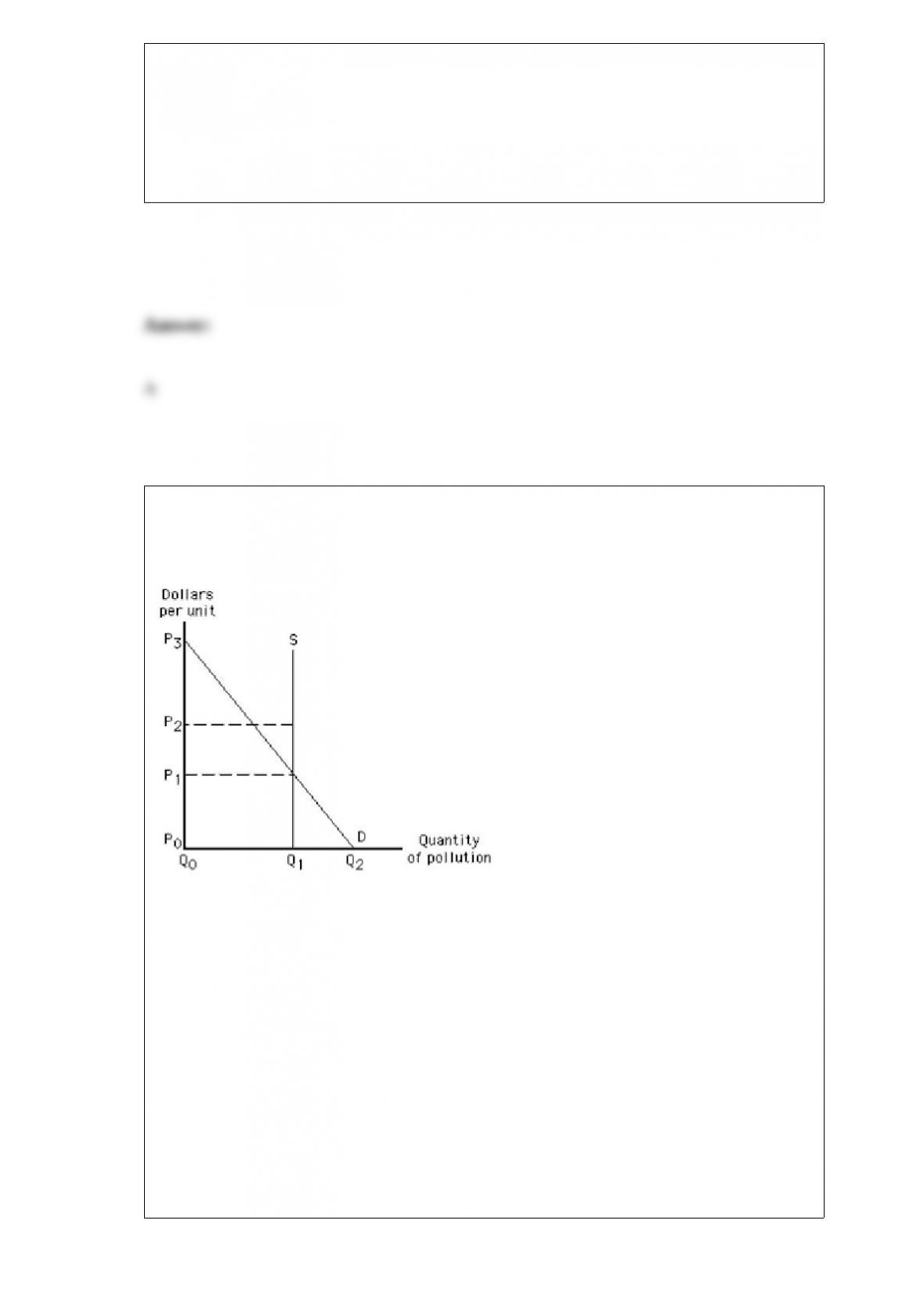
Exhibit 17-5
In Exhibit 17-5, if the government does not charge firms for emitting pollutants into a
river,
a. firms will emit Q1 units of pollutant at a price of P0 each
b. firms will emit Q2 units of pollutant at a price of P0 each
c. firms will emit Q0 units of pollutant at a price of P3 each
d. firms will emit Q1 units of pollutant at a price of P1 each
e. firms will emit Q2 units of pollutant at a price of P3 each
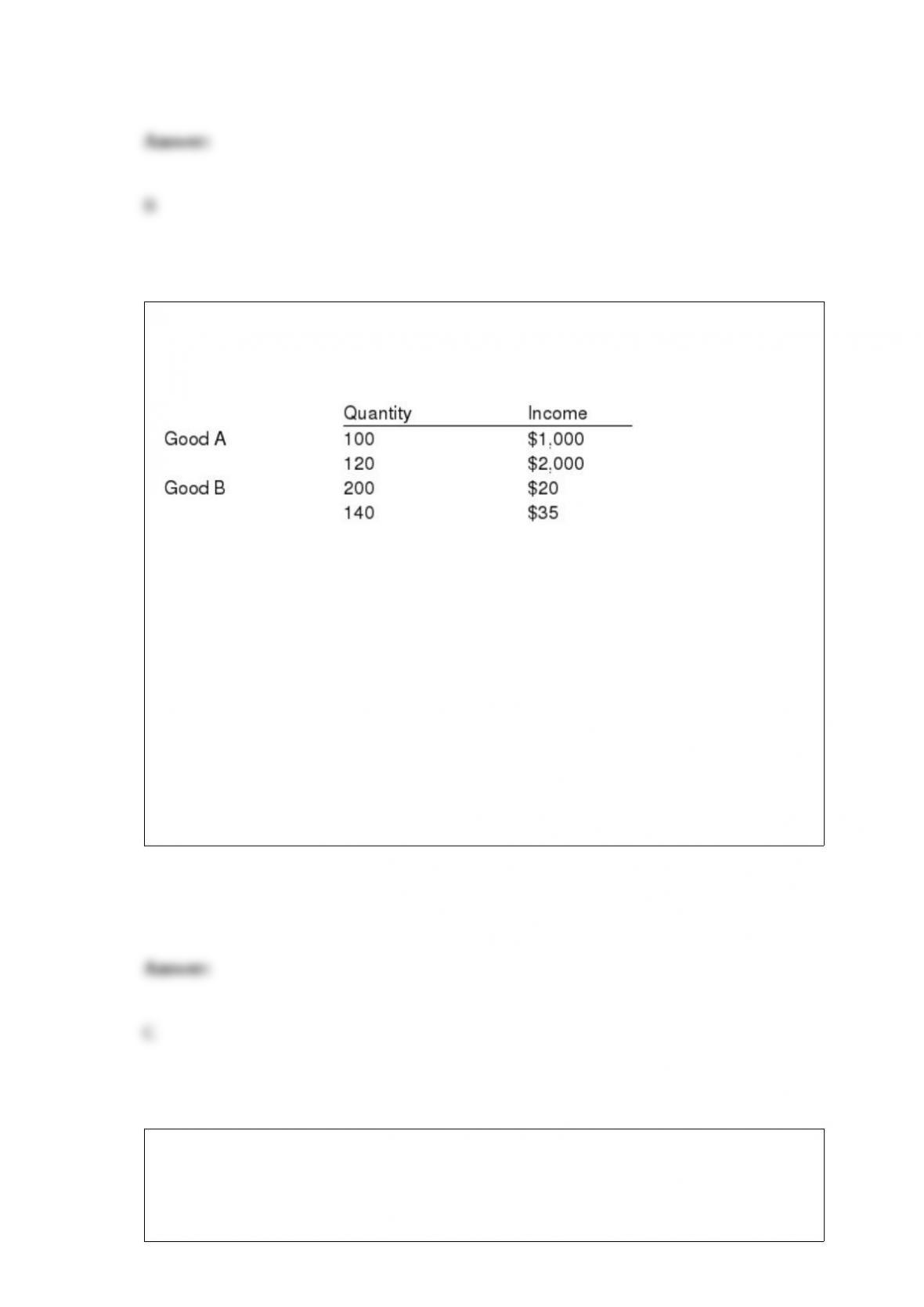
Exhibit 5-22
Use the information in Exhibit 5-22 to calculate the value of income elasticity of
demand for Good A.
a. 1
b. 2/9
c. 3/11
d. 11/3
e. 9/2
Which of the following is an example of a durable good?
a. food prepared at home

b. food eaten at a restaurant
c. high-fashion clothing
d. binoculars
e. motor oil
A shortage occurs whenever
a. quantity demanded exceeds quantity supplied at the equilibrium price
b. price is less than equilibrium price
c. quantity demanded is less than quantity supplied
d. goods are scarce
e. some of the people who need the product are not willing and able to buy it at the
equilibrium price
When a system of pollution rights is in effect, polluters have no economic incentive to
reduce the amount of pollution they generate.
a. True
b. False
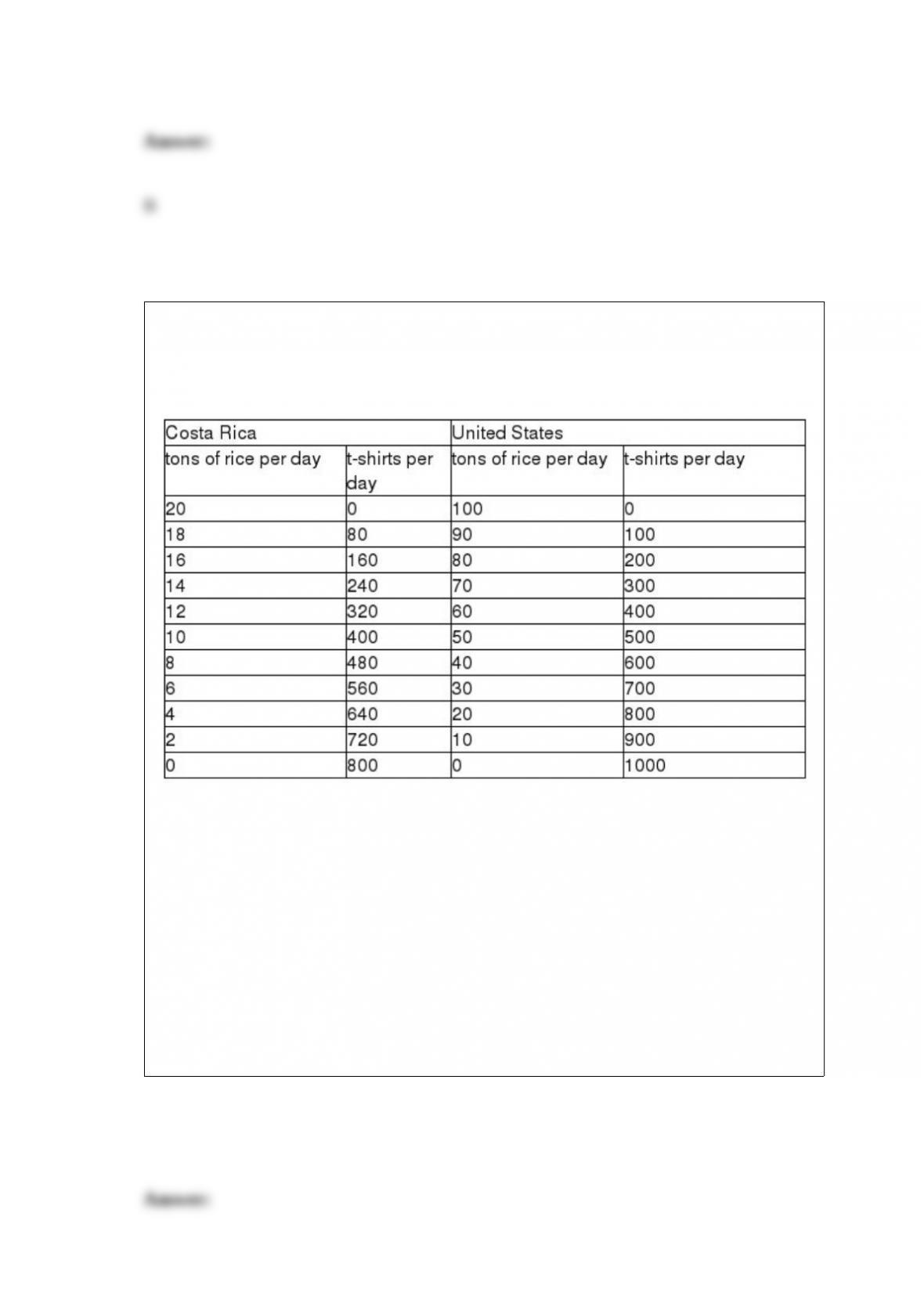
Exhibit 19-2
In Exhibit 19-2, the opportunity cost of 1 t-shirt in the United States is
a. 0
b. 1/2 ton of rice
c. 3/4 ton of rice
d. 1 ton of rice
e. 2 tons of rice
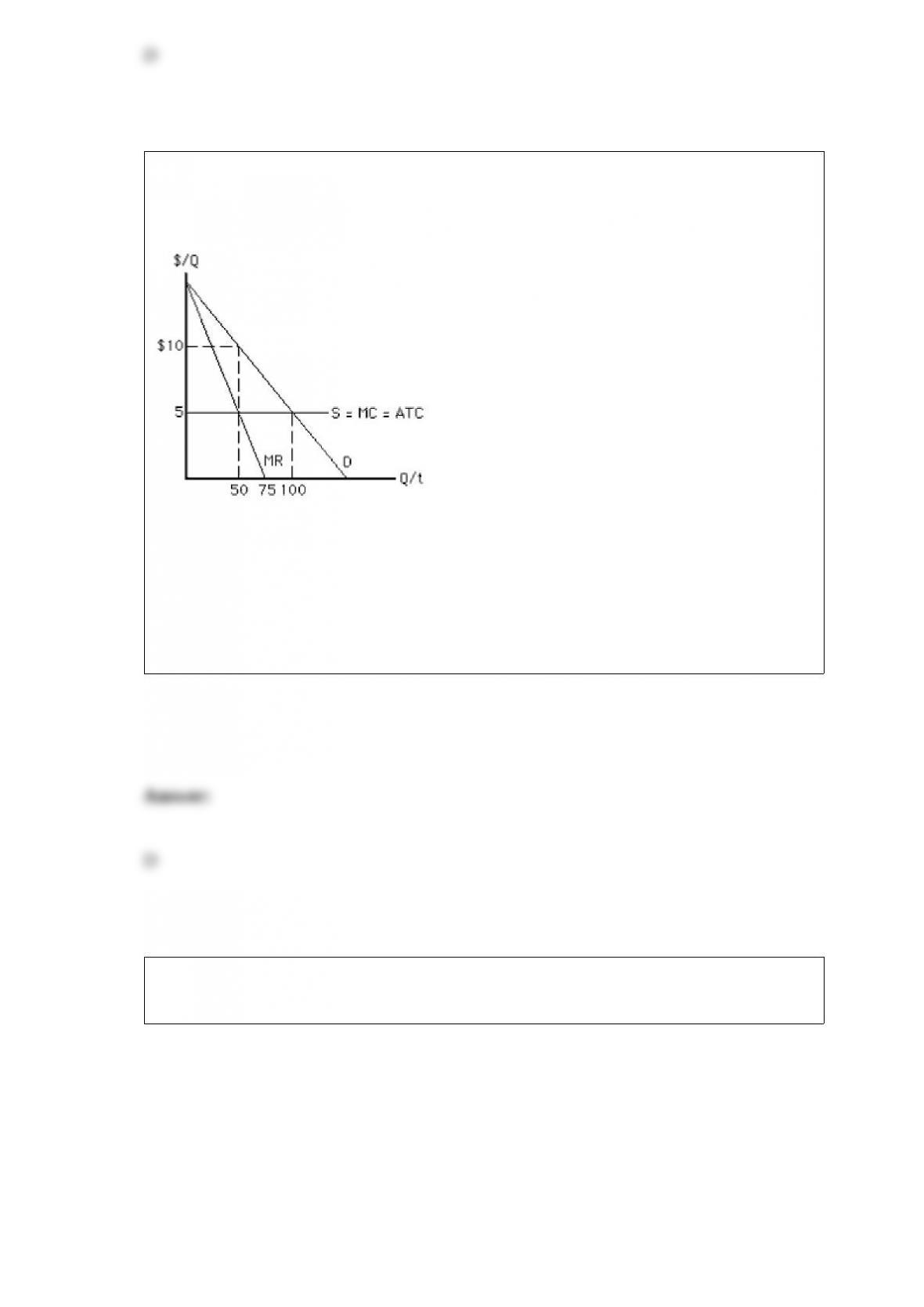
Exhibit 9-16
Exhibit 9-16 depicts the cost and demand conditions facing a profit-maximizing
monopolist that does not price discriminate. Which of the following statements is true?
a. An output of 50 is allocatively efficient, but the monopolist will produce 100 units.
b. An output of 50 is allocatively efficient, but the monopolist will produce 75 units.
c. An output of 75 is allocatively efficient, but the monopolist will produce 100 units.
d. An output of 100 is allocatively efficient, but the monopolist will produce 50 units.
e. An output of 100 is allocatively efficient, but the monopolist will produce 75 units.
Exhibit 4-1
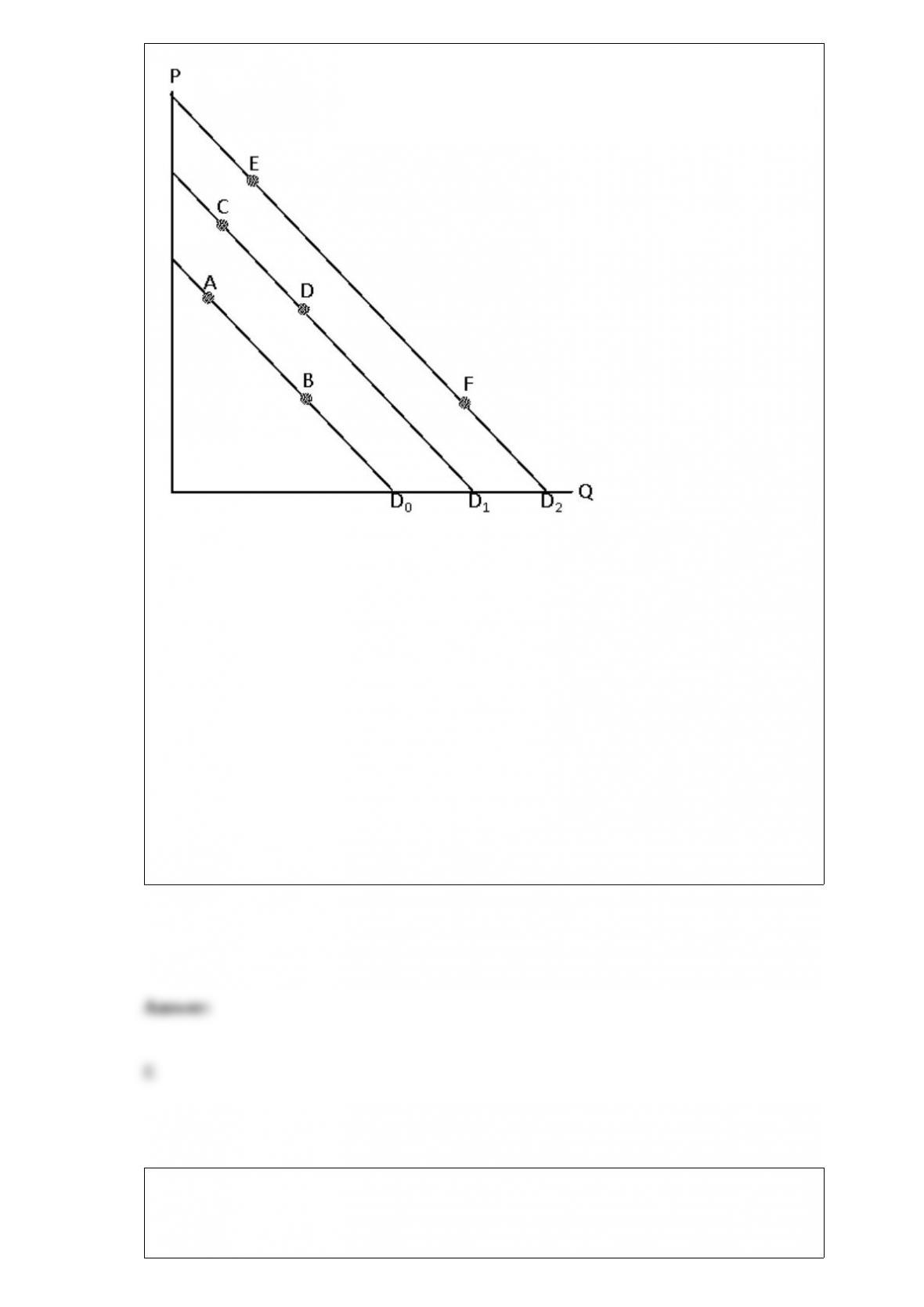
Consider Exhibit 4-1 which shows 3 demand curves for corn flakes. Which of the
following would be most likely to shift the demand curve from D2 to D1?
a. a report that eating corn flakes decrreases the risk of cancer
b. an increase in consumer incomes if corn flakes is a normal good
c. an increase in the price of oatmeal which many consumers consider to be a substitute
for corn flakes
d. an increase in the price milk which many consumers consider to be complement for
corn flakes
e. a widely anticipated recession
If on Tuesday you can buy 125 yen per U.S. dollar and on Wednesday you can buy 120
yen per U.S. dollar,

a. both the U.S. dollar and the yen have appreciated
b. both the U.S. dollar and the yen have depreciated
c. the U.S. dollar has appreciated and the yen has depreciated
d. the U.S. dollar has depreciated and the yen has appreciated
e. the yen has appreciated and the U.S. dollar has remained constant
One determinant of the derived demand for a resource is the
a. price of the product made using the resource
b. extra cost of the resource
c. marginal resource cost of the resource
d. availability of the resource in the marketplace
e. quantity of the resource demanded
Which of the following is true in the short run at the output level where average total
cost is at its minimum?
a. Marginal cost equals average total cost.

b. Average variable cost equals fixed cost.
c. Marginal cost equals average variable cost.
d. Average total cost equals average fixed cost.
e. Average total cost equals average variable cost.
In economics, specialization means
a. producing something using only one type of resource, such as labor
b. producing something using only one type of labor
c. focusing efforts on a particular product or a single task
d. producing only one unit of output
e. producing something using only one unit of a variable resource
Which of the following is likely to be present in a perfectly competitive market?
a. patents
b. government licenses
c. nonprice competition such as advertising
d. high capital costs
e. firms producing identical products

Which of the following components of the U.S. balance of payments includes direct
investment by Americans in foreign securities?
a. U.S. official reserve assets
b. the capital account
c. the current account
d. U.S. government assets abroad
e. merchandise trade balance
Opportunity cost is always measured in dollar terms, rather than in terms of real goods
and services.
a. True
b. False

The term “fiscal policy” refers to
a. the amount of physical output produced by firms
b. the means by which government policy makes firms more productive
c. the avenue by which government influences credit markets
d. spending and taxing by governments
e. a tool of government that works in the opposite direction of monetary policy
The assumption that individuals act rationally implies that
a. people think only of themselves and disregard the well-being of others
b. people undertake all those activities that yield benefits to themselves
c. people only consider the costs of an activity to decide whether it is worthwhile
d. the greater the cost of a charitable deed to a benefactor, the more likely he or she is to
perform that deed
e. people implicitly calculate the costs and benefits of an activity to decide if it is
worthwhile

Which of the following is a fixed cost of driving a car?
a. gasoline
b. maintenance
c. tires
d. license plates
e. motor oil
Points inside the production possibilities frontier represent
a. full and efficient use of all resources
b. inefficiency or unemployment (or both)
c. currently unattainable combinations of outputs
d. currently unattainable combinations of resources
e. the most desirable combinations of outputs
If the income elasticity of demand for a service is 0.6, then a 5 percent increase in
income will generate a __________ in quantity demanded
a. 3 percent decrease
b. 3 percent increase
c. 8.33 percent decrease
d. 8.33 percent increase
e. 0.12 percent decrease
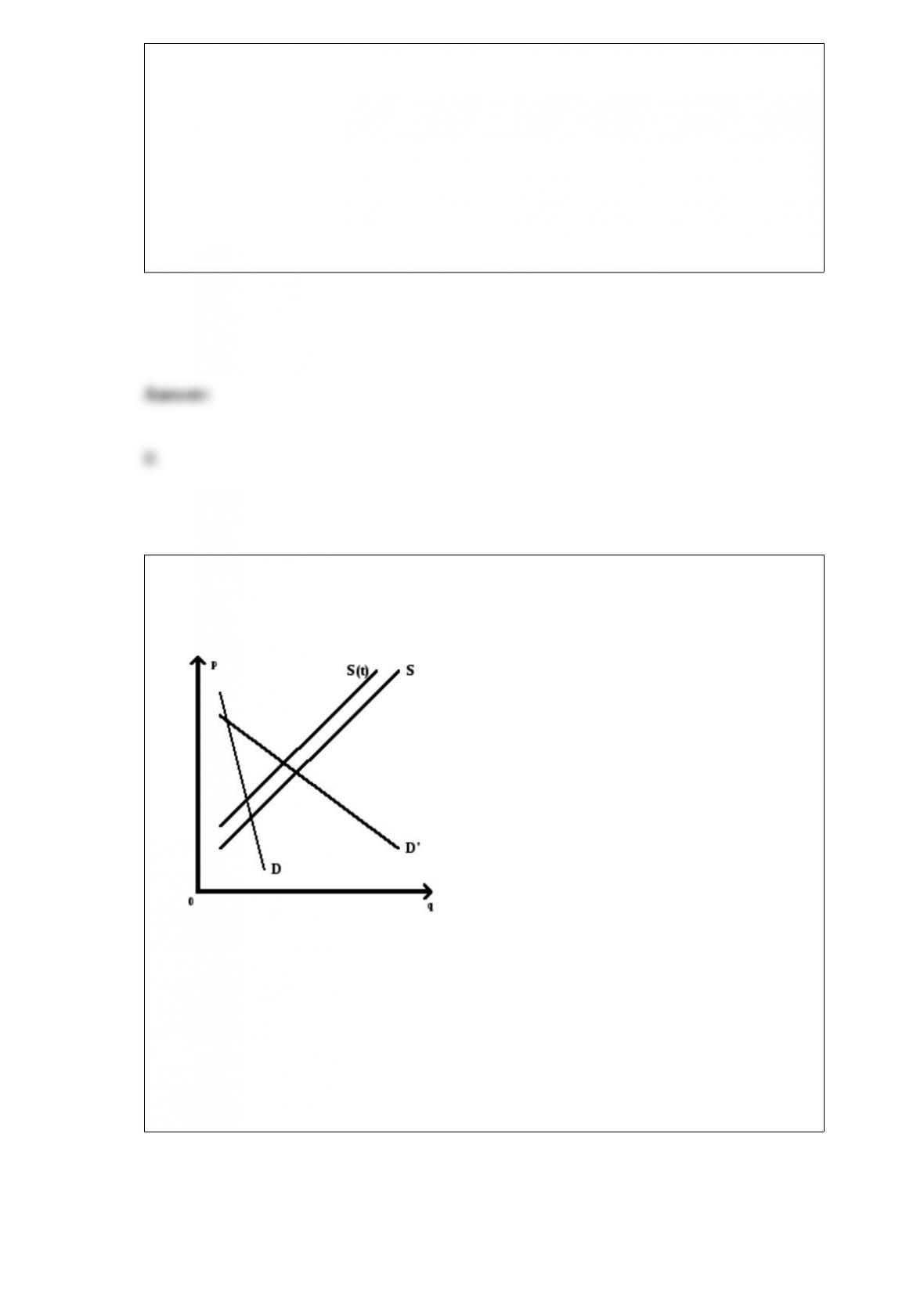
Exhibit 5-29
Refer to Exhibit 5-29. The supply curve decreases from S to S(t) because a tax is
imposed. Under demand curve D” as opposed to demand curve D, consumers will pay
more of the tax.
a. True
b. False
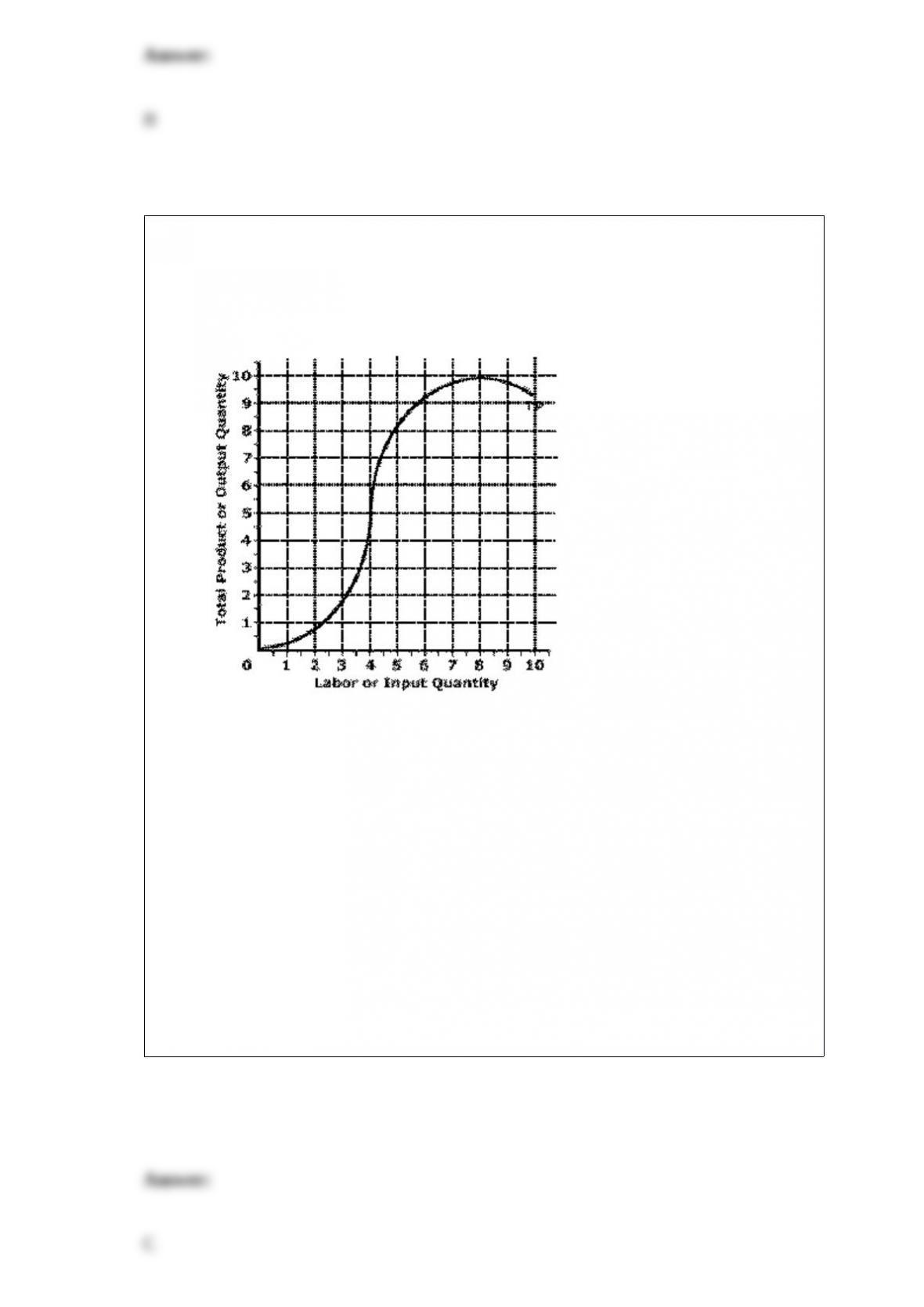
Exhibit 7-13 The Total Product of Labor
Given the information in Exhibit 7-13, what is the average product when eight units of
labor are employed?
a. more than two-thirds units of output
b. less than one-third of a unit of output
c. one and one-fourth units of output
d. two units of output
e. cannot be determined from the graph of total product

Attempts are being made to develop a biodegradable plastic using agricultural produce
such as potatoes. If these attempts are successful, what will happen to the equilibrium
price and quantity of potatoes?
a. Price will increase and quantity decrease.
b. Price will increase and quantity increase.
c. Price will decrease and quantity increase.
d. Price will decrease and quantity decrease.
e. No change in equilibrium price and quantity will occur.
In what way is consumer demand different from consumer wants?
a. Demand is only for necessities.
b. Demand is only for luxuries.
c. Demand takes into account the ability to pay.
d. Consumer wants are only for luxuries.
e. Consumer wants are only for necessities.

If Daniel produces one pair of shoes in 4 hours and Sarah produces one pair of shoes in
3 hours, then
a. Sarah has a comparative advantage in shoemaking
b. Daniel has a comparative advantage in shoemaking
c. Sarah has an absolute and a comparative advantage in shoemaking
d. Daniel has an absolute and a comparative advantage in shoemaking
e. Sarah has an absolute advantage in shoemaking