If there is an excess demand for money, there is an excess
a. supply of bonds and the price of bonds will increase.
b. supply of bonds and the price of bonds will decrease.
c. demand for bonds and the price of bonds will increase.
d. demand for bonds and the price of bonds will decrease.
e. supply of bonds and the price of bonds will not change.
Economists usually assume that all consumers have the same tastes and preferences.
Which of the following is not a tool for controlling the money supply?
a. Buying government bonds
b. Selling government bonds
c. Changing tax rates
d. Changing the required reserve ratio
e. Changing the discount rate
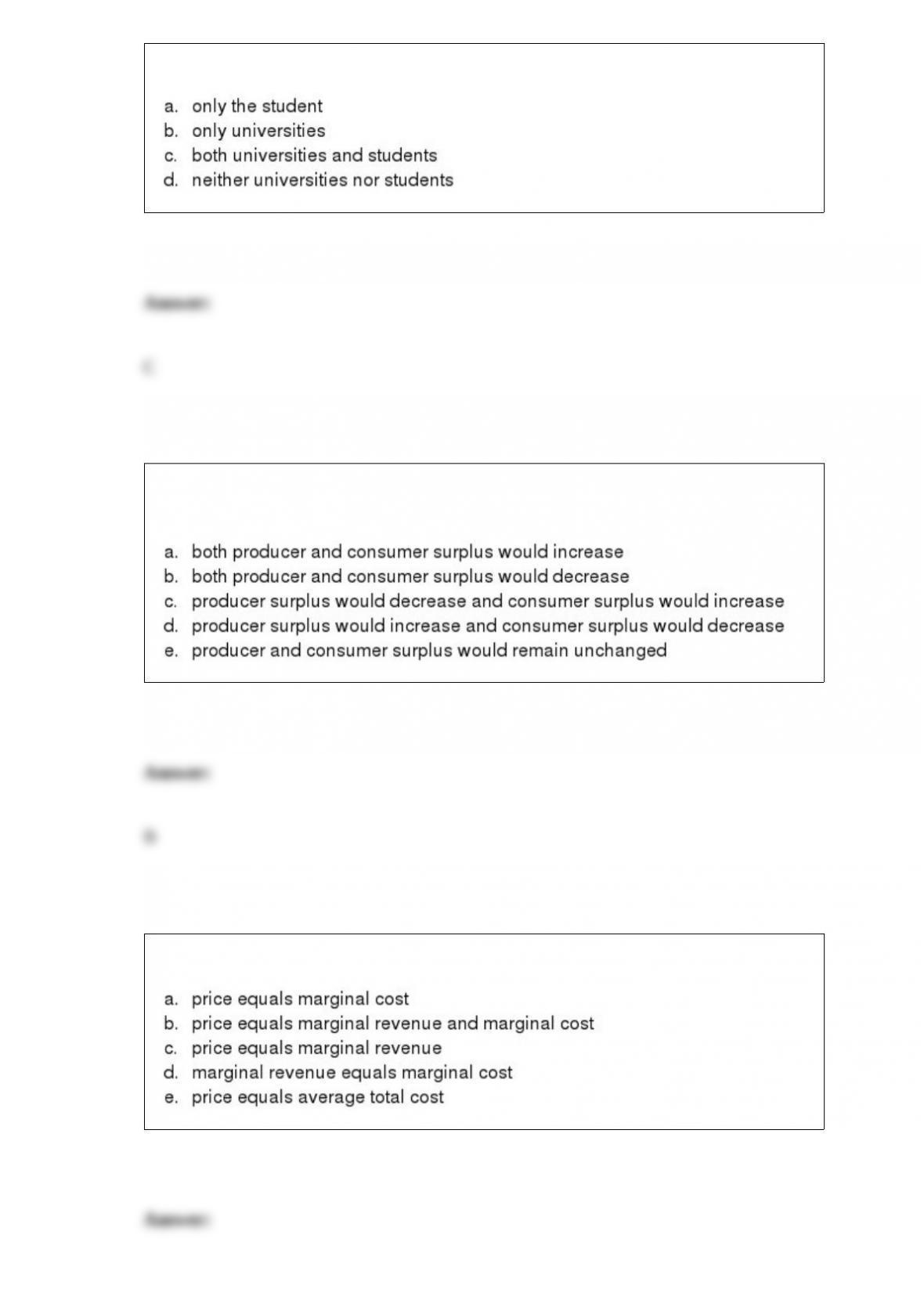
Federal subsidies to higher education benefit
If a perfectly competitive market is in equilibrium and market demand decreases, which
of the following would happen?
To maximize profit, a monopolist should produce the level of output at which
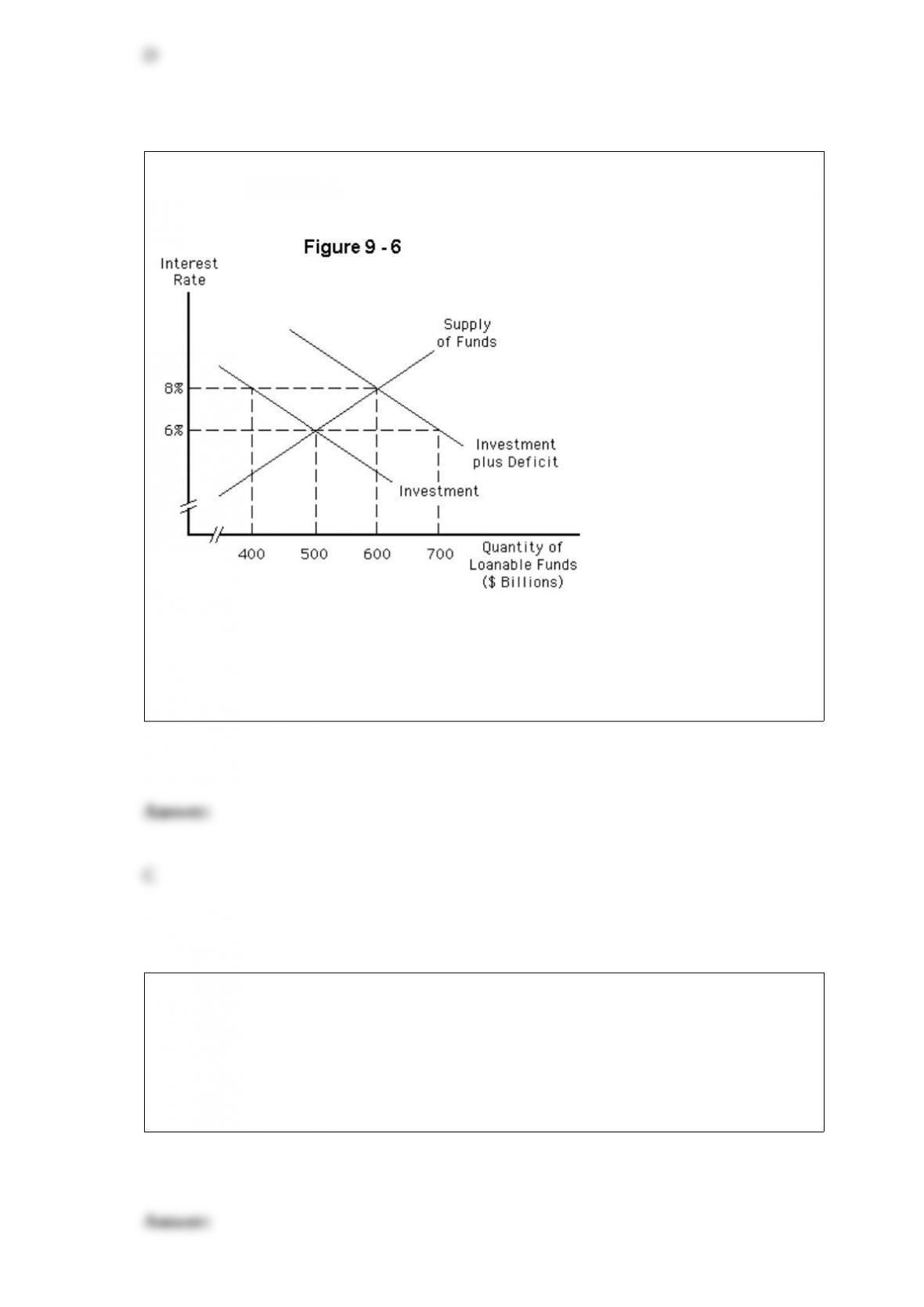
Refer to Figure 9-6. Starting from a $200 billion deficit, the government reduces
spending and eliminates the deficit. Investment spending will
a. decrease by $100 billion
b. decrease by $200 billion
c. increase by $100 billion
d. increase by $200 billion
e. not be affected by government budget deficit
Money is
a. any asset that is convertible into cash.
b. any asset with intrinsic value such as gold or silver.
c. any asset widely accepted as a means of payment.
d. anything that facilitates exchange.
e. cash only.

If the tax multiplier is -4.0, what is the marginal propensity to consume?
a. 0.66
b. 0.75
c. 0.50
d. 0.80
e. 0.25
If the government passed a law designating sea shells as money, sea shells
a. would not be legal tender
b. would not function as money because they would be unable to serve as a unit of
account
c. would not function as money because they would be unable to serve as a means of
payment
d. would not function as money because they would be unable to serve as a store of
wealth
e. would function as money as long as they were accepted in exchange for goods and
services
Which of the following isinversely related to consumption spending?
a. Wealth
b. Interest rates
c. Disposable income
d. Optimism about future income
e. None of the above.