1) the general agreement on tariffs and trade was founded in 1995 as a successor to the
world trade organization.
a.true
b.false
2) given an initial equilibrium in the money market and foreign exchange market,
suppose the federal reserve increases the money supply of the united states. under a
floating exchange-rate system, the dollar would:
a.appreciate in value relative to other currencies
b.depreciate in value relative to other currencies
c.be officially devalued by the government
d.be officially revalued by the government
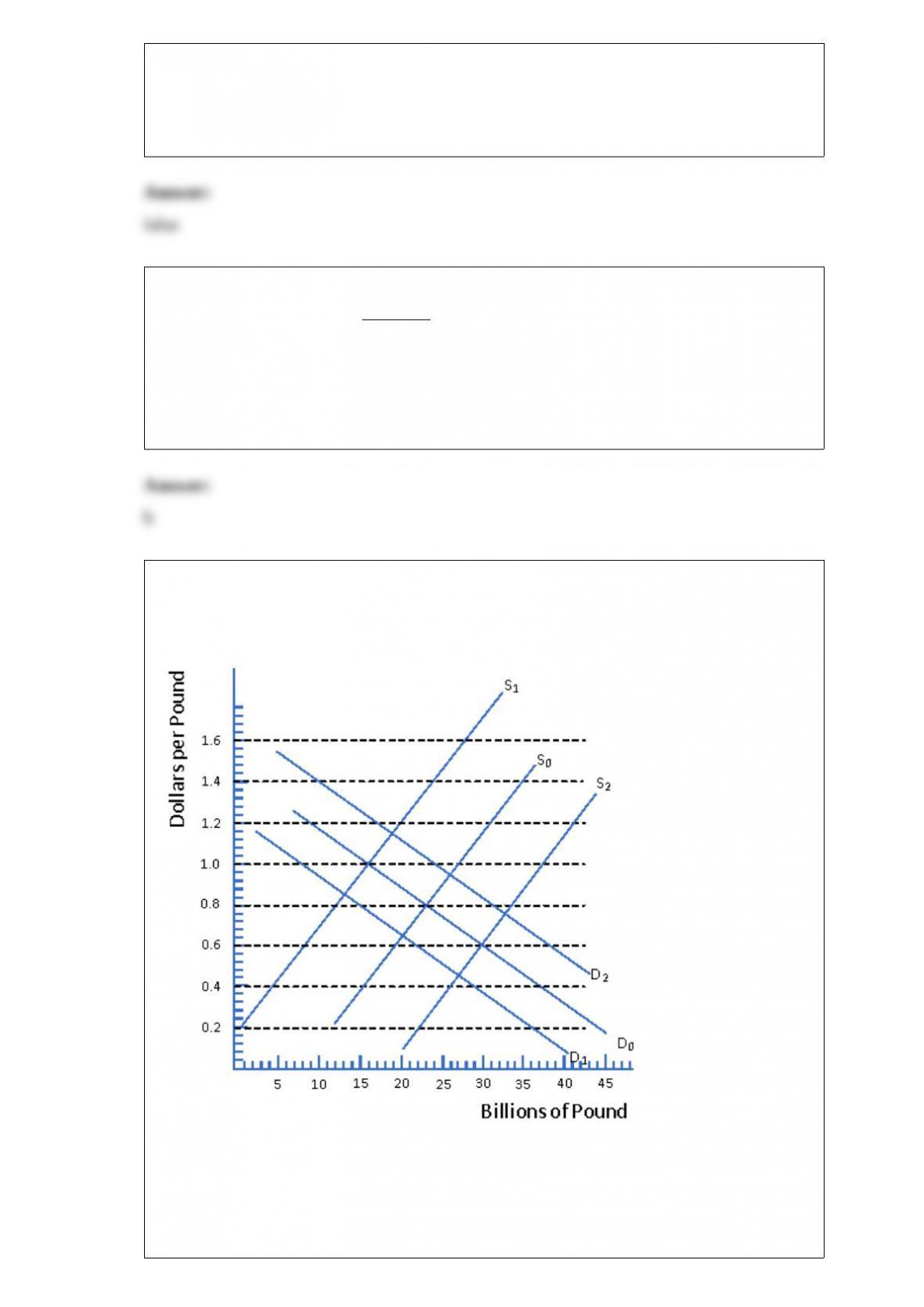
3) figure 12.3market for british pounds
consider figure 12.3.the market is initially governed by demand curve d0 and supply
curve s0.suppose the us government raises tariffs for uk made goods, which supply and
demand curves depict the new situation?
a.s1 and d2
b.s2 and d1
c.s0 and d2
d.s0 and d1
4) if a customs union included all of the countries in the world, there could exist only
trade creation, not trade diversion.
a.true
b.false
5) suppose the exchange rate between the japanese yen and the u.s. dollar is 100 yen per
dollar. a japanese stereo with a price of 60,000 yen will cost:
a.$60
b.$600
c.$6000
d.none of the above
6) international trade benefits:
a.all workers
b.most workers
c.many workers
d.none of these is correct
7) the eu has abolished restrictions on agricultural products traded internally.
a.true
b.false
8) among the determinants underlying a country’s international competitiveness in
business services (e.g., construction) are:
a.the potential scale economies afforded by a market’s size
b.abundance of equipment including data processing facilities and computers
c.skills and capabilities of employees and their wage rates
d.all of the above
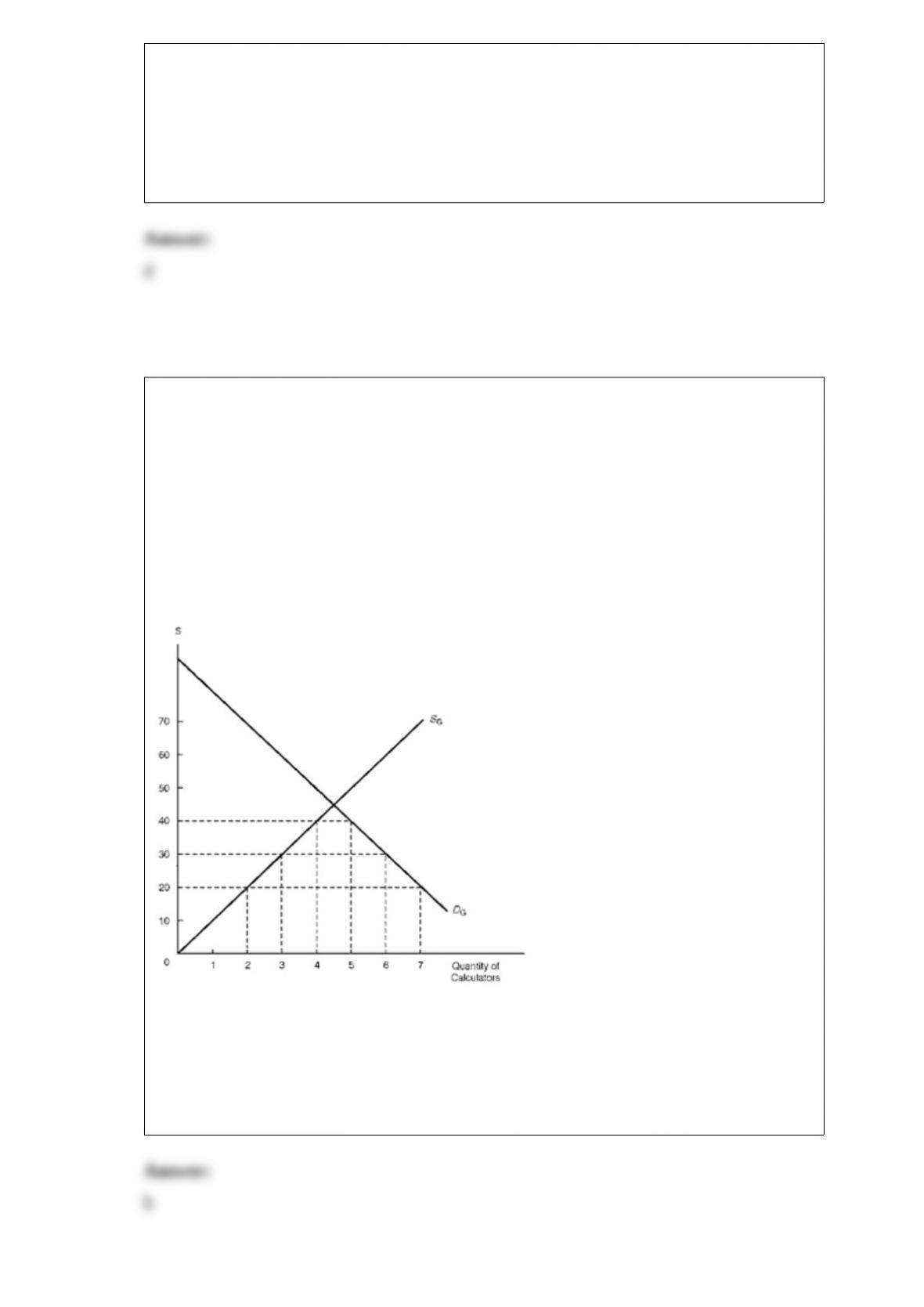
9) figure 8.1 depicts the supply and demand schedules of calculators for greece, a
‘small” country that is unable to affect the world price. greece’s supply and demand
schedules of calculators are respectively depicted by sg and dg. assume that greece
imports calculators from either germany or france. suppose germany is the world’s
low-cost producer who can supply calculators to greece at $20 per unit, while france
can supply calculators at $30 per unit.
figure 8.1. effects of a customs union
consider figure 8.1. the value of the trade diversion effect, resulting from the
greece/france customs union, equals:
a.$5
b.$10
c.$15
d.$20
10) the balance-of-payments adjustment mechanism developed during the 1700s by the
english economist david hume is the:
a.income-adjustment mechanism
b.flexible-exchange-rate-adjustment mechanism
c.price-adjustment mechanism
d.rank-reserve-adjustment mechanism
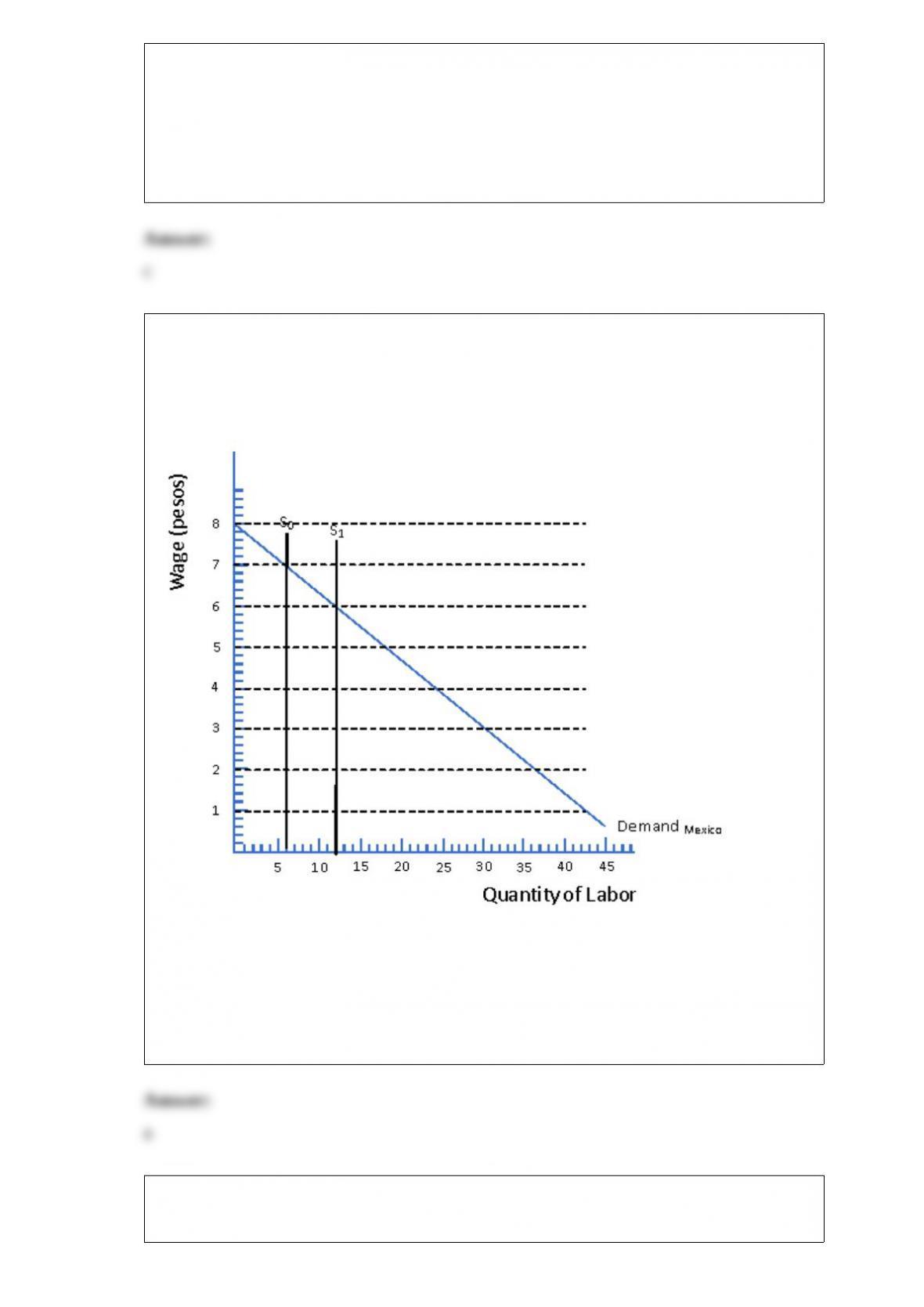
11) figure 9.3 figure 9.3 represents the mexican labor market. assume that labor and
capital are the only factors of production. also assume the initial supply schedule of
labor is denoted by s0 and consists entirely of native mexican workers. the demand
schedule of labor is denoted by dmexico.
consider figure 9.3. at labor market equilibrium, the payment to mexican capital owners
equals:
a.3 pesos
b.6 pesos
c.9 pesos
d.12 pesos
12) figure 13.1. u.s. capital and financial account
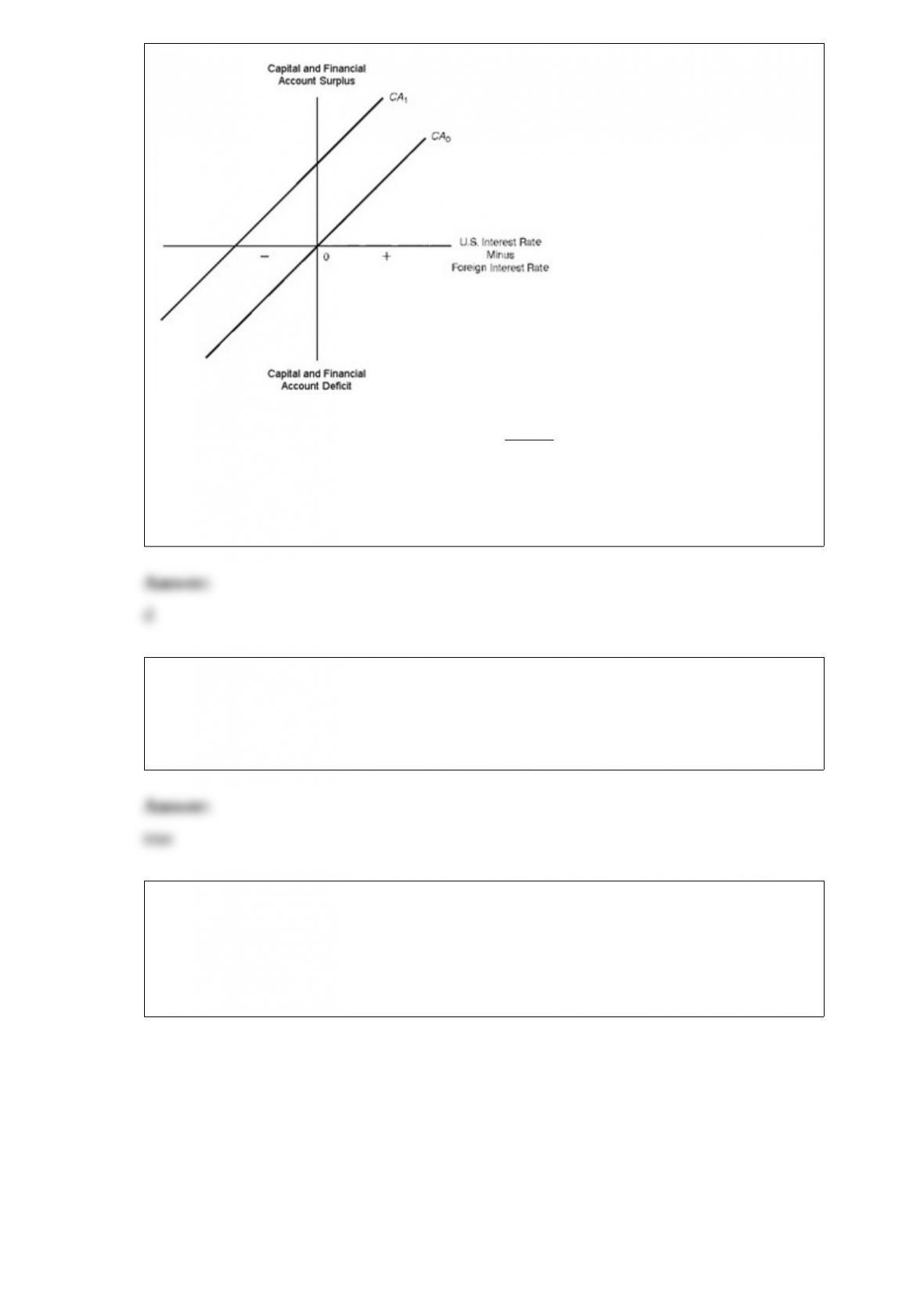
refer to figure 13.1. u.s. capital and financial account schedule ca0 would shift upwards,
or downwards, for all of the following reasons except:
a.u.s. residents being taxed on income earned from foreign investments
b.u.s. banks being restricted on loans that can be made abroad
c.u.s. political stability changing relative to foreign political stability
d.u.s. interest rates changing relative to foreign interest rates
13) the domestic cost ratios of nations set the outer limits to the equilibrium terms of
trade.
a.true
b.false
14) the figure below illustrates the supply and demand schedules of swiss francs under
a system of floating exchange rates.
figure 12.2. the market for swiss francs
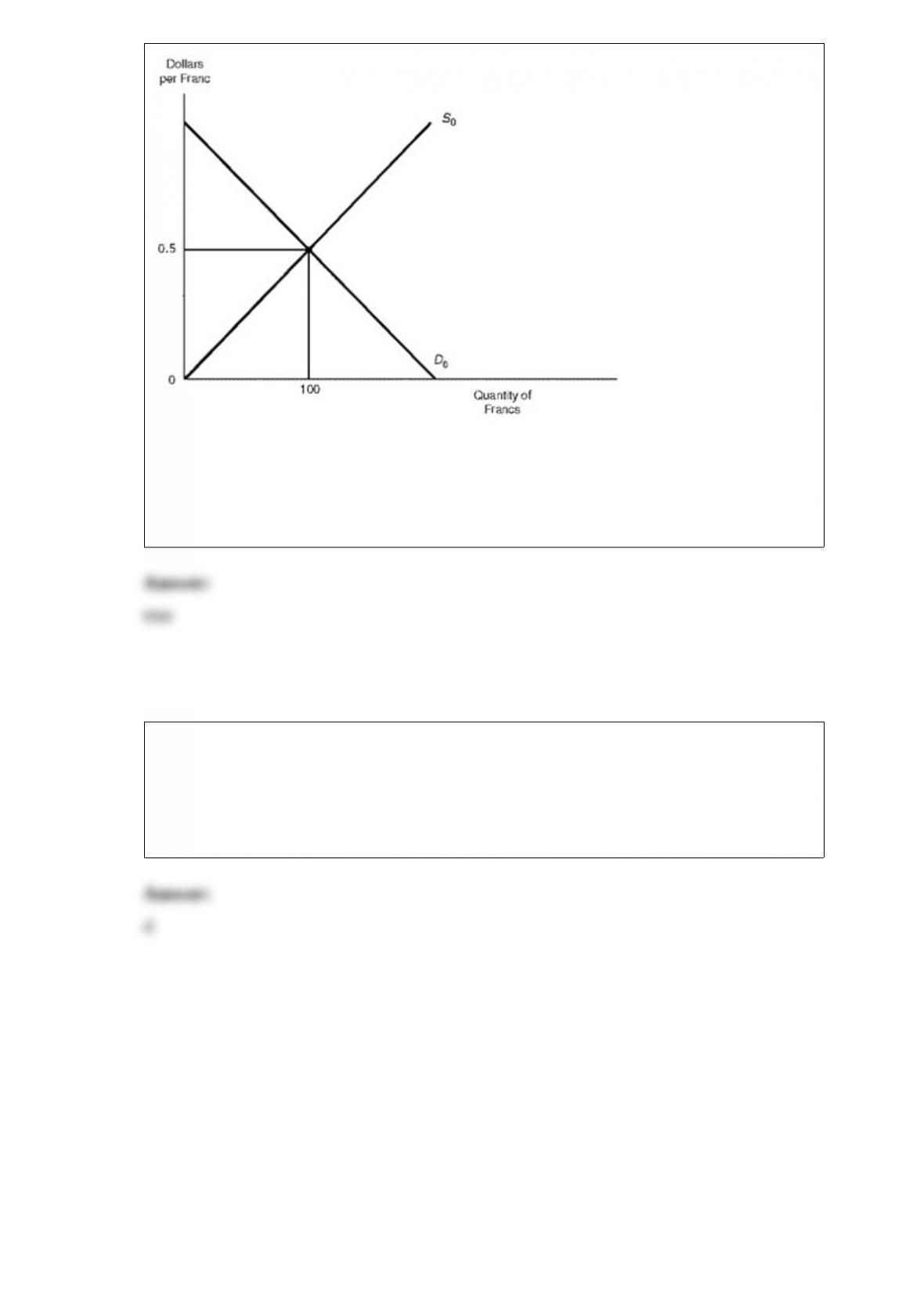
refer to figure 12.2. if swiss manufacturing costs increase relative to those of the united
states, there would occur an increase in the supply of francs and an appreciation in the
dollar’s exchange value.
a.true
b.false
15) the purchasing-power parity theory suffers from the problem
a.of choosing the appropriate price index
b.that it overlooks the influence of capital flows
c.that government policy may modify exchange rates
d.all of the above