
1) the only members of the general agreement on tariffs and trade and its successor, the
world trade organization, are developing countries rather than developed countries.
a.true
b.false
2) assume the united states adopts a tariff quota on steel in which the quota is set at 2
million tons, the within-quota tariff rate equals 5 percent, and the over-quota tariff rate
equals 10 percent. suppose the u.s. imports 1 million tons of steel. the resulting revenue
effect of the tariff quota would accrue to:
a.the u.s. government only
b.u.s. importing companies only
c.foreign exporting companies only
d.the u.s. government and either u.s. importers or foreign exporters
3) multilateral trade negotiations have led to
a.continued trade liberalization
b.financial liberalization
c.increased investment
d.all of the above
4) figure 6.5 japanese market for jetliners
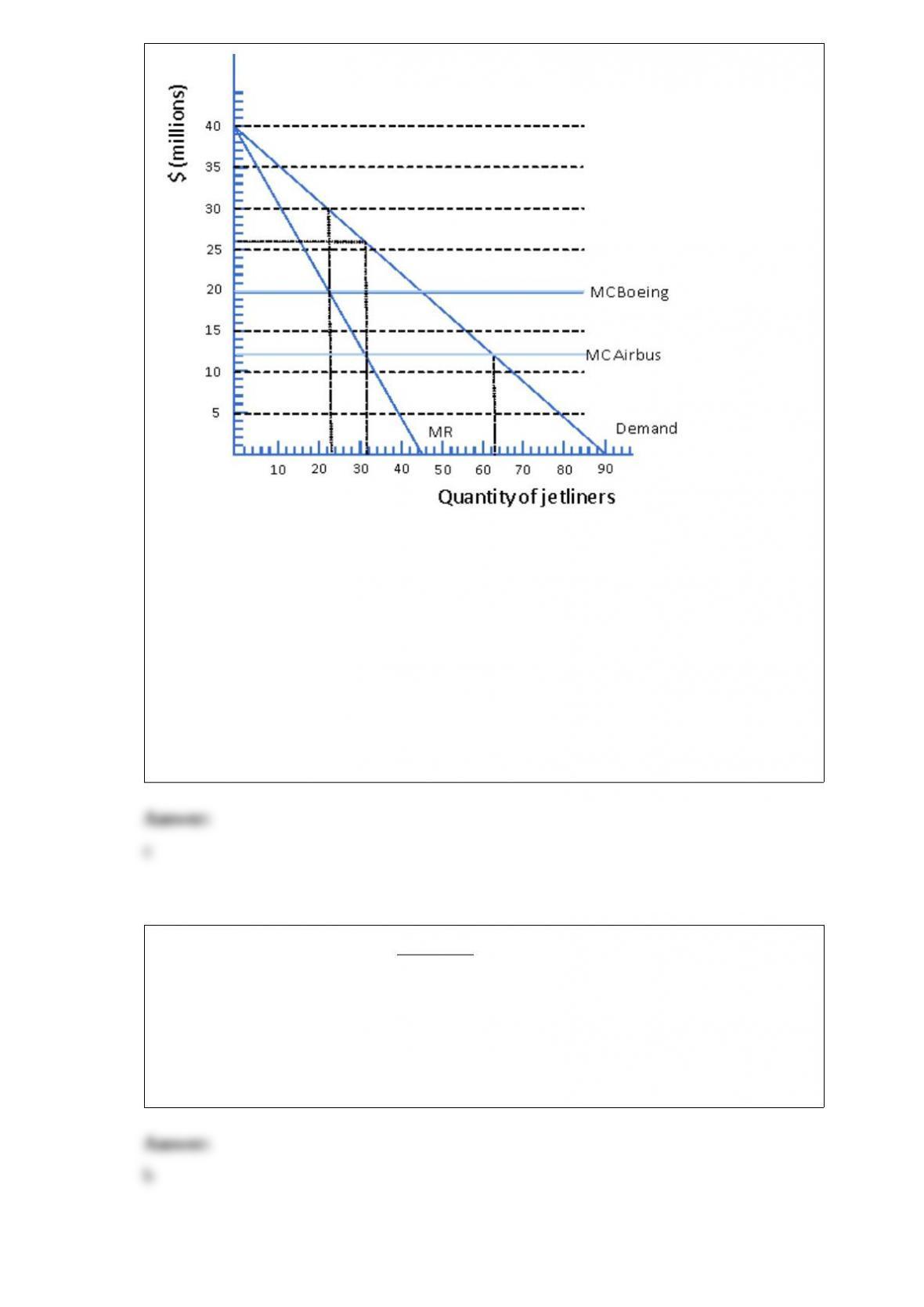
consider the japanese market for jetliners as depicted in figure 6.5.suppose lone
producer of jetliners in the world is boeing and boeing faces a constant marginal cost of
$20 million per jetliner but now a european manufacturer, airbus, begins
production.airbus faces the same marginal cost as boeing but the european government
provides airbus with a subsidy of $8 million per jetliner produced.as a result of the
competition, boeing leaves the japanese market leaving airbus as a monopoly.how much
profit will airbus earn?
a.$230 million
b.$350 million
c.$416 million
d.$450 million
5) suppose that the united states eliminates its tariff on steel imports, permitting
foreign-produced steel to enter the u.s. market. steel prices to u.s. consumers would be
expected to:
a.increase, and the foreign demand for u.s. exports would increase
b.decrease, and the foreign demand for u.s. exports would increase
c.increase, and the foreign demand for u.s. exports would decrease
d.decrease, and the foreign demand for u.s. exports would decrease

6) the united states was less open to international trade between:
a.1890 and 1910
b.1930 and 1950
c.1890 and 1950
d.1950 and 2013
7) assume that the formation of a customs union turns out to include the lowest-cost
world producer of the product in question. which effect could not occur for the
participating countries?
a.trade creation-production effect
b.trade creation-consumption effect
c.trade diversion
d.scale economies and competition
8) suppose the united states imposes trade sanctions (export quotas) on grain sold to the
russians. assuming other nations do not increase grain exports to the russians, all of the
following would occur except:
a.grain prices would rise in russia
b.consumer surplus would decrease for the russians
c.grain prices would rise in the united states
d.export revenues would decrease for u.s. producers
9) according to the strategic- trade- policy hypothesis, governmental subsidies granted
to domestic producers can help them in capturing economic profits from foreign
competitors.
a.true
b.false
10) figure 14.2the us market for imported toyotas
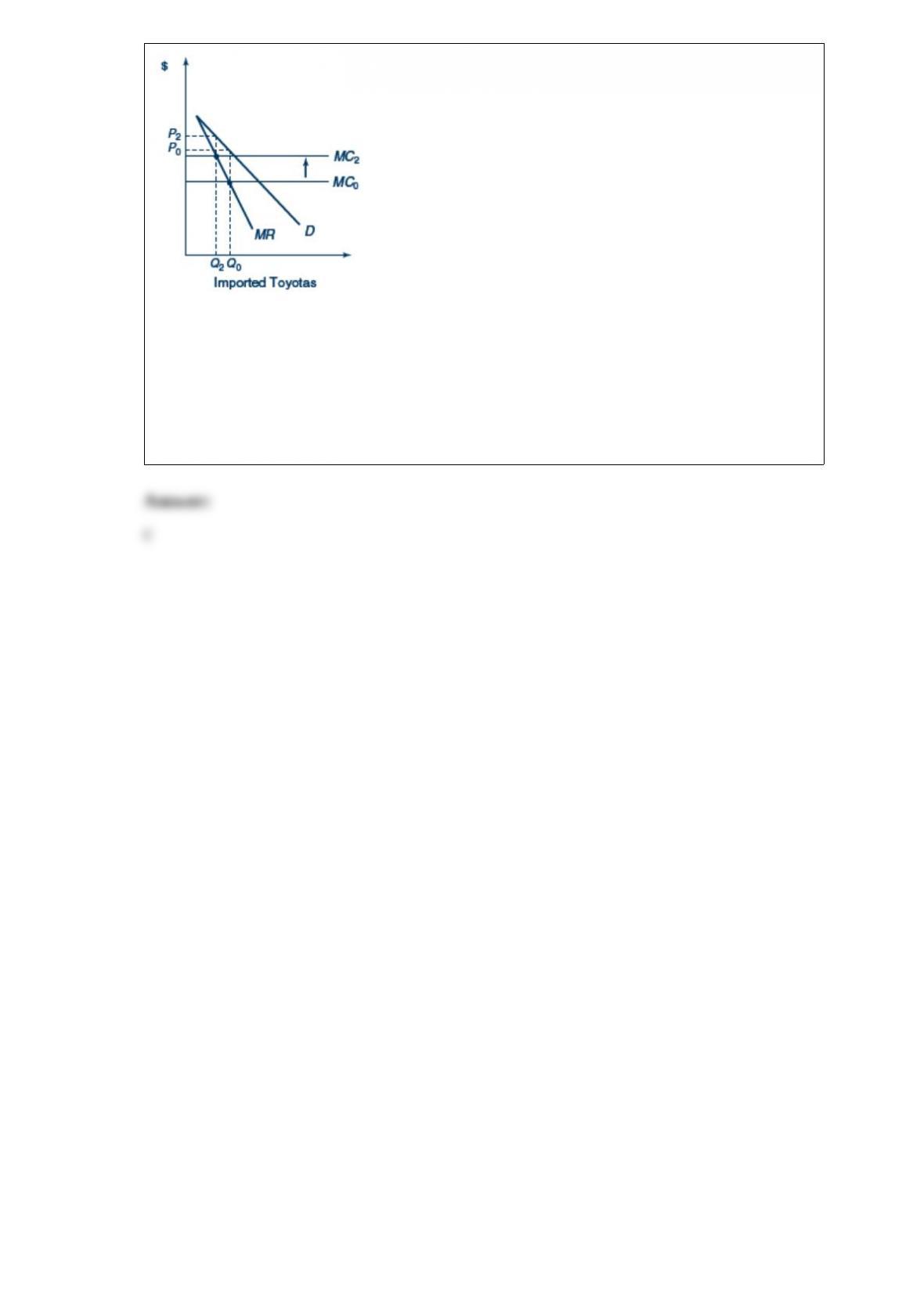
in figure 14.2, d represents the us demand curve for toyotas and mc0 represents the
marginal cost of producing toyotas.a shift in the marginal cost curve from mc0 to mc2
represents
a.an appreciation of the dollar relative to the yen
b.a depreciation of the yen relative to the dollar
c.a depreciation of the dollar relative to the yen
d.neither an appreciation nor a depreciation of the dollar relative to the yen