
Under which conditions might diseconomies of scale result?
A) hampered coordination brought about by bureaucracy
B) increasing costs of inputs
C) the firm uses a large amount of indivisible inputs
D) both A and B
If a variable is 100 and then increases to 150, then using the average value approach its
percentage growth is:
A) -50 percent.
B) 15 percent.
C) 40 percent.
D) 50 percent.
For a monopolist, if total revenue increases as output decreases, then marginal revenue
is:
A) equal to price.
B) zero.
C) positive.
D) negative.
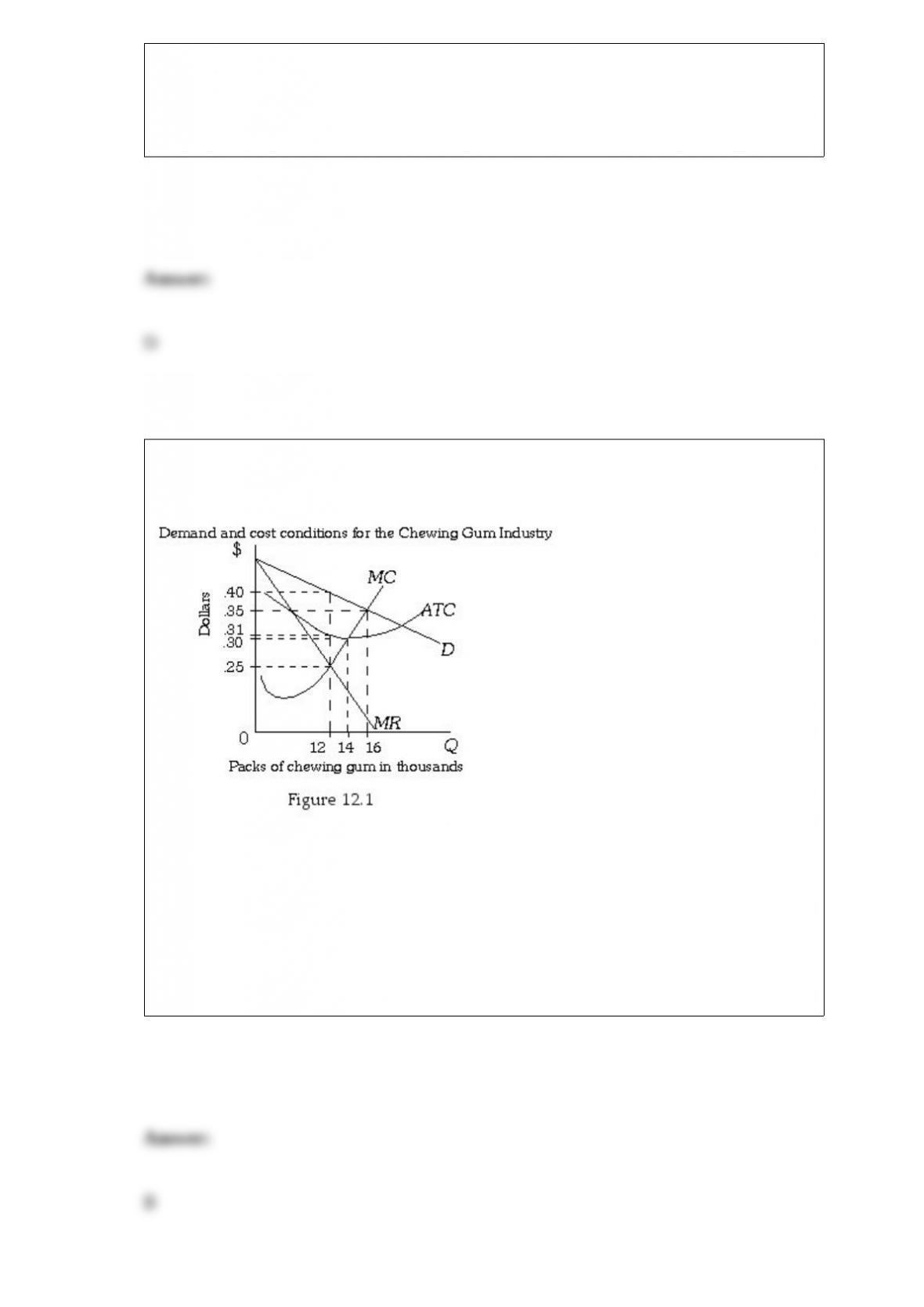
Refer to Figure 12.1. Assume the firms have formed a cartel. If the cartel is maximizing
profits, the cartel’s profits are:
A) $0.
B) $1,080.
C) $1,800.
D) indeterminate from this information.

Recall the application about Chinese coffee growers obey the law of supply. What does
the response from Chinese farmers illustrate switching from growing tea to coffee?
A) An increase in price increases the quantity supplied.
B) a decrease in demand
C) A decrease in price decreases the quantity supplied.
D) an increase in demand
The principle of voluntary exchange is based on the idea of:
A) making assumptions.
B) isolating variables.
C) thinking at the margin.
D) rational self-interest.
State and local governments receive more money from ________ than from any other
source.
A) grants from higher levels of government

B) grants from lower levels of government
C) sales taxes
D) property taxes
Which of the following is NOT a form of antitrust policy?
A) regulation of business practices
B) blocking mergers
C) breaking up monopolies
D) a price control
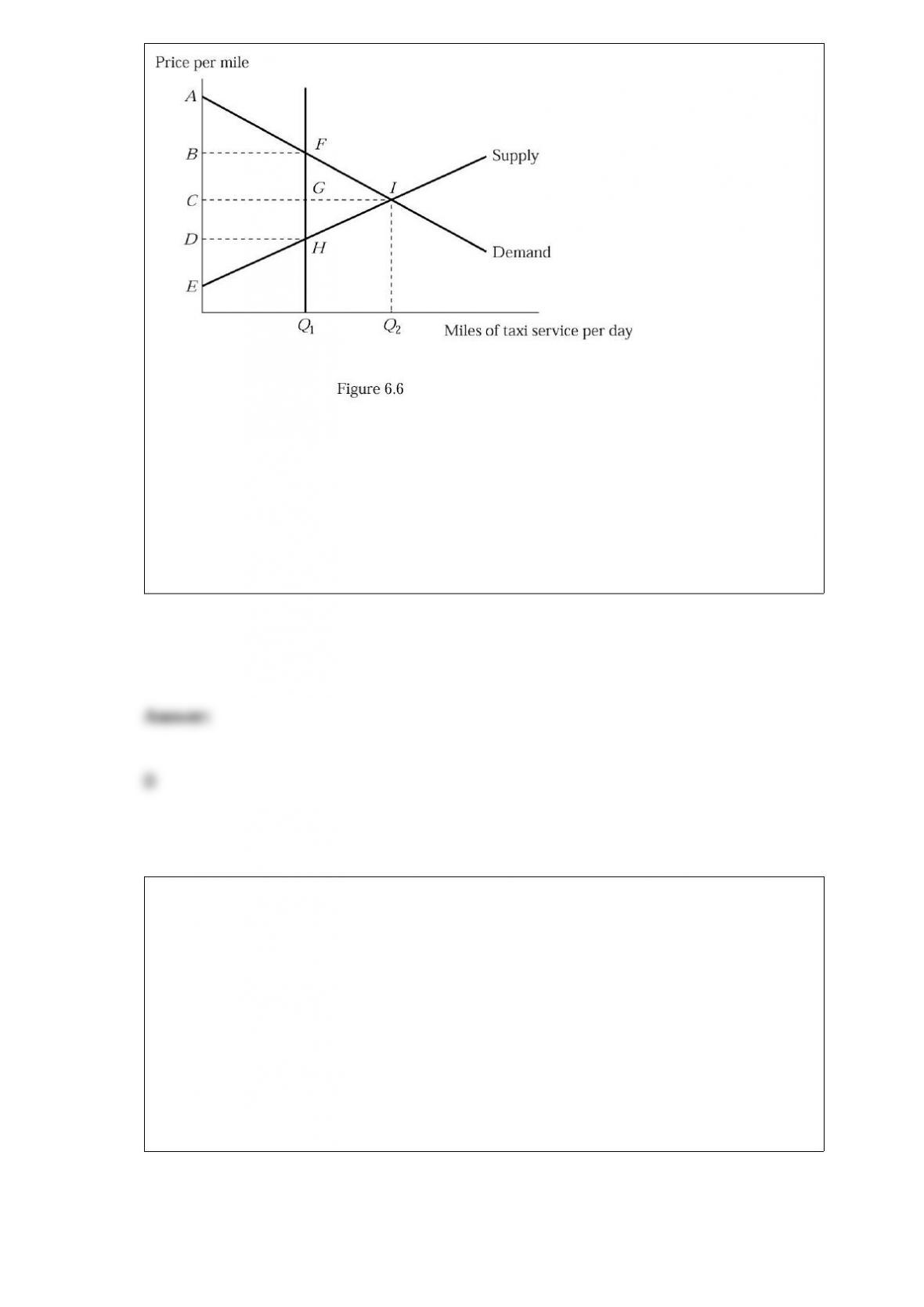
Refer to Figure 6.6, which shows a market for taxi medallions. If the number of taxi
licenses is reduced from to , the producer surplus:
A) increases by area BCFG.
B) increases by (area BCFG – area GHI).
C) decreases by area GHI.
D) decreases by (area CDGH + area GHI).
An advantage offered by pollution taxes that is NOT offered by command-and-control
policies is that:
A) under pollution taxes pollution is usually reduced to zero.
B) a pollution tax decreases the price of the polluting good.
C) under pollution taxes, the government receives tax revenues that may be used to
clean up pollution.
D) pollution taxes decrease the demand for the good generating the pollution.

If Joshua gets 200 utils from consuming three slices of pizza, 220 utils from consuming
four slices of pizza and 230 utils from consuming five slices of pizza, then the Joshua’s
marginal utility from the fifth slice of pizza is:
A) 230 utils.
B) 30 utils.
C) 20 utils.
D) 10 utils.
Suppose that you own a house. What is the opportunity cost of living in the house?
A) There is no opportunity cost because you own the house.
B) There is no opportunity cost unless you could set up a business in the house.
C) The opportunity cost is the rent you could have received from a tenant if you didn’t
live there.
D) The opportunity cost is the cost of your monthly mortgage payment plus bills.

Suppose that it would cost a firm $10 million to develop a new drug. In the absence of a
patent, other firms will be able to copy and bring to market a generic equivalent of the
drug in three years. In each of these three years, the firm would earn monopoly profits
of $3 million. A patent will generate monopoly status for the firm for twenty years. If
the government knew this information ahead of time, which of the following is most
correct?
A) The government should not grant a patent to the firm, because the firm would earn
monopoly profits for three years even without the patent.
B) The government should not grant a patent to the firm, because monopoly leads to
efficiency losses relative to the competitive market.
C) The government should grant a patent to the firm, because even with a patent the
firm will not earn a monopoly profits.
D) The government should grant a patent to the firm, because the firm would not
produce the drug at all without a patent.
If Crystal gets 140 utils from eating one yogurt, 145 utils from eating two yogurts and
148 utils from eating three yogurts, then Crystal’s total utility is:
A) increasing.
B) decreasing.
C) decreasing at decreasing rate.
D) constant.

The optimal level of pollution abatement is where:
A) the marginal benefit of abatement is greater than its marginal cost.
B) the marginal benefit of abatement is less than its marginal cost.
C) the marginal benefit of abatement is equal to its marginal cost.
D) none of the above
Additional Application
Prior to 2001 Canada annually exported billions of board feet of lumber to the U.S.
tariff-free. The two countries had followed an agreement in which there would be no
restrictions on the lumber from Canadian companies. In March 2001 the agreement
ended and in 2002 the U.S. imposed tariffs and duties on imported Canadian lumber.
What were the effects of these changes and who gained and who lost?
The forestry workers of Canada were hurt. About 15,000 workers lost their jobs in
British Columbia and many Canadian towns suffered from the loss of income from
lumber sales and related industries. Exports to the U.S. fell from 14.7 billion board feet
in 2000 to 20.9 million board feet in 2004. When the lumber prices rose in the U.S., the
costs of production for home building firms increased.
The U.S. government has realized $3.5 billion from the tariffs and that is sitting in the
Treasury awaiting resolution of legal disputes. Lumber companies in the U.S. have seen
their prices rise with less competition.
James Thayer, “Soft Wood, Hard Dispute,” The Weekly Standard, November 18, 2005.
Online
According to this application about the U.S. imposing tariffs on lumber from Canada, if
the cost of production for U.S. construction companies increased, then their ________

curve should shift ________.
A) demand; left
B) supply; right
C) demand; right
D) supply; left
When a pharmaceutical firm spends millions of dollars to lobby and convince Congress
to extend the number of years a firm is awarded patent protection, then the
pharmaceutical firm is engaging in:
A) rent seeking.
B) fraud.
C) price discrimination.
D) marginal cost pricing.
Recall the Application about advertising in the milk industry to answer the
following question(s).
Recall the Application. With the “Got Milk?” advertising campaign, all milk producing

firms benefit from the campaign, but no single firm has an incentive to pay for the
campaign. This is an example of:
A) a prisoners’ dilemma.
B) an advertisers’ dilemma.
C) limit pricing.
D) cartel behavior.
Average total cost equals:
A) total fixed cost plus total variable cost.
B) average fixed cost minus average variable cost.
C) average fixed cost plus average variable cost.
D) total cost minus average cost.
Cash payments make up approximately ________ percent of total expenditures on
means-tested programs.
A) 10
B) 20

C) 40
D) 50
Which of the following is the least likely complement for hamburgers?
A) beef
B) cheese
C) hamburger buns
D) soda
When the firm is producing at the monopoly equilibrium, its producer surplus will be
________ and the consumer surplus will be ________ than if the industry was
competitive.
A) higher; lower
B) higher; higher
C) lower; lower
D) lower; higher

In the short run, individual firms want to maximize their ________.
A) marginal cost
B) marginal revenue
C) total revenue
D) profit
Recall the application about a South African consumer lender that advertised its
products including a picture of man in some mailings and a picture of woman in others,
what did the South African consumer lender conclude from the respond from men vs.
women when the loan offer included a picture of a woman?
A) not release the movie to the public
B) not pay the actors high salaries
C) rewrite the script and refilm most scenes
D) not spend money on advertising
In the market for pollution permits, the demand for permits comes from:
A) firms that would prefer to use permits rather than incur abatement costs.
B) the Chicago Board of Trade.
C) firms with low abatement costs.
D) the Environmental Protection Agency.
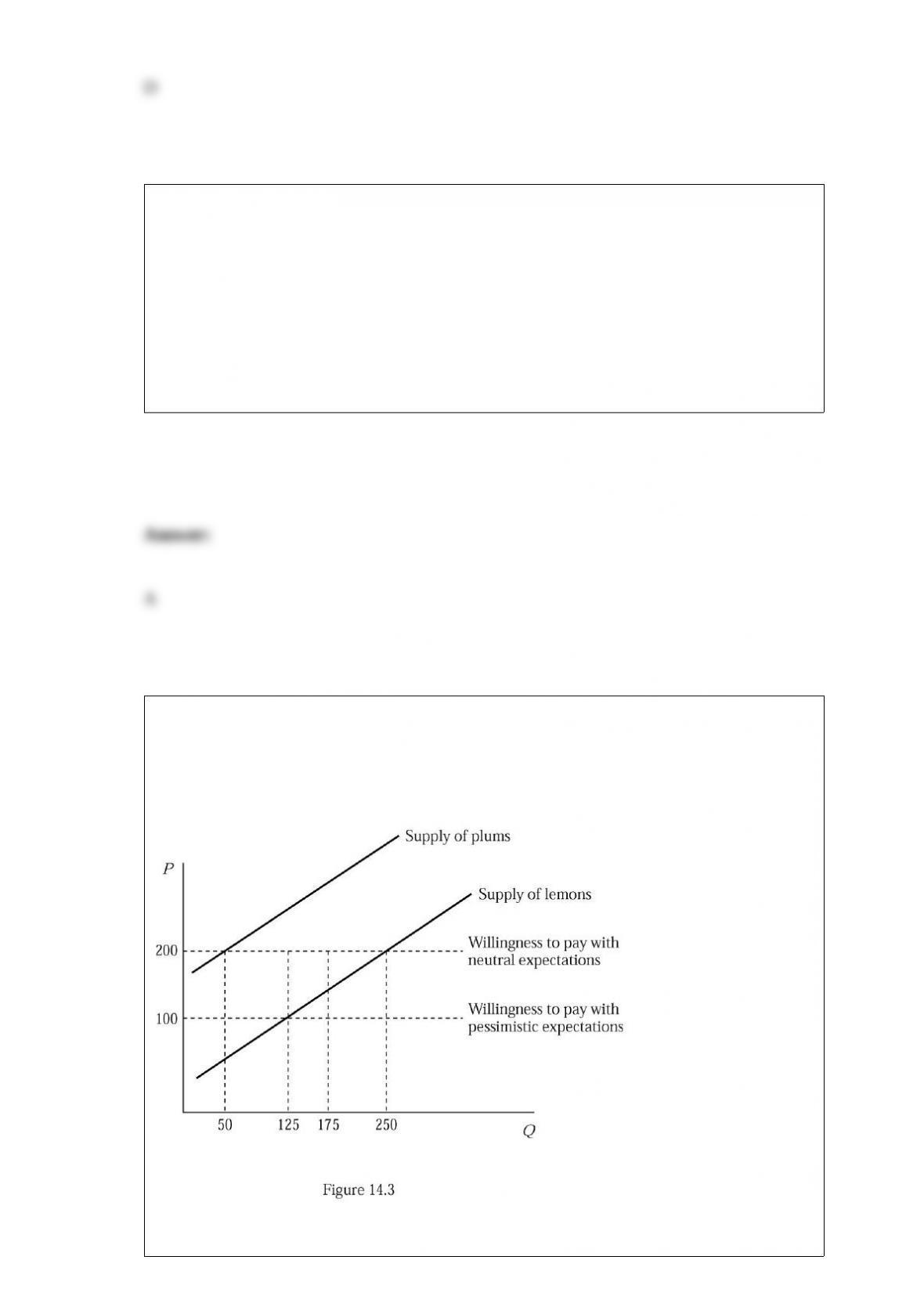
Figure 14.3 represents the market for used refrigerators. Suppose buyers are willing to
pay $300 for a plum (high-quality) used refrigerator and $100 for a lemon (low-quality)
used refrigerator. If buyers believe that 50% of used refrigerators in the market are
lemons (low quality), how many plums (high quality) will be supplied by sellers?
A) 50
B) 125
C) 175
D) 250
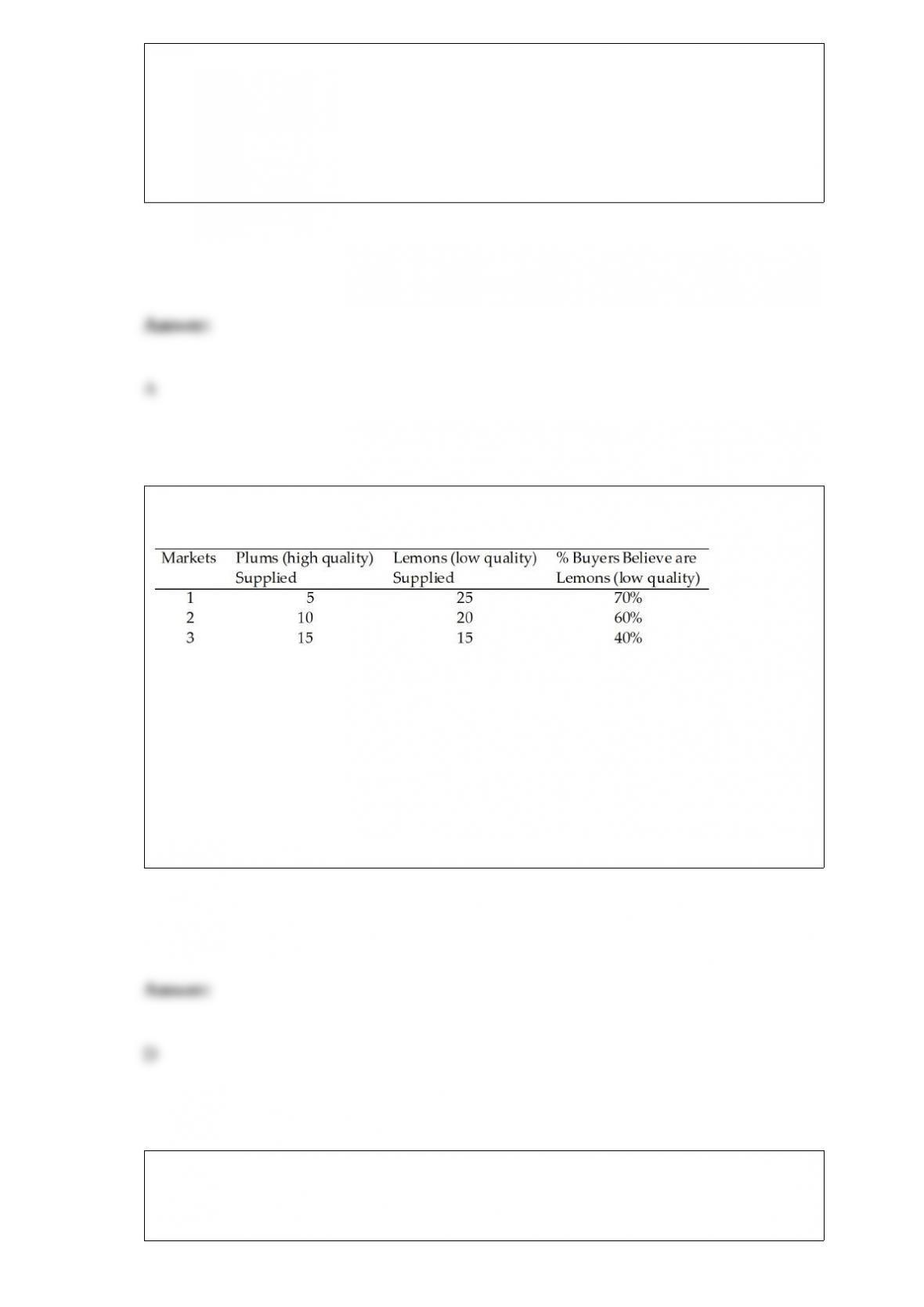
Refer to Table 14.3. In which market do buyers underestimate the chance of getting a
lemon?
Table 14.3
A) 1 only
B) 2 only
C) 3 only
D) all of the above
Suppose that for Sarah the marginal benefit per dollar spent on pork exceeds the
marginal benefit per dollar spent on chicken. Sarah can always increase her utility by
buying:

A) more pork and less chicken.
B) less pork and more chicken.
C) more of both goods.
D) Sarah is already maximizing utility.
When there are just a few firms in the industry, the industry structure is most likely to
be:
A) a perfectly competitive industry.
B) an oligopoly market.
C) a monopoly market.
D) a natural monopoly market.
What will happen if a second firm enters a natural monopolistic market?
A) The demand curve of the typical firm will shift to the left.
B) The demand curve will lay above the long-run average cost curve.
C) The profit will be reduced to zero for both firms.

D) It will have no effect on the profit of the first firm.