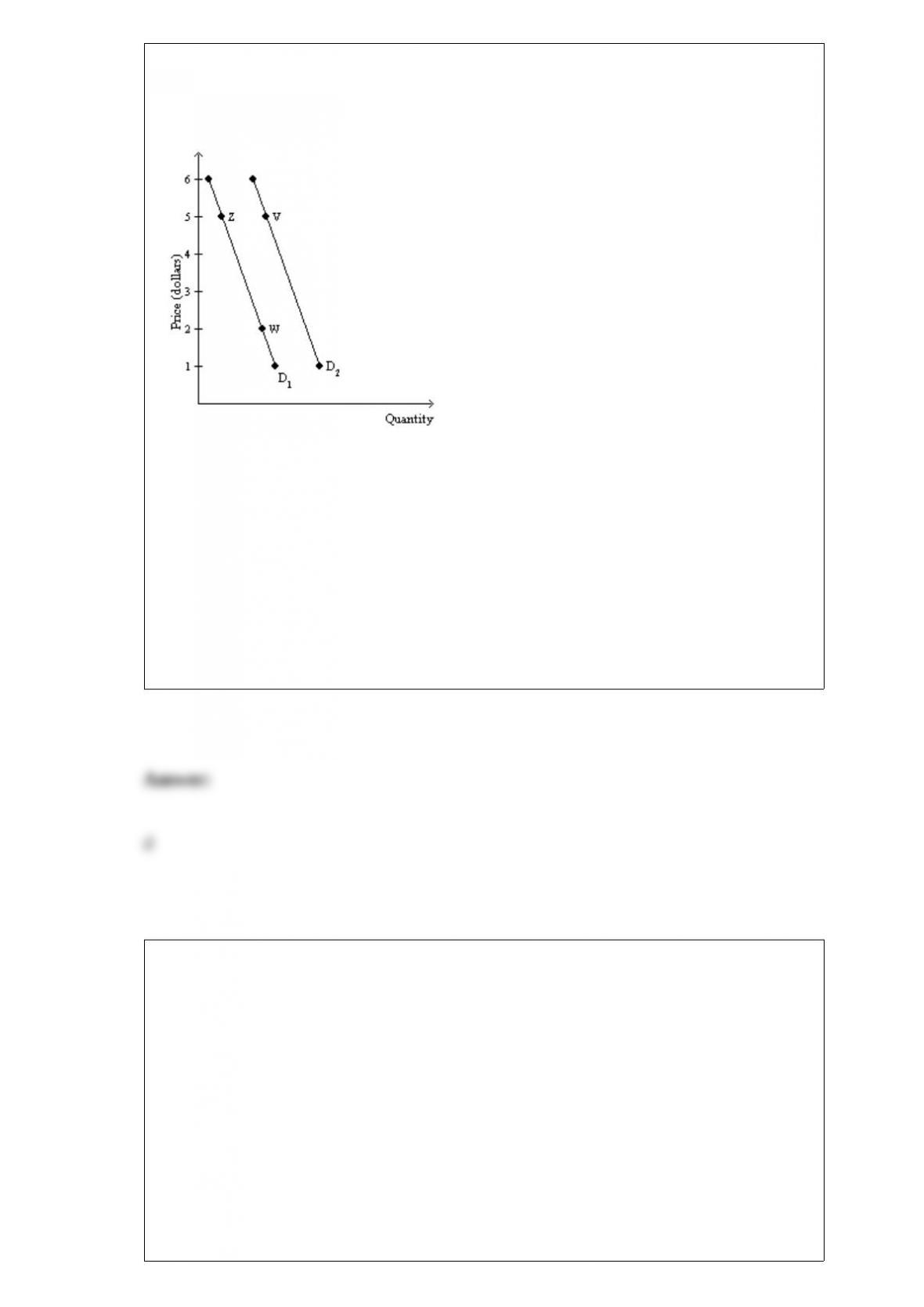
Refer to Exhibit 3-3. A shift in demand from D1 to D2 can NOT occur from a change in
the
Exhibit 3-3
Good Y
a. population.
b. price of a substitute for good Y.
c. average income of good Y buyers.
d. price of good Y.
As the dollar price of the Mexican peso falls, the __________ Mexican goods will be
for Americans to purchase and the __________ Mexican goods Americans will buy;
thus __________ pesos will be demanded.
a. less expensive; more, more
b. more expensive; fewer, fewer
c. more expensive; more, fewer
d. less expensive; more, fewer
e. none of the above
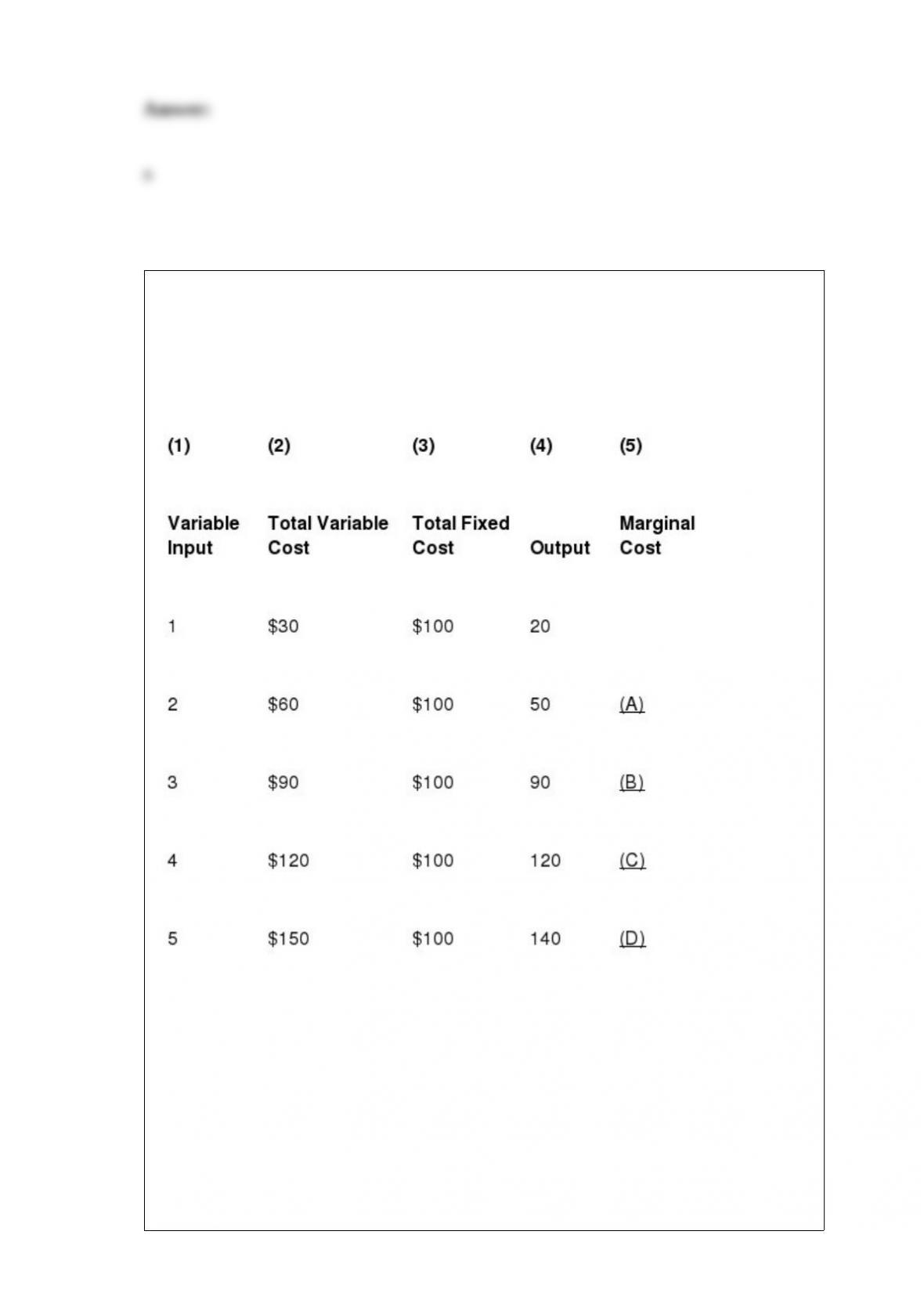
Refer to Exhibit 22-2. What is the average variable cost of producing 120 units of
output?
Exhibit 22-2
a. $0.67
b. $1.17
c. $1.00
d. $1.44
e. There is not enough information provided to answer the question.

The two ways in which the word “interest” is used in economics are as the price for
a. loanable funds and the return earned by entrepreneurship.
b. loanable funds and the return earned by capital as an input in the production process.
c. money and the return for risk taking.
d. loanable funds and the return for risk taking.
We state that the evidence __________________ if evidence is consistent with a
theory’s predictions.
a. fails to reject the theory
b. proves the theory is correct
c. proves the theory is invalid
d. none of the above

A good is nonrivalrous in consumption if
a. its consumption by one person does not reduce its consumption by others.
b. its consumption by one person reduces its consumption by others.
c. it is possible, or not prohibitively costly, to exclude someone from receiving the
benefits of the good once it has been produced.
d. it is impossible, or prohibitively costly, to exclude someone from receiving the
benefits of the good once it has been produced.
e. a and d
Economic profit is the difference between total revenue and implicit costs.
a. True
b. False
A network good is one whose value
a. increases as the expected number of units sold increases.
b. was created by the Internet.

c. is dependent upon interconnection to another good.
d. is defined by its links to other markets.
Consumers’ surplus is the difference between the maximum price the buyer is willing
and able to pay for a good and the actual price paid.
a. True
b. False
The answer is: “A tax on imports.” What is the question?
a. What is comparative advantage?
b. What is a quota?
c. What is a tariff?
d. What reduces consumers’ surplus?
e. c and d
Which of the following is not an assumption of the theory of monopolistic competition?
a. There are high barriers to entry.
b. There are many sellers and few buyers.
c. Each firm in the industry produces and sells a homogeneous product.
d. a and b
e. all of the above
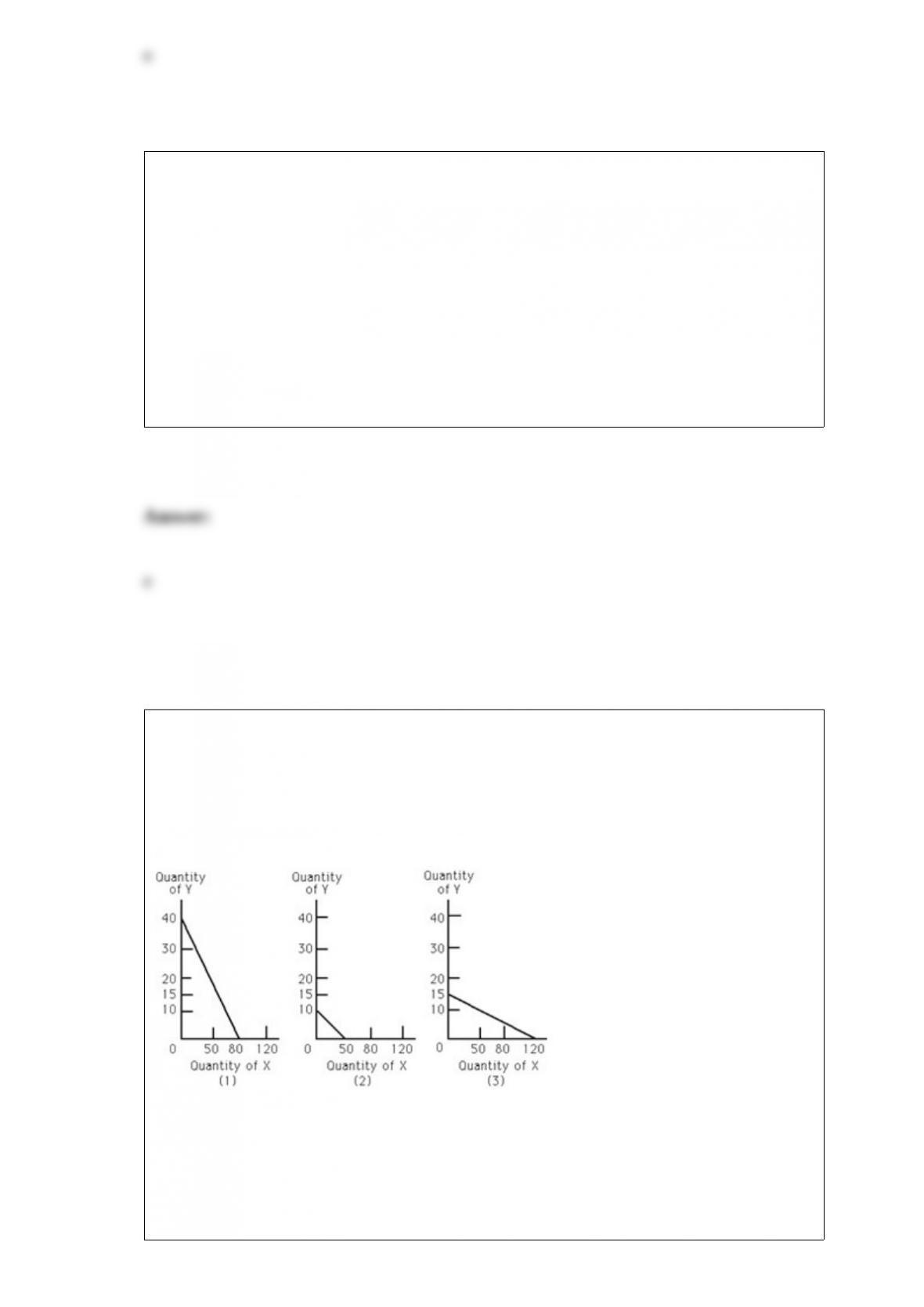
Refer to Exhibit 21-7. The price of X is $40 and the price of Y is $80. Assuming that the
consumer allocates all of his income to good X, how many units of X will he purchase?
(Request: Do not ask the instructor to which graph the question is referring.)
Exhibit 21-7
a. 40
b. 50
c. 80

d. 90
e. 120
Since workers today can move from city to city (quite easily) and from firm to firm
(again, quite easily), it is unlikely that there are very many pure
a. monopsony firms.
b. oligopoly firms.
c. monopoly firms.
d. perfectly competitive firms.
e. factor price takers.
A positive externality exists when
a. marginal social costs are less than marginal private costs.
b. marginal social costs are greater than marginal private costs.
c. marginal social benefits are less than marginal private benefits.
d. marginal social benefits are greater than marginal private benefits.
e. a and d
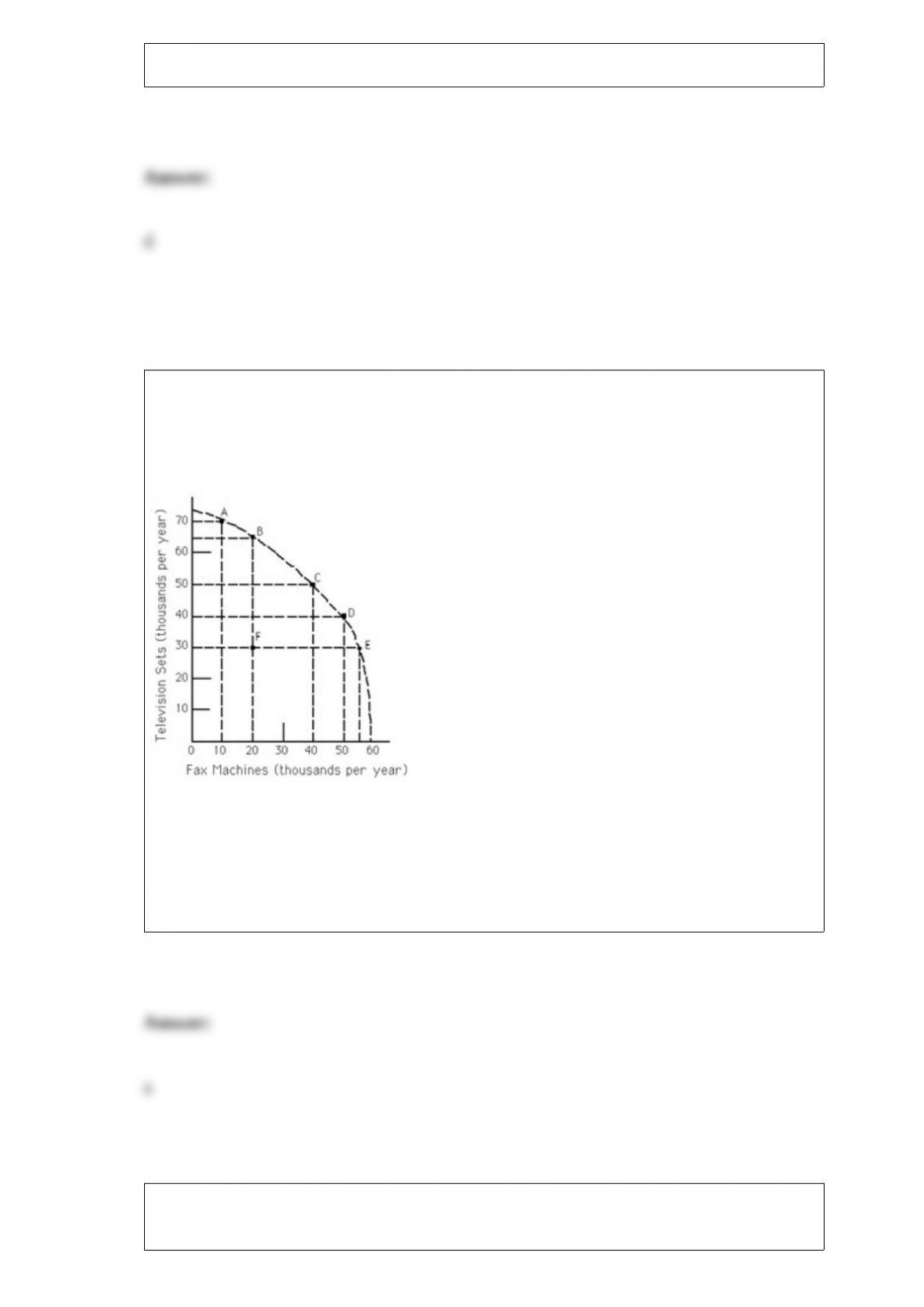
Refer to Exhibit 2-5. As more fax machines are produced, the opportunity cost of
producing them
Exhibit 2-5
a. increases.
b. decreases.
c. remains constant.
d. first decreases and then increases.
For a union to be successful in increasing the total wage bill received by its members by
forcing up the wage rate, the demand curve for labor needs to be
a. elastic.
b. perfectly elastic.
c. unitary elastic.
d. inelastic.
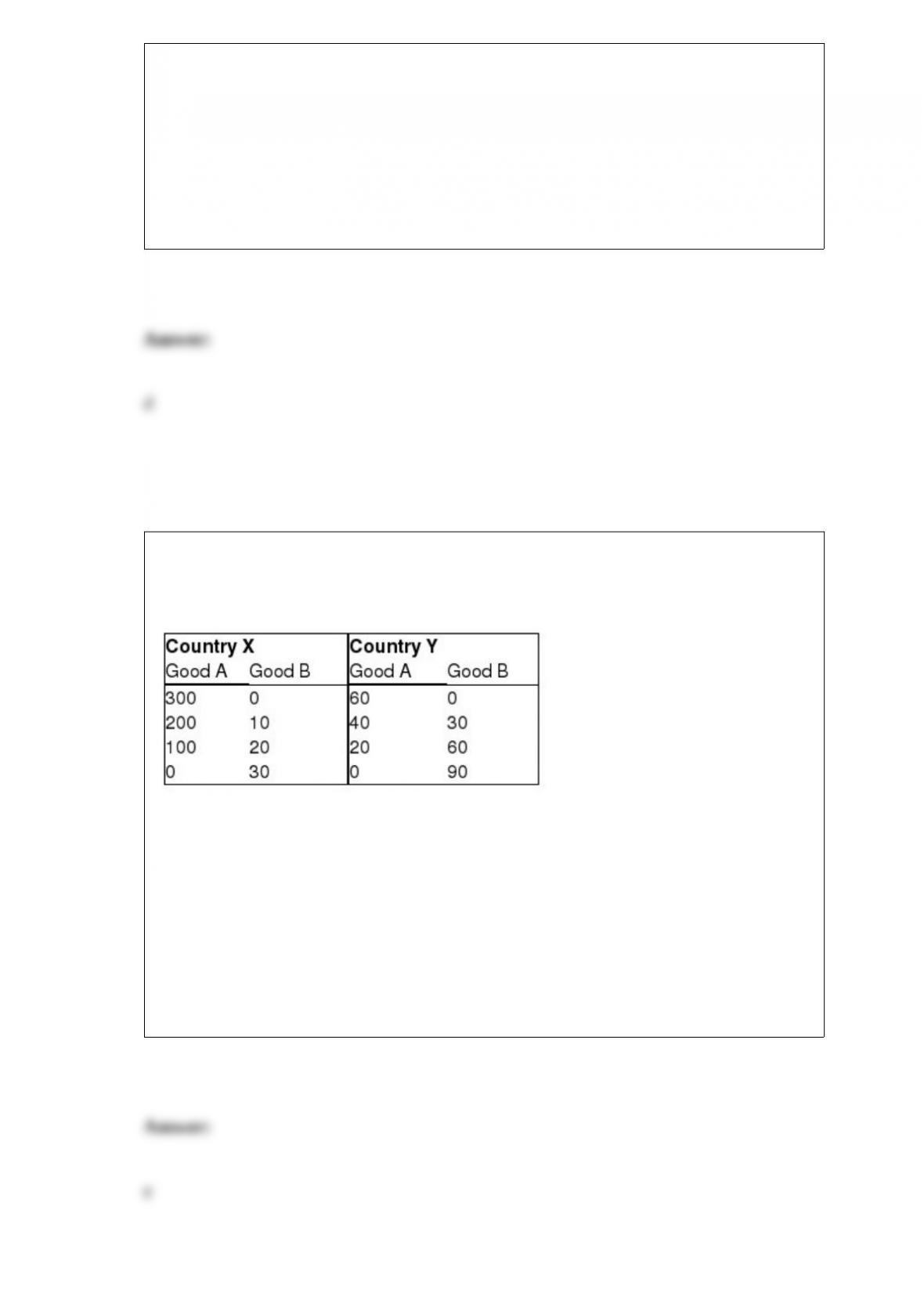
Refer to Exhibit 34-9. For country X, the opportunity cost of producing one unit of
good B is __________ unit(s) of good A.
Exhibit 34-9
a. 3
b. 1/10
c. 1/2
d. 1/3
e. 10
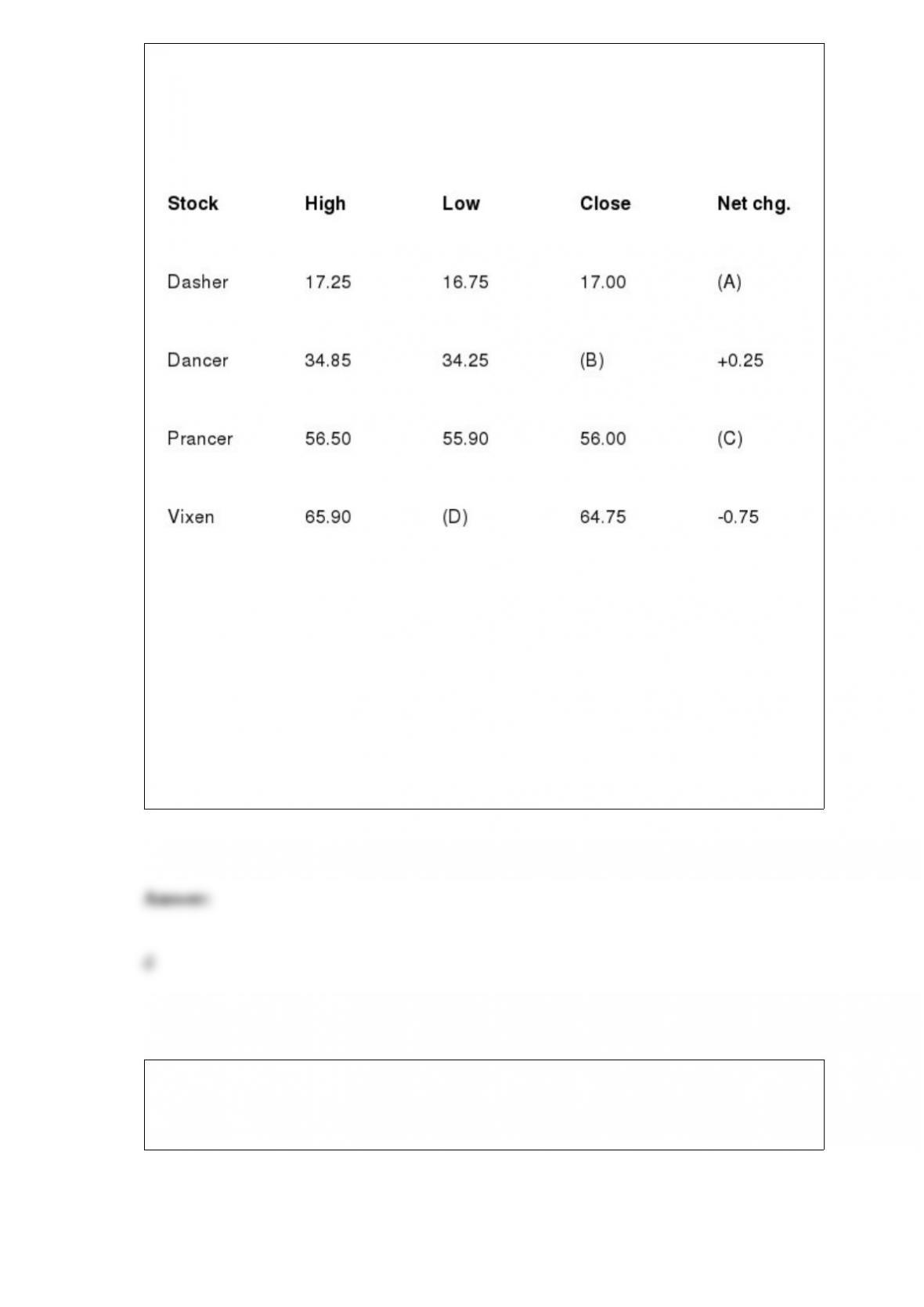
Refer to Exhibit 38-2.If the closing price of Dancer’s stock on the previous day was
$34.25, what value goes in blank (B)?
Exhibit 38-2
a. 34.85
b. 34.00
c. 34.75
d. 34.50
e. There is not enough information given to answer this question.
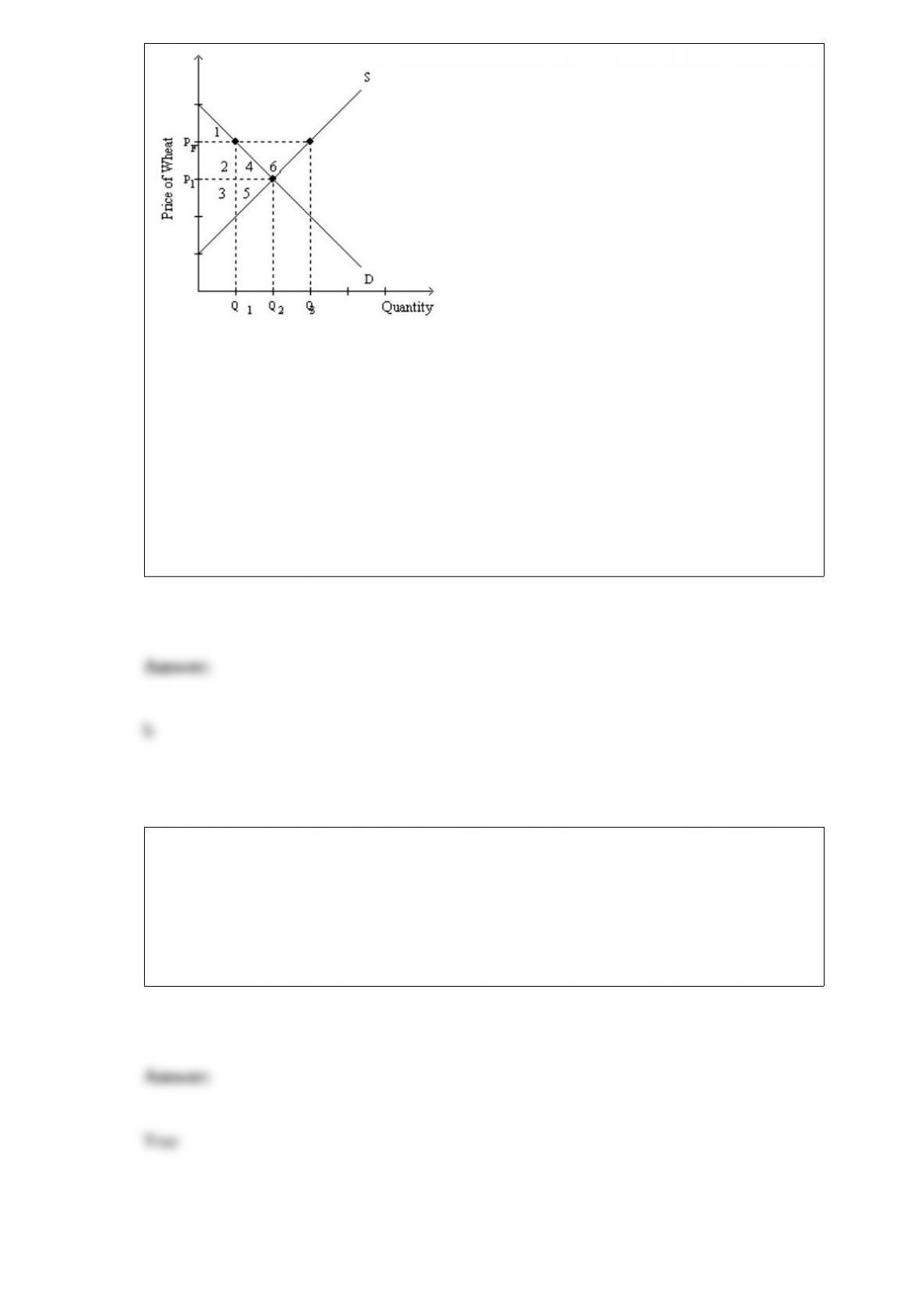
Refer to Exhibit 4-8.If the wheat market is in competitive equilibrium, the consumers’
surplus will equal
Exhibit 4-8
a. area 1 + 2 + 3
b. area 1 + 2 + 4
c. area 3 + 5
d. area 1 + 2 + 3 + 4 + 5
e. area 6
Price ceilings sometimes result in some buyers and sellers purchasing the good at
prohibited prices.
a. True
b. False

When income distribution data for the United States is adjusted for taxes and in-kind
transfer payments the distribution is more equal than before such an adjustment is
made.
a. True
b. False
A tariff on avocadoes ______________ the price of avocadoes, _____________
consumers’ surplus for avocado buyers, _______________ producers’ surplus of
avocado growersand __________________ tariff revenue. Because the loss to
_____________ is more than the gain to ___________________, there is a net loss to
society.
a. raises; increases; decreases; generates; producers; consumers and government
b. lowers; increases; decreases; does not generate; producers and government;
consumers
c. raises; increases; decreases; does not generate; producers and government; consumers
d. raises; decreases; increases; generates; consumers; producers and government
A quota on imported avocadoes ______________ the price of avocadoes,
_____________ consumers’ surplus for avocado buyers, _______________ producers’
surplus of avocado growersand __________________ tariff revenue. Because the loss
to _____________ is more than the gain to ___________________, there is a net loss
to society.

a. raises; increases; decreases; generates; producers; consumers and government
b. lowers; increases; decreases; does not generate; producers; consumers
c. raises; increases; decreases; does not generate; consumers; producers and importers
d. raises; decreases; increases; generates; consumers; producers and government