1) A good will have a more inelastic demand, the
a.greater the availability of close substitutes.
b.broader the definition of the market.
c.longer the period of time.
d.more it is regarded as a luxury.
2) An equilibrium occurs in a game when
a.price equals marginal cost.
b.quantity supplied equals quantity demanded.
c.all independent strategies counterbalance all dominant strategies.
d.all players follow a strategy that they have no incentive to change.
3) If a person expects the price of pumpkins to increase next month, then that person’s
current demand for pumpkins will increase.
a.True
b.False
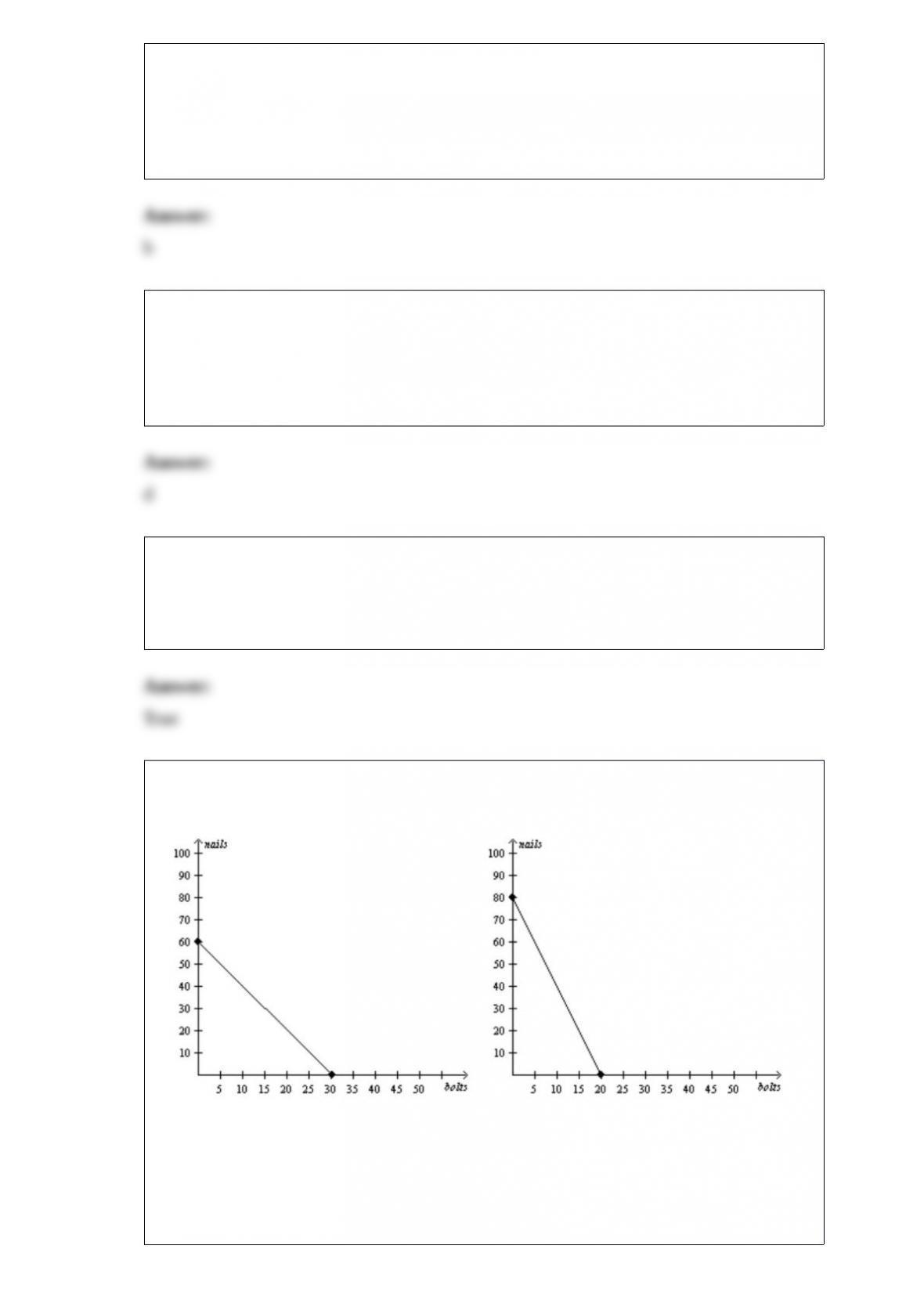
4) Uzbekistan’s Production Possibilities FrontierAzerbaijan’s Production
Possibilities Frontier
Suppose Uzbekistan decides to increase its production of bolts by 10. What is the
opportunity cost of this decision?
a.1/2 nail
b.2 nails
c.5 nails
d.20 nails
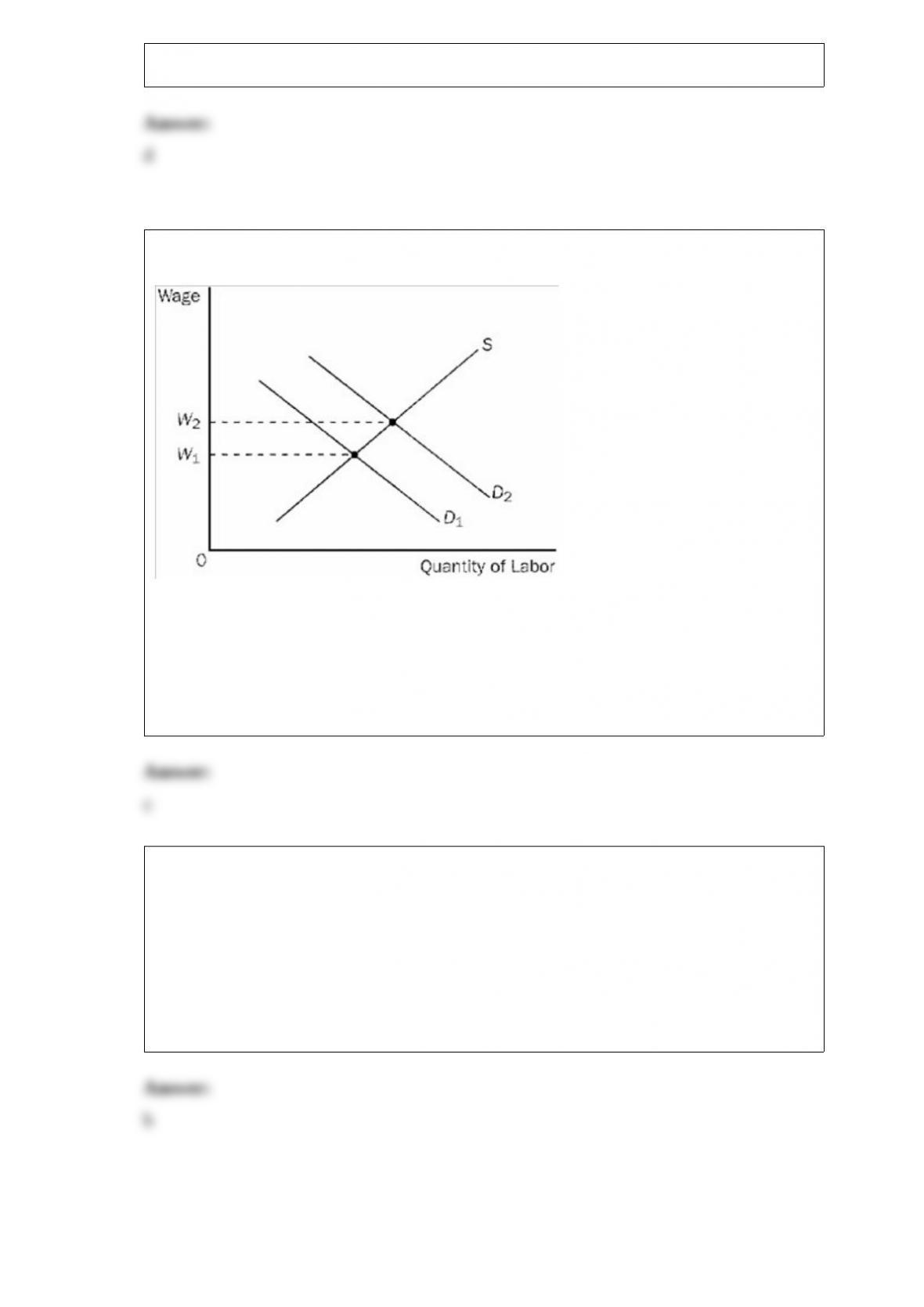
5) Figure 18-10
Refer to Figure 18-10. Which of the following would shift of the labor demand curve
from D1 to D2?
a.a change in workers’ attitudes toward the work-leisure tradeoff
b.decreases in wages in other labor markets
c.an increase in the price of firms’ output
d.All of the above are correct.
6) Suppose Luke values a scoop of Italian gelato at $4. Leia values a scoop of Italian
gelato at $6. The pre-tax price of a scoop of Italian gelato is $2. The government
imposes a “fat tax” of $3 on each scoop of Italian gelato, and the price rises to $5. The
deadweight loss from the tax is
a.$1.
b.$2.
c.$3.
d.$4.
7) In the U.S. economy, labor earnings make up about
a.one-half of total income.
b.two-thirds of total income.
c.three-fourths of total income.
d.nine-tenths of total income.
8) When a firm experiences constant returns to scale,
a.long-run average total cost is unchanged, even when output increases.
b.long-run marginal cost is greater than long-run average total cost.
c.long-run marginal cost is less than long-run average total cost.
d.the firm is likely to experience coordination problems.
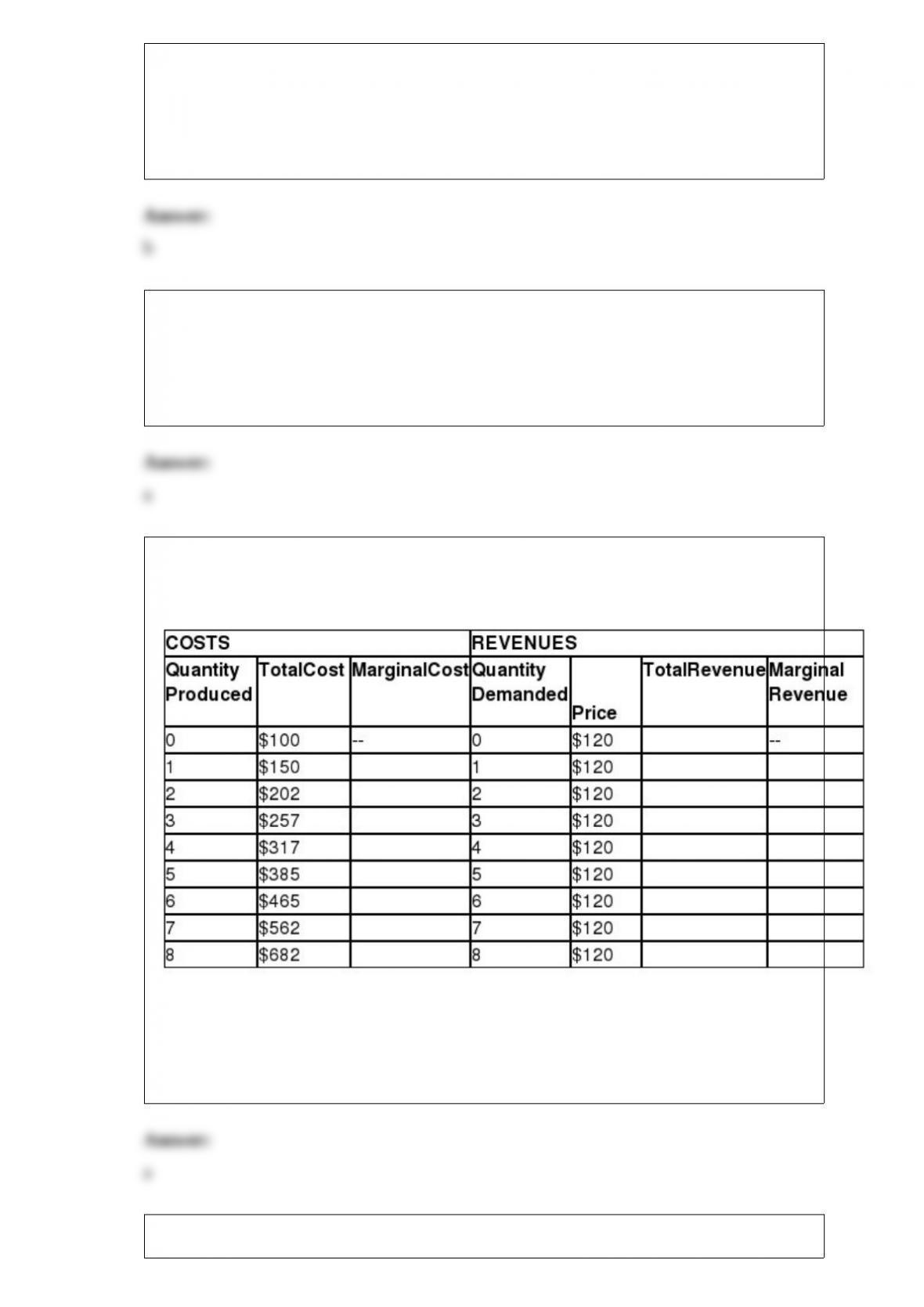
9) Table 14-13
Diana’s Dress Emporium
What is the marginal cost of the 1st unit?
a. $50
b. $75
c. $80
d. $150
10) Figure 8-8
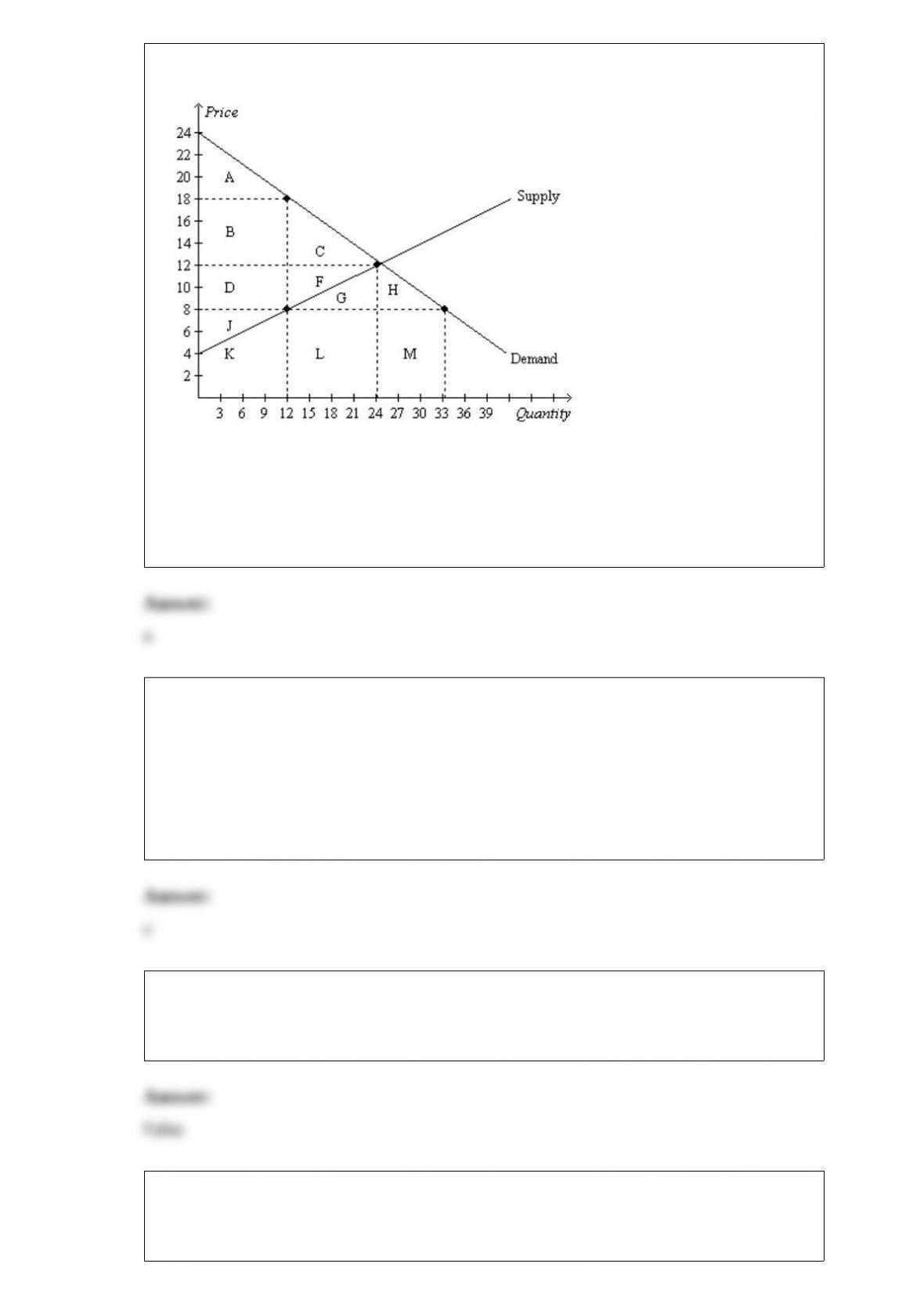
Suppose the government imposes a $10 per unit tax on a good.
The tax causes producer surplus to decrease by the area
a.D+F.
b.D+F+G.
c.D+F+J.
d.D+F+G+H.
11) The basic principles of economics suggest that
a.markets are seldom, if ever, a good way to organize economic activity.
b.government should become involved in markets when trade between countries is
involved.
c.government should become involved in markets when those markets fail to produce
efficient or fair outcomes.
d.All of the above are correct.
12) Economics is the study of how society allocates its unlimited resources.
a.True
b.False
13) Suppose that when the price of good X falls from $10 to $8, the quantity demanded
of good Y rises from 20 units to 25 units. Using the midpoint method, the is
a.-1.0, and X and Y are complements.
b.-1.0, and X and Y are substitutes.
c.1.0, and X and Y are complements.
d.1.0, and X and Y are substitutes.
14) Goods produced abroad and sold domestically are called exports and goods
produced domestically and sold abroad are called imports.
a.True
b.False
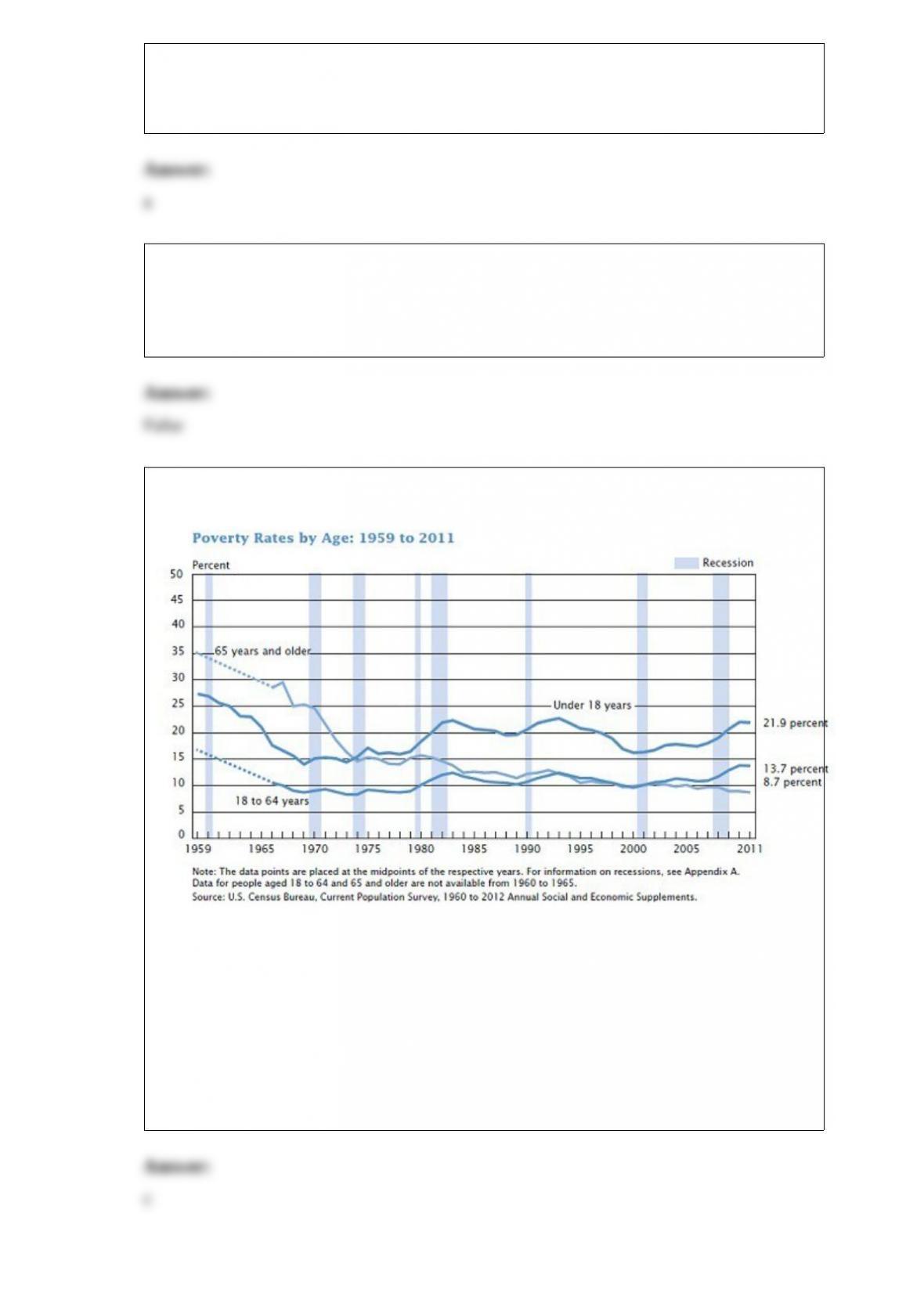
15) Figure 20-3
Refer to Figure 20-3. In 1968, the percent of adults aged 18 to 64 years in poverty is
a.higher than both the percentage of children under age 18 and the percentage of elderly
aged 65 and over in poverty.
b.higher than the percentage of children under age 18 but is lower than the percentage
of elderly aged 65 and over in poverty.
c.lower than both the percentage of children under age 18 and the percentage of elderly
aged 65 and over in poverty.
d.lower than the percentage of children under age 18 but is higher than the percentage
of elderly aged 65 and over in poverty.
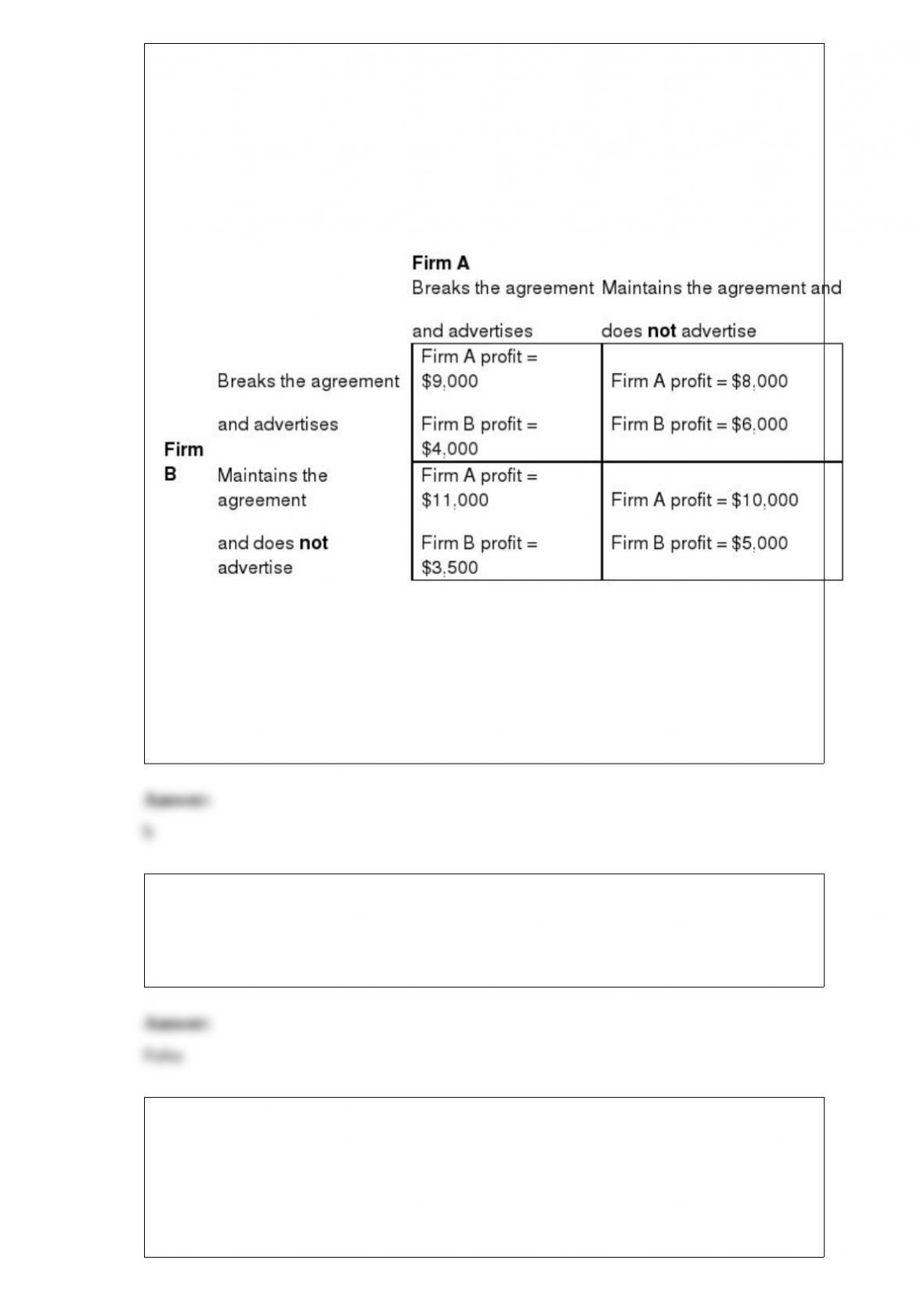
16) Table 17-23
Two bottled beverage manufacturers (Firm A and Firm B) determine that they could
lower their costs, and thus increase their profits, if they reduced their advertising
budgets. But for the plan to work, each firm must agree to refrain from advertising.
Each firm believes that advertising works by increasing the demand for the firm’s
product, but each firm also believes that if neither firm advertises, the costs savings will
outweigh the lost sales. Listed in the table below are the individual profits for each firm.
Refer to Table 17-23. At the Nash equilibrium, how much profit will Firm A earn?
a.$8,000 because firm A will maintain the agreement not to advertise, but firm B will
break the agreement and choose to advertise.
b.$9,000 because each firm will break the agreement and choose to advertise.
c.$10,000 because each firm will maintain the agreement and choose not to advertise.
d.$11,000 because firm B will maintain the agreement not to advertise, but firm A will
break the agreement and choose to advertise.
17) If we observe that when the price of chocolate increases by 10%, total revenue
increases by 10%, then the demand for chocolate is unit price elastic.
a.True
b.False
18) Suppose Tyler values a basketball at $20. Jacqui values a basketball at $25. The
pre-tax price of a basketball $10. The government imposes a tax of $5 on each
basketball, and the price rises to $15. The deadweight loss from the tax is
a.$25.
b.$15.
c.$10.

d.$0.
19) A market supply curve is determined by
a.vertically summing individual supply curves.
b.horizontally summing individual supply curves.
c.finding the average quantity supplied by sellers at each possible price.
d.finding the average price at which sellers are willing and able to sell a particular
quantity of the good.
20) Adam and Bob are identical twins who attended grammar school through high
school together. Adam got a job after high school, and Bob got a job after graduating
from college. Adam earns $36,000 a year, and Bob earns $69,000 a year. Select the best
explanation for this wage difference.
a.Adam has less human capital than Bob.
b.Bob has less human capital than Adam.
c.Adam has received a compensating differential
d.Adam is a member of a union.