
A horizontal merger is one in which the merging firms:
a. are about the same size.
b. produce the same good in the same industry.
c. will control greater than 50 percent of the market.
d. have never directly competed in the past.
e. will pay twice as much in taxes.
A decrease in supply means that:
a. demand will increase by the same amount.
b. the quantity demanded will increase.
c. there is a movement down and to the left along the supply curve.
d. the quantity supplied at every price will decrease.
e. the supply curve will shift out and to the right.
Which of the following is true at the point where diminishing returns set in?
a. Both marginal product and marginal cost are at a maximum.
b. Both marginal product and marginal cost are at a minimum.
c. Marginal product is at a maximum and marginal cost is at a minimum.
d. Marginal product is at a minimum and marginal cost is at a maximum.

Which of the following will decrease the demand for fast-food burger workers’ labor?
a. More people start working two jobs and eat more fast food.
b. The price of pizza, a substitute for burgers, decreases.
c. A new technology allows burgers to be produced faster.
d. Workers get additional training that increases productivity.
e. Workers form a union and get higher wages.
The profit maximizing or loss minimizing quantity of output for any firm to produce
exists at that output level in which:
a. total revenue is maximized.
b. total cost is minimized.
c. marginal cost is minimized.
d. marginal revenue equals marginal cost.
Assuming that automobiles are normal goods, a rise in consumer income, other things
being equal, will cause:
a. the demand curve for automobiles to shift to the left.
b. the demand curve for automobiles to shift to the right.
c. a downward movement along the demand curve for automobiles.
d. an upward movement along the demand curve for automobiles.

Which of the following best explains an economic criticism of unregulated
monopolists?
a. Monopolists do not try to minimize their costs of production.
b. Monopolists produce where marginal revenue is greater than marginal costs.
c. Monopolists attempt to produce too many products, and as a result, their prices are
high, and consumer’s waste time trying to choose between too many options.
d. Monopolists restrict output, and as a result, they fail to produce units that are valued
more than the marginal cost of producing them.
Suppose Ford, GM, and Dodge make the majority of pick-up trucks sold in the United
States If they all sell for approximately the same price, and Ford offers a $2,000 rebate
on new truck sales, what can Ford expect to see?
a. an unprecedented increase in truck sales
b. an immediate response by GM and Dodge
c. a visit from the antitrust authorities of the government
d. a revolution from Ford stockholders
e. announcements by GM and Dodge that plans are underway to produce a much
cheaper pick-up truck in six years
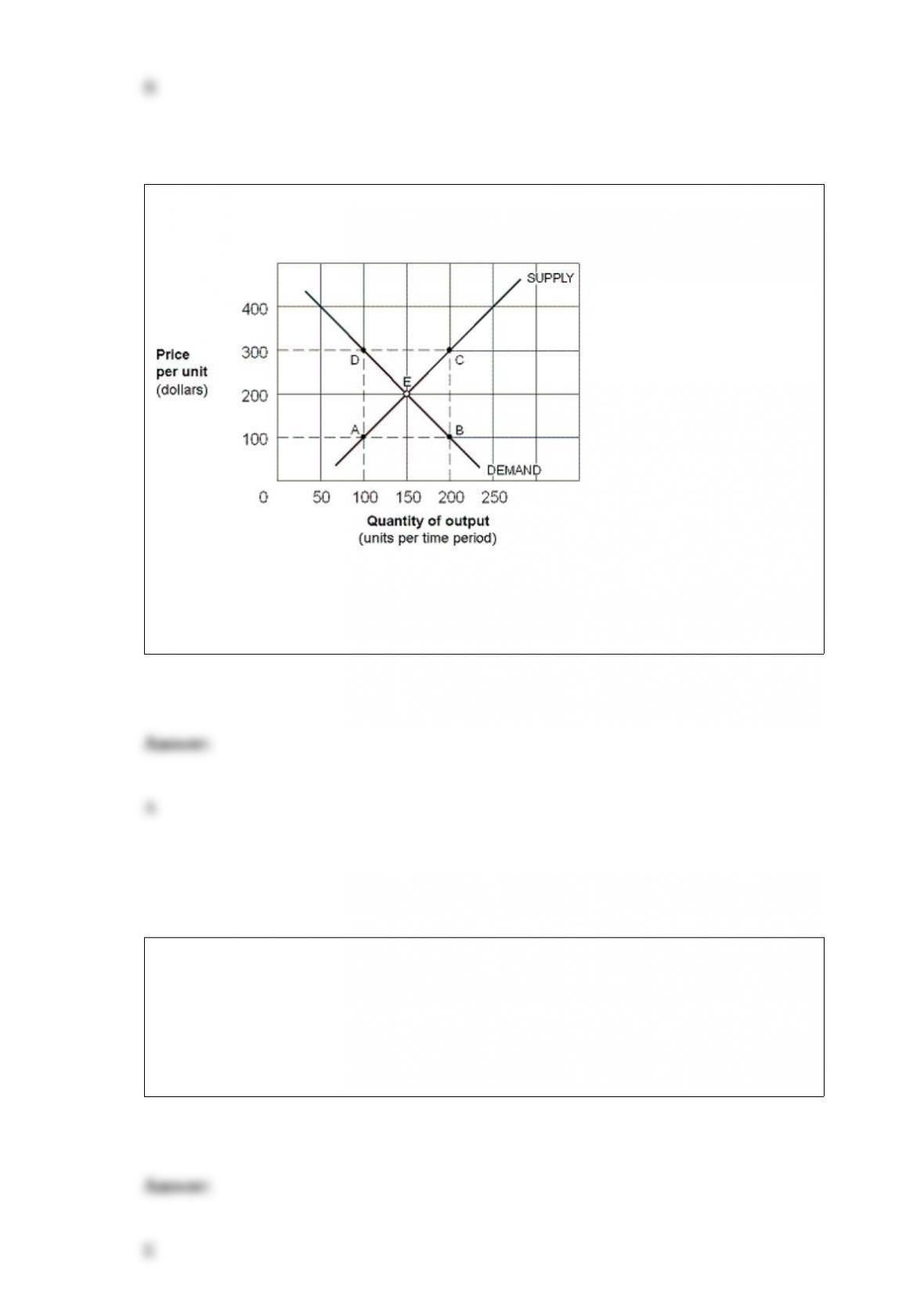
Exhibit 5-9 Supply and demand curves for good X
As shown in Exhibit 5-9, the price elasticity of demand for good X between points E
and B is:
a. 3/7 = 0.43. c. 1/2 = 0.50.
b. 7/3 = 2.33. d. 1.
The primary source of scale diseconomies appears to be:
a. a firm’s inability to acquire quality resources.
b. too little demand for the firm’s product.
c. consumers who resist dealing with large firms.
d. division of labor.
e. the organizational difficulties of managing an ever larger enterprise.

Compared to a competitive input market, a monopsonist will hire:
a. more and pay a higher input price.
b. less but pay a higher input price.
c. more but pay a lower input price.
d. less and pay a lower input price.
A drought destroys much of the peach crop. As a result, consumer surplus in the peach
market:
a. increases. c. remains unchanged.
b. decreases. d. equals the deadweight loss increase.
Which of the following causes the production possibilities curve to shift to the right?
a. d and e.
b. c and e.
c. A war.
d. The development of a new technology that improves productivity.
e. The discovery of oil reserves.

If there is an increase in income, which of the following is true?
a. The demand for complementary goods decreases.
b. The demand for substitute goods decreases.
c. The demand for normal goods decreases.
d. The demand for normal goods increases.
e. The supply for all goods decreases.
Suppose when a car wash has 2 washing stations and 5 workers and is able to wash 100
cars per day. When it adds a third station, but no more workers, it is able to wash 150
cars per day. The marginal product of the third washing station is:
a. 100 cars per day.
b. 150 cars per day.
c. 5 cars per day.
d. 50 cars per day.
The demand for labor curve is identical to the:
a. total wage cost curve.

b. marginal resource curve.
c. total revenue curve.
d. marginal revenue product curve.
e. marginal revenue curve.
Consumer equilibrium occurs where the budget line is ____ to the ____ possible
indifference curve.
a. tangent; highest
b. equal; lowest
c. marginal; maximum
d. differential; highest
The process through which an economy’s production possibilities curve shifts outward
is:
a. full-employment management. c. resource renewal.
b. investment. d. out-resourcing.

Which of the following statements is true about a command economy?
a. Shortages occur because of complexities in the planning process.
b. Planners determine what, how many, and for whom goods and services are to be
produced.
c. Planners often allocate goods and services through a rationing system.
d. The quality of produced goods and services tends to be inferior.
e. All of these are true.
Suppose a consumer is willing to pay $20 for one good X, $10 for a second, and $5 for
a third, and the market price is $4. The consumer surplus is:
a. $16. c. $1.
b. $6. d. $23.
Exhibit 3A-2 Comparison of Market Efficiency and Deadweight Loss

As shown in Exhibit 3A-2, if the market price falls from P1 to P2, then:
a. total surplus increases. c. overproduction increases.
b. deadweight loss increases. d. underproduction decreases.
A monopsony is defined as a monopoly that has to negotiate with a labor union.
Oligopolies have few sellers and difficult entry.

Total producer surplus is the area below the equilibrium price and above the supply
curve.
If a 10 percent price increase causes the quantity demanded for a good to decrease by
10 percent, demand is unitary elastic.
A decrease in the price of the output will decrease the firm’s demand for labor.
If the demand curve increases while the supply curve remains unchanged, the
equilibrium price would decrease.

If demand is perfectly inelastic, then the demand curve will be vertical.
Zero pollution represents an efficiency standard.
What to produce, how to produce, and for who to produce are the three fundamental
economic questions.