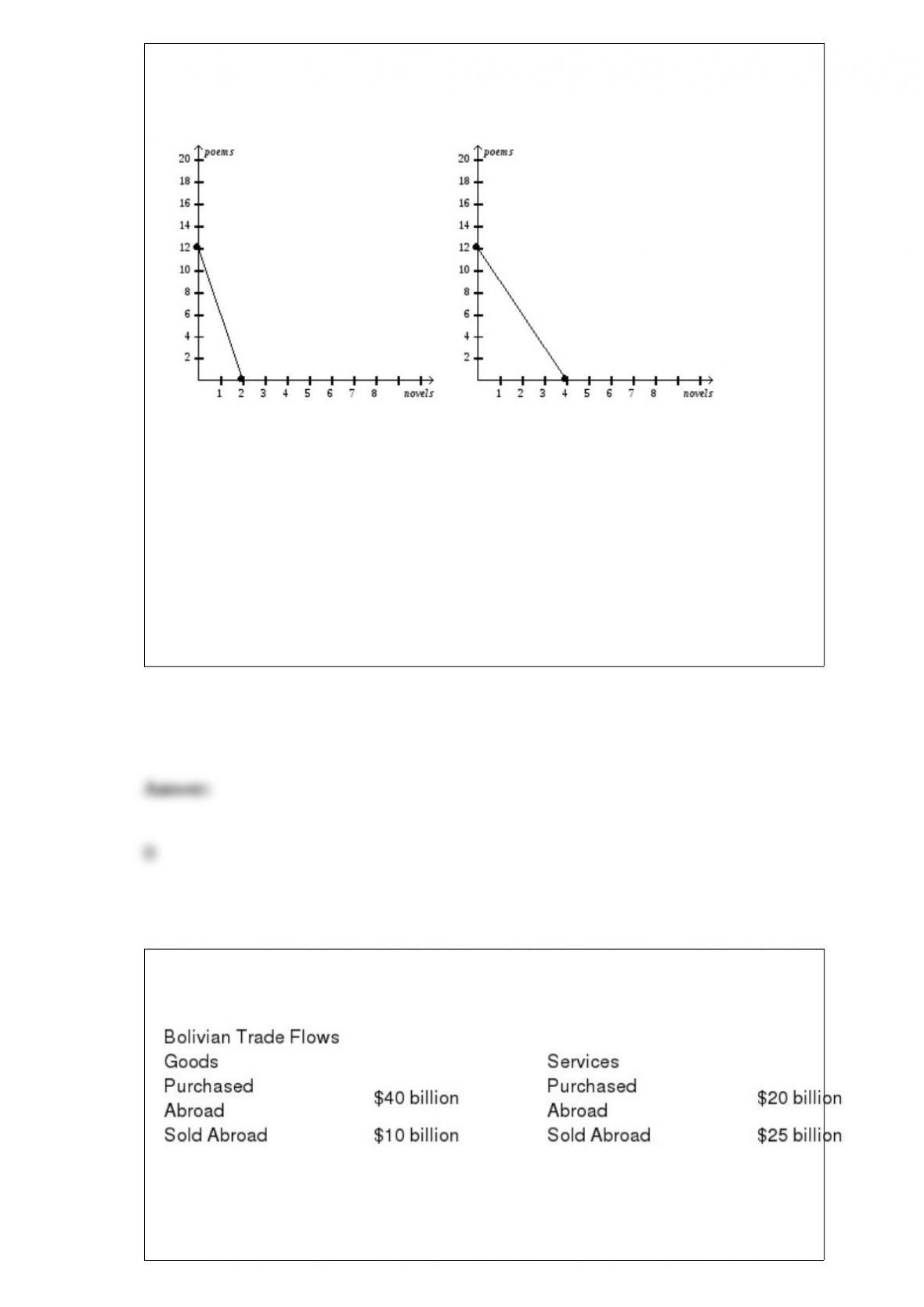
Figure 3-4
Perry’s Production Possibilities Frontier Jordan’s Production Possibilities Frontier
Refer to Figure 3-4. If Perry and Jordan each divides their time equally between
writing novels and writing poems, then total production is
a. 2 novels and 6 poems.
b. 3 novels and 12 poems.
c. 4 novels and 12 poems.
d. 6 novels and 24 poems.
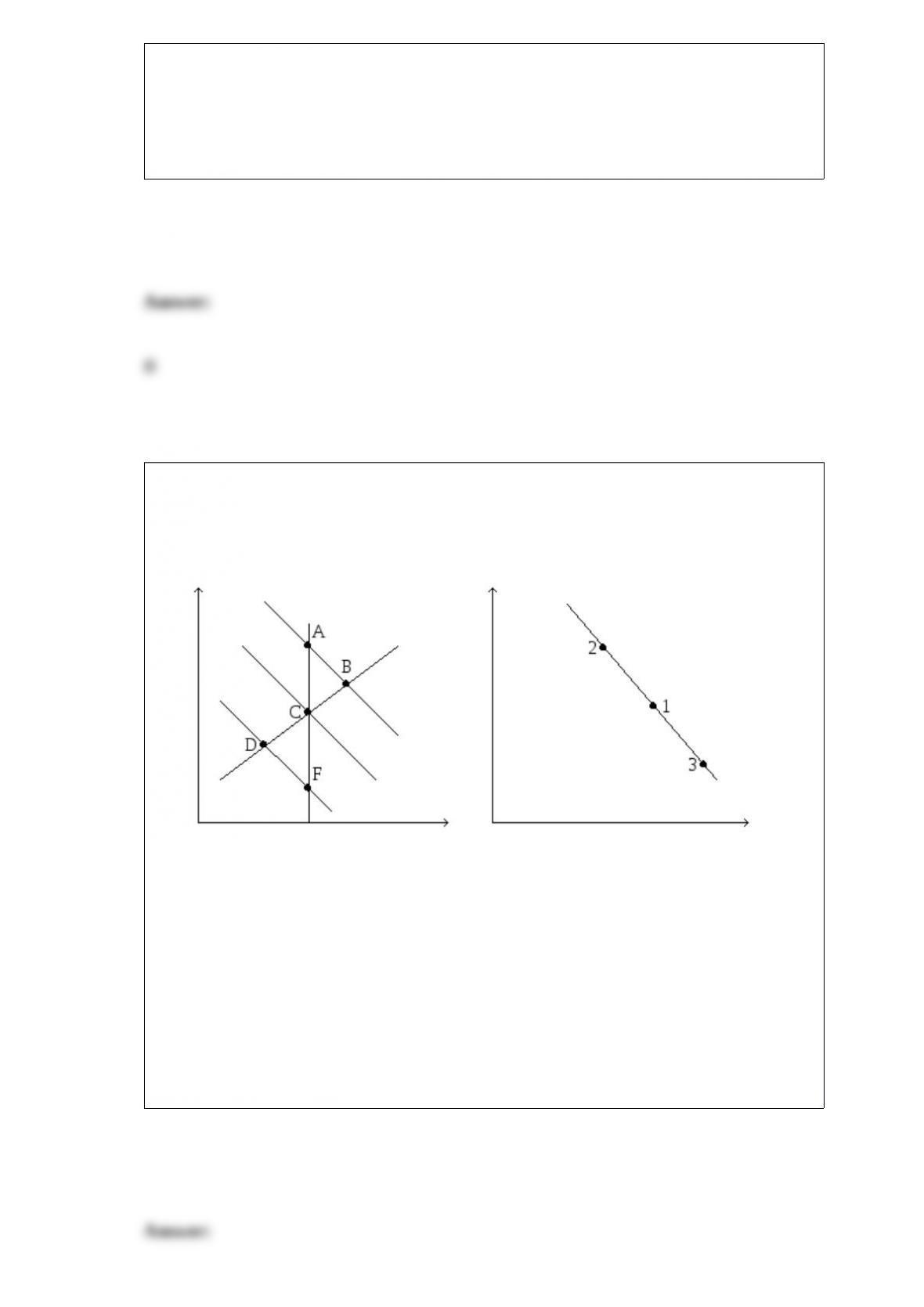
Table 18-1
Refer to Table 18-1. What are Bolivia’s exports?
a. $60 billion
b. $35 billion
c. $10 billion
d. None of the above are correct.
Figure 22-2
Use the pair of diagrams below to answer the following questions.
Refer to Figure 22-2. If the economy starts at C and 1, then in the short run, an
increase in government expenditures moves the economy to
a. B and 2.
b. B and 3.
c. B and 3.
d. None of the above is correct.
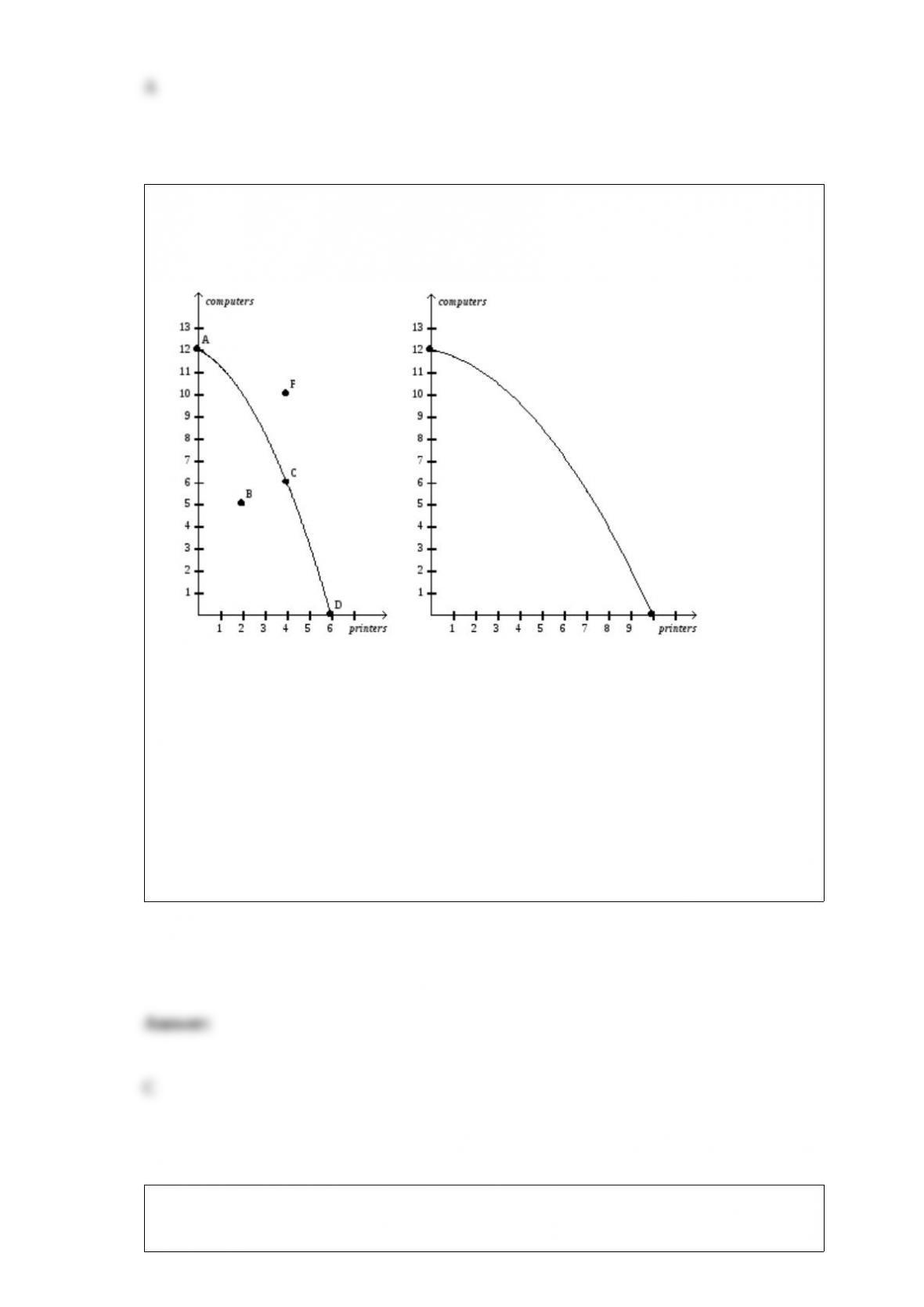
Figure 2-9
Panel (a) Panel (b)
Refer to Figure 2-9, Panel (a) and Panel (b). A shift of the economy’s production
possibilities frontier from Panel (a) to Panel (b) could be caused by
a. unemployment.
b. an improvement in computer production technology.
c. an improvement in printer production technology.
d. an improvement in both computer and printer production technology.
At present, the United States uses a system of quotas to limit the amount of sugar
imported into the country. Which of the following statements is most likely true?

a. The quotas are probably the result of lobbying from U.S. consumers of sugar. The
quotas increase consumer surplus for the United States, reduce producer surplus for the
United States, and harm foreign sugar producers.
b. The quotas are probably the result of lobbying from U.S. producers of sugar. The
quotas increase producer surplus for the United States, reduce consumer surplus for the
United States, and harm foreign sugar producers.
c. The quotas are probably the result of lobbying from foreign producers of sugar. The
quotas reduce producer surplus for the United States, increase consumer surplus for the
United States, and benefit foreign sugar producers.
d. U.S. lawmakers did not need to be lobbied to impose the quotas because total surplus
for the United States is higher with the quotas than without them.
If a central bank wants to counter the change in the price level caused by an adverse
supply shock, it could change the money supply to shift
a. aggregate demand right.
b. aggregate demand left.
c. aggregate supply right.
d. aggregate supply left.

Japan imposes a $300 per ton tariff on imported steel, raising the price charged in Japan
to $1,000. Using only this information, which of the following statements is correct?
a. The world price for steel is $300.
b. The world price for steel is $700.
c. The world price for steel is $1,000.
d. The world price for steel is $1,300.
Providing training for unemployed individuals is primarily intended to reduce
a. frictional unemployment.
b. seasonal unemployment.
c. structural unemployment.
d. cyclical unemployment.
If the CPI was 95 in 1955 and is 475 today, then $100 today purchases the same amount
of goods and services as
a. $4.75 purchased in 1955.
b. $20.00 purchased in 1955.

c. $95.00 purchased in 1955.
d. $500 purchased in 1955.
Any point on a country’s production possibilities frontier represents a combination of
two goods that an economy
a. will never be able to produce.
b. can produce using all available resources and technology.
c. can produce using some portion, but not all, of its resources and technology.
d. may be able to produce in the future with more resources and/or superior technology.
Figure 7-16
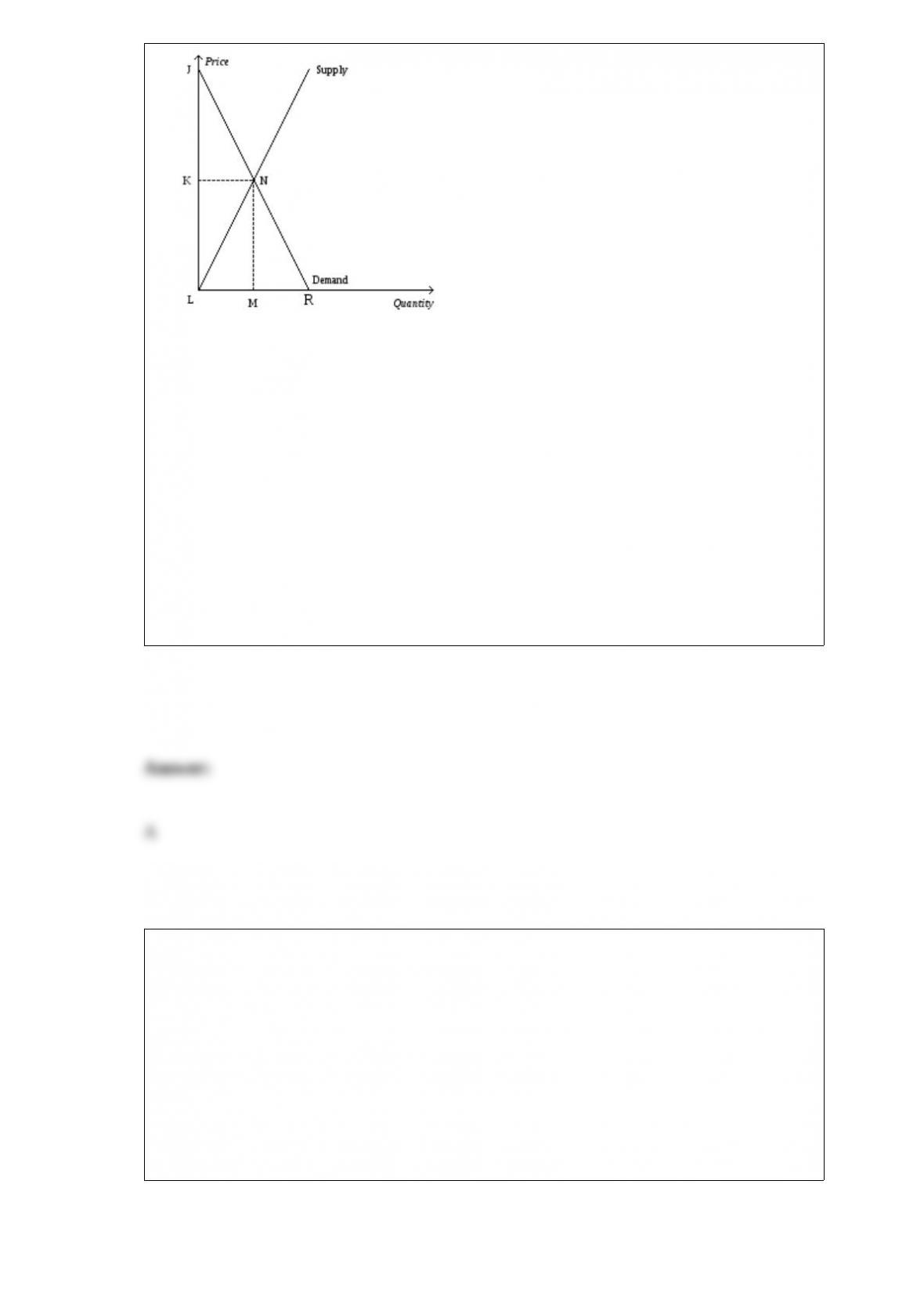
Refer to Figure 7-16. For quantities less than M, the value to the marginal buyer is
a. greater than the cost to the marginal seller, so increasing the quantity increases total
surplus.
b. less than the cost to the marginal seller, so increasing the quantity increases total
surplus.
c. greater than the cost to the marginal seller, so decreasing the quantity increases total
surplus.
d. less than the cost to the marginal seller, so decreasing the quantity increases total
surplus.
Suppose the government wants to encourage Americans to exercise more, so it imposes
a binding price ceiling on the market for in-home treadmills. As a result,
a. the demand for treadmills will increase.
b. the supply of treadmills will decrease.
c. a shortage of treadmills will develop.
d. All of the above are correct.

Which of the following is not a correct statement about the growth of real GDP in the
U.S. economy?
a. Real GDP in 2009 was almost four times its 1965 level.
b. Growth was steady between 1965 and 2009.
c. Continued growth in real GDP enables the typical American to enjoy greater
economic prosperity than his or her parents and grandparents did.
d. The output of goods and services produced grew on average about 3 percent per year
between 1965 and 2009.
If the Federal Reserve decreases the rate at which it increases the money supply, then
unemployment is higher in
a. the long run and the short run.
b. the long run but not the short run.
c. the short run but not the long run.
d. neither the short run nor the long run.

Which markets are represented in the simple circular-flow diagram?
a. markets for goods and services and markets for financial assets
b. markets for factors of production and markets for financial assets
c. markets for goods and services and markets for factors of production
d. markets for goods and services and markets for imports and exports
From 1993-2001 the U.S. economy experienced
a. relatively low inflation and unemployment rates.
b. relatively high inflation and unemployment rates.
c. relatively low inflation rates and relatively high unemployment rates.
d. relatively high inflation rates and relatively low unemployment rates.
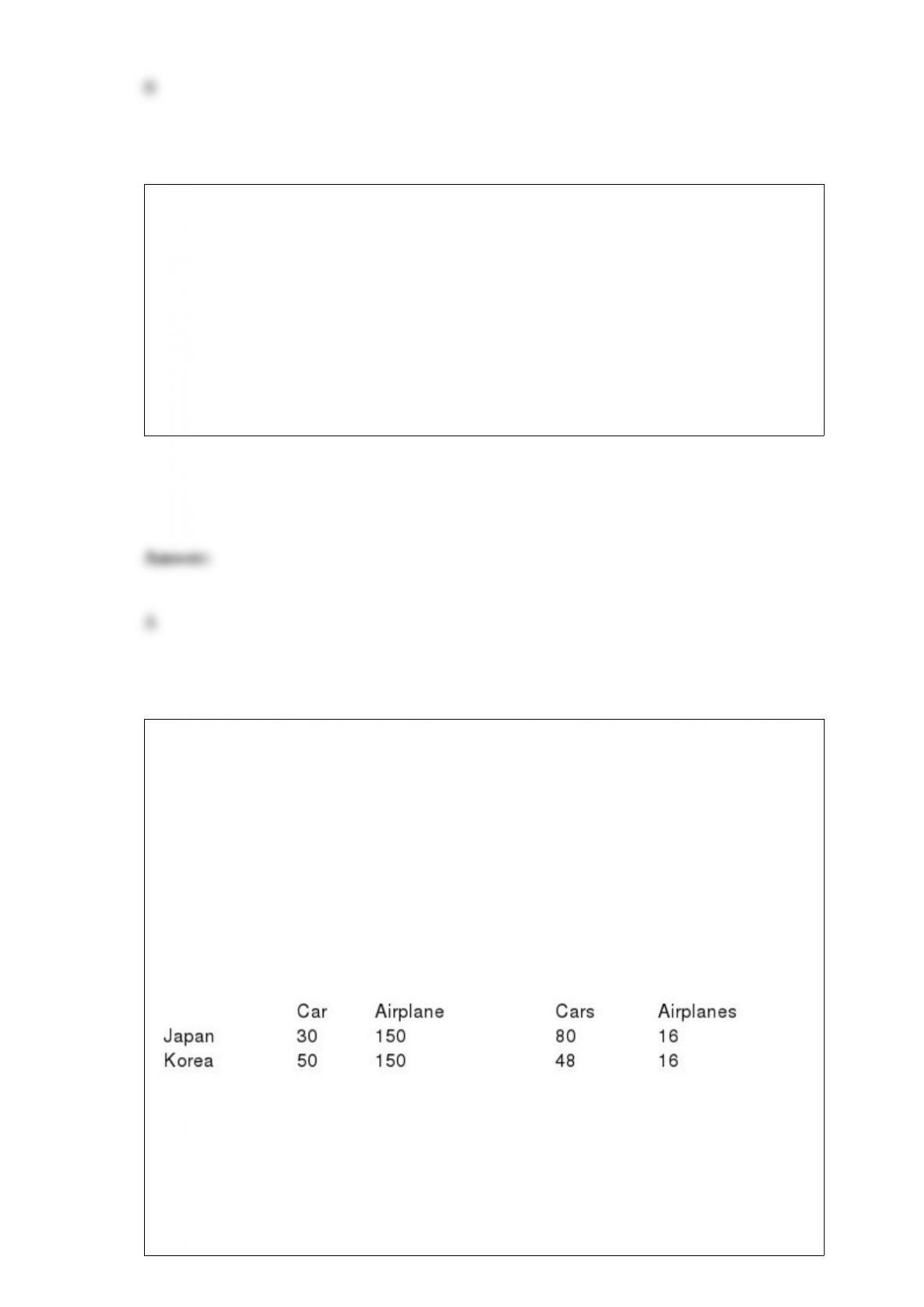
Table 3-7
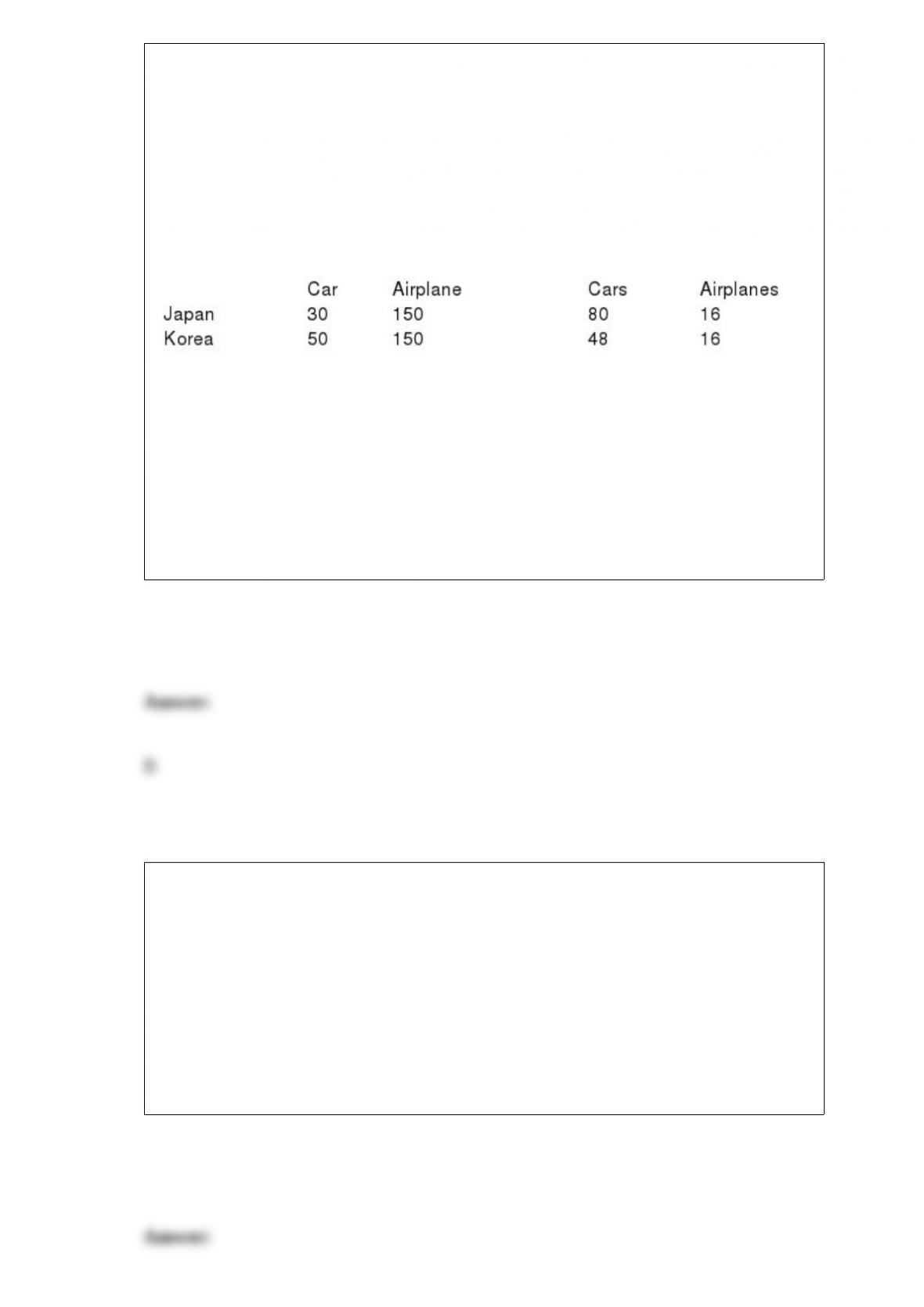
Assume that Japan and Korea can switch between producing cars and producing
airplanes at a constant rate.
Hours Needed
to Make 1 Quantity Produced
in 2400 Hours
Refer to Table 3-7. Korea should specialize in the production of
a. cars and import airplanes.
b. airplanes and import cars.
c. both goods and import neither good.
d. neither good and import both goods.
In computing GDP, market prices are used to value final goods and services because
a. market prices do not change much over time, so it is easy to make comparisons
between years.
b. market prices reflect the values of goods and services.
c. market prices reflect the quantity sold.
d. None of the above is correct; market prices are not used in computing GDP.
When consumers face rising gasoline prices, they typically
a. reduce their quantity demanded more in the long run than in the short run.
b. reduce their quantity demanded more in the short run than in the long run.
c. do not reduce their quantity demanded in the short run or the long run.
d. increase their quantity demanded in the short run but reduce their quantity demanded
in the long run.
Table 3-7
Assume that Japan and Korea can switch between producing cars and producing
airplanes at a constant rate.
Hours Needed
to Make 1 Quantity Produced
in 2400 Hours
Refer to Table 3-7. Assume that Japan and Korea each has 2400 hours available. If
each country spends all its time producing the good in which it has a comparative
advantage and trade takes place at a price of 12 cars for 6 airplanes, then
a. Japan and Korea will both gain from this trade.
b. Japan will gain from this trade, but Korea will not.

c. Korea will gain from this trade, but Japan will not.
d. neither Japan nor Korea will gain from this trade.
In the open-economy macroeconomic model, if the supply of loanable funds increases,
then the interest rate
a. and the real exchange rate increase.
b. and the real exchange rate decrease.
c. increases and the real exchange rate decreases.
d. decreases and the real exchange rate increases.
A relatively mild period of falling incomes and rising unemployment is called a(n)
a. depression.
b. recession.
c. expansion.
d. business cycle.

Suppose Jim and Tom can both produce baseball bats. If Jim’s opportunity cost of
producing baseball bats is lower than Tom’s opportunity cost of producing baseball bats,
then
a. Tom must have an absolute advantage in the production of baseball bats.
b. Jim must have an absolute advantage in the production of baseball bats.
c. Tom has a comparative advantage in the production of baseball bats.
d. Jim has a comparative advantage in the production of baseball bats.
The relative importance of housing in the breakdown of consumer spending is
a. 43 percent.
b. 15 percent.
c. 6 percent.
d. 4 percent.
Which of the following will decrease U.S. net capital outflow?
a. capital flight from the United States
b. the government budget deficit increases
c. the U.S. imposes import quotas
d. None of the above is correct.
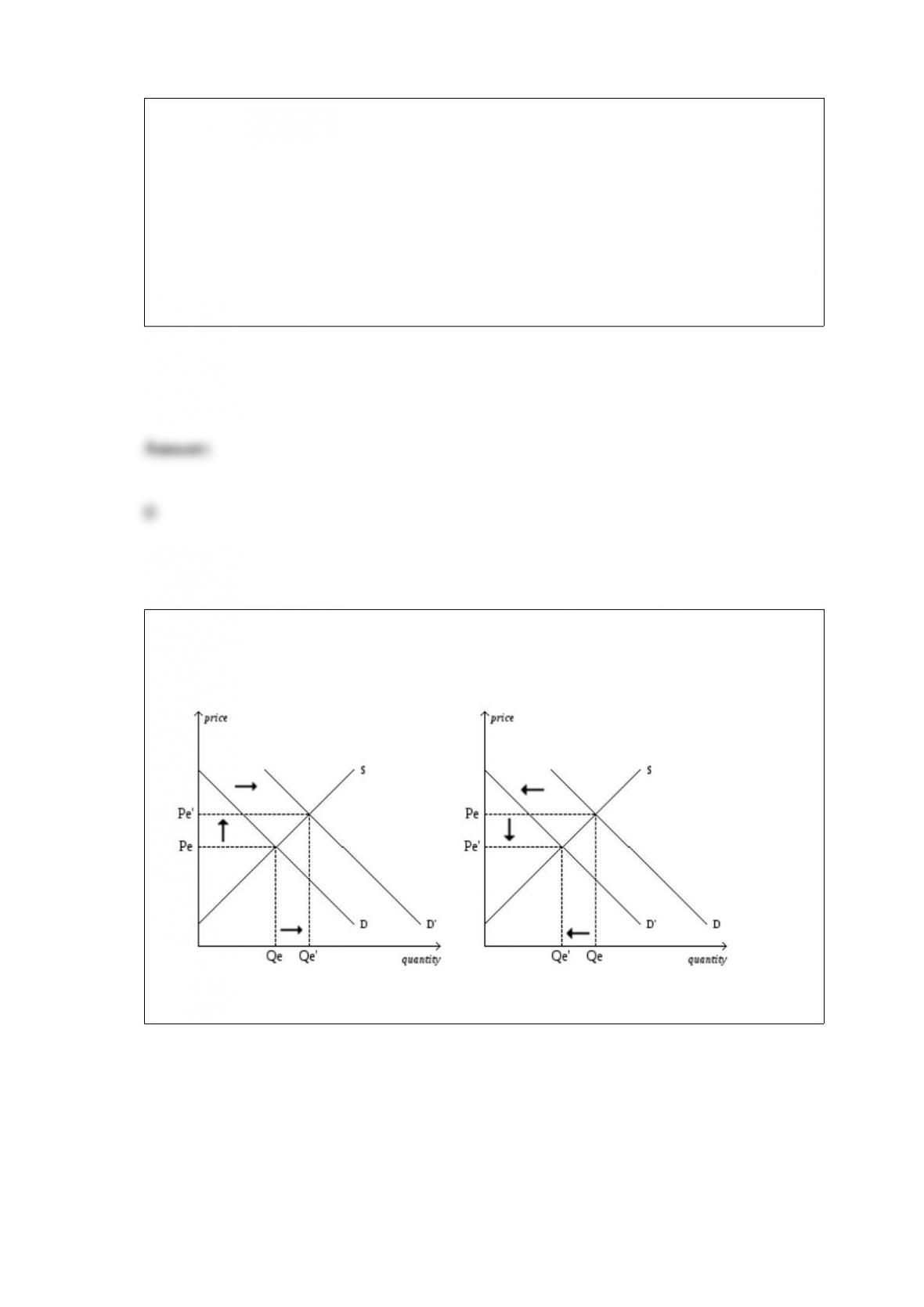
Figure 4-22
Panel (a) Panel (b)
Panel (c) Panel (d)
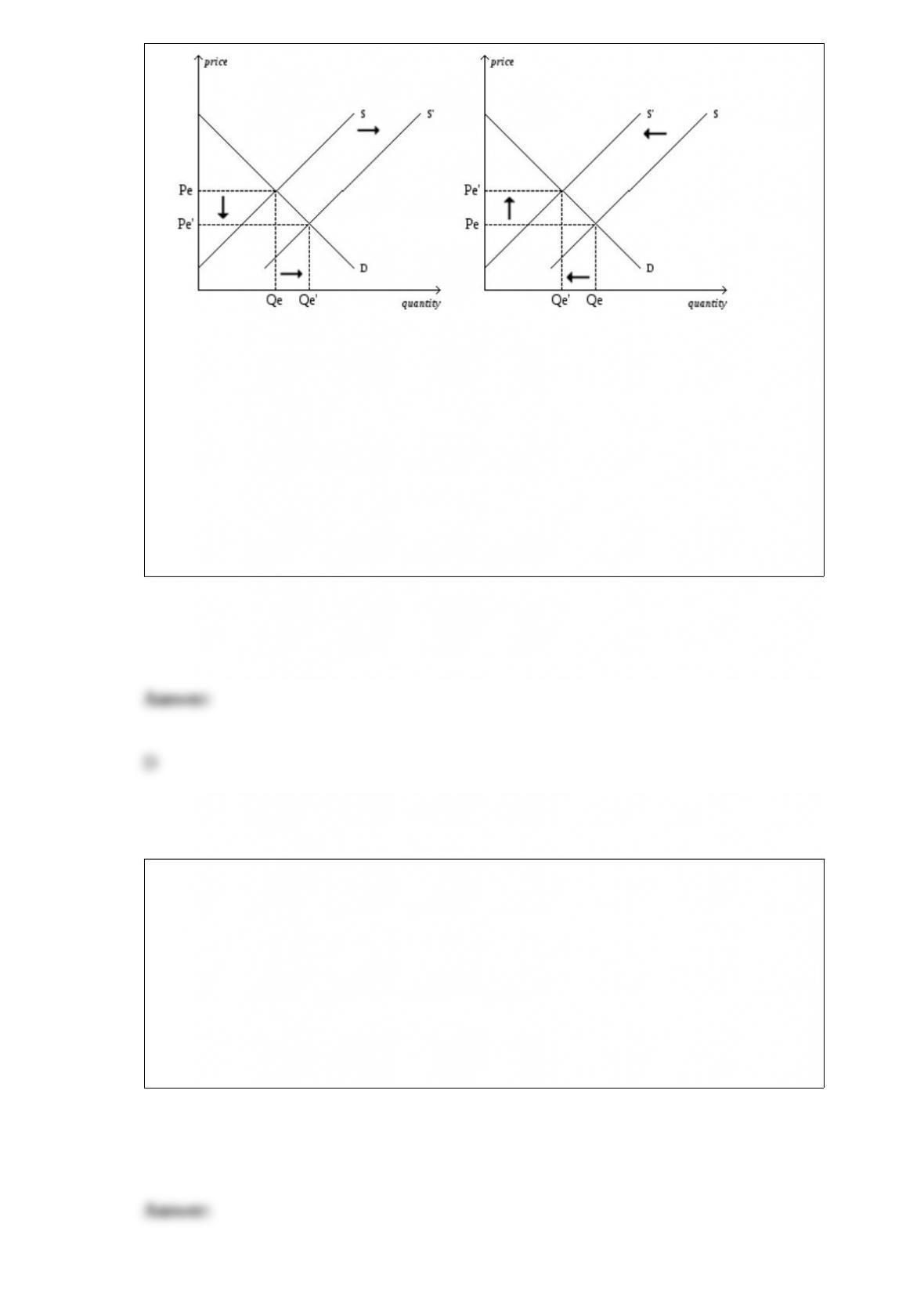
Refer to Figure 4-22. Which of the four panels represents the market for peanut butter
after a major hurricane hits the peanut-growing south?
a. Panel (a)
b. Panel (b)
c. Panel (c)
d. Panel (d)
If M = 5,000, P = 3, and Y = 10,000, what is velocity?
a. 6
b. 1.5
c. 2/3
d. 1/6

The lag problem associated with fiscal policy is due mostly to
a. the fact that business firms make investment plans far in advance.
b. the political system of checks and balances that slows down the process of
implementing fiscal policy.
c. the time it takes for changes in government spending or taxes to affect the interest
rate.
d. All of the above are correct.
If a country has business opportunities that are relatively attractive to other countries,
we would expect it to have
a. both positive net exports and positive net capital outflow.
b. both negative net exports and negative net capital outflow.
c. positive net exports and negative net capital outflow.
d. negative net exports and positive net capital outflow.
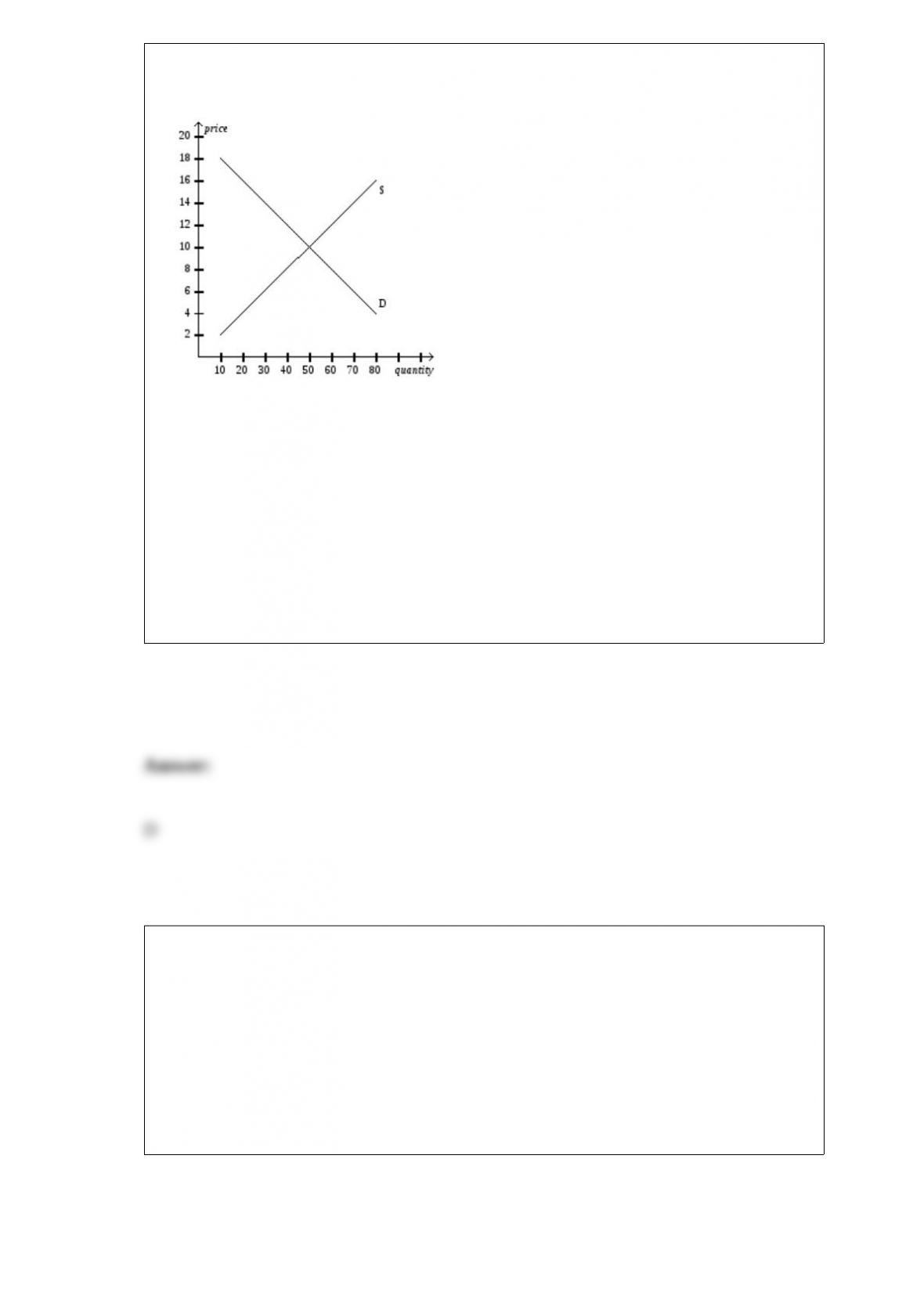
Figure 6-6
Refer to Figure 6-6. If the government imposes a price floor of $14 on this market,
then there will be
a. no surplus.
b. a surplus of 20 units.
c. a surplus of 30 units.
d. a surplus of 40 units.
Which of the following events shifts aggregate demand rightward?
a. an increase in government expenditures or a decrease in the price level
b. a decrease in government expenditures or an increase in the price level
c. an increase in government expenditures, but not a change in the price level
d. a decrease in the price level, but not an increase in government expenditures

Incentives for parents to send their children to school, such as small monthly payments
to parents if their children have regular attendance, appear to increase school
attendance.
Expenditures by households on education are included in the investment component of
GDP.
Figure 6-27
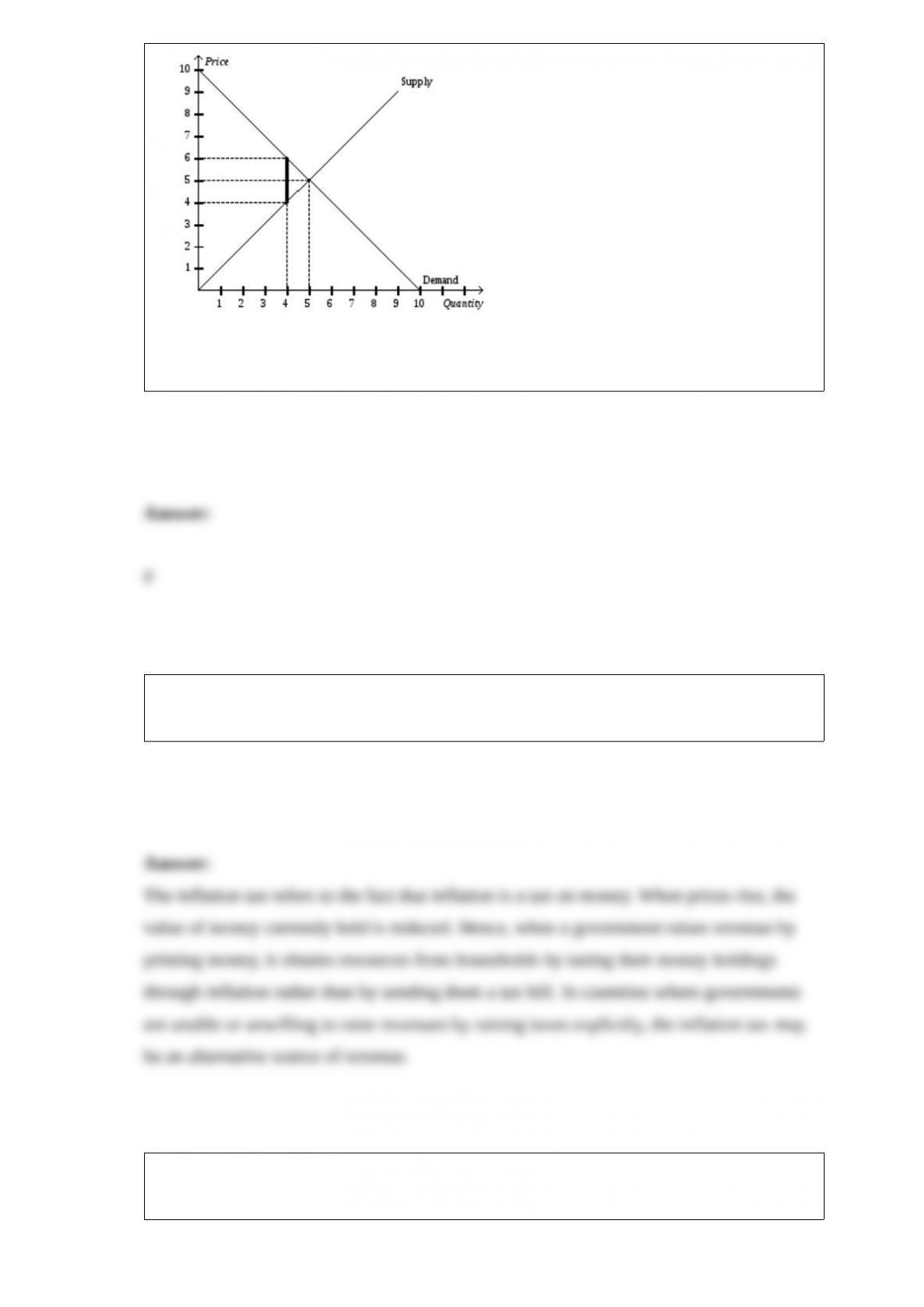
Refer to Figure 6-27. If the government places a $2 tax in the market, the buyer bears
$2 of the tax burden.
What is the inflation tax, and how might it explain the creation of inflation by a central
bank?
Inflation distorts relative prices. What does this mean and why does it impose a cost on
society?

Within the U.S., blacks and whites have similar rates of unemployment.
It takes Anne 3 hours to make a pie and 4 hours to make a shirt. It takes Mary 2 hours to
make a pie and 5 hours to make a shirt. Anne should specialize in making shirts and
Mary should specialize in making pies, and they should trade.
The theory of liquidity preference is largely at odds with the basic ideas of supply and
demand.

From 2007 to 2009 the U.S. trade deficit fell as U.S. investment fell.
Unemployment causes production levels to be inefficient.
The adult labor-force participation rate tells us the fraction of the population that has
chosen to participate in the labor market.
Other things the same, an increase in the U.S. real exchange rate makes U.S. goods
more expensive relative to foreign goods.
Capital flight raises a country’s interest rate.
The short-run Phillips curve is based on the classical dichotomy.
If a nation is selling more goods and services to foreigners than it is buying from them,
then on net it must be selling assets abroad.

Suppose that velocity and output are constant and that the quantity theory and the
Fisher effect both hold. What happens to inflation, real interest rates, and nominal
interest rates when the money supply growth rate increases from 5 percent to 10
percent?
The market for insurance is an example of diversification.