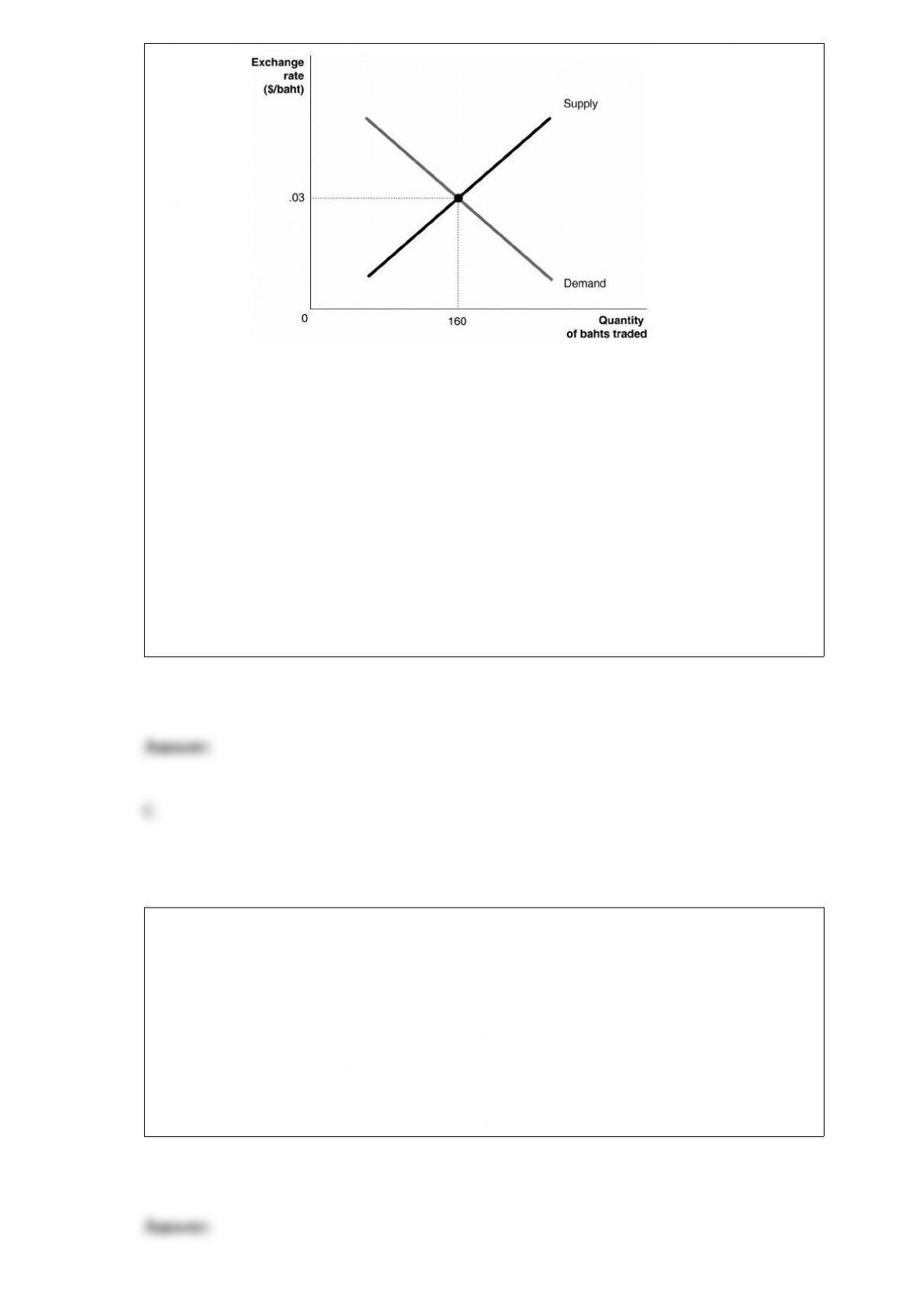
Figure 19-3
Which of the following is not true?
A) U.S imports are cheaper at exchange rates greater than $.03/baht than at the
equilibrium exchange rate.
B) The baht is overvalued at exchange rates greater than $.03/baht.
C) To achieve an exchange rate greater than $.03/baht, the Bank of Thailand must buy
surplus dollars with bahts.
D) Thai exports to the United States are more expensive at exchange rates greater than
$.03/baht than at the equilibrium exchange rate.
In recent economic history, the U.S. federal budget was in surplus during
A) 2001 through 2005.
B) 1998 through 2001.
C) 1990 through 1997.
D) 1980 through 1989.
During the month of May, 10 million workers moved from being classified as
“unemployed” to being classified as “employed.” As a result,
A) the unemployment rate rose.
B) the labor force participation rate fell.
C) the unemployment rate fell.
D) the labor force participation rate rose.
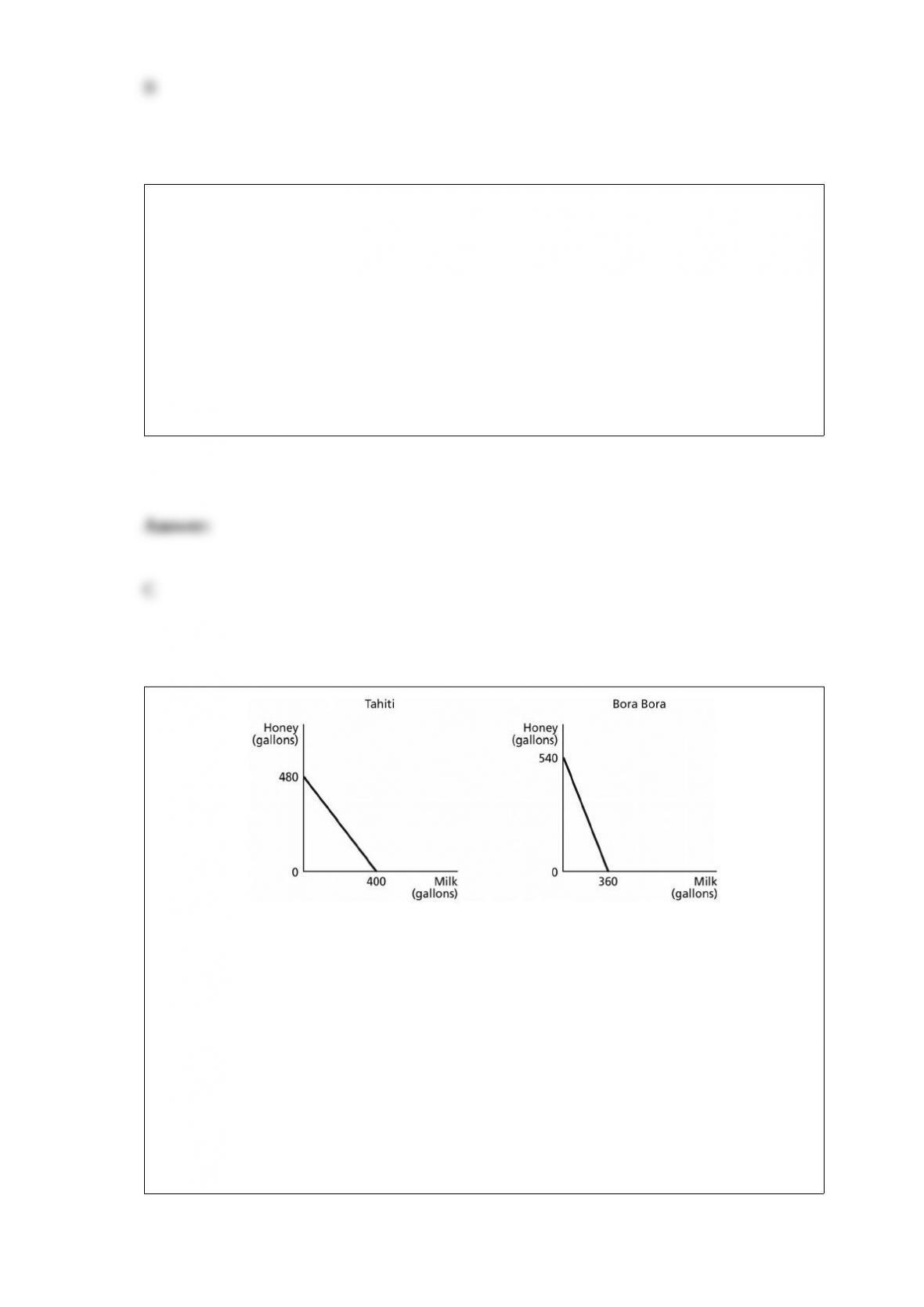
Figure 2-13 Figure 2-13
shows the production possibilities frontiers for Tahiti and Bora Bora. Each country
produces two goods, milk and honey.
Which country has a comparative advantage in the production of milk?
A) Bora Bora
B) They have equal productive abilities.
C) Tahiti
D) neither country

In general, the supply curve for a natural resource
A) is vertical.
B) is horizontal.
C) slopes downward to reflect decreasing available quantities over time.
D) slopes upward.
The marketing of the first ballpoint by Milton Reynolds showed
A) that first-mover advantages can make it more difficult for new firms to enter a
market and compete against the first mover.
B) that being the first firm to market a new product can result in a natural monopoly.
C) that being the first firm to market a product may not lead to a long-lived advantage
over later entrants into the market.
D) how important it is to receive patent protection for a new product.
Trina’s Tropical Fish Store sells goldfish for $2 each and angelfish for $10 each. What
is the opportunity cost of buying a goldfish?
A) 5 angelfish
B) 1/5 of an angelfish
C) $10
D) $2
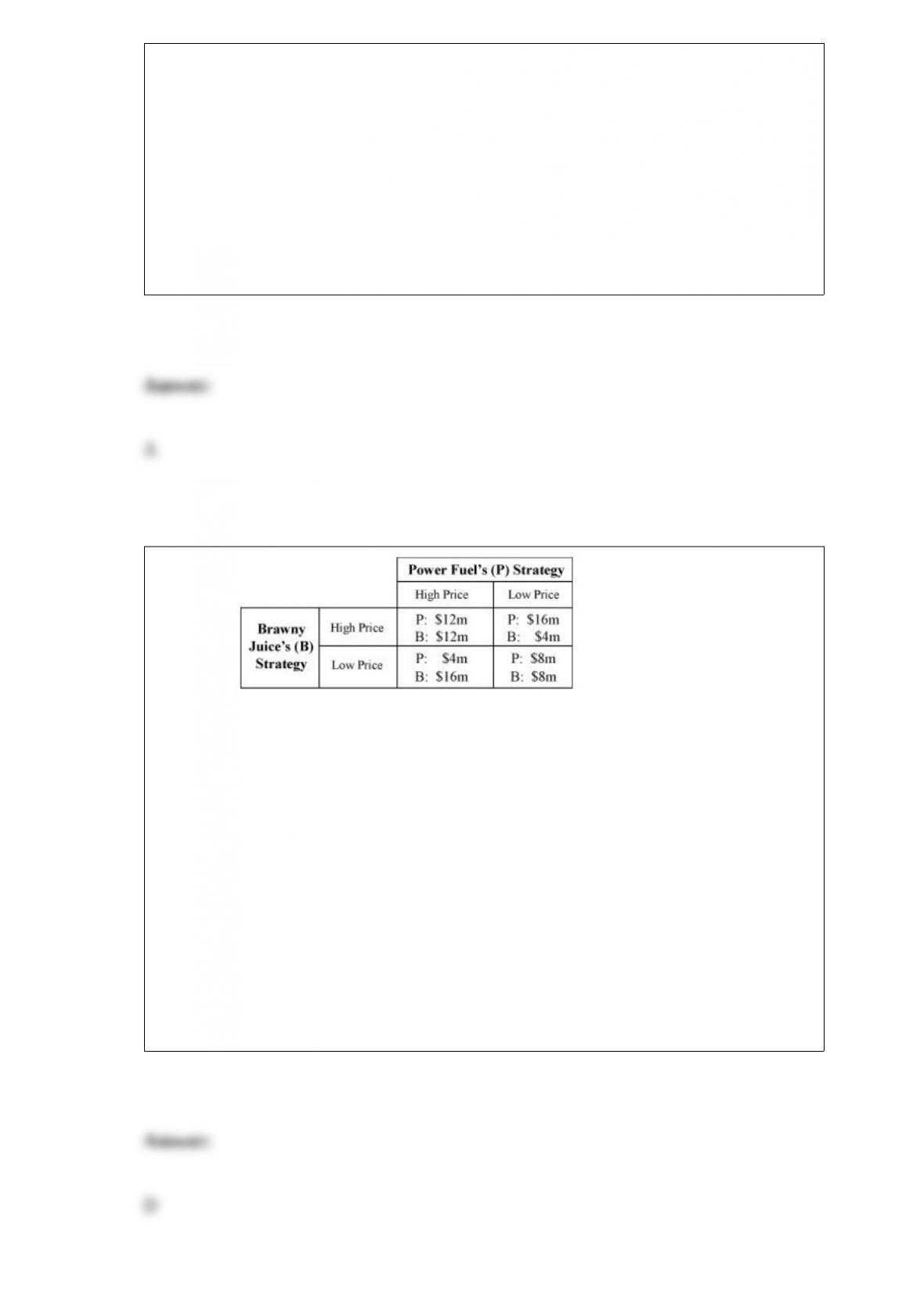
Table 14-8 Two rival oligopolists in the
athletic supplements industry, the Power Fuel Company and the Brawny Juice
Company, have to decide on their pricing strategy. Each can choose either a high price
or a low price. Table 14-8 shows the payoff matrix with the profits that each firm can
expect to earn depending on the pricing strategy it adopts.
If the two firms collude, is there an incentive for either to cheat on the collusion
agreement?
A) No, neither firm can gain by cheating.
B) Yes, but only Brawny Juice is in a position to gain by cheating.
C) Yes, but only Power Fuel is in a position to gain by cheating.
D) Yes, either firm can gain if it alone cheats.

If a firm’s average total cost is less than price where MR=MC,
A) the firm should shut down.
B) the firm should raise its price.
C) the firm should continue to produce the output it is producing.
D) the firm should cut back on its output to lower its cost.
If the Fed buys U.S. Treasury securities, then this
A) increases reserves, encourages banks to make more loans, and increases the money
supply.
B) decreases reserves, causes banks to reduce their loans, and decreases the money
supply.
C) decreases reserves, causes banks to reduce their loans, and increases the money
supply.
D) increases reserves, causes banks to reduce their loans, and increases the money
supply.
Gross national product, GNP, of the United States is the market value of all final goods
and services

A) produced within the United States.
B) consumed within the United States.
C) produced by citizens of the United States anywhere in the world.
D) consumed by citizens of the United States anywhere in the world.
In the first six months of 2003, branches of Commerce Bank in New York City were
robbed 14 times. The New York City Police recommended steps the bank could take to
deter robberies, including the installation of plastic barriers called “bandit barriers.” The
police were surprised the bank did not take their advice. According to a deputy
commissioner of police, “Commerce does very little of what we recommend. They’ve
told our detectives they have no interest in ever putting in the barriers.” It would seem
that Commerce bank would have a strong incentive to install “bandit barriers” to deter
robberies. Why wouldn’t they do it?
A) The banks would rather delay installation of any theft deterring equipment in
anticipation of new lower cost innovations in the security devices market.
B) The banks must have weighed the cost of installing bandit barriers against the
benefits and decided that they have “no interest in ever putting in the barriers.”
C) The banks are concerned that “bandit barriers” would send the wrong message to
customers € that the bank is unsafe.
D) The banks probably resent any interference from the police department.
Table 16-3
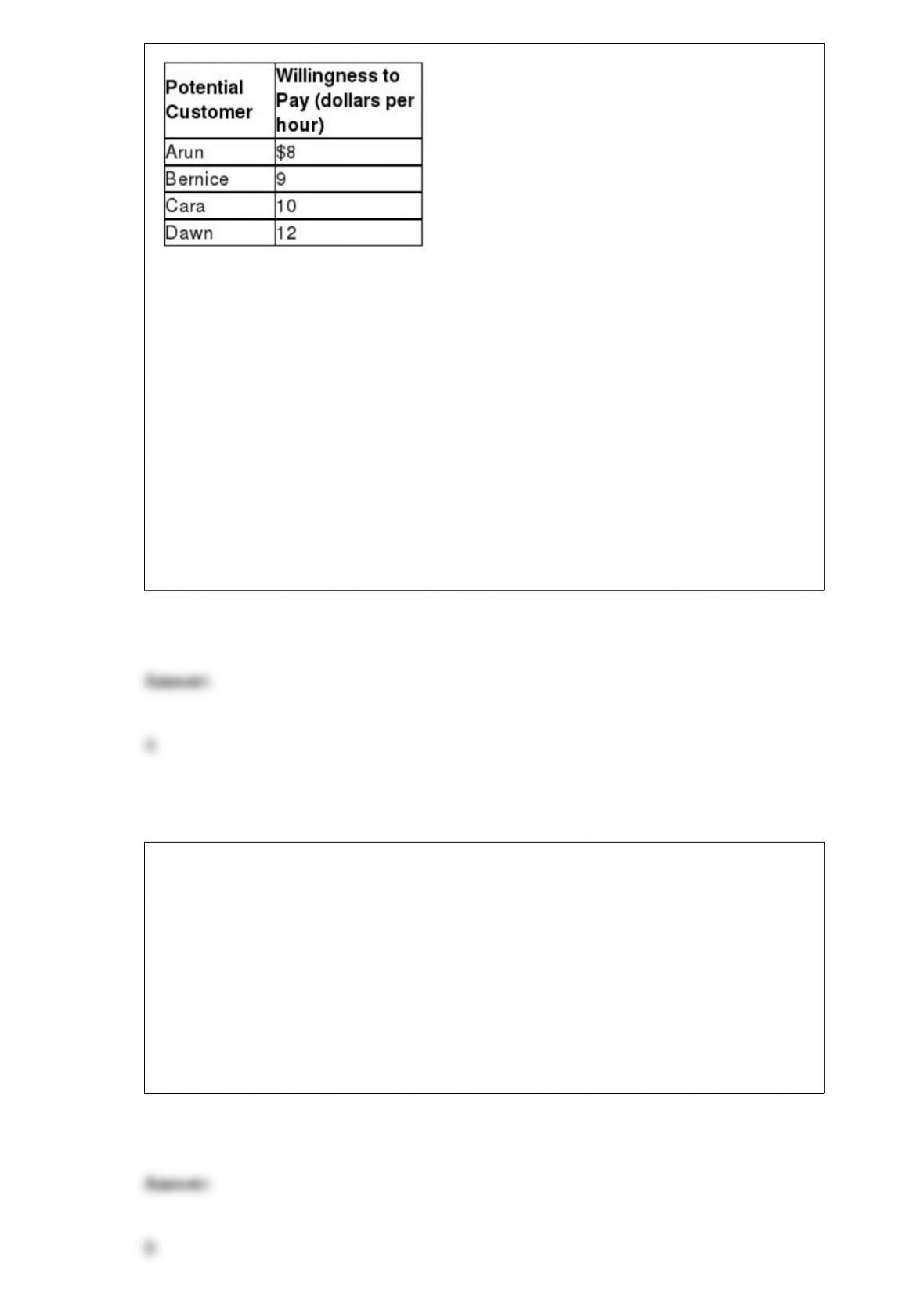
Julie plans to start a pet-sitting service. She surveyed her neighborhood to determine the
demand for this service. Assume that each person surveyed demands only one hour of
pet sitting services per period. Table 16-3 above shows a portion of her survey results.
Suppose Julie’s marginal cost of providing this service is constant at $7 and she decides
to charge each customer according to his or her willingness to pay. What is Julie’s total
revenue and how many hours of service will be purchased?
A) 4 hours and her total revenue = $39
B) 4 hours and her total revenue = $28
C) 1 hour and her total revenue = $7
D) 5 hours and her total revenue = $35
Doctors have ________ incentive to control their costs when consumers ________ for a
visit to the doctor’s office.
A) more; only pay a deductible
B) less; only pay a deductible
C) less; pay entirely out of pocket
D) more; have a third-party payer that pays

When a monopolistically competitive firm cuts its price to increase its sales, it
experiences a gain in revenue due to the
A) substitution effect.
B) income effect.
C) price effect.
D) output effect.
As a group, people with high incomes are likely to have
A) greater-than-average family inheritances and greater-than-average SAT scores.
B) greater-than-average holdings of stocks and bonds and lower-than-average
productivity.
C) greater-than-average productivity and greater-than-average amounts of capital.
D) a stable marriage and no children.
Adam spent $10,000 on new equipment for his small business, “Adam’s Fitness
Studio.” Membership at his fitness center is very low and at this rate, Adam needs an
additional $12,000 per year to keep his studio open. Which of the following is true?
A) The fixed cost of running the studio is $22,000.

B) The variable cost of running the studio is $22,000.
C) The $10,000 Adam spent on equipment is a fixed cost of business, and the $12,000
he’ll need to continue operations is a variable cost.
D) The $10,000 Adam spent on equipment is the total cost of starting the business, and
the $12,000 he’ll need to continue operations is a marginal cost.