1)
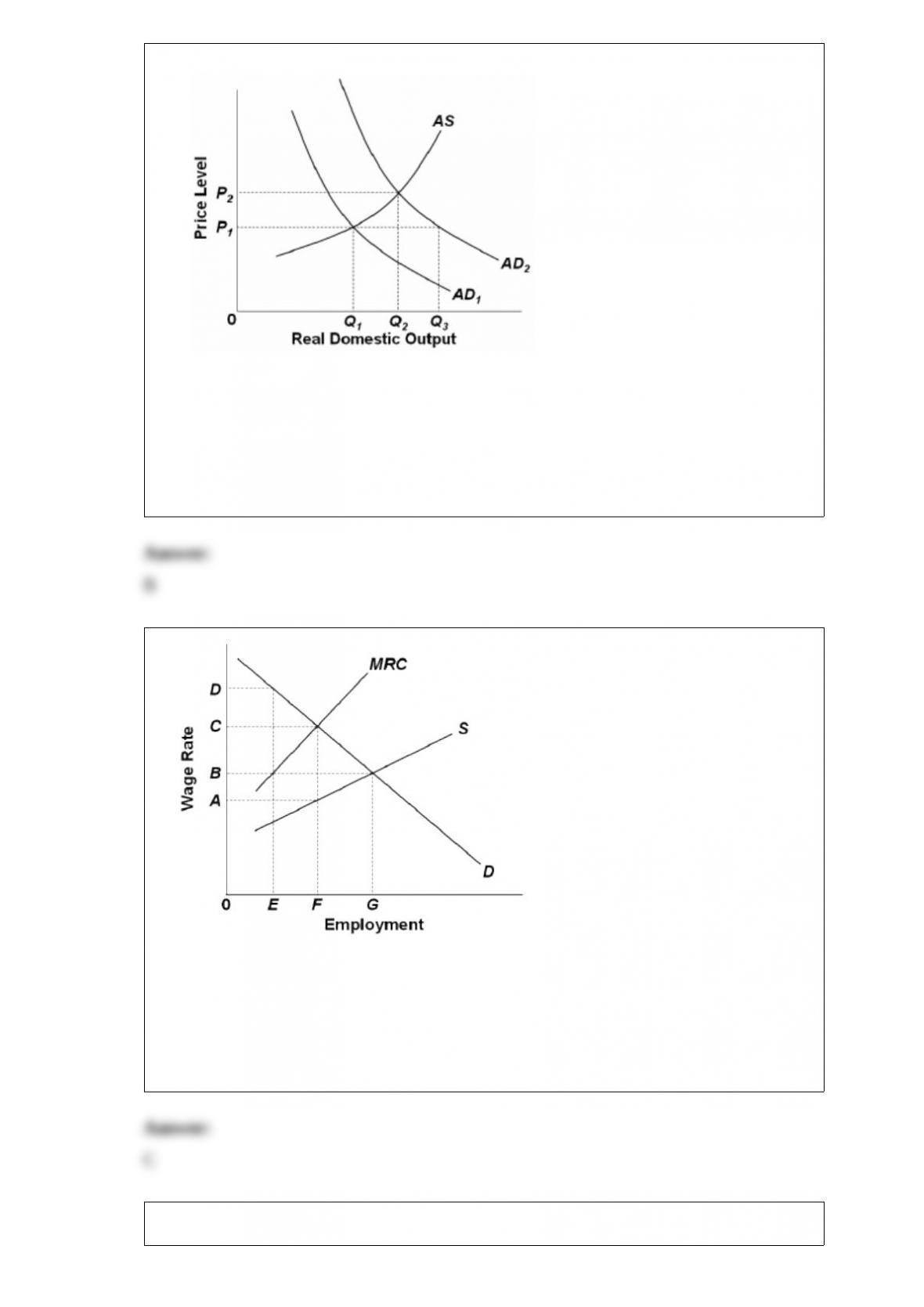
Refer to the above diagram. Which of the following would shift the aggregate demand
curve from AD2 to AD1?
A.a decline in personal income tax rates
B.an increase in the international value of the dollar
C.an increase in government spending
D.an upward revision of expected rates of return on investment projects
2)
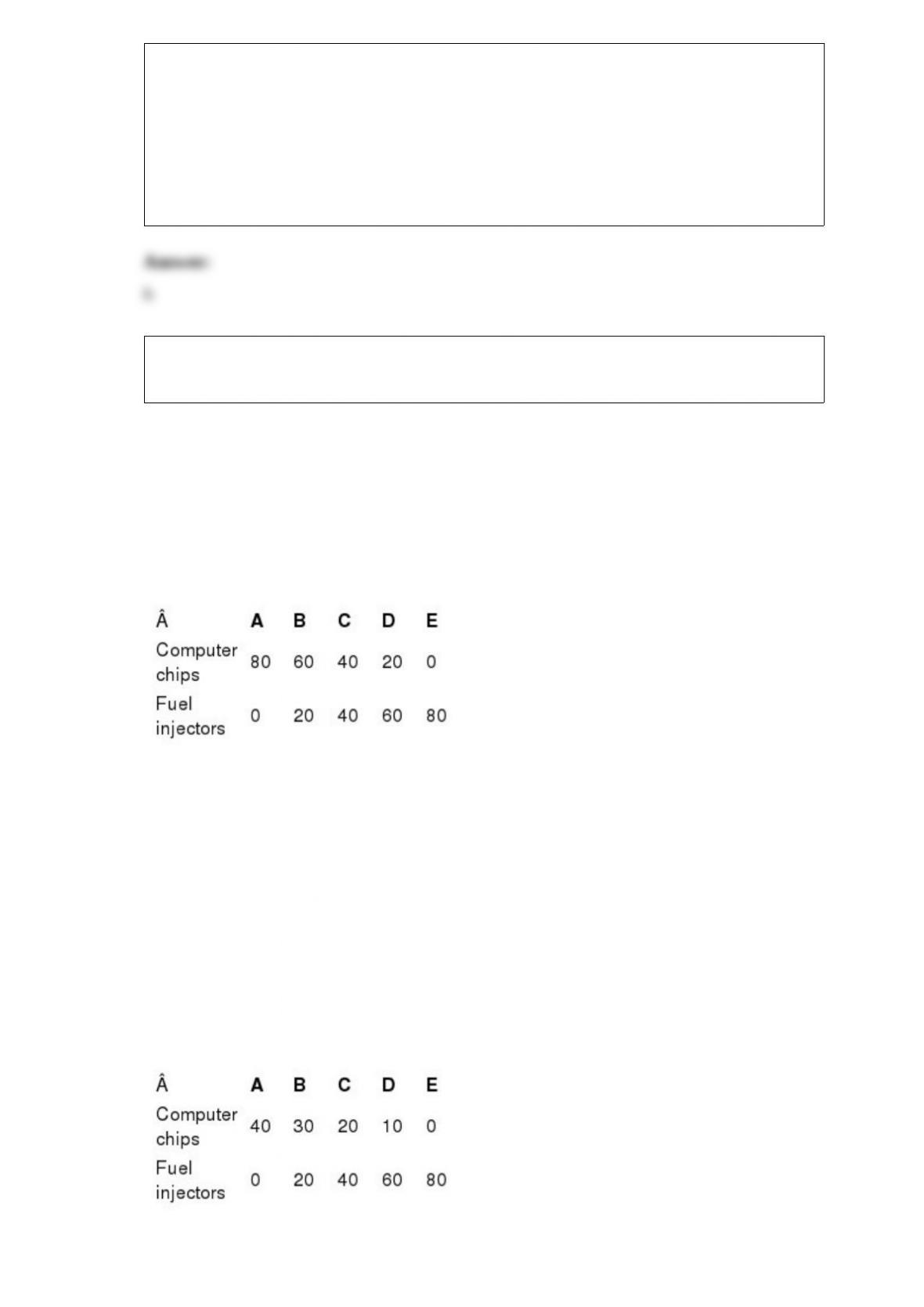
Refer to the above diagram. If this labor market is purely competitive, the wage rate and
level of employment respectively will be:
A.D and E.
B.C and E.
C.B and G.
D.B and F.
3) the slope of a straight line can be determined by:
a.comparing the absolute horizontal change to the absolute vertical change between two
points on the line.
b.comparing the absolute vertical change to the absolute horizontal change between two
points on the line.
c.taking the reciprocal of the vertical intercept.
d.comparing the percentage vertical change to the percentage horizontal change
between two points on the line.
4) Answer the next three questions on the basis of the following production possibilities
data for Narnia and Somosa. All data are in 1000s.
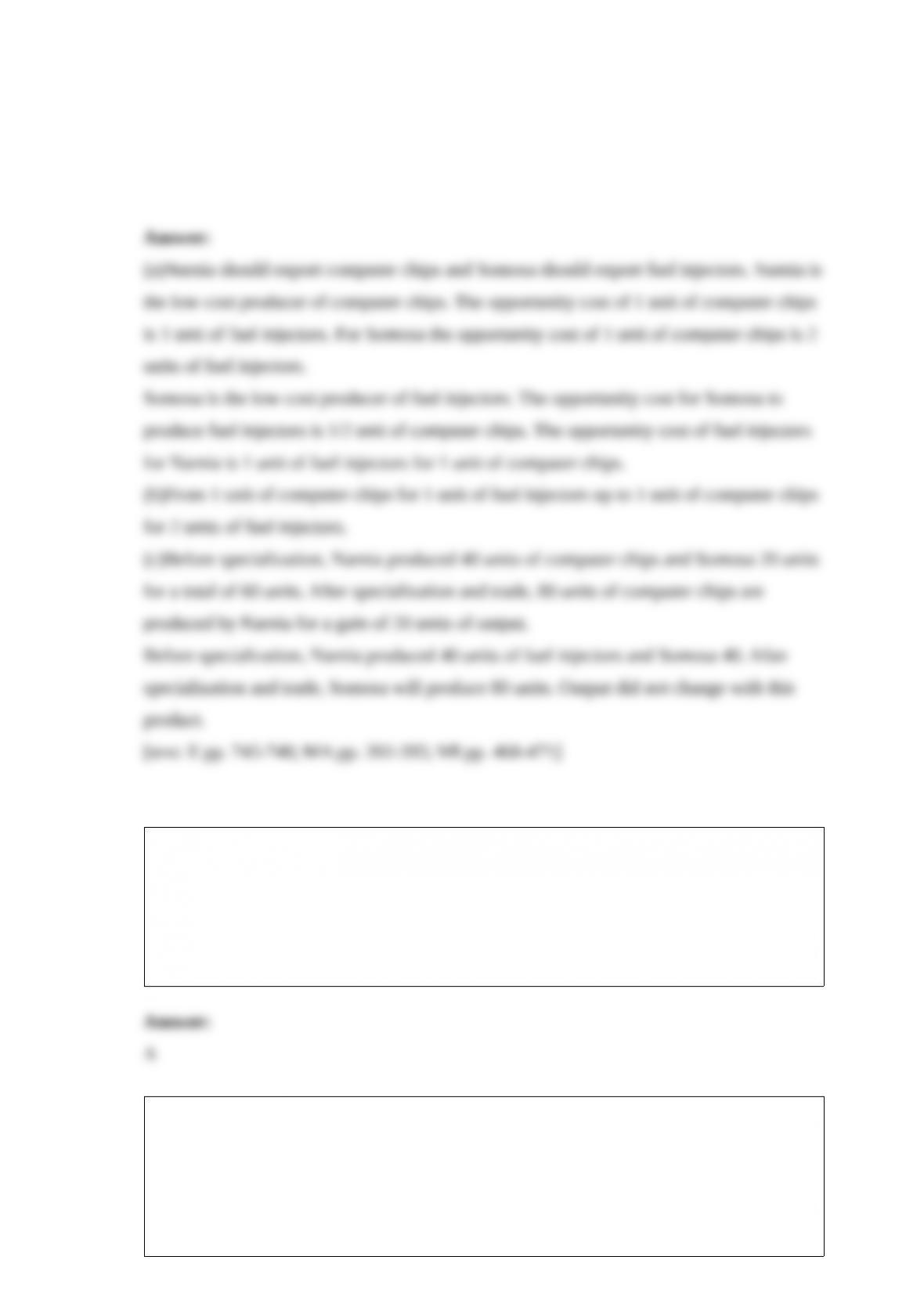
NARNIA PRODUCTION
POSSIBILITIES:
SOMOSA PRODUCTION
POSSIBILITIES:
(a)If trade occurs between Narnia and Somosa, which nation should export what product?
Why?
(b)What are the limits of the terms of trade between Narnia and Somosa?
(c)Assume that prior to specialization and trade, Narnia and Somosa chose production
possibility C. Now each specializes according to comparative advantage. What will be the
resulting gains from trade? Explain your answer.
5) Senator A agrees to vote for Senator K’s state project in exchange for Senator K
voting for Senator A’s state project. This is an example of:
A.logrolling.
B.the paradox of voting.
C.the principal-agent problem.
D.the median voter model.
6) in the past few years, the demand for donuts has greatly increased. this increase in
demand might best be explained by:
a.an increase in the cost of making donuts.
b.an increase in the price of coffee.
c.consumers expecting donut prices to fall.
d.a change in buyer tastes.

7) suppose that two groups of people are each offered plates of sugar cookies. for the
first group, the cookies are of identical taste and appearance. for the second group, the
cookies all taste the same, but they are of different colors. based on the m&m
experiments, behavioral economists would expect:
a.the second group to eat more cookies because of the variety of colors offered.
b.the second group to eat fewer cookies because of aversion to the variety of colors
offered.
c.no difference in the consumption of cookies between the two groups.
d.people to consume too many cookies because they are offered free of charge.
8) Which of the following statements is correct?
A.The supply of money decreases when the Federal Reserve Banks buy government
securities from households or businesses.
B.Excess reserves are the amount by which actual reserves exceed required reserves.
C.Commercial banks decrease the supply of money when they purchase government
bonds from households or businesses.
D.Commercial bank reserves are a liability to commercial banks but an asset to the
Federal Reserve Banks.
9) inflation is undesirable because it:
a.arbitrarily redistributes real income and wealth.
b.invariably leads to hyperinflation.
c.usually is accompanied by declining real gdp.
d.reduces everyone’s standard of living.
10) Which of the following are included and which are excluded in calculating this
years GDP? Explain in each instance.
(a)An auto mechanic who fixes his own car at home
(b)Cash received from selling a corporate bond
(c)Spending by a city government on a waste treatment plant
(d)The pleasure that people obtain from working at jobs they like
(e)A veterans payment made to a retired military officer
11)
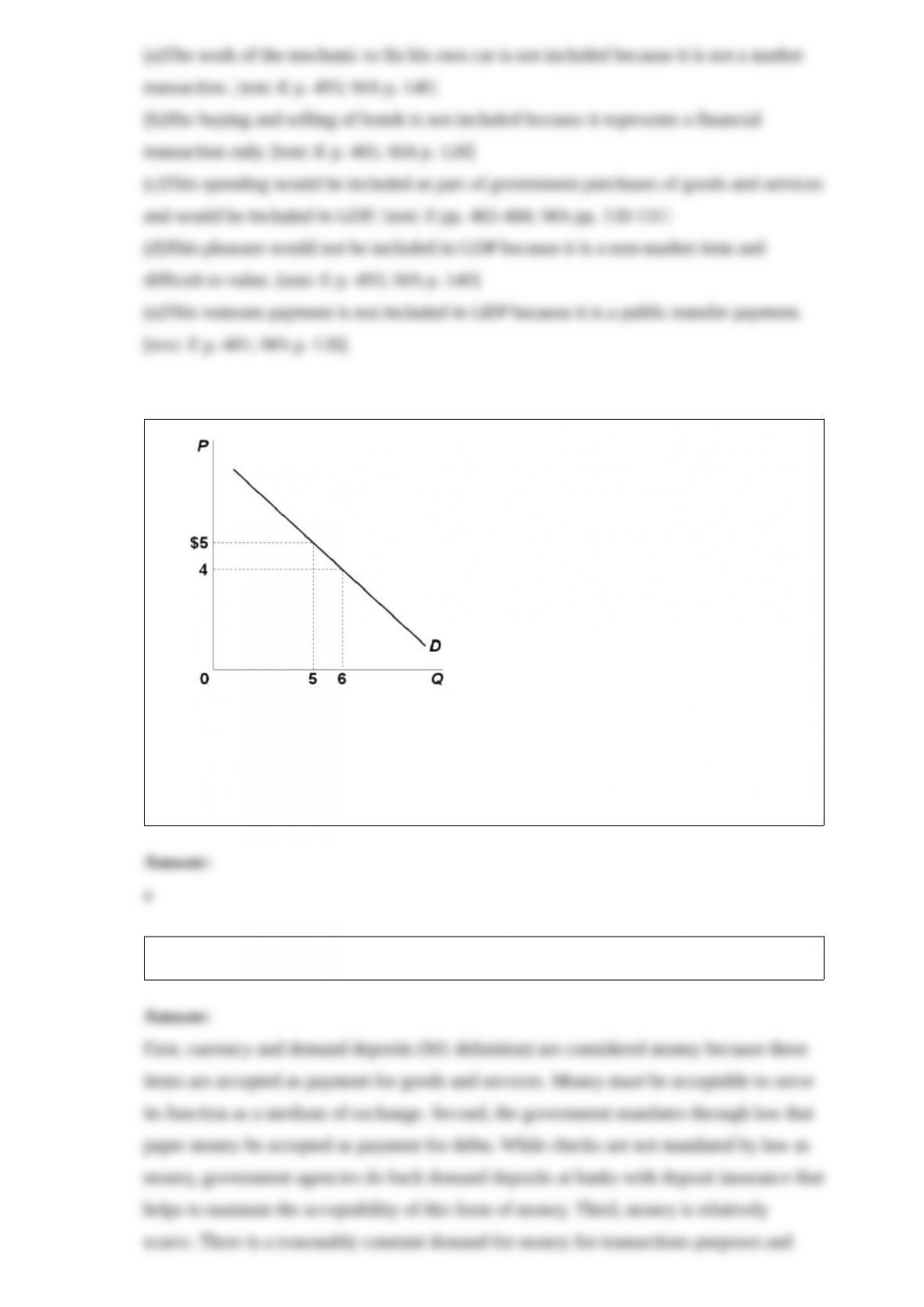
the above diagram indicates that the marginal revenue of the sixth unit of output is:
a.-$1.
b.$1.
c.$4.
d.$24.
12) Discuss three major points about what gives money its value.
13) How does NDP differ from GDP?
14) How do uncertainty and expectations influence economic behavior?
15) Suppose an economys real GDP is $700 billion in year 1 and $718 billion in year 2.
What is the growth rate of its GDP?
16) How can money be destroyed in the same way that checkable deposits expand the
money supply?