
If a tripling of price triples the quantity of a good supplied, the price elasticity of supply
for this good is:
a. 3.
b. 300.
c. 1.
d. 1.
e. 3.
Suppose that, in the long run, the price of feature films rises as the movie production
industry expands. We can conclude that movie production is a(n):
a. increasing-cost industry.
b. constant-cost industry.
c. decreasing-cost industry.
d. marginal-cost industry.
An inverse relationship exists when:
a. there is no association between two variables.
b. one variable increases and there is no change in the other variable.
c. one variable increases and the other variable increases.
d. one variable increases and the other variable decreases.

Which of the following is the best definition of economics?
a. Economics is the study of how to manage corporations to generate the greatest return
on shareholder investment.
b. Economics is the study of how to manage city and country government to generate
the greatest good to its citizens.
c. Economics is the study of how society chooses to allocate its scarce resources.
d. Economics is the study of how to track revenues and costs within a business.
Which of the following best illustrates a perfectly competitive market?
a. Soft drinks. c. Electric power.
b. Automobiles. d. Soybean farmers.
Exhibit 4-2 Supply and demand curves
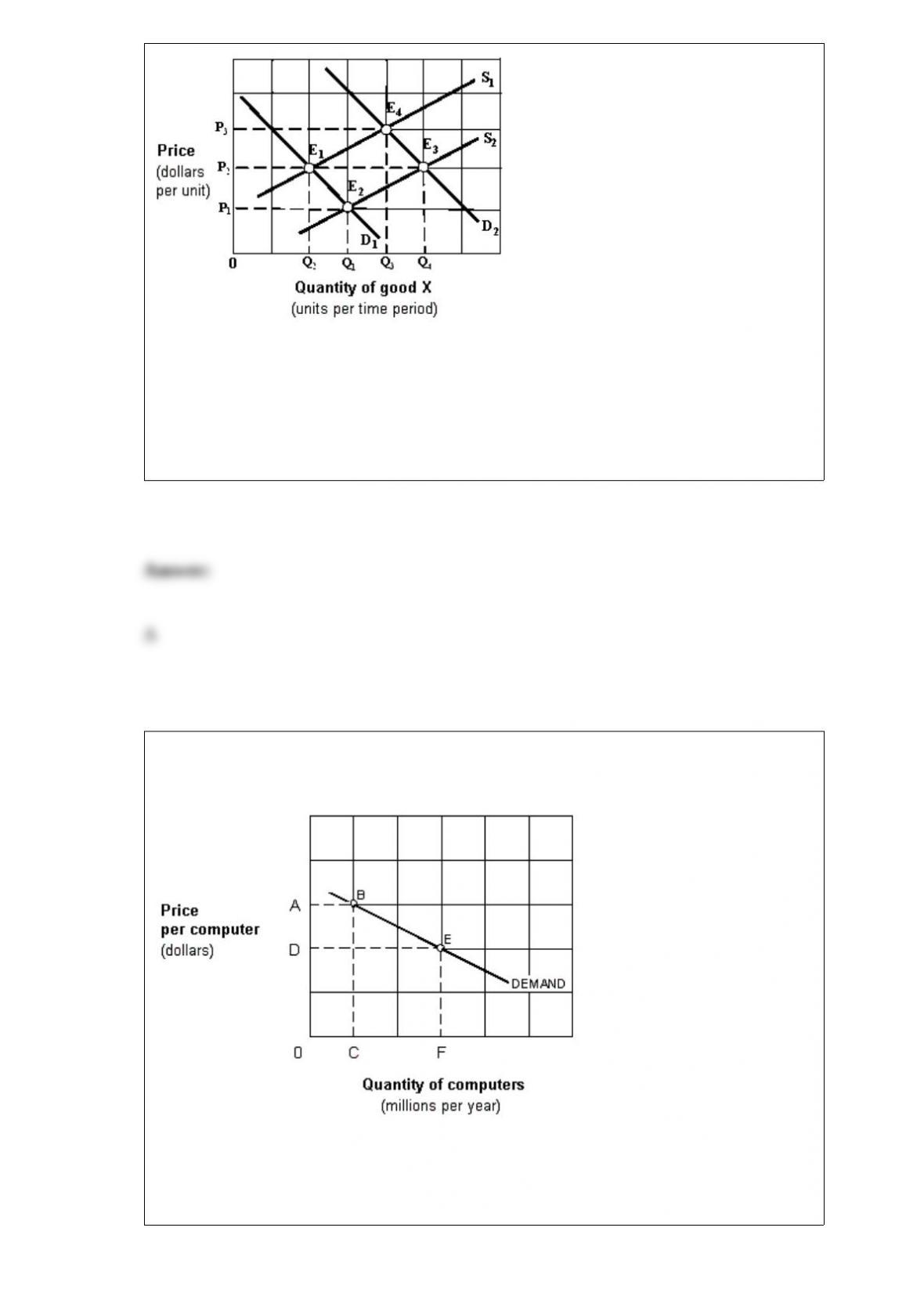
In Exhibit 4-2, which of the following might cause a shift from S1 to S2?
a. A decrease in input prices. c. An increase in input prices.
b. A decrease in consumer prices. d. An increase in consumer income.
Exhibit 5-5 Demand curve for computers
In Exhibit 5-5, the change in total revenue resulting from a change in price from A to D
indicates that the demand curve is:
a. elastic. c. unitary elastic.
b. inelastic. d. nonelastic.

Assume that the equilibrium price for a good is $5. If the market price is $10, a:
a. shortage causes the price to decline toward $5.
b. surplus causes the price to rise above $10.
c. shortage causes the price to rise above $10.
d. surplus causes the price to decline toward $5.
If the price elasticity of demand for football tickets is estimated to be 4.5, then a 10
percent increase in football ticket prices would be expected to cause a:
a. 4.5 percent decrease in quantity demanded.
b. 4.5 percent increase in quantity demanded.
c. 45 percent decrease in quantity demanded.
d. 45 percent increase in quantity demanded.
e. 450 percent increase in quantity demanded
An increase in the demand for a good means that:
a. the demand curve has shifted to the left.

b. the good’s price has fallen and, as a result, consumers are buying more of the good.
c. the good has become scarce.
d. consumers are willing to purchase more of the good at each possible price.
An increase in the price of plastic raises the cost of manufacturing DVDs. As a result,
the market changes to a new equilibrium because of a(n):
a. surplus of DVDs.
b. increase in the demand for DVDs.
c. leftward shift in the demand curve for DVDs.
d. leftward shift in the supply curve for DVDs.
Medicaid and food stamps are:
a. available only to families.
b. counterproductive.
c. forms of in-kind assistance.
d. forms of cash assistance.
e. both c and d.
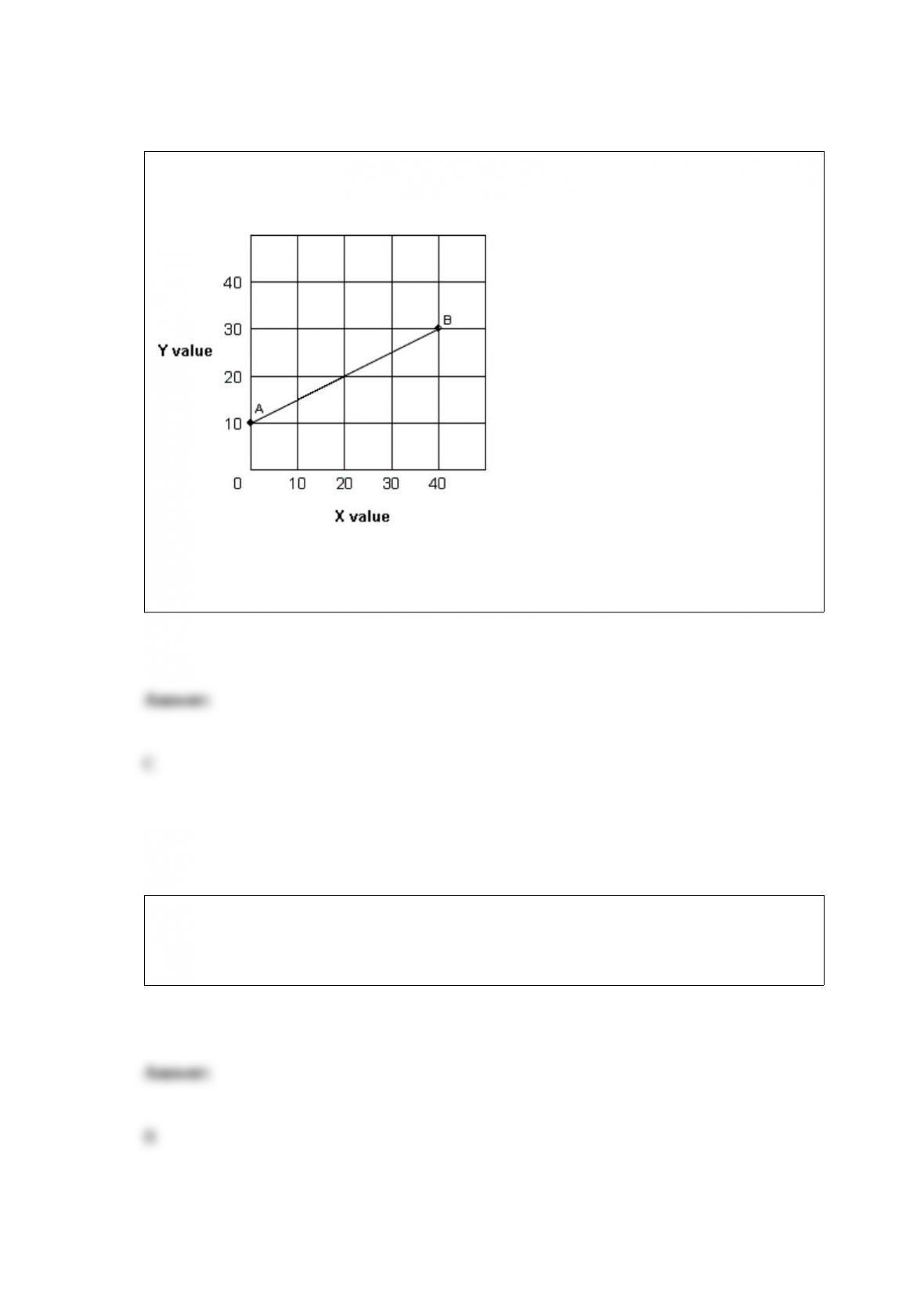
Exhibit 1A-1 Straight line
In Exhibit 1A-1, the slope of straight line AB is:
a. 1. c. 1/2.
b. 5. d. 1.
Flexible, or floating, exchange rate is determined by the:
a. World Bank. c. price of gold.
b. forces of supply and demand. d. Federal Reserve.

Avital and Joshua each have their own business selling lemonade in front of their
houses. When they each charge 25 cents per glass, their total revenues are equal.
However, when they each charge 40 cents per glass, Avital’s revenues are bigger than
Joshua’s revenues. This is because:
a. Joshua faces a more inelastic demand curve.
b. Avital faces a more elastic demand curve.
c. Joshua faces a more elastic demand curve.
d. Avital faces a less inelastic demand curve.
e. there is a market failure.
Which of the following would be most likely to cause the per capita income of
less-developed countries to rise?
a. Development of strong labor unions.
b. More rapid population growth.
c. Investment expenditures that enhance the human capital of labor force participants.
d. An international minimum wage law.
Assuming coffee and tea are substitutes, a rise in the price of coffee will have which of
the following effects on the market for tea?
a. A movement up along the tea demand curve.
b. A movement down along the tea demand curve.
c. A leftward shift in the tea demand curve.
d. A rightward shift in the tea demand curve.

Exhibit 6-3 Marginal utility data for goods X and Y
As shown in Exhibit 6-3, assume that the price of good X is $1 per unit and the price of
good Y is $2 per unit and your budget is $13. If you consume 4 units of good X and 2
units of good Y and maximize utility, you should consume:
a. neither X nor Y.
b. more of X and less of Y.
c. more of Y.
d. more of both X and Y.
e. less of both X and Y.
A large aircraft manufacturer, like Boeing, may have a cost advantage over a new
smaller manufacturer because of:
a. diseconomies of scale.
b. economies of scale.
c. diminishing returns to a fixed factor of production.
d. the principal agent problem is generally less severe for larger firms.

To determine whether two goods are substitutes or complements, an economist would
estimate the:
a. price elasticity of demand. c. cross-elasticity of demand.
b. income elasticity of demand. d. price elasticity of supply.
All of the following are examples of negative externalities except one. Which is the
exception?
a. Water pollution. c. Second-hand smoke.
b. Your roommate going on a diet. d. Loud conversation in the workplace.
On a production possibilities curve, the opportunity cost of good X, in terms of good Y,
is represented by the:
a. distance to the curve from the vertical axis.
b. distance to the curve from the horizontal axis.
c. movement along the curve.

d. all of these.
Suppose that in a perfectly competitive market, firms are making economic profits. In
the long run, we can expect to see:
a. some firms leave.
b. the market price rise.
c. market supply shift to the left.
d. economic profits become zero.
e. production levels remaining the same as in the short-run.
Diseconomies of scale exist over the range of output for which the long-run average
cost curve is:
a. constant.
b. falling.
c. rising.
d. subject to diminishing returns.
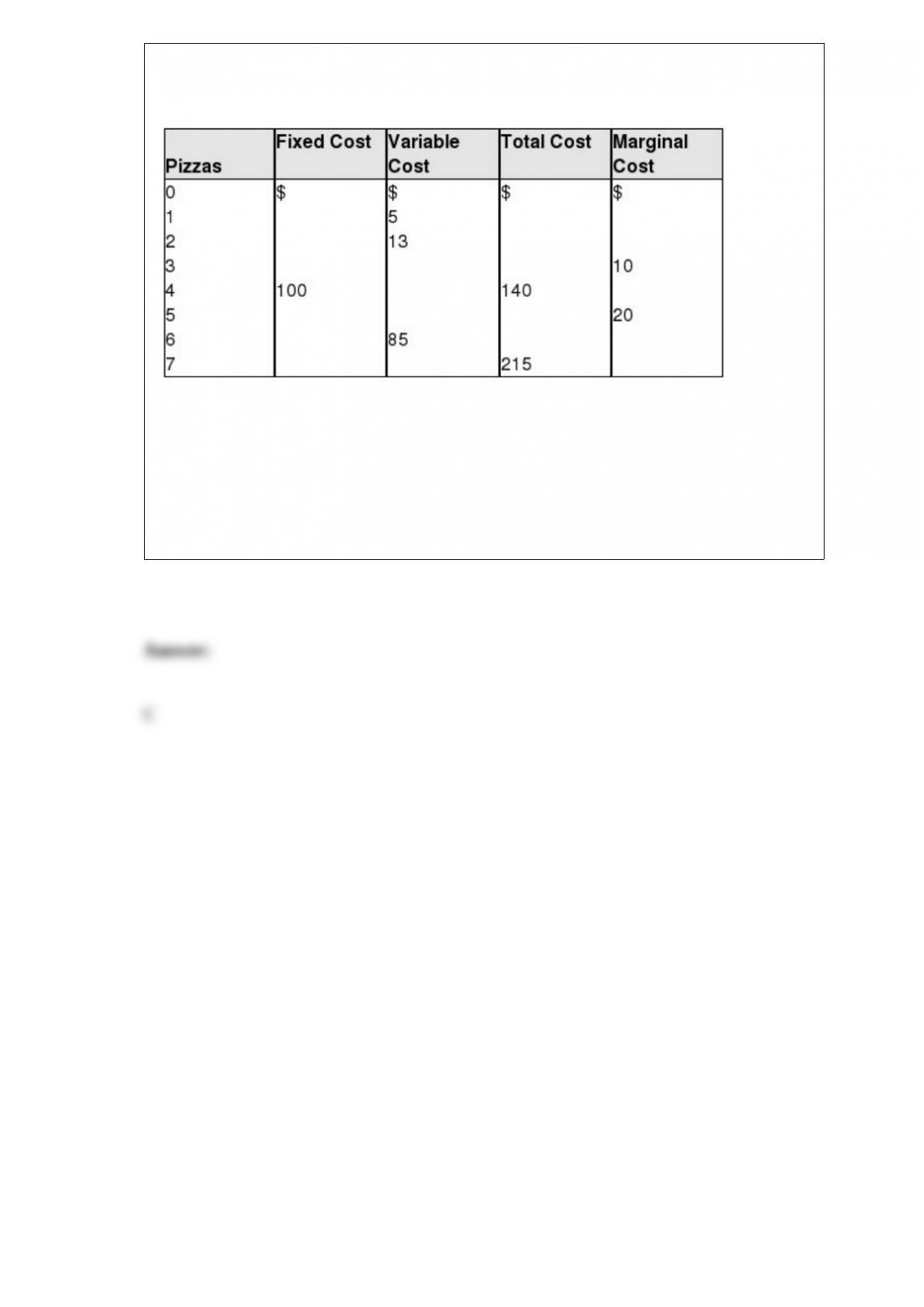
Exhibit 7-8 Costs schedules for producing pizza
By filling in the blanks in Exhibit 7-8, the marginal cost of the fourth pizza is shown to
be equal to:
a. $10.
b. $15.
c. $17.
d. $23.
e. $40.