1) A ‘satisficer” is a person who
a.always chooses the best course of action.
b.often chooses the worst course of action.
c.makes decisions that are merely good enough.
d.studies both economics and psychology.
2) Government intervention is necessary to correct all externalities.
a.True
b.False
3) A monopoly market is characterized by
a.many buyers and sellers.
b.”natural” products.
c.barriers to entry.
d.a Nash equilibrium.
4) When the government redistributes income from the wealthy to the poor,
a.efficiency is improved, but equality is not.
b.equality is improved, but efficiency is not.
c.both efficiency and equality are improved.
d.neither efficiency nor equality are improved.
5) In competitive markets,
a.firms produce identical products.
b.buyers can influence the market price more easily than sellers.
c.markets are more likely to be in equilibrium.
d.sellers are price setters.
6) Which of the following would shift the demand curve for gasoline to the right?
a.a decrease in the price of gasoline
b.an increase in consumer income, assuming gasoline is a normal good
c.an increase in the price of cars, a complement for gasoline
d.a decrease in the expected future price of gasoline
7) Expenditures on human capital
a.reflect an expectation of some future return on the investment.
b.are generally embodied in a specific individual.
c.reflect an investment of resources today to raise productivity in the future.
d.All of the above are correct.
8) Figure 21-25
The figure pertains to a particular consumer. On the axes, X represents the quantity of
good X and Y represents the quantity of good Y.
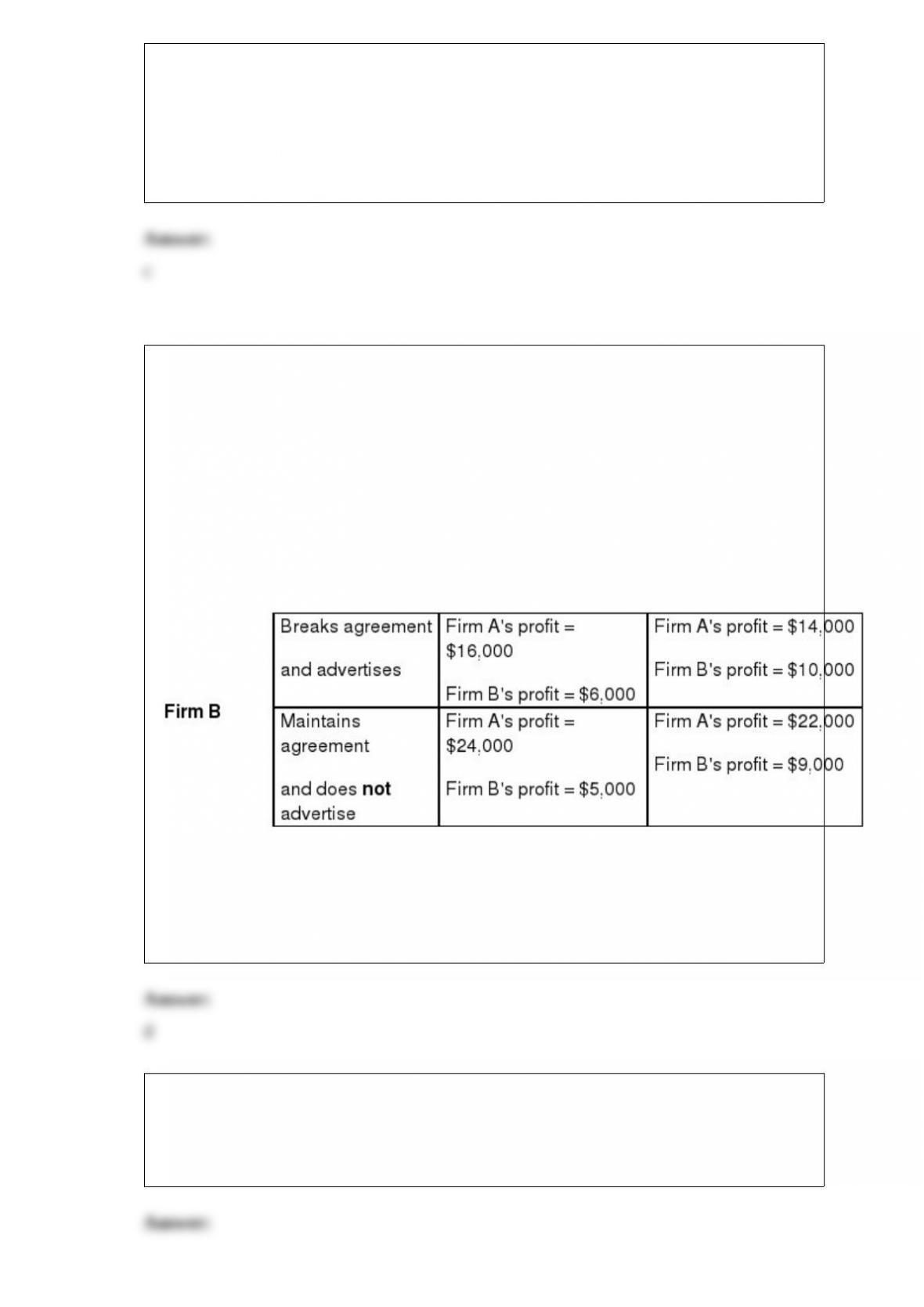
Refer to Figure 21-25. Suppose the price of good X is $15, the price of good Y is $10,
and the consumer’s income is $450. Then the consumer’s optimal choice is to buy
a.6 units of good X and 36 units of good Y.
b.12 units of good X and 27 units of good Y.
c.20 units of good X and 15 units of good Y.
d.26 units of good X and 6 units of good Y.
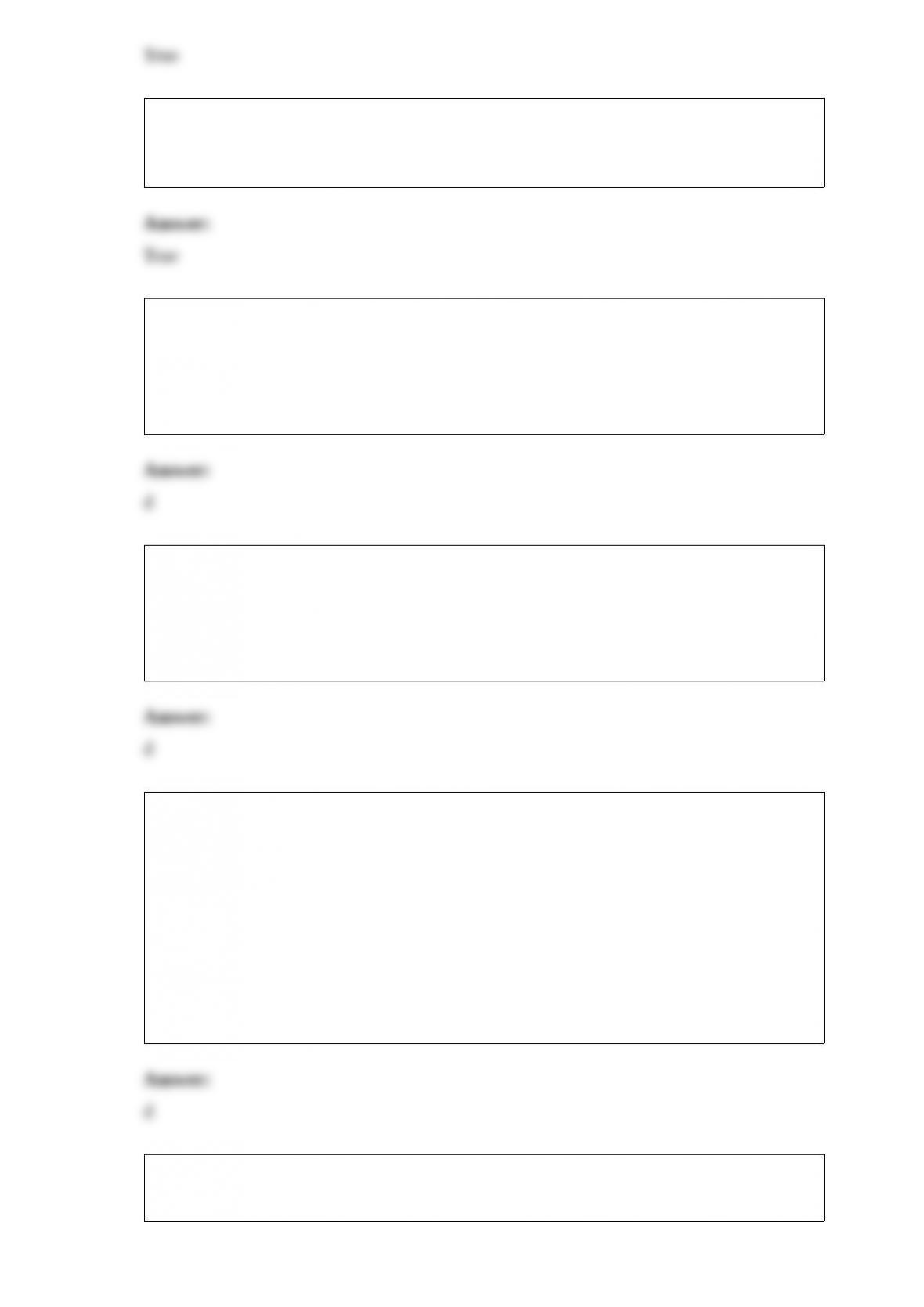
9) Table 17-28
Suppose that two firms determine that each could lower its costs and increase its profits
if both reduced their advertising budgets. But in order for the plan to work, each firm
must agree to refrain from advertising. Each firm believes that advertising works by
increasing the demand for the firm’s product, but each firm also believes that if neither
firm advertises, the cost savings will outweigh the lost sales. The table below lists each
firm’s individual profits:
Firm A
Breaks agreement Maintains agreement
and advertises and does not advertise
Refer to Table 17-28. What is the outcome of this game?
a.Firm A will advertise but Firm B will not.
b.Firm A will not advertise but Firm B will.
c.Neither Firm A nor Firm B will advertise.
d.Both Firm A and Firm B will advertise.
10) Ticket scalping can increase total surplus in the market for tickets to sporting
events.
a.True
b.False
11) A decrease in supply shifts the supply curve to the left.
a.True
b.False
12) One of the 20th century’s worst episodes of inflation occurred in
a.the United States in the 1960s.
b.Italy in the 1950s.
c.Russia in the 1930s.
d.Germany in the 1920s.
13) The fundamental source of monopoly power is
a.many buyers and sellers.
b.low fixed costs.
c.rising average total costs.
d.barriers to entry.
14) Which of the following tools help us evaluate how taxes affect economic
well-being?
(i)consumer surplus
(ii)producer surplus
(iii)tax revenue
(iv)deadweight loss
a.(i) and (ii) only
b.(i), (ii), and (iii) only
c.(iii) and (iv) only
d.(i), (ii), (iii), and (iv)
15) Assume that Maya and Miguel can switch between producing mixers and producing
toasters at a constant rate.
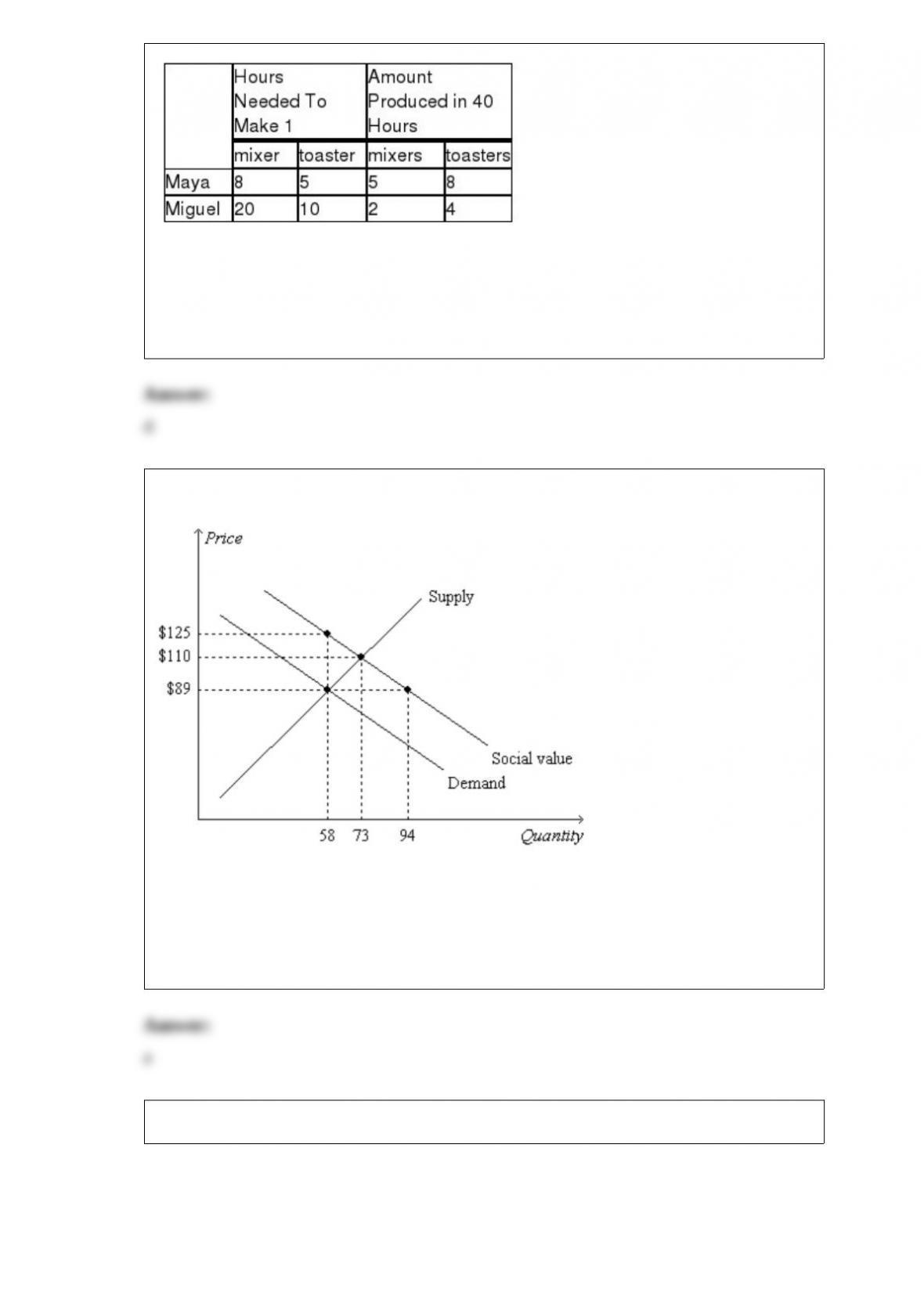
Miguel has an absolute advantage in the production of
a.both goods and a comparative advantage in the production of mixers.
b.both goods and a comparative advantage in the production of toasters.
c.neither good and a comparative advantage in the production of mixers.
d.neither good and a comparative advantage in the production of toasters.
16) Figure 10-19
The social optimum can be reached if
a.a subsidy of $36 is applied to each unit of the good.
b.a subsidy of $23 is applied to each unit of the good.
c.a tax of $23 is applied to each unit of the good.
d.a tax of $15 is applied to each unit of the good.
17) Figure 10-5
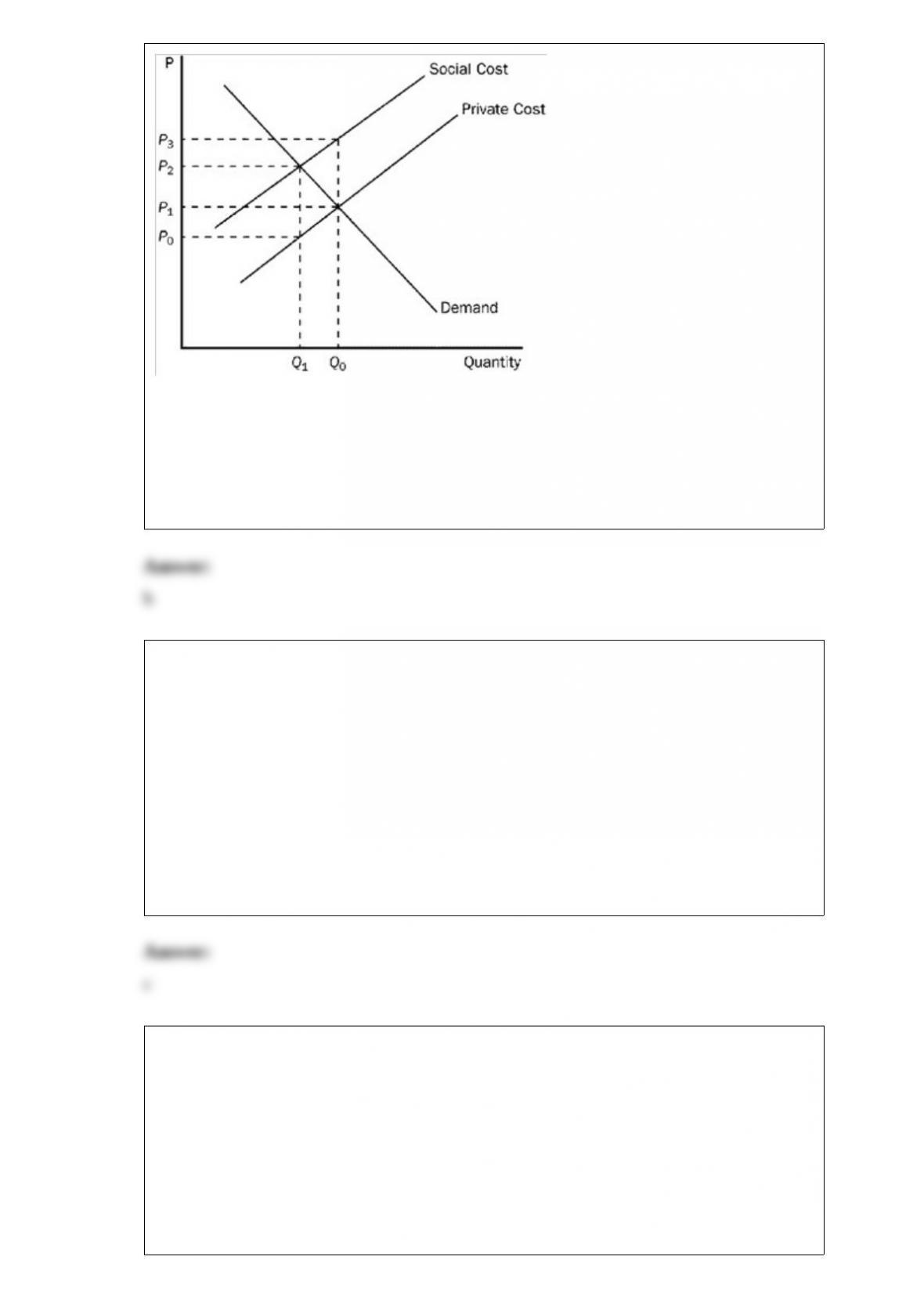
Which price and quantity combination represents the social optimum?
a.P0 and Q1.
b.P2 and Q1.
c.P1 and Q0.
d.P2 and Q0.
18) Scenario 13-7
Julia prepares tax returns and does bookkeeping. Last year her revenues from the tax
and bookkeeping business were $150,000, and her expenses for the business were
$15,000. When she started her tax and bookkeeping business, Julia gave up her
supplemental job doing in-home pet sitting. She used to earn $10,000 per year from pet
sitting. Assume that she incurred no costs for her pet sitting business.
Julia’s explicit costs are
a.0.
b. $10,000.
c. $15,000.
d. $25,000.
19) Scenario 16-2
Suppose market demand for a product is given by the equation P = 20 – Q. For this
market demand curve, marginal revenue is MR = 20 – 2Q.
If the marginal cost of producing this good is 4, how much total consumer surplus
would consumers receive in this market?
a.8
b.12
c.32
d.64
20) Describe the relationship between average variable cost and marginal cost.
21) Suppose demand is given by the equation:
Using the midpoint method, what is the between $7 and $8?
22) d.
23) d.
24) Use Table A to complete Table B.
TABLE A
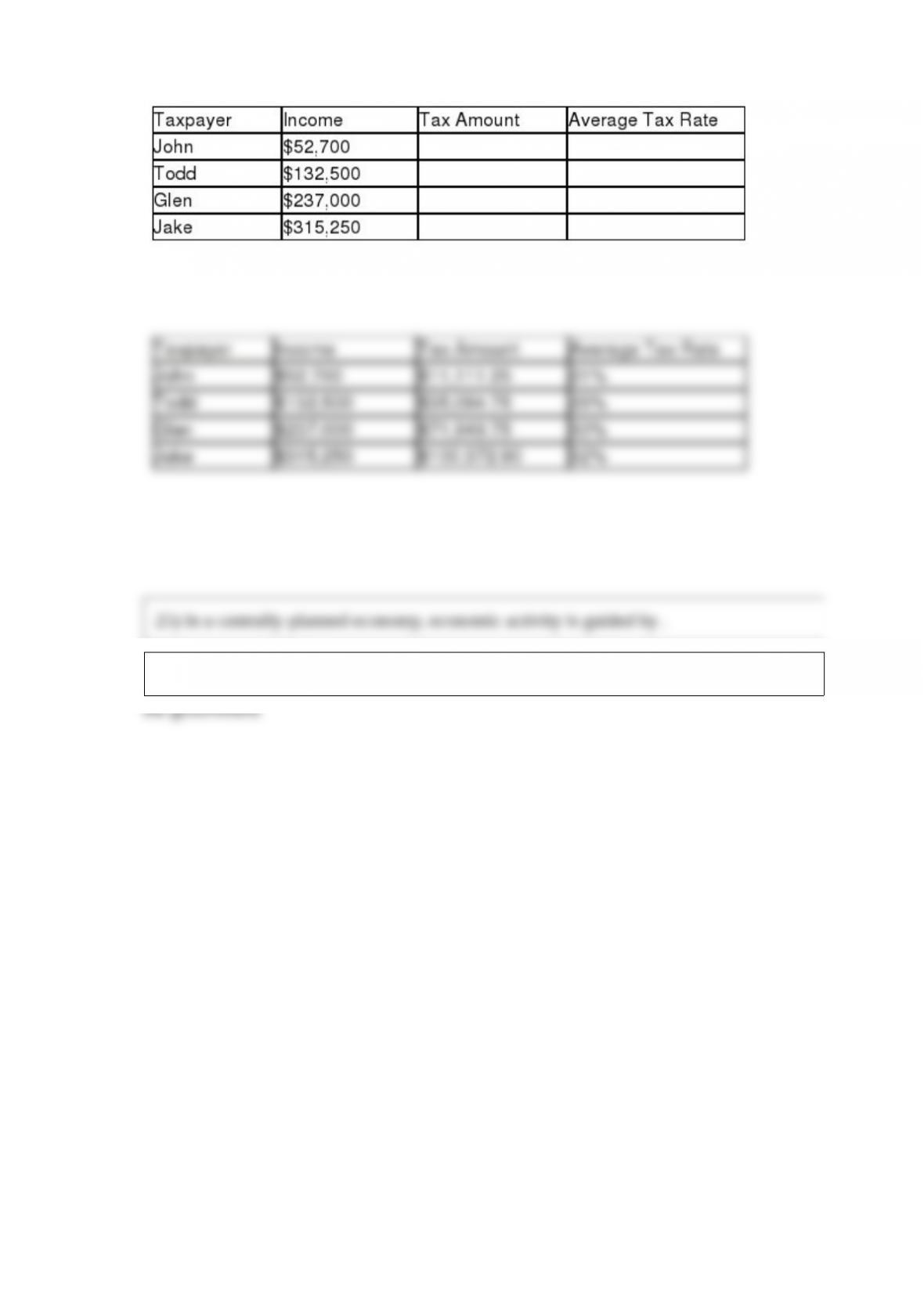
TABLE B
25) In a centrally-planned economy, economic activity is guided by .