1) In a December 2007 New York Times column Paul Krugman argued in favor of
a.protectionism based on the national-security argument.
b.protectionism based on the infant-industry argument.
c.protectionism based on the unfair-competition argument.
d.keeping world markets relatively open.
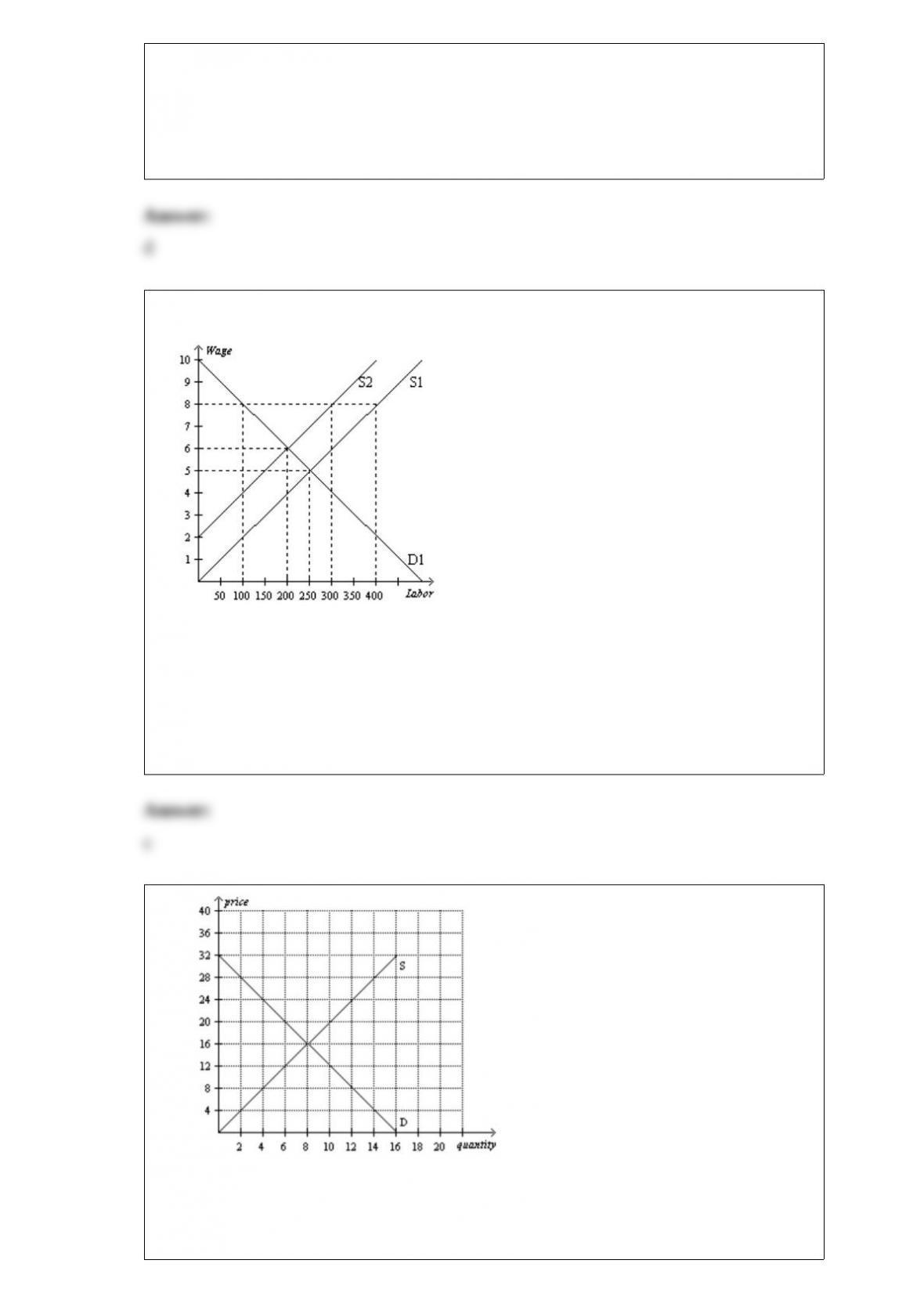
2) Figure 19-5
Refer to Figure 19-5. Given demand for labor, D1, and supply of labor, S1, what is the
surplus of labor if a minimum wage of $8 per hour is imposed on this market?
a.100
b.200
c.300
d.400
3) At a price of $12, there is a
a.surplus of 2 units.
b.surplus of 4 units.
c.shortage of 2 units.
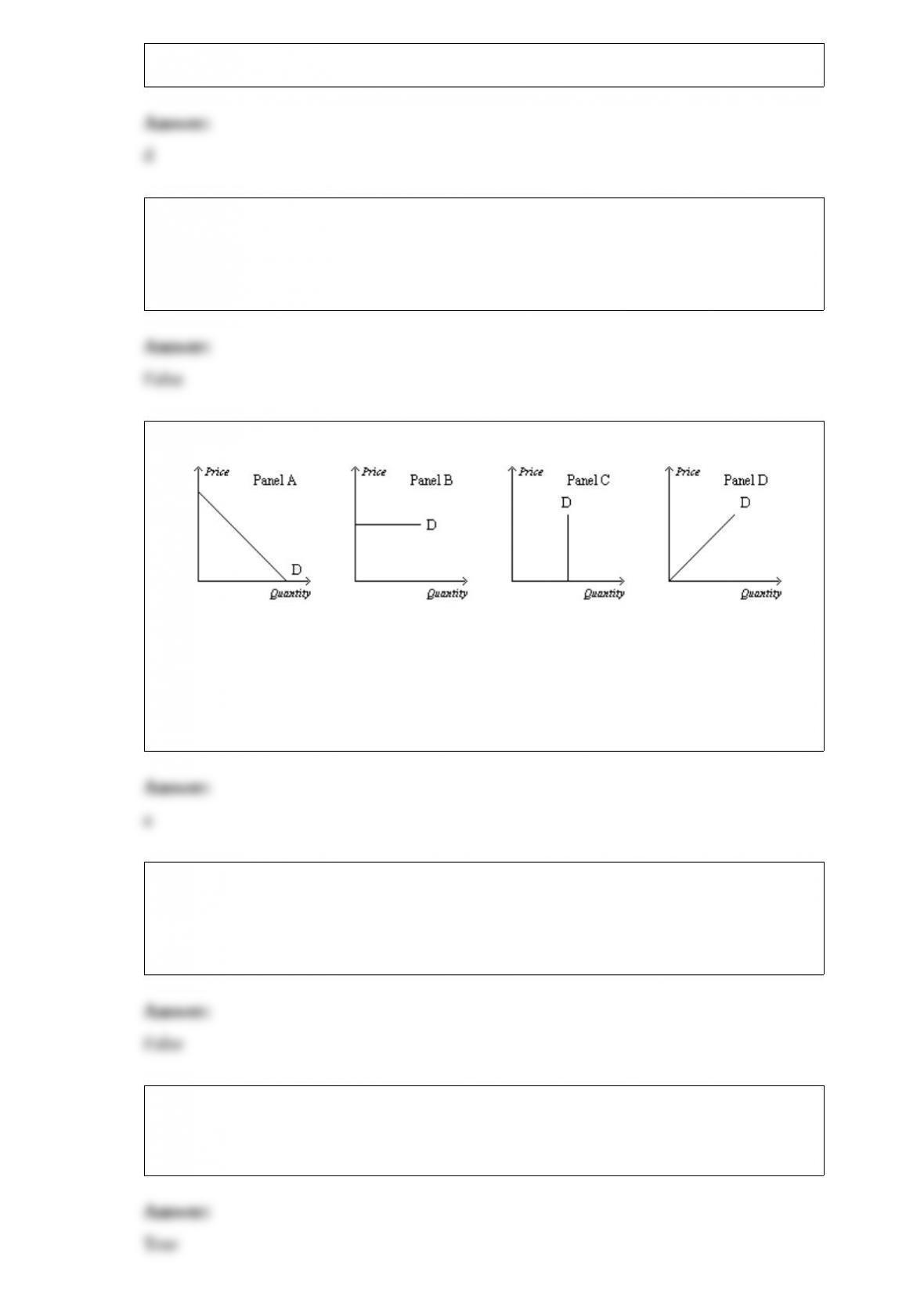
d.shortage of 4 units.
4) Producing a soccer ball costs Jake $5. He sells it to Darby for $35. Darby values the
soccer ball at $50. For this transaction, the total surplus in the market is $40.
a.True
b.False
5) Figure 15-3
Which panel could represent the demand curve facing the soybean industry?
a.Panel A
b.Panel B
c.Panel C
d.Panel D
6) According to the ability-to-pay principle, it is fair for people to pay taxes based on
the amount of government services that they receive.
a.True
b.False
7) A market is a group of buyers and sellers of a particular good or service.
a.True
b.False
8) Other things equal, an increase in supply causes a decrease in price is a normative
statement, not a positive statement.
a.True
b.False
9) Suppose that a decrease in the price of good X results in fewer units of good Y being
demanded. This implies that X and Y are
a.complementary goods.
b.normal goods.
c.inferior goods.
d.substitute goods.
10) Suppose a firm currently produces 325 units of output per day with 15 workers. The
firm is able to produce 340 units of output with a 16th worker. What is the marginal
product of the 16th worker?
a.10 units of output
b.15 units of output
c.16 units of output
d.25 units of output