A natural monopoly is inevitable if the entry of a second firm shifts the demand curve
facing each individual firm entirely below the average cost curve.
When there is imperfect information, a role of government is to disseminate
information and promote informed choice.
As new firms enter an industry, the demand curve facing each existing firm will shift to
the right.
A firm’s short-run supply curve shows the relationship between price and quantity
supplied.

The beer industry is an example of a oligopolistic industry.
Free trade will affect a country’s employment in different industries.
A carbon tax would increase the total volume of greenhouse gases.
Low-price guarantees is a way to insure that other firms will choose a high price.

Patents encourage innovation.
If marginal cost is increasing, average variable cost must also be increasing.
Marketers have no incentive to introduce products that are not designed to sell.
For firms in perfect competition, price is equal to marginal revenue at all levels of
output.
Basically, the marginal principle helps us to evaluate the factors involved in taking an
action or if doing something is worth the effort.
If a country bans the importation of a particular good, the market equilibrium is shown
by the intersection of the foreign demand curve and the domestic supply curve.
A secure monopolist charges a higher price than an insecure monopolist.

Command-and-control policies are undesirable ways of reducing pollution because the
means of abatement they mandate may not be efficient for all firms.
In a perfect competitive market, the firm specific demand curve is horizontal at the
market price.
One example of a microeconomic question is, “Should the inflation rate be lowered?”
In the used car market, the adverse selection problem refers to the fact that a buyer must
choose a used car from an undesirable selection of cars.
If two firms are engaging in price fixing, and one firm lowers its price, the other firm
will always interpret this as underpricing.
If the opportunity cost of 1 wristwatch is 4 wall clocks in Japan and 2 wall clocks in
Germany, it makes sense for Germany to produce wristwatches.
Health insurance companies are often at an advantage because they must pick from a
desirable selection of customers.
If the elasticity of demand for sugar cookies is 2.5, then a 10% change in price will lead
to a 5% change in quantity demanded.
The Department of Justice could use the cross-price elasticity between products sold at
Staples and Office Max to show that the firms are very similar.
A perfectly competitive firm that is maximizing profit produces the quantity of output at
which price equals marginal cost.

An individual demand curve shows the relationship between the price of a product and
the quantity demanded by a rational consumer.
If consumer income and prices all are cut in half, then the consumers’ real income
doubles.
The prisoners’ dilemma is a simultaneous decision-making game.
Most of the working-age people in the U.S. have private health insurance.
The advertisers’ dilemma suggests that firms would be worse off if they did not
advertise, even though advertising only raises total output in an industry by only a small
amount.
On a straight line demand curve, total revenue is maximized where demand is unitary
elastic.
The main purpose of advertising is to inform the consumers about a product’s features.
An increase in the wages received by lawyers in general will result in an increase in the
opportunity cost of law school.
A quantity restriction decreases the price of the product and the quantity produced.
When making a decision, gut feelings trigger activity in the ________, and cognitive
considerations trigger activity in the ________.
A) insular cortex; Nucleus Accumbens
B) amygdala; insular cortex
C) Nucleus Accumbens; dorsal-lateral portion of the prefrontal cortex
D) dorsal-lateral portion of the prefrontal cortex; insular cortex
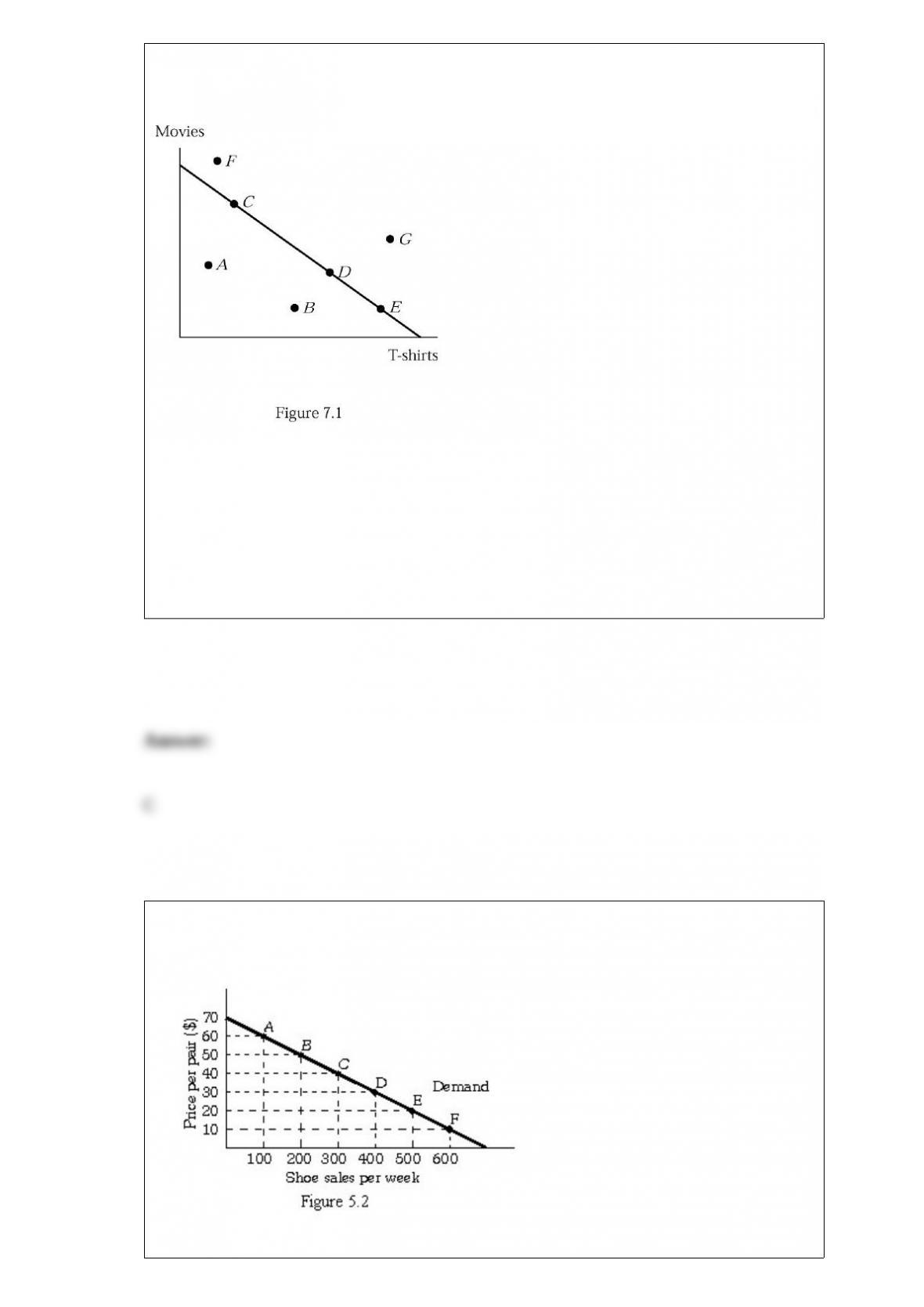
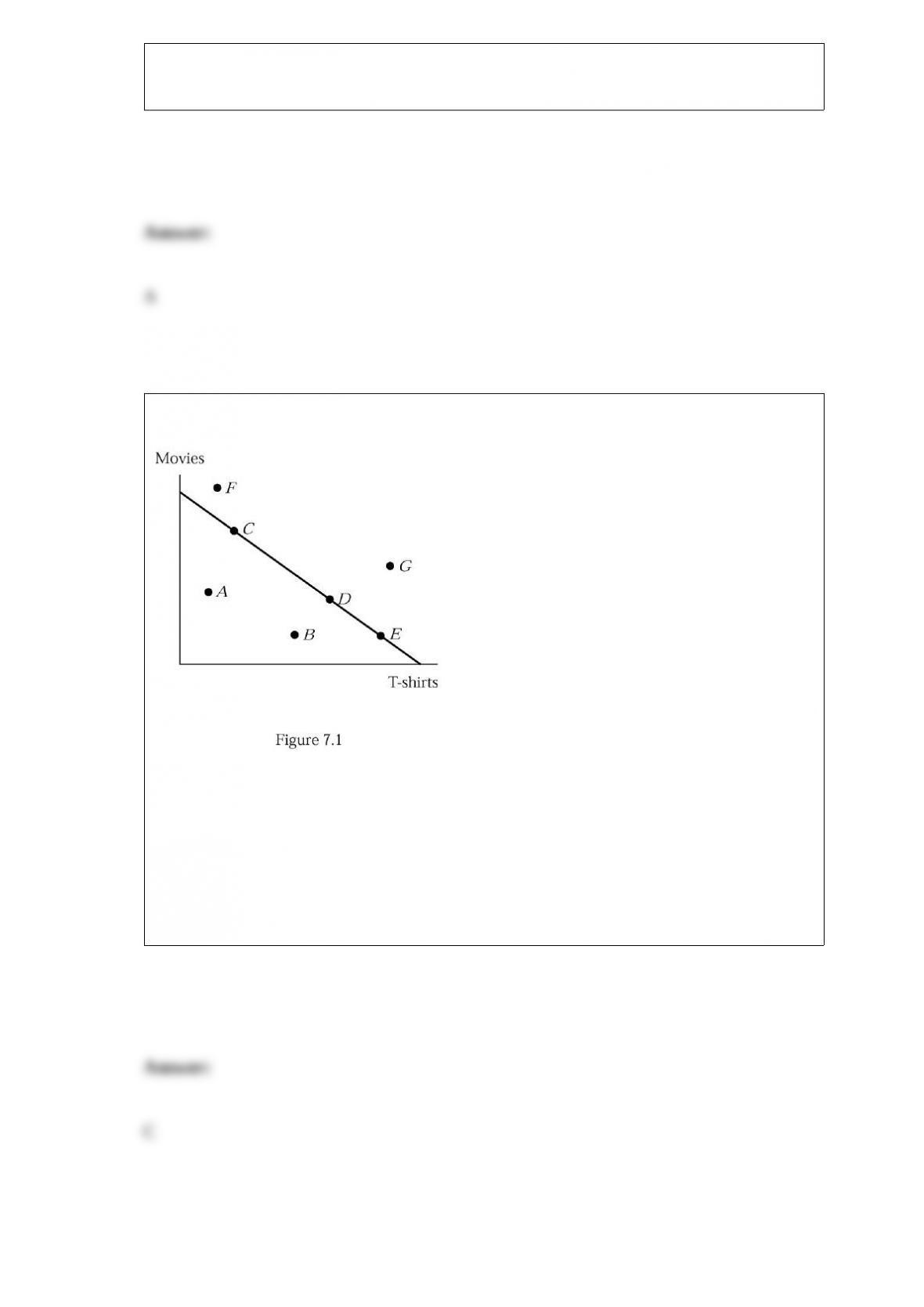
Refer to Figure 7.1. Which of the following includes an unaffordable combination(s) of
movies and T-shirts?
A) A, B and C
B) B, C and D
C) C, D and F
D) A, C and E
Refer to Figure 5.2. Using the initial-value method, the value of the price elasticity of
demand from point A to point B can be described as:

A) elastic.
B) inelastic.
C) unitary.
D) zero.
Why do pharmaceutical firms benefit most from patent protection?
A) because research and development of drugs require large expenditures that need to
be recouped while the patent is still valid
B) because pharmaceutical drugs need to be controlled by the government
C) because pharmaceutical companies pay large taxes to the government
D) because only physicians can legally prescribe pharmaceutical drugs
In the long run, the monopolistically competitive firm in Figure 11.3 would earn $
________ of economic profit.
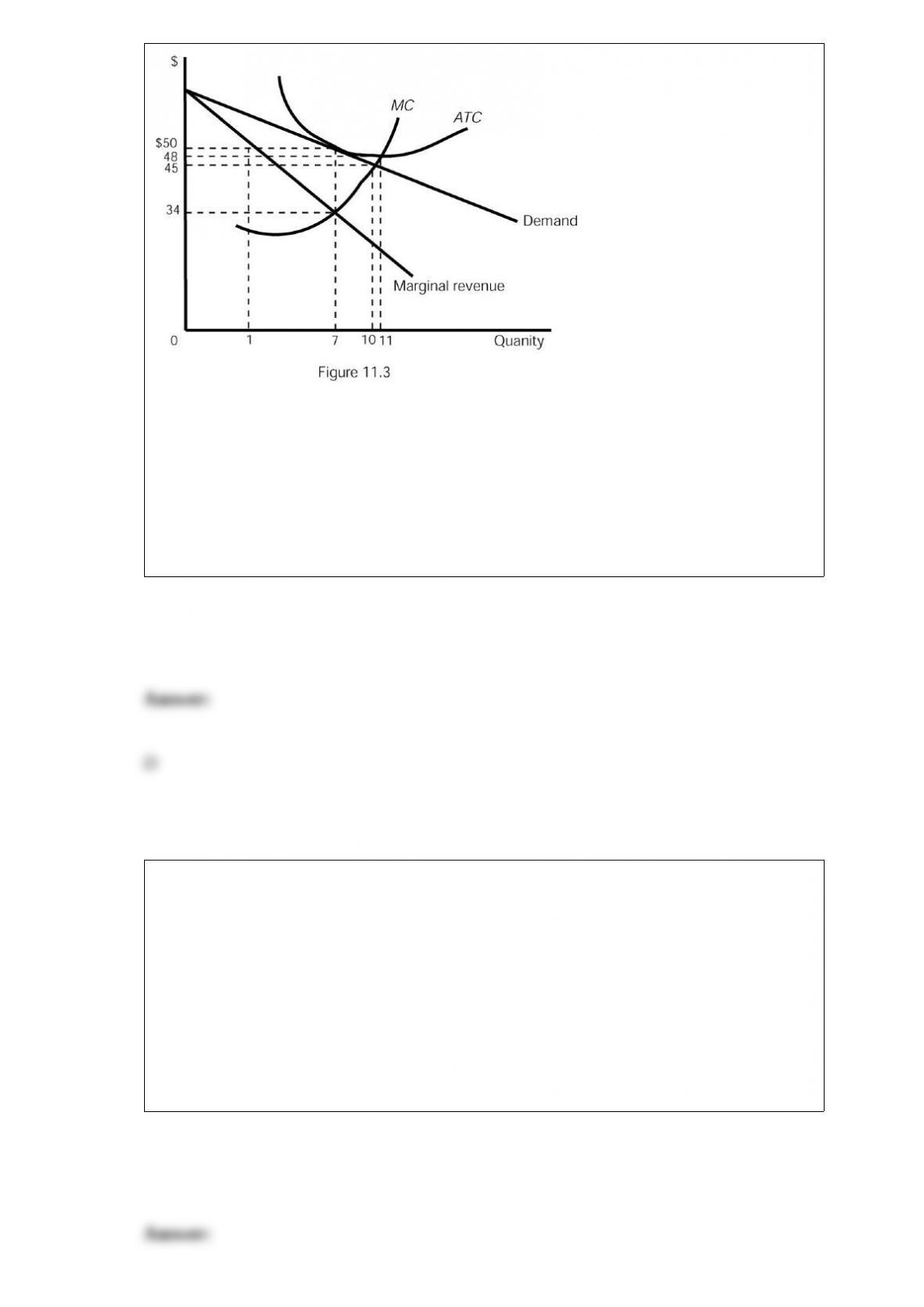
A) 14
B) 30
C) 35
D) 0
If the price of monthly satellite TV service increases from $40 to $50, the percentage
change is:
A) 5 percent.
B) 20 percent.
C) 25 percent.
D) 45 percent.
If marginal product is negative, then:
A) total product will decrease if more of the input is hired.
B) total product is equal to zero.
C) marginal product will increase if more of the input is hired.
D) average product will increase if more of the input is hired.
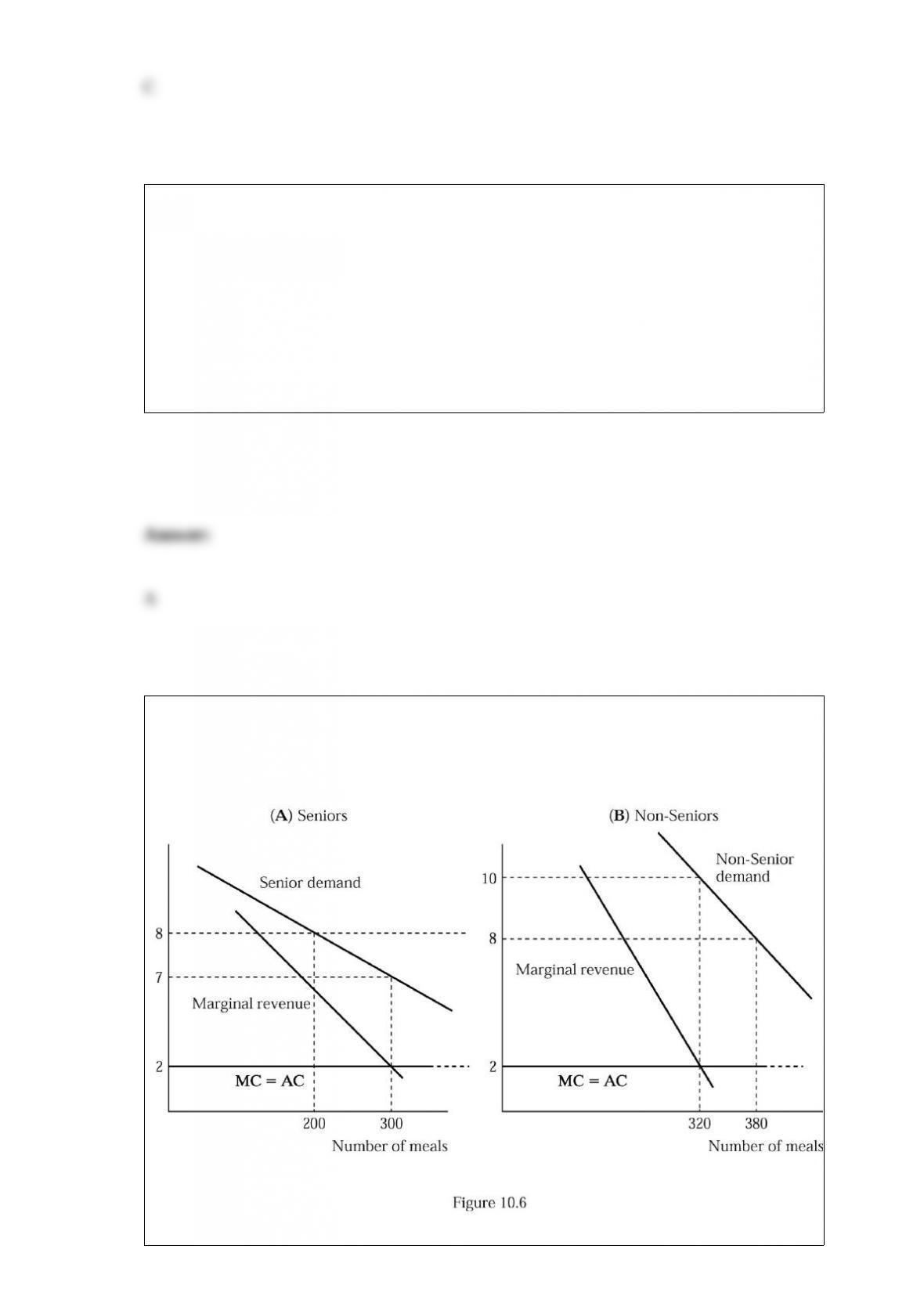
Figure 10.6 shows prices, demands, and cost data for the only restaurant in a small
town. If the restaurant charges the single price of $8 per meal, what is its profit from
senior customers?

A) $1,200
B) $1,500
C) $2,280
D) $2,560
If the government imposes a quantity restriction on how many shoes can be imported
into a country, and the total quantity is below the market equilibrium quantity:
A) total surplus in the market increases.
B) total surplus in the market decreases.
C) total surplus in the market does not change.
D) total surplus may increase or decrease, depending on whether costs are increasing or
decreasing in production.
Which of the following is an example of price discrimination?
A) Firm A sells its output for less than Firm B.
B) Firm C doubles the price of its output given a large increase in market demand.
C) Firm D is the only seller of a product.

D) Firm E gives senior citizens a 10% discount.
Tom’s landscaping service has only one variable input which is labor. Tom’s
landscaping service labor costs are $300 a day and Tom’s landscaping service does 9
yards per day. To do 10 yards per day, Tom’s landscaping service labor costs increase to
$325 a day. The marginal cost of doing that 10th yard is:
A) $25.
B) $32.5.
C) $45.
D) indeterminate from the information given.
Which conditions must hold if a firm is to engage in price discrimination?
A) It must be extremely difficult, if not impossible, for one consumer to resell a product
to another.
B) Firms must have a sufficiently low amount of market power.
C) Consumers must have very similar preferences for the product.
D) all of the above
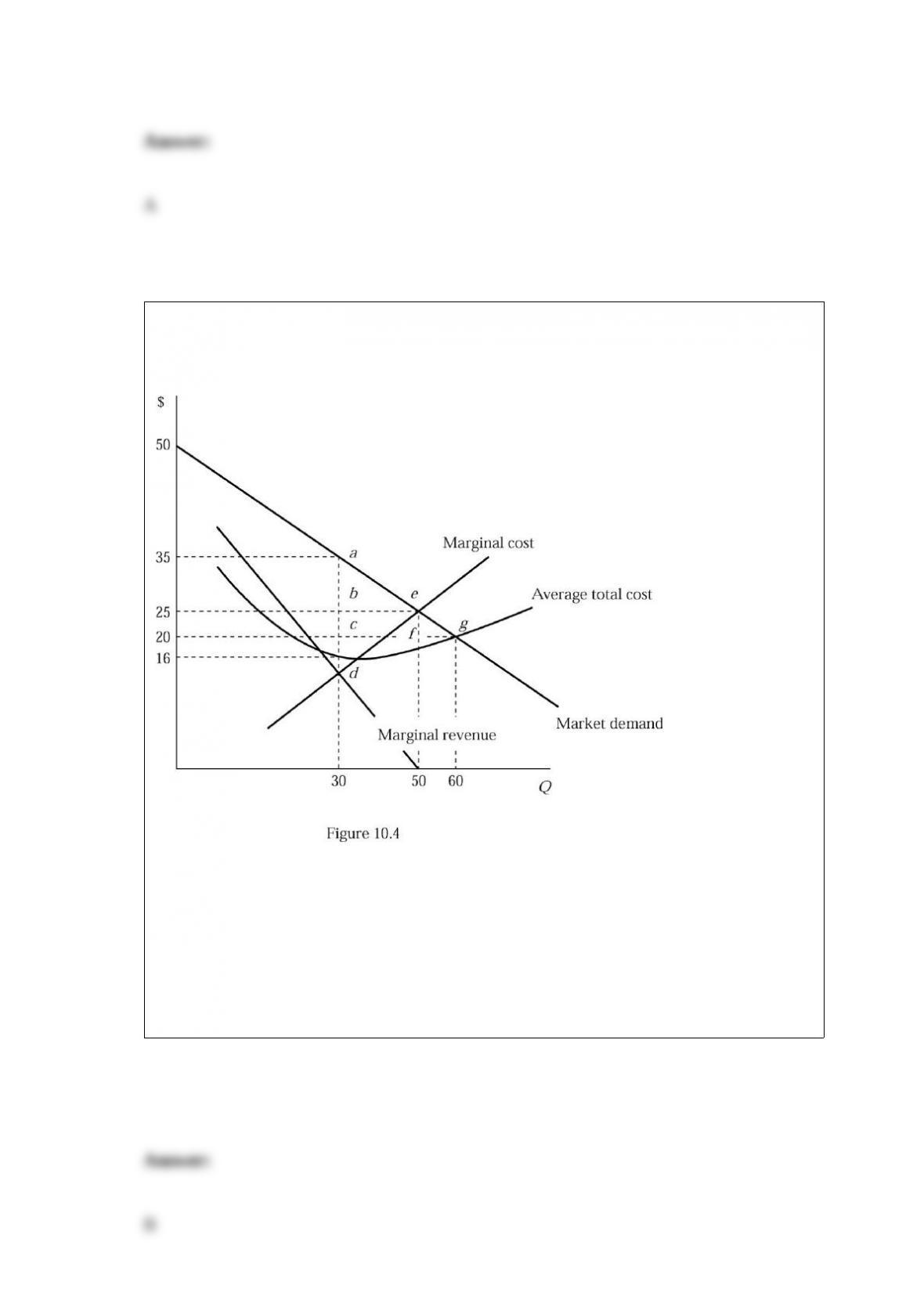
Refer to Figure 10.4. If the market was perfectly competitive, the consumer surplus
would be:
A) $850.
B) $625.
C) $300.
D) $100.

Firms are likely to prefer a pollution tax to a command-and-control policy because the
command-and-control policy will:
A) increase the costs of production more than a pollution tax.
B) result in the price of the good rising more than under a pollution tax.
C) result in consumers buying less of the good than under a pollution tax.
D) all of the above
The Asian Pacific Economic Cooperation (APEC) was modeled after NAFTA.
If a firm is maximizing profit, which of the following is true?
A) The marginal revenue product is equal to the wage rate.
B) The marginal product of labor is equal to the average product of labor.
C) The marginal product of labor is maximized.
D) all of the above
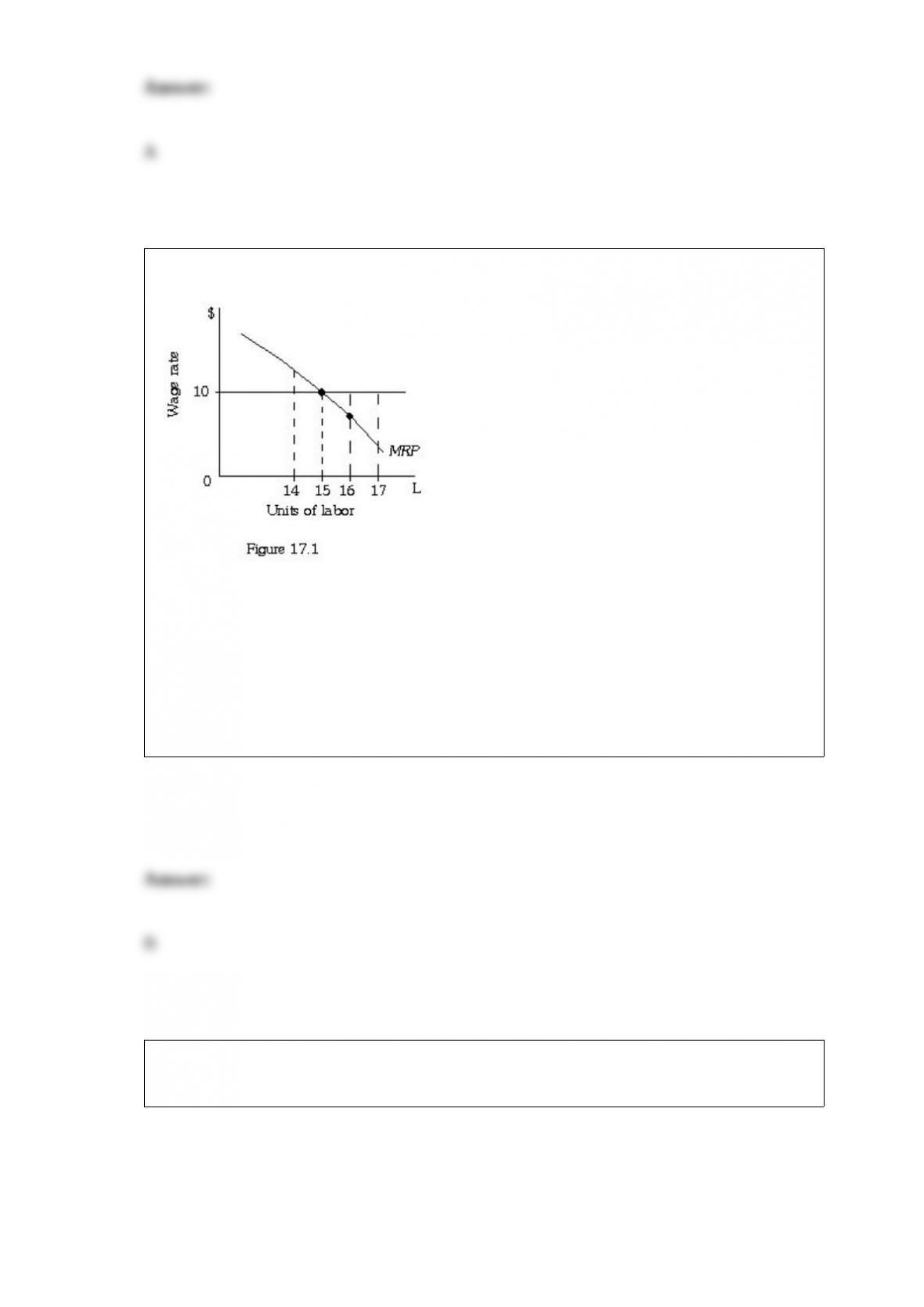
Refer to Figure 17.1. This firm is currently hiring 16 workers. This firm should:
A) do nothing because it is maximizing profits.
B) reduce employment to 15 workers to increase profits.
C) reduce employment to 14 workers to increase profits.
D) increase employment to 17 workers to increase profits.
Krystal runs a nail salon and needs to decide how many hours to stay open. Table 2.2
illustrates her marginal costs of staying open for each additional hour.
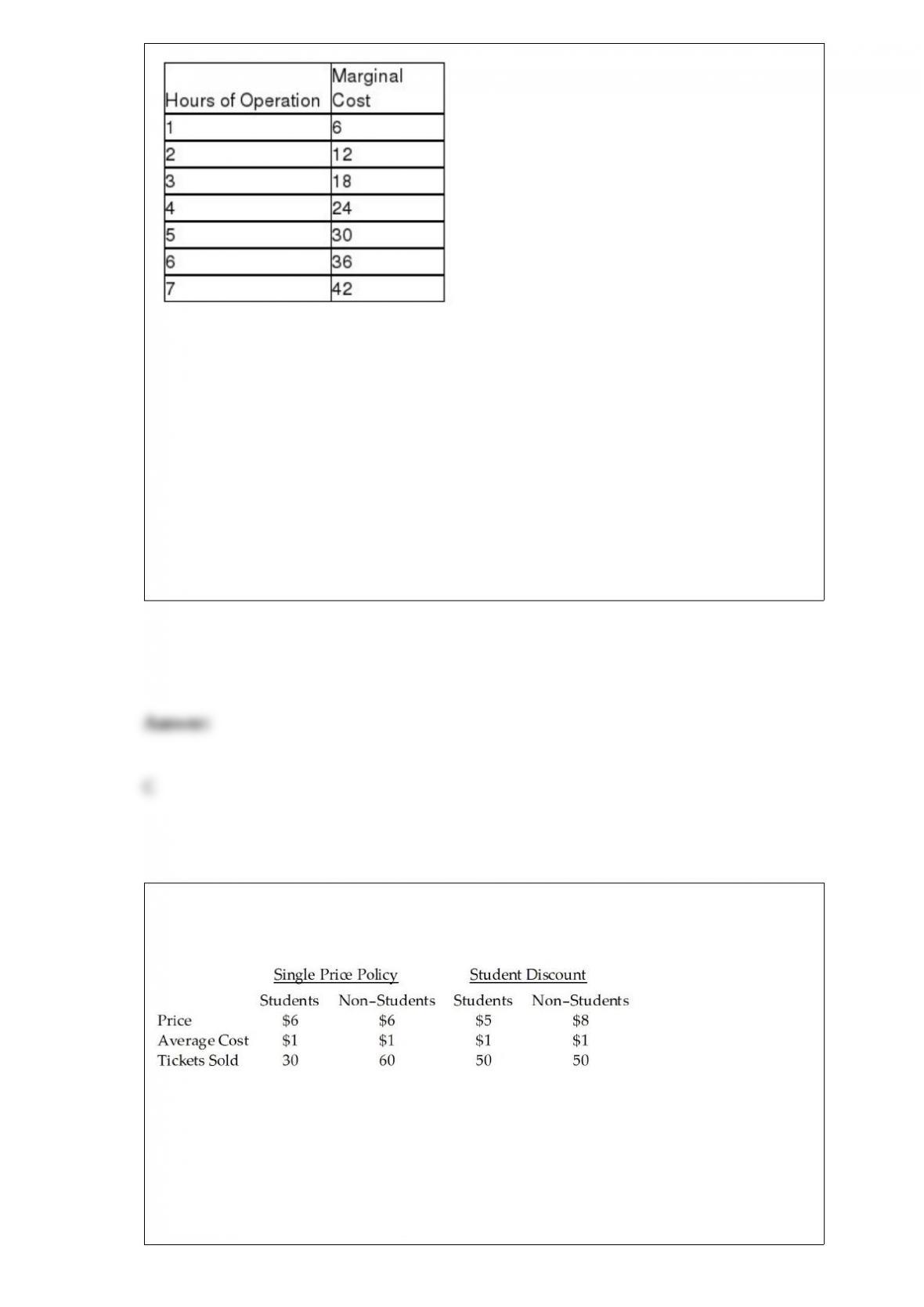
Table 2.2
Suppose that we observe Krystal staying open 4 hours per day. If she is following the
marginal principle, what must her marginal benefit be?
A) $12
B) $18
C) $24
D) $30
Table 10.2 contains price, demand, and cost data for the Capri Theater, the only first-run
movie theater in a small town. What is its profit from students under the student
discount policy?
Table 10.2
A) $200
B) $250
C) $325
D) $375
Refer to Figure 7.1. Which of the following statements is INCORRECT?
A) Bundle A costs less than bundle E.
B) Bundle C costs as much as bundle D.
C) Bundle B costs more than bundle C.
D) Bundle F costs more than bundle C.
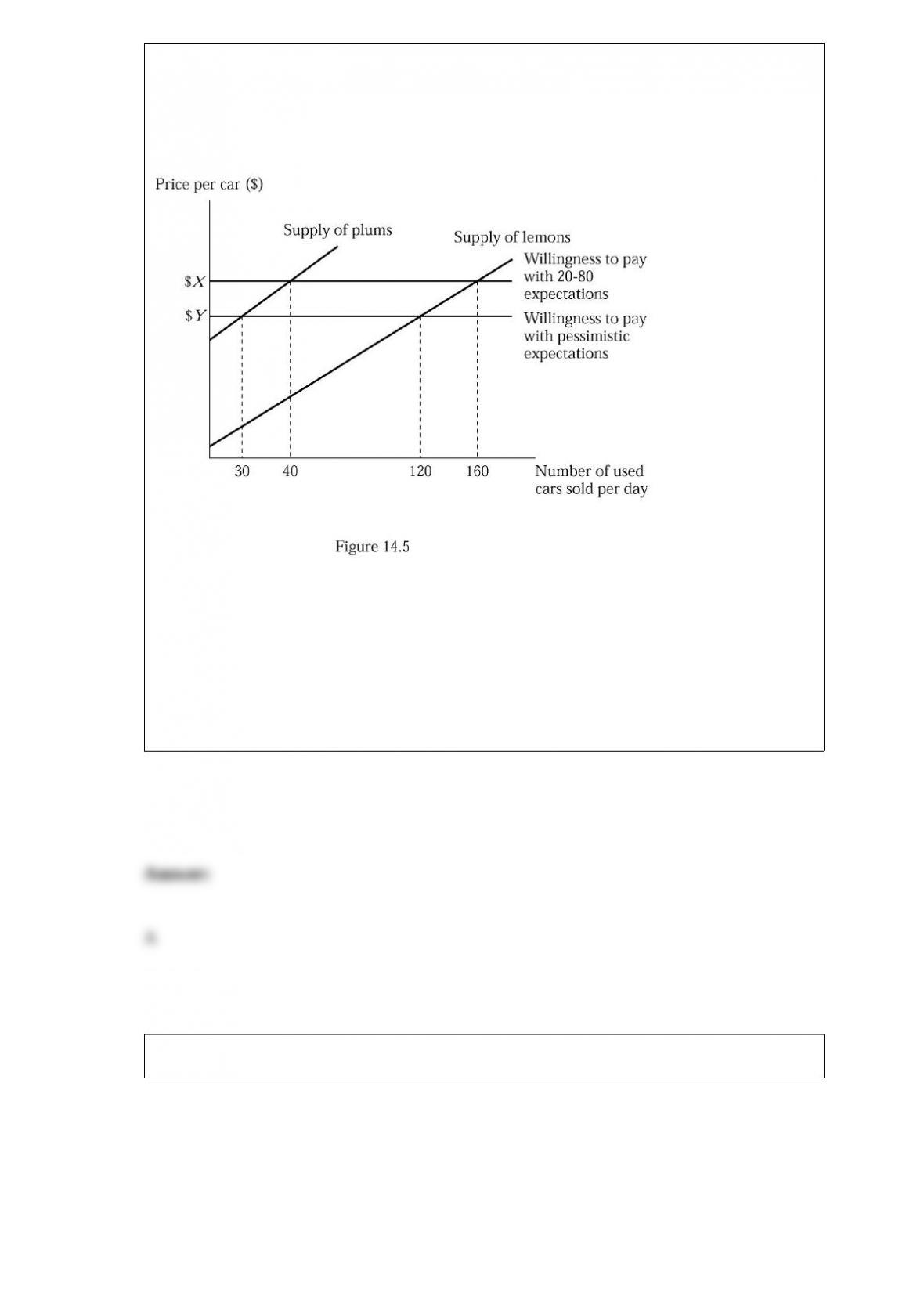
Figure 14.5 represents the market for used cars. Suppose buyers are willing to pay
$5,000 for a plum (high-quality) used car and $3,000 for a lemon (low-quality) used
car. If buyers believe that 80% of used cameras in the market are lemons (low quality),
what percent of used cars sold will actually be plums?
A) 20%
B) 25%
C) 33.33%
D) 75%
The production possibilities curve in Figure 2.1 illustrates the notion of:
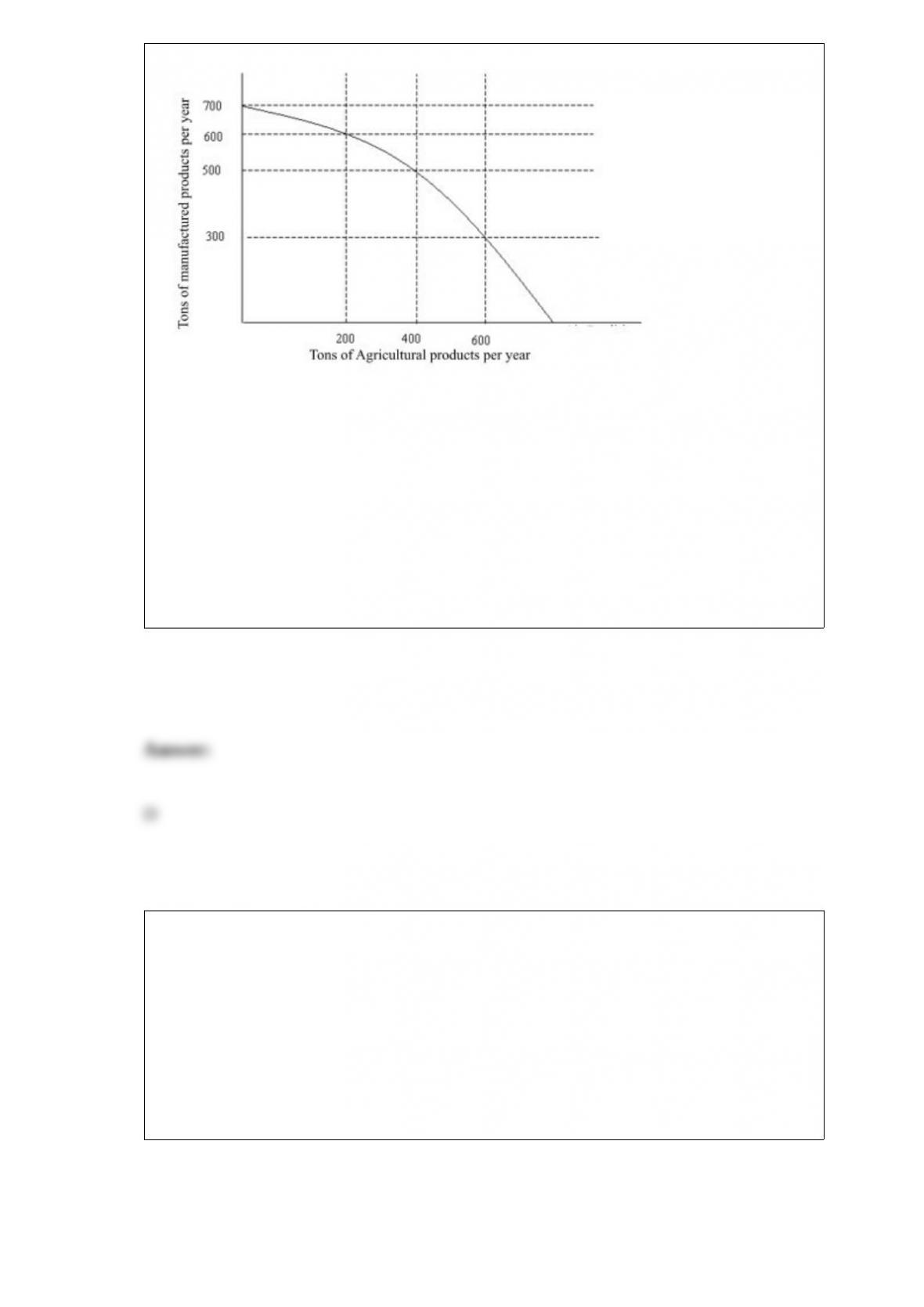
Figure 2.1
A) increased factory goods production.
B) increased farm produce production.
C) diminishing resources.
D) opportunity cost.
When the price of almonds falls:
A) the demand for almonds decreases, ceteris paribus.
B) the demand for almonds increases, ceteris paribus.
C) the quantity of almonds demanded decreases, ceteris paribus.
D) the quantity of almonds demanded increases, ceteris paribus.

The condition for long-run equilibrium in a monopolistically competitive industry is:
A) price equals average total cost.
B) price equals marginal cost.
C) price equals marginal revenue.
D) marginal cost equals average total cost.
The Coase bargaining solution applies to a situation when there is a ________ number
of affected parties, and the transactions costs of bargaining are relatively ________.
A) large; high
B) large; low
C) small; high
D) small; low
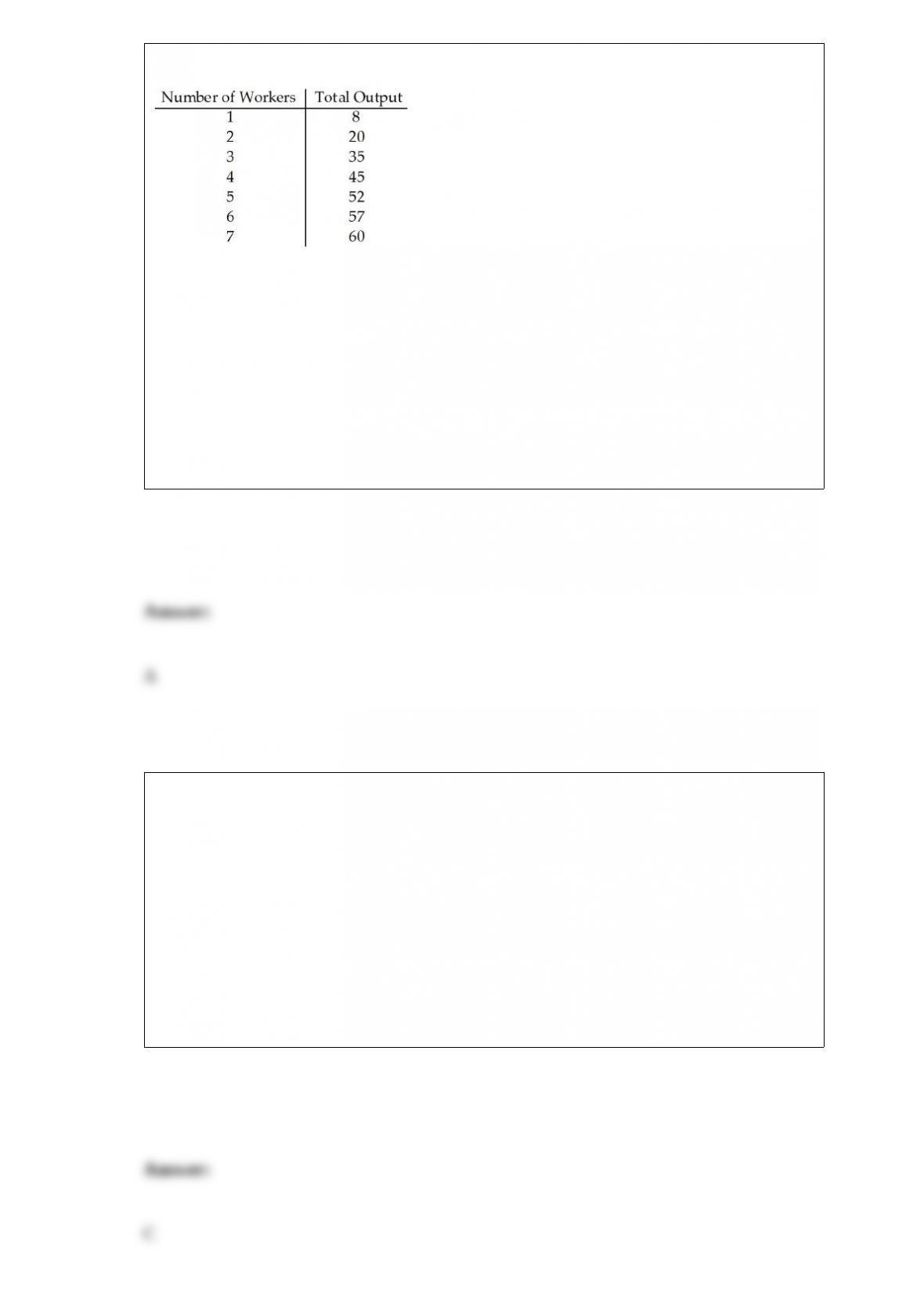
Refer to Table 8.3. If four workers are hired, then:
Table 8.3
A) diminishing marginal returns have started.
B) marginal product equals five.
C) total product is maximized on the table.
D) all of the above
If you have $10,000 to start a lawn-cutting business, the interest rate is 4 percent, your
cost of equipment is $3,000, and the earnings you sacrifice from working at another job
are $32,000, your yearly cost of doing business would be:
A) $13,000.
B) $13,400.
C) $35,400.
D) $45,000.
A perfectly competitive market:
A) is dominated by one firm.
B) consists of at most five firms.
C) is made up of a large number of firms.
D) consists of only one firm.
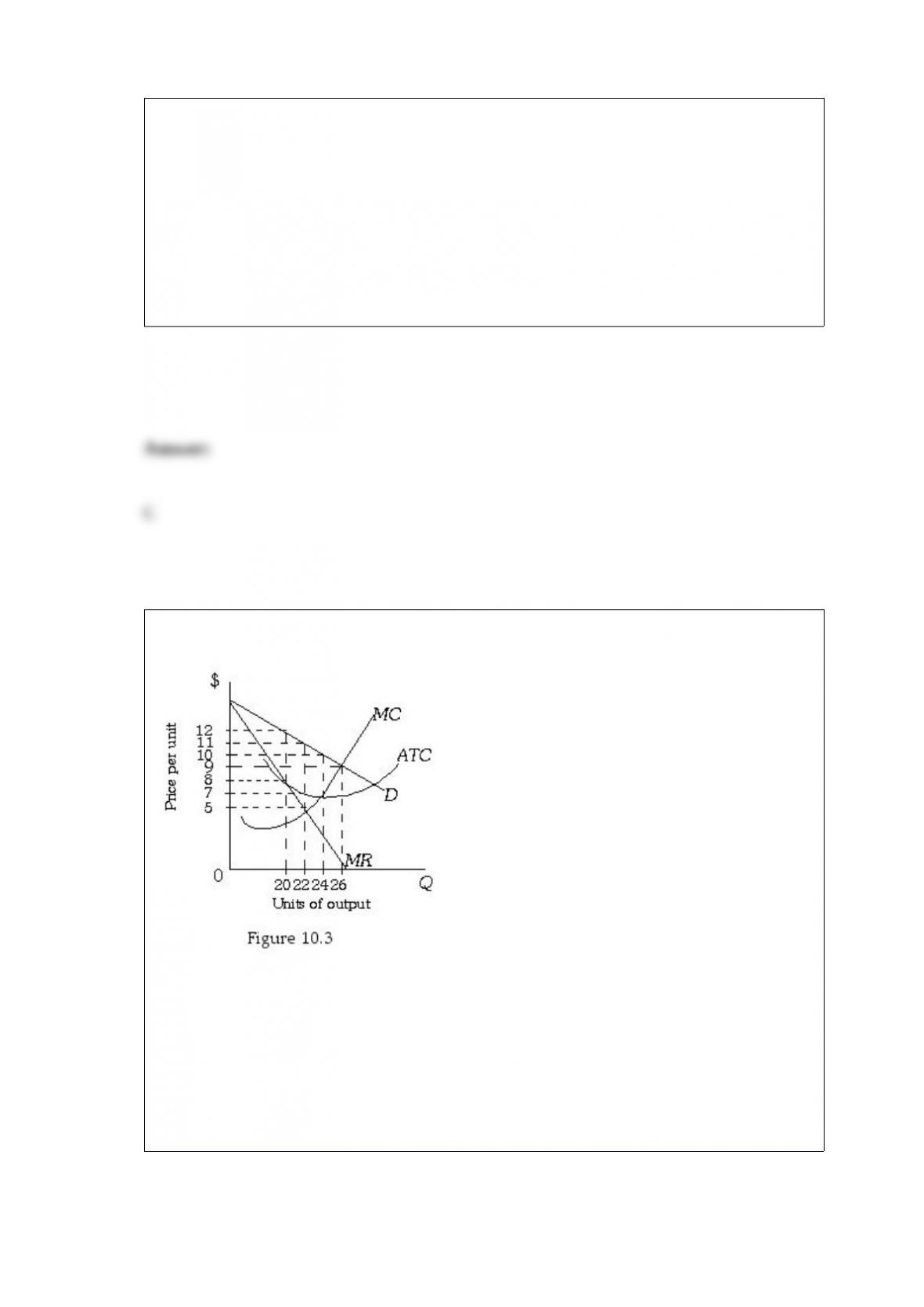
Refer to Figure 10.3. In the long run this monopoly firm’s profit will:
A) fall.
B) rise.
C) remain unchanged.
D) become normal.

Which of the following is the most important reason for growing inequality in the
income distribution in the United States?
A) an increase in demand for highly educated workers
B) inheritances
C) discrimination
D) a steady increase in tuition and fees for a college education
For a competitive firm, marginal revenue is ________ price, whereas for a monopolist
marginal revenue is ________ price.
A) equal to; greater than
B) equal to; less than
C) less than; equal to
D) greater than; equal to
If a tax is placed on the output of perfectly competitive firm that imposes external costs
on society, the firm’s marginal cost curve will shift ________ and the market supply
curve will shift to the ________.
A) down; left
B) down; right
C) up; right
D) up; left
What does a decrease in population do to the demand for a product?
With respect to consumer choice, explain what the following regions of the brain are
responsible for:
1. Nucleus Accumbens
2. Insular cortex
3. Amygdala
4. Prefrontal cortex
Describe the Office Depot/Staples case.
Explain three ways we can use microeconomic analysis.
Describe the Hart-Scott-Rodino Act.
Describe a tit-for-tat strategy.
Suppose that buyers assume that there is a 30% chance of getting a plum, and 8 of 10
cars in the used car market are lemons. Is this an equilibrium?
What is consumer surplus?
Explain three different types of barriers to entry in monopoly.
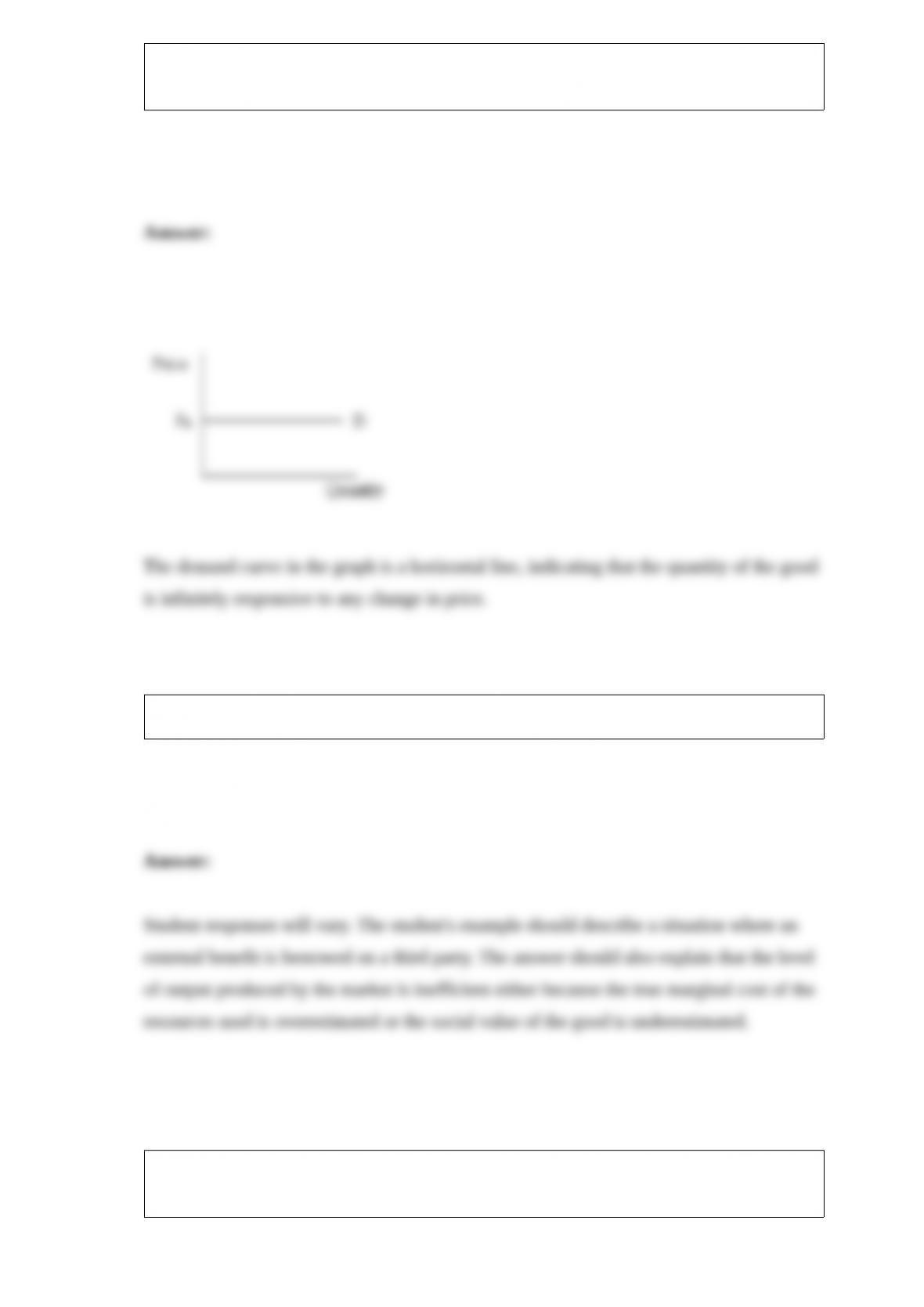
Draw the demand curve for a good whose price elasticity of demand is equal to infinity.
Be sure to label both axes.
Give an example of an external benefit and explain why the outcome is inefficient.
The additional cost resulting from a one unit increase in the production of a good is
known as the ________.
Consider a firm that is trying to determine how many hours to remain open in a day.
How would the firm make this decision?
What are the main features of the Clayton Act?
Andrew is willing to pay $50,000 for a college education, yet the tuition cost at the
college to which he was accepted is $75,000. Under what condition would it be efficient
for the government to pay for the last $25,000 of Andrew’s education?
What does the cross elasticity of demand measure? How is it calculated?
Explain the two predictions made by the lemons model.
Use the marginal principle to explain why government mandated safety features in
automobiles during the 1960s and 1970s resulted in an increase in collisions between
automobiles and bicycles.
What is adverse selection?
Why is it important that a firm can prevent resale of its product if it wishes to engage in
price discrimination?