Because the height of the demand curve measures the marginal value of the good to
consumers, the fact that a demand curve slopes downward to the right illustrates that
a. as more of a product is consumed, consumers will value additional units less.
b. as more of a product is consumed, consumers will value additional units more.
c. the value of additional units of the good is unrelated to the amount consumed.
d. the cost of production for a good generally rises as more of it is produced.
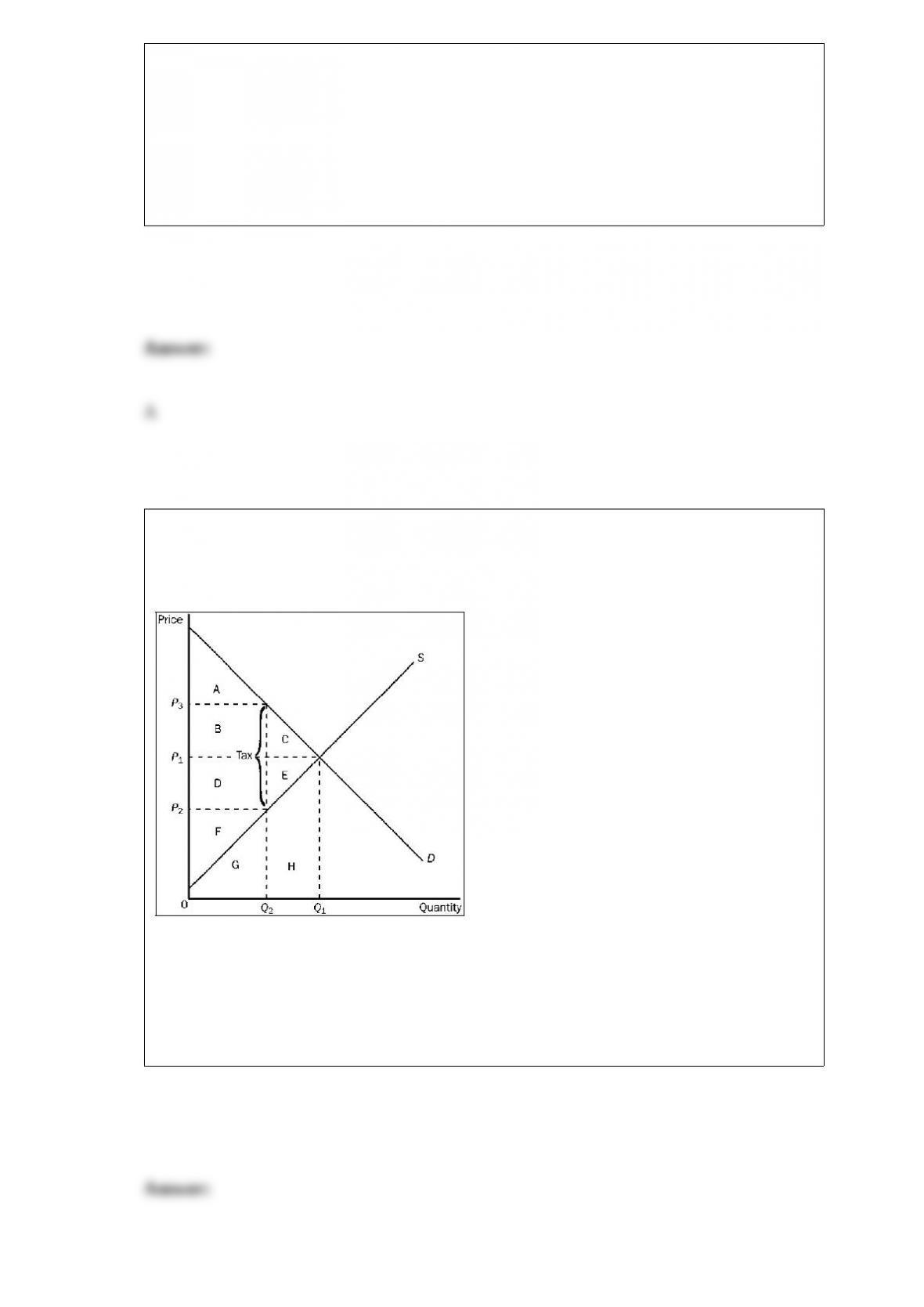
Figure 4-25
Refer to Figure 4-25. The price that buyers pay after the tax is imposed is
a. P1.
b. P2.
c. P3.
d. impossible to determine from the figure.
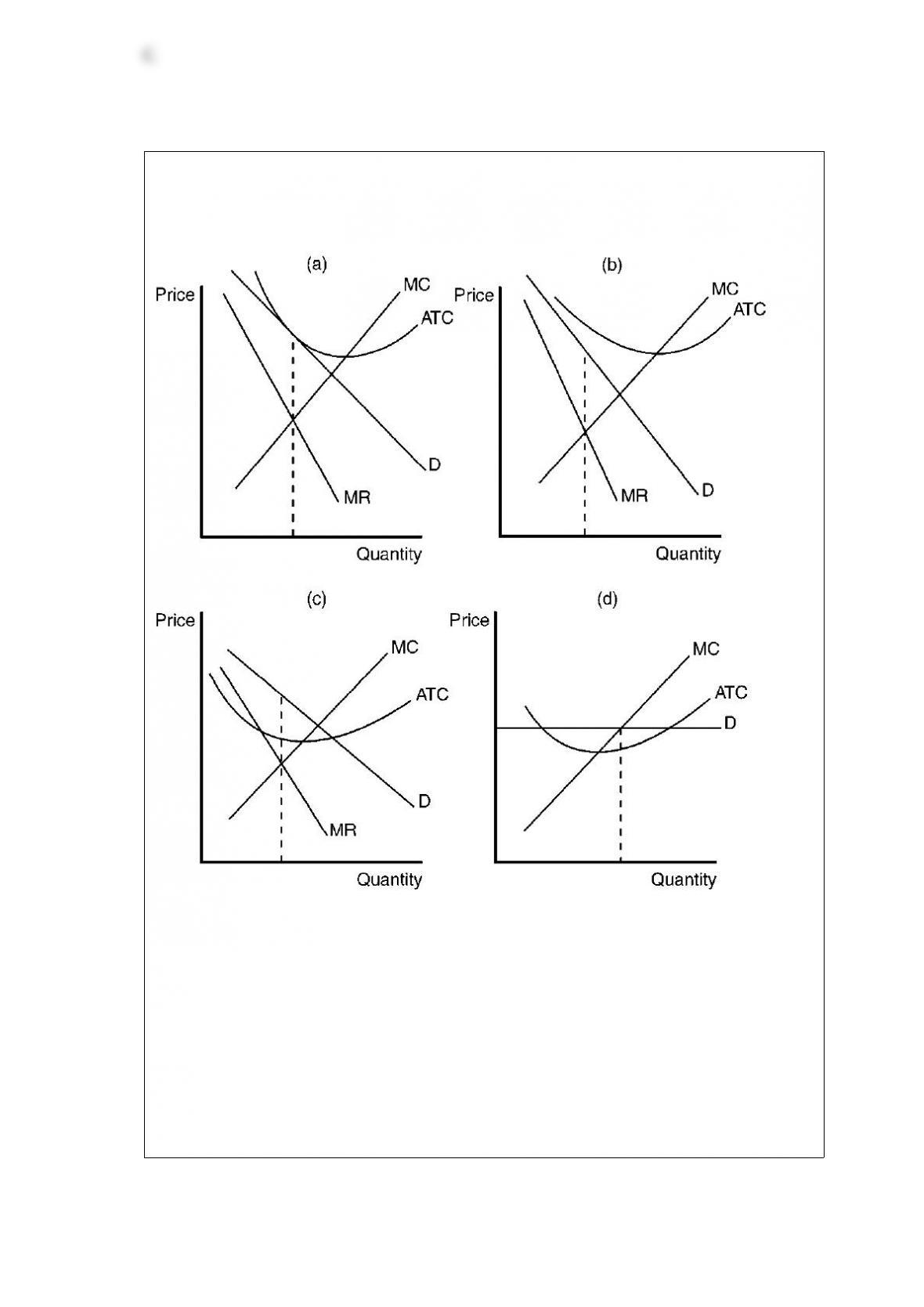
Figure 10-12
Refer to Figure 10-12. Panel (a) shows a profit-maximizing competitive price-searcher
firm that is
a. earning zero economic profit.
b. likely to exit the market in the long run.
c. producing its efficient scale of output.
d. not maximizing its profit.
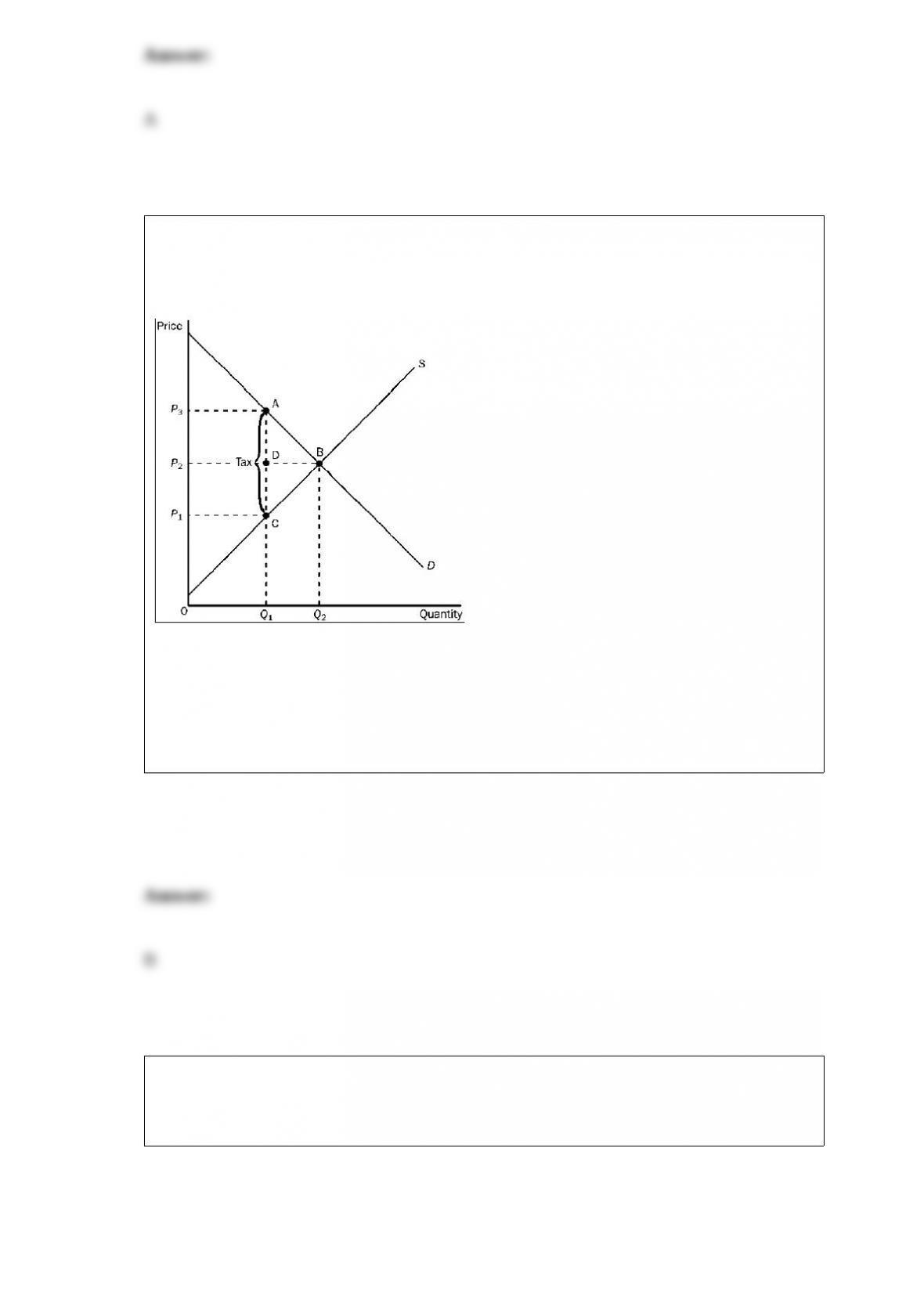
Figure 4-24
Refer to Figure 4-24. The equilibrium price before the tax is imposed is
a. P1.
b. P2.
c. P3.
d. None of the above is correct.
Use the figure below to answer the following question(s).
Figure 4-7
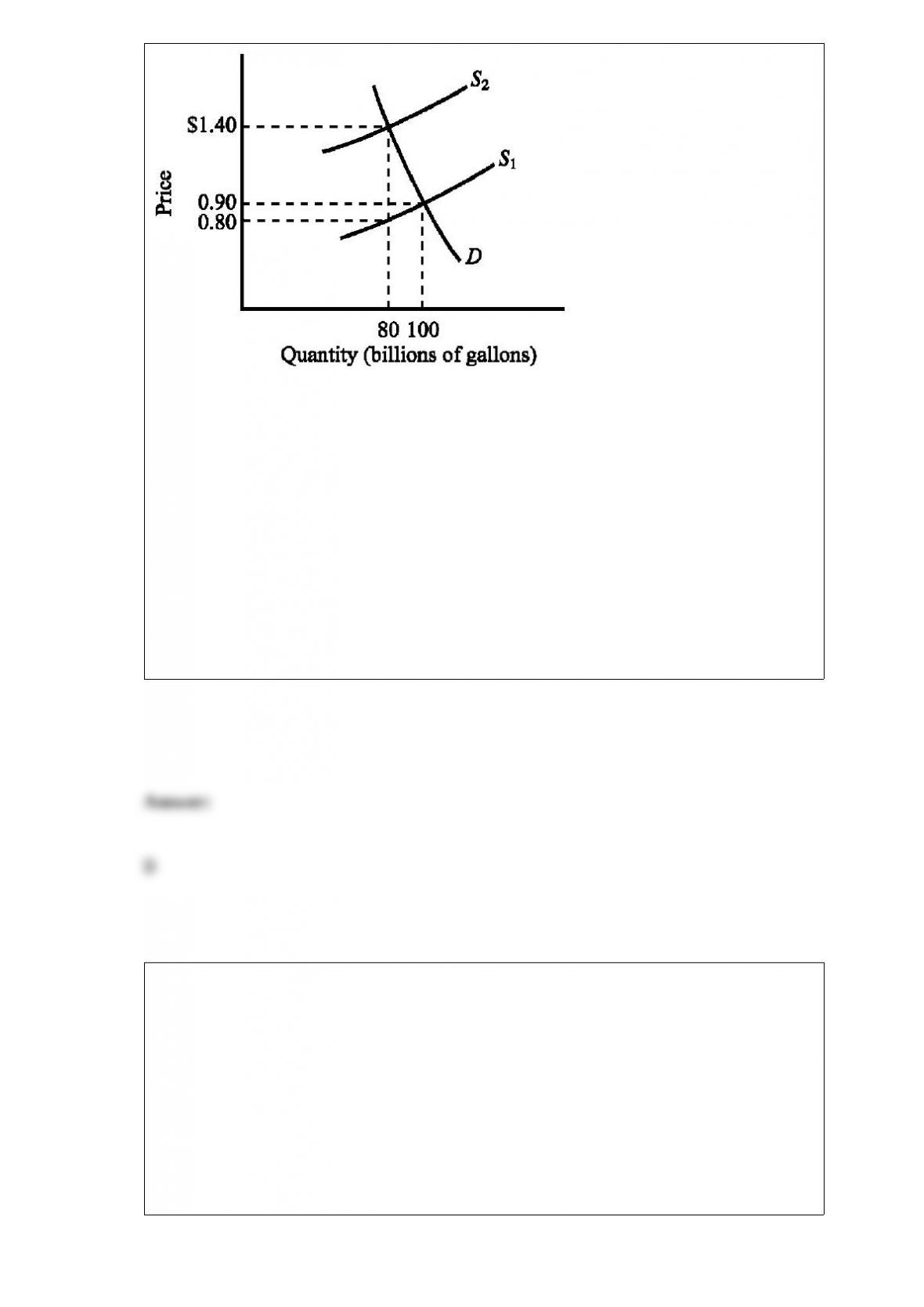
Refer to Figure 4-7. Which of the following is true for the tax illustrated?
a. The tax increases the price of gasoline by $.60.
b. Since the demand for gasoline is more inelastic than the supply, consumers bear most
of the burden of the tax.
c. Since the demand for gasoline is more elastic than the supply, consumers bear most
of the burden of the tax.
d. Since the supply of gasoline is highly inelastic, the primary burden of the tax is
imposed on the suppliers of gasoline.
Which of the following explains why higher prices in the goods and services market
will lead to an upward sloping short-run aggregate supply curve?
a. The higher prices will temporarily improve profit margins because many of the cost
components of firms will be fixed in the short run.
b. The higher prices will reduce the purchasing power of the fixed quantity of money
and, thereby, stimulate additional output.
c. The higher prices will expand the economy’s resource base and, thereby, stimulate
additional output.
d. The higher prices will improve technology and, thereby, stimulate additional output.

Which of the following transactions would be included in this year’s GDP for the
United States?
a. Deion sends $100 to a hotel in Costa Rica as a deposit for his vacation.
b. Deion buys a travel guide written by a Costa Rican woman living in the United
States.
c. Deion buys a shirt while on vacation in Costa Rica.
d. Deion spends money in an American-owned restaurant in Costa Rica.
Teenage unemployment is substantially higher than unemployment among prime-age
workers because teenagers
a. are more likely to switch jobs and move into and out of the labor force.
b. are less likely to be in the labor force than are older workers since many teenagers
are still in school.
c. are more likely to be in the armed forces, therefore, they’re counted as unemployed.
d. generally think they can find jobs that are available only to experienced, highly
skilled workers if they just search diligently enough.
If real interest rates in the United States are higher than those of our trading partners,
what will tend to happen to the foreign exchange value of the dollar and the U.S.
current account deficit or surplus?
a. The dollar will depreciate; the current account will move toward a deficit.
b. The dollar will depreciate; the current account will move toward a surplus.
c. The dollar will appreciate; the current account will move toward a deficit.
d. The dollar will appreciate; the current account will move toward a surplus.
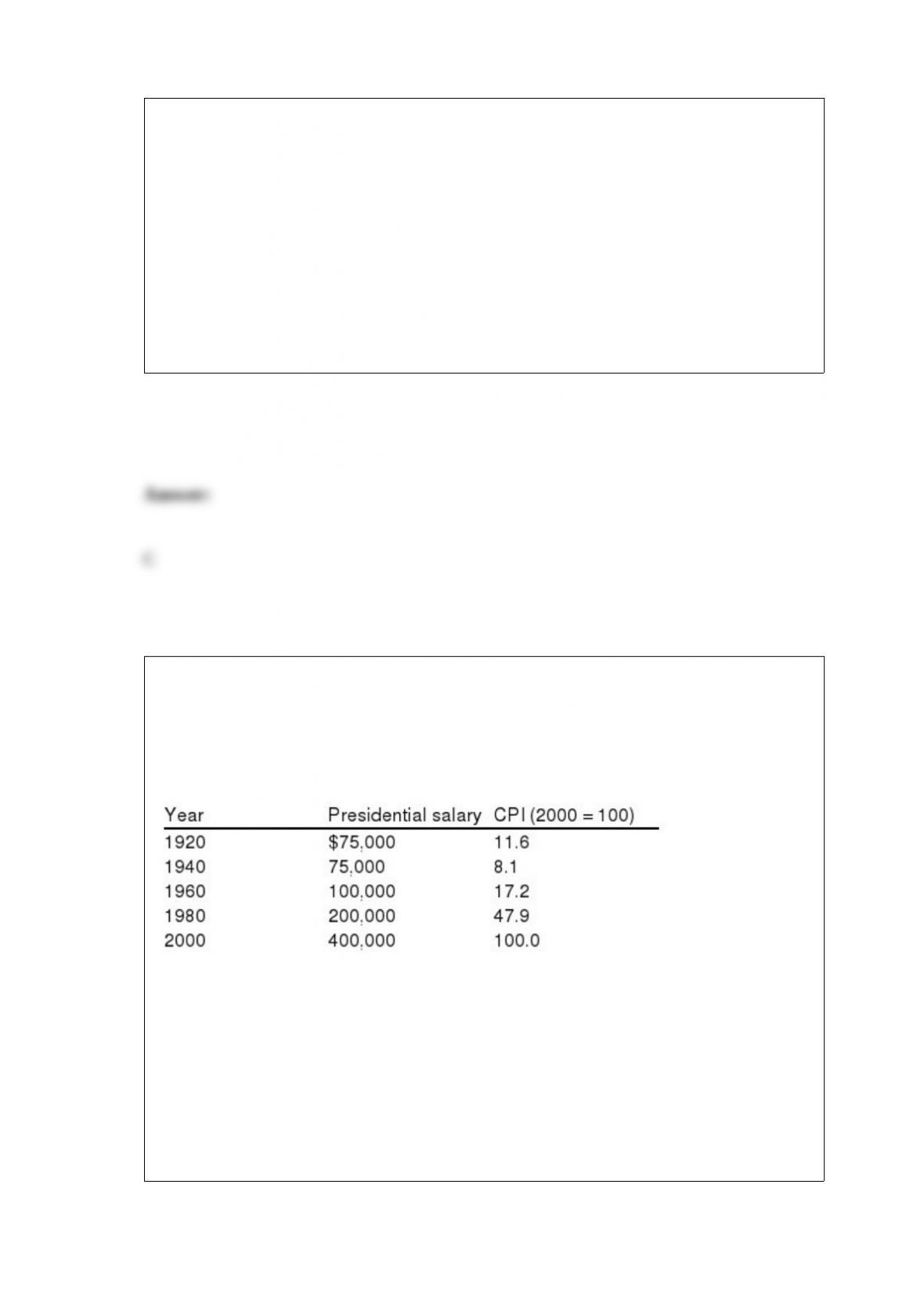
The nominal salary paid to the president of the United States and the Consumer Price
Index (CPI) are given for various years below.
Table 7-9
Refer to Table 7-9. The salary of the president of the United States in 2000 was
$400,000. In 1940, the president’s salary was $75,000. If the Consumer Price Index was
8.1 in 1940 and 100 in 2000, the 1940 presidential salary measured in terms of the
purchasing power of the dollar in 2000 would be
a. less than $75,000.
b. less than $400,000.
c. approximately $668,850.
d. approximately $750,000.
e. approximately $926,000.

Which of the following is true?
a. Real federal spending per person was approximately 50 times higher in 1900 than
1800.
b. Real federal spending per person was approximately 80 times higher in 2012 than
1916.
c. Real federal spending per person grew slowly under the Reagan Administration
during the 1980s, but it increased rapidly under the Clinton administration in the 1990s.
d. In recent years, government expenditures at the state and local levels have been
greater than government spending at the federal level.
What do economists mean when they state that a good is scarce?
a. There is a shortage or insufficient supply of the good at the existing price.
b. It is impossible to expand the availability of the good beyond the current amount.
c. People will want to buy more of the good regardless of the price of the good.
d. The amount of the good that people would like exceeds the supply freely available
from nature.

Which of the following contributed most to the large increases in poverty since 1960?
a. increases in air pollution and other externalities
b. federal government budget deficits
c. the increase in the number of elderly individuals
d. rising poverty rates among households headed by females
e. the increase in the number of households headed by females
Which of the following is true?
a. Uncertainty accompanies investment decisions.
b. At any given time, there are a virtually infinite number of potential investment
projects that might be undertaken by investors.
c. In order to be successful, entrepreneurs must be good at recognizing and undertaking
economically beneficial projects.
d. All of the above are correct.
Which of the following would tend to decrease the demand for carpenters?

a. An increase in the wages of carpenters.
b. An increase in the price of houses.
c. A decrease in the demand for houses.
d. An increase in the supply of carpenters.
When new firms enter a competitive price-taker market,
a. economic profits of existing firms will continue to be zero.
b. entering firms will earn zero economic profit upon entry into the market.
c. existing firms may see their costs rise as more firms compete for limited resources.
d. prices will rise as existing firms raise prices to keep new firms out of the market.
If the government provides free schooling for all students, an economist would say
education is
a. a free good, having no cost.
b. scarce even though its cost is paid by taxpayers rather than by students.
c. an example of a good that is no longer scarce.
d. all of the above.

As the proportion of women preparing for careers as professionals increases,
a. their years of work experience will become more similar to men.
b. the female/male earnings ratio will rise.
c. their level of human capital will become more similar to men.
d. all of the above.
Which of the following is a lesson that can be learned from monetary policy during the
Great Depression?
a. Monetary policy should be changed frequently in response to economic fluctuations.
b. Prolonged periods of monetary contraction will retard economic growth.
c. Low interest rates will direct an economy toward recovery.
d. Monetary policy should focus on variables such as output and employment.
Which of the following correctly describes the external benefit resulting from an
individual’s purchase of a winter flu shot?
a. The flu shot is cheaper than the cost of treatment when you get the flu.
b. The income of doctors increases when you get the flu shot.
c. The flu shot reduces the likelihood others will catch the flu.
d. The flu shot reduces the likelihood you will miss work as the result of sickness;
therefore, you will earn more income.
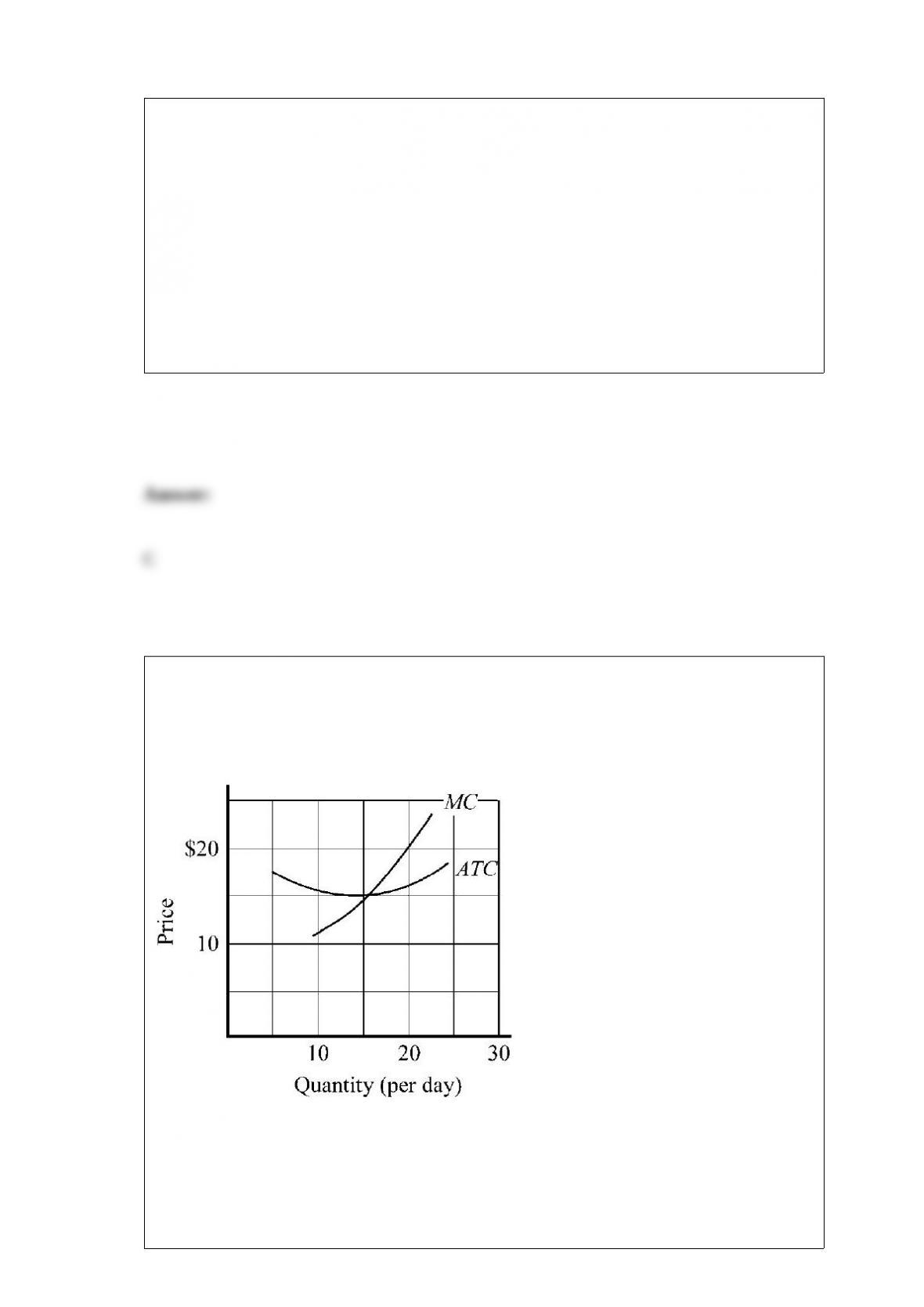
Use the figure to answer the following question(s).
Figure 9-6
The average total cost (ATC) and marginal costs (MC) of a firm producing in a
price-taker industry are depicted in Figure 9-6. If the current market price of the firm’s
product is $15, what output should this firm produce?
a. 10
b. 15
c. 20

d. 25
If a college enforces a new policy where anyone caught cheating is immediately
expelled, the basic postulate of economics suggests that
a. cheating will be completely eliminated.
b. fewer students will attempt to cheat.
c. the amount of cheating will be unaffected.
d. any of the above is possible because student behavior is unpredictable.
The discount rate is the interest rate
a. commercial banks charge their low-risk customers for a loan.
b. savings and loan associations pay for using savings deposit funds.
c. the U.S. Treasury pays individuals who buy Treasury bonds in denominations of
$10,000 or more.
d. the Federal Reserve charges banking institutions for borrowing its funds.

High income countries with larger governments as a share of GDP have generally
a. grown less rapidly than their counterparts with smaller governments.
b. experienced less deadweight losses resulting from taxes and/or government
borrowing.
c. seen the government decrease in size as real GDP rises.
d. been able to be more economically efficient.
Which one of the following would supply dollars to the foreign exchange market?
a. the sale of U.S. automobiles to a Mexican consumer
b. the spending of British tourists in the United States
c. the purchase of Canadian oil by a U.S. consumer
d. the sale of a U.S. corporation to a Saudi Arabian investor

Geri purchases a newly constructed house built by a private contractor. Her spending on
the house is included in GDP as a part of
a. personal consumption expenditures.
b. depreciation.
c. gross private investment.
d. personal saving.
Which of the following events would cause the interest rate to rise?
a. a decrease in the demand for loanable funds
b. an increase in the demand for loanable funds
c. an increase in the supply for loanable funds
d. a decrease in aggregate demand
As the result of specialization and trade, according to the law of comparative advantage,
total output will
a. decline because specialization is costly.
b. rise only when there is an accompanying decline in the total output of one’s trading
partners.
c. rise if a nation is a net exporter and fall if the nation is a net importer of goods and
services.
d. increase since resources will be better directed toward their highest-valued use.

Public choice theory suggests that politicians will be most likely to favor redistribution
of income from
a. the rich to the poor.
b. unorganized taxpayers to well-organized interest groups.
c. well-organized business groups to consumers.
d. none of the above.
Which of the following business decisions will be made by firms that are price
searchers but not those that are price takers?
a. What combination of resources should be used to produce a product that is supplied?
b. What output should be produced?
c. What price should be charged?
d. What legal structure of business organization (for example, a proprietorship or
corporation) should be used?

Why do nations impose trade barriers, such as those instituted during the Great
Depression, that make it difficult for their own citizens to trade with people in other
countries?
a. Trade restrictions are a good way for a country to increase the total employment and
income level of its citizens.
b. As the experience during the 1930s illustrates, trade restrictions are an effective way
to increase exports and tax revenues.
c. Trade restrictions provide gains to domestic residents at the expense of foreigners.
d. Trade restrictions often provide benefits to highly visible special interest groups
while imposing a less visible cost on the general populace.
As the dollar depreciates, which of the following is most likely to occur?
a. More Americans will travel abroad.
b. American imports will rise.
c. More foreigners will visit the United States.
d. American firms will increase their investments abroad.
If a 10 percent rise in airfares leads to a 5 percent increase in total expenditures on air
travel, the price elasticity of demand for air travel in this range must be
a. 2.
b. elastic.

c. 0.5.
d. inelastic.