
Special interest group Z receives a 1/200th slice of the economic pie.Its net benefit from
both an economic growth policy and a transfer policy is $30,000.How much does the
size of the economic pie (Real GDP) need to grow before group Z is indifferent
between the two policies?
a. $150
b. $600,000
c. $600,000,000
d. $6,000,000
e. none of the above
The factor demand curve shifts leftward as a result of
a. an increase in the price of the product the factor helps to produce.
b. an increase in the marginal physical product of the factor.
c. a decrease in the price of the product the factor helps to produce.
d. a and b
e. b and c
Economies of scale, constant returns to scale and diseconomies of scale account for the
shape of the __________ cost curve.

a. average variable
b. average fixed
c. long-run average total
d. short-run average total
e. marginal
The branch of economics that studies the decisions made by individuals and firms is
called macroeconomics.
a. True
b. False
If a perfectly competitive firm and a monopolistic competitor in long run equilibrium
face exactly the same demand and cost curves, then there is high probability that
a. the former will earn zero economic profits, but the latter will earn positive economic
profits.
b. both will earn zero economic profits, but the former will attain lower unit costs than
the latter.
c. both will earn zero economic profits, but the latter will attain lower unit costs than
the former.
d. both firms will earn zero economic profits, and attain the lowest possible unit costs.
e. neither firm will earn zero economic profits, but both will attain the lowest possible
unit costs.
If the equilibrium exchange rate is $1 = 90 yen, then at an exchange rate of
$1 = 80 yen there is a
a. surplus of yen.
b. shortage of yen.
c. shortage of dollars.
d. a and c
e. b and c
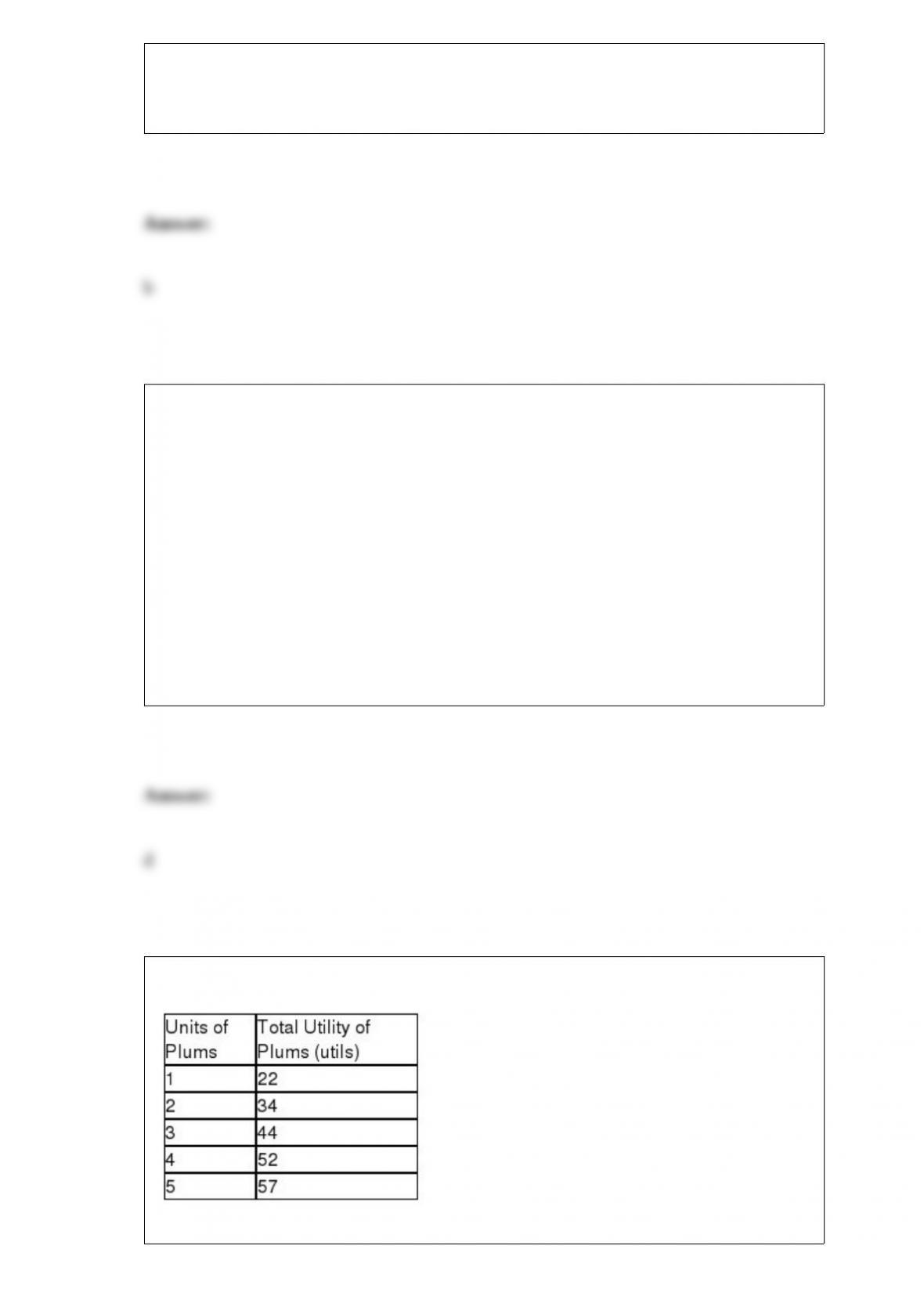
Exhibit 21-1

The marginal utility of the third plum is
a. 17 utils.
b. 10 utils.
c. 8 utils.
d. 3 utils.
e. cannot be determined
Which of the following statements is false?
a. Firms calculate present values when they make investment decisions because
investment decisions yield benefits in the future and firms want some idea of the value
of these benefits.
b. The present value of $100 a year from today at a 10 percent interest rate is
approximately $91.
c. The present value of $100 two years from today at a 10 percent interest rate is
approximately $83.
d. A firm will not undertake an investment if the present value of the future income
resulting from the investment is greater than the cost of the investment.
Exhibit 3-10
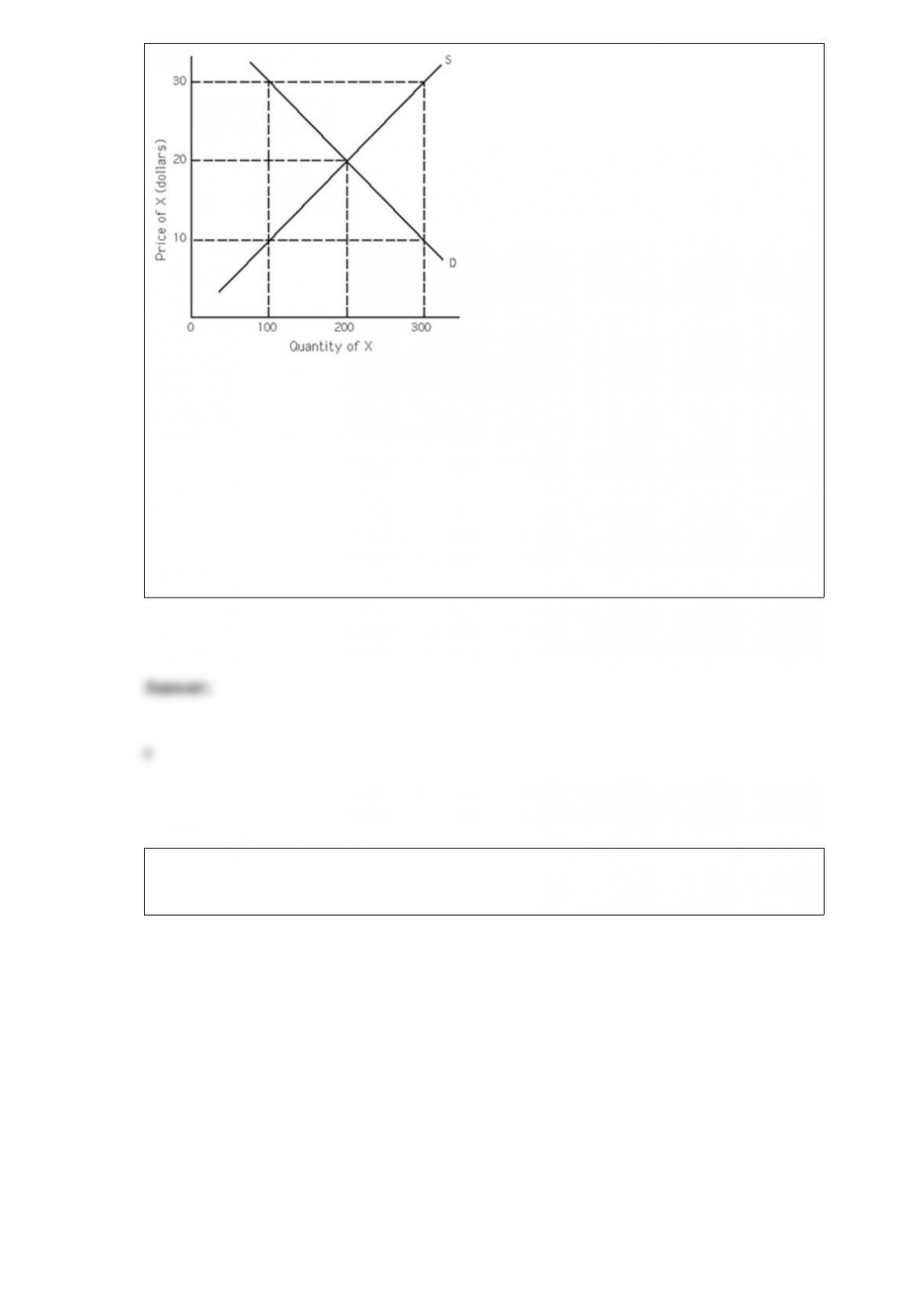
At a price of $10, __________ units of the good will be exchanged.
a. 100
b. 200
c. 300
d. none of the above
Exhibit 22-3
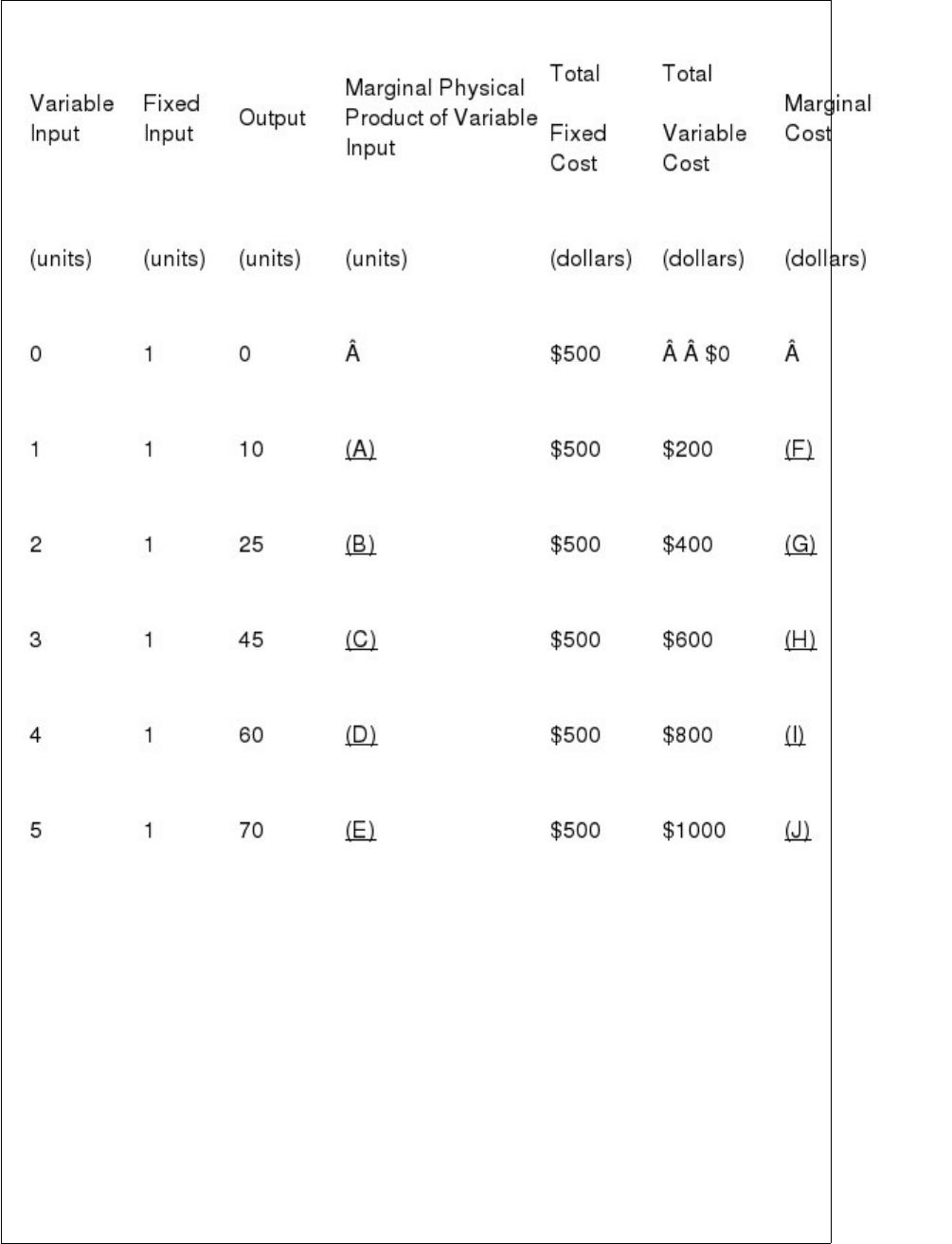
The average variable cost of producing 10 units of output is
a. $2.00.
b. $1.75.
c. $20.00.
d. $2.25.
e. $2.50.
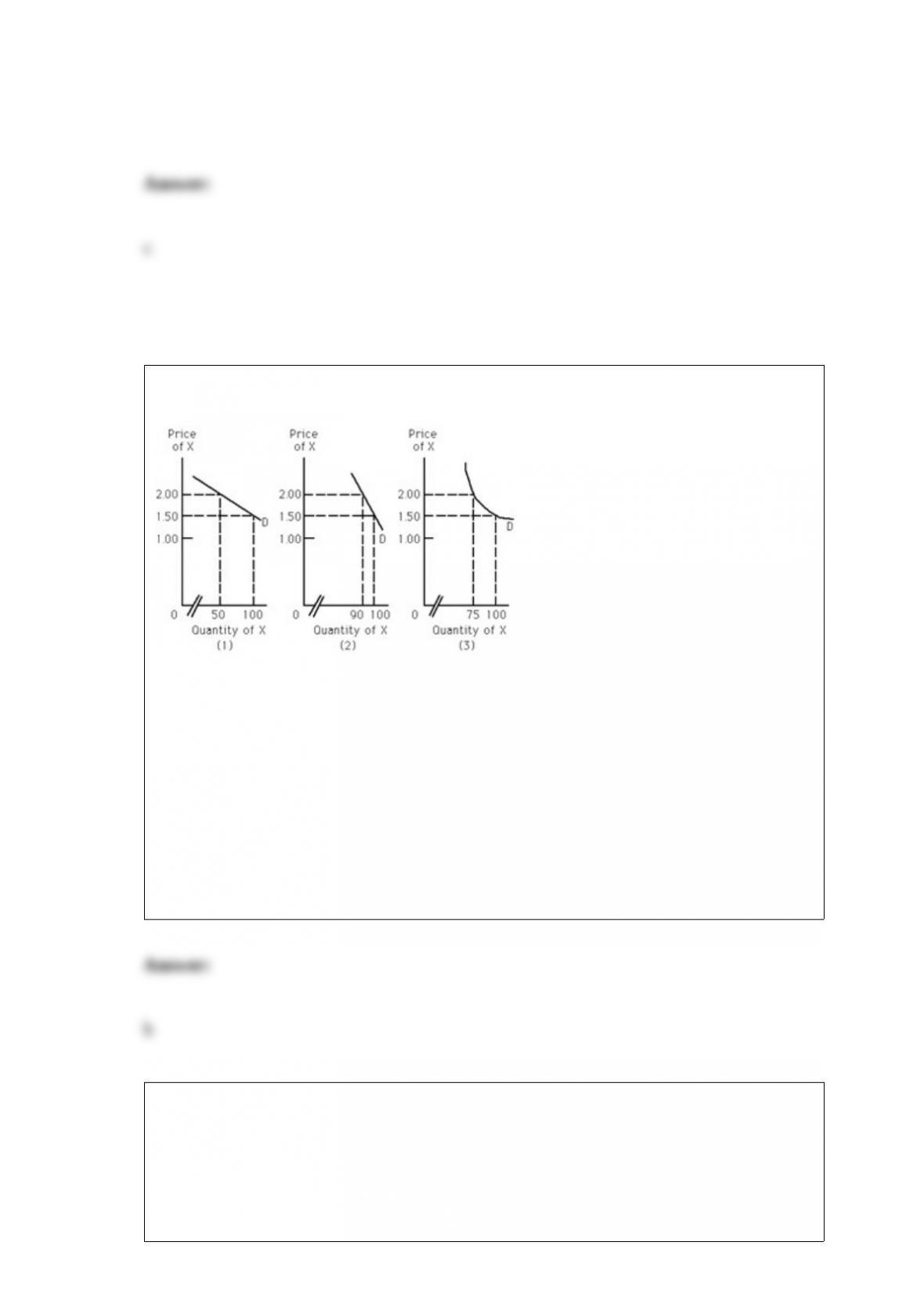
Exhibit 20-5
Assume that the seller of X increases the price from $1.50 to $2.00, and this results in
an increase in total revenue. Which of the graphs represents the demand curve for X?
a. (1)
b. (2)
c. (3)
d. all of the above
In a simple majority vote, the losses to the losers are greater than the gains to the
winners. It follows that the
a. outcome of the vote is efficient.
b. outcome of the vote is inefficient.
c. outcome of the vote will be nullified (most likely by the Courts).
d. vote has generated net benefits.
e. none of the above
What condition is necessary for a price floor to have an impact on a market? Describe
twoeffects that a price floor can have on a market.
Explain how and why price elasticity of demand changes as a product is defined more
narrowly or more broadly.Cite an example to help support your answer.
As discussed in the textbook, describe some policy changes the government could make
in order to make it easier for people to buy houses.Using supply and demand analysis,
explain how these policy changes could indirectly lead to fewer people being able to
afford to purchase a home.
Explain what it means to say that a theory is falsifiable or refutable?Give a specific
example to help support your answer.
Suppose you are thinking about buying a car.The market price of the car (including all
associated taxes and fees) is $18,200 which you will pay for in cash if you buy the
car.You anticipate that you will receive $3,000 (above and beyond any costs associated
with running and maintaining the car) worth of services from the car each year for the
next eight years, after which time the car will be scrapped and will have no scrap
value.If the interest rate is 6%, determine if the present value of the car is more than,
less than, or equal to the market value of the car and specify whether or not it makes
economic sense to purchase this car.Does the interest rate need to rise or fall in order for
you to reach the opposite conclusion about buying the car?Explain your answer and
support it using present value calculations.
List and describe the four conditions necessary for everyone to receive equal pay in the
long run.
Identify two activities that generate positive externalities and two activities that
generate negative externalities.Be sure to explain why each activity you identified
generates the type of externality you stated.