
For the purchasing power of money to increase, the price level has to fall.
Answer:
If income is unequally distributed in an economy, increases in GDP may not raise
well-being in an economy.
Answer:
A tariff is a tax imposed by a government on imports.
Answer:
Fed Chairman Alan Greenspan managed to keep the rate of inflation low as the
economy was growing at a brisk pace by setting and hitting low money supply growth
rate targets.
Answer:

For all points below the 45-degree line, planned aggregate expenditure will be less than
GDP.
Answer:
In many European countries it is much easier than in the United States for unemployed
workers to receive generous wage replacement income from their governments.
Answer:
A characteristic of the long run that is not available in the short run is that a firm is free
to vary its output.
Answer:
As the number of firms in a market increases, the supply curve will shift to the right and
the equilibrium quantity will rise.
Answer:

A profit-maximizing firm should hire workers up to the point where labor’s marginal
revenue product equals the wage rate.
Answer:
When negative externalities exist, the competitive market supply curve does not include
all of the costs borne by members of society.
Answer:
For a natural monopoly, the marginal cost of producing an additional unit of its product
is relatively small.
Answer:
The current account balance equals the value of net exports.
Answer:

The demand curve for a luxury good is upward-sloping.
Answer:
The labor force participation rates of women have rapidly increased since 1948.
Answer:
On a diagram of a production possibility frontier, economic decline (negative growth) is
represented by the production possibility frontier shifting inward.
Answer:
Figure 4-5

The figure above represents the market for pecans. Assume that this is a competitive
market. At a price of $3,
A) the marginal cost of pecans is greater than the marginal benefit; therefore, output is
inefficiently low.
B) producers should raise the price to $9 in order to sell the quantity demanded of
12,000.
C) the marginal benefit of pecans is greater than the marginal cost; therefore, output is
inefficiently high.
D) the marginal benefit of pecans is greater than the marginal cost; therefore, output is
inefficiently low.
Answer:
After Suzie, owner of Suzie’s Sweet Shop, hires her 8th worker the average product of
labor declines. Which of the following statements must be true?
A) The marginal product of the 8th worker is negative.
B) The marginal product of the 8th worker is less than the average product of labor
before the 8th worker was hired.
C) Suzie’s profits would be greater if she did not hire the 8th worker.
D) The average product of labor is negative.
Answer:
Corruption
A) curtails economic growth.

B) raises the rate of growth as bribes enhance income.
C) is eliminated by foreign direct investment.
D) acts as a magnet for foreign direct investment.
Answer:
The simple deposit multiplier is the ratio of the amount of
A) new reserves created by the banks to the amount of deposits.
B) new reserves created by the banks to the amount of loans.
C) deposits created by the banks to the amount of new reserves.
D) loans issued by the banks to deposits created by the banks.
Answer:
People who lost their jobs as hand-drawn animators because of the popularity of
computer-generated 3D animation are examples of persons who are suffering
A) frictional unemployment.
B) structural unemployment.
C) cyclical unemployment.
D) seasonal unemployment.
E) unnatural unemployment.

Answer:
Assume that firms in a perfectly competitive market are earning economic profits.
Which of the following statements describes the change in market price and output as a
result of the entry of new firms into this market?
A) The market demand curve shifts to the right, causing price to rise and market output
to increase.
B) The market demand curve shifts to the left, causing price to fall and market output to
decrease.
C) The short-run market supply curve shifts to the right, causing price to fall and total
market output to increase.
D) The short-run market supply curve shifts to the left, causing price to rise and total
market output to decrease.
Answer:
The decision to make the U.S. income tax system progressive was
A) a progressive decision.
B) a positive decision.
C) a decision that was needed to minimize the excess burden of taxation.
D) a normative decision.
Answer:

The law of demand implies, holding everything else constant, that as the price of gelato
A) increases, the demand for gelato will increase.
B) increases, the quantity of gelato demanded will increase.
C) decreases, the quantity of gelato demanded will increase.
D) decreases, the demand for gelato will increase.
Answer:
If the price level in the United States is 110, the price level is 120 in Mexico, and the
nominal exchange rate is 140 pesos per dollar, what is the real exchange rate from the
U.S. perspective?
A) 94
B) 115
C) 128
D) 153
Answer:
Generally with bond ratings, the higher the rating, the ________ the interest rate an
investor will receive and the ________ the the risk that the issuer of the bond will
default.

A) higher; higher
B) higher; lower
C) lower; higher
D) lower; lower
Answer:
If demand is perfectly inelastic, the absolute value of the price elasticity coefficient is
A) infinity.
B) zero.
C) more than one.
D) equal to the absolute value of the slope of the demand curve.
Answer:
According to the short-run Phillips curve, if unemployment is 2.4% and inflation is
3.7%, a decrease in the inflation rate might result in which of the following?
A) an increase in the unemployment rate to 3.4%
B) a decrease in the unemployment rate to 3.0%
C) a decrease in the demand for labor in the economy
D) Both A and C are correct answers.
Answer:
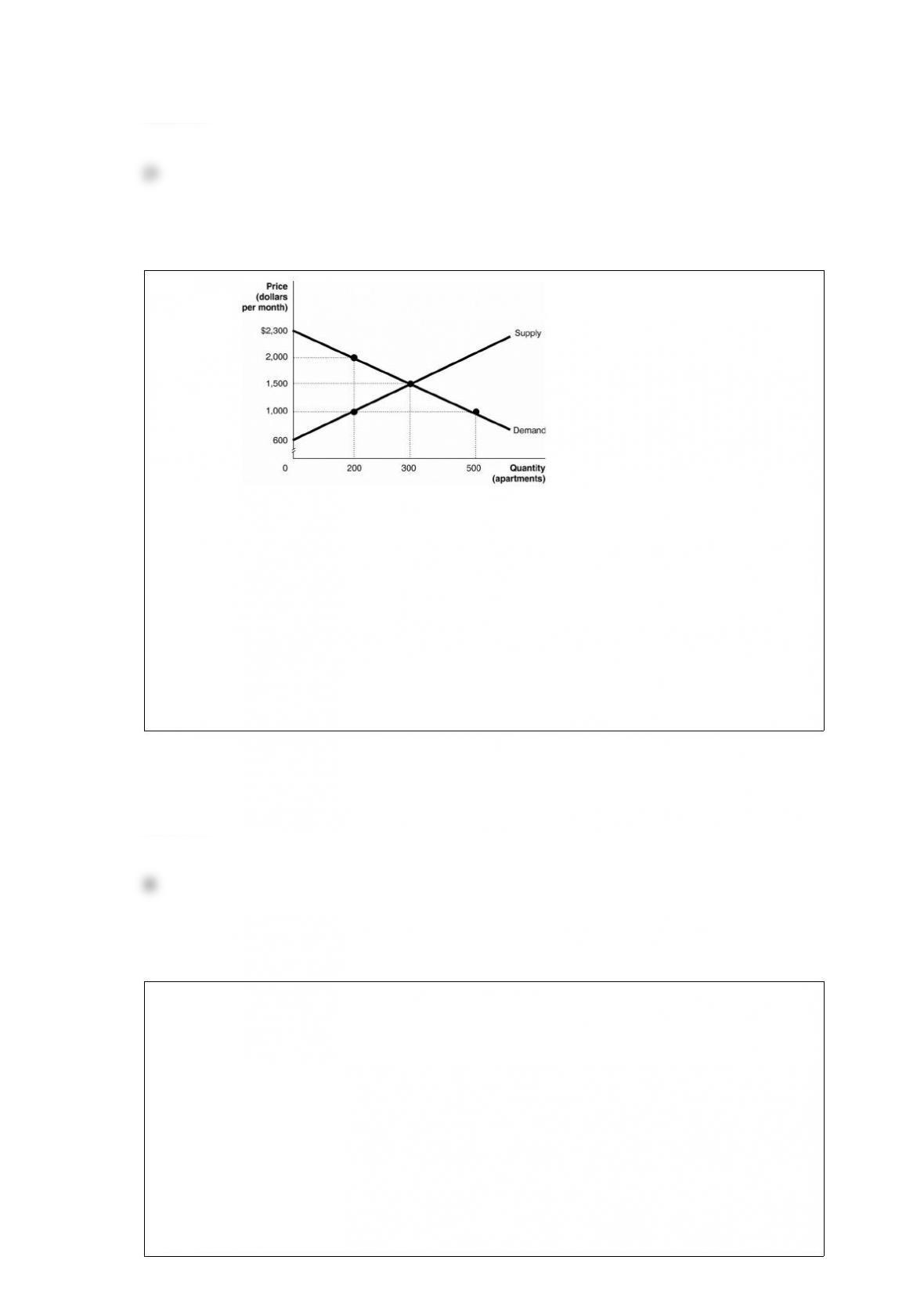
Figure 4-8 Figure 4-8 shows the market for
apartments in Springfield. Recently, the government imposed a rent ceiling of $1,000
per month. What is the value of consumer surplus after the imposition of the ceiling?
A) $120,000
B) $230,000
C) $270,000
D) $430,000
Answer:
Suppose the government spending multiplier is 2. The federal government cuts
spending by $40 billion. What is the change in GDP if the price level is not held
constant?
A) an increase of less than $80 billion
B) an increase equal to $80 billion
C) an increase of greater than $80 billion
D) a decrease of less than $80 billion

E) a decrease of more than $80 billion
Answer:
The following equations represent the demand and supply for kumquats.
QD = 60 – 3P
QS = -20 + 5P What is the equilibrium price (P) and quantity (Q – in thousands) of
kumquats?
A) P = $5; Q = 20 thousand
B) P = $30; Q = 5 thousand
C) P = $20; Q = 10 thousand
D) P = $10; Q = 30 thousand
Answer:
All of the following are true statements about the multiplier except
A) The formula for the multiplier overstates the real world multiplier when we take into
account the impact of changes in GDP on imports, inflation and the interest rate.
B) The larger the MPC, the larger the multiplier.
C) The multiplier is the ratio of the change in real GDP to the change in autonomous
expenditure.
D) The multiplier makes the economy less sensitive to changes in autonomous
expenditure.

Answer:
The unemployment rate is
A) the percentage of the labor force that is employed.
B) the percentage of the number employed that is unemployed.
C) the percentage of the working-age population that is unemployed.
D) the percentage of the labor force that is unemployed.
E) the percentage of the working-age population that is employed.
Answer:
When calculating GDP, the Bureau of Economic Analysis releases its “advanced
estimate” of a quarter’s GDP approximately
A) three months before the quarter has ended.
B) one month after the quarter has ended.
C) three months after the quarter has ended.
D) one year after the quarter has ended.
Answer:
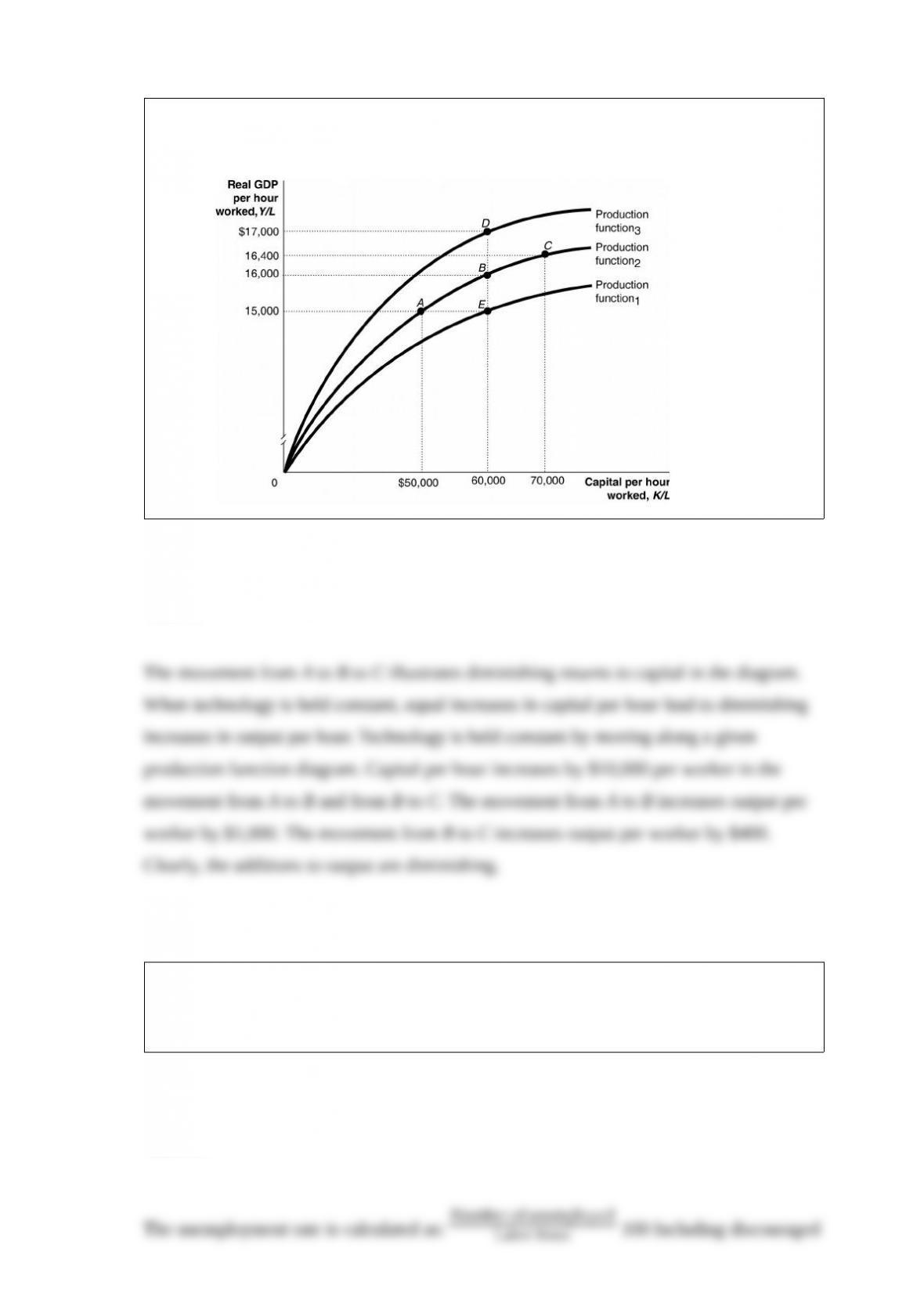
Using the points on the diagram below, identify which combinations of these points
illustrate diminishing returns to capital. Give a brief explanation to support your
answer.
Answer:
How would the unemployment rate and the labor force participation rate change if
discouraged workers were counted as unemployed rather than counted as out of the
labor force? Show using the formula for both measurements.
Answer:

Explain why the demand curve for loanable funds has a negative slope.
Answer:
Briefly explain 4 of the Difficulties in making cross-country comparisons in health care
outcomes.

Answer:
President Bush lowered income taxes for individuals in 2001. Explain how lower
income taxes affect the aggregate demand curve.
Answer:
Under what circumstances will the law of one price hold, and when might it not hold?
Answer:
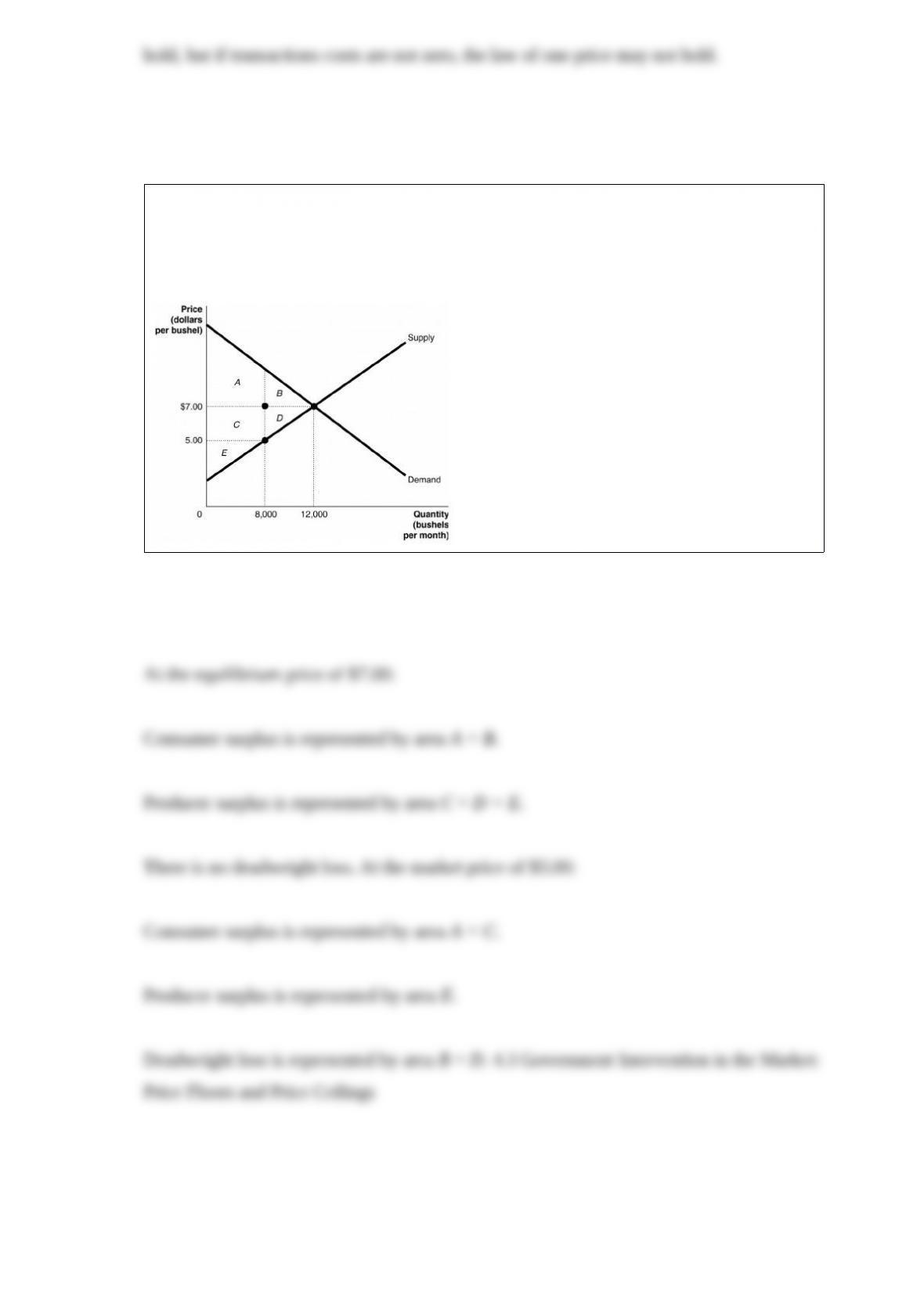
The graph below represents the market for lychee nuts. The equilibrium price is $7.00
per bushel, but the market price is $5.00 per bushel. Identify the areas representing
consumer surplus, producer surplus, and deadweight loss at the equilibrium price of
$7.00 and at the market price of $5.00.
Answer:
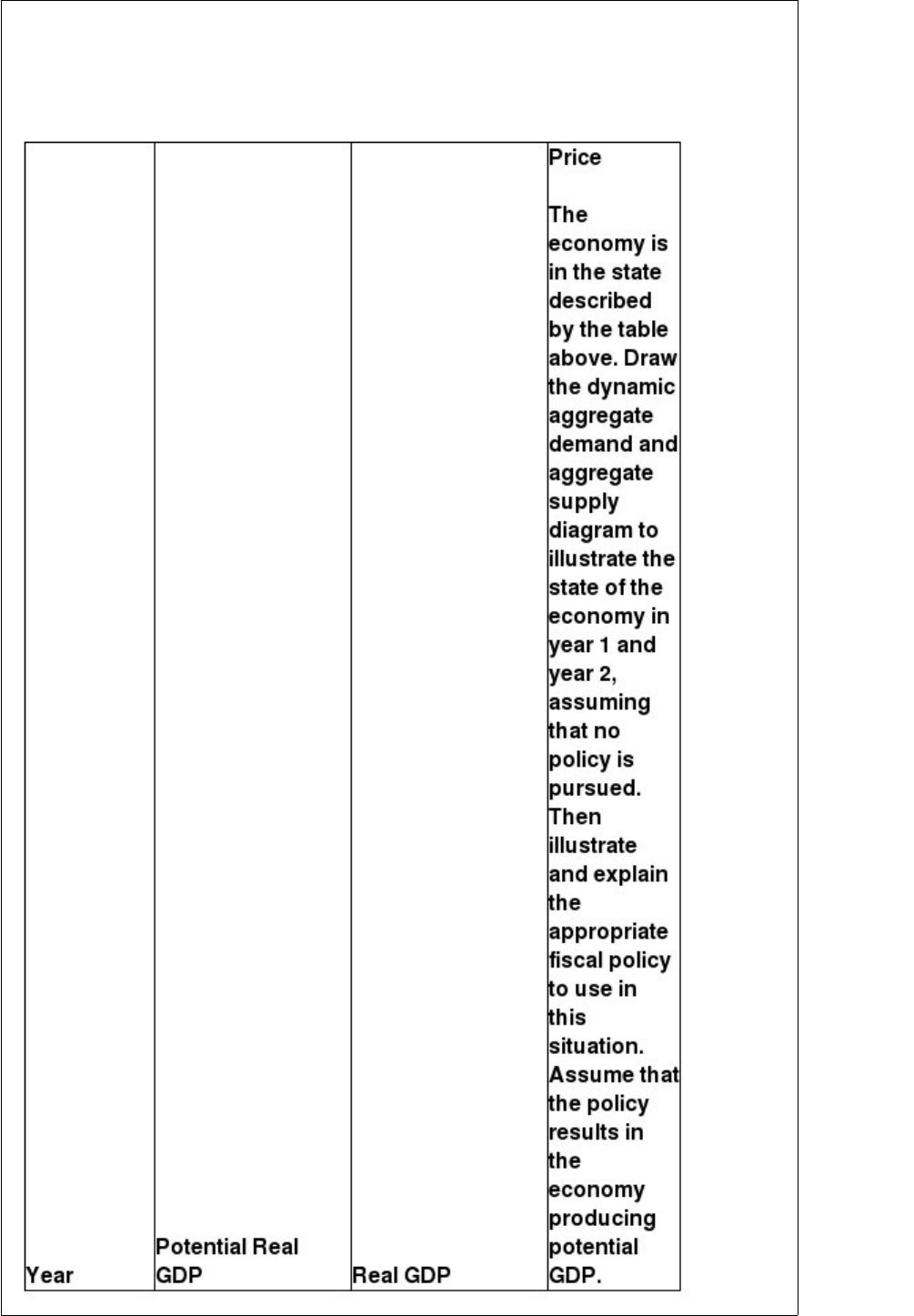
Table 16-5

Answer:
Anti-globalization and protectionism are both arguments against free trade. How do
these two arguments differ?
Answer: