1) migrant workers who face imperfect skill transferability may:
a.have to settle for a lower wage than they were expecting at the time of migration.
b.overcome this problem through greater motivation and effort.
c.return to their origin nation because the net benefits of migration were less than
expected.
d.experience all of these.
2) Other things equal, the short-run aggregate supply curve shifts positions when:
A.the price level changes.
B.the rate of inflation changes.
C.nominal wages and other input prices change.
D.aggregate demand changes.
3)
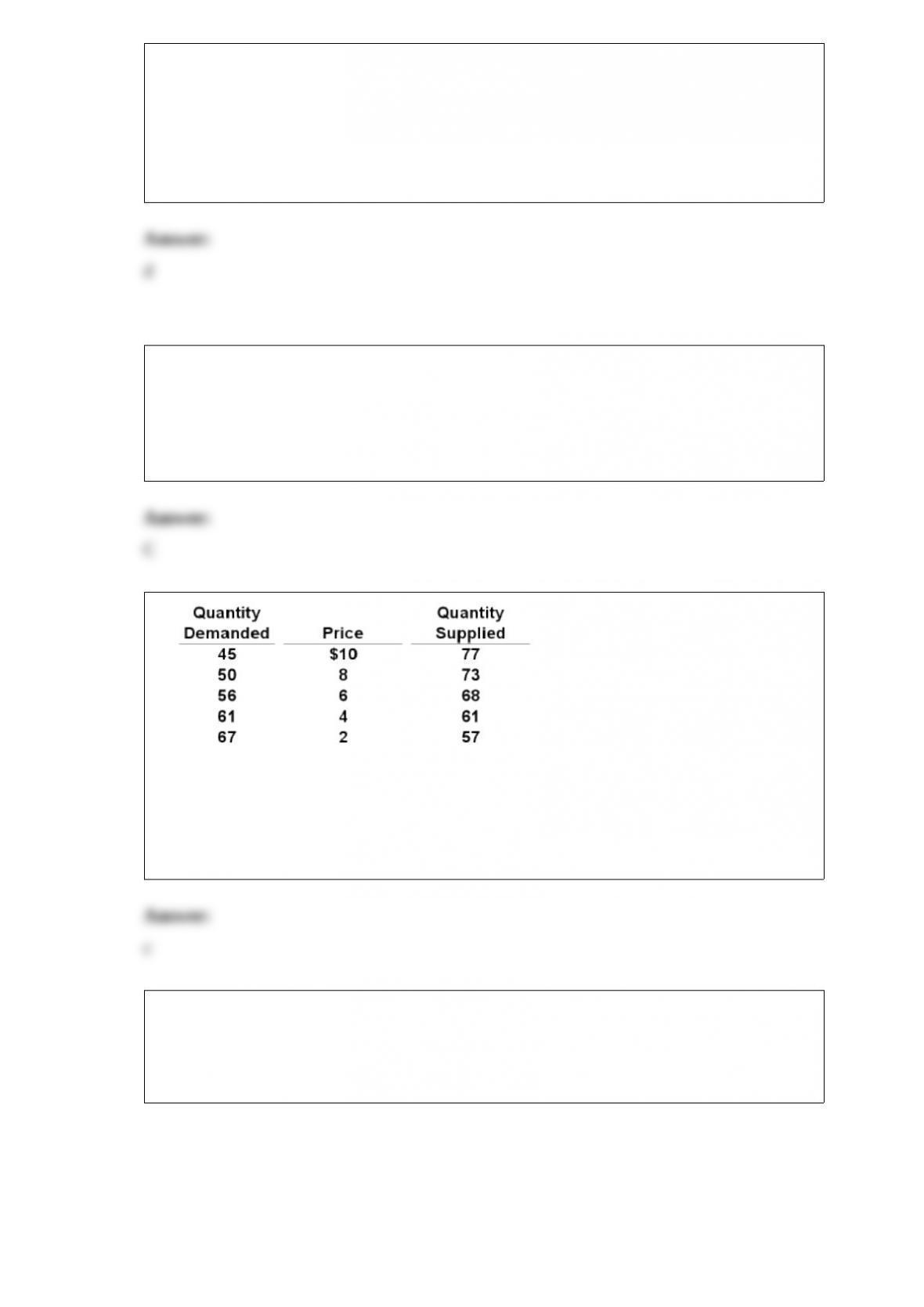
refer to the above data: equilibrium price is:
a.$8.
b.$6.
c.$4.
d.$2.
4) the following two schedules which show the amounts of additional satisfaction
(marginal utility) which a consumer would get from successive quantities of products j
and k.
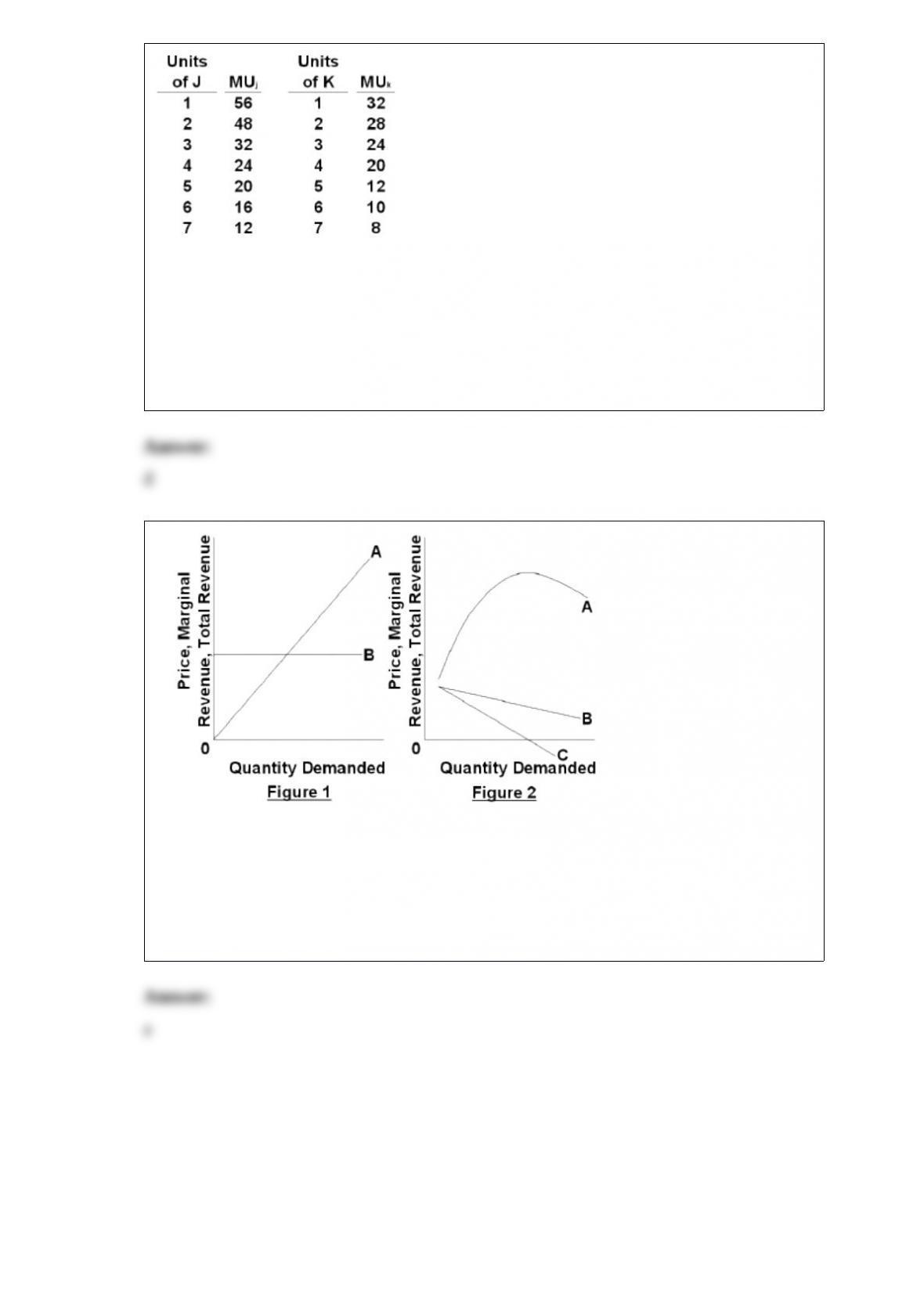
refer to the above data. if the consumer’s money income were cut from $52 to $28, and
the prices of j and k remain at $8 and $4 respectively, she would maximize her
satisfaction by purchasing:
a.3 units of j and 3 units of k.
b.1 unit of j and 3 units of k.
c.4 units of j and 1 unit of k.
d.2 units of j and 3 units of k.
5)
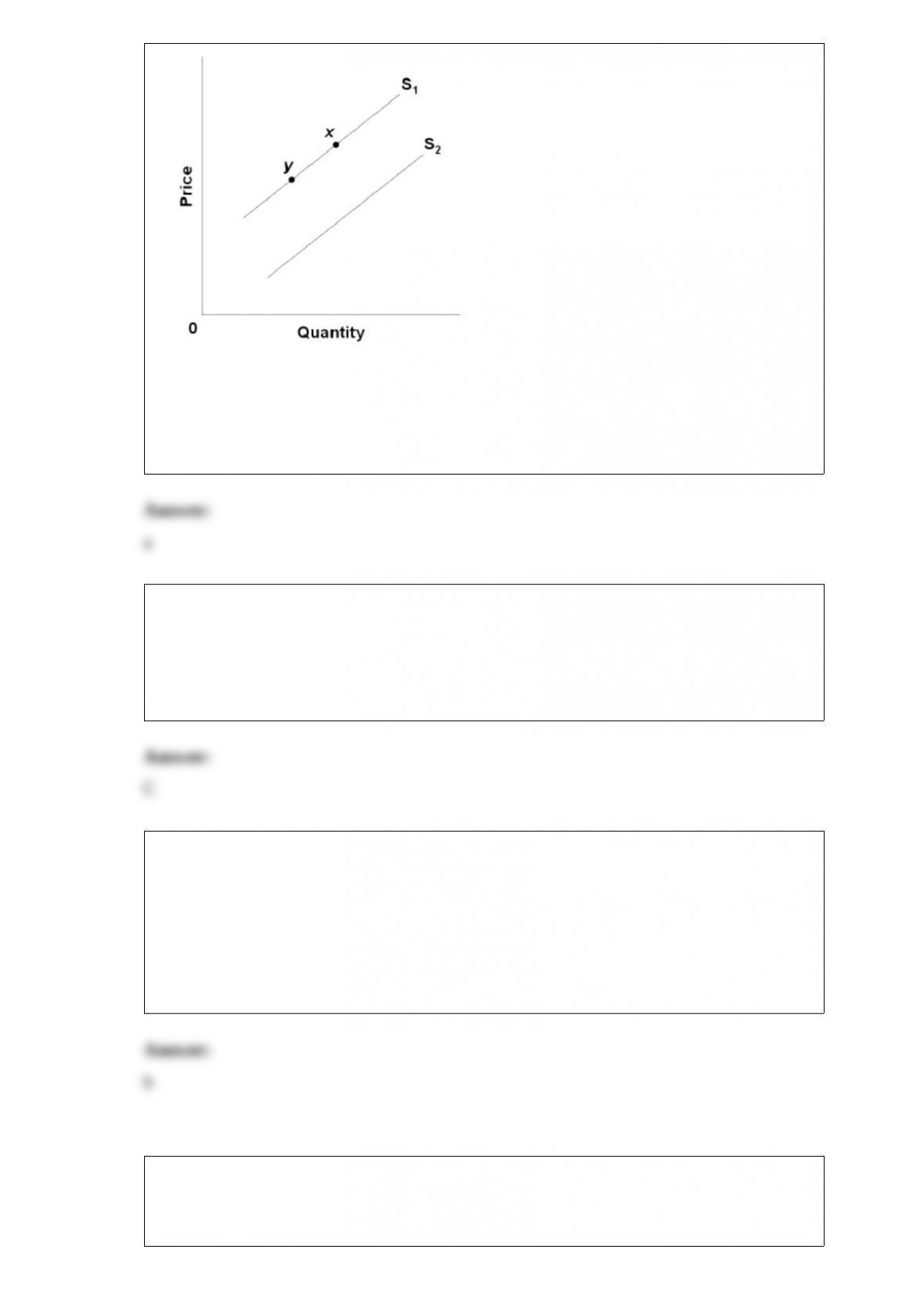
refer to the above two diagrams for individual firms. in figure 1 line b represents the
firm’s:
a.demand and marginal revenue curves.
b.demand curve only.
c.marginal revenue curve only.
d.average revenue curve only.
6)
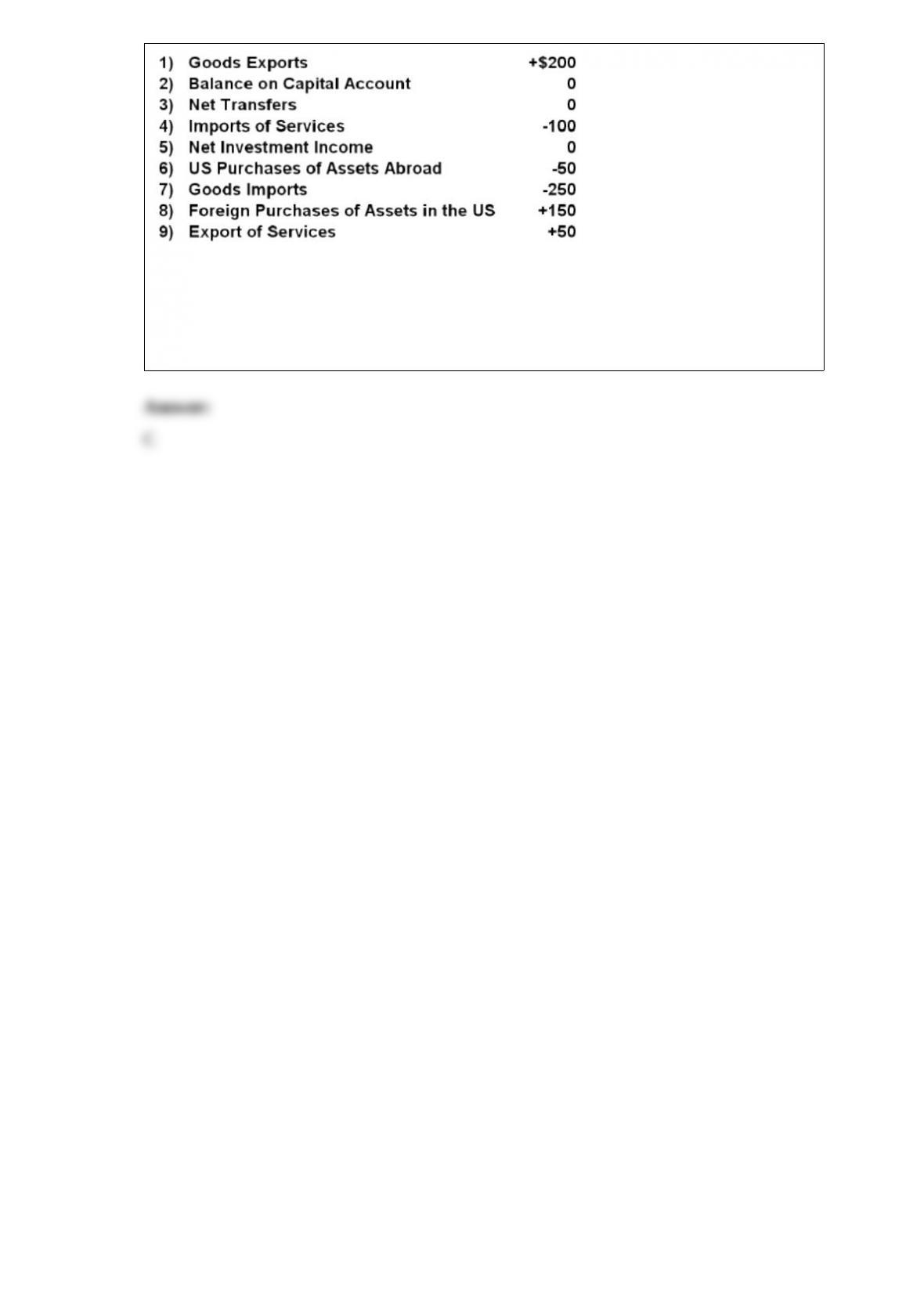
refer to the above diagram. an increase in quantity supplied is depicted by a:
a.move from point y to point x.
b.shift from s1 to s2.
c.shift from s2 to s1.
d.move from point x to point y.
7) The demand for labor is derived from:
A.the demands for other variable inputs.
B.the cost-minimization rule.
C.consumer demand for the product or service it is helping to produce.
D.the supply of related inputs.
8) “the government deregulated the electricity industry in california and a shortage of
electricity soon occurred. it is clear that the deregulation caused the shortage.” this
statement needs careful analysis because it may reflect the:
a.the fallacy of composition.
b.post hoc, ergo propter hoc fallacy.
c.use of loaded terminology.
d.the law of averages.
9) in a purely competitive industry:
a.there will be no economic profits in either the short run or the long run.
b.economic profits may persist in the long run if consumer demand is strong and stable.

c.there may be economic profits in the short run, but not in the long run.
d.there may be economic profits in the long run, but not in the short run.
10) Standard Census data on the distribution of income:
A.take all taxes and transfer payments into account.
B.are before taxes in that they do not account for personal income and payroll taxes.
C.include noncash transfers.
D.exclude cash transfers.
11) an indifference map implies that:
a.money income is constant, but the prices of the two products vary directly with the
quantities purchased.
b.the two products under consideration are perfectly substitutable for one another.
c.a consumer is better off to be at some point high on a given curve as opposed to a
point low on the same curve.
d.curves farther from the origin yield higher levels of total utility.
12) Which of the following would cause the present optimal extraction level of a
non-renewable resource to fall?
A.An increase in the present value of expected future profits.
B.A decrease in extraction costs.
C.A decrease in user costs.
D.An increase in the current price of the resource.
13) The plus items below are “export-type” entries and the minus items are
“import-type” entries in the balance of payments for the hypothetical country of Zippo.
Refer to the above information. Zippo has a:
A.current account surplus.
B.financial account deficit.
C.financial account surplus.
D.surplus on goods and services.